
Started in on the proverbs of Proverbs, this morning — those snappy sayings that start up in chapter 10. And for me, these one-liners have sometimes been difficult to digest. And that, I think, for a couple of reasons.
First, often these seemingly black-and-white dynamics describing the way things should work (and will work in the kingdom of God) just don’t play out in this fallen world and its many shades of grey. Sometimes, the disconnect between the described “should be” and what “actually is” gets in the way.
The other thing that can sometimes mute the impact of the proverbs for me is their “to do” nature in the context of my “It is finished” faith. The temptation to take Solomon’s asserted acts of righteousness and think that as I long as I do them then I will be righteous. Yet, my righteousness is found in Christ alone. Get what I’m saying?
But as I chew on the opening verses of Proverbs 10, there may be something here that resolves some of the tension I often feel with the proverbs, a key that unlocks a door. It’s thinking about the difference between being wise and being prudent.
The proverbs of Solomon.
A wise son makes a glad father,
but a foolish son is a sorrow to his mother.
Treasures gained by wickedness do not profit,
but righteousness delivers from death.
The LORD does not let the righteous go hungry,
but he thwarts the craving of the wicked.
A slack hand causes poverty,
but the hand of the diligent makes rich.
He who gathers in summer is a prudent son,
but he who sleeps in harvest is a son who brings shame.
(Proverbs 10:1-5 ESV)
These one-liners seem to be a section talking about two types of sons. A wise son and a foolish son – aka a prudent son and a son who brings shame. And within the bookends of verses 1 and 5, there are some kingdom principles. Principles as to the impact of the two sons on their parents; the impact on their approach to making a living; the impact of how the LORD looks upon how they make a living; and the different kingdom outcomes one should expect from the hand of the diligent vs. a slack hand.
And verse 5 gives a specific example of what Solomon is generally describing. And it comes down to what the sons do in summer, the way they behave in harvest. It’s whether they gather or sleep which defines whether they are a prudent son or a son who brings shame.
So, am I stretching things too far to say that prudence is the application of wisdom? That if wisdom begins with the fear of the Lord and is the knowledge of the ways and means and dynamics of the kingdom to come, then prudence is the application of those principles. That it’s one thing to know that it’s important to gain treasures in the right way so that one does not go hungry, to be diligent in work in order to know gain, but it’s another thing to actually decide to go be someone who gathers in summer rather than sleeps in harvest. Still making sense?
So, if in Christ — by grace alone through faith alone — I am declared righteous, and, if because of my union with Christ, I have access to the mind of Christ (1Cor. 2:16), the mind of the One who is wisdom in and of Himself, then, in Him, I am a wise son who makes my Father glad. But when, because of who I am — beloved of God — I have a holy desire to wholly live as a wise son, I actually purpose to gather in summer, then I am a prudent son as well. I’m living out who I really am.
So, as I weigh my way through these proverbs, rather than get tripped up by a “works” mindset, I’m to embrace the desire to be a prudent son, putting the way of wisdom, the way of following Jesus, into practice. Not to earn His favor, but because of already having known His favor. I’m to live out these kingdom principles, because I have already been “transferred” (Col. 1:13) into these kingdom realities.
A prudent son. A prudent daughter.
By His grace. For His glory.
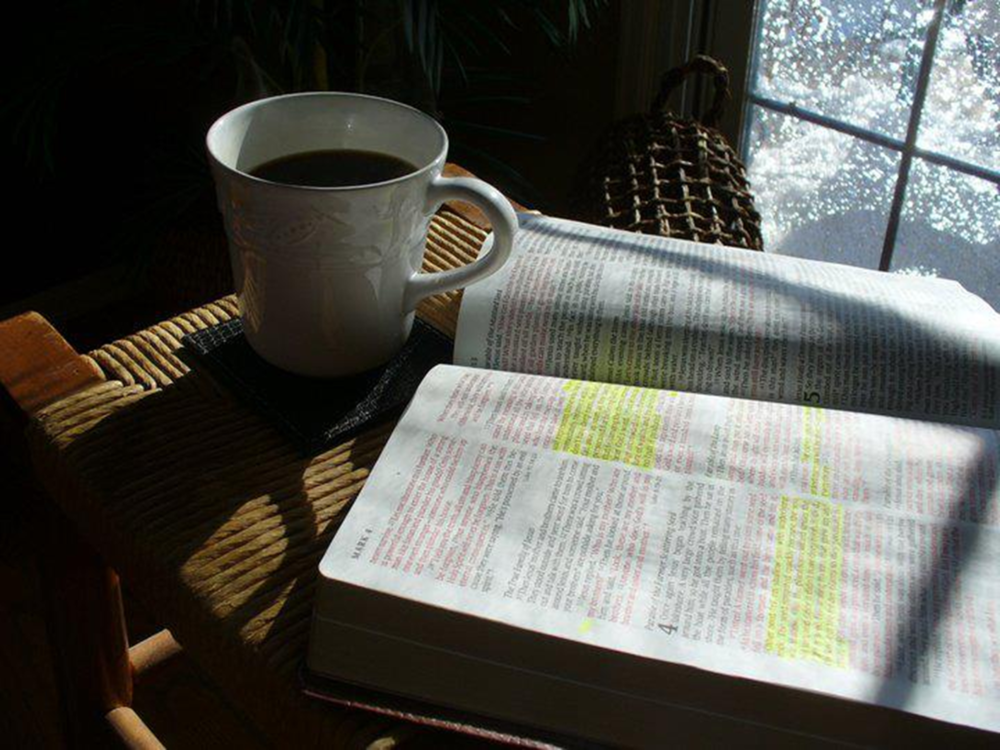
 My Morning Meal