
Two Voices

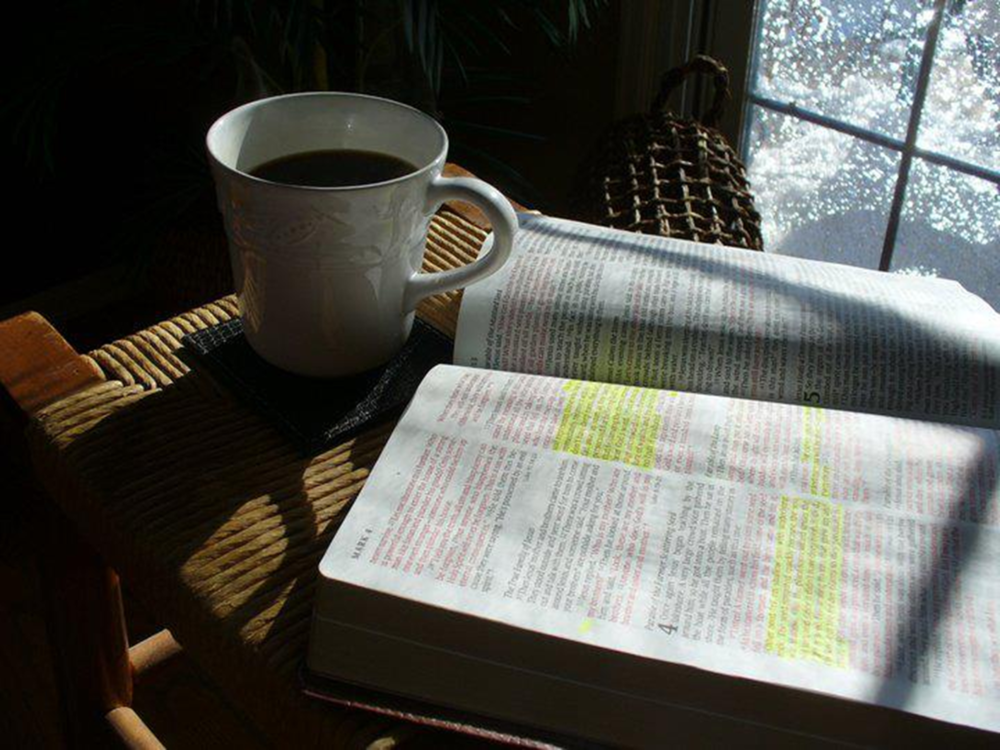
Wrapping up the first section of Proverbs this morning. Over the course of these first 9 chapters, Solomon has made his appeal for men to embrace wisdom. The prize is worth the trip, he says . . . the benefits far outweigh the costs . . . the way of wisdom is far superior to the way of folly . . . heaven’s way is to be passionately pursued while the way of the world is to be rejected. And in chapter 9, wisdom and folly are, once again, personified as two women . . . and as you read this chapter you get the sense of how similar they appear to be and yet how different . . . how their appeals are so similar, but their outcomes are worlds apart . . . it’s a stark reminder that throughout life we encounter two voices. And ours is to decide which we will heed.

Wisdom has built her house, it’s foundation is the sure foundation of seven pillars (9:1). She has taken of what is hers and prepared a feast . . . she has slaughtered meat from her own flocks and herds, she has mixed wine from her vineyard, and made ready her banquet table (9:2). All legitimately hers . . . all prepared at her hand . . . authentic . . . real . . . substantial. And then she cries out from the highest places in the city, “Whoever is simple, let him turn in here! If you lack understanding, Come eat of my bread and drink of the wine I have mixed. Forsake foolishness and live, and go in the way of understanding” (9:3-6). The key here, I think, is that what she offers is hers . . . and it is real food, and true nourishment. She can deliver on the way of understanding . . . she is the voice of life.

But there is another “female voice” that cries out. Her voices is “clamorous” (NKJV), “loud” (NIV), “boisterous” (NASB), “brash” (NLT) . . . literally, her voice is a “troubled roar” or a “disquieted growl” . . . it is a predator’s voice. She, herself, is simple and she knows nothing (9:13). But that doesn’t stop her from calling out to those who pass by to share in her nothingness. Like Lady Wisdom, she too cries out from the highest places of the city, to those who pass by, to those wanting to walk a straight path (9:15). And her appeal is similar, “Whoever is simple, let him turn in here” (9:16). But, she has nothing to offer . . . nothing that is legitimately hers . . . nothing of any substance that will last beyond a few fleeting moments of pleasure . . . her words are those of the adulterous, “Stolen water is sweet, and bread eaten in secret is pleasure” (9:17). It is the call by the simple to the simple to take of the forbidden fruit. But far from having any lasting nourishment, this fruit is the meal of the dead. Though she is enticing . . . though the “rush” of the pleasure is tempting . . . “he does not know that the dead are there, that her guests are in the depths of hell” (9:18).

Two voices . . . two ladies voices. Both calling out to the simple . . . both offering something to feast of . . . but that’s where the similarity ends. Lady Wisdom’s banquet is the real stuff . . . beginning with the fear of the Lord . . . serving up “the knowledge of the Holy One” . . . delivering true understanding and the needed GPS to navigate life in such a way that it pays dividends here and now and for eternity . . . “For by me your days will be multiplied, and the years of life will be added to you” (9:10-11). However, the female of folly, appeals to the most base of motivators . . . hers is the call of the sensual . . . of trying to satisfying the appetite of the flesh with junk food . . . of stolen pleasures and secret encounters. Two similar sounding voices . . . two identical calls . . . two promises . . . two very different outcomes.

Do I believe it? Is it true? If so, then the stakes are pretty high. Which voice is which? How do I discern? Which do I choose?

Lady Wisdom’s voice is found in the pages of the book before me . . . her voice is heard through the Spirit which indwells me . . . the food she offers is realized by the grace of the One who saved me. I’m thinking that if I pursue her . . . eat of the food that is legitimately hers to offer as nourishment . . . and drink of the living water that truly satisfies the thirst . . . then I will recognize the voice of the imposter . . . and know the lies behind her enticing appeals. Recognizing Folly’s voice, however, isn’t enough . . . I also need to say, “No!” . . . refuse the temptation of pleasure for a season . . . flee youthful lusts . . . stop my ears and cover my eyes from her seductive calling. Instead, I need to stay focused on knowing the Holy One.

My great desire is hear and know and heed Lady Wisdom’s voice . . . for the glory of God . . . amen!!!
Posted in Proverbs | Leave a comment

Delighted!

Delight. Now there’s a word that has some emotion, a kind of warm and fuzzy glow, behind it. How do you describe delight? What words do you use to convey what it is to be delighted? The dictionary people at Miriam-Webster put it like this: “1) a high degree of gratification, joy, extreme satisfaction; 2) something that gives great pleasure.” This morning I’m thinking about being delighted . . .

Proverbs 8, for me at least, stretches the mind. It takes me beyond the “immediate context” of wisdom and its personification and intertwines it with the Person of Christ. As I read Proverbs 8 I can’t help but conclude that wisdom and Christ are one . . . that Christ is wisdom. Here wisdom declares she existed before the world was . . . that she was present when God created the heavens and earth . . . and not just present but actively engaged as a “master craftsman” . . . the sense is clear that by wisdom God created all things. Sound familiar? “For by Him (Christ) all things were created that are in heaven and that are on earth, visible and invisible, whether thrones or dominions or principalities or powers. All things were created through Him and for Him.” (Col. 1:16)

And so, it’s with that connection, that sense that, as you read these verses in Proverbs 8, you are being treated to some divine insight into the dynamics of the Godhead in the work of creation. So what’s delight got to do with it? Check this out . . .

“Then I (Wisdom) was beside Him (the LORD) as a master craftsman; and I was daily His delight, rejoicing always before Him, rejoicing in His inhabited world, and my delight was with the sons of men.” (Proverbs 8:30-31)

Ok . . . so what gratification . . . what joy . . . what extreme satisfaction . . . what great pleasure . . . what delight . . . was being experienced by Almighty God as the earth was being formed? Lots! Tons! More than I can imagine! And if I’m reading this right it wasn’t just in the creation being formed but His delight was in the “Master Craftsman” . . . Wisdom aka Christ was His delight. As the Master Craftsman rejoiced in the presence of God . . . as He rejoiced in the inhabited world . . . as He dwelt “beside” the Father and wielded His skillful artistry . . . He was the Father’s delight. Can’t you hear God saying, “Behold my Son, in whom I am well pleased!”

And while the Father’s delighting in Wisdom, Wisdom delights in the inhabited world and in the sons of men. Sources of pleasure . . . that’s what creation and the sons of men where for God, the Master Architect, and for His Son, the Master Craftsman. Together as One with the Holy Spirit, they rejoiced, they delighted, they beamed over the heavens and the earth and people they had created and set to inhabit it.

Fast forward millennia . . . the fall . . . the rise of a nation of promise and blessing to all peoples . . . the law . . . the Christ . . . the cross . . . the resurrection . . . the ascension . . . the redemption of souls through faith in the person and work of Jesus, God in flesh, God among us . . . and can you still sense a prevailing atmosphere of delight? I read Luke 15 this morning too. There is joy in heaven over one sinner who repents (Luke 15:7). There is a Father who watches for the return of the prodigal . . . who looks for the ember of faith turning a heart toward home . . . who, when he sees it, though the boy might sill be a “great way off”, runs and falls on his neck and kisses him . . . delighting in his return . . . clothing him in the finest garments of salvation . . . declaring a feast, “Let us eat and be merry” (15:22-23) . . . rejoicing . . . extremely gratified and satisfied . . . experiencing great pleasure . . . delighted!

My God is a God of delight! Do I have that right?

He delights in the Son . . . the Son delights in the Father . . . and they delight in the those they have made . . . and re-made through the work of the cross.

And I delight too . . . for His glory . . . Yes!

Posted in Luke, Proverbs | Leave a comment

Charity Begins at Home, Piety Does Too!

Sometimes some of the harshest, most straight-forward declarations in Scripture are found in the least expected place. Take this one for example, “He has denied the faith and is worse than an unbeliever.” Ouch! What could someone do that would cause Paul to label him “worse than an unbeliever” . . . what action or behavior would merit having to wear a t-shirt with “FAITHLESS” plastered on it? The context might seem a bit surprising . . .

“But if anyone does not provide for his own, and especially for those of his household, he has denied the faith and is worse than an unbeliever.” (1Timothy 5:8).

In the overall scheme of 1Timothy, this first part of chapter 5 probably doesn’t get a lot of attention. It’s not as grand as “Christ Jesus came into the world to save sinners” (1:15) . . . or as all-encompassing as the priority of prayer for all men (2:1) . . . or as foundational as the instruction concerning the qualifications of elders and deacons (3:1-13) . . . or as lofty and theologically profound as “the mystery of godliness” (3:16) . . . or as inspiring as the charges about godly exercise (4:7-8) and being an example of a believer (4:12). Instead, it’s pretty targeted . . . almost mundane compared to the grander things of Christianity . . . it’s about the care of widows.

In a nutshell, this portion of Scripture defines who should be viewed as “really widows” and who should care for a senior saint who has been “left alone.” The church should care for them . . . but only if they are truly “left alone.” If a widow has family, then they should provide for the practical needs for their parent or grandparent (5:4). And it’s in this context that a pretty powerful and practical principle jumps out at me . . . “learn to show piety at home” (5:4).

It’s in the home where we have a 24/7 opportunity to learn how to love and live and give like Christ. Piety (NKJV) starts at home . . . godliness (ESV), true religion (NIV), . . . literally, reverence and worship . . . it all starts at the address where my house is located. Show me a good family man, I’ll show you a good church man. Show me a woman who nurtures at home, I’ll show you a care-giver at church. Show me a teen who honors his or her father and mother at home, I’ll show you one who respects the elderly on Sunday mornings.

And it’s in this context where Paul throws down one of his harshest judgments . . . a person who doesn’t provide for his own . . . who doesn’t place as priority his family . . . has denied the faith and is worse than an unbeliever. We can talk about serving the Lord in ministry . . . or glorifying Him in missions . . . but if the ministry and mission doesn’t start at home, then we’re skipping a pretty foundational developmental ground.

Being a “servant of all” (Mark 9:35) is learned in the family . . . esteeming others better than yourself and looking out for others’ interests (Php. 2:3-4) should begin at home . . . and while I know that, for way too many of us, homes are also a place of trial and tribulation, even then it becomes a forum to learn how to love unconditionally and trust in the Lord.

That I am to provide for “my own and especially for those of my household” is clear. That’s a priority . . . that’s where I learn something of service . . . that’s where I first model the image of Christ being formed in me . . . that’s the field upon which I’m first called to honor God. Charity begins at home . . . piety does too!

For His glory . . .

Posted in 1Timothy | Leave a comment

Privilege and Responsibility

For most of my Christian life I “grew up” in a church tradition which didn’t use the term “membership” or the phrase “becoming a member of the church.” I think that in principle we had a “membership process”, but instead we spoke of being “received into full fellowship.” Just as in my current church family where people request to become members, so in my “previous life” believers who attended “the assembly” for a while would often, at some point, ask to be “received into fellowship” . . . a formal recognition of their desire to align themselves with that particular body of believers, placing themselves under the authority of that local leadership. And in that process, at some point, there would be a discussion of the “privileges and responsibilities” of being “received”.

And it’s that term, “privileges and responsibilities” that comes to mind as I read in Luke 14 this morning. I’m thinking that most of us gravitate pretty easily to “privileges”, but talk of “responsibility” . . . uh, that might cause a bit of hesitation. What am I getting into? What’s it gonna cost? Will it be hard?

Jesus spoke a parable of a certain man who gave a great supper and invited many to it (Luke 14:16-24). And at first, this man couldn’t fill the seats. Those who had been invited started to RSVP with “their regrets” . . . “I have bought a piece of ground, and I must go and see it. I ask you to have me excused” . . . “I have bought five yoke of oxen, and I am going to test them. I ask you to have me excused” . . . “I have married a wife, and therefore I cannot come.” But the master was determined to hold the feast and fill the place and so he sends out his servant into the streets and lanes of the city to invite “the poor and the maimed and the lame and the blind” to come and enjoy the goodness that others were too busy to avail themselves of. Talk about privilege!

These are the sorts of people who didn’t get invited anywhere by anyone . . . much less invited by a wealthy,powerful man, to be a guest at a great supper. The point of the story is pretty clear. I am that people . . . not deserving of a seat at the kingdom’s table . . . no means within myself to purchase a ticket or merit an invite . . . but solely, by the grace of God, and through the payment made on Calvary for my sin, I have been invited to sup at the King’s table . . . just as I am . . . without one plea . . . but that Thy blood, was shed for me . . . oh yeah!!!! . . . I come! What a privilege! Amen?

But, you know, Jesus didn’t stop the teaching there. It says that a “great multitude went with Him” upon hearing this teaching . . . getting that the Pharisees were the “worthy guests” who were too busy and that they were “the street people” being invited to a great feast. And so they followed . . . and so Jesus kept teaching, “If anyone comes to Me and does not hate his father and mother, wife and children, brothers and sisters, yes, and his own life also, he cannot be My disciple. And whoever does not bear his cross and come after Me cannot be My disciple . . . For which of you, intending to build a tower, does not sit down first and count the cost, whether he has enough to finish it . . . . . . So likewise, whoever of you does not forsake all that he has cannot be My disciple.” (Luke 14:25-33) Enter responsibility.

The seat is free . . . but I need to be prepared for it to cost me everything. The way into the holy of holies has been open to me that I might enjoy intimate communion with Holy, Holy, Holy God . . . but that way involves the path of a servant, constrained by the love of Christ to live for Christ. With the privilege comes a responsibility . . . not a burden, mind you . . . not a load beyond bearing . . . but a calling . . . enabled by a gifting . . . to be exercised for His purposes and for His pleasure.

Sometimes I think it’s good to be reminded that along with the privilege comes the responsibility. The privilege of being a child of God, the responsibility of bearing the “family name” in a manner worthy of the calling . . . the privilege of being indwelt with the Holy Spirit, the responsibility to let Him lead and use the gifting He’s given me . . . the privilege of being invited by the King . . . the responsibility of following as His subject . . the privilege delivered through His grace . . . the responsibility discharged by His grace . . . and for His glory . . . amen.

Posted in Luke | Leave a comment

The Downstream Effect

It’s a pretty simple principle really . . . if the reservoir is contaminated, the water that flows from it will be contaminated . . . that’s why care is taken to protect natural sources of drinking water. Allow livestock to graze too close to water sources and you run the risk of harmful bacteria polluting what should be sources of health and instead making them potential sources of illness and death. So, what’s got me thinking about polluted water this morning? A very simple but profound piece of counsel in Proverbs . . .

“Keep your heart with all diligence, for out of it spring the issues of life.” – Proverbs 4:23

The heart, in a biblical context, is not so much the seat of emotion but the center of understanding. It is the soul of a man . . . his mind, knowledge, thinking, reflection, and memory. It is the seat of his conscience and moral character . . . what he is resolved or inclined to do . . . it is the reservoir of who we are and what we do. Not surprising then that it doesn’t take long for the voice of wisdom to address the importance of the heart . . . “apply your heart to understanding (Prov. 2:2) . . . let your heart keep my commands (3:1) . . . write them on the tablet of your heart (3:3) . . . let your heart retain my words (4:4) . . . keep them in the midst of your heart (4:21) . . . keep your heart . . . for from it flow the springs of life (4:23 ESV).”

I can play it pretty loose with heart . . . rather than vigilantly guarding it, it’s way too easy to just let whatever graze way to close to it. Probably some pride at play, “Not my heart! It couldn’t get contaminated” . . . or maybe a bit of laziness, “Whatever, I just wanna veg . . . too much effort to maintain some discipline” . . . or, just snoozin’ at the wheel, not really paying attention or applying any discernment as to whether some “input” has the potential to contaminate.

Put the exhortation is to keep watch . . . to place a guard in front of . . . to preserve and protect the heart. How come? Contaminated heart, contaminated life. It is the well of our walk. It is the spring of life. If the heart is messed up, guess what? . . .

I remember some preacher saying years and years ago, “You aren’t what you think you are . . . but what you think is what you are.” Jesus said it this way, “A good man out of the good treasure of his heart brings forth good things, and an evil man out of the evil treasure brings forth evil things.” (Matt 12:35) What we are . . . what we really are . . . springs from the heart, the seat of our thinking, and so, we should be very careful with what we allow to influence the place of understanding and discernment.

I was reading also in Ezra 6 this morning. Those who had returned from the Babylonian captivity to rebuild the temple keep kind of got this . . . “Then the children of Israel who had returned from captivity ate together with all who had separated themselves from the filth of the nations of the land in order to seek the LORD God of Israel” (Ezra 6:21). They’d hung out in Babylon long enough . . . been there done that. I’m guessing that many had had their hearts turned toward the values and ways of Babylon. But there were others who looked for a chance to get out . . . and when that was presented, returned to the place where God said His presence would be found. And, upon getting there, they distanced themselves from the contamination of a world opposed to the things of God. They understood the risks associated with righteousness having fellowship with lawlessness . . . with light trying to have communion with darkness . . . with the people of Christ entertaining the ways of Belial . . . with the temple of God making room for idols (2Cor. 6:14-17). To not separate themselves was to not guard the heart with all diligence . . . to risk it becoming polluted and springing forth actions reflective of contamination.

Keep your heart, Pete. Yeah. If I want to live in manner that honors and pleases my Savior . . . if that’s the downstream effect I desire, then I better be vigilant about protecting the source . . . by His grace and for His glory . . . amen.

Posted in Proverbs | Leave a comment

Worth Pursuing?

I’m struck this morning by a passion. And this passion appears to be in contrast to how many of us in God’s household seem to approach spiritual understanding and the search for the knowledge of the things of God. For many of us, I fear, it’s relegated to Sunday morning’s when we gather together to “hear the word.” Perhaps it’s a “spiritual discipline” where we faithfully do our “morning devo’s”. Or, for some, I wonder if we don’t think it’ll just happen by default now that we’re saved and the Spirit of wisdom and truth resides in us.

Now, all of these are important . . . certainly understanding the things of God won’t happen apart from any of these. But as I read Proverbs 2 this morning I’m struck by what seems to be an “x factor” when it comes to understanding the fear of the LORD, and finding the knowledge of God. This “x factor” seems to be found within a passionate pursuit. Not necessarily in more effort, but in greater desire.

“My son, if you receive my words . . . treasure my commands . . . incline your ear to wisdom . . . apply your heart to understanding . . . cry out for discernment . . . lift up your voice for understanding . . . seek her as sliver . . . search for her as for hidden treasures; Then you will understand the fear of the LORD, and find the knowledge of God.” (Proverbs 2:1-5)

I guess we pursue that which we prize . . . we go after that which we find of worth . . . we seek that which we believe we can attain and value having. Solomon says that wisdom and understanding the mind of God are as valuable as silver and the return on their pursuit is like finding hidden treasures. Who wouldn’t put forward some effort for a return like that . . . only those who don’t believe that there is a return . . . or whose heart are really set on another set of “investments.”

But I’m told this morning to take captive words of heavenly instruction . . . to store up within me the instruction from God’s word. I’m to give attention to godly wisdom and to spread out my heart toward taking it in and discerning it’s application. And far from being some passive exercise, the pursuit of wisdom should be on my prayer list . . . underlined with exclamation marks in my prayer journal . . . as I cry out for discernment and lift up my voice pleading for Spirit enabled understanding.

Oh, the premium I should put on comprehending and applying the counsel of God . . . the desire I should have to be shaped by wisdom from above.

And the LORD is ready to reward the pursuit. He gives wisdom . . . from His mouth come knowledge and understanding . . . He dispenses “out of this world” insight from His storehouse of omniscience. And this isn’t some high-minded, pie in the sky, of no practical value type of knowledge. Uh, huh! “When wisdom enters your heart, and knowledge is pleasant to your soul, discretion will preserve you; understanding will keep you.” (2:10-11)

Wisdom is to be valued because it is the means by which God’s people navigate this world in a godly manner. It is provides the internal GPS which leads in ways of righteousness and warns of paths of destruction. It reveals the mind of God showing us that manner of life which brings him pleasure and that manner which grieves Him.

“Skillful living” . . . that’s a definition for wisdom I heard years ago . . . and it sticks with me. Oh that I would value, treasure, and pursue skillful living . . . that my soul would thirst for it . . . driving me to God’s word in pursuit of it. Certainly for my protection . . . and also that I might enter into the things of the mind of God . . . but more so, that through my passion for skillful living, He might be brought a measure of glory through this redeemed child of God.

Worth pursuing? I think so . . .

Posted in Proverbs | Leave a comment

I’m Listening . . .

Transition day . . . after almost 7 months with the Psalms as a part of my daily readings, I now shift to Proverbs. Always kinda’ sad to leave the Psalms . . . always anticipation, though, as I enter the Proverbs. I love the praise of the Psalms . . . I so enjoy connecting with the emotion of the song-writers and having their experience direct my heart heavenward. But we’re not to love God with our heart only . . . but with our minds too . . . enter, the Proverbs. Oh, to be wise . . . to have a heart like Solomon which sought a mind in tune with God . . . that too is a worthy pursuit. And so, entering the Proverbs, I desire to grow in wisdom . . . to become more a master of “skillful living” . . .

To help me, I’m going to look to change up my coloring scheme for this book so that I can be on the look for repeating themes and topics addressed by Solomon and others in this piece of “wisdom literature.” One of the shifts I made this morning was I took the color I use for Jesus, shaded navy blue, and I used it for wisdom. Though I’m not necessarily looking for connections between my “default colors” and my “Proverbs colors”, in this case, this one does seem appropriate. Is it too much to think of Christ as the embodiment of wisdom?

“Wisdom calls aloud outside; She raises her voice in the open squares. She cries out in the chief concourses, At the openings of the gates in the city She speaks her words; ‘ . . . Surely I will pour out my spirit on you; I will make my words known to you . . . whoever listens to me will dwell safely, and will be secure, without fear of evil.’ ” (Proverbs 1:20-21, 23, 33)

Oh, to hear the voice of wisdom calling out above the world’s din. Though being in the marketplace or caught up on the rat race, to still hear her voice providing context to the fast paced encounter I have each day with life. To know the voice which can envelope my carnal experience with a spiritual dimension. To see things not through just my own eyes, but through the eyes of the One who created all things and seeks to redeem all things.

There’s a promise for those who are open to wisdom . . .who have their “ears on” for her words . . . for those who are seeking to catch what she throws. To those, she will pour out her spirit . . . and reveal her thoughts, make known her words. To those, she will provide a safe and secure place, a place without fear of evil . . . not a tribulation-free place . . . but a fear-free place.

And as I consider wisdom calling out this morning I hear these words: “Come to Me, all you who labor and are heavy laden, and I will give you rest. Take My yoke upon you and learn from Me, for I am gentle and lowly in heart, and you will find rest for your souls. For My yoke is easy and My burden is light.” (Matt. 11:28-30)

I hear that voice crying out in the open squares and concourses. These words calling me to bind my life with His that He might pour His life into mine. A promise of soulful rest . . . a security and peace that passes understanding that comes only from hearing and heeding His voice.

Oh, that I might be tuned to wisdom’s frequency . . . that the Spirit of wisdom might have free access to lead me in ways of wisdom and truth . . . that the Son of wisdom might live through me as I’m conformed more and more to His image and participate more and more in His mind . . . that the Father of wisdom might be brought some pleasure through my navigation of this world by His light.

Yup, I love the Psalms’ praise . . . but I’m looking forward to the Proverbs’ wisdom. Call aloud . . . raise your voice . . . I’m listening . . .

Posted in Proverbs | Leave a comment

Making the Box Bigger

So, I’m wrapping up Chronicles this morning. For the past month I have tried to follow along with the history of the kings of Judah . . . those of the line of David. Along the way, there’s been a number lessons to learn . . . after all, that’s why it’s here . . . “For whatever things were written before were written for our learning, that we through the patience and comfort of the Scriptures might have hope” (Rom. 15:4) . . . and, “Now all these things happened to them as examples, and they were written for our admonition, upon whom the ends of the ages have come” (1Cor. 10:11). And it’s kind of interesting that the final lessons I take from this session in Chronicles is not from the life of a king of Judah (though you gotta like that Josiah kid), but from two pagan kings . . . check this out . . .

Pagan King 1: Necho king of Egypt. In 2Chronicles 35:20 it says that Necho “came up to fight against Carchemish by the Euphrates; and Josiah went out against him.” Necho’s fight isn’t with Josiah. In fact, Necho tries to avoid confrontation with Josiah. Necho believes that God commanded him to wage war at Carchemish . . . that Josiah’s affront was “meddling with God, who is with me” . . . that if Josiah determined to face him in battle that Josiah would, in essence, be opposing God and God would end up destroying him (35:21). And the God-breathed scriptures state Josiah “did not heed the words of Necho from the mouth of God” (35:22). The result? Josiah is wounded in battle and retreats to die in Jerusalem. Necho, king of Egypt, spoke words from the mouth of God. Huh!

Pagan King 2: Cyrus king of Persia. Timing? Many years later. Jerusalem has fallen . . . Judah has been in Babylonian captivity for 70 years . . . Babylon has fallen to Persia. And 2Chronicles records, “In the first year of Cyrus king of Persia . . . the LORD stirred up the spirit of Cyrus king of Persia, so that he made a proclamation throughout all his kingdom . . . ‘All the kingdoms of the earth the LORD God of heaven has given me. And He has commanded me to build Him a house at Jerusalem . . .”(2Chron. 36:22-23). Huh, again! Another pagan king . . . the Spirit of God stirring his spirit . . . another revelation and word from God.

So, here’s what impresses me this morning. While God had chosen the line of Abraham to bless all people . . . while He called Jacob to be the father of His chosen nation . . . while the Scriptures primarily concern God and Israel and preparation for the Messiah . . . God also worked in a context beyond the immediate focus of the Old Testament Scriptures. Right? Some things are recorded as part of God’s revelation to me . . . but not everything. Kind of obvious, I know. But sometimes I wonder if I can’t start somehow thinking God is an exclusive God . . . just for Israel . . . just for the Christian.

But God, who is unchanging, has always been “not willing that any should perish but that all should come to repentance” (2Peter 3:9). And so to think that God would reveal himself to a pagan king or two . . . or lead a nation such as Nineveh to repentance (a la Jonah) . . . should come as no surprise . . . but it does catch me a bit unawares at times. Or, to think that God is limited to only working through Israel . . . or the church . . . is probably putting God in a box of my making and not His. Not to say that God hasn’t ordained His glory to be known through the church . . . but God is God and will accomplish His purposes in His ways.

And I sit back and think of a king of Egypt telling a king of Judah what God has said . . . or of a Persian king saying to God’s chosen nation, “Who wants to go back to Jerusalem to rebuild the house of God ’cause that’s what He’s put in my heart to do?” . . . and I’m awestruck. How big is our God? How so out of the box is the manner in which He can choose to operate? Way big! Way outta’ the box!

Oh, that I might be so sensitive to the Spirit . . . and so possess the mind of Christ . . . that I would not limit the manner in which my God can work. That I might have ears to hear even when I’m not expecting to hear. That I might have eyes that recognize God at work, even when it’s not the exact framework I have pictured in my mind. I’m not talking about “anything goes” . . . Scripture is still the standard . . . but, as I think about Necho and Cyrus and the fact that the Holy Spirit moved the author of Chronicles to record God’s working through them, I can’t help but sit back in awe and marvel at the “unorthodox” ways by which my God may choose to impact my world and the world around me.

Praise be to God . . . who makes “the box bigger” . . . to Him be all glory, forever and ever, amen!

Posted in 2Chronicles | Leave a comment

God’s Pleasure

Often, in Scripture, it takes but a few words to cause you to pause and reflect . . . and, at least in your heart, go facedown. I’ve read a lot of words this morning . . . a good chunk in 2Chronicles concerning King Hezekiah’s reforms and King Manasseh’s repentance and, in Luke, some of Jesus’ teaching on being ready and watchful and responsible for the light God has revealed to you . . . all impactful stuff in it’s own right. But then I wrapped up my readings with Psalm 149 . . . and that’s what has touched me afresh this morning.

Not going to lie to you, I love these last Psalms that call His people to “Praise the Lord!” In the first 3 verses of Psalm 149 I’m encouraged to sing a new song (kind of justifies my iTunes habit, I think) . . . to praise in the assembly of the saints (it’s a communal activity, amen?) . . . to rejoice in my Maker and be joyful in the King . . . to praise Him with dance (disco or salsa?) . . . and to do all this with a band leading the way (I’m sure it’s a country or bluegrass group he has in mind). I’m in (well, the dance part’s gonna be tough on me). But then I come across those few words that kind of say, “Stop and chew on this.”

“For the LORD takes pleasure in His people; He will beautify the humble with salvation.” – Psalm 149:4

And I can’t help but personalize it . . . the LORD takes pleasure in me . . . and beautifies me with salvation. Not that there’s any boasting . . . ’cause there’s nothing, except for the cross, to boast in or about . . . that’s what causes you to pause and reflect and be amazed. He doesn’t take pleasure in me because I’m so great, but because He’s so great. He beautifies me not because I’m already such a good-looker but because I was once leprous with sin and dressed in filthy rags and in need of rescue. Enter salvation . . . start Pete’s extreme makeover . . . beauty infused at the hand of God. How do you process it?

God takes pleasure in me. He delights that I am His child even though I was once in rebellion. He’s glad to have me as one of His own though I was once a stranger and determined to go it on my own. He is pleased to see one of His creation who once was dead, now alive . . . one of His making who once walked in darkness now stumbling along trying to be faithful to the way of light. And I think this deep seated delight and pleasure is in big part because when He sees me, He see not what I used to be, but He sees Jesus.

He looks upon His people and sees their Savior, His precious beloved Son. He hears our praise and He delights in the fruit of work of the cross. He sees us, feebly at times, trying to be faithful followers . . . desiring to seek first the kingdom . . . striving to be consistent with our calling . . . and has a deep sense of satisfaction and completion knowing that blood of Jesus cleanses from all sin and is fully capable of providing the once for all time atonement for transgression. Not that He ever had any doubts as to it’s sufficiency . . . but, despite our goofs up and trip ups and struggles, I imagine God looking down and saying, “Yes! That’s the salvation that my Son died for . . . isn’t it beautiful?”

Oh, to be an object of God’s pleasure. To be beautified and adorned with garments of salvation. What grace! What blessing! What more reason do I need to heed the Psalmists cry to “Praise the Lord!” None.

He has started the work . . . He will finish the work . . . He takes pleasure in the work. Oh, that the work would bring Him glory . . .

Praise the Lord!

Posted in Psalms | Leave a comment

Time to Clean House?

There is something about considering the temple of God that evokes a certain awe-factor . . . as, I think, is intended. To imagine the magnificent structure conceived in the heart of David and built by the hands of Solomon, is to be reminded that though the earth cannot contain Him, yet God has delighted to reside near His people . . . to allow His glory to settle in their midst. I think of the holy place with the ever burning lampstand . . . the sweet aroma of ascending incense . . . the provision of the show bread . . . all arrayed in a pristine precision which cries out, “Holy ground!” And then to form a picture in the mind’s eye of what it would have been like to enter into the Holy of Holies . . . to look upon the towering cherubim that filled the room with their wings . . . to look upon the ark and be reminded of the presence of God . . . what glory! . . . what incredible glory! Oh, to have been able to witness the cloud of heaven descend upon the place . . . I can only imagine . . .

But as I read 2Chronicles 29, I’m reminded that such was not always the condition of the temple during the time it stood on Zion’s hill. Here, in chapter 29, a twenty-five year old named Hezekiah takes the throne. He succeeds Ahaz who, for the past 16 years of his reign, had been “continually unfaithful to the LORD” and “had encouraged moral decline in Judah” as he “became increasingly unfaithful to the LORD” (2Chron 28:19, 22). And as Ahaz pursued the “molded images of Baal” (28:2) and then “sacrificed to the gods of Damascus” (28:23), he desecrated the holy of house of God. He used its treasures to buy military alliances . . . he cut up its materials to build “altars in every corner of Jerusalem” and he closed the doors (28:24) . . . ichabod . . . the glory had departed.

And then his son, Hezekiah takes the throne and “in the first year of his reign, in the first month, he opened the doors of the house of the LORD and repaired them” (29:3). Like father . . . not like son. God, in His sovereign grace, takes the son of Ahaz and places within him the heart of David . . . and the first thing the new king does is open up the temple . . . and cleans house.

I don’t normally think about the temple needing to be cleaned . . . it’s not on my radar that the holy place has junk to be removed . . . or that the holy of holies is defiled with debris. But such was the case when Hezekiah came to power. And, after having consecrated the Levites again to God’s service, Hezekiah sends in a troop of sanctified housecleaners and, for 8 days that’s what they do . . . they clean house. The Levites clean up the outer courts and “public areas” and “the priests went into the inner part of the house of the Lord to cleanse it, and brought out all the debris that they found in the temple of the LORD” (29:16). How sad is that? To consider the holy place and the place where God’s glory once dwelt filled with junk and debris. Not the picture of the temple I usually carry with me . . . but perhaps one to be reminded of every once in awhile.

I’m led to consider another temple of God . . . ” Do you not know that you are the temple of God and that the Spirit of God dwells in you?” (1Cor. 3:16) . . . “Now, therefore, you are no longer strangers and foreigners, but fellow citizens with the saints and members of the household of God . . . in [Christ] the whole building, being joined together, grows into a holy temple in the Lord, in whom you also are being built together for a dwelling place of God in the Spirit.” (Eph. 2:19-22)

And I’m wondering if, through neglect, this temple also doesn’t get “junked up” from time to time and needs some cleaning. It shouldn’t, but I fear that too often and too easily it can. And the glory kind of departs . . . the Spirit is grieved and quenched . . . and so it’s time to do a deep cleaning . . . to go in and throw out the debris . . . to consecrate the temple afresh to God and Him alone . . . to recognize that because I’ve run after other gods, I’ve allowed the temple of God to collect dust and gather up junk. Time to chuck out the junk . . . time to refocus on the glory of the One who desires to reside within the temple . . . time, by His grace, to take back the ground which His Son died for and longs to sanctify. Time to clean house perhaps . . .

Posted in 2Chronicles | Leave a comment