
As I chew on Psalm 49 this morning, I think you could make the argument that it presents an example of the classic Critical Theory scenario. In this corner, the oppressor — “those who trust in their wealth and boast in the abundance of their riches” (Ps. 49:6). In the other corner, the oppressed — the lowly temple-serving sons of Korah, surrounded by the wealthy who cheat them (49:5). They are prevented from owning any land of their own, prevented from participating in the free-market dynamic of growing, reaping, selling and just working hard to make all you can while you can. Instead of being free to participate in a free-market economy where they could accumulate wealth by working, working, and working some more, they were ransomed by God at birth (read about that in Numbers 3 this morning), conscripted into a heavenly economy where they were set apart for worshiping, worshiping, and worshiping some more.
But unlike modern Critical Theories which look for answers here and now, the songwriter says the just resolution of this oppressor/oppressed dynamic is ultimately reserved for a time and place which is there and then. Here’s how I processed it 5 years ago.
Hovering over Psalm 49 this morning. A song, it seems to me, about economics. Eternal economics. The songwriter solving a riddle with lyrics and melody (v.4) as he considers the ultimate advantage of wealth. (Spoiler alert . . . none).
The conundrum he contemplates? “Why should I fear in times of trouble?”
Apparently his time of trouble involved being cheated by the hands of “those who trust their wealth” and “boast of the abundance of their riches” (v.5-6). Those with the means to make his life miserable. Those with the money to mess things up. Those who espoused their own version of the golden rule–we have the gold, we’ll make the rules. Those who, from a natural perspective, had a lot of leverage because they possessed a lot of the loot.
But the songwriter considers further the natural and reminds himself that it is temporal. That even the wealthiest man eventually dies. That when all is said and done, nothing ultimately distinguishes the rich from the poor. That both the wise and the foolish end up in the grave. That boasting is ultimately buried. That whatever one possesses, and whatever power that might seem to allow him to wield, “his pomp will not remain; he is like the beasts that perish” (v.12).
And consideration of the temporal leads the psalmist to consider the eternal and the economics that dictate life after the grave.
Truly no man can ransom another, or give to God the price of his life, for the ransom of their life is costly and can never suffice, that he should live on forever and never see the pit. . . . But God will ransom my soul from the power of Sheol, for He will receive me. Selah
(Psalm 49:7-9, 15 ESV)
No man can redeem another from the power of the grave. No amount of earthly riches can reverse the stranglehold of death. But God is able to ransom the soul. He is able to bear the cost to pay forever the price of mortality. He alone has the power to break the bondage of Sheol. His heavenly riches able to secure earthly resurrection. And in that, “He will receive me.” Death’s chains broken so that we might live bodily in His presence.
And while the ancient songwriter was led by the Spirit of God to be assured of such a ransom, today we know the One in whom those riches are found.
In Him we have redemption through His blood, the forgiveness of our trespasses, according to the riches of His grace. . . But God, being rich in mercy, because of the great love with which He loved us, even when we were dead in our trespasses, made us alive together with Christ–by grace you have been saved–and raised us up with Him and seated us with Him in the heavenly places in Christ Jesus, so that in the coming ages He might show the immeasurable riches of His grace in kindness toward us in Christ Jesus.
(Ephesians 1:7, 2:4-7 ESV)
God ransoms the soul from the power of Sheol with the riches of His grace — the immeasurable riches of His grace — manifest in the finished work of His Son. Though once dead in sin, though once with no hope of a future beyond the certainty of the grave, He has made us alive. He has raised us up with the resurrected Christ, and reserved for us a heavenly seat which is ours by faith today and will, one day, be ours to possess for eternity.
That’s eternal economics.
And so, the songwriter answers his own riddle.
Be not afraid when a man becomes rich, when the glory of his house increases. For when he dies he will carry nothing away; his glory will not go down after him.
(Psalm 49:16-17 ESV)
But when the beloved of God die, those who by faith have believed in His ransom and received of His pardon, we will be carried away. It is then that true glory will be ours. The glory of the redeemed. The glory of the resurrected. The glory of our imperishable, undefiled, and unfading inheritance in Christ.
The glory purchased according to the immeasurable riches of His grace.
The glory which will be for His glory alone.
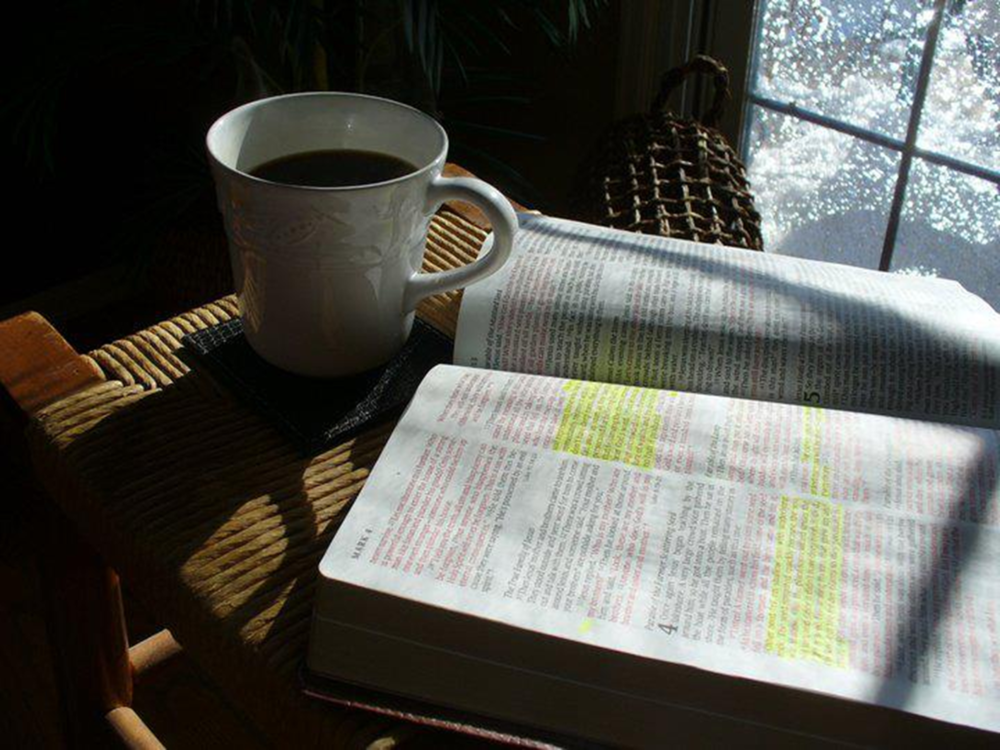
 My Morning Meal