
Less About When and All About Who

The letters given to John to write to the angels of the seven churches in Revelation 2 and 3, all end with a promise. They are promises for those who conquer, or, as I prefer, those who overcome. And so, when I’m reading this portion of Scripture, I’m highlighting the promises. While these were seven churches in existence during John’s day, and while they may refer to seven church ages throughout history, these things were written for my instruction today . . . promises included. And one of those promises has stood out this morning. And, while I may not be quite sure of it’s exact interpretation, I’m thinking that it’s less about when and all about Who.

At the end of chapter two, John is writing to the church at Thyatira. He who has eyes like a flame of fire (2:18) knows all about the dynamics that prevail in their gathering. They are characterized by ever increasing fruitfulness in their works, love, faith, service, and patient endurance. But He also, who has feet like burnished bronze and is prepared to judge sin, warns these believers of the leaven of tolerance of doctrine within their midst that promotes idolatry and overlooks sexual immorality.

And so the call is for those who tolerate “Jezebel” to repent knowing that He who “searches mind and heart” will give to each according to their works (2:23).

But to the rest, . . . to those who do not hold to such idolatrous, immoral teaching, Jesus says, “Only hold fast what you have until I come” (2:25).

And then a two-fold promise. First, for those who overcome, when the King returns to rule the nations, He will give authority for His own to rule with Him. Amazing! But it’s the second part of the promise that has me thinking . . .

And I will give him the morning star. He who has an ear, let him hear what the Spirit says to the churches.    (Revelation 2:28-29 ESV)

Jesus will give those who hold fast until He comes the morning star.

I did just enough commentary work this morning to know that the meaning of this promise is open to a wide range of interpretation. So, while I have a lot more study to do before being in anyway authoritative, I do know what I fell’t by what was tell’t.

I know that Jesus concludes His revelation to John by declaring, “I am the Root and the Descendant of David, the Bright Morning Star” (22:16). So, at it’s simplest, this is a promise that for those who overcome, Jesus will give them Himself. Whether that’s referring to His Second Coming . . . or, as some speculate, His coming to take up His church in advance of the tribulation . . . or, some other interpretation, as I hover over this verse, it’s less about when and all about Who.

For those who hold fast . . . for those who conquer . . . for those who overcome, the Morning Star will give them Himself. And I can’t help but think that, while it might a be a promise for the future, it reflects a current truth. That the Savior gives Himself to His people as His people give themselves to their Savior. That the Light of the world manifests Himself to those who have been translated from darkness into light, as He shines in the hearts of believers to “give the light of the knowledge of the glory of God in the face of Jesus Christ” (2Cor. 4:6).

Everyday I keep on keepin’ on . . . every day I seek to, by His grace and through His power, hold fast, is a day of communion with the Morning Star. As I abide in Christ, He abides in Me. As I seek Jesus, He reveals Himself to me. So that it is “no longer I who live, but Christ who lives in me” (Gal. 2:20).

O’ blessed Morning Star! O’ wondrous promise of the abiding presence of the LORD of heaven and earth! What privilege! What grace!

To Him be all glory . . .
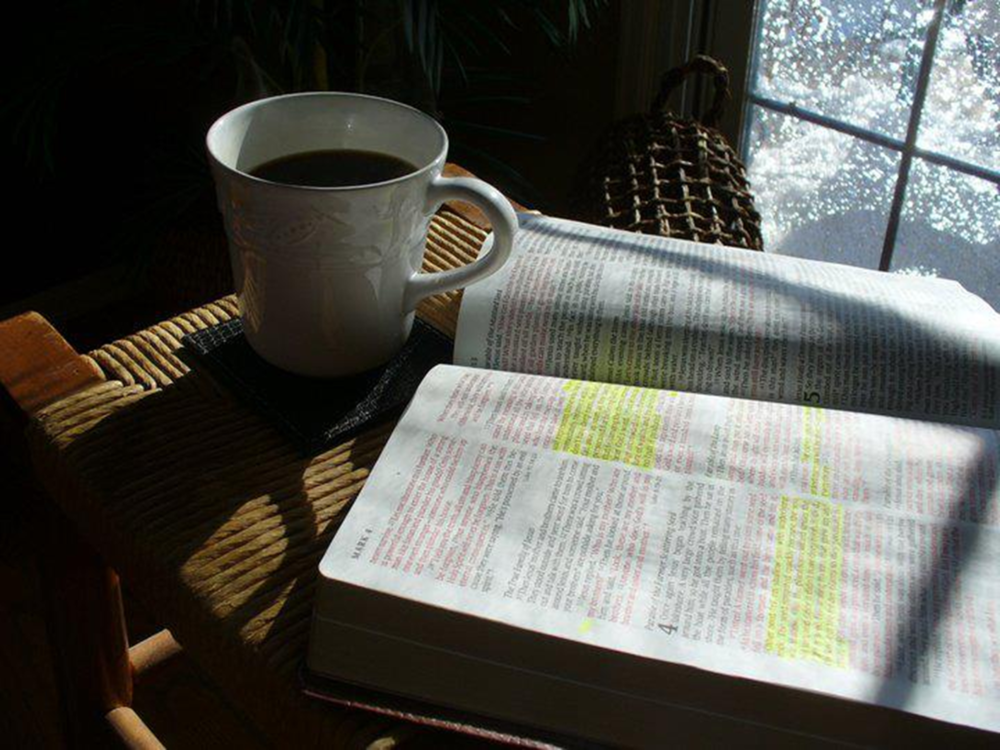
 

Posted in Revelation | Leave a comment

On the Outskirts

How much I need to battle to maintain perspective. How great is the temptation to make me the center of my universe. Even when I acknowledge God’s place in my life, how often do I make Him a “small enough god” so that I have enough room to find a place beside Him on the throne of my life. I wiggle my way to being at the center with Him. I become familiar enough with “unapproachable light” (1Tim. 6:16) that taking a “selfie” with the Almighty doesn’t seem all that out of order. But Job speaks to my center and reminds me that I am but on the outskirts.

Behold, these are but the outskirts of His ways, and how small a whisper do we hear of Him! But the thunder of His power who can understand?  (Job 26:14 ESV)

Job, moved by the Spirit of God, recounts but an iota of the amazing dynamics of creation (vv. 7 – 13). That, if you go to the top of the earth, there’s nothing there holding it up — the earth hangs on nothing. That tons of water can be stored in clouds without them splitting under its weight. That, where light and darkness meet on the face of the waters, there is a circle testifying to a round planet that somehow holds all things to itself. These all testify to the power of the God who created them. And yet, says Job, they are just the outskirts of His ways . . . the mere edges of all He is able to do.

Though, as the psalmist writes, “The heavens declare the glory of God, and the sky above proclaims his handiwork” (Ps. 19:1), they are but a “small whisper” of His grandeur . . . a faint utterance of His majesty and might. We can’t even comprehend, says Job, the thunder of His power. It’s only because we are on the outskirts that we are able to hear, perceive, and continue to function, and are not so overwhelmed by the might of His power that we are forced to the ground in unending facedown awe and trembling.

O’ the power of our God! The magnificence of His glory! The wonder of His being! We get just a glimpse on the outskirts. What will it be like when we are before the throne?

And before the throne we will be. No longer at the edges. No longer at the fringes. But before the throne. And that, because of grace.

And I wonder at how much I really and fully comprehend the power of the gospel for salvation to everyone who believes (Rom. 1:16). The power that invites those on the outskirts to boldly enter the Holy of Holies and approach His throne of grace (Heb. 4:16). The power that opens the way for Messiah, the Son of God, to call to lost sheep, “Come to Me, all who labor and are heavy laden, and I will give you rest” (Matt. 11:28). The power that removes the wrath of God from those once in rebellion to God.  The power that makes those who once were makes enemies of God, children of God. The power that invites those on the edges into His very presence.

Do I comprehend but the edges of that power, as well? The power of re-creation through regeneration? The power that’s whispered through the still small voice of the eternal Spirit of God who resides in me? “The thunder of His power,” declares Job, “who can understand?”

For now we see in a mirror dimly, but then face to face. Now I know in part; then I shall know fully, even as I have been fully known.  (1Corinthians 11:12 ESV)

Praise God for the outskirts . . . for the access given to sinners saved by grace. But may I never lose perspective of that which the whispers speak of.

To Him be the center of the picture alone . . . to Him be the throne alone . . . to Him be glory alone.

Amen?


Posted in Job | Leave a comment

When We See Jesus

Two of John’s writings have me imagining a day which is sure to come . . . though I don’t know when or exactly how. But a day, to be sure, that will come. John’s gospel speaks of its certainty. The revelation given to John gives insight as to its wonder. It’s the day when we see Jesus.

In My Fathers house are many rooms. If it were not so, would I have told you that I go to prepare a place for you? And if I go and prepare a place for you, I will come again and will take you to Myself, that where I am you may be also.    (John 14:2-3 ESV)

Jesus says, Count on it! I have gone to make ready a place for you . . . a place in My Father’s house . . . a place where you will be with Me. And if I go, I will come again.

Kind of puts the here-and-now into perspective . . . an eternal, not of this place, holy, holy, holy, awe-filled perspective. It’s the goal . . . it’s the prize . . . it’s the “gonna be worth it all” culmination of this life. Being with Jesus.

And what will that be like? John, the beloved disciple of Jesus . . . the one who reclined at Jesus side with Him . . . the one who knew Him intimately in His humanity . . . this John, receives a revelation of the risen, glorified, Son of Man in all His majesty.

. . . One like a Son of Man, clothed with a long robe and with a golden sash around His chest. The hairs of His head were white like wool, as white as snow. His eyes were like a flame of fire, His feet were like burnished bronze, refined in a furnace, and His voice was like the roar of many waters. In His right hand He held seven stars, from His mouth came a sharp two-edged sword, and His face was like the sun shining in full strength.
(Revelation 1:12-16 ESV)

What will it be to see the exalted Christ? What kind of sensory overload will our minds try to process as we take in His presence, His countenance, and His radiance? How will our hearts not swell to near bursting as eyes of faith give way to face-to-face recognition of Him who bears the markings of the wounds taken for our transgressions . . . of Him who will show the nail prints and the scars for the chastisement that brought us peace and the stripes by which we were healed (Isa. 53:5). What will it be like when we see Jesus? I can only imagine.

But I’m pretty sure what we’ll do . . .

When I saw Him, I fell at His feet as though dead.   (Revelation 1:17a ESV)

Facedown. Utterly still in His presence. Trying to catch our breath even though all we want to do is shout at the top of our lungs His praise.

We will worship when . . . not if . . . but when we see Jesus.

Won’t that redefine what we think to be glory? I’m thinkin’ . . .


Posted in John, Revelation | Leave a comment

One Leaned In, One Walked Out

I don’t know for sure if they were already feeling a bit of electricity in the air as they gathered for supper, but I’m guessing they might have. Ever since Jesus had called Lazarus out of the tomb, the religious leaders had set their sites on putting to death the Raiser-of-the-Dead (still think that’s weird). Nevertheless, as Passover approached, Jesus determined to walk into their backyard, and enter Jerusalem He did — in a big way. The week had begun with Jesus’ Messianic looking entry into the city. And, during that week, He continued to teach His disciples and confound His detractors. And so, as they gathered for the Passover, I’m thinking there was a bit of energy in the room.

The night starts off kind of weird. Jesus “having loved His own” and “knowing that the Father had given all things into His hands,” gets up from supper . . . lays aside His outer garment . . . pulls out a towel and ties it to His waist . . . and then begins to wash the disciples feet (John 13:1-17). Ok, if there wasn’t an edge to the night before that, you gotta think that after reclining back at the table, everyone around that table is on high alert. I imagine that they were all ears concerning everything Jesus taught about His foot washing “object lesson” and about everything else He would say afterward.

Then Jesus drops a bombshell, “Truly, truly, I say to you, one of you will betray me” (13:21). Jesus, having loved His own, knew who wasn’t His own.

John, the disciple “whom Jesus loved” was reclining at the side (literally “in the bosom”) of Jesus. Peter must have been near as well, as he motions to John and says, Pssst! . . . Ask Jesus who He’s talking about . . .

So that disciple, leaning back against Jesus, said to Him,”Lord, who is it?” Jesus answered, “It is he to whom I will give this morsel of bread when I have dipped it.” So when He had dipped the morsel, He gave it to Judas, the son of Simon Iscariot. . . . So, after receiving the morsel of bread, he immediately went out. And it was night.
(John 13:25-26, 30 ESV)

And with all the dynamics swirling around the room that night, here’s what struck me this morning. John leaned in, but Judas walked out.

Both had been called by Jesus. Both had followed. Both had seen the signs and heard the teaching. Both had been given access to the Son of Man’s inner circle. Yet John abided, but Judas betrayed. John set His face towards the Lord, Judas gave Jesus his back. John leaned into the bosom of his Savior, but Judas walked out overtaken by the Serpent.

Equal access . . . equal opportunity . . . equal knowledge . . . very different responses. How come?

While I could spend time figuring trying to come up with the different dynamics of John and Judas in processing the revelation they received concerning the Son of God, and though I believe both had full freedom to respond as they chose, this morning I just sit in wonder as I’m reminded that “only sovereign grace can explain the difference” (note from my Gospel Transformation Bible).

The awe focused as much on John leaning in as it is on Judas walking out.

John, like Judas, was a sinner. John, like Judas, had been dead spiritually. John, like Judas, had been a rebel and an enemy of God. And this John, unlike Judas, now leans into the bosom of Jesus. Called of the Father . . . wooed by the Spirit . . . given as an eternal trophy of grace to the Son.

Amazing grace! That one leaned in . . .


Posted in John | Leave a comment

Contend for the Faith

Although he was eager to talk to them of their common salvation, he instead appeals to them to contend for the faith. While he wanted to get lost in the grandeur of deliverance, he instead felt he needed to be real about the great danger of destruction. Though he initially intended to talk to them of the steadfast love of God, he instead warns them of the condemnation that awaits those who pervert grace.

Beloved, although I was very eager to write to you about our common salvation, I found it necessary to write appealing to you to contend for the faith that was once for all delivered to the saints. For certain people have crept in unnoticed who long ago were designated for this condemnation, ungodly people, who pervert the grace of our God into sensuality and deny our only Master and Lord, Jesus Christ.    (Jude 3-4 ESV)

They had entered the assembly of the saints in secret. Stealthily they had settled in alongside those who had been “called, beloved in God the Father and kept for Jesus Christ” (v.1). Jude piles on the metaphors concerning these infiltrators. They were “hidden reefs at your love feasts” . . . shepherds who feed themselves . . . waterless clouds . . . fruitless trees . . . wild waves of the sea . . . wandering stars (vv.12-13). Driven by their flesh-invoked, and perhaps satanically inspired, dreams, they “defile the flesh, reject authority, and blaspheme glorious ones” . . . blaspheming “all that they do not understand” (v. 8, 10). They were, and are, quite simply, bad news for the people of the good book.

And, they have “crept in unnoticed.” Therefore, writes Jude, contend for the faith.

In our day, I sometimes fear that we have reacted so strongly to the legalism of past generations that, as part of preaching “by grace alone,” we have failed to recognize the need to still contend for the faith among those calling themselves people of God. That while we are careful to not rely in the flesh at all, we fail to see the need to still bring the flesh under submission. That while our salvation is by grace alone through faith alone, it is possible to pervert, or transpose, grace such that, rather than make us free FROM SIN, it is used as an excuse TO SIN. That our liberty is swallowed up in license. And so, says Jude, we need to enter the fray and agonizingly struggle for the truth of the faith delivered to us.

We need to be people of the Book. We need to be people who are careful not to quench the illuminating work of the Spirit. We need to be people ready to call sin for what it is . . . sin! And, we need to be people who are ready to engage error and wrestle it to the mat . . . especially when it’s error from the inside.

But we are not people who do this on our own. For just as it was Jesus who delivered a people out of the land of Egypt (v.5a), it is Jesus who is able “to keep you from stumbling and to present you blameless before the presence of His glory with great joy” (v. 24a). As we build ourselves up in our most holy faith . . . as we pray in the Holy Spirit . . . as we keep ourselves in the love of God . . . as we wait for the mercy of our Lord Jesus Christ that leads to eternal life (vv. 20-21) . . . then will we be able, by grace, to contend for grace. Then will we, with power, be able to defend that which is true.

And then, with eagerness, we will bask in the wonder of our common salvation.

By His grace . . . for His glory.


Posted in Uncategorized | Leave a comment

No Greater Joy

There are a lot of things that can bring joy. A lot of things that can cause gladness . . . a lot of things that will lead to rejoicing . . . a lot of things to be thankful for. But in his third epistle, John refers to something that brought him maximum joy.

When John tallied up all the reasons for joy he could think of, when he ranked them according to that which provided him the greatest gladness, there was a joy that ranked at the top. While others, like remembering his risen Savior, might be equal to such joy, there was no greater joy.

I have no greater joy than to hear that my children are walking in the truth. (3John 4 ESV)

No greater joy. I pause. Really? No greater joy? While other things might evoke a similar joy, nothing else ranks above it? Again, really? It’s kind of an “over the top” statement if you think about it.

Of all the joys that John had known — think the Mount of Transfiguration . . . think communing in the bosom of Jesus . . . think of the empty tomb . . . think of eating with the risen Christ — of them all, none was greater to John than hearing that those he had birthed into the kingdom were living their lives according to the truth. Sure, there had been rejoicing, even in heaven, as God used John to lead darkness-dwellers into the Light through the power of the gospel. But there was no greater joy than to see those who had been brought into the Light, walking in the Light.

In the economy of heaven, how important is a walk that matches the talk? Pretty!

What a disservice is done when I think that how I live my Christian life is less important than the fact that I’ve become a Christian. When I think that as long as I’ve sealed the deal on eternal security, I can kind of “wing it” according to what I think works best for now.

But if John reflects the heart of God . . . if John personifies the mind of Christ . . . and I think he does, then the Father has no greater joy than to hear, and in His case, see, that His children are seeking to walk in truth. That they order their ways as people not of this world but as those seeking a city to come. That they set their way in accordance with the Word. That they take their cues not from what’s the popular thinking of the day, but from what is permanent truth for eternity. That their conduct reflects not the world of darkness from which they were delivered, but the realm of Light to which they have been called.

How we walk the Christian walk is important. How we regulate our lives is very much on heaven’s radar. And it is a joy invoker.

Saved by grace, we follow by grace. Sealed with the Spirit, we learn to walk in the Spirit. Called to be holy, we seek to be holy. For His joy.

No greater joy. Really! No greater joy then that His children are walking in the truth.

Might I bring Him such joy. By His grace . . . for His glory.


Posted in 3John | Leave a comment

The Most High Rules

Kind of one of those “Duh!” moments for me this morning. I’m reading Daniel 4. King Nebuchadnezzar’s second dream . . . Daniel’s second interpretation . . . God’s continued revelation of Himself to a pagan sovereign. And I found myself, as I think I have most times when reading this in the past, in wonder as to the amount of attention God gives to the Babylonian king. The amount of focus heaven directs to this one man. And I conclude, as I have in the past, God is willing to give a lot in order to get a heart. And while that might be true, I’m thinking this morning that in “seeing the trees,” I’ve may have missed some of the forest. That it might be less about the interaction between the Teacher and the student, and more about the lesson being taught. The lesson that’s repeated three times in this chapter. Duh!

The sentence is by the decree of the watchers, the decision by the word of the holy ones, to the end that the living may know that the Most High rules the kingdom of men and gives it to whom He will and sets over it the lowliest of men . . . till you know that the Most High rules the kingdom of men and gives it to whom He will . . . until you know that the Most High rules the kingdom of men and gives it to whom He will.    (Daniel 4:17, 25, 32 ESV)

If repetition is Scripture’s megaphone of emphasis, then, while the dealings of the God of heaven with the king of Babylon are fascinating and instructive, the main point of the passage is that those who read it understand that the Most High rules.

It’s about “the Most High” . . . God referred to in this way 6 times. And it’s about His rule over the earth. His might, His authority, His mastery, His position as captain of the helm. Know that the Most High rules the kingdom of men.

In a world that seems a bit out of control . . . where, in general, leaders reject the Scriptures . . . and where governments aggressively seek to annex other lands . . . and where sects rise to wage wars of terror . . . in such a world, I need to be reminded that Heaven rules (4:26).

Our God is the Most High . . . He is the Sovereign of all sovereigns. The King of heaven, though permitting sinful men to be sinful men, will only do so for a time . . . and in that time His hand is not staid from directing world affairs as serves His eternal purposes. And in that time He is not idle, but through His people . . . and by His Spirit . . . and with the message of the gospel, seeks to make Himself known through His Son. Calling men and women to, like Nebuchadnezzar, know the mighty workings of Heaven as He has made provision for redemption. That men and women, through faith, might humble themselves and cast themselves upon the mercy and grace of God and receive the gift of eternal life. That men and women might know the Most High who rules through the Son He sent to serve.

The King of heaven rules the kingdoms of men. “His dominion is an everlasting dominion . . . and His kingdom endures from generation to generation. He does according to His will among the host of heaven and among the inhabitants of the earth; and none can stay His hand” (4:34-35).

And when people, whether they be kings with authority or people with unassuming day jobs, get the lesson and know the Most High, their response is the same . . .

I praise and extol and honor the King of heaven, for all His works are right and His ways are just . . .
(Daniel 4:37 ESV)

The Most High rules! To Him be all glory!


Posted in Daniel | Leave a comment

The Revealer of Mysteries

Started in our Daniel this morning. Man, I like coming back to this book! Gotta love Daniel and his resolve not to defile himself with the king’s fare (1:8). Always inspired by his confidence in the calling of his God to take the path less traveled. But as much as the man Daniel stirs me in these opening chapters, it is the God of Daniel who fires up the awe-o-meter. For my God is a revealer of mysteries.

. . . there is a God in heaven who reveals mysteries . . .    (Daniel 2:28 ESV)

So declares Daniel to the insomniac (and somewhat out-of-whack) king of Babylon. Nebuchadnezzar has had a disturbing dream and calls his “wise men” to interpret the dream. But he’s a bit paranoid . . . he’s thinking these wise men are more like wise guys . . . charlatans who have been stringing him along. And so, he demands that they interpret the dream without him telling what it is. That they must reveal to him both what he dreamt and what it means.

Impossible, they say. No man on earth can do such a thing . . . no king has ever asked such a thing. Can’t be done! O’ yes it can . . .

Enter the Revealer of Mysteries . . . the One who brings to understanding deep and once hidden secrets. Enter the God of heaven.

Daniel petitions His God, and his God provides revelation to Daniel. Daniel seeks to know the mystery, and his God determines to make known the mystery. And the king’s own awe-o-meter goes nuts!

The king answered and said to Daniel, “Truly, your God is God of gods and Lord of kings, and a revealer of mysteries, for you have been able to reveal this mystery.”    (Daniel 2:47 ESV)

To the king, through Daniel, God reveals the mystery of a future kingdom that the God of heaven, Himself, will establish . . . a kingdom that will never be destroyed . . . a kingdom that will stand forever (2:44).

And to me, through His Word, through believers who have patiently taught me, and by His Spirit, the Revealer of Mysteries had made known to me a mystery or two as well. The mystery of how a holy God can be both just and the justifier of those contaminated with sin. The mystery of how God Himself entered humanity and offered Himself as the final atoning sacrifice for the transgressions of all men and women. The mystery of how those who once were not the people of God, and who were far removed from the promises of God, can be brought into living relationship with God. The mystery of forgiveness. The mystery of spiritual rebirth. The mystery of having the righteousness of Christ credited to my account. The mystery of grace.

How can it not impact the old awe-o-meter?

Blessed be the name of God forever and ever,
   to whom belong wisdom and might.
He changes times and seasons;
   He removes kings and sets up kings;
He gives wisdom to the wise
   and knowledge to those who have understanding;
He reveals deep and hidden things;
   He knows what is in the darkness,
   and the light dwells with Him.
To you, O God of my fathers,
   I give thanks and praise . . .     (Daniel 2:20-23a ESV)

To Him be all glory. Amen?


Posted in Daniel | Leave a comment

Jehovah Shammah

It’s been a ride. From glory seen . . . to glory departed . . . to glory returned. From exile due to judgment, to return due to grace. From hard to visualize visions of whirling creatures, to easy to understand object lessons acted out by a faithful prophet. And when it all comes to an end . . . when the prophecy is done . . . when the curtain falls . . . there is a city encompassed by a people who have been brought into a land. They are the people of God . . . it is the land of promise. And the name of that city is Jehovah Shammah.

The circumference of the city shall be 18,000 cubits. And the name of the city from that time on shall be, The LORD is There.   (Ezekiel 48:35 ESV)

When all is said and done . . . when all is done and said . . . The LORD is There . . . Jehovah Shammah.

It is the culmination of reconciliation . . . it is the end state of regeneration . . . it is the God desired outcome of redemption. The people of God are in the land and their God is in their midst. And so, we look for a city . . . and it will be called Jehovah Shammah . . . because The LORD is There.

I believe there will be a literal fulfillment of Ezekiel’s prophecy. A day when Christ will reign on earth in a city surrounded by those of the twelve tribes. And it will be called Jehovah Shammah, For the LORD is There. Jesus the Christ is Jehovah . . . the always existing I AM . . . the Incarnate God . . . the defining radiance of God’s glory . . . the exact imprint of His being. And He will be on the throne. He will be the glory that fills the temple. The King of kings and Lord of lords will reign. Jehovah Shammah.

And, I believe, there will be a greater fulfillment of Ezekiel’s prophetic conclusion. A celestial city . . . a place that’s out of this world . . . literally.

Then I saw a new heaven and a new earth, for the first heaven and the first earth had passed away, and the sea was no more. And I saw the holy city, new Jerusalem, coming down out of heaven from God, prepared as a bride adorned for her husband. And I heard a loud voice from the throne saying, “Behold, the dwelling place of God is with man. He will dwell with them, and they will be His people, and God Himself will be with them as their God.”   (Revelation 21:1-4 ESV)

A city with no temple, “for its temple is the Lord God the Almighty and the Lamb.” A city with no need of natural light provided by the sun or moon, “for the glory of God gives it light, and its lamp is the Lamb.” A city with the river of life flowing through the middle of it. A city centered by a throne . . . a city inhabited by the Lamb. The LORD is There. Jehovah Shammah.

And while I wait for Ezekiel’s future forecast to play out, I’m reminded that there is another temple in existence today. A temple defined by a spiritual dynamic whereby sinners saved by grace are joined together in and through the Spirit of God to be a dwelling place of God (Eph. 2:21-22). That where two or three are gathered in His name, He is in the midst of the them (Matt. 18:20). That even now, the mysterious working of the kingdom of God is active in the hearts of all who believe . . . for The LORD is There . . . Jehovah Shammah.

By His grace . . . for His glory.


Posted in Ezekiel | Leave a comment

What’s It There For?

Of all the words I’ve read this morning the one that’s particularly caught my attention is the word “therefore.” You know . . . as in, when you come across a “therefore” find out what it’s there for. It’s a fundamental rule in seeking to understand the text. Determine the context . . . seek to connect the cause-and-effect dots. And so that’s what I’m noodling on . . . one of the “therefores” in my reading in John this morning.

Six days before the Passover, Jesus therefore came to Bethany, where Lazarus was, whom Jesus had raised from the dead. So they gave a dinner for him there. Martha served, and Lazarus was one of those reclining with him at the table. Mary therefore took a pound of expensive ointment made from pure nard, and anointed the feet of Jesus and wiped his feet with her hair. The house was filled with the fragrance of the perfume. (John 12:1-3 ESV)

It’s not the first “therefore” I’m thinking about. I think Jesus came to Bethany because He had set His face to be at Jerusalem but also knew that the chief priests had given orders that anyone seeing Jesus should report it so that He might be arrested. So Jesus lays low before the Passover with some friends.

But it’s the second “therefore” . . . the “therefore” of Mary anointing the feet of Jesus that has me pausing.

At first, I think Mary’s extravagant worship is just in response to seeing her brother, Lazaraus, reclining at the table with Jesus. She stands to the side as she watches Jesus interact with those invited to the dinner given in His honor. And she can’t help but keep staring at her brother . . . the dead man made alive. The one who had seemingly breathed his last, whose body had been wrapped in burial spices and linen, whose lifeless corpse had been laid in the tomb and had remained there for four days. The one who rose from the dead in response to Jesus’ command, “Lazarus, come out!” The one who testified as a living object lesson of the truth that Jesus was indeed “the Resurrection and the Life” (John 11:17-44).

You gotta know that, as she gazed upon her brother, the gratitude and awe so welled up within her that her only response could be extravagant worship.

But I also wonder if the “therefore” isn’t there because she took notice of her sister Martha. Faithful Martha . . . devoted Martha . . . Martha driven by the gift of hospitality. Martha served. She served Jesus . . . she served those who were with Jesus. She was the first to go to Jesus when He came after Lazarus had died. Even then, in her grief and confusion, she confessed her faith, “Yes Lord; I believe You are the Christ, the Son of God, who is coming into the world” (11:27). And so she served.

Therefore, because Martha was serving the Son of God, and because Lazraus was reclining with the Giver of Life, Mary responded by anointing the only one worthy of worship. She took very expensive perfume and, without measure, poured it on the head (Mark 14:3) and feet of Jesus. As the fragrance filled the house, she humbled herself at the feet of Jesus, her favorite place before the Master, and wiped His feet with her hair. With that which was her glory (1Cor 11:15) she glorified her Lord. Thus she subjected herself fully in exaltation and adoration to the One her brother reclined with, and to the One her sister served.

And long after the dinner was done . . . the aroma of the worship would remain . . . in the house . . . and in her hair. Even as Jesus would be betrayed, condemned, and die, the fragrance would never be far from Mary. I’m thinking even after His resurrection, a wisp of that expensive sacrifice would have remained in Mary’s hair and she would have been moved again to worship.

Martha served . . . Lazarus reclined . . . therefore Mary anointed. He is worthy of extravagant worship. And that’s what it’s there for.

To Him be all glory!


Posted in John | Leave a comment