
What An Example!

It’s a bit of an understatement really. Easy to just skim over it in the greater context of the main point Paul is trying to make. A small phrase . . . with huge implications. A “no brainer” observation . . . that has the potential for shaping how I go about doing life. A well known fact among us Christians . . . that should become a life-driving principle.

We who are strong have an obligation to bear with the failings of the weak, and not to please ourselves. Let each of us please his neighbor for his good, to build him up. For Christ did not please Himself, but as it is written, ‘The reproaches of those who reproached You fell on Me.”   (Romans 15:1-3 ESV)

Christ did not please Himself. Ya’ think? Just finished reading Matthew 27. It ends with a tomb secured by a seal and surrounded by a guard . . . in that tomb, is Jesus the Christ. Before being laid in the tomb He hung on a cross . . . derided by men, forsaken by God. Before the cross He was made sport of in the courts of a Roman governor . . . stripped and draped with a mock royal robe . . . a crown of thrones twisted together and beat about His brow . . . a reed placed in the hand of the King of kings and Lord of lords as a scepter of weakness . . . knelt before in mocking adulation . . . spit upon.

Christ did not please Himself. In fact, the Son of Man came not to be served but to serve others and to give His life as a ransom for many (Mark 10:45) . . . the Son of God did not consider equality with God something to be grasped, but made Himself nothing (Php. 2:6-7) . . . the Creator, He who made all things, He for Whom all things were made, freely and fully gave of Himself to reconcile to Himself all things, whether on earth or in heaven, making peace by the blood of His cross (Col. 1:15-20).

Christ did not please Himself. Oh, the wonder of the Shepherd’s heart who came to seek and save the lost. Oh, the glory of the Master who washes His disciple’s feet. To bow in awe before the Lion of the tribe of Judah who became the Lamb of God come to take way the sin of the world.

Do I get it? Christ did not please Himself.

A student is not above his teacher, nor a servant above his master. It is enough for the student to be like his teacher, and the servant like his master.  
(Matthew 10:24-25a ESV)

And so, Paul says, I have an obligation to bear up the weak . . . to please others for their good and to build them up . . . to esteem others better than myself . . . to look out not only to my interests, but also to the interest of others . . . “and not to please ourselves.”

Oh, to be more like the Master. To live for Him by seeking to minister to others. To honor Him by removing myself from the picture in favor of another. To worship Him by humbly serving the community of those of like precious faith “that together you may with one voice glorify the God and Father of our Lord Jesus Christ” (Rom. 15:6).

Oh, what an example! Oh, what a Savior!
Posted in Romans | 1 Comment

Escaped the Curse

I don’t know how you read Deuteronomy 28 without a shiver running down your spine at some point. Sixty-eight verses . . . fourteen of them outlining the blessings that will come upon the children of Israel as long as they “faithfully obey the voice of the LORD your God, being careful to do all His commandments” (28:1) . . . . followed by fifty-two verses describing, sometimes in horrifying detail, the consequences that will come upon a people who “will not obey the voice of the LORD your God or be careful to do all His commandments and statutes” (28:15). God’s warning is clear, beyond clear, that for those who disobey . . . whose hearts turn away from the God of redemption and pursue the gods of the nations around them . . . “then all these curses shall come upon you and overtake you” (28:15b). And I can’t help but bless God this morning, that under His new covenant with His people, I have escaped the curse.

To be sure, as I’ve read through Deuteronomy, I have been convicted concerning obedience. I have been challenged as I again consider the nature of a God who is a jealous God and will not share His glory with another . . . I have been caused to think about how easy it is to “glide in grace” and forget that love for the Master is shown by obedience to the Master. Yeah, as I’ve worked through this book, I’ve had to ask myself, “How faithfully am I pursuing doing what I know God wants to me to?” But I’ll be honest, how thankful I am that mine is not a performance-based religion . . . that the blessings of God are not dependent on my ability to step up to the requirements of the law of God.

I’m reminded that “by the works of the law no flesh shall be justified” (Gal: 2:16). The history of Israel bears witness to that truth. You read the latter part of Deuteronomy 28 and it’s less about “if they fail” than about “when they fail.” Apart from a new nature . . . apart from some reconstructed spiritual DNA . . . apart from some Spirit-infused tools . . . it just can’t be done. Obedience as the means of acceptance is a losing proposition. It was never intended to be the way . . . but to show people toward The Way . . . “So the law was put in charge to lead us to Christ that we might be justified by faith” (Gal. 3:24).

How I praise God that I have been lead to Christ! That it is because of His obedience, not mine, that I stand inside the veil this morning . . . sandals removed and feet cleaned by the blood of Jesus so that I can stand on holy ground without fear. That it’s because of the work of Jesus on the cross, and not the work of Pete in his own strength, that I am considered a child of God, an heir, and a joint-heir with Christ. That it’s because of the faithfulness of Immanuel, He who became flesh that He might “become a merciful and faithful high priest in the service of God, to make propitiation for the sins of the people” (Heb. 2:17) . . . and not because of my faithfulness and ability to step it up and keep it up . . . that I am counted righteous, in Him. That it’s because of Him, and Him alone, that I know the reality of having been blessed “with every spiritual blessing in the heavenly places” (Eph. 1:3).

Yup . . . sometimes you need to reflect a bit on where you might have been in order to re-capture the awe and wonder and worship of being where you are. Sometimes you need to see the God of wrath to rekindle the fire of thanksgiving. Sometimes you need to consider the consequences in order to be reminded that you’ve escaped the curse . . . and been brought into the blessing . . . by the grace of God . . . for the glory of God!

All who rely on observing the law are under a curse, for it is written: “Cursed is everyone who does not continue to do everything written in the Book of the Law.” Clearly no-one is justified before God by the law, because, “The righteous will live by faith.” The law is not based on faith; on the contrary, “The man who does these things will live by them.” Christ redeemed us from the curse of the law by becoming a curse for us, for it is written: “Cursed is everyone who is hung on a tree.” He redeemed us in order that the blessing given to Abraham might come to the Gentiles through Christ Jesus, so that by faith we might receive the promise of the Spirit.    (Galatians 3:10-14 ESV)

Posted in Deuteronomy | Leave a comment

Desert Rider

That the Lord “rides in the heavens” isn’t surprising. That’s what the psalmist pens in Psalm 68:33 . . . and it’s kind of what you’d expect of our God. You can imagine Him in power and majesty riding on high. The picture in Revelation comes to mind . . . the One called Faithful and True arrayed in glory . . .emerging from the portals of heaven itself riding a white horse . . . surrounded by the armies of heaven . . . the King of kings and Lord of lords. When you think of God “riding” you instinctively think to look up and behold the One who “makes the clouds His chariot” and “rides on the wings of the wind” (Ps. 104:3). That’s were you expect God to ride . . . He rides the heavens! But this morning I’m struck by the fact that the psalmist also declares that my God is a desert rider as well.

But the righteous shall be glad; they shall exult before God; they shall be jubilant with joy! Sing to God, sing praises to His name; lift up a song to Him who rides through the deserts; His name is the LORD; exult before Him!   (Psalm 68:3-4 ESV)

Now, if you’re reading a translation other than the ESV or NASB, looks like you’ll miss this . . . rather than “desert” it’s translated “heavens” (AV) or “clouds” (NKJV, NIV). But based on my study tools, it really should be translated “desert” . . . and that just creates a very different picture for me . . . and evokes a sense of awe, wonder, and worship!

So, I know that God accompanied the Israelites out of Egypt and went with them in the desert . . . appearing as a cloud by day and a pillar of fire by night (Ex. 13:21-22). But I guess I always thought about it from an earthbound perspective. Though God is in their midst, I still imagine the people looking up and beholding the cloud . . . I can feel the crick developing in their necks as these sojourners turn their eyes skyward to gaze upon the pillar of fire. To be sure, an awesome sight. But what did the cloud and pillar of fire look like from heaven’s perspective . . . can anyone say, “Look down! Look way down!”

My God is a desert rider. He descends in order to lead His people . . . and if His people are in the desert, then He is there to captain them through the wilderness. He rides before them through barren lands . . . and barren times . . . to bring them through the dry land and into the place of promise. He condescends to enter into their reality that He might deliver them. Oh, the depths to which our majestic King reaches in order to settle “the solitary in a home” and to lead “prisoners to prosperity” (68:6).

He who “rides in the heavens” entered the desert in the flesh . . . “Since therefore the children share in flesh and blood, he Himself likewise partook of the same things . . . Therefore He had to be made like His brothers in every respect, so that He might become a merciful and faithful high priest . . . For we do not have a high priest who is unable to sympathize with our weaknesses, but one who in every respect has been tempted as we are, yet without sin. (Heb. 2:14, 17; 4:15).

He who “rides in the heavens” visits those who faithfully work their way through the desert . . . “For this is what the high and lofty One says–He who lives for ever, whose name is holy: ‘I live in a high and holy place, but also with him who is contrite and lowly in spirit, to revive the spirit of the lowly and to revive the heart of the contrite'” (Isa 57:15).

He who is “rides in the heavens” takes up residence within dusted-up pilgrims by the agency of the Holy Spirit of God. Graciously knocking at the heart . . . asking to be permitted entrance . . . that He might enter our ride before us in the desert through abiding fellowship.

Awesome is God from His sanctuary; the God of Israel–He is the one who gives power and strength to His people.   (Psalm 68:35 ESV)

. . . in the desert.

Blessed be God! Lift up a song to Him who rides through the deserts; His name is the LORD; exult before Him!

Posted in Psalms | Leave a comment

Just Use Them!

My purple pencil crayon (colored pencil for those in the U.S.) has been pretty busy over the past couple of mornings. I use it to underline verses on obedience or to underline commandments to be obeyed. As I continue to work through Deuteronomy, the importance of obedience is stressed over and over again . . . and the number of commands to “be careful to do” are many. It was imperative to knowing the blessing of God that God’s people should “walk after the LORD your God and fear Him and keep His commandments and obey His voice, and you shall serve Him and hold fast to Him” (Deut. 13:4). But the “command to obey” that stuck out this morning wasn’t found in Deuteronomy but uncovered in Romans 12. Not one of the “biggies” by some estimations, perhaps . . . but one that is vital for the health of the church and, I think, for the well being of the believer.

For as in one body we have many members, and the members do not all have the same function, so we, though many, are one body in Christ, and individually members one of another. Having gifts that differ according to the grace given to us, let us use them . . .   (Romans 12:4-6a ESV)

“Let us use them” . . . that’s it . . . that’s the command . . . “let us use them.”

“Them” . . . referring to the gifts given us according to the grace of God . . . abilities, talents, passions, enablings of the Spirit of God . . . that’s “them.” Gifts given of God . . . gifts seeded, nurtured, developed by the grace of God . . . gifts intended not for our possession but to be shared.

“Let us” . . . referring to . . . well, us! Members of the body of Christ . . . members of one another. Those called to offer their bodies as living sacrifices to the God of their salvation as an act of “spiritual worship” (12:1). Those encouraged to not overrate themselves, but also not to underrate themselves, but to think with “sober judgment” (12:3) . . . recognizing that God has begun a work in us which, in part, is to be leveraged for others.

“Use” . . . a verb . . . an action word . . . a “get off the bench and into the game” type of term. Let us, the redeemed . . . take them, the graced giftings of God . . . and use them . . . put them in motion . . . share them with others . . . move from the dormant to the dynamic . . . let us use them.

Whether it’s “up front” stuff like preaching and teaching . . . or the “one-on-one” stuff like serving and encouraging . . . what God has given us as part of His makeover in our lives, is to be used within the context of the body of believers. It’s the stuff upon which healthy churches are built . . . humble believers using their grace-apportioned gifts amongst one another. It’s the stuff that connects members with other members . . . the stuff that turns Sunday gatherings from meetings into family reunions . . . the stuff that God uses to build up His people . . . the stuff, quite frankly, that creates a huge “jazz factor” within “dispensers of grace” as they realize the out-of-this-world dynamic of God’s Spirit working through them to minister to others.

Nike says, “Just do it!” . . . the Spirit of God through Paul says, “Just use them!”

Oh, that God’s people would be quick to obey such a simple command. It’s not about what we think we have that ability to do . . . but about what God has already graced us with and what He wants to do through us. It’s not about being someone else . . . it’s about being who God has made us and gifted us to be and willingly sharing what we have with brothers and sisters in Christ. It’s not about what we can accomplish . . . but about what we can faithfully dispense, knowing that God will give the increase as He determines.

Yeah . . . underline it in purple . . . mine, quite simply, is to just use them . . . by His grace . . . for His glory . . .

Posted in Romans | Leave a comment

My Favorite Word?

There are books in the Bible which I’ll say are my favorite. Not that I don’t love His whole word, but some books, like Galatians or Ephesians, have just found a special place with me. And then there are some chapters in the Bible which are my favorite. Who doesn’t get jazzed by 1Corinthians 13 or Hebrews 11? And certainly I have favorite verses in the Bible . . . verses which have become my “life verses” establishing a framework and filter for doing the pilgrim walk, and those that are “go to verses” which are brought to remembrance during certain situations, providing strength or encouragement. But I don’t know that I’ve really thought about favorite words in the Bible. This morning though, I came across one that would vie for a spot among my top ten . . . irrevocable!

For the gifts and the calling of God are irrevocable.   (Romans 11:29 ESV)

Now here’s a promise in Scripture that you can hang your hat on. The context is Paul’s explanation of God’s dealing with Israel and the promise of a future work of revival in that nation where they come to know Jesus as Messiah and ” . . . will be grafted in, for God has the power to graft them in again” (11:23). And the promise in verse 29 is true for all those whom God has called . . . even to us — the church . . . “even as He chose us in Him before the foundation of the world, that we should be holy and blameless before Him. In love He predestined us for adoption through Jesus Christ, according to the purpose of His will . . .” (Eph. 1:4-5).

I have been called of God . . . and that calling is irrevocable. Don’t you like . . . no, don’t you love that word . . . IRREVOCABLE! It’s the only time you’ll find that English word in the whole Bible . . . literally it means “without repentance . . . not to be repented of . . . without regret.” That is the nature of the calling of God on His people . . . true of Israel . . . true of the church. When God puts His call on something it is irrevocable. Wow!!!! No wonder Paul would break out in awe-inspired praise . . . “Oh, the depth of the riches and wisdom and knowledge of God! How unsearchable are His judgments and how inscrutable his ways!” (11:33).

Irrevocable . . . it’s unsearchable . . . it’s inscrutable . . . it’s almost unbelievable . . . it’s definitely incredible . . . amen?

And then, I turned to Psalm 65 and, as if orchestrated to compliment this wondrous thought in Romans, I read this . . .

Blessed is the one You choose and bring near, to dwell in Your courts! We shall be satisfied with the goodness of Your house, the holiness of your temple!
(Psalm 65:4 ESV)

Blessed is the person that God chooses . . . that God causes to approach Him. Why? I’m thinking, at least in part, because that choosing and that place of privilege are irrevocable.

God calls me to draw near . . . God woos me into the beauty of His holiness . . . God promises me that, in that place, I will be satisfied with the goodness of His house. How can this irrevocable and high and holy calling not compel me to “take off my sandals” and stand on holy ground . . . to cleanse myself, through the forgiveness made available by the cross, from the dirt I’ve accumulated along the way and enter into the holy of holies by the blood of Jesus . . . to set my heart, mind, and soul on that which I know pleases Him . . . and to determine, as much as lies within me, to do it God’s way? Irrevocable . . . it’s got to be one of my favorite words.

Here’s a couple of others. Immeasurable . . . as in the “the immeasurable riches of His grace in kindness towards us in Christ Jesus” (Eph. 2:7) . . . and . . . Acceptable . . . as in “Therefore let us be grateful for receiving a kingdom that cannot be shaken, and thus let us offer to God acceptable worship, with reverence and awe . . . “

Posted in Romans | Leave a comment

Lest I Forget

It seems to be happening more frequently as time goes on. I know that the information is stored somewhere in my brain . . . just can’t seem to find the drawer I filed it in. Things that I sense I should be able to retrieve which, for some reason, seem to be hiding in a fog somewhere. And it’s not just the old stuff . . . there’s new stuff that I tuck away which, 45 minutes later, seems to have disappeared . . . like a coin in the hand of magician. Forgetfulness . . . reminded of it daily. But this morning, as I continue reading in Deuteronomy, I am again reminded to diligently combat forgetfulness . . .

Take care lest you forget the LORD your God by not keeping His commandments and His rules and His statutes, which I command you today, lest, when you have eaten and are full and have built good houses and live in them, and when your herds and flocks multiply and your silver and gold is multiplied and all that you have is multiplied, then your heart be lifted up, and you forget the LORD your God, who brought you out of the land of Egypt, out of the house of slavery . . . Beware lest you say in your heart, ‘My power and the might of my hand have gotten me this wealth.’ You shall remember the LORD your God . . .   
(Deuteronomy 8:11-18 ESV)

The people of Israel are poised on the doorstep of the promised land. It’s right over there . . . soon they will move in and start taking possession of it. Moving into cities they did not build . . . decorating houses they didn’t have to buy . . . sowing and reaping in vineyards they didn’t have to establish . . . taking possession of material wealth they were not in line to inherit. These were a people of promise . . . just on the other side of that river was the promise. And, as part of doing final prep, Moses warns them, “Take care lest you forget.”

They are a people delivered from Egypt . . . a people redeemed with a mighty hand from the house of slavery . . . “a people holy to the LORD your God” . . . a people chosen “for His treasured possession” . . . not because of their greatness . . . but because of the great love of their God who, in His sovereign grace, has determined to enter into covenant relationship with them (Deut. 7:6-8). Sound familiar? It’s enough of a hook to draw me in and receive the words of Deuteronomy like they were meant for me. And so I hear the warning, “Take care lest you forget.”

This is the fourth time in these first 8 chapters of Deuteronomy that Moses has heralded the warning (4:9, 4:23, 6:12, 8:11). And I’m thinking I would do well to have ears to hear.

Too easy, as time passes, to forget. The distance from my “deliverance from Egypt” increases . . . and so does the joy of my salvation . . . and the wonder of why He would rescue me. I’m getting familiar with the ways of this new world I’m living in . . . such that, that which I once pursued passionately has become that which I do out of routine . . . able to go through the motions on autopilot. As I enjoy the blessings of this place of promise, I start thinking that somehow I earned it . . . it’s mine to do with as I please because I worked hard for it. And so, I forget.

So easy to forget the God who rescued me from darkness and from the bondage of sin. To forget the price paid for my redemption . . . the shed blood of God’s beloved Son. To forget the wonder and awe of the increasing realization and reality of being in relationship with the God of all creation. To become so familiar with the ways of the people of God that, what was once a pursuit, has now become something that I try to fit into my busy schedule. To become so familiar with the Word of God that instead of hungering and thirsting after it, as I did once, it becomes a “rabbit’s foot to be rubbed” with a quick devo reading in the morning. To start believing my own “press clippings” on what a good job I’ve done of shaping a moral, upright character . . . forgetting the work of the abiding Spirit who has undertaken to shape this lump of clay into a vessel of honor. Oh, how easy to forget . . .

You shall remember the LORD your God! Yes Lord! That’s my desire . . . by Your grace . . . for Your glory . . . lest I forget.

Posted in Deuteronomy | Leave a comment

Give and Take

Our God is a God of promise. If anything has become clear during these past few months of walking through the Old Testament in our mid-week men’s studies, it is that God has chosen to interact with His creation on the basis of promise. And it’s not just an OT thing . . . Paul writes to the Galatians, “And if you are Christ’s, then you are Abraham’s offspring, heirs according to promise . . . Now you, brothers, like Isaac, are children of promise” (Gal. 3:29, 4:28). But as I’ve started into Deuteronomy in my reading plan, I’ve also noticed that there is a role for the child of God to play in appropriating the promise. What God gives, I need to take . . .

And now, O Israel, listen to the statutes and the rules that I am teaching you, and do them, that you may live, and go in and take possession of the land that the LORD, the God of your fathers, is giving you.   (Deuteronomy 4:1 ESV)

“Go in and take possession of the land that LORD is giving you” . . . that’s the phrase that caught my attention again this morning. It caught my attention yesterday morning as well (Deut. 1:8). And in these first five chapters of Deuteronomy, Moses has reminded the people numerous times that they are on the doorstep of the land God had promised to give to Abraham, Isaac, Jacob, and to their offspring after them . . . and Moses has also commanded them numerous times to “take possession” of that land . . . or as the NKJV says “to go in and possess” . . . to enter and inherit.

God had determined to give them the land . . . theirs was to enter into it. God had promised them “great and good cities that you did not build, and houses full of all good things that you did not fill, and cisterns that you did not dig, and vineyards and olive trees that you did not plant” (Deut. 6:10-11). But the refuge . . . and the refreshment . . . and the reward . . . they’d never know any of it unless they went into possess what God had promised. God had made a covenant to give . . . the people needed to make a concerted effort to take.

The promise of forgiveness of sins is of no value unless it is received by faith. God has said that, in Christ, we are new creations — the old having passed away, the new having come (2Cor. 5:17) . . . but in order to know that new-ness, we are to offer our bodies as living sacrifices, feed on the word of Christ, and be “transformed by the renewal of your mind” (Rom. 12:2).

God’s covenant to conform His children into the image of His Blessed Son (Rom. 8:28) becomes a reality only as we determine, as much as lies within our feeble beings, to “walk by the Spirit . . . be led by the Spirit . . . live by the Spirit” so that we might bear “the fruit of the Spirit” (Gal. 5:16-25). God desires to give us a peace that passes understanding . . . our is to make known to the Lord every need with “prayer and supplication with thanksgiving” (Php. 4:6-7). And the list goes on . . .

Go in . . . take possession of the land that the LORD is giving you . . .

Ours, in a sense, is a give and take relationship with the LORD. He promises to give . . . the child of God determines, by His grace, to take . . . to appropriate . . . to possess.

And then, mine is to give as well. To give Him all praise . . . to give Him all honor . . . to give Him all glory . . . amen?

Posted in Deuteronomy | Leave a comment

Silence and an Out-Pouring

I’m not sure that Psalm 62 and Matthew 26:6-13 would normally be compared and contrasted with each other . . . but they’re both part of my reading plan this morning . . . and they both deal with silence and an out-pouring.

In Matthew 26 a woman comes to Jesus as He dines at the house of Simon the leper and, without saying a word, takes “an alabaster flask of very expensive ointment, and she poured it on His head as He reclined at the table” (26:7). John 12 identifies the woman as Mary, the sister of Lazarus . . . the Lazarus who had been dead, whom Jesus had raised from the dead. John tells us it was a pound of expensive ointment made from pure nard, an extremely aromatic plant. That, after pouring it on His head, she also anointed His feet . . . wiping them with her hair. That the house was filled with the fragrance of the perfume (John 12:1-3). Mary is silent . . . not a word spoken . . . just the outpouring of extravagant worship . . . and Jesus is honored.

Psalm 62 is a very different situation . . . a completely unrelated context . . . but here too you find silence . . . and you find an out-pouring.

For God alone my soul waits in silence; from Him comes my salvation. . . . For God alone, O my soul, wait in silence, for my hope is from Him . . . Trust in Him at all times, O people; pour out your heart before Him; God is a refuge for us. Selah    (Psalm 62:1, 5, 8 ESV)

As David so often experienced, the pressure is on . . . times are tough . . . the battle is going in the wrong direction . . . his enemies are many . . . his victories, at this time, are few. What to do? What’s the strategy? What’s the “plan A” . . . and if that doesn’t work, the “plan B” . . . “plan C”??? The plan? . . . wait silently for God alone . . . still all that is within me . . . focus it solely on the God who is the immovable rock . . . quietly direct my total being toward the One who has promised to be my salvation. In so doing, I will not be moved.

Really? That’s it? My tendency when things are going south is to do something . . . anything . . . try a little of this . . . work a little of that. Is my stability in chaotic times really to be found in my soul silently waiting on my God? David thought so. And in this silent determination to look to God to be God, David stood on the Rock and with confidence declared, “I shall not be moved.” Mary knew that Jesus’ death was imminent . . . she didn’t understand how or why Messiah could die, but she believed that Jesus’ predictions of His death were soon to be fulfilled . . . her world was about to shaken . . . her hopes to be tossed upside down . . . what to do? Go to the Rock . . . silently, quietly . . . come to Jesus.

Mary brought some oil to pour out . . . David, his heart . . .

Jesus was honored through Mary’s sacrificial out-pouring of costly perfume . . . isn’t He also honored when we pour out our hearts before Him . . . when we break open the alabaster box of our inner desires and feelings and anxieties . . . when we trust Him with all our troubles and trials . . . when we anoint Him with our most intimate struggles . . . when we run to Him as the only refuge that is sure. Tender, broken hearts freely flowing . . . their target, the feet of God . . . their fragrance of faith and trust filling the portals of heaven itself . . . believing His word as He invites us to “with confidence draw near to the throne of grace, that we may receive mercy and find grace to help in time of need.” (Heb. 4:16).

Lord Jesus, when I think of extravagant worship, I think of what I can say . . . what I can sing . . . what I can verbally express out of the joy of my salvation. But this morning, I wonder if a quiet confidence in You . . . my soul waiting in silence . . . trusting You with all the circumstances of my life . . . pouring out my heart, even if it’s filled with uncertainty and anxiety . . . if this isn’t equally an act of extravagant worship. When I turn to You first . . . when my soul waits silently before You because You are my rock . . . when my heart is poured out to You because my hope is in You alone . . . does it fill the room with a sweet smelling aroma? . . . are You honored my God? . . . are You exalted Lord Jesus? . . . I’m thinking so. May I be quick to bring such offerings . . . for Your glory . . . amen!

Posted in Matthew, Psalms | 1 Comment

The Glory That Is To Be Revealed

As we went through my mom’s things we found the NIV Bible we had given her. Many, I know, have had a tougher go than my mom did . . . but her’s wasn’t an easy road, either. In her 48 short years on this sphere she had known her fair share of struggle and pain. Multiple back surgeries . . . a weakness with alcohol that, when “under the influence”, led her to say and do things she never would have wanted to say and do . . . contributing, eventually, to divorce and living alone . . . and a battle with cancer . . . which the cancer won. But amidst it all she had a passion for people and to serve others. Eventually she knew victory over her “demon.” And, through her battle, she came to know “the higher power that gives strength” . . . she met Jesus, Her rescuer. And through it all, as I learned when I looked through that Bible and saw this verse highlighted, she came to know a truth that grips my heart this morning as I read in Romans 8 . . .

For I consider that the sufferings of this present time are not worth comparing with the glory that is to be revealed to us. (Romans 8:18 ESV)

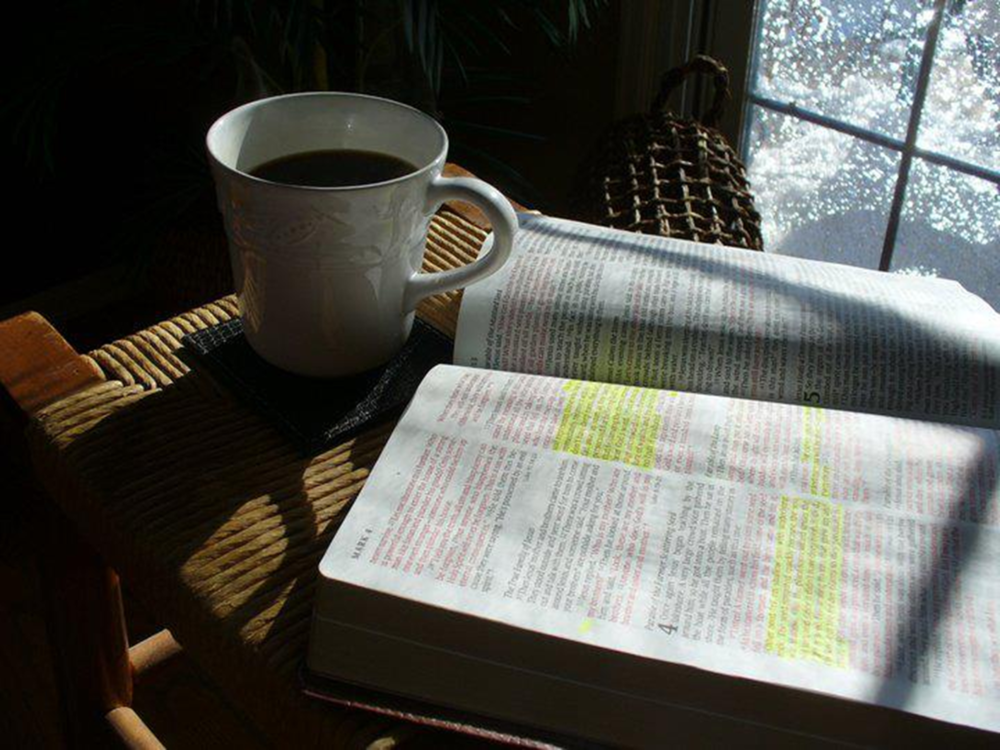
I read this verse this morning and had a flashback to encountering it, highlighted in yellow, in her Bible some 27 years ago. It brought back memories . . . a ton of very good memories growing up in her loving care . . . some not so good memories, as well. And I remember coming across this highlighted portion of Scripture and thanking God that He had graciously brought her to a place where she could live through the “here and now” in the context of the “there and then”.

We all know suffering from time to time. To be sure, the degree of that suffering varies wildly. I can’t imagine the depths of pain known by those in the midst of oppressive regimes . . . or living in underdeveloped countries . . . or living in underdeveloped countries under oppressive regimes. But even in our “land of plenty” and “freedom” there is enough suffering to go around. Whether it be relationships . . . children gone side ways . . . economy gone south . . . health gone AWOL . . . or just our own personal “thorns in the flesh” that everyone, at some level, is acquainted with, we all have experienced . . . or are experiencing . . . “the sufferings of this present time.”

But for those who have tasted and experienced the grace and goodness of God and taken refuge in Him (Ps. 34:8) . . . for those who have experienced a peace that passes understanding (Php. 4:6-7) . . . for those have lifted up their eyes to the hill and known the help the comes from the LORD, who made heaven and earth (Ps. 121:1-2) . . . for those look for a city not built with hands in a better country not of this world (Heb. 11:10, 16) . . . for those who possess the hope of sharing in the glory of the risen King of Kings . . . the sufferings of this present time pale in comparison.

There is something about spending even just a few minutes considering the glory that is to be revealed that eases the pain and produces a bit of a smile within the inner man. Something about imagining what it will be like to look upon the blessed and beautiful face of the One who gave Himself for me that says, “It’s going to all work for my good.” Something about the anticipation of going facedown before His thrown and lifting our voices in wonder and worship before His glorious presence that says, “It’s going to be worth it all.”

Oh, to anticipate the glory that is to be revealed . . .

Posted in Romans | Leave a comment

I Got the Law and The Law Won!

Rock bed . . . firm foundation . . . bottom line truth that you can hang your hat on . . . or stake your salvation on. That’s Romans 8. Gotta love it. Gotta be encouraged by it. “There is therefore now no condemnation for those who are in Christ Jesus . . .” (8:1). True statement. Glorious reality. And what jumped out this morning is a phrase that I think is only found here, in these opening verses of Romans 8 . . . a concept that is at the core of the “no condemnation” and the “in Christ Jesus” that I enjoy this morning as a blood-bought believer . . . a reality that governs my today and secures my tomorrow.

For the law of the Spirit of life has set you free in Christ Jesus from the law of sin and death. (Romans 8:2 ESV)

At its simplest, a law refers to anything by which we are governed or ruled. There are laws of nature . . . step off a cliff and you’re going down. There are laws of society . . . step on the gas too hard and you’re going to have a chat with a man or woman in a uniform. And, there are laws that trump other laws . . . step off a cliff with the right apparatus on your back and you’ll soar like an eagle, the law of aerodynamics superseding the law of gravity.

And, in the things of the eternal, there are also laws. There is the law of sin and death. Live under the law of sin and it will lead to death. Be governed by the desires of the flesh . . . be ruled by the lust of the eyes . . . be controlled by a desire to boast in what one does or has . . . and you’re going down . . . the end of those things is death (Rom. 6:20b, 23a).

But in the things of the eternal, there is another law . . . the law that governs those who are “in Christ Jesus” . . . the law of the Spirit of life. There is another set of operating influences and governing realities for those, who by faith, have believed the testimony concerning the person and work of Jesus Christ. This law, unlike the law of sin and death, does not encase in bondage but, instead, sets free . . . does not result in “going down” but serves to “lift up” . . . does not result in death, but promises life . . . life to the full . . . eternal life. It is the law of the Spirit of life.

It is a law which is not enacted in the halls of some governmental building far away, but is instead written on the hearts of believers through the dynamic of the indwelling Holy Spirit of God. The Spirit sets us free . . . the Spirit will shift our focus from the things of time to the things of eternity . . . the Spirit elevates our awareness beyond the things of earth and sets our minds on things of heaven . . . things which lead to life and peace (8:5-6). The law of the Spirit provides a “governance model” defined by principles of adoption . . . “for all who are led by the Spirit of God are sons of God” . . . “by Whom we cry, “Abba! Father!” . . . “and if children, then heirs — heirs of God and fellow heirs with Christ” (8:14-17).

And under this law . . . this law of life . . . this law written on the heart . . . this law weaved within our born again spiritual DNA . . . there is no condemnation . . . none . . . zilch.

By the grace of God . . . through the work on the cross . . . by the power of a risen life . . . I got the law, and the law won! Amen?

Posted in Romans | 1 Comment