
Ok . . . so as I’ve mentioned before, when I’m reading in the morning I’m on the watch for observations on a variety of topics . . . which, when found are either underlined or shaded with a certain colored pencil. One of those areas that I try and keep my eyes open for, unsurprisingly, are observations about God. This morning, I noticed something I had not noticed before . . . saw something concerning God which I had never articulated before . . . underlined something in blue in Leviticus that I had never underlined before. Get this, “All fat is the LORD’s.”
If his offering is a sacrifice of peace offering, if he offers an animal from the herd, male or female, he shall offer it without blemish before the LORD. And he shall lay his hand on the head of his offering and kill it at the entrance of the tent of meeting, and Aaron’s sons the priests shall throw the blood against the sides of the altar. And from the sacrifice of the peace offering, as a food offering to the LORD, he shall offer the fat covering the entrails and all the fat that is on the entrails, . . . And the priest shall burn them on the altar as a food offering with a pleasing aroma. All fat is the LORD’s. It shall be a statute forever throughout your generations, in all your dwelling places, that you eat neither fat nor blood. (Leviticus 3:1-3, 16-17 ESV)
While I am in no way any where near an expert in the finer points of all that’s encompassed in the teaching on the sacrifices in Leviticus, I know enough that they contain types and shadows . . . hidden truths concerning the things of God, man, sin, and atonement. The peace offering, apparently, is just that, an offering to God which celebrates the peace, or fellowship, the offerer enjoys with the LORD. It’s the only offering where, the offerer partakes of the sacrifice, where he takes home a portion of it and eats it with his family (Lev. 7:15-21), and thus symbolizes the communion enjoyed with God because of the other atoning sacrifices. But in that partaking he is not to eat either the fat nor the blood (3:17).
Now I get the part about the blood . . . that goes back to the Genesis 9:4 . . . the life is in the blood . . . in terms of the sacrifice, the blood was to be poured out . . . the life of another was to be poured out for another . . . “and without the shedding of blood there is no forgiveness of sins” (Heb. 9:22). Therefore, no eating of the blood.
But the fat . . . when it came to the peace offering . . . this sacrifice recognizing the blessing of communion with God . . . this sacrifice where the offerer is allowed to partake in the offering . . . in this case, “you shall eat not fat . . . all fat is the LORD’s”. How come? Beyond the very practical health advantage of regulating fat intake, what’s the symbolic meaning? What’s the shadow? Why no fat? Why’s that the Lord’s portion only?
When Pharaoh invites Joseph to bring his family down to Egypt from Canaan, he tells Joseph to tell his brothers, “Bring your father and your households and come to me; I will give you the best of the land of Egypt, and you will eat the fat of the land” (Gen. 45:18). The best of the land is referred to as the fat of the land . . . we use the phrase even today. So, the fat was the very best part of the animal, and thus the best was not to be kept for the offerer but was to be given as the offering . . . given to Him who alone is worthy to be honored with the best . . . the LORD.
All fat is the LORD’s. He is to be honored with the best.
The finished work of Christ is seen in the peace offering . . . He is our peace (Eph. 2:14) . . . He has made peace through the blood of His cross (Col 1:20) . . . He has preached peace to those who were far off and to those who were near (Eph. 2:17). And for those who have, by faith in the finished work of Christ, been brought into privileged communion with the Holy, Holy, Holy God of heaven . . . doesn’t He deserve the fat . . . is He not worthy of the best we have to offer? Whether it’s my worship, my praise, my goods, my life . . . the fat belongs to the Lord.
Oh, that by His grace, and for His glory, I might seek to give Him the best . . .
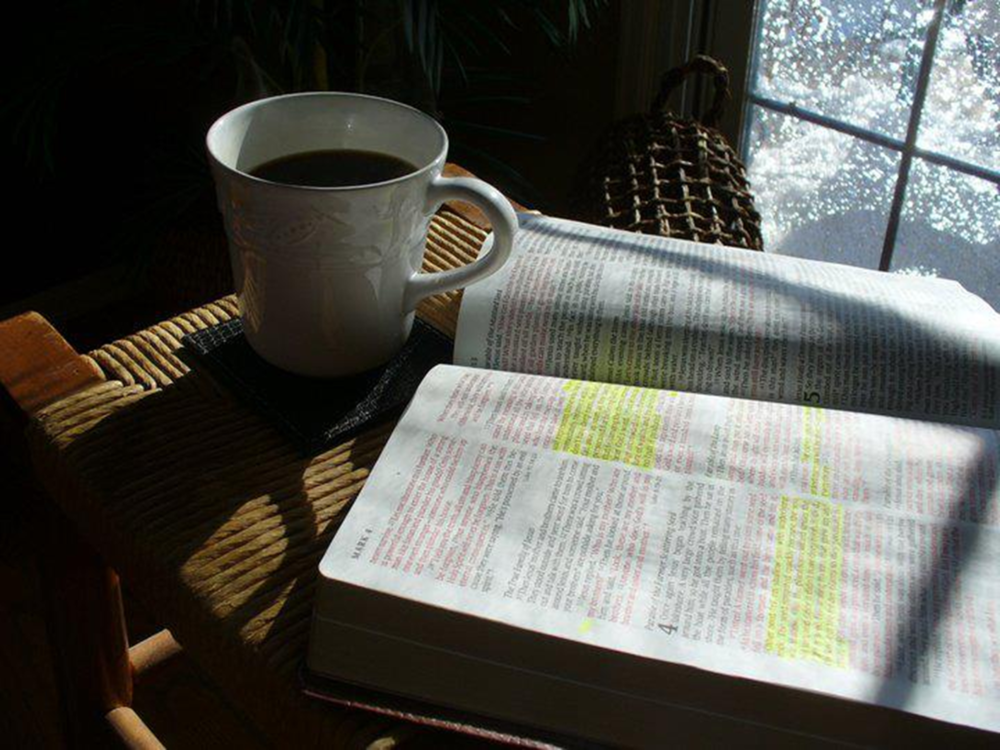
 My Morning Meal