
I read of two very different women this morning. One was a woman of wealth and influence. The other had very little means and was, for the most, a nobody to those around. One, it seems, attacked life . . . using the means at her disposal to pursue the desires of her heart. The other, seemed to really have life happen to her . . . going where she was told to go . . . staying where she was told to stay. The woman of means encountered the greatness of God as manifest in God’s favor to a man . . . and the other woman encountered the glory of God as it was revealed by a heavenly host. And both woman could do nothing but respond in quiet, wonder-filled awe.
I don’t fully understand God’s purpose in including the story of the Queen of Sheba’s visit to Solomon (1Kings 10:1-110). Maybe its purpose is to emphasize and bear “independent witness” of the breadth of Solomon’s wisdom and the magnitude of his riches. You sense this lady of prominence had some attitude. She heard about how great this King of Israel was . . . and was skeptical . . . and so packed up herself, probably a few dozen servants, and a caravan of riches and headed to Jerusalem “to test him with hard questions” (10:1b). She was going to challenge him. I sense she came with an air of opposition. Perhaps she thought that no man could be smarter or richer than she . . . so she arrived and riddled him with riddles . . . bombarded him with brain-teasers . . . deluged him with deep, deep questions . . . challenging the wisdom for which he was renown. And Solomon answered all her questions, nothing so difficult that he couldn’t explain it (10:3). And not only did he satisfy her intellectual curiosity, he blew her away with his wealth . . . it was more than she really could take in . . . and it says, “there was no more spirit in her” (10:5b). She was impressed . . . she was silenced . . . nothing more to be said save for, “Blessed be the Lord your God, who delighted in you . . . the Lord has loved Israel forever, therefore He made you king, to do justice and righteousness” (10:9). The woman of encountered the greatness of God and so, she blessed the Lord.
And then I read, in Luke’s gospel (2:1-20), of the other woman. She too had taken a journey . . . but not really of her choosing. She was told to go with her husband-to-be to their hometown to be counted. Very inconvenient timing as she was pregnant. She didn’t have servants . . . wasn’t accompanied by a caravan of riches . . . in fact, when they arrived in Bethlehem their “influence” was such that they could only secure a place in a stable for her to have her baby, “because there was no room for them in the inn” (2:7). You just know that if she had been the Queen of Sheba, there would have been room. But this woman too, saw something of the glory of God as she gave birth to a baby before having known a man. This baby had been announced by an angel . . . conceived by the Spirit of God . . . and was born in a barn. And, as this woman of little earthly power tended to her baby, a troop of shepherds arrived telling all who would listen of their encounter with a host of angelic beings . . . relating the angel’s declaration, “There is born to you this day in the city of David a Savior, who is Christ the Lord. And this will be a sign to you: You will find a Babe wrapped in swaddling clothes, lying in a manger” (2:12). Not many babies going to found lying in a manager . . . none being announced as a Savior . . . none being identified as the Christ, the Messiah, the Son of God . . . in fact, only one . . . this One born to a no-name, yet-to-be-married young girl from Nazareth.
A Son born in the same lineage as the great King Solomon . . . a Son who too was a King — the King of Kings, in fact . . . a Son who also possessed riches beyond description or imagination, but had left them all behind . . . a Son born of a woman of no means, no influence, and no power. And Mary, as she heard the shepherds tell of their heavenly encounter . . as she witnessed the marvel over-taking those who were drawn by the shepherds to her “nursery” to hear their story . . . Mary reacted very much like the Queen of Sheba had . . . nothing more to be said . . . instead “Mary treasured up all these things, pondering them in her heart” (2:19 ESV).
That’s what you do when you encounter the greatness and glory and grace of God — no matter who you are. Whether you’re “a somebody” or “a nobody” . . . whether you’re a skeptic or a humble servant . . . whether you “control life” or feel “controlled by life” . . . when you witness the hand of God, it’s time to be quiet . . . to take it all in . . . to treasure it up in your heart . . . and to ponder it . . . to try to fully take in the encounter. It’s time to “Be still and know that I am God” (Ps. 46:10) . . .
O’ blessed be the Lord . . . Glory to God in the highest!
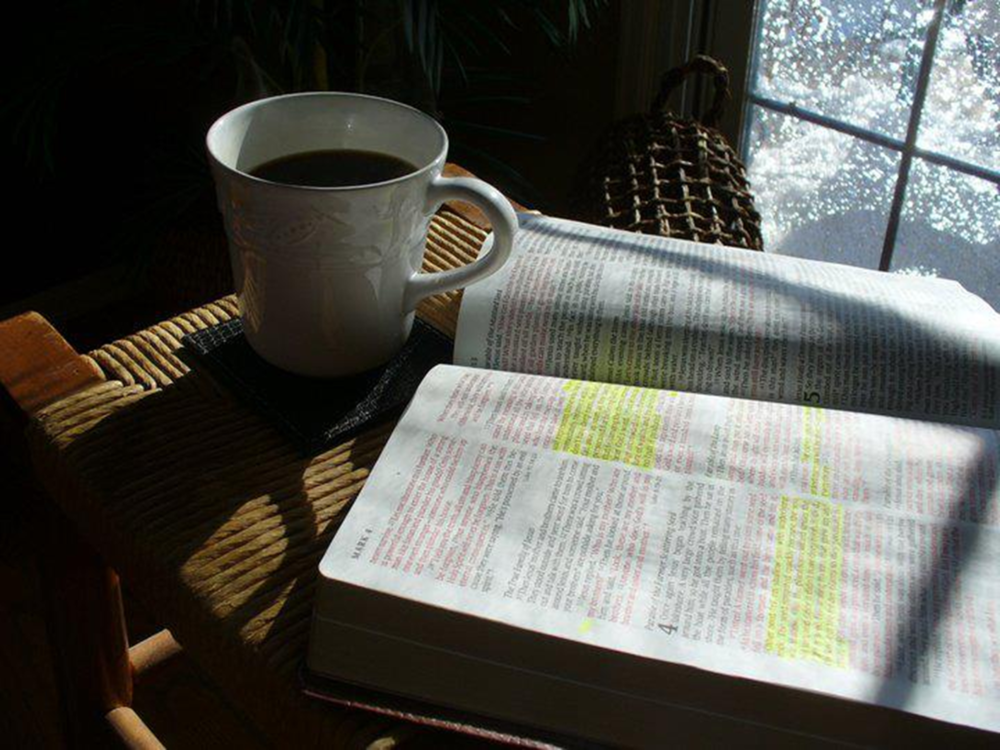
 My Morning Meal