
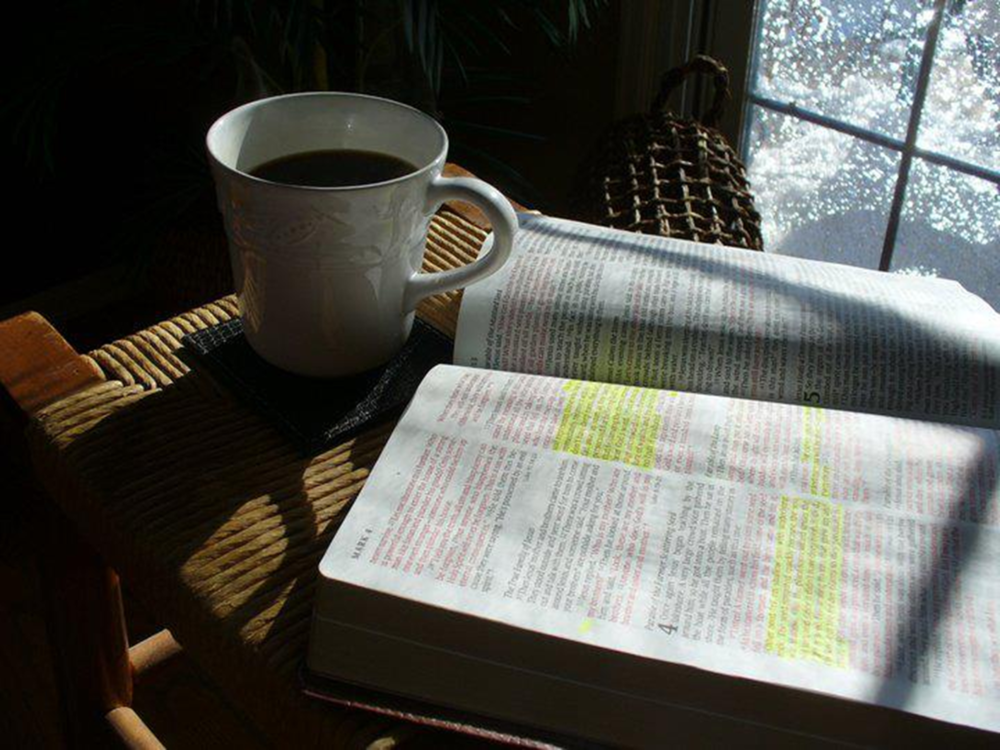
Kind of hovering over Psalm 137 this morning. A psalm written in exile. A psalm written with a broken heart. A psalm written with tears and a remembrance of better days and of things gone terribly wrong. And it strikes me that this is a song about not singing.
Ecclesiastes says that there is “A time to weep, And a time to laugh; A time to mourn, And a time to dance;” (Eccl. 3:4) and, I’m thinking, a time to sing and a time not so much. Sitting by the rivers of Babylon (137:1), remembering Zion, was one of those times “not so much.” But they were singers . . . they were musicians . . . where they went, their instruments went . . . harps in hand they went down to the rivers of this foreign land that held them captive . . . but the songs of Zion didn’t seem appropriate so they hung their harps on the willows (137:2), they put them on the shelf.
Their captives wanted to be entertained. “Sing us one of those happy Hebrew religious songs,” they’d ask, or perhaps, mock (137:3). And the Psalmist, in the lyrics of this song asks the question, “How shall we sing the Lord’s song in a foreign land?” (137:4)
And it’s that question that’s got me thinking this morning.
First, it’s a little ironic, I think, that in a song there’s a question about the appropriateness of singing . . . hence a song about not singing. But beyond that, it seems to me there’s a couple of ways to think about the psalmist’s somewhat gloomy question.
First, songs of Zion, aka songs of Jerusalem, were hard to sing when you knew that Jerusalem lay in ruin . . . when you recalled that, because of generations of sin and rejecting God’s ways, the glory of God had departed . . . and that judgment for spiritual idolatry and moral bankruptcy had been extracted with such overwhelming destruction. The songs intended to be song in God’s place by God’s people extolling God’s glory didn’t seem appropriate as they remembered the time when they rejected God’s will. Hard to sing when you know you’ve sinned . . . and you’re living with the consequences.
But the Psalmist also talks of it being inappropriate to sing songs of praise when the Subject of Praise has been forgotten. Something about mindless worship, i.e. forgetting Jerusalem (137:5-6), that should be rejected. The songs of Zion were more than just another genre on i-Tunes. They were to be declarations of God’s mighty works and faithfulness. They were a vehicle to join well thought out words with well played music and present it as an offering, a sacrifice of praise, an intentional heaven-bound oblation, designed and presented to bring pleasure to the God who alone is worthy of praise. To do it at the world’s beckoning, for the world’s pleasure, without thought or remembrance of the meaning of the words, just didn’t seem right.
“How shall we sing the Lord’s song in a foreign land?” (137:4) Good question.
Hard to sing when the hearts heavy because of conviction of sin . . . but God is faithful and just to forgive sin and cleanse us from all unrighteousness when we come to Him in confession of sin (1John 1:9) and He restores the song. Useless to sing when the song’s Subject is “outta sight, outta mind.” No delight in heaven over mindless, thoughtless melodies of worship. Ours, instead, should be to engage the mind, fan the heart’s fire into flame, and sing from the inner depths of the soul, and with all our might, the songs of Zion, the songs exalting the Redeemer. And, I think, it’s just wrong to sing God’s praise if I’m happily laying by the world’s rivers, with no desire for the things of God or the God of the song.
But, for the soul that’s known forgiveness of sin . . . for the mind that is fixed on Jehovah . . . for the heart that yearns for home . . . there is a song to be sung. Sung in church . . . sung in the shower . . . sung on the way to work . . . sung, even through difficult times. There’s a song that replaces sorrow with joy . . . despair with hope . . . the things of earth with the glories of heaven. It’s the song of the redeemed . . . and it’s a song to be sung. Amen?
 My Morning Meal