
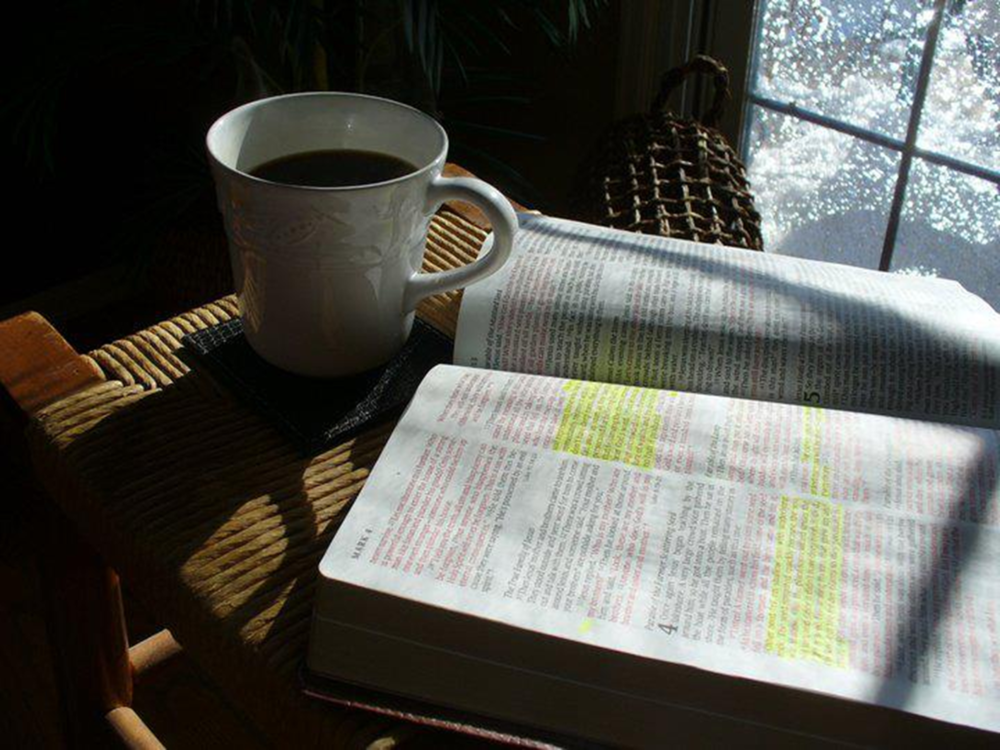
So, I’m wrapping up Chronicles this morning. For the past month I have tried to follow along with the history of the kings of Judah . . . those of the line of David. Along the way, there’s been a number lessons to learn . . . after all, that’s why it’s here . . . “For whatever things were written before were written for our learning, that we through the patience and comfort of the Scriptures might have hope” (Rom. 15:4) . . . and, “Now all these things happened to them as examples, and they were written for our admonition, upon whom the ends of the ages have come” (1Cor. 10:11). And it’s kind of interesting that the final lessons I take from this session in Chronicles is not from the life of a king of Judah (though you gotta like that Josiah kid), but from two pagan kings . . . check this out . . .
Pagan King 1: Necho king of Egypt. In 2Chronicles 35:20 it says that Necho “came up to fight against Carchemish by the Euphrates; and Josiah went out against him.” Necho’s fight isn’t with Josiah. In fact, Necho tries to avoid confrontation with Josiah. Necho believes that God commanded him to wage war at Carchemish . . . that Josiah’s affront was “meddling with God, who is with me” . . . that if Josiah determined to face him in battle that Josiah would, in essence, be opposing God and God would end up destroying him (35:21). And the God-breathed scriptures state Josiah “did not heed the words of Necho from the mouth of God” (35:22). The result? Josiah is wounded in battle and retreats to die in Jerusalem. Necho, king of Egypt, spoke words from the mouth of God. Huh!
Pagan King 2: Cyrus king of Persia. Timing? Many years later. Jerusalem has fallen . . . Judah has been in Babylonian captivity for 70 years . . . Babylon has fallen to Persia. And 2Chronicles records, “In the first year of Cyrus king of Persia . . . the LORD stirred up the spirit of Cyrus king of Persia, so that he made a proclamation throughout all his kingdom . . . ‘All the kingdoms of the earth the LORD God of heaven has given me. And He has commanded me to build Him a house at Jerusalem . . .”(2Chron. 36:22-23). Huh, again! Another pagan king . . . the Spirit of God stirring his spirit . . . another revelation and word from God.
So, here’s what impresses me this morning. While God had chosen the line of Abraham to bless all people . . . while He called Jacob to be the father of His chosen nation . . . while the Scriptures primarily concern God and Israel and preparation for the Messiah . . . God also worked in a context beyond the immediate focus of the Old Testament Scriptures. Right? Some things are recorded as part of God’s revelation to me . . . but not everything. Kind of obvious, I know. But sometimes I wonder if I can’t start somehow thinking God is an exclusive God . . . just for Israel . . . just for the Christian.
But God, who is unchanging, has always been “not willing that any should perish but that all should come to repentance” (2Peter 3:9). And so to think that God would reveal himself to a pagan king or two . . . or lead a nation such as Nineveh to repentance (a la Jonah) . . . should come as no surprise . . . but it does catch me a bit unawares at times. Or, to think that God is limited to only working through Israel . . . or the church . . . is probably putting God in a box of my making and not His. Not to say that God hasn’t ordained His glory to be known through the church . . . but God is God and will accomplish His purposes in His ways.
And I sit back and think of a king of Egypt telling a king of Judah what God has said . . . or of a Persian king saying to God’s chosen nation, “Who wants to go back to Jerusalem to rebuild the house of God ’cause that’s what He’s put in my heart to do?” . . . and I’m awestruck. How big is our God? How so out of the box is the manner in which He can choose to operate? Way big! Way outta’ the box!
Oh, that I might be so sensitive to the Spirit . . . and so possess the mind of Christ . . . that I would not limit the manner in which my God can work. That I might have ears to hear even when I’m not expecting to hear. That I might have eyes that recognize God at work, even when it’s not the exact framework I have pictured in my mind. I’m not talking about “anything goes” . . . Scripture is still the standard . . . but, as I think about Necho and Cyrus and the fact that the Holy Spirit moved the author of Chronicles to record God’s working through them, I can’t help but sit back in awe and marvel at the “unorthodox” ways by which my God may choose to impact my world and the world around me.
Praise be to God . . . who makes “the box bigger” . . . to Him be all glory, forever and ever, amen!
 My Morning Meal