
It must have been quite the scene. The young upstart Rabbi had come to Jerusalem for His first Passover celebration since “going public.” He had started to gather a following . . . He had called some disciples . . . stories were starting to be told . . . but no one expected Him to turn things upside down (literally) when he arrived at the temple . . . no one could have predicted what was to happen when He arrived that day . . .
“And He found in the temple those who sold oxen and sheep and doves, and the moneychangers doing business. When He had made a whip of cords, He drove them all out of the temple, with the sheep and the oxen, and poured out the changers’ money and overturned the tables. And He said to those who sold doves, ‘Take these things away! Do not make My Father’s house a house of merchandise!’ ” (John 2:14-16)
Imagine what that must have looked like! The chaos . . . the uproar . . . the look on the faces of those those who witnessed such a spectacle. But for a small group of men . . . those who had spent some time with Jesus . . . who had been instructed by Him concerning Himself . . . for them, this was the opportunity for the Holy Spirit to cause a light bulb to go on as He connected the dots between what they were witnessing and Psalm 69:9 . . .
“Then His disciples remembered that it was written, “Zeal for Your house has eaten Me up.’ ” (John 2:17)
The Psalmist prophesied that Messiah would be characterized by a consuming passion for purity of worship . . . and Jesus was Messiah . . . and now it was time for that to be known. As a boy, a teen, and a young man, He had come many times before to Jerusalem for Passover. This visit was not the first time He witnessed the hypocrisy of turning the holy ground of the temple into a market place where people were ripped off under the pretense of ensuring they had an acceptable offering to bring before the Lord. So while He had seen it before, now was the time to act . . . now He was openly going about His Father’s business . . . now His full character as Messiah would be known. And part of that character was a fiery determination to contend for authentic worship before God. And this would not be the only time that Jesus would cause such a scene and seek to cleanse the temple of such corruption . . . He would do it again on what would be His last visit to Jerusalem before His crucifixion (Mark 11:12-18). I wonder if He did the same thing at Passover during His second year of ministry, as well.
Jesus was consumed with a passion for His Father’s house. The temple was intended to be so much more than just going through the motions. It was never intended to be a pretense for corrupt merchandising of “certified, acceptable offerings”. The focus had shifted from the heart of worship to the “how of worship” . . . from the God who was to receive the offering to the “quality” of the offering being given to God. Instead of sacrifice it had become about merchandise. And Jesus just wouldn’t stand for it.
And it strikes me, that if Jesus so cared about authenticity at the place of worship, shouldn’t I?
And I guess I’m not thinking so much about walking into a church and overturning every inconsistency I perceive. Rather, I’m thinking I need to check my own heart when it comes to how hot or cold I am about entering the house of God and bringing before Him my sacrifices of praise. That I need to test my own “jazz factor” concerning gathering with God’s people in God’s presence for God’s glory. That I need to be reminded that mindlessly going through the motions probably upsets the One who is consumed by zeal for His Father’s house. That I need to beware of “packaging and presenting” my cold worship as the real thing. That I need to avoid doing anything that would stumble someone else from worshipping in truth and spirit. That by His grace and through His Spirit I too would have a zeal for His house.
Oh, to be consumed with a passion for true worship before God . . . to be more like Son . . . for the Father’s glory . . . amen.
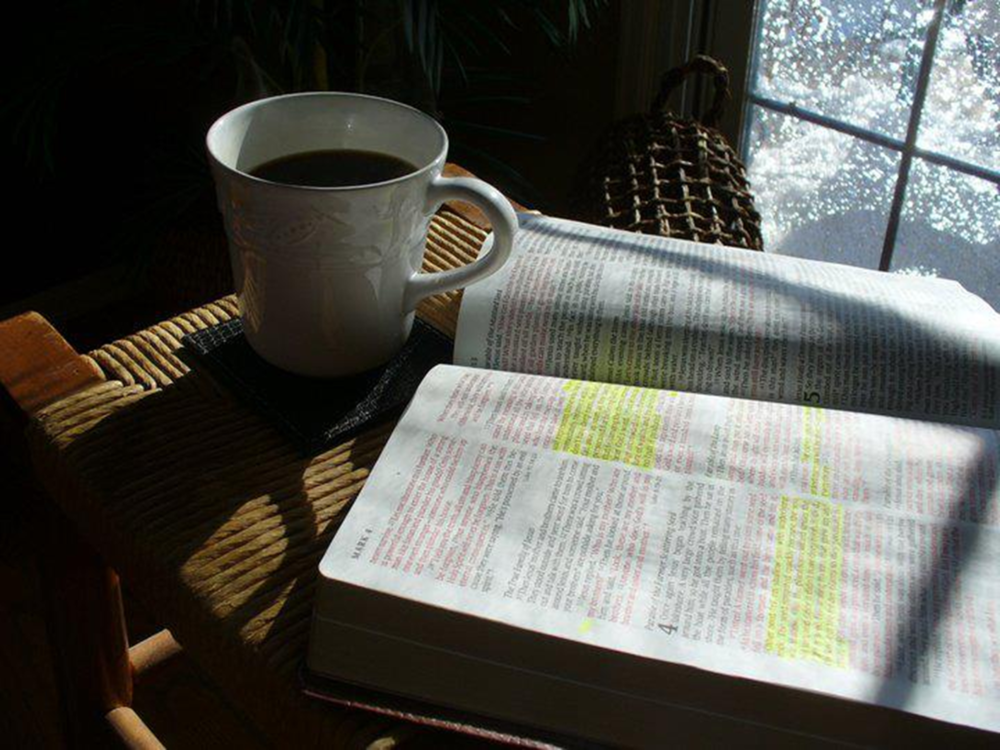
 My Morning Meal