
I don’t think I’d every really noticed how similar the end of Leviticus is to the end of Deuteronomy. Both books of Moses, after having laid out in explicit details the “do’s” and “don’t’s” of atoning sacrifices . . . and pleasing aromas . . . and moral imperatives . . . and ceremonial instructions . . . and social parameters . . . at the end of it all comes some pretty simple, but very directed, “straight talk.” “Walk in my statutes, observe my commandments and do them,” says the LORD, “and you will know blessing and I will make My dwelling among you” (Lev. 26:3, 11). “But if you will not listen to me and will not do my commandments . . . I will set My face against you . . . I will discipline you” (Lev. 26:14, 17a, 18a). How clear is that? . . . pretty!
These were the rules of engagement . . . twenty-five chapters worth in my English Bible . . . do it, and it’s good . . . don’t do it . . . mmm, not so good. How do a not-so-holy people live in the presence of a holy God? . . . follow the rules for atonement . . . over and over and over again . . . bring lots of animals. How do the seed of Adam, fallen in nature, live with each other? . . . follow the rules for community conduct . . . try to repress the sin nature . . . power up the self-will and self-discipline . . . and, when you fail, bring lots of animals. Keep trying . . . resolve to keep the commandments . . . bring lots of animals . . . and know the blessing of the Lord. I’m way over-simplifying, but I think, in essence, that’s kind of how it worked.
The alternative was to quit trying . . . to not worship in the prescribed way . . . to live for self and reject the rules of neighborly conduct . . . to not honor God as God alone but to look to the nations for cues on how to seek the favor of deities. And for those who chose to walk in a different way . . . to offer unauthorized fire . . . God would discipline them sevenfold for their sins (26:18, 21, 24, 28). To say sin would lead from things going from bad to worse to catastrophic is understating it. God doing what would be necessary to bring His people to confession of sin (26:40), to a humbling of their uncircumcised heart (26:41) . . . in order to remember His covenant with Abraham, Isaac, and Jacob (26:42, 44-45).
And so, concludes Leviticus, “these are the statutes and rules and laws that the LORD made between Himself and the people of Israel through Moses on Mount Sinai” (Lev. 26:46, 27:34).
Oh, to be sure, there is much in this “rule book” that I would do well to heed. Moral commandments as relevant today as they were then, for my God is an unchanging, holy God. There is much to be learned from the principles surrounding the need for uncleanness to be dealt with in order to know God in the midst. And there is depth of understanding concerning the work of Christ on the cross to be gained through appreciating the nuances of the different sacrifices brought to the altar . . . all Scripture being God-breathed and profitable for teaching, for reproof, for correction, and for training in righteousness (2Tim. 3:16)
But at the end of the day, I can’t help but praise God that, as said so well by Matthew Henry, “we are not under the heavy yoke of the law . . . a yoke which neither they nor their fathers were able to bear (Acts 15:10), but under the sweet and easy institutions of the gospel, which pronounces those the true worshippers that worship the Father in spirit and truth, by Christ only, and in His name, who is our priest, temple, altar, sacrifice, purification, and all.”
Not that obedience isn’t necessary . . . not that worshipping in the simplicity of spirit and truth will be easy . . . but . . . I don’t need to bring lots of animals.
Jesus paid it all . . . His shed blood sufficient for all my sin . . . past, present, and future. And through faith in Him, I have received a new nature, subject not to the taskmaster of the law but to the leading of the Spirit of Christ in me . . . such that His yoke is easy and “the burden” of obedience is light (Matt. 11:29-30) . . . He being the enabling power within me to be holy as God is holy. Oh praise God for the gospel . . . praise God for His Son . . . and praise God . . . no need for any animals.
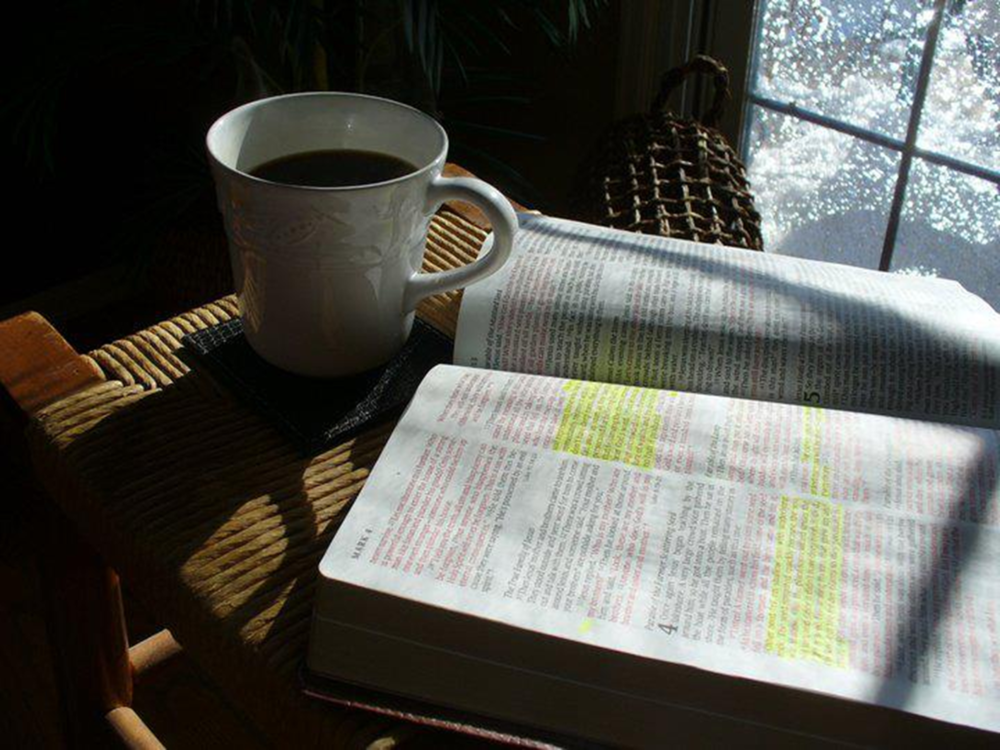
 My Morning Meal