
It’s funny . . . I’ve been staring down at this phrase for almost 30 minutes now. I’ve had at least 4 or 5 “false starts” on trying to put together some thoughts on a truth in Romans that has captured me this morning. The thought is that of a distinctive . . . a characteristic that marks the believer . . . something which sets apart the child of God . . . an act, which has been performed on the flesh since almost the beginning of time, but which God also enacts upon the inner beings of those He has called into His kingdom. When it comes down to it, it’s a matter of the heart.
For no one is a Jew who is merely one outwardly, nor is circumcision outward and physical. But a Jew is one inwardly, and circumcision is a matter of the heart, by the Spirit, not by the letter. His praise is not from man but from God.
(Romans 2:28-29 ESV)
The “procedure”, given to Abraham back in Genesis 17, was linked to the covenant God was entering into with Abraham and his seed . . . it was a means of Abraham and his progeny to associate themselves with the covenantal relationship God had called them into. In addition, it was symbolic of the cutting off of the flesh, the old nature, in order to pursue a life of consecration to their God . . . of putting off that which was impure and defiled in order to enjoy a relationship based on God’s calling of a holy people. But this distinctive had become a source of pride and boasting . . . as if, somehow, this outward act somehow translated into a spiritual reality.
But in his Romans 2 discussion of that which marks a true child of Abraham, Paul assets that it is not merely a matter of the “outward and physical”, but a matter of the heart.
And it’s not a matter of what what we can do to shape our hearts . . . not a matter of our discipline and performance . . . but an act of the Spirit. An act which marks the covenantal relationship we’ve been brought into with the God of our salvation . . . which puts to death the flesh . . . which enacts the power to put away that which defiles . . . which creates within “the patient” a desire to pursue the things of faith and obedience.
It’s not something I can do to myself . . . not a procedure I’m capable of performing . . . not something I can will into being . . . but it is the work of the Spirit of God. It is part of making a dead man alive . . . part of making an old creation new . . . part of making blind eyes see. It is what marks the child of God.
So, what can I do but thank Him? How can I not pause and praise? Oh, forgive me for the times when I’ve just blown over this truth without stopping to behold the wonder and to worship.
It’s a matter of the heart . . .
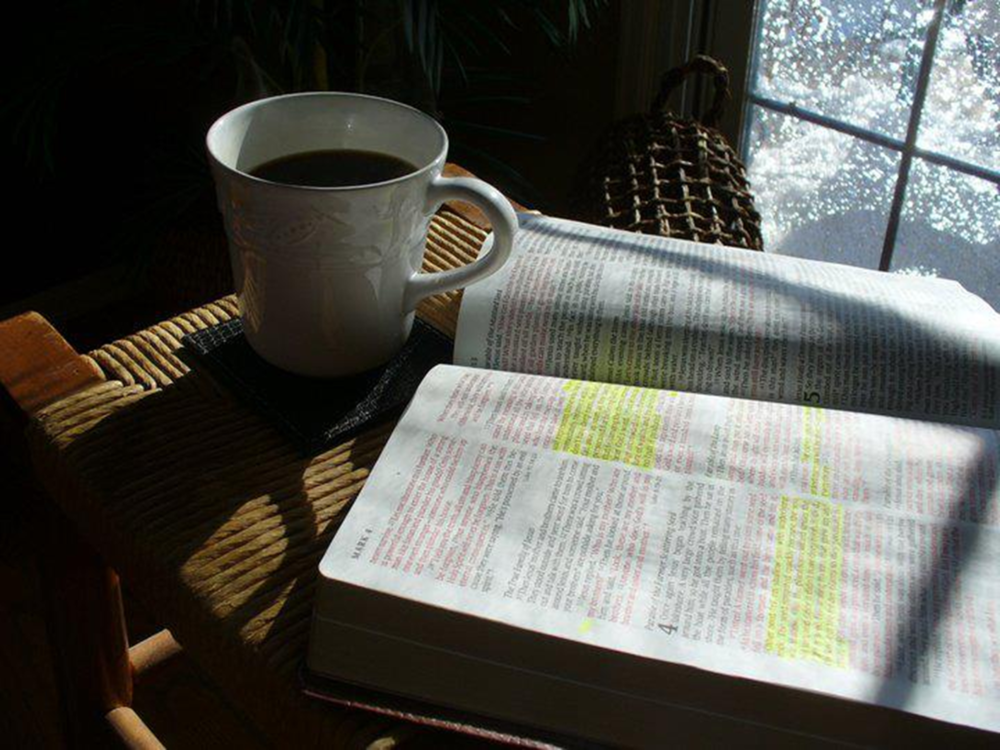
 My Morning Meal