
Paul had been forced to let them solo long before he had wanted. They had just barely gotten on the bike before the apostle was forced to kick up the training wheels and let them sputter and weave down the road on their own. He had only been allowed a few weeks with the Thessalonians to “onboard” them into the kingdom of light and it’s implications for living . . . and then he was run out of town. But though these beloved saints were out of sight, they were far from out of mind. And so Paul, because he could no longer bear not knowing, sent Timothy to the Thessalonians to learn about their faith.
For this reason, when I could bear it no longer, I sent to learn about your faith, for fear that somehow the tempter had tempted you and our labor would be in vain. (1Thessalonians 3:5 ESV)
Paul wanted to know about their faith. And I think it was less about whether or not they could echo back the teaching they had received during those few short weeks Paul had taught them . . . less about whether or not they still confessed Jesus as Savior . . . but more about whether what they had been taught, and about Whom they had believed, was being manifested in how they lived . . . a lot about, in the midst of the certain affliction they were experiencing because they owned Christ as Savior, whether or not they were “keepin’ on keepin’ on.”
Paul wanted to hear from Timothy that what these Thessalonians had professed to believe was evident in how they went about day-to-day life.
The Spirit makes it so clear through Paul, that the fruit of the gospel goes far beyond the rescue from the judgment of sins . . . though, if that were the gospel’s only benefit, we would eternally thank and praise Him for such a great rescue. But, beyond redemption, the gospel opens the way for living as a new creation in Christ (2Cor. 5:17) . . . for walking in a manner that has eternal significance . . . for doing everyday life in a way that brings the God of heaven pleasure and manifests, in some small way, His glory. Paul wanted to know about their faith.
His fear was that the potential of the gospel might be compromised by the enemy. That the tempter might have have seduced these believers . . . if not to abandon the faith, then to at least go underground and avoid some of the heat. If not to reject Christ, then, in order to take the easy and prosperous way, live as those who had. “After all,” the snake’s voice whispers in their ears, “You’re in . . . but no need to be radical about it. Go with the flow and it will be easier. Look after yourself first . . . pursue the treasure you can see . . . ” If, after receiving the gospel, these believers did not walk in a manner worthy of God, Paul would have considered his labor in vain.
We sell our salvation short if it’s just about a profession and not about a purpose . . . if it’s just about church on Sunday and not about Christ 24/7 . . . if it’s something for our future but doesn’t make much of a difference now.
Oh that we, as God’s people, would live out our faith by His enabling grace. That as we grow in our knowledge of the faith, that the reality of what we believe would be manifest in how we process this world and how we respond to it in our lives. That we would live as citizens of a different land . . . that our values and priorities might be aligned to a different culture . . . that what we do would so backup what we profess.
That, should Paul have sent Timothy to learn of our faith, Tim could report back, “They’re doing well . . . they’re still on the bike . . . still weaving a bit as they go down the road . . . but their faith’s the real deal . . . by God’s grace . . . and for God’s glory . . . “
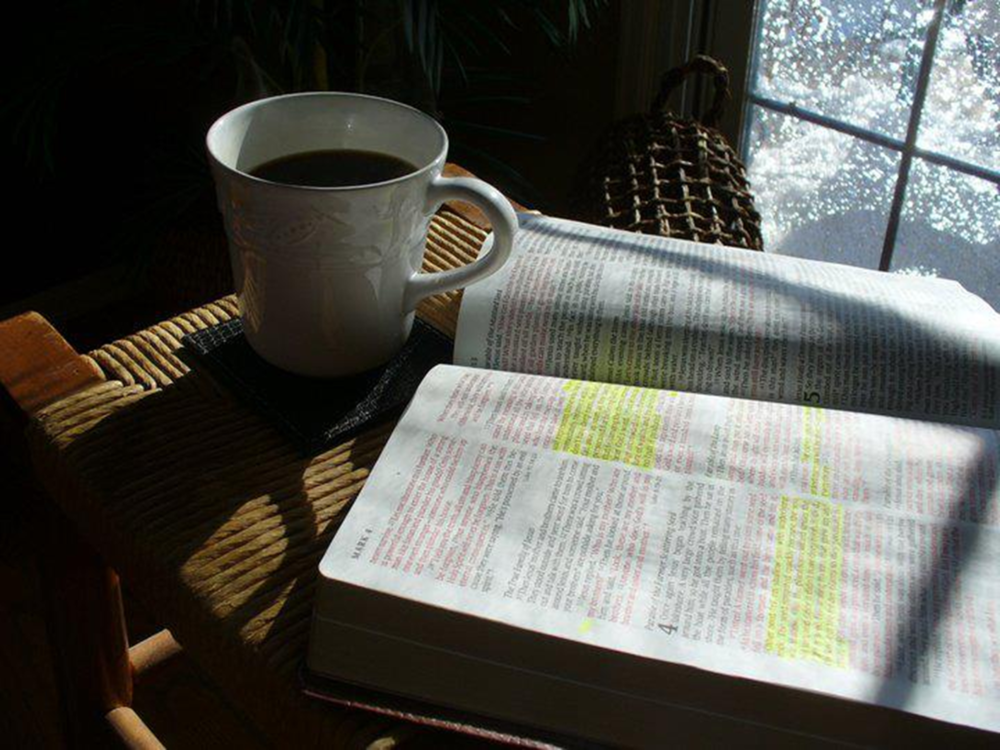
 My Morning Meal