
It seems it began as a political move more than anything else. Less about rejecting God than about securing an “electorate.” Jeroboam was king . . . at least over most of Israel . . . he had been made king of the ten northern tribes. It had been determined of God (1Kings 11:9-11) . . . revealed by God (11:31-39) . . . and, enabled by God (12:15). And then Jeroboam . . . well, he forgot God. And that led to man made worship.
Jeroboam established his newly acquired throne in Shechem. It was the kingdom promised to him by God . . . and delivered to him by God. You’d think that worshiping God might be a natural response. Actually, worshiping God would seem to be a supernatural response. For now that Jeroboam had the kingdom, he was more concerned with how to hold onto the kingdom than with how to give thanks for the kingdom.
He reasoned that if people continued to travel to the temple in Jerusalem, the capital of that other king in the southern kingdom, to offer sacrifices and pay tithes, then eventually their hearts would turn again to him and Jeroboam would lose his grip on power. So, he had to do something . . . make a political move that would secure his position . . . ignoring the promise of God that God would build Jeroboam a “sure house” if Jeroboam would walk in His ways (11:38). Solution? An alternative to Jerusalem . . . a northern kingdom relevant system of sacrifice . . . a replica . . . a counterfeit . . . man made worship.
And so, “he made.”
Jeroboam made two calves of gold . . . “Behold your gods, O Israel, who brought you out of the land of Egypt” (12:28). What!?! That’s not true . . . but it was politically expedient. And so “he made” more stuff. He made a temple on high places . . . and he made a priesthood of non-Levites (12:31). He made an altar for sacrifices . . . and he made feasts to rival the feasts of Jehovah (12:32-33). And these things, the Holy Spirit records, were “devised from his own heart” (12:33b).
And I’m thinking how quickly the northern kingdom went south . . . how fast the promises of God were forgotten and the political will of a king was enacted . . . how quickly the ways of God were abandoned for the works of man. A man made worship concerned less with the object of worship than the benefits of keeping it local . . . concerned less with authentic worship than with maintaining control and power . . . concerned less with the holiness of the sacrifice than with the expediency of self-realization.
And while few of us have the power to enact such sweeping “reform,” we are all able to make a call on how to worship God in a way that seems convenient . . . in a manner that “meets my needs” . . . choosing the form that suits my agenda the best . . . “devising from our own hearts” the way that seems right to us.
Just as “he made” . . . we can make too. Maybe not golden calves . . . but perhaps a God made after our own image . . . our own liking . . . our own preferences . . . best suiting our own desires. A system of worship aligned to our priorities and our schedules. Just enough sacrifice to fulfill the intent but not to really have to sacrifice.
“But the hour is coming, and is now here, when the true worshipers will worship the Father in spirit and truth, for the Father is seeking such people to worship Him. God is spirit, and those who worship Him must worship in spirit and truth.” — Jesus (John 4:23-24 ESV)
May it be so of His people . . . no man made worship here . . . but worship which is in spirit and truth. By His grace . . . for His glory . . .
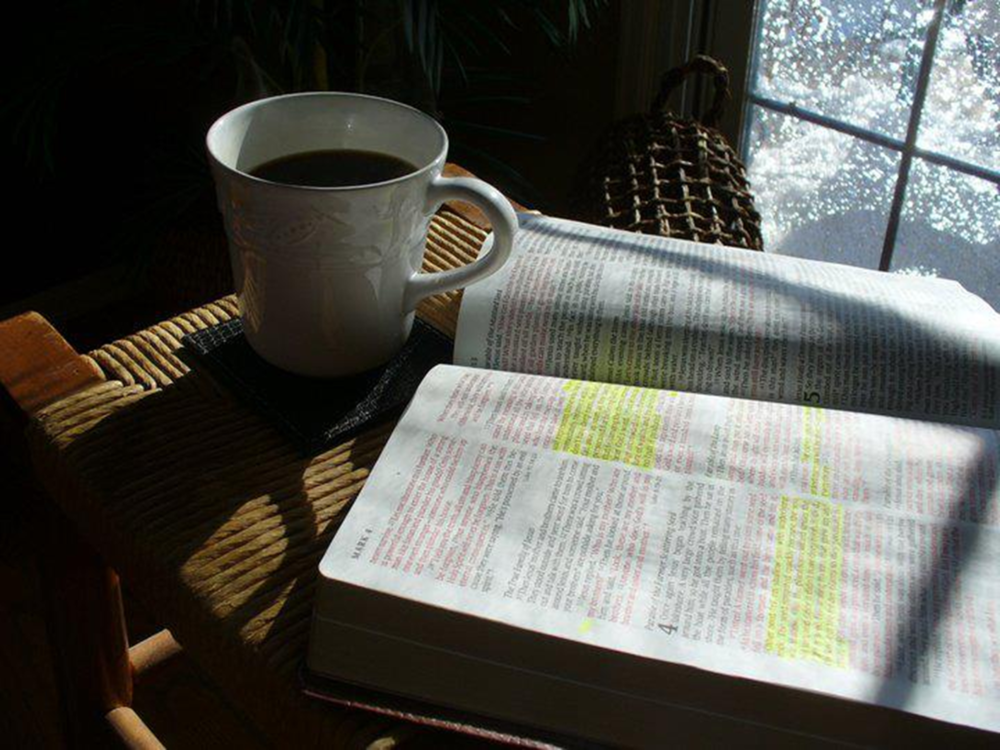
 My Morning Meal