
Yeah, I don’t think it’ll make word of the year anytime soon.
Reading in Acts 15 this morning and I encounter a word that I don’t think gets used much in the church anymore — though it did a generation ago when I was first saved (at least in the circles I was saved into). But depending on how you look at it, while the word may stand in stark contrast with today’s worldly mindset, it may in fact be far more compatible than we realize.
For 2023, Merriam-Webster’s word of the year is Authentic. While used often in the context of a plumb line and filter for Artificial Intelligence, or as the goal for social media users and influencers, where authentic has arguably found its greatest attachment is as an adjective connected to identity. Our culture places a premium on being your authentic self. On seeking and speaking your authentic voice. On you being the authentic you. And, because it’s authentic, it must be accepted as being what’s true, beyond question, and thus demanding to be enthusiastically embraced.
So, in light of 2023’s word of the year, how’s a word such as the word I encountered in Acts gonna play in our current cultural climate?
So, being sent on their way by the church, [Paul and Barnabas & Co.] passed through both Phoenicia and Samaria, describing in detail the conversion of the Gentiles, and brought great joy to all the brothers.
(Acts 15:3 ESV)
Conversion. Not a likely candidate for word of the year, but it’s the word I’m chewing on this morning.
There’s a number of ways we tend to describe disciples of Christ. Words like believer, and follower. Terms like those who have asked Jesus into their heart; who have been born again; who have been saved by the blood. But when’s the last time you heard anyone in your church talk of those who had been converted or had experienced a conversion?
Conversion. This particular word is found only once in the entire New Testament. Used to describe a group of people who were “authentically” idolaters but now were unashamedly followers of the risen Son of God, Jesus. A people who once were oriented one way, but now — in a 180-degree turnabout sense — are now headed in a very different direction.
So, how does talking about conversion line up with the cultural goal of embracing one’s self? See, what I mean . . . the implications of being converted, of doing a 180, are at odds with the world’s view of what it means to be authentic.
But what if the world has it wrong (and it does)? What if conversion is really the most authentic way to authenticity? What if being converted is really about becoming who we were created to be?
For those whom [God] foreknew He also predestined to be conformed to the image of His Son, in order that He might be the firstborn among many brothers.
(Romans 8:29 ESV)
We were created as image bearers of God (Gen. 1:27). So, we are our most authentic when we bear the image of God. Thus, to be conformed (likely another unpopular word in a world enmeshed with being authentic) to the image of His Son is to land where we were always meant to be. That what we are apart from Christ is really the deep fake. That what our world thinks life should be about is really the deceptive lie. That the form we are shaped into by sin is the antithesis of the image we were created to bear. And thus, we need a conversion.
We need a supernatural event that translates us from darkness into light. That reorients us from self to others. That redefines authentic by replacing ourselves as the standard to be embraced with the Son and the once forever exchange He offers — our sins taken on by Him and His righteousness credited to us so that, by His power, we might practically and authentically live out what it looks like to be righteous.
Conversion. Might be a word worth using a little more often. But don’t think it’s gonna make word of the year anytime soon. And yet, isn’t it the converted who are truly on the path to being authentic? I’m thinkin’ . . .
By God’s grace. For God’s glory.
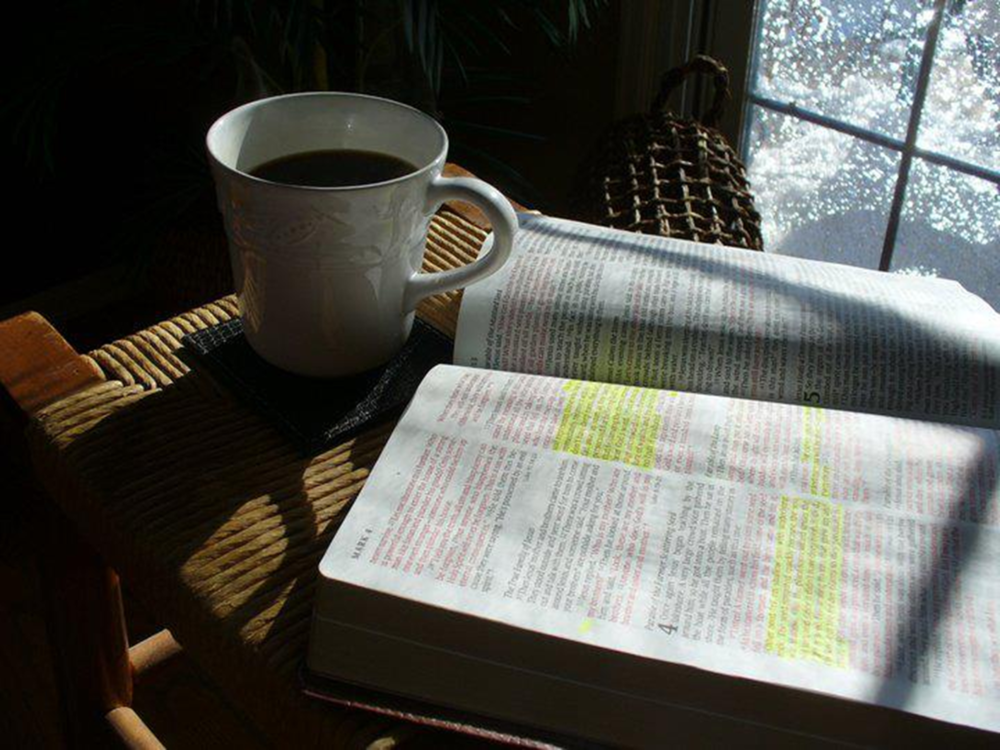
 My Morning Meal