
Honestly, don’t you think we might be more motivated on Sunday mornings if, instead of pushing ourselves out the door to “go to church”, we instead rushed out to get to the “love feast”? That instead of trying to look forward to sitting shoulder-to-shoulder in chairs or pews, we instead anticipated sitting face-to-face around a table? While welcoming another opportunity to listen to a message by a single man, we also relished the chance to get caught up on the lives of our spiritual family? And all this as a build up to the “main course”, the bread and the wine, both “to faith the solemn sign” reminding us “of love divine” (Horatius Bonar, “For the Bread and For the Wine”, mid-1800’s)? Yeah, I can only imagine what Jude envisioned as he talked about “your love feasts.”
But Jude is writing about love feasts because guess who might be coming to dinner?
These people blaspheme all that they do not understand, and they are destroyed by all that they, like unreasoning animals, understand instinctively. Woe to them! For they walked in the way of Cain and abandoned themselves for the sake of gain to Balaam’s error and perished in Korah’s rebellion. These are hidden reefs on your love feasts, as they feast with you without fear, looking after themselves; waterless clouds, swept along by winds; fruitless trees in late autumn, twice dead, uprooted; wild waves of the sea, casting up the foam of their own shame; wandering stars, for whom the gloom of utter darkness has been reserved forever. . .
These are grumblers, malcontents, following their own sinful desires; they are loud-mouthed boasters, showing favoritism to gain advantage.
(Jude 10-13, 16 ESV)
Hidden reefs on your love feasts . . . That’s what I’m chewing on this morning.
Jude was pretty clear as to why he wrote this letter. It was because he “found it necessary to write appealing to you to contend for the faith” (Jude 3). And as you read on, it’s not just about standing firm against those on the outside — guess who might be coming to dinner?
Those who blaspheme, not really knowing what they’re talking about. Those who walk in the jealous, vengeful anger of Cain. Those who, like Balaam, compromise their moral compass for the sake of gain. Those inside the camp who, like Korah, yield to rebellion. People in our midst who are really in it for themselves.
Waterless clouds . . . fruitless trees . . . wild waves . . . wandering stars.
Grumblers . . . and malcontents . . . and loud-mouthed boasters . . . oh my!
Though there on a Sunday morning, these are not the faithful but those showing favoritism to gain advantage.
Guess who might be coming to dinner? Hidden reefs on your love feasts.
So, am I to be searching for heretics in the seats around me? Seeking to call out those who I think may “have crept in unnoticed” (Jude 4)? I don’t think so.
Instead, I am to contend for the faith. To test what is true (1Jn. 4:1). To become so familiar with the real, authentic thing that the counterfeit thing will expose itself. And then, I am to love at the love feast. Embracing brothers and sisters as together, by the leading of the Spirit, we worship the Son, to the glory of the Father.
While I need to be wary of who may be coming to dinner, I need not worry — for “God’s firm foundation stands, bearing this seal: “The Lord knows those who are His” (2Tim. 2:19). While not a troubled worrier at the love feast, I should purpose to be a “true worshiper”, one who worships “in spirit and truth” (Jn. 4:23-24). Not nervous but not naïve either.
By His grace. For His glory.
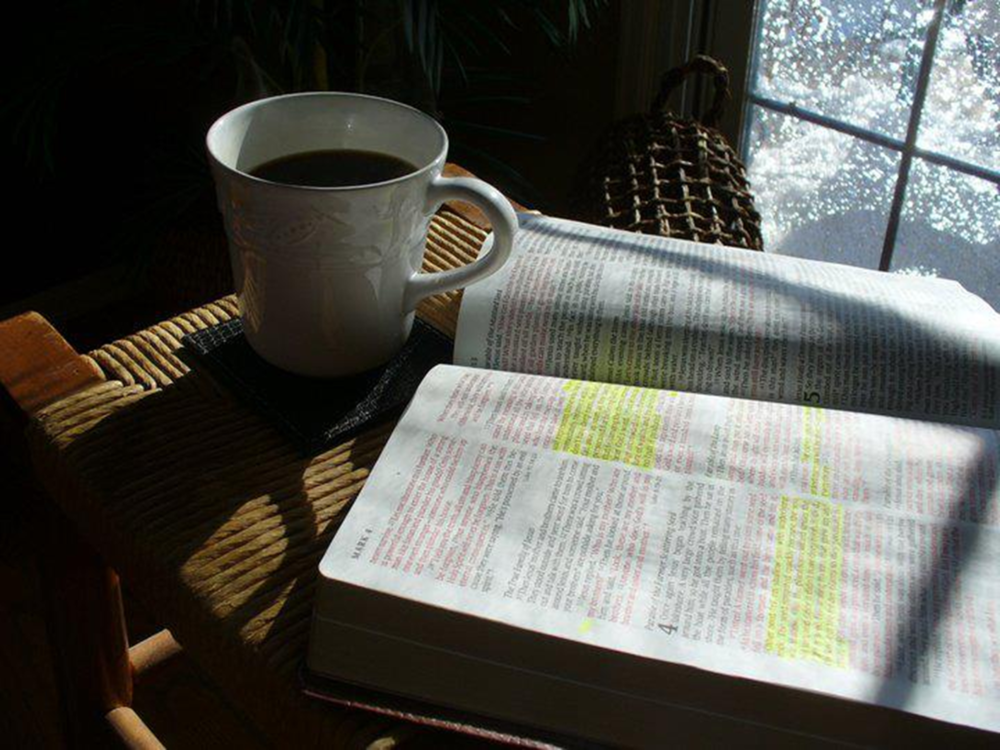
 My Morning Meal