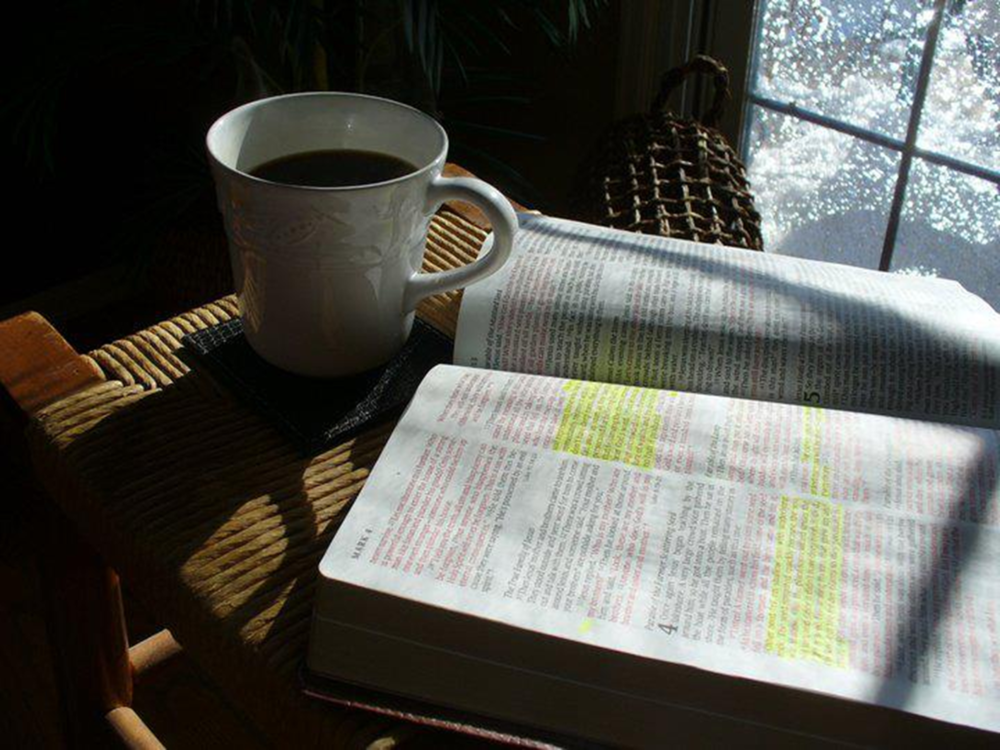
Vindication

As I hover over Psalm 26 this morning, what I’m chewing on is a thought that justification and vindication are two different things. I’m thinking that if justification deals with sin, vindication deals with the unfounded accusation of sin. If justification deals with making right wrong acts, vindication is making known sincere intentions. That’s what David wanted — vindication.

Vindicate me, O LORD,
       for I have walked in my integrity,
       and I have trusted in the LORD without wavering.
Prove me, O LORD, and try me;
       test my heart and my mind.
For Your steadfast love is before my eyes,
       and I walk in Your faithfulness.

(Psalm 26:1-2 ESV)

All David wanted was his name cleared (MSG). Specifically, some suggest, in the matter — or supposed matter — of his ill-will towards Saul (1Sam. 24:9).

David’s appeal to the LORD wasn’t to stamp all his actions and deeds as perfect, but wanted God to bring to light that his motives were pure. He had walked in integrity, in innocence and simplicity, when it came to serving Saul. Though he knew the throne would one day be his, he wasn’t jockeying for position or planning some treacherous coup, but instead had determined to trust in the LORD without wavering. Though there may have been missteps and misunderstandings along the way, David’s heart was to serve Saul as he followed the LORD, walking in God’s steadfast love and faithfulness.

But David wouldn’t trust his own heart to diagnosis his own heart. Instead, he invites the LORD to prove him, to try him, and to test him. “Search me, O God,” he would sing in another song, “and know my heart! Try me and know my thoughts! And see if there be any grievous way in me, and lead me in the way everlasting!” (Psalm 139:23-24). And then, having had his heart searched and His thoughts known, having dealt with any grievous ways, David would ask of the LORD, “Vindicate me. Clear my name.”

We don’t always get what we want. Vindication before others might just have to be seen as a “nice to have.” But to be known by the LORD, tested of the LORD, and vindicated in His sight — to confidently wash our hands in innocence and boldly come before His altar with thanksgiving (Ps. 26:6-7) — is the far greater prize. Our vindication, though not the same as our justification, possible only because of our justification, Christ’s atoning work on our behalf and His imputed righteousness to our account.

Vindication.

Might it be so, Lord.

By Your grace. For Your glory.

Posted in Psalms | Tagged , , , | Leave a comment

Poor is Where You Want to Be

Okay, not gonna lie! I get pretty pumped when I can remember something I read six months ago and the impact it had on me then (hey, in these days of my sixth decade I’m excited that I remember stuff from last week). Such is the case this morning reading in Matthew as I recall that I read the same thing in Luke last June (here’s the thinking then).

It’s an “one-of-these-things-is-not-quite-like-the-other” observation.

Now when John heard in prison about the deeds of the Christ, he sent word by his disciples and said to Him, “Are You the one who is to come, or shall we look for another?” And Jesus answered them, “Go and tell John what you hear and see: the blind receive their sight and the lame walk, lepers are cleansed and the deaf hear, and the dead are raised up, and the poor have good news preached to them. And blessed is the one who is not offended by me.”

(Matthew 11:2-6 ESV)

See it? The thing that’s not quite like the other things? The thing that stands out?

So, what’s the thing? The poor have good news preached to them.

The blind see and the lame walk. Lepers are cleansed and the deaf hear. Even the dead, when they encounter Jesus, realize a great reversal as they are raised up. But the poor? What do the needy who are poor get when they get to Jesus? Money? Riches? A pre-loaded debit card? Nope. They get a sermon. They get the good news preached to them.

Chew on that for a bit. I am. For the second time in six months. (Did I mention that kind of pumps me?)

And it kind of hits me that being poor is the great equalizer for all those in Jesus’ healing line. In that day and culture, someone who was blind ended up being a beggar. So, after being touched by Jesus, they became a seeing beggar. Same for a leper who had been a leper for any length of time. Or someone deaf. Maybe the dead guy (or dead gal) raised to life had some local notoriety, but this was well before the ability to publish an “I Was Dead and Then Alive” memoir or cash in on daytime TV interviews. Guessing the dead guy (or dead gal) who came back ended up coming back to whatever socio-economic status they had before. I’m thinking that it’s possible that all of these, after the miracles they experienced, were now where the poor always were — ready to hear some good news preached to them.

After all, when it comes to the economics of eternity, poor is exactly where you want to be.

Listen, my beloved brothers, has not God chosen those who are poor in the world to be rich in faith and heirs of the kingdom, which He has promised to those who love Him?

(James 2:5)

Poor is where you want to be — where you need to be — when it comes to picking up what Jesus is laying down. ‘Cause having nothing is the perfect position to be in when it comes to being given everything. But we’re not talking worldly riches. Rather, we’re talking eternal riches, aka treasure in heaven (Matt. 19:21).

For you know the grace of our Lord Jesus Christ, that though He was rich, yet for your sake He became poor, so that you by His poverty might become rich.

(2Corinthians 8:9 ESV)

I said it six months ago (actually Jesus said it two thousand years ago, but I’m just jazzed that I can remember quoting Him six months ago), “Blessed are you who are poor, for yours is the kingdom of God” (Luke 6:20).

Amen?

By His grace. For His glory.

Posted in Matthew | Tagged , , | 2 Comments

A Door of Faith

It had been between 4 and 10 months since they left Antioch. Antioch, the place where the church submitted to the Spirit’s leading to “set apart for me Barnabas and Saul for the work to which I have called them” (Acts 13:1-2). They left in early or late spring, they returned in the fall.

And boy, did they have a story or two to tell concerning their missionary journey. Stories of the word proclaimed in synagogues and before governors (Acts 13:4-12). Of the word of God believed and belittled. Of encounters with demon-possessed magicians (Acts 13:10) and stone-throwing mobs (Acts 14:19). Of how the message of salvation had created division, with some becoming disciples of Jesus who were urged to continue in the grace of God (Acts 13:43), and of some, filled with jealousy, becoming detractors who thrust aside the gospel, judging themselves unworthy of eternal life (Acts 13:44-46).

But, as Luke meticulously records, while Paul and Barnabas relayed their tales of trial and triumph, they made sure that what was known was that whatever had been accomplished for the kingdom of God over the previous few months had not been their own doing.

They sailed to Antioch, where they had been commended to the grace of God for the work that they had fulfilled. And when they arrived and gathered the church together, they declared all that God had done with them, and how He had opened a door of faith to the Gentiles.

(Acts 14:26-27)

All that God had done . . . That’s what Paul & Co. talked about.

Sure, what had been done on their missionary journey had been with them, but what happened over the course of those months — the demons that were denounced, the bodies that were healed, the souls that were saved, the believers who were added — all that God had done. And all that could be summarized in a phrase that’s captured my thoughts this morning, He had opened a door of faith.

The preaching and proclaiming, the healing of the crippled and the hushing of the critical, the calling of disciples and the castigating of detractors, whether to Jew or to Gentile, it was all about opening a door. A door of faith.

A reminder this morning of how anyone, and how everyone, is saved. It’s by going through a door. A door opened not “of the will of the flesh or the will of man, but of God” (Jn. 1:13). A door of faith, “and this is not your own doing; it is the gift of God, not a result of works, so that no one may boast” (Eph. 2:8-9).

The door not only by which we were saved, but also the door by which we are being saved (1Cor. 15:1-2). Our sanctification not our work but His. Our desire to be disciples not stories of what we are doing, but of what God has done. Not tales exalting our efforts, but confessions of but walking through a door continually opened to us, a door of life-giving, life-sustaining faith.

For we walk by faith, not by sight.

(2Corinthians 5:7 ESV)

It’s time to go through that door again today. Amen?

Only by His grace. Only for His glory.

Posted in Acts | Tagged , , | 1 Comment

The Joy of His Face

Hovering over a verse in one of David’s songs, this morning. Tempo’s up beat. Lyrics are uplifting. It’s a song written when the going’s gone good, when the battle’s been won, when the enemies have been defeated. It’s a song of rejoicing.

But what grabs me is that David’s joy is not ultimately sourced in being given “his hearts desires” (v.2), nor is it that he’s been met with “rich blessings” (v.3) — though, I’m sure that doesn’t hurt. No, David’s gladness is not solely found in his circumstance but ultimately in God’s countenance.

For You [O LORD] make him most blessed forever;
       You make him glad with the joy of Your presence.
For the king trusts in the LORD,
       and through the steadfast love of the Most High he shall not be moved.

(Psalm 21:6-7 ESV)

The joy of Your presence . . . that’s the circumstance negating, season of life equalizing phrase I’m chewing on this morning. Literally, it’s joy by Your face.

How can joy not be known if it’s true that, for those who trust in Him, the LORD gives us His face and not His back? How can a sense of well-being not be well-experienced if we truly know that the sovereign God of creation is engaged and not indifferent? How can the things of earth not grow faintly dim in the light of His glory and grace, supplanted by the invasion of Almighty occupancy? Yes Lord, You make me glad with the joy of Your face!

His face seen through the revelation of the Scriptures. His face seen in knowing Jesus. His face illuminated through the inner agency of the Holy Spirit who works within us to experience 20/20 spiritual vision.

“Lift up the light of Your face upon us, O LORD!”      (Psalm 4:6 ESV)

Your face, Lord, show us Your face! In times of victory, in times of defeat. In seasons of elation, in seasons of sorrow. For then there will be gladness with joy.

O, to know always the joy of His face. To know the blessing God has for His people.

The LORD bless you and keep you;
the LORD make His face to shine upon you
       and be gracious to you;
the LORD lift up His countenance upon you
       and give you peace.

(Numbers 6:24-26 ESV)

By His grace. For His glory.

Posted in Psalms | Tagged , , | Leave a comment

A Question I Don’t Know the Answer To

How come? How come Joseph never went back? How come, after he became second only to Pharaoh (aka no restrictions on his passport), Joseph didn’t pack up an entourage and head home to reconnect with dad and spill the beans on his brothers? How come?

That’s the question I’m noodling on this morning as I’m reading in Genesis 44 and 45. Truth is, I don’t know. But I’m wondering . . .

Wondering if it’s not because Joseph may have had some nagging doubts about dad’s potential involvement in his betrayal. After all, like his brothers, dad was a bit choked at Joseph’s dreams (Genesis 37:10). And it’s not like dad didn’t have some two-faced, scheming tendencies in his past — his bio was full of them. So, how come dad didn’t come looking for him? Did dad even care? Could it be that Joseph may have had some “daddy issues” as a result of the early trauma in his life? Is that why, when he could have gone home without fear, he never tried to go home? Like I said, I don’t know, but I’m wondering.

And what’s got me chewing on such things? It’s what I’m thinking may have been the thing which emotionally broke Joseph when his brothers are brought before him after Benjamin is found with a silver cup stolen from Joseph’s house. Up to this point, Joseph’s been pretty good at hiding his identity from his brothers as they are repeatedly humbled before him, fulfilling his dream of his brothers bowing before him. But then, the dam breaks, and we read that Joseph could not keep up the charade any longer.

Then Joseph could not control himself before all those who stood by him. He cried, “Make everyone go out from me.” So no one stayed with him when Joseph made himself known to his brothers. And he wept aloud, so that the Egyptians heard it, and the household of Pharaoh heard it. And Joseph said to his brothers, “I am Joseph! Is my father still alive?”

(Genesis 45:1-3a ESV)

Is it his concern for his father that breaks the camel’s back and compels Joseph to make himself known. If so — and if he in fact had been suspicious of his father’s part in all that had befallen him — then what turned the tide?

Here are the verses that particularly caught my attention this morning. Here’s what Joseph’s brother, Judah, revealed that I think may have broken Joseph as it put his father in a more accurate light.

“Our servant my father said to us, ‘You know that my wife bore me two sons. One left me, and I said, “Surely he has been torn to pieces,” and I have never seen him since. If you take this one also from me, and harm happens to him, you will bring down my gray hairs in evil to Sheol.'”

(Genesis 44:27-28 ESV)

Jacob never went searching for Joseph because Jacob thought Joseph was dead. Jacob had been fed a story, the story of a son who had been torn to pieces by some animal.

Joseph’s brothers knew that was the reason Jacob never went after Joseph. I know that too, ’cause I’ve read Genesis 37. And you know that as well, if you’ve ever heard the story. But did Joseph know that? After all, he was already Ishmaelite chattel by the time the brothers cooked up the torn-to-pieces coat scheme. So, when Joseph hears that Jacob didn’t come for him because Jacob thought Joseph was dead — that, in fact, Jacob so loved Joseph that the news of his “untimely demise” had crushed him for the past 20+ years — it breaks Joseph, and he weeps uncontrollably as he makes himself known to his brothers. Is that what went down? Maybe. But one more time, I don’t know.

But it does lead me to think of how, today, many might not pursue the Father because they’re not sure what the Father thinks of them. Of how many, because of circumstance in their lives, feel perhaps betrayed by the Father. Or, of the number who are like Joseph, not seeking the Father because they’re unsure as to whether the Father even cares or wants relationship with them. So, what’s gonna cause the narrative to be set straight? What will cause people to know the truth, be broken, and cry out, “Can I see my Father?” It’s the truth of the gospel.

The Spirit-illuminated truth that God so loved the world that He sent His one and only Son (John 3:16). The truth that while we were yet enemies, the Father sent His Son to provide a way home, a path of eternal redemption (Rom. 5:10). The truth that, though we were children deserving wrath, already dead in our sins, because of God’s great love for us mercy unimaginable was offered, ready to make us alive together with Christ (Eph. 2:1-6).

It’s believing that, far from God being against us, God is for us (Rom. 8:31-32) — so for us!

That’s what should break us. That’s what should cause us to seek His face and want to know His presence. That’s why our heavenly Father can be trusted.

All because of God’s unfathomable grace. All for God’s unsearchable glory.

Posted in Genesis | Tagged , , , | 1 Comment

Day After Day

We’ve gone analog at our church. At least for a few weeks.

What does that mean? Well, we’ve been asked to check our phones at the door (figuratively not literally) and bring our hardcopy bibles from which to read. We’ve left the projector in its case and have taken down the screen and are being asked to sing from a sheet in our bulletin — a physical, tactile, hold it in your hand mini-hymnal. And we’ve been asked to think about how the digital world might be impacting our spiritual world outside of Sunday morning. What’s it doing to being present with God? How about present with others? How is having our devices with us 24/7, which are vying constantly for attention, impacting our abiding? Considering our modern habits, we’re being asked to think about what we’re becoming. Hmm . . .

This morning, as I read the familiar story of Joseph in Potiphar’s house, a connection is made with what we’re being asked to think about on Sundays. After all, when we’re talking about habits, we’re talking about what happens day after day.

     Now Joseph was handsome in form and appearance. And after a time his master’s wife cast her eyes on Joseph and said, “Lie with me.” But he refused and said to his master’s wife, “Behold, because of me my master has no concern about anything in the house, and he has put everything that he has in my charge. . . . How then can I do this great wickedness and sin against God?” And as she spoke to Joseph day after day, he would not listen to her, to lie beside her or to be with her.

     But one day, when he went into the house to do his work and none of the men of the house was there in the house, she caught him by his garment, saying, “Lie with me.” But he left his garment in her hand and fled and got out of the house.

(Genesis 39:6b-12 ESV)

Day after day . . . that’s the phrase that caught my attention. Those are the words that have me chewing on their implications.

Day after day, Joseph went to work. Day after day, he did what he did every day, he looked after all the people and operations associated with the house of his master, Potiphar, the captain of the guard. And, at some point, day after day Potiphar’s wife started tempting him, “Lie with me.” Get in bed with me. Become more intimate with me.

Day after day, she sent notifications. Day after day, she offered up enticing reels and pictures of what could be. Day after day she beckoned, drop what you’re doing and have a quick look at my latest post, my latest tweet, my latest video. It became routine. It became habitual. Day after day, Joseph got up, went to work, and she spoke to him. And, day after day, he would not listen to her.

But one day . . .

She grabbed him in a way she had not done before. Took hold of him as he’d never expected her to do before. Scared him as he had not been scared before as she drew him face-to-face. And what did Joseph do on that one day? He decided to cut and run . . . literally. He left his garment in her hands and fled the house. He knew he had to break the cycle of what was happening day after day.

Not many of us have a Potiphar’s wife so brazenly beckoning us to embrace her and sin against God. But most of us are daily within earshot of a siren’s voice, a voice which can be like that of the mythological woman whose singing lured unaware sailors to crash their ships on the rocks. The voice of our phones. Really helpful most of the time. Potentially dangerous some of the time. At the very least, tempting us too often to distraction. At her worst, tempting us to engage in things we know we shouldn’t be engaged with. More often than not, however, she’s simply habit forming as she calls out, “Lie with me” so that her handlers can monetize one of our most valuable resources, our attention.

Most days, we might be successful in refusing her day after day advances. But one day . . . One day, we may need to realize that she’s crossed the line, and that we need to take some decisive action — perhaps even flee.

A quote from our Sunday morning series stuck (I think it’s from a book by James K.A. Smith): Our habits shape what we love; What we love shapes what we worship; What we worship, over time, eventually shapes what we become.

Yeah, like Joseph, I need to be aware of, stand fast against, and maybe at some point even run from what’s going on day after day.

Only by God’s grace. Wanting to live for God’s glory.

Posted in Genesis | Tagged , , , | Leave a comment

The Break Through Kid

Don’t know why (yeah, I kinda’ do, thinking it’s a Spirit thing), but I find myself hovering over a “breakthrough baby” this morning. “Breakthrough” because he literally “broke out.”

When the time of her labor came, there were twins in her womb. And when she was in labor, one put out a hand, and the midwife took and tied a scarlet thread on his hand, saying, “This one came out first.” But as he drew back his hand, behold, his brother came out. And she said, “What a breach you have made for yourself!” Therefore his name was called Perez. Afterward his brother came out with the scarlet thread on his hand, and his name was called Zerah.

(Genesis 38:27-30 ESV)

Mom’s name was Tamar. Mom was likely a Canaanite. And mom’s story fits in well with the relational weirdness that had come to characterize Jacob & Co.

Tamar marries Er, the firstborn of Judah who was the fourth son born to Jacob. Er is a wicked man and the Lord puts him to death — Tamar is now a young widow. According to ancient custom, she’s then given to Judah’s next eldest son, Onan, so that he might “perform the duty of a brother-in-law” and “raise up offspring” for his deceased brother. But Onan’s just as wicked as Er and Tamar’s widowed again. While Judah should have arranged for her to marry the next son in line, he indefinitely procrastinates. After all, Tamar’s developed a bit of a “black widow” reputation and Judah fears that if son #3 gets involved with her, Jacob won’t have a son #3.

So now, Tamar is twice widowed, ultra-marginalized, and without children. But Tamar is not to be denied.

Years later, “in the course of time”, her father-in-law finds himself a widower. And knowing her father-in-law, she disguises herself as a prostitute, plays upon his manly lusts, and ends up becoming pregnant by him. So, she secures for herself what she was owed by the line of Judah — and more. She conceives not just one child, but two. (Twins, oh, that sounds familiar). And the one that should have been the younger, ends up with the rights and privileges of the older (hmm, sounds familiar again . . . a pattern perhaps?). And the younger who ends up coming out as the older is named Perez, the one I’m thinking of as the “break through baby”, because, as observed by the midwife at birth, “What a breach you have made for yourself.”

What a breach . . .

Perez had “broken out”. Though he should have been second in line, he “budged” and ended up at the front of the line. Though naturally speaking, he should have been “the lesser”, somehow he came out the greater. Though conceived through deceitfulness, lustfulness, and shamelessness, this half-Canaanite would end up as an important link in the chain that would bring to the earth the Messiah, the blessing promised to Abraham (Mt. 1:3, Lk. 3:33).

And I’m kind of identifying with this break through kid this morning. As a Gentile, I too was kind of second in line. After all, the covenant was made with Abraham and his kin, with the Jew. They were the first to be called forth as His people. Yet somehow, my tribe (which is no tribe at all) broke out. And those of us who were once a distant second (so distant we were lost and without hope in the world) have been brought near (Eph. 2:12-13). Though the ancient Jews may have been marked with a scarlet thread, a different people, for the most part, ended up with the blue ribbon. How come?

What shall we say, then? That Gentiles who did not pursue righteousness have attained it, that is, a righteousness that is by faith; but that Israel who pursued a law that would lead to righteousness did not succeed in reaching that law. Why? Because they did not pursue it by faith, but as if it were based on works.

(Romans 9:30-32 ESV)

Faith. That’s what makes a break through kid. “And this is not your own doing; it is the gift of God, not a result of works, so that no one may boast.” (Eph. 2:8b-9).

Despite a messed-up family, carrying more baggage into life than a little kid should have to carry, Perez made quite the breach. So too, this sinner sitting in this chair. Another break through kid.

Only by God’s grace. Only for God’s glory.

Posted in Genesis | Tagged , , | Leave a comment

Your Father

I’ve put it down on paper (aka typed it into my journal) before and I’ll do it again. Repetition in Scripture is the Spirit’s megaphone. So, when Jesus is quoted as saying the same thing multiple times, it’s not because He can’t think of a different way to say something but because He really wants us to hear something we need to hear.

Sometimes the repetition is at the forefront of a passage, like it is this morning as I finish up Matthew 6. Three times in ten verses Jesus tells His disciple, “Do not be anxious” (6:25, 6:30, 6:33). So what’s the Spirit laying down that I should be tripping all over and needing to pick up? You got it . . . “do not be anxious.”

But sometimes the repetition is more an echoing background beat than it is an again and again center stage proclamation. It’s that background beat in the Sermon on the Mount that’s caused me to pause and wonder this morning. While I continue to be challenged by the ways of the kingdom being taught by Jesus, I’m comforted by my connection to the kingdom repeated by Jesus.

“Therefore I tell you, do not be anxious about your life, what you will eat or what you will drink, nor about your body, what you will put on. Is not life more than food, and the body more than clothing? Look at the birds of the air: they neither sow nor reap nor gather into barns, and yet your heavenly Father feeds them. Are you not of more value than they? . . . Therefore do not be anxious, saying, ‘What shall we eat?’ or ‘What shall we drink?’ or ‘What shall we wear?’ For the Gentiles seek after all these things, and your heavenly Father knows that you need them all.”

(Matthew 6:25-26, 31-32 ESV)

Though I pick up the lead repetition of this passage, “Do not be anxious” it’s the supporting echo that captures my attention and my heart, this morning. Hear the refrain . . . your heavenly Father.

The “redundancy” has been going on for awhile now. Since I started in on the Sermon on the Mount a few days ago, eleven times I’ve taken note that Jesus refers to God, His Father, as my Father. Eleven times, so far, Jesus has reminded those with ears to hear that God is “your Father.” Your heavenly Father, as repeated in this morning’s reading. And whether this Father is the one “who is in heaven” (5:45), or the Father who “is perfect” (5:48), or the Father who “sees in secret” (6:4), or the Father who “knows what you need” (6:8), what’s jaw-dropping in Jesus’ repeated name dropping is that He repeats, again and again, that He is your Father.

My Father? Really?

Yes! Your Father. Really!

Everything the sermon says we are to be we can be, and everything we’re called to be we want to be, and that because the Almighty, Eternal God of Creation is your Father.

I hear the repetition again and again, as Jesus picks His words carefully. I’m drawn into the echo reverberating throughout the sermon, the Spirit accentuating the familiar chorus intentionally. God is Your Father.

I am a child of God. The heavenly Father is my heavenly Father. Not because of merit, but because of mercy. Not because of goodness, but because of grace. Not because I’ve learned all I need to learn, but because He loves with an everlasting love. Not because I’ve arrived, but because He has promised to continue to abide even as I continue to journey.

Then, I really am His child. That’s what the Spirit bears witness of this morning as, with wonder and awe, I settle into the repeated back beat of this passage.

For you did not receive the spirit of slavery to fall back into fear, but you have received the Spirit of adoption as sons, by whom we cry, “Abba! Father!” The Spirit Himself bears witness with our spirit that we are children of God.

(Romans 8:15-16 ESV)

Your heavenly Father. Hear the words, again and again. Bask in the words, deeper and deeper. Rest in the words, more and more.

By His grace. For His glory.

Posted in Matthew | Tagged , , | Leave a comment

Gen R (2020 Rerun)

Apparently, those born this year will be part of what will be called “Generation Beta”. Those born between 2013 and 2025 being referred to, by those who use such references, as Generation Alpha. Five years ago, Gen Z was all the talk. And it was in January 5 years ago — which was pre-pandemic, though barely pre-pandemic — that another generation caught my attention. That same generation came on my radar in this morning’s reading. And as I’m hovering over David’s song, my mind goes back to a post written in 2020.

Sharing that post again this morning.

Still thinking that, while each generation might think they’re the best generation, Gen R is the enduring generation. Amen?


Gen Z. That’s the latest generation to be named, characterized, and surveyed like crazy by sociologists. This current generation. Those born since 1996. Not to be confused with the millennials before them or the Gen X-ers and Gen Y-ers before them. A generation marked by always having known the internet and social media as everyday tools and formative dynamics in their lives.

Gen Z. Sounds kind of cool, doesn’t it? (Don’t know why I couldn’t have been branded with a cool sounding letter designation like them. Baby boomer? Gen BB? Good grief! Who’s getting that put on a t-shirt? But, I digress).

This morning as I’m reading in the psalms, I came across another generation to take note of. Gen R.

. . . God is with the generation of the righteous.     (Psalm 14:5b ESV)

According to the songwriter, “the LORD looks down from heaven on the children of man, to see if there are any who understand, who seek after God.” And what does He find? Nada. Nyet. Zippo. None. “Not even one.”

They don’t understand God. They don’t seek God. They don’t call on God. They don’t fear God. Instead, they do what they wanna do.

Evildoers. Corrupt. They’re marked by “abominable deeds.” Characterized by foolish hearts saying, “There is no God.”

And amongst this sea of lost souls there is a people. My people. Gen R. The generation of the righteous.

Gen R not because of our goodness, but because of God’s grace. Not seeking God because of our fine tuned sense of spiritual reality, but seeking the kingdom of heaven because the King of heaven has sought us . . . and bought us . . . and brought us into relationship with Himself. The generation of the righteous not because of any righteousness of our own (remember the Nada . . . Nyet . . . Zippo . . . None . . . Not even one part?) but robed in the righteousness of a Righteous Savior sent to redeem, regenerate, and reclaim a people for His own. Gen R.

And so, goes the song, God is with Gen R.

God is with us. Present through His Spirit. Speaking through His Word. Transforming us through the renewing of our mind. Conforming us increasingly into the likeness of His Son.

Gen R. The generation of the redeemed. The generation of the reconciled. The generation of the righteous.

O, what a Savior!

O, what a great salvation!

O, what a glorious generation to be part of!

Only by His grace. Only for His glory.

Posted in Psalms | Tagged , , | 1 Comment

On My Side

You gotta admit that Jacob and kin make the Kardashians look like the Waltons.

Thinking this morning about Jacob’s past as I consider something I read this morning about Jacob’s God. And to be honest, it can be a bit of a head-scratcher to think about the family God had chosen to bless all the nations of the earth.

Read Genesis 25 through 31 and tell me, if they were around today, that there wouldn’t be some network out there ready to pick up Jacob’s family for a reality TV show.

Let’s start with Jacob scamming the birthright from his brother, Esau. Though God had told Jacob’s dad, Isaac, that Jacob was going to be the child of promise, Isaac still determines to give his blessing to Esau — mostly because he likes Esau’s cooking. So then, mom, Rebekah, gets in on the act. And in her we can we see which gene pool fed Jacob’s scheming tendencies. Rebekah masterminds a plot for Jacob to secure the blessing that God had already promised would be his, a ruse involving her best cooking and Esau’s best clothes. But to make it all work, Jacob needs to out and out lie to his father to get the blessing. When Esau finally shows up with his food and finds out the blessing’s already been blessed to his brother, he’s so ticked that he starts to plot his brother’s murder. Rebekah gets wind of Esau’s nefarious intentions and tells Jacob to run. And Jacob does. To Rebekah’s brother’s place. Jacob runs off to Uncle Laban’s place where he starts working for his uncle, falls in love with his cousin, Rachel, and in the spirit of true love, works 7 years for her hand in marriage. Happy ending? Nah!

‘Cause Laban is so obviously Rebekah’s brother. He’s so cut from the same cloth.

After the “I do’s”, Laban secretly slips the older sister, Leah, into the marriage bed intended for Jacob and Rachel’s wedding night — now Leah’s Jacob’s wife. But Jacob says he’ll work another seven years for Rachel. So, Jacob ends up with the two sisters, along with their handmaids, for what will become a kind of mini harem. But inter-family feuding soon begins. The sisters, each wanting to be Jacob’s “favorite”, figure they can secure top spot if they provide him with children . . . like, lots of children. So, they start swapping themselves, and their handmaids, in and out of the marriage bed and Jacob ends up fathering a dozen kids by four women. Weird! Right?

While growing his family, Jacob is also building up his flocks beside Laban’s. He eventually, though, finds himself needing to leave quickly as his prosperity is generating resentment from Laban’s other kids. And so, Jacob and his two wives and their two handmaids and their myriad of kids and their ton of livestock take off. But, just for good measure, and to make sure she gets all that she thinks she’s due, Rachel decides to steal the family idols from her dad’s place before they leave. Oh, brother!

And then, you guessed it, Laban comes after them and confronts Jacob about his rapid exit and the stolen idols.

Behold, God’s chosen family!

But, if you look past the dysfunction of the family, you see the faithfulness of God. Through all this craziness, while working His purposes, God is also working in Jacob. The independent, self-made schemer realizes, more and more, that the God he met at Bethel has been the God who has watched over him, protected him, and prospered him while he has lived next to Laban. And one of the clearest indications of this, for me, is something Jacob says when confronted by his father-in-law.

“These twenty years I have been in your house. I served you fourteen years for your two daughters, and six years for your flock, and you have changed my wages ten times. If the God of my father, the God of Abraham and the Fear of Isaac, had not been on my side, surely now you would have sent me away empty-handed. God saw my affliction and the labor of my hands and rebuked you last night.”

(Genesis 31:41-42 ESV)

On my side. That, says Jacob, is what has made the difference through all the dysfunction.

Jacob, the independent deceiver, is being transformed into Jacob the indebted worshiper. Jacob, the self-made man, is recognizing that he is Jacob, the God-protected man. Jacob, the haughty, is becoming Jacob the humble. And that, because God was on his side.

God, in His patient and purposeful steadfast love, works amidst all the craziness to complete the work He has begun in Jacob that He might fulfill the purposes He had determined through Jacob (Gen. 28:13-15). Thus, says, Jacob, “The Fear of Isaac was on my side.”

Behold our God. The one on our side, too (Php. 1:6).

Not because we have our acts together, but because we don’t. Not because we’re so ultra competent and cooperative all the time, but because, so often, we are not.

How come? To show us that God’s power is made perfect in our weakness and that, like Jacob, it’s when we are weak, that we are strong (2Cor. 12:9-10).

For consider your calling, brothers: not many of you were wise according to worldly standards, not many were powerful, not many were of noble birth. But God chose what is foolish in the world to shame the wise; God chose what is weak in the world to shame the strong; God chose what is low and despised in the world, even things that are not, to bring to nothing things that are, so that no human being might boast in the presence of God. He is the source of your life in Christ Jesus . . .

(1Corinthians 1:26-30a ESV)

On my side . . .

Only because of His amazing grace. Only for His always deserving glory.

Posted in Genesis | Tagged , | Leave a comment