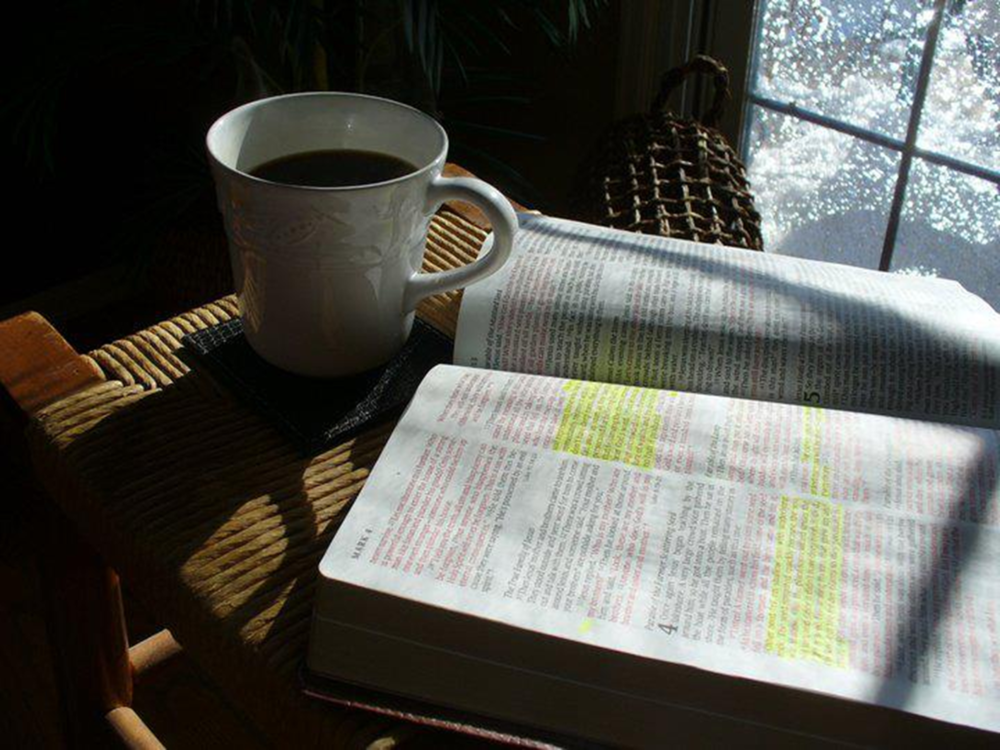
The Path to Our Final Destination

I think I’ve commented on it before . . . how some verses lie in the shadow of others. Case in point, this morning, Romans 6:22.

Romans 6:23 is the well known verse . . . “For the wages of sin is death, but the free gift of God is eternal life in Christ Jesus our Lord.” It’s the consummate summary of the gospel . . . bad news, followed by the good news. Part of the “Roman Road” . . . inscribed on plaques and wall hangings . . . frequently found in Scripture memorization plans. A “big” verse. As such, it can cast a pretty broad shadow. Causing us, sometimes, to skim over the verses around it. But in that shadow, my attention was drawn to the twenty-second verse of Romans six . . . and the path to our final destination.

But now that you have been set free from sin and have become slaves of God, the fruit you get leads to sanctification and its end, eternal life.   (Romans 6:22 ESV)

Paul’s been making the argument that grace should be no motivator to sin. In fact, the same grace that forgives sin is the grace which gives new life. Moreover, while sin’s power is death, grace conquers because it offers a righteousness that comes by faith. Thus, we are not to sin because it’s covered by grace. Instead, we are to pursue righteousness because it is who we are by grace.

And so, set free from sin, we are now free to yield to a new master . . . we are free to become slaves of God.

To be sure, we are not “there” yet . . . the old man waging war continually with the Spirit within us (Gal. 5:16-18). But, if we walk in the Spirit, we will not have to concede to the flesh. And the fruit of submitting ourselves to the Spirit, of counting ourselves as slaves to God, is sanctification. The manifest impact of yielding ourselves to the things of the kingdom will be an ever-increasing, more and more evident, holiness.

Slaves of God start thinking more and more like His Son. Slaves of God start acting more and more like His Son. Slaves of God become more and more conformed to the nature of His Son.

And this process of sanctification, this realization of holiness, is but the divine preparation for a glorious end.

While being focused on living life well now is important, the ultimate goal of this pursuit is the fullness of salvation. That what is now a “work in progress” will one day be the complete “restoration of the soul to the favor and enjoyment of God forever” (Charles Hodge). That the holy determination to live according to the new nature now, will one day become second nature. Having already been delivered fully from the penalty of sin, holiness will just be who I am when I’m finally and fully delivered from the power and the presence of sin.

Sanctification is but the means towards a glorious end. It’s but the preparation for a future reality. It’s but the incentive towards greater riches. It’s but the evidence that the promise will be fulfilled.

To be sure, I fail and fall way more than I would like. But, in those moments when, by His grace, I recognize myself really living as a “slave of righteousness” through the power of the Spirit of God, far from patting myself on the back and saying, “I’ve arrived,” I should, instead, be reminded that it’s but the path to our final destination. I should look to the sky and know that I’m not home yet . . . but I’m on my way.

All because of grace. All for His eternal glory.

Posted in Romans | Tagged , | Leave a comment

Honor Me

I’ve read it before, but this morning it kind of bothers me afresh. They haven’t been perfect, but they’ve been faithful. They’ve spent four decades working together to lead their people out of bondage and into a land flowing with milk and honey. They had to take a forty year detour because of these same people. People who complained . . . people who grumbled . . . people refused to enter the land . . . people who rose up in rebellion.

As I enter Numbers 20, apparently it’s been 38 years since the detour at Kadesh Barnea. Now the congregation is back . . . a new congregation. Those who refused entrance the first time have all passed during Israel’s wandering in the wilderness. Their kids have grown up. And now the children of Abraham, Isaac, and Jacob are back in the wilderness of Zin, staying at Kadesh.

And, kind of like father, like son, they rise up against Moses and Aaron quarreling about a lack of water. “It would have been better to perish in the wanderings like the others, than come into this desert where there’s no water. Tell us again, why you made us come out of Egypt?” (20:3-5). Sounds too familiar. And Moses and Aaron do what they do when “their flock” gets ugly. They go to the tabernacle, get on their faces, and intercede for them before the LORD.

And God meets with them . . . and He gives them the plan for addressing the people’s thirst . . .

“Take the staff, and you and your brother Aaron gather the assembly together. Speak to that rock before their eyes and it will pour out its water. You will bring water out of the rock for the community so that they and their livestock can drink.”   (Numbers 20:8 ESV)

And Moses and Aaron follow God’s instructions . . . kinda’. Rather than speak to the rock, they chastise the people. Rather than speak to the rock, in what seems to be frustration and anger, they instead strike the rock twice. And, though water starts to flow in abundance such that all the people and their livestock drink, behind the scenes God deals with Moses and Aaron in what seems a most severe manner.

But the LORD said to Moses and Aaron, “Because you did not trust in Me enough to honor Me as holy in the sight of the Israelites, you will not bring this community into the land I give them.”    (Numbers 20:12 ESV)

And before the chapter ends, at Mount Hor, Moses escorts Aaron up the mountain along with Eleazar, Aaron’s son. And there Aaron hands over his priestly garments to his son, and then Aaron is “gathered to his people” and dies. And, honestly, it kind of bugs me.

So much given for the work of the LORD. So many risks taken. So much rebellion dealt with. So close to entering the promised land. And Aaron, and soon Moses, comes up short from seeing the prize.

But as I noodle on it, I’m reminded that it’s never been about Aaron getting the prize, but always about God getting the glory. It has been grace upon grace that afforded Aaron the privilege of being high priest . . . even after that golden calf incident at Mt. Sinai. Though he and Moses often bore the brunt of a complaining crowd, they were also afforded entrance into the very presence of God . . . having done enough “cloud time” that interacting with God’s glory had perhaps become a bit common place. So much so, that he and Moses decided to improvise a bit with God’s command concerning the rock.

It’s faith that pleases God (Hebrews 11:6). But these wearied servants didn’t trust God enough to let Him deal graciously with this new congregation and show Himself holy in their sight. And thus, for these well-worn warriors, consequences.

And so, while I feel a genuine sense of sadness as I read of Aaron’s “home gathering,” I’m also filled afresh with a reverent awe before my God who, even in Aaron’s death, deals with him so graciously. Not swallowed up by the earth . . . not taken out by fire or plague . . . but gathered to his people by his God.

And I’m reminded that my God is to be honored as holy. That He is to be set apart as Sovereign. That He is to be the center of all attention, and mine is to be but a sign post pointing to Him. And that it’s not about me winning the prize, but about Him receiving all the glory.

Honor Me, He says. Yes, LORD, I respond . . . by Your grace, for Your glory.

Posted in Numbers | Tagged | Leave a comment

He Stood Between . . .

A bit of extended reading time in Numbers this morning (chapters 9 through 17). Crazy! It’s amazing what “doing community” in the wilderness can do to a nation. It has a way, it seems, of making people kind of cranky . . . and oh, so foolish. Despite God’s visible presence among them as the cloud hovers over the tabernacle, indicating when to set up camp and when to move out, they somehow seem to forget that God’s there. Instead they focus on the stuff of the flesh. Stuff like . . . I’m getting tired of manna and want some variety in my diet. Stuff like . . . I know God promised us this land, but have you seen how big those dudes are? Stuff like . . . Who made you the boss over me?

And as a result, God’s anger is kindled. And though Moses spends a lot of time facedown petitioning on behalf of the cranky crowds, people are dying. Some due to plague. Some due to the earth swallowing them and their families whole. And God repeatedly asks, “How long will this people despise Me? How long with they not believe in Me? How long shall this wicked congregation grumble against me?”

And there was a phrase at the end of chapter 16 that caught my eye . . . and captured my heart . . . and evoked a measure of thanksgiving.

It’s another day in the congregation. Actually not just any other day . . . it’s the day after Korah and Co. have been consumed by the earth because of their arrogant challenge of Moses’ and Aaron’s authority. So, you would think that the day after that kind of night before would be a day when people are a bit more cautious about mouthing off to Moses or to the LORD. Evidently not! The next day they grumble against Moses and Aaron and how they have “killed the people of the LORD.” Hello!!! Did they not see the ground open? Kind of a God thing . . . not really a man thing. But it seems there’s something about allowing the flesh to lead that can make people kind of stupid.

And so, they assemble against Moses. And then the cloud descends upon the tabernacle. The glory of God enters the camp, and another plague starts taking out people. “Get away from the midst of this congregation,” says the LORD to Moses, “that I may consume them in a moment” (16:45). And Moses and Aaron go facedown before the LORD on behalf of the people . . . AGAIN! And then Moses tells Aaron to quickly grab his censer, put fire on it from the altar, and start making atonement for the people “for wrath has gone out from the LORD” (16:46).

And here’s what caused me to pause . . .

So Aaron took it as Moses said and ran into the midst of the assembly. And behold, the plague had already begun among the people. And he put on the incense and made atonement for the people. And he stood between the dead and the living, and the plague was stopped. (Numbers 16:47-48 ESV)

And I pulled out my colored pencil for Jesus and shaded “he stood between the dead and the living, and the plague was stopped.”

If Aaron’s actions aren’t a foreshadow of the Savior’s atoning work, then I’m not sure what is. Jesus, as it were, ran into the midst of the assembly . . . the destruction of sin all about Him . . . and made atonement for the sins of men through the offering of Himself on the altar’s fire. And my Savior stands between the dead and the living and the plague is stopped. For all who will believe, death’s power is broken. For all who will receive, the wrath has been turned away. For all who are covered by the offering of the spotless Lamb of God, they are counted among the living. The truly living. Given life . . . given new life . . . given abundant life . . . given life everlasting.

O’, what joy seeing Jesus “pop up” in the Old Testament. What humbling blessing to know again the Father’s heart towards wayward children that He would send His Son to redeem them that God might be both just, and the justifier, of all who believe (Rom. 3:26).

O, what amazing grace! To Him be eternal glory!

Posted in Numbers | Tagged | Leave a comment

A Right Response to the Word

Some pretty high-powered reading this morning. Romans 3 declares that all have sinned, the law bearing witness to man’s failure at works-based righteousness. And then it reveals that a righteousness of God has been manifest — “the righteousness of God through faith in Jesus Christ for all who believe” (Rom. 3:22). Certainly worth pausing over and typing out a few thoughts.

I also read Psalm 51 this morning. Game, set, match against David. So busted! The law referred to in Romans 3 condemning him for his unbridled lust and duplicit, murderous treachery. And yet He pleads to God for washing and cleansing. Asks that his transgressions be blotted out . . . that a right spirit might be renewed . . . that the joy of salvation might be restored. The grace Paul explains in Romans 3 is given flesh and blood application in Psalm 51. Worthy too of a bit of noodling and some writing.

But it was my reading in the latter part of Matthew 22 that “topped the list” in terms of stirring my soul. Maybe because three phrases in the passage highlighted for me a right response to the Word.

They marveled . . . they were astonished . . . no one was able to answer Him a word.

It started as a setup. In Matthew 22:15 it says the Pharisees went to Jesus and plotted how to “entangle Him in His talk.” They understood that Jesus had just spoken against them in His stories of the kingdom (Matt. 21:23-22:14). “Okay, Mister Articulate Man,” they think, “Let’s see if we can’t trip You up with all Your words.”

So the Pharisees send some of their disciples to Jesus with an “innocent question” about paying taxes (23:16-22). “Is it lawful to pay taxes to Caesar, or not?” Jesus, aware of their ill intent, tells them to look at a coin and take note of whose face is on it. It’s Caesar’s of course. It’s his money. So, says Jesus, “render to Caesar the things that are Caesars, and to God the things that are Gods.” Pretty simple, yet pretty profound. And Matthew records that when they heard His response, “they marveled” (v.22).

Emboldened by this challenge, but perhaps disdainful of such an inane topic, the Saducees step forward with some “sincere” ponderings about the resurrection (23:23-33). They lay out a hypothetical case that they are sure puts a stake in the heart of resurrection teaching. But Jesus dismisses their logic, “You are wrong, because you know neither the Scriptures nor the power of God.” And then Jesus, who is the Author of the Scriptures and the Incarnate Power of God, corrects their understanding of marriage in heaven, and reminds them of their own admission that God is not the God of the dead, but of the living. And, says Matthew, “when the crowd heard it, they were astonished at His teaching” (v.33).

Finally, the Pharisees push toward Jesus one of their brightest minds to engage Him in a debate concerning “the greatest commandment in the Law” (23:34-45). And after providing an unarguable response to His question, Jesus asks them a question of His own, “If the Christ is the son of David, then how is it that, through the Spirit, David calls Him Lord?” And, pens Matthew again, “no one was able to answer Him a word.”

And I can’t help but think that those should be three pretty common responses whenever I hear Jesus speak. That I should marvel . . . that I should be astonished . . . that I should be still and silent with awe. Sometimes, I fear, I can be so impressed with my understanding of a passage or, with the results of my study, that I fail to recognize that it isn’t about how bright I am but how gracious He is. That He, through His Spirit, illuminates the Scriptures. That I hear His voice solely due to the grace of divine revelation.

If I truly regarded it as such, wouldn’t I, more often, marvel . . . and be astonished . . . and sit quietly before Him?  Wouldn’t that be a right response to the Word? I’m thinkin’ . . .

Word of God speak . . .

By Your grace . . . for Your glory.

Posted in Matthew | Tagged | Leave a comment

Of Head and Of Heart

This morning I encountered two provisions for someone to declare they were wholly the LORD’s. Two approaches that evidenced a willingness to pay a price that their all-out allegiance to the God of creation might be known. One was evidenced to everyone by the head, the other known only to Him who sees in secret by the heart.

Provision was made in the Old Testament for a man or a woman to “separate himself to the LORD” (Numbers 6:1-21). The NKJV says “to consecrate,” the NASB, “to dedicate” and, the NLT speaks of it as “setting themselves apart in a special way.” The original word has the idea of doing something extraordinary, or hard, or difficult. The idea of doing something wondrous. Thus of taking “above and beyond” measures in order to evidence someone’s dedication to the LORD.

The Nazirite vow involved complete abstinence from anything sourced on the grapevine, whether it be for drinking or eating. In addition to not touching the vine, they would allow nothing to touch their head. As long as the person was in this separated state, the locks of their head would be allowed to grow long. They were not to have any contact with death. Even accidentally being beside someone who suddenly died would defile the separation and would require sacrifice and cleansing to reestablish their consecrated state.

What’s more, the vow required that, at the end of the period of separation, the vow be consummated with a number of costly sacrifices. Lambs and rams for a sin offering, a burnt offering, and a peace offering. Loaves of unleavened bread offered as a grain offering along with a drink offering. Their grown out hair shorn, and the locks put on the fire of sacrifice.

And while I don’t necessarily get all the meaning and symbolism associated with this provision for separation, I get that it demanded a lot of effort and a lot of self-determination. And I get that people would know those who undertook the Nazirite vow by their long hair. Their head bearing evidence of their separation to God.

And then I read this in Romans . . .

For no one is a Jew who is merely one outwardly, nor is circumcision outward and physical. But a Jew is one inwardly, and circumcision is a matter of the heart, by the Spirit, not by the letter. His praise is not from man but from God.
(Romans 2:28-29 ESV)

In this provision for separation, it is the heart which bears evidence of a consecrating work.

Circumcision was another ancient rite indicating the desire of people to be separated to God. Another physical act to try and convey a spiritual reality. But, says Paul, the true setting apart of a man or a woman to God is a spiritual dynamic, performed by the Spirit of God, which manifests itself in the physical reality of transformed lives.

It is the circumcising of the heart by the Spirit of God which provides the power for living lives consecrated to the Author or Life. It is the cutting away of the old nature through rebirth that allows true Nazirite dedication. Not by the goodness of any man, but by the grace of the One True God . . . not by human effort, but by divine intervention . . . not because of what we do or abstain from doing, but all because of what Jesus has done on the cross . . . not because of the power of self-discipline, but all because of the power of an indestructible life manifested through Christ’s resurrection from the dead . . . not because of self denial, but because of the abundant out-pouring of God’s grace.

That is separation marked by the heart. That is consecration enacted from the inside out.

Not that we might boast . . . but that He might be glorified.

Posted in Numbers, Romans | Tagged , | Leave a comment

Producing Kingdom Fruit

This morning, I’m hovering over a story Jesus told to the chief priests and elders after they asked Him, “By what authority are you doing these things?” (Matt. 21:23). Jesus has refused to answer them directly because they have refused to deal with the claims of John the Baptist honestly. But Jesus proceeds to tell them a couple of stories. The first is about a son who said he wouldn’t but eventually did, and of his brother who, although he said he would, didn’t (Matt. 21:28-32). Then Jesus tells them another story (Matt. 21:33-46). A story involving a master of a house who builds and then leases out a vineyard. A story involving those who leased the vineyard and said they’d work it. A story involving the master’s son who came to collect and was killed. And, as I’m chewing on it, at it’s core, I think it’s a story about fruit.

I think if, in the past, you were to have asked me why the tenants abused the master’s servants and killed the masters son, I would might have responded, greed. Though the vineyard had been built by the master of the house and leased to the tenants to work it, when the first set of the master’s servants were sent to collect their portion of the crop, they were refused because the tenants didn’t want to part with any of it. But something I read in Jesus’ application of the story, is making me think otherwise this morning.

Jesus said to them, “Have you never read in the Scriptures: ‘The stone that the builders rejected has become the cornerstone; this was the Lords doing, and it is marvelous in our eyes’? Therefore I tell you, the kingdom of God will be taken away from you and given to a people producing its fruits.”   (Matthew 21:42-43 ESV)

It’s that phrase, “a people producing its fruits,” which caught my eye. And, not to over think the parable as it’s main message is the rejection of the master’s son, I’m wondering if the tenants’ issue wasn’t that they didn’t want to share the fruits, but that they had no harvest to share from. They had worked the vineyard, but had nothing to show for it. Though the master expected to share in a certain crop from their labors, they had followed another agenda, and had nothing to return to the master. Thus, Jesus’ application, it would be given to a people producing its fruits.

In the Old Testament, Israel had been likened to a vineyard (Isa. 5:1-7). A vineyard that instead of yielding profitable fruit, bore instead “wild grapes.” That picture of the ancient Israelites was now being applied to the religious leaders of Jesus’ day. The kingdom had been announced to them . . . the vineyard presented . . . yet they did nothing with it. It wasn’t just that they didn’t want to share in the fruit of the kingdom, it was that they had nothing to share. Instead, they had worked their own agenda and not the Master’s. And, refusing the Master’s will, they refused the Master’s Son, masterminding His death. And so, says Jesus, the kingdom will be given to others. Others who will produce the kingdom’s fruits.

For the kingdom of God is not a matter of eating and drinking but of righteousness and peace and joy in the Holy Spirit.   (Romans 14:17 ESV)

Not an exhaustive list of the kingdom’s fruit . . . but a good start. Righteousness . . . peace . . . and joy . . . all in the Holy Spirit.

The Master has built the vineyard, the kingdom, on the foundation of the imputed righteousness of Christ to all who receive the gift of God’s salvation. Through His Son’s death on the cross, peace has been provided to remove the enmity between holy God and sinful man. And the vineyard has been seeded with inexpressible joy for those who believe — the joy of not only knowing sins forgiven, but the joy of a hope of eternity in God’s presence. And we have been given the power to participate in all this through His Holy Spirit.

And from this vineyard, the Master desires fruit. And so, says Jesus, He is redeeming a people that they might be producing kingdom fruit.

That His church may continue to be such a people. By His grace . . . for His glory.

Posted in Matthew | Tagged | Leave a comment

A Left-Handed Person with Right-Handed Righteousness

I’m left handed. Always have been. No one’s ever tried to force me to be otherwise. Sometimes it’s been a challenge. As a kid I remember that scissors never really worked well for me unless I got a special kind. There were always fewer baseball mitts to choose from. Really hated getting ink on my hand as, when I would write, I had to push my pen across words that had just been freshly scribed upon the paper. But being left-handed kind of helped when I met a new opponent in ping pong or tennis, at least initially. They weren’t used to playing lefties . . . I had some experience with “righties.” Sure, the world was probably more right-hand oriented when I was a younger, but, for the most part, being left-handed wasn’t a big deal.

But in Scripture, you clearly get the sense that the left hand was the lesser hand. That power and authority were associated with the right hand. You see this in the Old Testament repeatedly as it concerns the right hand of God (if you’re interested and have the time, check out Psalms 18:35, 20:6, and 74:11 . . . also Exodus 15:6 and Isaiah 41:10).

And, in the New Testament, the right hand is seen as the place of power next to the One who rules over heaven and earth. Repeatedly, Christ is portrayed as standing, or seated, or interceding at the right hand of God, “at the right hand of the throne of the Majesty in the heavens” (Heb. 8:1). Also, in Revelation, Christ carries the stars representing the angels of the churches in His right hand (Rev. 1:16, 20) — indicating His authority as head of the Church.

So something I read in the Psalms this morning made me glad that I was a left handed person with right-handed righteousness.

We have thought on Your steadfast love, O God, in the midst of your temple. As Your name, O God, so Your praise reaches to the ends of the earth. Your right hand is filled with righteousness.   (Psalm 48:9-10 ESV)

The right hand of God is filled with righteousness.

It is filled with the righteousness of His very being. God is righteousness — He Himself is the perfection of His nature. He is holy. He is light. As such, His right hand also carries the plumb line by which righteousness is determined. He is the standard against which what it means to be right and to be just are determined. And all will come before Him one day to be judged according that standard.

But the right hand of God is also filled with righteousness offered to all who will receive it. Having sent His Son to bear the immense “shortfall” of our righteousness, having placed the penalty for our sin upon Him, God freely credits, to those who bow before His Son as Savior and Lord, the righteousness of Christ. God dishes out liberally, from His right hand, the righteousness of Himself in Jesus, who “was in all points tempted like as we are, yet without sin” (Heb. 4:15). God confers upon those who come to Him in confession, repentance, and seeking forgiveness, not only a pardon for transgression, but a pronouncement that, in Christ, every believer has been clothed in robes of righteousness. For in the gospel, which is the power of God for, a righteousness is revealed that comes through faith (Romans 1:16-17).

For our sake He made Him to be sin who knew no sin, so that in Him we might become the righteousness of God.   (2Corinthians 5:21 ESV)

God’s right hand is filled with righteousness. And this left-handed person has received it in abundance. Not because of who I am . . . despite what I have done. But solely because of who my Savior is . . . and what He has accomplished through the cross on my behalf.

What amazing grace! To Him be all glory!

Posted in Psalms | Tagged | Leave a comment

The Brothers

To be honest, I probably didn’t approach Acts 28 with “high expectations” this morning. I should have. After all it is God-breathed . . . “and profitable for teaching, for reproof, for correction, and for training in righteousness.” And it does put Paul in Rome, further establishing that “this salvation of God has been sent to the Gentiles” (Acts 28:28).

And, to be sure, there’s some pretty amazing stuff that happens in the first part of the chapter. Paul, and all who were on board, survive a horrendous time at sea and then a hairy shipwreck. They end up on the island of Malta and are shown “unusual kindness” by the native people. As they warm themselves by a fire, Paul is bitten by a poisonous viper (talk about your terrible, horrible, no good, very bad day!), but is unaffected and, as such, is exalted by the native people as a god. And the gospel spreads. Not you’re everyday happenings.

But as I read through the chapter, Dr. Luke’s meticulous account of events, it seemed a bit anti-climatic. However, as is often the case, I was surprised by a simple phrase which stood out unexpectedly this morning. One that caught my eye and warmed my heart.

And so we came to Rome. And the brothers there, when they heard about us, came as far as the Forum of Appius and Three Taverns to meet us. On seeing them, Paul thanked God and took courage.   (Acts 28:14b-15 ESV)

To say it had been a trip and a half would be an understatement. Since being put on the boat for Italy, Paul and those permitted to travel with him, Luke and Aristarchus, hadn’t had a lot of likeminded people around them. Seamen, Roman centurions, and prisoners don’t necessarily make for the warmest fellowship. And it wasn’t like they were going on some vacation cruise. Then throw in a crazy helmsman who felt like he needed to make up for lost time. And you have the makings a very, very rough trip. Throw in a shipwreck and a snake bite and I’m thinking Paul & Co. were ready for some recharging. Enter “the brothers.”

No matter how “profitable” a grueling ministry trip may have been . . . even when God has shown Himself faithful during the storm . . . there is nothing like connecting with other believers to evoke praise and build up a saint.

Paul saw the brothers, some who had traveled a fair distance to be with him, and he took courage. Though the outer man had been through the ringer, just the presence of other believers was enough to restore confidence and boldness within the faithful apostle. An opportunity to share the things of Christ together . . . to trade stories of how God was at work . . . all serving to renew the inner man of Paul and his traveling companions.

And I can’t help but think that’s how Sundays should be. For many, they have spent a week amidst people who need Christ but have little interest in the things of the kingdom. And, for some, they’ve been riding the waves of their own storms, uncertain if the ship is going to hold together for another week. But walk in those doors . . . start mingling with the family of God . . . and there’s something there that should work revival within the soul. That something is the brothers . . . and the sisters too. And on seeing them, we should thank God. As we come together, it should serve as a respite from the turbulence of life and the storms of adversity. A calm bay where our anchor is again sunk deep . . . a rock solid place where the certainty of things hoped for is renewed. Where confidence is rebuilt. Where joy is restored.

May it be so among the people of God.

And let us consider how to stir up one another to love and good works, not neglecting to meet together, as is the habit of some, but encouraging one another, and all the more as you see the Day drawing near.    (Hebrews 10:24-25 ESV)

All because of grace. All for His glory.

Posted in Acts | Tagged | Leave a comment

Eyes Opened Wide

That they would be desperate is not surprising. Don’t know how long these two men had been blind, but long enough to be sitting by the roadside begging. And you got to know that while they appreciated the alms that were dropped before them by some leaving Jericho, what they wanted more than anything else were eyes opened. And so, when they heard that Jesus was passing by, they cried out as if their lives depended on it . . . and, more than they could know at the time, their lives did depend on it.

And so they cried out repeatedly, “Lord, have mercy on us, Son of David!” They might have addressed anyone worthy of honor as “Lord.” But there would be but one they would address as “Son of David” — that title reserved for God’s Holy Anointed One . . . the Messiah. The Promised One . . . the Deliverer of God’s people. They had heard enough talk along that road concerning Jesus of Nazareth that they had come to believe, as some had said Jesus claimed, that He was the Messiah. And so they cried out to Israel’s Deliverer for a bit of their own deliverance.

And Jesus, compelled by compassion, touched their eyes, “and immediately they recovered their sight and followed Him” (Matthew 20:29-34).

That they followed Him, seems to me, was further evidence of their faith. But what they would soon see with their newly functioning optical systems was more than they could have bargained for. Some things you don’t want to see. But that’s what happens when you’re given eyes opened wide.

Just before recording this incident, Matthew chronicles a conversation Jesus had with His disciples. It was a conversation that Jesus has had before with His disciples, a conversation concerning His death. But this one was the most detailed, the most graphic, perhaps the most disturbing . . .

“See, we are going up to Jerusalem. And the Son of Man will be delivered over to the chief priests and scribes, and they will condemn Him to death and deliver Him over to the Gentiles to be mocked and flogged and crucified, and He will be raised on the third day.”   (Matthew 20:18-19 ESV)

Before this Jesus had hinted at His death (Matt. 12:40). And He had spoken of an impending time of suffering, and of being delivered over to the hands of men to be killed (Matt. 17:12, 22). But this was the first time He spoke of flogging and crucifixion. And it occurs to me that these two formerly blind guys who had become followers of Jesus were soon to see something that may have caused them to wish that their eyes had never been opened.

A little over a week after having received their sight, I imagine them there, at that place called Golgotha, staring in horror as their Sight-Giver is hung before them. His body so beaten, His face so marred, that He is almost beyond recognition. The Son of David, who had directed the power of heaven towards healing their eyes, now hung seemingly helpless before a jeering crowd. “Father, forgive them,” He pleads before heaven. “My God, My God why have You forsaken Me,” He cries into the darkness. “It is finished,” He shouts with a victorious shout. “Father, into Your hands I commit my spirit,” as He breathes His last.

And whether they saw it then, or later, they would come to know that His suffering was for them. That it was their sin that compelled the Son of David to take upon Himself the wrath of God. That, because of their transgression and iniquity, the prophesied King of Heaven would come first as the once-for-all sacrificial Lamb of God. That the horror of His death would be matched only by the horror of their realization of the depths of their own depravity and rebellion before the God of All Creation.

Maybe they should have been careful what they asked for when they asked for their sight. What they saw was probably more than they wanted to see. But see it they did. His death on the cross. The realization of the depths of their sin that put Him there. All because of eyes opened wide.

But, I’m guessing, they wouldn’t change a thing. For they also saw their redemption. The gift of God graciously poured out on a needy world. And, just as He had said, Christ rose from the grave on the third day. And, as He promised, they knew, just knew, they would see Him again, the Son of David, in all His glory and majesty.

All because of eyes opened wide.

By His grace . . . For His glory!

Posted in Matthew | Tagged | Leave a comment

Hearing the Rhythm

I finished today’s reading in Leviticus 18 through 20 and sat back. While I couldn’t remember all the detail of what I had just read, the rhythm of the passage continued to pound in my head and in my heart. If this were a symphony then the underlying melodic theme would be unmistakable. Twenty-five times in ninety-four verses . . . more than one out of every four . . . rings the clarion, calling all with ears to hear to know the underlying principle behind the many commandments. The trumpet sounds, again and again, “I am the LORD!”

God speaks to Moses and, in turn, directs him to relay to the congregation of the people of Israel the commands they are to obey. For the most part, these commands are in the “thou shall not” category. Behaviors and acts that characterized Egypt, the land they had left, and the Canaanites, the people they were about to dispossess. “You shall not walk in their statutes,” says the LORD, “You shall follow my rules and keep my statutes and walk in them. I am the LORD your God” (Lev. 18:1-4).

And so goes the back beat . . . and so is established the rhythm . . . and so is repeated the symphonic theme . . . I am the LORD.

Again and again, “thou shall not” after “thou shall not,” the people are brought back to the overarching reason for God’s command that they be not like the people of the nations around them, “I am the LORD.” And with that, the associated implication is pronounced three times.

Speak to all the congregation of the people of Israel and say to them, You shall be holy, for I the LORD your God am holy. . . .

Consecrate yourselves, therefore, and be holy, for I am the LORD your God. . . .

You shall be holy to Me, for I the LORD am holy and have separated you from the peoples, that you should be Mine.      (Leviticus 19:2, 20:7, 20:26 ESV)

God had chosen them to be His people. God had separated them to Himself. Delivering them from Egypt, the old world that had enslaved them, that world that was behind them. About to drive out the inhabitants of Canaan, that they might live under heaven’s rule and economy and not be soiled by the world in front of them. And their’s was to be holy . . . just as their God is holy. And thus the back beat. Thus the rhythm. Thus the theme.

Less about checking the box of all that they didn’t do, it was about ever being drawn towards being who they were and reflecting Whose they were. To be continually reminded that “I am the LORD” . . . to, again and again, consider Jehovah, the “self-existing One,” the “I AM.” By ever keeping that rhythm pounding in their head and heart, they would stay focused on being the people God had call them to be. They would desire holiness as long as they remembered that He is holy.

So too would be those of the New Covenant. Those who, by grace, have been called to be the people of God:

As obedient children, do not be conformed to the passions of your former ignorance, but as He who called you is holy, you also be holy in all your conduct, since it is written, “You shall be holy, for I am holy.”    (1Peter 1:14-16 ESV)

Desiring to be holy. Not that we might be accepted by God, but because we have been accepted by God . . . through the work of the cross . . . because of the once-for-all sacrifice of Christ, the Lamb of God. As, by faith being made alive in Christ, we desire to, because of the Father’s love, bring glory to the Father. Desiring, because of I AM’s holy nature, to live lives that are, by grace, holy as well.

If I keep the rhythm . . . if I get in the groove of the back beat . . . if the symphony’s theme, “I am the LORD,” resonates continually within me, then I will seek to live in accordance with the holiness of God.

By the power of the Spirit . . . through the all sufficient grace poured out by the Son . . . and for the everlasting glory of the Father . . .

Amen?

Posted in Leviticus | Tagged , | Leave a comment