
Fan Into Flame

I’m reminded this morning of the relationship between the divine and the determined. That God’s sovereign will has been intertwined with man’s simple ways . . . that God’s eternal purposes have been linked to man’s earthly powers . . . that while God will act, He does so through those who are available.

It came up repeatedly this morning as I continued reading in Nehemiah. Here are some examples . . . God had put it into the heart of Nehemiah to rebuild the walls at Jerusalem (Neh. 2:11) . . . but “the people had a mind to work” (4:6). When opposing forces gathered to fight against Jerusalem and disrupt the rebuilding project, “we prayed to our God AND set a guard as protection” (4:9, emphasis added) . . . Nehemiah encouraged the people to “remember the Lord, who is great and awesome, AND fight for your brothers” (4:14, emphasis added again) . . . and, while Nehemiah believed with all his heart that “our God will fight for us,” he also called the people to rally, with sword in hand, when they heard the sound of the trumpet (4:20).

God’s work . . . the peoples willingness to engage in it. God as architect . . . the returned remnant, the laborers. God the Commander-in-Chief of the army, wanna be wall-builders enlisted as His army. And as this was running through my mind, I encountered the following in another of my readings this morning . . . boy was I set up . . .

For this reason I remind you to fan into flame the gift of God, which is in you through the laying on of my hands . . .    (2Timothy 1:6 ESV)

As our congregation has been reminded repeatedly from the pulpit over the last several months, though the Scriptures may have been written to someone else, they were written for us. And so, when I come to the first part of Paul’s second letter to Timothy and come across this charge to the young man of God, I can’t help but apply it to myself. And, apply it in the context of what I’ve just read in Nehemiah . . . God’s gifting . . . my fanning into flame.

That God, through the Spirit, gifts His children as He determines, is clearly taught in Scripture. Grace has been given to each one of us as Christ has apportioned it (Eph. 4:7) . . . each believer has been given “the manifestation of the Spirit for the common good” and they have been gifted for service in the body by “the one and same Spirit” who distributes gifts to everyone as He determines (1Cor. 12:4-7, 11). But, while the Triune God is the Determiner and the Giver of these giftings, I am to be actively engaged in fanning into flame the spark which God has set.

The King James translates it, “stir up the the gift of God which is in you.” Not as in stirring up a cake mix . . . but as in stirring up embers in a fire that are in need of re-kindling that they might burst again into flame, producing a productive heat rather than just a warm glow.

I am not the source of any gifting, but I am to be a steward. I can’t, in and of myself, generate any power, but the power within me will not be unleashed without my cooperation. The wall won’t be rebuilt because of who I am or what I can do . . . the battle won’t be won because of my strength and strategy . . . God is the builder of the wall . . . the battle belongs to the Lord. But, in His Sovereign determination, He has enlisted me to work on a part of the wall . . . He has drafted me to fight the fight in selected battles . . . and mine is to purpose with a willing heart to engage in the building . . . mine is to freely offer my feeble efforts in the fight . . . that He might, through me, accomplish His purposes.

Fan into the flame . . . the all-sufficient grace bestowed . . . the faltering faith seeded . . . the gifting which has been given . . . all for His glory. Amen?
Posted in 2Timothy | Leave a comment

Get A Firm Grip

Last week my team got creamed. My company hosted a picnic for the employees . . . food, fun, relay races, and a tug-of-war competition. What was I thinking? Talk about allowing peer pressure to put you in situations you wouldn’t otherwise sign up for . . . ok, maybe it was more like boss pressure. But, again, what was I thinking? What were the 8 of us thinking? We had formed a team for the relay races in order to be “good sports” and participate . . . but agreeing to compete in the tug-of-war eliminations? Brother! We went out . . . or should I say down . . . in the first round. A number of us lost our footing (we think it’s because they had us lined up where we had just run the Crisco’d watermelon roll relay . . . but that’s another story) . . . others of us just lost our grip. No contest. Better luck next year . . . don’t think so.

Ok . . . so why the flashback? It’s Paul’s closing words in his first letter to Timothy that have me thinking about the importance of making sure I get a firm grip . . .

But as for you, O man of God . . . Pursue righteousness, godliness, faith, love, steadfastness, gentleness. Fight the good fight of the faith. Take hold of the eternal life to which you were called and about which you made the good confession in the presence of many witnesses.    (1Timothy 6:11-12 ESV)

I fear that for some, they view their “decision for Christ” as the final step in “their journey.” That they’ve “found it” and now they’re done with searching for it. That the sinner’s prayer has been prayed . . . the ticket punched . . . eternity secured . . . done and won . . . now they can get on with life. That for some, being saved means they’ve reached the finish line . . . that they’ve dealt with the question of eternity and their soul and so it’s all done . . all that’s left is to keep the “saved” button visible so that when Jesus comes He’ll know who said the prayer. But far from that, the moment I believed was just the beginning. Salvation is less about making a decision and more about entering a race . . . and not just a sprint, but a marathon. The faith that was but a mustard seed when I first believed the gospel call, is the faith that I am to attend to and grow in. It’s the faith I am to pursue . . . the faith I am to live out . . . the faith worthy of fighting the good fight for. The eternal life I received when I first believed is the eternal life upon which I am to get a firm grip.

As for the rich in this present age, charge them . . . They are to do good, to be rich in good works, to be generous and ready to share, thus storing up treasure for themselves as a good foundation for the future, so that they may take hold of that which is truly life. (1Timothy 6:17-19 ESV)

Timothy, Paul says, take hold of eternal life . . . seize it . . . and encourage others to do the same.

I am to get a firm grip on the things of righteousness, godliness, faith, love, steadfastness and gentleness. To submit to the sanctifying work of the Spirit in me and, by His all sufficient grace, cultivate character which imitates that of the Savior’s. And getting a firm grip on that “which is truly life” will involve where my treasures are as manifest in the way I conduct my life . . . being rich in good works . . . generous and ready to share . . . less concerned about my 401(k), or my RRSP for my Canadian brethren, than I am about storing up treasures as part of “an inheritance that is imperishable, undefiled, and unfading, kept in heaven for you” (1Peter 1:4).

Pursue righteousness . . . fight the good fight . . . store up heavenly treasures. That’s the race I’m running . . . those are the “events” I’ve signed up for.

Take hold of eternal life . . . that which is truly life . . . that which Jesus calls abundant life (John 10:10). Get a firm grip . . . By His grace . . . for His glory.

Posted in 1Timothy | Leave a comment

Knowledge of the Holy One

It is the key that unlocks the door . . . the puzzle piece that completes the picture . . . the switch that turns on the light. Without it, smart people can really be kind of dumb . . . simple things become complex . . . and complex things are rationalized away in simple-minded ways. It is available to all . . . but pursued by too few. It is the knowledge of the Holy One.

The fear of the LORD is the beginning of wisdom, and the knowledge of the Holy One is insight. (Proverbs 9:10 ESV)

For 9 chapters wisdom has been making her plea . . . calling out in the streets . . . crying out at the gates . . . claiming to offer returns better than jewels, gold, and silver (8:11, 19) . . . promising to be found by those who diligently seek her (8:17). And just as she started her plea (1:7) she concludes it . . . the fear of the LORD is the beginning of wisdom. But here she adds a bit of “color” to her claim. It is not some random reverence for an unknown God but, the key to wisdom . . . the “secret sauce” of insight and understanding . . . the great connector between that which is earthly and that which is of another realm . . . that key is knowledge of the Holy One.

The word, actually, is plural . . . literally it is “a knowledge of the Holy Ones.”

Insight . . . discernment . . . meaning . . . all are sourced in knowing the Triune God. Without knowing the Creator, creation is left to our puny minds to explain. Without knowing the Giver of life, the meaning of life is left up to our whims. Without believing that He has numbered our days and ordered our steps, we are left to aimlessly wander unaware of where we are going. But, by the grace of God, start to gain knowledge of the Holy Ones and things fall into place.

Know that a Triune God has made man “in our image” (Gen. 1:26) and desires communion with His creation and you understand the problem of sin, the need for atonement, and that which drives God’s pursuit of the sinner. Start to know something of the heart of a Heavenly Father and grasp the lengths to which He might go to make a way for a prodigal child to return. Comprehend something of the Son’s desire to do the Father’s will and make sense of why God became flesh . . . and of why the Son of God humbled Himself, becoming the Lamb of God, to offer Himself as a once-for-all sacrifice for sin and the way to reconciliation to the Father. Start to get the active agency of the Spirit of God living inside of born again believers and you have available resurrection power to transform lives as you become more adept at hearing His voice and being led in His ways.

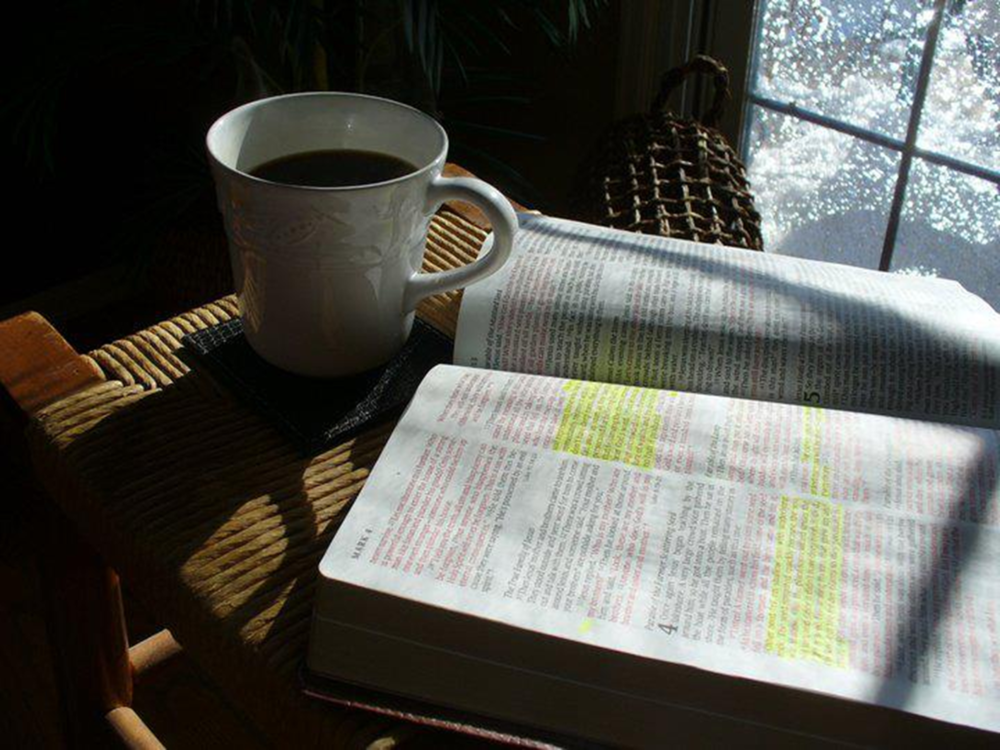
And it’s not like we’re left on our own to “feel it out” . . . or form an intimacy with the divine through our own understanding. But I have this book in front of me. The God-breathed Scriptures . . . illuminated through the God given Spirit . . . designed that I might know something of the Holy Ones.

It’s not about knowledge for knowledge sake. It’s not about facts and data and mindless regurgitation as if it were about playing some trivia game. But it is understanding that bears the fruit of insight and discernment. It is perception which open up reality. It is awareness that produces fruitfulness. A knowledge which, in the end, pleases God.

Thus says the LORD: “Let not the wise man boast in his wisdom, let not the mighty man boast in his might, let not the rich man boast in his riches, but let him who boasts boast in this, that he understands and knows Me, that I am the LORD who practices steadfast love, justice, and righteousness in the earth. For in these things I delight, declares the LORD.” (Jeremiah 9:22-23 ESV)

Knowledge of the Holy One . . . for insight into the ways of this life and the one to come.

Might I hear afresh Wisdom’s call . . . and respond anew to Her invitation . . . and pursue at length the riches She offers. By God’s grace . . . for God’s glory.

Posted in Proverbs | Leave a comment

Joy Before the Angels

Luke 15 . . . one great chapter . . . three great parables. Sheep wanders off, shepherd searches for it until he finds it, laying it on his shoulders as he brings it home. Coin is lost, woman searches high and low until she finds it. A man takes his inheritance and goes south (literally), father waits patiently for him to come to his senses and receives him wholeheartedly when he returns. Interesting to noodle on why the lost sheep and the lost coin are searched for, but the lost son is waited upon . . . but that’s for another devo. This morning I’m thinking about joy before the angels.

In all three stories, when the lost is found there is rejoicing. The man with the sheep comes home and “calls together his friends and his neighbors, saying to them, ‘Rejoice with me, for I have found my sheep that was lost.'” (15:6). The woman, upon finding her coin, “calls together her friends and neighbors, saying, ‘Rejoice with me, for I have found the coin that I had lost’ (15:9). And the father, who’s son comes home, tells his other son, whose nose is bent out of shape because he never got a dinner, that the right thing to do is “to celebrate and be glad, for this your brother was dead, and is alive; he was lost, and is found” (15:32). And Jesus, the storyteller, makes sure that the connection is clear . . .

Just so, I tell you, there will be more joy in heaven over one sinner who repents than over ninety-nine righteous persons who need no repentance . . . there is joy before the angels of God over one sinner who repents.    (Luke 15:7, 10 ESV)

First thing to note . . . there will be joy . . . there will be gladness . . . in heaven. If we extend this joy to include the implications of the third story, there will be celebrating in heaven. I’m thinking that reasons to rejoice won’t stop when the last sinner is called home . . . that joy will be a part of eternity.

But what’s grabbed my eye is the fact that, in the cases of these stories, . . . the parables of the lost things found . . . that the “joy in heaven” is equated with “joy before the angels of God.” Other translations render it joy or rejoicing “in the presence of the angels of God.” At first, I’m prone to think that it is the angels rejoicing among themselves. But something I read earlier this year (can’t remember what) has sown a seed about how you might understand this a bit differently. If the word is to be understood as “before the angels” . . . then what, or who, is before the angels rejoicing?

And all the angels were standing around the throne and around the elders and the four living creatures, and they fell on their faces before the throne and worshiped God . . .    (Revelation 7:11 ESV)

What’s before the angels? . . . the throne! Who’s before the angels? . . . Him who sits on the throne, Almighty God! So, if there’s joy “before the angels” over one sinner who repents, who’s doing the rejoicing? . . .

Is it too much of a stretch to think that God Himself rejoices when someone is saved? That the Father in heaven is ready to kill the fatted calf when one of His children who was lost is found . . . when one of them who was dead is made alive. Does God say, “Yes!” when a sinner receives His Son . . . when the shed blood of His Son is applied to the sin stains of a wayward soul and cleanses him white as snow . . . when a pauper is robed in the righteousness garments of Christ? Does God smile? Does He shout with gladness? Does He sing with joy? Pretty sure He at least sings with joy . . .

The LORD your God in your midst, The Mighty One, will save; He will rejoice over you with gladness, He will quiet you with His love, He will rejoice over you with singing.   (Zephaniah 3:17 ESV)

O’ the grace of God that seeks the lost . . . O’ the mighty power of God to save the sinner . . . O’ the overflowing love of God which sings with gladness . . . and displays great joy before the angels . . . when spiritually dead people are made alive in Christ!

To Him be all glory . . .

Posted in Luke | Leave a comment

God’s Good Hand

Perspective . . . it makes all the difference. The filter through which we see life, and live life, really is what defines the “quality of life.” And, what’s got me thinking about this is a phrase that is repeated three times in my reading in Ezra 8 this morning . . . a phrase that I also encountered three times in Ezra 7. If repetition in the Scriptures is the Holy Spirit’s way of emphasizing something,and it is . . . then I better listen up, ’cause He’s shoutin’!

Even though it bears his name, we don’t actually meet Ezra in the book of Ezra until the seventh chapter. There we read of this “scribe skilled in the Law of Moses” returning to Jerusalem from Babylon . . . the king granting his request to return “for the hand of the LORD his God on him” (7:6).

There it is . . . the phrase . . . “the hand of God was on him” . . . first of 6 times it’s used in these two chapters.

Ezra found favor of the king to return to Jerusalem, why? . . . the hand of God was on him. Again, in verse 9 it says that Ezra “came to Jerusalem, for the good hand of his God was on him.” Ezra’s request . . . the king’s assent . . . God’s good hand. Then, after recounting the king of Persia’s edict permitting Ezra to return, Ezra says, “I took courage, for the hand of the LORD my God was on me” (7:28).

In chapter 8, as Ezra gathers together the troupe that would journey back to Jerusalem with him, Ezra notices that there are no sons of Levi . . . no priests . . . and so he goes to find some. And when he’s successful what does he say? “And by the good hand of our God on us, they brought us a man of discretion” (8:18). Ezra’s idea . . . Ezra’s search . . . Ezra finds his Levite . . . but he sees it all as further evidence of God’s good hand.

Not only did Ezra recognize the hand of God in his circumstance, he counted on it. Before leaving for Jerusalem he gathers together his entourage to fast and pray and seek God for direction and protection. For, although the king had offered Ezra an armed escort to guard him and all the treasures he was taking back to the promise land, Ezra refused it . . .

” . . . since we had told the king, ‘The hand or our God is for good on all who seek Him . . . ‘” (Ezra 8:22 ESV)

Ezra saw it as kind of inconsistent if he professed to rely on the good hand of God but took an armed escort of pagan soldiers as an insurance policy. “So,” he says, “we fasted and implored our God for this, and He listened to our entreaty” (8:23). Despite what was often a trek where enemies and bandits would lie in wait for traveling caravans, they arrive safely . . . and what does Ezra credit that to? . . . you got it . . . “the hand of our God was on us, and He delivered us from the hand of the enemy and from ambushes by the way” (8:31).

Whether it was conceiving the idea to return . . . or the king granting the request . . . or them finding Levites willing to return . . . or having a safe journey . . . Ezra saw it all through eyes that recognized the good hand of God upon him. He was encouraged by it . . . he counted on it.

Oh, that I would navigate my day-to-day with such a filter . . . the recognition of the good hand of God upon me. How much do I take credit for, when really it is God’s hand? How smart do I think I am sometimes when, in fact, it’s the good hand of God? I still have to make decisions . . . I still need to engage the task . . . I still need to embark on the journey . . . but at the end of day . . . when the decision turns out to be the right one . . . when the task is successfully accomplished . . . when the journey is safely completed . . . isn’t that all the good hand of God on me? I’m thinkin’ . . .

It is the grace of God to place His hand upon a life . . . and it is the power of God to work all things together according to His purpose. And if I believe these things to be true . . . and I do . . . then God forbid that I should take any credit or have any boast in anything other than God’s good hand. Amen?

Posted in Ezra | Leave a comment

Don’t Be A Budger

When they were little, my girls called it “budging” . . . and those who did it, “budgers.” Budging happens where people are required to line up for something. Budgers are those who, when they arrive, rather than take the next available place at the end of the line, find someone they know who is towards the front of the line and they join them . . . some say they butt in . . . my girls would say, “Hey, they budged! What budgers!” Doesn’t matter whether you’re standing in line to enter a theater, waiting in line to get something to eat, or lined up in traffic . . . nobody likes a budger. Truth be told though, in those situations, most of wish we could budge . . . but were taught it’s not polite to do so, and so we don’t . . . but if we could, we would. Naturally, we want to budge . . . Jesus warned against it.

In Luke 14 Jesus tells a story. He’s been invited to the house of a ruler of the Pharisees for a meal. It wasn’t just a quiet dinner for two . . . it was more of a banquet, Jesus being one of many guests. And Jesus notices something . . . that as the guests arrive, at least some of them jockey for position . . . “they chose the places of honor.” They wanted to sit at the head table. If there was focal point in the room, they wanted to be there . . . if there was to be a limelight, they wanted it shining on them . . . if there was a front of the line, they were budging in order to be there.

So Jesus throws a parable out there . . .

“When you are invited by someone to a wedding feast, do not sit down in a place of honor, lest someone more distinguished than you be invited by him, and he who invited you both will come and say to you, ‘Give your place to this person,’ and then you will begin with shame to take the lowest place. But when you are invited, go and sit in the lowest place, so that when your host comes he may say to you, ‘Friend, move up higher.’ Then you will be honored in the presence of all who sit at table with you. For everyone who exalts himself will be humbled, and he who humbles himself will be exalted.”   (Luke 14:8-11 ESV)

Don’t claim the place of honor . . . don’t exalt yourself . . . don’t be a budger.

Though to differing degrees, there is something in the heart of little boys and girls, and of grown up men and women, that naturally makes them want to be budgers . . . to want to place themselves above others . . . to want their interests to be of greater importance than the interests of others. Jesus says, “Don’t do it!” Rather, go to the end of the line . . . sit in the lowest place . . . humble yourself.

That’s what Jesus did. Though He was God, very God, He didn’t consider the majesty and honor associated with His being something to be contended for and demanded. Instead, He made Himself “of no reputation” . . . and “He humbled Himself and became obedient to the point of death, even the death of the cross” (Php. 2:7-8 NKJV). Jesus, King of Kings and Lord of Lords, went to the end of the line . . . presenting Himself as the meek and lowly Jesus. He who deserves the highest place, took the lowest place. He, before whom every knee will one day bow, relinquished His own interests for the sake of others. The Son of God, in order to redeem a fallen creation, willingly became the Lamb of God.

Therefore, it says, God highly exalted Him (Php. 2:9). He who allowed Himself to be subject to the shame of the cross and the weakness of death, was lifted up . . . raised from the dead on the third day . . . ascended into heaven . . . exalted at the right hand of the Father on high . . . given the name which is above every name. “For he who humbles himself will be exalted.”

God opposes the proud but gives grace to the humble. Humble yourselves, therefore, under the mighty hand of God so that at the proper time He may exalt you . . . .   (1Peter 5:5-6 ESV)

I don’t need to make sure I’m at the front of the line . . . I don’t need to be a budger . . . I just need to trust in the One who created me and loves me so much that He sent His Son to redeem Me. I don’t need center stage . . . that’s Jesus’ place . . . the back row works just fine if only to be in His presence. Oh, that I might be content with the lowly place that He might be lifted up.

By His sanctifying grace . . . for His eternal glory.

Amen?

Posted in Luke | Leave a comment

All In

Last year, a business matter I was involved with went to mediation. A dispute had risen between the company I work for and another, and though we tried to work it out among ourselves, it just wasn’t happening . . . and so, we went to a third party. Interesting process. We arrived at the mediator’s offices and were seated in one conference room. Representatives from the other company were seated in another room. The mediator then went back and forth between the two rooms . . . getting more facts . . . seeking understanding . . . passing on information . . . tendering offers . . . providing legal expertise as appropriate . . . trying to bring the two parties together on a mutually agreeable resolution. But one thing that the mediator made sure to let us know was that he was impartial . . . he had no “dog in this fight” . . . the outcome was of no personal interest or importance to him.

This morning, as I continue reading in Paul’s letter to Timothy, I’m reminded of another mediation I’ve been involved with . . . but in this case, the Mediator had a very personal stake in the outcome . . . He had deep convictions about what needed to happen . . . far from being an impartial third party, this Mediator was all in.

For there is one God, and there is one Mediator between God and men, the man Christ Jesus, who gave Himself as a ransom for all, which is the testimony given at the proper time.    (1Timothy 2:5-6 ESV)

God desires all people to be saved and to come to the knowledge of the truth (1Tim. 2:4). But there’s a problem . . . a three letter word . . . begins with “s” . . . ends with “in”. Holy, holy, holy and just God in “one room” . . . less than holy men and women in the other . . . their sin separating them from their Creator . . . their transgression creating a chasm that no human effort can bridge. But God in His great love for us, initiated mediation . . . appointed a Mediator . . . His own blessed Son . . . second Person of the Trinity. And He, far being some some impartial, aloof go-between, was all in.

First the Mediator entered our stage . . . making “Himself nothing, taking the form of a servant, being born in the likeness of men” (Php. 2:7). For the sake of reconciliation, the Son of God took on flesh that He might enter the dynamics of “the dispute” in a very close and personal way. Not that it was about God understanding man, but that Jesus might be able to reveal to men something about God . . . and about His kingdom . . . and about the problem . . . and about the solution.

But though He could teach of the kingdom . . . though He could call people to repentance . . . though He could reveal the Father in and through Himself . . . though He could turn people’s hearts towards heaven . . . there was still this chasm to be dealt with. There were wages of sin to be paid . . . there was a debt owed that needed to be settled . . . and frankly, the party this side of heaven (aka me) was bankrupt . . . nothing to be offered . . . no amount of good works or sincere effort that could be enough. I needed a Mediator who was all in.

And so, my Mediator gave Himself as a ransom for all . . . “and being found in human form, He humbled himself by becoming obedient to the point of death, even death on a cross” (Php. 2:8). He paid the price for my release . . . He settled the debt with His own blood . . . He bridged the chasm through His sacrifice on the cross and through the victorious power of His resurrection from the grave. And then, by His loving grace, the Shepherd sought me and brought me into the fold . . . through His wooing Spirit, the Bridegroom allowed my heart to hear Him calling me to be His betrothed . . . all possible because “Jesus paid it all . . . all to Him I owe . . . sin had left a crimson stain . . . He washed it white as snow” (good ol’ hymn).

There is one Mediator between God and men, the man Christ Jesus, who gave Himself as a ransom for all . . .

Praise God for a Mediator who is all in! Amen?

Posted in 1Timothy | Leave a comment

In Hot Pursuit

I wouldn’t consider myself to be what some would call a “go getter.” While I try and be faithful to what I think I’ve been called to do, I wouldn’t consider myself really “driven.” I think I put in a “fair day’s work for a fair day’s pay” . . . but rarely will I bring it home with me. When I get home, the things that I enjoy doing are pretty simple . . . and frankly, most often don’t require a lot of physical energy. I don’t have a bucket list that I’m checking off . . . or a set of goals I’m trying to achieve. Overall, I think I’m pretty chilled (though my girls might have other thoughts). But this morning I’m exhorted to, at the very least, be passionate about one thing . . . to be driven by one grand goal . . . to be in hot pursuit of one great outcome . . .

My son, if you receive my words and treasure up my commandments with you, making your ear attentive to wisdom and inclining your heart to understanding; yes, if you call out for insight and raise your voice for understanding, if you seek it like silver and search for it as for hidden treasures, then you will understand the fear of the LORD and find the knowledge of God.   (Proverbs 2:1-5 ESV)

See the “if / then” argument? If you do this, then you will have that.

“That” is understanding the fear of the LORD . . . “that” is finding the knowledge of God. Hmmm . . . sounds kind of big and ambitious, doesn’t it. What’s your goal? . . . to understand what it is to fear the LORD. What’s on your bucket list? . . . to find the knowledge of God. Ok, why not add in “to discover the meaning of life” while your at it? . . . Good idea, it’s on the list!

Big goals . . . high desires. So, if the fear of the Lord and the knowledge of God are the “that’s” . . . what’s the “if”? Check it out . . . in a nutshell the “if” is hot pursuit.

If you receive . . . if you treasure up . . . if you make your ear attentive . . . if you incline your heart . . . if you call out . . . if you raise your voice . . . if you seek like you would seek silver . . . if you search as you would for hidden treasure . . . if you are in hot pursuit of God’s word, then watch out!

It’s a promise to claim . . . it’s a passion to pursue.

Jesus put it this way, “Ask, and it will be given to you; seek, and you will find; knock, and it will be opened to you. For everyone who asks receives, and the one who seeks finds, and to the one who knocks it will be opened” (Matt. 7:7-8).

God’s Word is God’s way to God’s wisdom. It’s not some good luck charm to rub in the morning through our devo’s. It is the revealed mind of the Creator . . . illuminated by His Spirit . . . available to all who believe . . . and accessible through our pursuit of the high, the holy, the lofty fear and knowledge of God.

If there’s anything worth being a “go getter” for, it’s the Word of God. If there’s anything worth being “driven” by, it’s the desire for the knowledge of the Divine. If there’s anything worth being in hot pursuit over, it’s the fear of the LORD . . . ’cause that’s the foundation for skillful and fruitful living.

Better get at ‘er . . . by His grace . . . for His glory.

Posted in Proverbs | Leave a comment

Truth in Advertising

Apparently there are laws in place to protect the consumer and ensure that advertisers don’t misrepresent their products. But who hasn’t ended up with a product that wasn’t quite as shiny as the one shown on television . . . or ended up with a gadget that seemed a lot slicker in the hands of the demo’er than it was when they used it at home . . . or didn’t quite do everything that its seller claimed . . . including making julienne fries (whatever those are). So, even though we, the consumer, are supposedly protected there’s still some caution . . . a hesitancy to buy in when something sounds almost too good to be true. But I came across a bold claim this morning . . . a product advertised in such a way that to believe it would be to run . . . not walk . . . to run and get it. This morning I encountered some truth in advertising . . .

The proverbs of Solomon, son of David, king of Israel: To know wisdom and instruction, to understand words of insight, to receive instruction in wise dealing, in righteousness, justice, and equity; to give prudence to the simple, knowledge and discretion to the youth — Let the wise hear and increase in learning, and the one who understands obtain guidance, to understand a proverb and a saying, the words of the wise and their riddles. (Proverbs 1:1-6 ESV)

There’s always a sense of anticipation when I enter the Book of Proverbs as part of my reading plan. And part of that is because of the “hard sell” of the book’s early chapters. Wisdom is crying aloud in street . . . she raises her voice in the market . . . she tries to be heard over the noisy streets . . . and seeks to catch the sleeve of those who walk into the city gates (1:20). There is a full-court press by Wisdom to be heard . . . and heeded.

And the promise of this book is that Wisdom, at least in part, is encountered through these ancient writings of Solomon and others. These proverbs are bite-sized models of reality . . . God inspired insights as to the real mechanics of life. Swindoll said that wisdom is skillful living . . . and the claim of this book is that these Proverbs are profitable for building a toolkit of understanding in order that we might be adept at navigating the paths before us. And the claims are big . . . even though they don’t include making julienne fries (whatever those are).

The proverbs of Solomon aid in knowing wisdom . . . in gaining discipline . . . in sharpening skills of discerning . . . in receiving valuable course-correcting instruction in our dealings with others, in our pursuit of righteousness and justice. The promise is that they will produce a shrewdness in those who are naïve to the ways of this world . . . imparting the basis for skillfully maneuvering through the many choices and possibilities put before us. The bold claim is that, whether just a beginner at this wisdom thing or someone already possessing a certain level of wisdom, learning, and guidance, that through these vignettes of insight into real life, there is an equipping for the complex and perplexing enigma’s of everyday life.

Pretty bold promises. Talk about your truth in this advertising!

And I think part of what stirs my soul with this hard and aggressive “sales pitch” in Proverbs 1 is that the claims made by this book, are also the reality of what is offered in The Book. In the whole Word of God before me are depths of understanding . . . profitable for skillful living . . . ready to be illuminated by the Author Himself through the active agency of His Blessed Spirit . . . available to all who have hears to hear. Nothing is “oversold” . . . all the promises are “Yes” and “Amen” in and through the Son of God who saved me and now lives in me (2Cor. 1:20, Gal. 2:20).

That’s truth in advertising. Can’t wait to get started . . . maybe I’ll even figure out what julienne fries are.

Posted in Proverbs | Leave a comment

What’s the Big Idea?

Some portions of scripture you really need to dig into to try and determine what it’s trying to say. Only after you’ve worked through the historical context . . . and have rightly placed it within the context of why it was written . . . and have worked through some difficult terminology or concepts . . . only after you’ve spent time in detailed observation are you ready to move on to interpretation. And even then, sometimes the interpretation isn’t readily apparent . . . maybe one or two or more ways to look at it . . . some controversy on how it should be understood . . . sometimes you just need to live with some ambiguity. And then . . . even after the detail work of observation . . . and wrestling with the interpretation . . . the application may not, at first, be apparent. Fortunately . . . that wasn’t the nature of my reading in the Book of Psalms this morning. Pretty easy to figure out the songwriter’s “big idea” . . .

WHAT are we to do? Praise the Lord (150:1) . . . there it is . . . Hallelujah! 13 times in 6 verses the reader is told to “Praise the LORD” or, “Praise God” or, “Praise Him.” Our boast . . . our focus . . . the activity we are commanded to perform is to praise Him who is worthy of praise. That’s what this Psalm is about . . . He is the One to whom our praise is directed. The big idea is to praise Him!

WHERE are we to do it? We are to praise Him in “his sanctuary” and in “His mighty heavens” (150:1) . . . on earth and in heaven. My call to praise Him will transcend my time here on earth. Getting practiced up in praise now will prepare me well for that time when I have opportunity to be facedown in His very presence. And as I think about the “where” . . . what a tragedy when we restrict to only happening “at church.” God forgive us for compartmentalizing our praise . . . it should happen during my morning devotions . . . it should happen when I’m driving in my car and I’ve got music on that exalts His name . . . it should happen instantaneously when I recognize a blessing . . . and yes, it should even happen when I’m going through tough times and call upon Him who is faithful. Praise’s proximity should only be limited by heaven and earth . . .

WHY are we to praise Him? For His “mighty deeds” and according to His “excellent greatness” (150:2). For what He has done and for who He is!!! Ok . . . so that sounds like quite a bit of “subject matter” to work with. If my praise is getting stale . . . repetitive . . . same old, same old . . . the problem is with me — not with the One who is to be the object of my praise. I wouldn’t need another “mighty deed” of God in my life other than the mighty act of being saved to evoke praise to Him for eternity. The cross . . . the blood . . . the Lamb of God come to atone for sin . . . oh, Praise the Lord!!! The resurrection . . . the promise of a house being built with many rooms — one for me . . . the assurance that He will come to take me to be with Him . . . eternity face-to-face . . . oh, Praise the Lord!!! And after I’ve exhausted praising Him for what He’s done (like that’s gonna happen) . . . let’s focus on who He is!!! Start listing out His “omni” attributes . . . omnipresent . . . omniscient . . . omnipotent . . . mix that with His compassion and grace and lovingkindness . . . throw in a bit of faithfulness . . . and you’ve just started to scratch the surface of our God who is God and nothing less. How weak and shallow and superficial my praise must seem sometimes. Going through the motions . . . yada yada yada. Oh, for a mind focused on the works and person of my God . . . get a group of those people together and see the roof lifted off!!! Speaking of lifting the roof off . . .

HOW is praise to happen? Half of the psalm deals with the “how” (150:3-5). In two words? Without reservation!!! Bring it on . . . trumpets . . . lutes . . . harps . . . tambourines . . . stringed instruments (ok . . . my guitar’s in . . . ) . . . flutes . . . loud cymbals . . . really loud cymbals . . . and dancing too (at least in your heart if not with your feet). How anemic my praise is sometimes. How little I sometimes bring to the table. And it’s not really up to the worship band to make it happen . . . although well tuned and well played instruments combined with spiritually tuned musicians certainly can be a catalyst for heart soaring praise. It’s about what I’m prepared to bring. “And you shall love the LORD your God with all your heart, with all your soul, with all your mind, and with all your strength. This is the first commandment.” (Mark 12:30) What if I determined to praise God with all my heart, soul, mind and strength. Oh, that I would be such a worshiper.

And finally, WHO is to do the worshiping? Everything that has breath (150:6). That would include me. To leave it up to the band . . . to leave it up to those who can play an instrument or carry a tune . . . is to be disobedient (did I mention that every time the word “praise” is used in the psalm it is in the command format?). If I’m not praising . . . then am I really breathing? If I’m not adoring then am I really tuned into the abundant life Jesus promised? If I’m not exalting Him continually then am I really focused on things above rather than things of this earth?

And I guess the unasked question here is WHEN? And I’m thinking the answer is always. On the mountain . . . in the valley . . . when He giveth . . . and when He taketh away . . . when I’m near . . . and when I’m drifting . . . when I feel like it . . . and when not so much. He is God . . . He is worthy of my praise at all times . . . in all places . . . with all my being. Praise the Lord!!!!

So what’s the big idea? . . .

Posted in Psalms | Leave a comment