
The Fast God Chooses

They were committed to their religious rituals. Daily they went through the motions of seeking the LORD. They acted in ways intended to convey a desire to know His ways. They wanted God to intervene with “righteous judgments” so they followed the script for demonstrating their “delight to draw near to God.” And yet, nothing. Zip. Zero. Zilch. Nada.

“Why have we fasted, and You see it not? Why have we humbled ourselves, and You take no knowledge of it?”

(Isaiah 58:3a ESV)

They were doing their part, why wasn’t God doing His? As far as they knew, they were pulling all the right strings, why wasn’t He dancing? They were fasting, why wasn’t God acting?

I’m captured this morning by God’s rebuke of the ancient Israelites in Isaiah 58. He says that true fasting isn’t necessarily marked by outward acts of humility such as heads bowed like weakened reeds or sackcloth and ashes spread about in abundance (58:5a).

“Will you call this a fast, and a day acceptable to the LORD?”

(Isaiah 58:5b ESV)

Then, through His prophet, the God of Israel reveals the fast He chooses (58:6a).

He points to what we might refer to today as acts of “social justice” as being the appropriate markers of a people who truly are seeking their God. To loose the bonds of the oppressed. Share bread with the hungry. Bring into their homes the homeless. Cover the naked with clothes. Stop ignoring and isolating themselves from the plight of others also subject to the weakness of the flesh (58:6-7). Then, says the LORD, because of these earthly efforts they would see heavenly results.

“Then shall your light break forth like the dawn, and your healing shall spring up speedily; your righteousness shall go before you; the glory of the LORD shall be your rear guard. Then you shall call, and the LORD will answer; you shall cry, and He will say, ‘Here I am.’ ”

(Isaiah 58:8-9a ESV)

And it’s not just that God demands a “you do” then “I will do” protocol. It’s not that the grace of God is dependent on our efforts to clean up society’s woes. It’s that their lack of caring for the needy was symptomatic of a deeper lack of caring for their God because of a deepening desire to live only for themselves.

“If you turn back your foot from the Sabbath, from doing your pleasure on my holy day, and call the Sabbath a delight and the holy day of the LORD honorable; if you honor it, not going your own ways, or seeking your own pleasure, or talking idly; then you shall take delight in the LORD, and I will make you ride on the heights of the earth.”

(Isaiah 58:13-14a ESV)

At the heart of their social “injustice” was a heart of going their own ways, seeking their own pleasures, and giving only lip service to any transcendent context. Having put their own needs, wants, and desires above the Creator’s decrees it manifest itself in little regard for the suffering of those bearing the Creator’s image.

Not sure exactly what I’m to do as I chew on Isaiah 58. But can’t get away from what I think I am to know. Authentic love for God will manifest itself in active love for others. A fading compassion for others may indicate a diminishing devotion to God and may be the result of an increasing promotion of self.

Religion that is pure and undefiled before God, the Father, is this: to visit orphans and widows in their affliction, and to keep oneself unstained from the world.

(James 1:27 ESV)

Lord, search my heart.

By Your grace. For You glory.
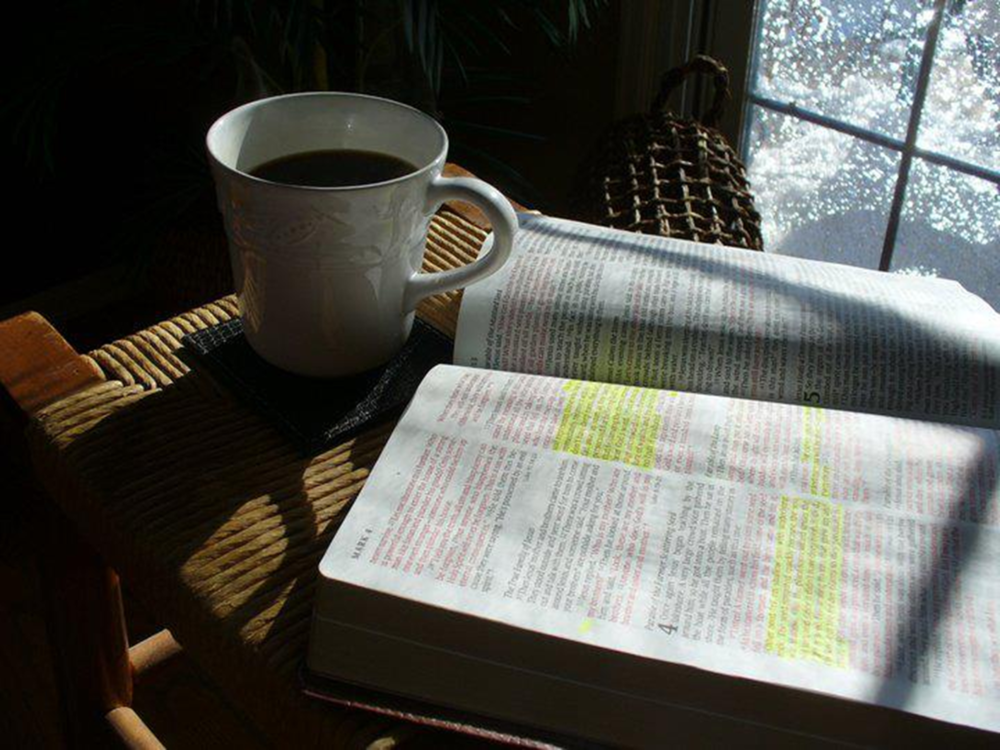
Posted in Isaiah | Tagged , , , , | Leave a comment

Come (A Re-run)

Some thoughts from 10 years ago from this day’s reading in Isaiah. Similar season then, different circumstances (not pandemic related . . . more personal, not global).


It really is a pretty compelling invitation. Spend just a couple of minutes hovering over it, and though you might not strictly be within “the context” of the invite, the Spirit within you testifies that the envelope that carries this request for “the favor of your presence” is addressed with your name on it. Your circumstance isn’t exactly what was originally addressed, but somehow you know that the application to your situation is just as real. And so, there it is . . . one word . . . four letters . . . the Master requests of you, “Come!”

Come, everyone who thirsts, come to the waters; and he who has no money, come, buy and eat! Come, buy wine and milk without money and without price. Why do you spend your money for that which is not bread, and your labor for that which does not satisfy? Listen diligently to Me, and eat what is good, and delight yourselves in rich food. Incline your ear, and come to Me; hear, that your soul may live; and I will make with you an everlasting covenant, My steadfast, sure love for David.”

(Isaiah 55:1-3 ESV)

In the day, it was an offer to a rebellious people who had known severe discipline for their spiritual adultery. It was an overture to a people who had rejected the living God for goofy graven images made of wood and stone . . . who had learned the hard way that idols don’t deliver. Their judgment had been used as a means to purify them . . . to burn away the confused thinking . . . to point them again to the God of their fathers . . . to set their eyes again upon the One who had called them . . . to ready them for the invitation, “Come!”

What little life-investing currency and resources they had, they had wasted on stuff that didn’t satisfy, but now the offer was before them. Though spiritually bankrupt, they could buy without money . . . they could invest though they had no resource of their own. Available to them was water for the thirsty . . . wine and milk and bread for the famished. The promise was theirs to be appropriated, “Eat what is good . . . delight yourself in the food that satisfies . . . consume without measure that which makes the soul come alive. And be filled by His everlasting covenant . . . a forever feast . . . catered by heaven itself . . . sourced in the steadfast, sure love and compassion of God Himself.”

It doesn’t have to be idolatry . . . there are other things that can distract me . . . other dynamics that cause me to take a detour on “Self Sufficient Highway.” It could be a trial . . . change and uncertainty . . . some hard stuff that’s in the way. Or, it might even be a victory . . . a success . . . a patch of road with no potholes where I think I’m capable of taking the wheel. Either one has the potential to drain my soul’s bank account on attitudes and efforts that leave the Father out of the picture and invest in that which doesn’t satisfy. Precious internal resource wasted on worry . . . or, valuable gifts wasted on self-serving pride . . . neither satisfies . . . both will drain the account. Time to hear the Father’s invitation, “Come!”

For me . . . today . . . it’s the trial. The world’s been rocked a bit . . . thinks aren’t what they were . . . my assumptions about the future have been rattled . . . more questions than answers . . . easier to worry than to pray . . . easier to look out over a cloudy horizon than to look up to my unchanging God. And, by His grace, through these ancient words I hear, “Come. Come and buy of Me.” And I hear too the words of the blessed Son of God, “Come. Come to me, all who labor and are heavy laden, and I will give you rest” (Matt. 29:11).

Mine is to RSVP . . . to respond in the affirmative . . . to feebly seek to avail myself of the resources of heaven . . . offered freely by the God of grace . . . made available through the blood of His Son . . . infused and made real by the Spirit who indwells.

Just as I am, without one plea
But that Thy blood was shed for me
And that Thou bidd’st me come to Thee
O Lamb of God I come! I come!

Just as I am, tho tossed about
With many a conflict, many a doubt
Fightings and fears within, without
O Lamb of God, I come! I come!

Posted in Isaiah | Tagged , , | Leave a comment

A Homeland, A Country, A City

Some mornings it’s like eating the biggest steak with all the trimmings and then gorging yourself on the richest of desserts. You sit back and you are full — like really, really full. That’s this morning as I feasted on all of Isaiah 53 AND all of Hebrews 11. Whew! I’m stuffed! Almost too much to digest.

But there is one after flavor above the rest that lingers. The reminder of a homeland, a country, and a city.

These all died in faith, not having received the things promised, but having seen them and greeted them from afar, and having acknowledged that they were strangers and exiles on the earth. For people who speak thus make it clear that they are seeking a homeland. If they had been thinking of that land from which they had gone out, they would have had opportunity to return. But as it is, they desire a better country, that is, a heavenly one. Therefore God is not ashamed to be called their God, for He has prepared for them a city.

(Hebrews 11:13-16 ESV)

Abraham, Isa ac, Jacob, and Sarah. All pilgrims because of promise. Going but knowing. Leaving only because of believing. Living in tents because they were looking forward to a city with a sure foundation (11:8-12). Yet, they all died not having received the things promised. Yet, all commended of God because they all died in faith. And faith, as I learned in my KJV days, is “the substance of things hoped for, the evidence of things not seen” (11:1). All had their eye on the prize.

Seeking a homeland. By faith knowing their native place wasn’t their now place. Their fatherland was to be realized in a future land. The country of their allegiance was a kingdom to come. Thus, they “accepted the fact that they were transients in this world” (11:13 MSG).

Desiring a better country. Literally, stretching one’s self out in order to touch or grasp a more useful, a more advantageous, a more excellent country. A separate location from where they woke up each morning. An unearthly place in which they were sure they would wake up some morning. A heavenly country. An eternal place of belonging. A place where every tear would be wiped away from their eyes, where death shall be no more, “neither shall there be mourning, nor crying, nor pain anymore” (Rev. 21:4).

Seeking a homeland, desiring a better country, sure that God has prepared for them a city. A city designed and built by God Himself (11:10). A city created by the One who created them. A city where everything has been made ready for the many He would purpose to redeem. A city though unknown here and now, would feel like home the moment they entered there and then. A city worth seeking. A final landing place worth desiring. Even, if only realized by faith.

For, with such seekers and such desirers, God is not ashamed to be called their God.

A homeland. A country. A city. Worth dying for. For they comprise our citizenship, our true identity, our substantive hope of realizing all who we were created, and re-created to be. Worth living for — if only by faith.

And without faith it is impossible to please Him, for whoever would draw near to God must believe that He exists and that He rewards those who seek Him.

(Hebrews 11:6 ESV)

By His grace. For His glory.

Posted in Hebrews | Tagged , , , , , , | Leave a comment

On the Palms of My Hands

Their situation was drastically different, but the sentiment is relatable.

But Zion said, “The LORD has forsaken me; my Lord has forgotten me.”

(Isaiah 49:14 ESV)

Judged for her rebellion? Yes. Overrun because of her spiritual adultery? Yes. Exiled in order to soften her hard heart and to subdue her stiff neck? Yes. But was Zion, the epicenter representing God’s people, forsaken? Was she forgotten? No sir.

“Can a woman forget her nursing child, that she should have no compassion on the son of her womb? Even these may forget, yet I will not forget you. Behold, I have engraved you on the palms of My hands; your walls are continually before Me.”

(Isaiah 49:15-16 ESV)

Though a result of their own rebellion and spiritual unfaithfulness, the years leading up to Judah’s exile must have been, nevertheless, unimaginably hard years. Relentless assaults by enemies. Continual erosion of infrastructure. Perpetual impact on day to day living. Same old trials with little light at the end of the tunnel. I’m guessing “wearying” and “exhausting” might describe those days. What else could go wrong? How much harder could it get? How long, O Lord? Are you there, God?

Like I said, while I can’t relate to ancient Israel’s situation, I can relate somewhat to the sentiment. I can connect with a dreary, weary season that never seems to end. God, are You there? Have you forgotten your people?

I will not forget you. Behold, I have engraved you on the palms of My hands.

Looks like there’s much speculation as to what Isaiah literally was referring to with “engraved palms”, but you get the idea. God’s not going to forget His people. They are not at risk of being some passing thought. Instead, they are indelibly etched into His very being. Not some experiment gone bad to be tossed so that He can start over again, but an expression of His unconditional love, His unwavering faithfulness, and His unmatched power to deliver on the promises He has purposed.

I will not forget you. Behold, I have engraved you on the palms of My hands.

If not intended as a foreshadow of the palms of Christ, how can it not spark such a connection? The Lamb bearing for eternity the wounds of His once forever act of redemption (Rev. 5:6). The wounds of nail-pierced hands a forever reminder that those He saves, He saves to the uttermost. Those He redeems He redeems for eternity. Those in whom He begins a good work, He completes that good work. Times may get tough, the heavens may seem to go silent for season, but has God forgotten His people?

I will not forget you. Behold, I have engraved you on the palms of My hands.

Engraved on the palms of His hands. Ever near to the heart of God. Confident that He will never leave us nor forsake us.

All because of His amazing grace. All for His everlasting glory.

Posted in Isaiah | Tagged , , | Leave a comment

A Like No Other God

Hovering over Isaiah 45 this morning. Particularly the prophet’s words directed to a Persian king. A king called by name by a God he didn’t know. A king unaware he has been equipped by heaven to accomplish the Creator’s purposes on earth. A dime a dozen king, in a sense, displaying the glory of a like no other God.

“For the sake of My servant Jacob, and Israel My chosen, I call you by your name, I name you, though you do not know me. I am the LORD, and there is no other, besides Me there is no God; I equip you, though you do not know Me, that people may know, from the rising of the sun and from the west, that there is none besides Me; I am the LORD, and there is no other.”

(Isaiah 45:4-6 ESV)

Maybe because I am getting ready to lead a class on the nature and character of God, but as I try and process the LORD’s words through Isaiah I’m somewhat overwhelmed this morning. Give your head a shake, Pete! Try to teach on a God like no other god? A God like no other anything? What are you thinking? Lord, help me.

Yet, our invisible God desires to be recognized. He has purposed to be a communicating God. A God who has gone to great lengths to make Himself known, even in His unknown-ness. Communicating through His carefully preserved, God-breathed word, and by His liberally supplied, truth-illuminating Spirit. And so, you hover over words like these and you somehow sense you are actually getting to know Him who is unfathomable. Able to draw near to Him who lives in approachable light.

But, for whatever familiarity is wrought by a Creator who makes Himself known to His creation, at some point you just need to be still and know that He is God. To quiet yourself as you try to comprehend a God beyond comprehension. To calm yourself as you try to contain and ponder that which can’t help but overflow the heart, soul, and mind.

. . . for God is in heaven and you are on earth. Therefore let your words be few.

(Ecclesiastes 5:2 ESV)

Even so, Lord.

By Your grace. For Your glory.

Posted in Isaiah | Tagged , , | Leave a comment

A Blessing Here and Now

I had a brief conversation with someone yesterday who “had to admit” their faith was being shaken somewhat by the suffering being experienced by various people within our church family. I empathized with her empathy for those who are dealing with present hardships as well as an uncertain future. But I tried to encourage her that while these things are without question hard things, they can also be faith-building things if they draw us deeper into abiding in the Savior.

Something I read this morning in Hebrews has me wondering if perhaps one of the reasons hardships can be spiritually unsettling is because we’ve been led to believe, either explicitly or implicitly, that the good life the good news promises should be realized now. But what if there’s a different expectation we should have of our salvation?

For if the blood of goats and bulls, and the sprinkling of defiled persons with the ashes of a heifer, sanctify for the purification of the flesh, how much more will the blood of Christ, who through the eternal Spirit offered Himself without blemish to God, purify our conscience from dead works to serve the living God. Therefore He is the mediator of a new covenant, so that those who are called may receive the promised eternal inheritance, since a death has occurred that redeems them from the transgressions committed under the first covenant.

(Hebrews 9:13-15 ESV)

The promised prize is an “eternal inheritance.” Something we enter into now, but which we fully realize in the future — when our mortality gives way to immortality. If we’re looking for “the good life” this side of heaven, then we’re going to be disappointed, our faith shaken even, when bad things happen to people who we think were saved for the good life.

But the writer to the Hebrews says that the blood of Christ redeems us to serve the living God. That’s what we were saved for. To exchange dead works sourced in a dead soul for good works in service to a living God.

I’m not saying that we shouldn’t expect blessings this side of heaven, our God delights in giving good gifts to His children (Mt. 7:11). But I guess I’m reminded that if we’re saved to serve the living God, then that means we’re to do so in whatever season, through whatever circumstances, for however long He’s determined our days. And that through serving Him — especially in hardship, even when walking (whether ourselves or with others) through the valley of the shadow of death — the greatest prize, that of knowing Jesus experientially and deeply as we come to depend on Him more and more desperately, is ours to realize. That far from shaking our faith, it really can deepen our faith.

Not wanting to be overly simplistic. Hard stuff is hard, for sure. But His grace is sufficient, equally for sure (2Cor. 12:9). And in experiencing the reality of mercies that are new every morning (Lam. 3:22-23) there is daily an encounter of the divine kind which can only lead to a deepening relationship with a God who is able to, and faithful to keep us from falling and present us blameless before the prize of His presence (Jude 24).

Saved to serve the living God and in that to know the living God. That’s a blessing here and now. Amen?

By His grace. For His glory.

Posted in Hebrews | Tagged , , , , , , , | 1 Comment

No Guilt In Him, My Guilt On Him

These days my reading plan has me feeding on Jesus, as He makes His way to the cross, in “bite-sized” chunks. All of it is pretty familiar stuff. But oh, if I slow down and “chew my food” well, there are worship-evoking flavors to be savored afresh. Case in point? Pilate’s pronouncement.

`Pilate addressed them once more, desiring to release Jesus, but they kept shouting, “Crucify, crucify Him!” A third time he said to them, “Why, what evil has He done? I have found in Him no guilt deserving death. I will therefore punish and release Him.” But they were urgent, demanding with loud cries that He should be crucified. And their voices prevailed. So Pilate decided that their demand should be granted. He released the man who had been thrown into prison for insurrection and murder, for whom they asked, but he delivered Jesus over to their will.

(Luke23:20-25 ESV)

I have found in Him no guilt deserving death. Those words rang out as I read them. “No guilt in Him,” says Pilate. “Why crucify Him?” he asks.

Pilate wasn’t necessarily bound by a high code of justice. After all, he was ready to beat up an innocent man some more if it would satisfy the blood lust of the crowd. But put to death a man in whom no guilt was found? Even for Pilate that seemed to be a bit extreme. But while there was in Him no guilt deserving death, I know that soon there would be on Him guilt deserving death.

While Pilate may not have been just, God is just. Thus, if rebellious, sinful, antagonistic image-bearers of God were to ever have a way back, any hope of a means of reconciliation, then it was necessary for their guilt to be found on Him.

But He was pierced for our transgressions; He was crushed for our iniquities; upon Him was the chastisement that brought us peace, and with His wounds we are healed. All we like sheep have gone astray; we have turned — every one — to his own way; and the LORD has laid on Him the iniquity of us all.

(Isaiah 53:5-6 ESV)

“Behold, the Lamb of God, who takes away the sin of the world!”

(John 1:29 ESV)

Pilate didn’t see any reason on earth for Jesus to die. But our heavenly Father had purposed, before the foundation of the earth, to ransom a wayward creation through the precious blood of His promised Messiah (1Pet.1:18-20). To lay upon the guiltless One the guilt of our iniquity. Forever atoning for our transgression through the once for all, and once forever, sacrifice of His beloved Son.

Thus, while on earth delivering the Son of God over to the will of His creation seemed to be the most unjustifiable act of all time, Pilate was, in reality, delivering Jesus over to the Father’s will (Isa. 53:10) so that many could be justified forever (4:25).

No guilt in Him. My guilt on Him.

That I might know life eternal through Him.

Hallelujah! What a Savior!

Because of grace. For His glory.

Posted in Luke | Tagged , , , , , | Leave a comment

No Ifs, Ands, or Buts

There was a problem with the first covenant. If there hadn’t been, says the writer to the Hebrews, there would have been no need for a second. And that problem, according to the Spirit, wasn’t with the old covenant, it was with the material it had to work with (Heb. 8:7-8a).

It was an if/then covenant. If you obey, then you will be blessed. If you don’t obey, then you will end up on the receiving end of curses. “You” was the weak link in the old covenant. Thus, when he’s moved of God to quote the prophet, the writer to the Hebrews removes “you” and, along with it, the ifs, ands, and buts.

“For this is the covenant that I will make with the house of Israel after those days, declares the Lord: I will put my laws into their minds, and write them on their hearts, and I will be their God, and they shall be my people. And they shall not teach, each one his neighbor and each one his brother, saying, ‘Know the Lord,’ for they shall all know me, from the least of them to the greatest. For I will be merciful toward their iniquities, and I will remember their sins no more.”

(Hebrews 8:10-12 ESV)

Jeremiah prophesied of a new covenant with Israel — a promise, I believe, yet to be fully realized. Yet the dynamics of this new spiritual economy were introduced at Pentecost and are now at play within the church, those redeemed through the blood of Christ by faith. In a sense, you could say the church is the “prototype” of what it looks like when men and women who are made in the image of God are regenerated, indwelt, and formed into the likeness of the Son of God by the Spirit of God.

And the power of this new covenant? “You” is removed. Replaced with “I will,” says God Most High –the sovereign, omnipotent God of heaven and earth.

No ifs. No quid pro quo. Not dependent on my works. Not relying on my righteousness. My obedience shifted from a requisite for blessing to a response to blessing. Having been born again through the cross, I purpose, by His enabling, to live in its shadow. Having been loved with an unfailing, steadfast love by God, I desire to love God in return with the love He has poured into my heart. Having been brought into relationship with the Savior, I long to abide with the Savior as a branch grafted into the Vine. Having been given the Spirit, I want to be led by the Spirit even as I’m empowered to walk in the Spirit.

No ands. The work of the cross is finished. The way into the holy of holies complete. I can bring nothing to the table to make me any more redeemed. It’s “Jesus + Nothing” or it’s not worth anything. By grace alone through faith alone or, I’m left to my own devices alone.

No buts. While the grace of God is not so I might presume upon God, it is the reality that keeps me secure when I stumble in my walk for God. My weak flesh unable to weaken His love for me. My defeats before the enemy giving Him no thought to abandon me. My propensity to wander into the world never leading to the point where He has lost His grip on me. Even when I don’t, He will. That’s the power of the new covenant. No ifs, ands, or buts.

Not my will but Your will be done.

By Your grace. For Your glory.

Thank you, Lord.

Posted in Hebrews | Tagged , , , | Leave a comment

We Have Heard It Ourselves

As far as back-and-forth conversations go, it was a pretty short one — at least according to how Mark was led by the Spirit to record it. Only 70 words, and most of those single syllable words. Not long. Not complex. But pretty profound.

They spoke 7 words, He responds with 37. They counter with 7 more words, He wraps things up with 5 . . . and, for those with ears to hear, it’s a “drop the mic” moment. All that’s left is for them to say among themselves, “We’re done here.”

As I chew on this mini-debate of eternal significance though, twelve words quiet my heart and evoke my praise. For I am so grateful we have heard it ourselves.

When day came, the assembly of the elders of the people gathered together, both chief priests and scribes. And they led [Jesus] away to their council, and they said, “If You are the Christ, tell us.” But He said to them, “If I tell you, you will not believe, and if I ask you, you will not answer. But from now on the Son of Man shall be seated at the right hand of the power of God.” So they all said, “Are You the Son of God, then?” And He said to them, “You say that I am.” Then they said, “What further testimony do we need? We have heard it ourselves from His own lips.”

(Luke 22:66-71 ESV)

The Christ. The Son of Man. The Son of God. I Am.

Twelve single-syllable words. Thirty-four letters. But get them, believe them, and respond to them? And they are eternity.

The religious elite understood that Jesus claimed to be the Messiah, but they wanted to hear it from His lips one more time. Not so they could bow down before God’s promised Redeemer, but so as to charge this Carpenter from Nazareth with blasphemy. Not so they could confess Him as the Author of Life, but that they might condemn Him to death (Matt. 26:65-66).

But Jesus takes their “the Christ” accusation and punctuates it with His own “the Son of Man” proclamation. They take His “the Son of Man” and draw a line in the sand with their “the Son of God.” And then Jesus steps way over the line, blowing the line away with, “You got it! I AM!”

And, for us followers of Christ, we have heard it ourselves from His own lips, as well.

Not because we are so smart, but because He is so patient. Not because we’re better than those hard-hearted accusers, but only because we believed — and this not our own doing; “it is the gift of God” (Eph. 2:8). Not to our credit, but because of His grace.

So, there’s another back-and-forth conversation happening this morning, and it’s happening at this desk. He speaks through His Spirit from the written word before me. I respond with worship from the heart of faith within me.

Jesus is the Christ, the promised Redeemer and Rescuer. He is the Son of Man seated at the right hand of the power of God. He is the Son of God, soon to return in power as King of kings and Lord of lords. He is the ever and always existing I AM.

So grateful this morning that we have heard it ourselves.

By His grace. For His glory.

Posted in Luke | Tagged , , , , | Leave a comment

The Stability of Our Times

I know enough about reading Isaiah that, within the prophecies of days of judgment and days of restoration, there is pictured events which are imminent and events which are little further off in the future. Judah to be judged soon, the world to be judged eventually. Return from exile and restoration, at least on a temporary basis within at least some of the people’s lives he’s writing to, reconstruction, on a forever basis for those who are possessors of eternal life. Sorting through which is which can be tricky — and sometimes, I’m pretty sure, it’s not either/or it’s both/and. Such may be the case with a couple of verses I’m hovering over this morning.

The LORD is exalted, for He dwells on high; He will fill Zion with justice and righteousness, and He will be the stability of your times, abundance of salvation, wisdom, and knowledge; the fear of the LORD is Zion’s treasure.

(Isaiah 33:5-6 ESV)

According to my handy-dandy, online bible program, some commentators view this vision of Isaiah being fulfilled when Hezekiah became king over Judah. And to be sure, under his reign there was a great reversal of Judah’s slide down the slippery slope of idolatry and rebellion (2Chr. 29-31). The temple was cleansed and reopened for business. The Passover again celebrated in a way that had not been seen in Jerusalem since King Solomon. And the priesthood revitalized. To be sure, the fear of the LORD seemed to have again come to Judah. But, all that was undone (and more) when, after Hezekiah’s death, his son, Manasseh, took the throne.

So, while Hezekiah may have been the stability of your times if your times ended when his did, if you happened to live beyond Hezekiah, he would have been the stability of your times for only some of your time. Thus, only partially fulfilling Isaiah’s words. (Make sense?)

Thus, could Isaiah have also been pointing to another king who would come who would be the stability for all times? I’m thinkin’ . . .

There is coming a day when the King of kings will return, be exalted, and dwell on high. A time when He will fill Zion, and the whole earth, with justice and righteousness, with an abundance of salvation, wisdom and knowledge. And He will be the stability of your times for all time. Even so, Lord Jesus, come!

But as I chew on the promise of this future day I’m reminded that Jesus is the stability of your times even at this time.

If any one word could describe our current times, it’s unstable. Politically, environmentally, internationally, pandemic-ally — not to mention whatever’s happening personally — who knows what a day will bring? Not this guy. Yet, amidst the stress and uncertainty there is a peace that passes understanding. A wellness of the soul amidst the waves of the storm. There is a stability for the times for those who know Jesus, for those who abide in Jesus.

The King is coming, for sure. But the King has come — equally for sure. He will reign over all the earth, but even now He reigns. Then, we will be with Him, but even now He is with us, living in us and through us by His Holy Spirit. An anchor for the soul.

He is the Rock. He is the sure foundation. His promises are true. His provision is sufficient. His power known even in our weakness.

He is the stability of our times. Amen?

By His grace. For His glory.

THE SOLID ROCK

My hope is built on nothing less
Than Jesus’ blood and righteousness
I dare not trust the sweetest frame
But wholly lean on Jesus’ name

When darkness veils His lovely face
I rest on His unchanging grace
In ev’ry high and stormy gale
My anchor holds within the veil

His oath His covenant His blood
Support me in the whelming flood
When all around my soul gives way
He then is all my hope and stay

When He shall come with trumpet sound
O may I then in Him be found
Dressed in His righteousness alone
Faultless to stand before the throne

On Christ the solid Rock I stand
All other ground is sinking sand

Edward Mote | William Batchelder Bradbury
© Public Domain

Posted in Isaiah | Tagged , , , | 1 Comment