
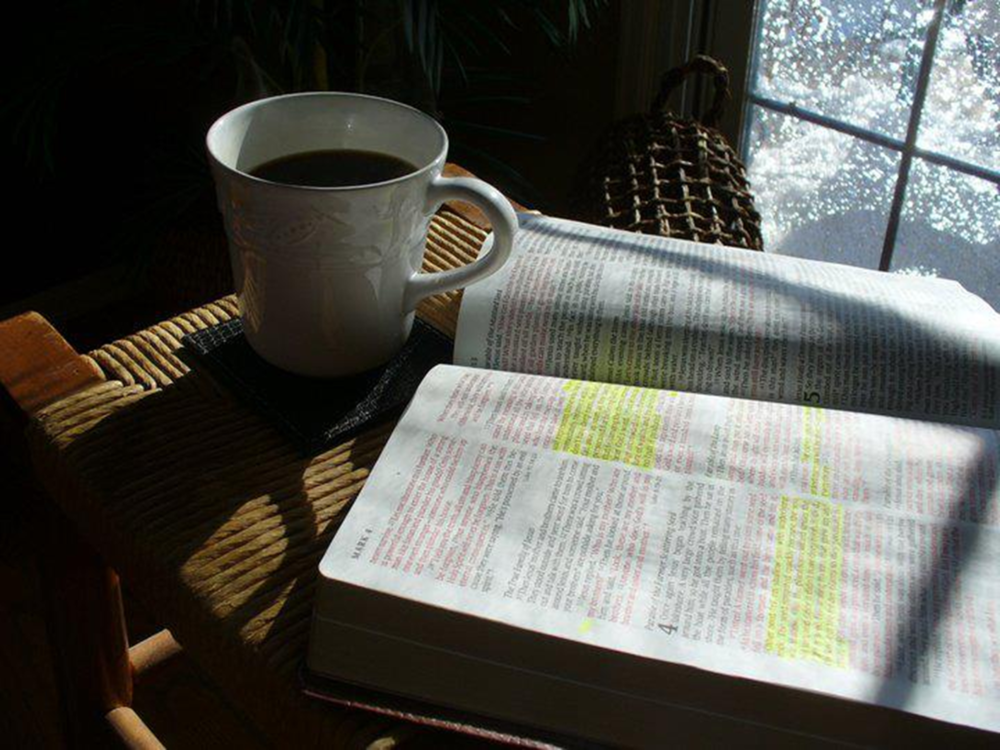
Chewing on Psalm 43 this morning. That it’s a continuation of Psalm 42 seems evident because of the common chorus in these two songs of David — still turmoil within . . . still a soul cast down . . . still the echoing question of “why” (Ps. 42:5, 11; 43:5).
But the “why” asked of a soul cast down is not the only “why” being asked in these songs crying for vindication and relief from oppression.
I say to God, my rock:
“Why have You forgotten me?
Why do I go mourning
because of the oppression of the enemy?”
(Psalm 42:9 ESV)
For You are the God in whom I take refuge;
why have You rejected me?
Why do I go about mourning
because of the oppression of the enemy?
(Psalm 43:2 ESV)
Why have You forgotten me? Why have you rejected me? Those questions would seem to make David’s query to his cast down soul seem kind of rhetorical, don’t they? He knows why His soul is cast down. Because, in his current situation, he feels forgotten by God. In his current reality, it’s like God has rejected him. That’s why his soul is cast down.
Every day his oppressors keep him from entering “the house of God”, he longs to again praise God with the people (42:4). As long as the ungodly, deceitful, and unjust keep him from “the holy hill” he yearns again to be in the place of God’s dwelling. But why? Why would the psalmist want to praise the God who has seemingly forgotten him. Why long to be in the presence of the One who, being Sovereign and all-powerful, has left him to his oppressors, apparently rejecting him? Those are the “whys” I’m chewing on.
Here’s a clue . . .
Then I will go to the altar of God,
to God my exceeding joy,
and I will praise You with the lyre,
O God, my God.
(Psalm 43:4 ESV)
In yesterday’s song, He was the God of my life (Ps. 42:8). This morning, He’s God my exceeding joy. How can that be? How can the seemingly forgetting God and rejecting God also be God my exceeding joy? And yet, He is.
God my exceeding joy. Literally, God the gladness of my joy, the joy of my joy, the very essence, the beginning of my joy. As Spurgeon puts it: “He is not his joy alone, but his exceeding joy; not the fountain of joy, the giver of joy, or the maintainer of joy, but that joy itself.”
Before David had known the turmoil of oppression, before encountering the depressing need for vindication, he had known the joy of the LORD. He had tasted and seen that the LORD is good (Ps. 34:8). He had experienced God’s presence, He had known God’s goodness, He had soared with divine rapture as he had worshiped facedown before God’s majesty. He had known God not as just the giver of joy, the supplier of gladness, but had found in God Himself joy itself.
Thus, He longed again to be in the presence of the One who currently seemed to have forgotten Him. He cried out for vindication so that he might access again the altar of sacrifice to make offerings to the One who seemed to have rejected Him. David wanted to be in the place where he could praise God, even in seasons of suffering and confusion, because he knew God . . . he believed God . . . he was bound to God — to God my exceeding joy.
Oh, to know God as not only the source and giver of joy, but to know Him as my exceeding joy itself. And, in knowing Him as my joy, to be able to trust Him in all seasons and situations — through those times when I feel forgotten, in those circumstances where I wonder where He is and sense divine rejection.
God my exceeding joy. Thus, my Rock, and my Refuge.
By His grace. For His glory.
 My Morning Meal