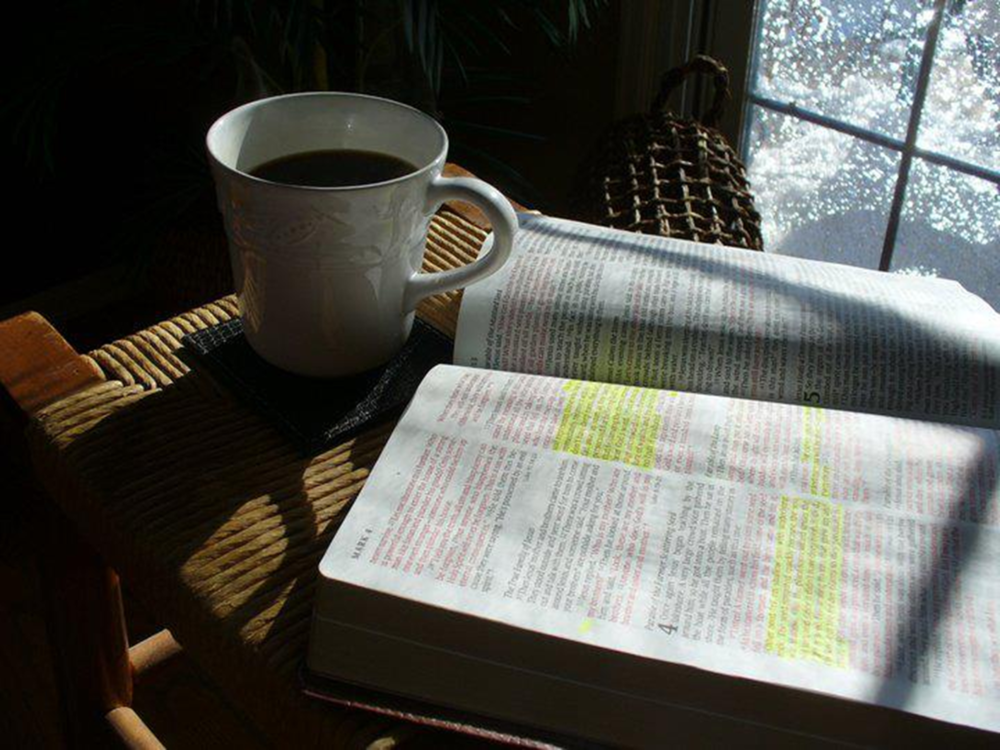
The Wisdom of God in Our Hand

It’s a favorite line from Aladdin. It’s also a phrase that comes to mind, from time to time, as I read Scripture. And it comes to mind again this morning as I read in Ezra 7. Like the “genie gig”, the word of God, in a sense, is “phenomenal cosmic powers, itty-bitty living space.”

Love Ezra. One my heroes of faith. Inspiring because he was a man of the word. “A scribe skilled in the Law of Moses” (Ezra 7:6). A guy who had “set his heart to study the Law of the LORD, and to do it, and to teach His statutes and rules in Israel” (Ezra 7:10). Though not a temple builder, per se, integral to revitalizing temple worship in Jerusalem as he “opened the book” for God’s people (Neh. 8).

But here’s my observation this morning, not about Ezra but about the book. The Spirit identifies it in a number of ways. It is the “the Law of Moses” which God had given (Ez. 7:6). It is the “the Law of the LORD” which Ezra purposed to study (Ez. 7:10). And the Spirit moves a pagan king to recognize something transcendent about the book, as well, referring to it as “the Law of the God of heaven” (Ez. 7:12), that which is “decreed by the God of heaven” (Ez. 7:23). But here’s the identifier for God’s revelation that’s pushed the button on the old awe-o-meter this morning . . .

“And you, Ezra, according to the wisdom of your God that is in your hand, appoint magistrates and judges who may judge all the people in the province Beyond the River, all such as know the laws of your God. And those who do not know them, you shall teach.”

(Ezra 7:27 ESV)

The wisdom of your God that is in your hand . . .

A couple of days ago I read that by wisdom the LORD founded the earth (Prov. 3:19) — sounds like phenomenal cosmic power to me. And today I read that Ezra had the same wisdom in his hand — talk about your itty-bitty living space. Kind of jaw-dropping, huh?

And that wisdom is open in front me this morning on my desk, a pretty small book on a not much bigger desktop. It’s the living and active word of God, “sharper than any two-edged sword, piercing to the division of soul and spirit, of joints and of marrow, and discerning the thoughts and intentions of the heart” (Heb. 4:12). Communicating thoughts not my thoughts and ways not my ways, thoughts and ways that, like the heavens, “are higher than the earth” (Isa. 55:8-9). God-breathed (2Tim. 3:16). Able to transform lives through the renewing of the mind, making known “what is the will of God” (Rom. 12:2). If that isn’t phenomenal cosmic power, I’m not sure what is.

The wisdom of God in your hand. Talk about an “at will” encounter of the divine kind!

Oh, that all God’s people would be like Ezra. That the wisdom of God in our hand would be sought, studied, obeyed, and taught.

By His grace. For His glory.

Posted in Ezra | Tagged , , , | Leave a comment

Take a Seat . . . Down There

Not the first time I’ve read this parable. Not the first I’ve paused to noodle on it. Not the first time I’ve been challenged to apply it. But I do think it’s the first time I’ve noticed that Jesus noticed.

Context: Jesus is dining at the “the house of a ruler of the Pharisees” and those Pharisees have their eyes on Jesus, “they were watching Him carefully” (Luke 14:1). Literally, they kept a “close eye” on Him. As Peterson puts it, they were “watching His every move” (MSG). But they weren’t the only ones in observation mode.

Now He told a parable to those who were invited, when He noticed how they chose the places of honor.

(Luke 14:7a ESV)

He noticed . . . those two words are giving me something to chew on this morning.

Jesus “held upon.” He paid attention to. He took note of. He saw, He marked, He retained.

And, while we know that the One who created all things knows all things, the Spirit focuses on this particular thing that Jesus notices. He catches sight of those making a beeline for the best seats. He does a double-take toward those who are elbowing their way to front-row, center. He spots those who are set on being as close as they can to the spotlight. Seems like kind of an insignificant thing for the One who sustains all things to be bothered with. Evidently not.

For not only does Jesus notice, Jesus thinks it important enough to comment.

“When you are invited by someone to a wedding feast, do not sit down in a place of honor, lest someone more distinguished than you be invited by him, and he who invited you both will come and say to you, ‘Give your place to this person,’ and then you will begin with shame to take the lowest place. But when you are invited, go and sit in the lowest place, so that when your host comes he may say to you, ‘Friend, move up higher.’ Then you will be honored in the presence of all who sit at table with you. For everyone who exalts himself will be humbled, and he who humbles himself will be exalted.” ~ Jesus

(Luke 14:8-11 ESV)

“Be seated with Me in the heavenlies (Eph. 2:6)”, says Jesus, “but find a seat down there” — go and sit in the lowest place.

Literally, “take the last place.” Humble yourself, make yourself low, and go sit where no one really wants to sit. If anyone wants to be first, let him be last (Mk. 9:35). If anyone wants to be great, let her be the servant of all (Mk. 10:43-44). For everyone who exalts himself will be humbled, and he who humbles himself will be exalted. That’s the way of the kingdom.

Worth noticing? I’m thinkin’ . . . Jesus does.

Oh, to be willing to go and sit in the lowest place. To take a seat . . . down there.

By His grace. For His glory.

For even the Son of Man came not to be served but to serve, and to give His life as a ransom for many.

(Mark 10:45 ESV)

Posted in Luke | Tagged , , | Leave a comment

Scorn

It’s a “lesser sin to consider” that hits my radar this morning. A more “acceptable” transgression that’s giving me something to chew on.

Scorn. Kind of a funny word. Not really a word that I think is used much these days. But oh, how I think it is a word which is very much in play within our polarized, angry cultural moment.

Merriam-Webster defines it as “open dislike”, as “disrespect” manifesting itself in “mockery often mixed with indignation.” More than just disagreement, scorn is shown through disdain. More than trying to correct those we believe in the wrong, the bad fruit of scorn is showing contempt.

My Greek lexicon says that the ancient word used for scorn is literally “make mouths at”, to talk arrogantly towards. Boastful mockery is in the sense. Inflated derision.

And, as with all sin, even the sins we might scorn, God’s not a fan of scorners.

Toward the scorners He is scornful,
       but to the humble He gives favor.

(Proverbs 3:34 ESV)

Now to be fair, the context for this out of context verse is “a man of violence” (3:31), a “devious person”(3:32), one who inhabits “the house of the wicked” (3:33). It’s sinful behavior characterizing those who are not interested in having a heart that keeps His commandments (3:1-2) nor a heart ready to trust in the LORD and lean not to their own understanding (3:5-6). The scorner here is not all that interested in finding wisdom (3:13-18).

Yet, you don’t have to be a scorner to be drawn into the sin of scorn. Like all sin — like the “forbidden woman” Solomon’s already warned his son about, the “adulteress with her smooth words” — scorn seduces down a path of evil and “perverted speech”, enticing those without “discretion” to “walk in the ways of darkness” (2:9-19).

Boastful, arrogant disdain for others isn’t just reserved for the unsaved scorner. Our old man, our flesh, is more than able — and all too often ready and willing — to engage in scorn.

But where is God’s favor found? Where does grace abound? With the humble.

Not with the wishy-washy. Not with those who tolerate apart from truth. But with those who are humble. With the lowly. With the meek. With the poor. As in, poor in spirit (Mt. 5:3)? I’m thinkin’ . . .

Sure, God’s people are to be truth-tellers. But if in telling that truth we do so with open dislike or disrespect, if we do so by “making mouths at” and talking arrogantly and with inflated derision, then I’m thinking we need to take heed the truth which tells us that towards the scorners He is scornful.

And just to make sure we’re picking up what’s being laid down, the Spirit brings “the charge” against the scorner “on the evidence of three witnesses” (Deut. 19:15) — Solomon, Peter, and James (1Peter 5:5, James 4:6).

Father, forgive us saints for being tripped up by the sin of scorn.

By Your grace. For Your glory.

Posted in Proverbs | Tagged , , , | Leave a comment

Let Wisdom Reign!

If the first couple of chapters of Proverbs are any indicator, then evidently Solomon was not an “under promise, over deliver” sort of guy. As he seeks to convince his son to hear instruction and not forsake teaching (1:8); as he tries to “sell” him on the value of calling out for “insight”, raising his voice for “understanding”, seeking for it like “silver”, and searching for it as for “hidden treasure”, he does so promising some pretty big “quids” for his son’s “pro quo”; some pretty significant payouts for his investment. Check this out:

You will understand the fear of the LORD
       and find the knowledge of God.

You will understand righteousness and justice
       and equity, every good path;

Discretion will watch over you,
       understanding will guard you,

So you will walk in the way of the good
       and keep to the paths of the righteous.

(Proverbs 2:5, 9, 11, 20 ESV)

Acquainted with the fear of the LORD, able to comprehend something of an incomprehensible God. Clarity on what is right, insight as to what is just. Able to recognize what is straight, confident in the ability to discern good paths from not so good paths. Possessing a prudence that preserves and a reasoning that renders safe. So much so, that there is a confidence that you will always travel down ways that are ultimately worth it and find your footing on roads which are always marked out by righteousness.

How’s them apples for some promises to claim? No under-promising there. Who wouldn’t want that?

And so, as I start this year’s journey through Proverbs over the next couple of months, I’m in. Ready to do some calling out for insight as I hear afresh Wisdom’s cry, ready to let her pour out her spirit on me and make her words known to me (1:20-23). Anticipating a refresher in the fear of the Lord and the ways of insight and understanding. Claiming the promises of building some muscle with a divine dynamic that has some pretty significant impact on daily decision making. Wanting to pick up as much as I can of what that the Lord is laying down.

For the LORD gives wisdom;
       from His mouth come knowledge and understanding;
He stores up sound wisdom for the upright;
       He is a shield to those who walk in integrity,
guarding the paths of justice
       and watching over the way of His saints.

(Proverbs 2:6-8 ESV)

Let Wisdom reign!

By His grace. For His glory.

Posted in Proverbs | Tagged , , , | Leave a comment

A Triune God, A Twofold Prayer

The verse pops first because I think it’s a Trinitarian verse. But as I chew on it, it’s the twofold prayer that feeds my soul.

The church at Thessalonica really was a remarkable church. Paul had only “three Sabbath days” to “reason with them from the Scriptures” about Christ’s needful sufferings and His inevitable resurrection before Paul was run out of town by Jews who were “jealous” (Acts 17:1-5).

Planted amidst opposition, the small fellowship quickly put down deep roots and thrived amidst opposition (1Thess. 1:13-14). And the founding Jews of that church along with the grafted in Gentiles quickly became a body of believers that were known and celebrated throughout the Christian world (1Thess. 1:6-10). This was a church that knew how to keep on keeping on.

But keeping on can wear you down. Keeping on only invites more opposition. Keeping on keeps you on the evil one’s radar. And so, as Paul wraps up his second letter to this faithful body of believers, it’s a prayer Paul prays for them that resonates as a prayer prayed for me.

May the Lord direct your hearts to the love of God and to the steadfastness of Christ.

(2Thessalonains 3:5 ESV)

First thing that hits me? Looks to me to be a Trinitarian prayer as the Lord who is directing hearts would seem to be the Spirit. The Spirit guiding the believer to the Father and the Son. The Spirit removing barriers and making straight the discernings of the heart towards the love of God and the steadfastness of Christ. And where’s that Triune action happening? Inside the believer.

Stop right there. Look down at your chest. And ask yourself, “Is that what’s happening inside me right now?”

Imagine — though you really can’t — the Spirit in you stirring in you an awareness of God’s steadfast love and Christ’s “for the joy set before Him” endurance (Heb. 12:2). The Helper helping you to know afresh the goodness of the Father and the power of the Son. What!?!? Really!?!? Kinda crazy, if you think about it. Talk about your encounter of the divine kind!

And then . . . like you really can get past the “then” . . . after considering that triune dynamic, chew on the twofold directive. Hearts directed to the love of God and to the steadfastness of Christ.

What Paul prayed for them, I imagine Jesus interceding for me (Heb. 7:25). That this day, through the Spirit, my being would be secured in the Father’s love which surrounds me and that my way would be settled through the Son’s steadfastness which strengthens me.

I am not heading into this day alone. I’m enveloped in the presence of a Triune God, energized by hearing the promises of a twofold prayer.

By His grace. For His glory.

Posted in 2Thessalonians | Tagged , , , | 1 Comment

To Me Be the Glory

Okay . . . I guess there’s glory, and then, there’s glory. Glory we give and, according to Paul this morning, glory we get. I know, sounds weird to even think about “to me be the glory”, but get used to it, it’s gonna happen.

But we ought always to give thanks to God for you, brothers beloved by the Lord, because God chose you as the firstfruits to be saved, through sanctification by the Spirit and belief in the truth. To this He called you through our gospel . . .

(2Thessalonians 2:13-14a ESV)

If you’re a brother in Christ, if you’re a sister, then know that God chose you to be saved. And, after being declared holy, you then become a work-in-progress being made holy through sanctification by the Spirit and belief in the truth. God’s choosing made effectual as He called you through our gospel. That’s the dynamic of salvation.

And for what purpose?

Brace yourself . . . Hold on to your hats . . . Get ready to pick your jaw up off the floor. . .

. . . so that you may obtain the glory of our Lord Jesus Christ.

(2Thessalonians 2:14b ESV)

What!?!? To me be the glory? Yup, to me be the glory.

As Peterson puts it, we “get in on the glory of our Master, Jesus Christ” (MSG). That’s the prize.

Not glory as in obtaining Jesus’ praise, but glory as in experiencing Jesus’ presence. We get to share in the majesty, splendor, and honor of the One who now is seated at the right hand of the Father because — soon and very soon — we will be with the One who is now seated at the right hand of the Father, face to face (1Cor. 13:12a).

That was the Son’s ask on the night He was betrayed: “Father, I desire that they also, whom You have given Me, may be with Me where I am, to see My glory” (Jn. 17:24).

That is the Spirit’s assignment each day we awake, that even as we now by faith are “beholding the glory of the Lord”, we are also being “transformed into the same image from one degree of glory to another” (2Cor. 3:18).

Because it’s been the Father’s agenda always, that those called through the gospel should obtain the glory of our Lord Jesus Christ.

Sharing in His exalted state . . . If we truly are in Christ and if Christ really does live in us — if our union with Christ is actually a union with Christ — then I guess it makes sense that what’s His is ours. True of His righteousness which justifies, true of His resplendence which glorifies.

Beloved, we are God’s children now, and what we will be has not yet appeared; but we know that when He appears we shall be like Him, because we shall see Him as He is.

(1John 3:2 ESV)

We shall be like Him . . .

That we may obtain the glory of our Lord Jesus Christ . . .

To me be the glory . . .

Chew on that for a bit.

By God’s overflowing grace.

For God’s worship evoking glory.

Posted in 2Thessalonians | Tagged , , , | 1 Comment

A Little Play Acting Here, A Bit of Cover Up There

A crowd had gathered to hear the Savior, but they pushed and shoved and treated each other with “insulting neglect” (Greek Lexicon). They were purportedly there to hear the truth but failed to see the incongruity of stepping on one another’s toes. Though they may have thought they were displaying a passion for Jesus’ words of life, as they treated each other “with rudeness and insult” (Greek Lexicon) they also trampled underfoot the gospel. And so, as many thousands gathered, Jesus determined to speak only to a few.

In the meantime, when so many thousands of the people had gathered together that they were trampling one another, [Jesus] began to say to His disciples first, “Beware of the leaven of the Pharisees, which is hypocrisy.”

(Luke 12:1 ESV)

Beware of the leaven of the Pharisees . . . Now, that’s for sure a command to obey.

If you’ve been around any bible teaching at all you know that leaven, or yeast, is often used as a symbol for sin. Because what’s true of yeast is true of sin, it spreads. Just as a “little leaven leavens the whole lump” (1Cor. 5:6), a little bit of sin in one area of life, when left unchecked and unremoved, eventually grows and spreads to infect every area of life, and even to lives beyond our own. So, it makes sense when Jesus says to those who are in Him, “Beware of the leaven . . .

But what grabs me this morning is the specific leaven Jesus is referring to here. We’re not just talking generic sin; we’re talking something pretty particular. We’re talking the leaven of the Pharisees. And lest His followers weren’t quite sure of what that was, Jesus gets even more particular-er. Beware, says Jesus, of hypocrisy.

Beware of playing a part, as an actor would on stage. Give attention to the natural propensity to pretend, to simulate, to feign an outward righteousness you know doesn’t line up with an inward reality.

Hypocrisy, that’s the little leaven in a disciple’s life that can spread imperceptibly and leavens the whole lump. The faking it in one area of following Jesus which, if not dealt with, can become a prevailing facade over many areas of following Jesus.

And what are the beginning stages of hypocrisy? How might that little bit of leaven be detected in one’s life? What might be an indicator that would trigger us to beware of some acting going on in our lives? Well, how about the ancient practice of wearing a mask when on stage? How about covering up?

A lack of transparency. An absence of anyone in our lives with whom we are totally open. Totally open about everything. Not only sharing our successes but our failures. Not only presenting candidly our strengths but our weaknesses, too. Not only talking frequently about how well our followership is going but also confessing freely how much our flesh continues to get in the way.

Just like our first parents, our “go to”, so often, is to slap on a couple of fig leaves, cover up, and keep pretending that we’re walking in the cool of the day with the Lord as He’s told us to. To think that by hiding ourselves from the perception of men we can, like Adam and Eve, hide ourselves from the presence of God (Gen. 3:7-8). But Jesus tells those with ears to hear that it doesn’t work that way.

“Nothing is covered up that will not be revealed, or hidden that will not be known. Therefore whatever you have said in the dark shall be heard in the light, and what you have whispered in private rooms shall be proclaimed on the housetops.”

(Luke 12:2-3 ESV)

Remember, Jesus isn’t addressing the many thousands, He is talking to His closest circle, His disciples. And what’s He saying? Beware of the leaven of the Pharisees, which is hypocrisy.

Hypocrisy, a little leaven that leavens the whole lump. The whole lump of my life, the whole lump of my local fellowship, the whole lump of the church’s witness within our culture. Can’t help but think that my complicity in the heart-breaking fall of so many of our famous and celebrated brothers over the past several years is this, the little leaven of play acting, the unseen yeast of cover up. The hidden sin of excusing sin, of failing to repent of sin, no matter how small that sin might be. If I’m covering that up, what’s it growing into — within my own life, within my own church, within the body as a whole? If I’m wearing a mask and play acting, how’s that spreading? If I’m unwilling to be transparent and authentic with anyone in my circle, how’s that seeping into other circles? What kind of ripple effect might it have?

A little bit of cover up here, a little bit of play acting there. It might just be seen as a little bit of leaven but beware of it, says Jesus.

Forgive me, Lord, for tolerating even a little of hypocrisy’s leaven. I confess my sin.

Thank You, Lord. That through the finished work of the cross, You purge from me the leaven of hypocrisy as You continue to be “faithful and just to forgive us our sins and cleanse us from all unrighteousness” (1Jn. 1:7-9) — even the unrighteousness of a little play acting here and a bit of cover up there.

Thank You, for Your abundant grace.

To You be all the glory.

Posted in Luke | Tagged , , , , | Leave a comment

Even When I’m Powerless, My Eyes Still Work

No time this morning for journaling, so re-read some past entries — seems I’ve been captured by this story a few times over the years.

The words that particularly grabbed me this morning?

“We do not know what to do, but our eyes are on You.” (2Chron. 20:12b).

And the big idea that sticks this morning? Even when I’m powerless, my eyes still work.

Here’s how I summed up the story in 2017.


Reading about King Jehoshaphat this morning in 2Chronicles. This guy intrigues me. Talk about a leader who was firing on 7 out of 8 cylinders. Walked in the ways of David, rejected the ways of the Baals, obeyed the LORD (17:3-4). Made sure his people knew the Book (17:7-9), all the while setting his own heart to seek God (19:3). The misfiring cylinder? His Achilles heel? Unholy alliances. Just couldn’t keep himself from tethering himself to the household of Ahab, king of Israel (18:1).

God’s grace covered the Israel thing. But what inspires this morning is the king’s response to trouble . . . BIG TROUBLE!

Jehoshaphat describes it as a “great horde.” Not one, not two, but three nations rising up together to come against Jehoshaphat for battle (20:1). A great multitude making a great effort with the intent of inflicting some great damage upon Judah and its king. And what does the king whose heart is set on seeking the LORD do? He prays. And it’s the nature of his prayer that I’m chewing on this morning.

First, he acknowledges afresh, and reminds himself anew, of God’s power.

“O LORD, God of our fathers, are You not God in heaven? You rule over all the kingdoms of the nations. In Your hand are power and might, so that none is able to withstand You.”

(2Chronicles 20:6 ESV)

He puts His current situation in the context of God’s strength. Nothing on earth too hard for the God of heaven. Not even a great horde. God is sovereign. His rule is over all nations and over every circumstance. In His hand is power. Nothing able to withstand the might of our God. So, if God is for us, then who can be against us? And speaking of being for us . . .

Jehoshaphat then, before getting to the need at hand, replays God’s promise.

“Did You not, our God, drive out the inhabitants of this land before Your people Israel, and give it forever to the descendants of Abraham Your friend?”

(2Chronicles 20:7 ESV)

It’s not like Jehoshaphat’s trouble was born from being outside the will of God–but was a direct result of being exactly where God wanted him. The land the horde were seeking to overrun was the land God had promised to Abraham. The land God had cleared before Joshua and those who had come through the wilderness. The land where the temple had been built and His glory had descended. These nations weren’t just rallying themselves against any old people, but they were rising up against the people of God, the people of promise.

And so, having grounded himself in the truth of God’s power and the surety of God’s promise, he now brings before heaven his trouble and declares it to be God’s problem.

“And now behold, the men of Ammon and Moab and Mount Seir, whom You would not let Israel invade when they came from the land of Egypt, and whom they avoided and did not destroy–behold, they reward us by coming to drive us out of Your possession, which You have given us to inherit. O our God, will You not execute judgment on them? For we are powerless against this great horde that is coming against us. We do not know what to do, but our eyes are on You.”

(2Chronicles 20:10-12 ESV)

We are powerless. We don’t know what to do. But our eyes are on You. More than I can handle, Lord. Taps out my creativity or ability. Thus, I look to You, and You alone. O God of power and promise, I have no choice but to make this Your problem.

That’s a model for prayer, I’m thinking.

And God’s response? The Spirit, by way of a prophet, declares:

“Do not be afraid and do not be dismayed at this great horde, for the battle is not yours but God’s.”

(2Chronicles 20:14-15 ESV)

Not your battle, says the Spirit. God is faithful to His promise, He’ll take this on as His problem. Oh, and by the way, not a problem for the God who is all-powerful.

And Jehoshaphat and the people bow their heads and go facedown and worship the Lord (20:18-19). Even before their deliverance they declare God’s praise. They believe that who God says He is, He is. That what God has promised to fulfill, He will. And that, when God fights our battles, He wins.

A king’s prayer. A prayer to a King.

Powerless . . . but his eyes still worked.

By His grace. For His glory.

Posted in Uncategorized | Leave a comment

Nothing’s Random

This week our church has been running a sports camp each evening hosting about 120 kids as they learn skills, play games, and burn off energy. I’m running (walking?) with seven and eight-year-olds and getting home each night with my grandson well past both our bedtimes. Kind of impacts what “bright and early” looks like this week (hence a mid-morning post) and how much time I have to chew on my morning readings in the morning.

But here’s what’s been running through my mind throughout this morning . . .

Back story . . . King Jehoshaphat, good king from Judah, enters into an alliance with King Ahab, bad king from Israel. Dumb move!

Ahab says, “I have an idea, why don’t you come along and help me war with my enemies?” Jehoshaphat replies, “Sure!” Ahab schemes, “How about I wear a disguise in battle, and you ride upon your horse with your royal robe on so that everyone knows you’re a king.” Jehoshaphat replies, “Sure!” Dumber move.

Enemy forces see the regal robe bullseye on Jehoshaphat’s back flapping in the wind and give chase. Jehoshaphat prays. God hears, God acts on his behalf: “And the LORD helped him; God drew them away from him” (2Chron. 18:31).

As for Ahab, he’s unseen, camouflaged amidst the battlefield as just another no-name, no rank solider.

But then, some other no-name, run-of-the-mill, non-descript, indiscriminate solider decides to take aim at whoever in the crowd.

But a certain man drew his bow at random and struck the king of Israel between the scale armor and the breastplate. Therefore he said to the driver of his chariot, “Turn around and carry me out of the battle, for I am wounded.”

(2Chronicles 18:34 ESV)

At random . . . Now there’s some food for thought.

Innocently. Without intent. The archer just archer-ing ’cause he supposed to. And his eyes-closed, longshot arrow not only finds the disguised king but also “happens upon” a crack in the joints of the king’s armor.

At random?

Nope. Not buying it. No such thing as “at random” when it comes to an all-knowing, all-powerful, Sovereign God. If anything is clear in the Scriptures — Old and New Testament — it’s that God determines all things. Even where stray arrows end up.

God determines all things? Like all things? Yup, I’m pretty sure.

“I form light and create darkness;
       I make well-being and create calamity;
       I am the LORD, who does all these things.”

(Isaiah 45:7 ESV)

Who has spoken and it came to pass,
       unless the Lord has commanded it?
Is it not from the mouth of the Most High
       that good and bad come?
Why should a living man complain,
       a man, about the punishment of his sins?

(Lamentations 3:37-39 ESV)

Bottom line, nothing’s random.

If I have a beef with some of the cards I’ve been dealt me in this life, ultimately, it’s with the Giver of life, the One who, in His sovereign purposes and through the finished work of the cross, has called me to “have life, and have it to the full” (Jn. 10:10 NIV). If I can’t understand why, I can rest in Him who knows why (Isa. 55:8-9). If I fail to see how it’s good, I look by faith to the God who is good and promises all things will work together for good (Rom. 8:28).

There is a deep shalom for those who know nothing’s random (Ps. 131).

By His grace. For His glory.

Posted in 2Chronicles | Tagged , , | Leave a comment

My Portion

Psalm 142 is a cave prayer. Over the years, I have regularly paused to capture in my journal thoughts on cave dwelling — four of those times prompted by Psalm 142. So, I’m not surprised that Psalm 142 again gives me something to chew on this morning — not necessarily because I’m cave-constrained right now, but because I have been and, in all likelihood, I will be again. What does surprise me a bit are the two words that “popped” as my portion this morning.

I cry to You, O LORD;
       I say, “You are my refuge,
       my portion in the land of the living.”

(Psalm 142:5 ESV)

My portion . . . that’s what I’m chewing on this morning. You, O LORD, are my portion . . .

One of the things about cave living is there’s not much there. Think cave and you’re thinking not much light. Think cave and you’re thinking not much rest. Think cave and you’re thinking not much company. But while it doesn’t feel like much of a life, for most of us cave dwelling, from time to time, is very much a part of the land of the living. And David would declare You, O LORD, are my portion in the land of the living.

God is the “much” when there’s not much else. He’s our share when no one else is sharing. Our possession when we’re feeling largely dispossessed. Our reward when not much feels rewarding. Our all in all when there’s nothing else. You get the idea. So did David.

You, O LORD, are my portion . . .

Living water for my thirst. Bread from heaven for my hunger. The friend of sinners who knocks at the door in my loneliness. The ultimate prize for running the race — especially when that race includes pit stops in a cave.

Sometimes it takes a cave to remind me of my portion. Not just my portion some day in heaven, but my portion this day in the land of the living.

Oh, to know today the LORD is my portion.

As Spurgeon puts it, “there is no living in the land of the living like living upon the living God.”

To breathe, drink, and feed deeply on His all-sufficient, ever-present grace.

That it might be for His all-deserving, everlasting glory.

Amen?

Posted in Psalms | Tagged | Leave a comment