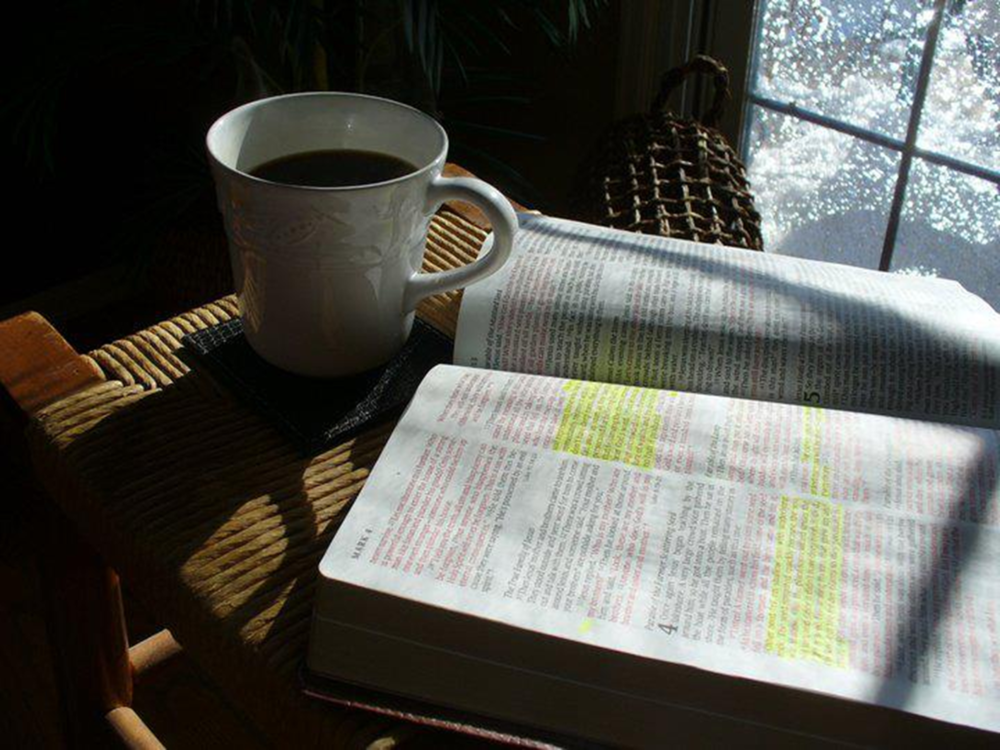
Pressures, Prayer, Promises, and Presence

For me, Psalm 119 is the psalm of psalms. Fearfully and wonderfully made. Like all of Scripture, knit together through the pen of the songwriter by the inspiration of the Spirit. Yet, this song is different. While, overall it has one grand theme, God’s word, it is divided into twenty-two sections, one for each letter of the Hebrew alphabet. Each section having eight verses. And every verse in every section beginning with the corresponding Hebrew letter. For example, in the stanza I’m reading this morning, each verse begins with Qoph. In tomorrow’s reading, Lord willing, I will encounter eight verses beginning with Resh. Spurgeon called Psalm 119 The Golden Alphabet.

And while no two verses in this 176 verse psalm say exactly the same thing, it’s not always clear to me on what a theme might be for a particular stanza. Some seem more Proverbs like with seemingly disassociated considerations brought together. But this morning, as I read the 19th stanza in the 119th psalm, a theme seems clear. Here the songwriter sings of the connection between problems, prayer, promises and God’s presence.

Repetition tells me it’s about prayer.

With my whole heart I cry; answer me, O LORD! I will keep Your statutes.
I call to You; save me, that I may observe Your testimonies.
I rise before dawn and cry for help; I hope in Your words.
My eyes are awake before the watches of the night, that I may meditate on Your promise.
Hear my voice according to Your steadfast love; O LORD, according to Your justice give me life.

(Psalm 119:145-149 ESV)

A whole-hearted cry. A cry for help. 911, rescue needed! Sleepless nights. Up before dawn. Desperately appealing to God on the basis of who He is, and how He operates, as the compelling reason to “hear my voice.”

The cause of such prayer is clear.

They draw near who persecute me with evil purpose; they are far from Your law.

(Psalm 119:150 ESV)

Don’t know who they is, but know that they is in the songwriter’s face, and that they is up to no good. They are devising wicked schemes (NIV). Pursuing evil plans (CSB). Following the path of wickedness, they are coming closer and closer (MSG). The battle is real. The difficulty difficult. The pressure pressing. And so, the songwriter prays.

Now, praying in light of life’s pressures might be pretty intuitive. Crying out for help when you need help, kind of a no-brainer. But what grabs me is that, even as the psalmist cries out for salvation, he is ready to engage in the battle himself with the sword of the Spirit, “which is the word of God” (Eph. 6:17).

Answer me O God, so that I might continue to obey Your statutes. Save me, so that I can keep on keepin’ on according to Your way. I pray in the wee hours of the morning because I have hope in Your words. Even when I can’t sleep, my meditation is on Your promises. So, hear my voice, O LORD.

The Word isn’t only to be read as some spiritual discipline, it is a lifeline. We don’t do devo’s just because, “if I don’t, my day doesn’t go very well.” The Bible isn’t some rabbits foot we make sure to rub every morning for good luck. It is our bold access into dynamic relationship with the living God of creation. The Bible on my desk a reminder of His presence in my life. The living and active word of God before me, the catalyst for the living and active Spirit of God to work in me. Not just some verses to check off my reading plan, but the words of life desperately needed as I face the world.

The songwriter prays when he is under pressure. And his prayer is fueled by God’s promises. From which He knows God’s presence.

But You are near, O LORD, and all Your commandments are true.
Long have I known from Your testimonies that You have founded them forever.

(Psalm 119:151-152 ESV)

More evidence of God’s abundant grace. More reason to give God everlasting glory.

Amen?

Posted in Psalms | Tagged , , , , , , , | 1 Comment

The Righteous Word

Been involved in a number of conversations over the past several days on what’s happening in our land. And I don’t think they’re fueled just by media coverage and news cycles. I do think there’s a stirring in our hearts which is sourced from outside of our hearts.

I have talked with people who think there’s a systemic problem and with those who don’t. Have tried to listen more to those who have a perspective different than mine and have nodded my head more than once with those with whom I agree. What’s not in debate in my circles is that, as a value, justice for all people is a good thing and that the basis for an “all people” view is the Imago Dei — that every human being is an image bearer of God (Genesis 1:26-27). What’s also not in debate is that this world is not as it should be.

I’m thinking that may be why the following caused me to pause and reflect this morning.

Do all things without grumbling or disputing, that you may be blameless and innocent, children of God without blemish in the midst of a crooked and twisted generation, among whom you shine as lights in the world, holding fast to the word of life . . .

(Philippians 2:14-16a ESV)

A crooked and twisted generation. That’s what captures me initially. Paul’s talking to a people who live in a world that’s gone off the rails and has distorted and turned aside from what is true. And he points that out, not so the people of God might withdraw from such a “squalid and polluted society” (MSG), but that they might be motivated to be the children of God they were called to be, blameless and innocent, and shine as lights in such a world. The church needs to be the church, without grumbling and disputing, in order to be light in a world which has twisted justice and is either unaware of, or in denial of, the Imago Dei.

That’s what hooks me. But what I’m chewing on is how, at least in part, this happens.

. . . holding fast to the word of life . . .

To have a grip on. To observe. To attend to. To apply. That’s what the children of God must do with the word of God in order to be the light of God among a crooked and twisted generation. To believe that the Word really is the word of life, and believing that, to hold it fast.

Chewing on that for a bit then set me up for my reading in Psalm 119.

Righteous are You, O LORD, and right are Your rules.
You have appointed Your testimonies in righteousness and in all faithfulness.
My zeal consumes me, because my foes forget Your words.
Your promise is well tried, and Your servant loves it.
I am small and despised, yet I do not forget Your precepts.
Your righteousness is righteous forever, and Your law is true.
Trouble and anguish have found me out, but Your commandments are my delight.
Your testimonies are righteous forever; give me understanding that I may live.

(Psalm 119:137-144 ESV)

In a book I’ve started reading, the author makes the case that righteousness is more than just an attribute of God, it is also a dynamic, “God’s powerful activity of making right what is wrong in the world” (Eric Mason in Woke Church quoting The Crucifixion: Understanding the Death of Jesus Christ by Fleming Rutledge). Justice flows from righteousness. And in this stanza from the psalmist’s love song for the word of God, the integral link between God’s righteous character and His righteous testimonies adds fuel to Paul’s thought of holding fast to the word of life if we are going to shine as lights in a wayward world.

To be sure we need to be doers and not hearers only (James 1:22-25), but there is no doing without first hearing. No making a difference without first holding fast.

How we need to be people of the word, the righteous word — the life transforming gospel and the redemptive story of God’s restoration of the Imago Dei. And from that righteous word, willing to be agents of God. Used of God to impact our world, even if it’s just our little piece of the world.

But let justice roll down like waters, and righteousness like an ever-flowing stream.

(Amos 5:24ESV)

Only by God’s grace. Only for God’s glory.

Posted in Philippians, Psalms | Tagged , , | Leave a comment

Far Better

Though we have both known quarantine, I know there’s no comparing my season of life today with that of the apostle Paul’s when he wrote to the Philippians.

I’ve been sheltering in place in a wonderful house, free to leave as I like, go where I want, and pretty much keep working as normal. But the work is harder work. The spiritual battle seems a little more intense. The emotional toll seems to be a bit more emotional. And this somewhat solitary way of doing the day to day is getting somewhat old. What’s more, though I’ve dutifully managed my “bubble”, I continue to monitor the social carnage around me from things outside of my control. From new things that have been with us for just a few months, like COVID, and from old things that have been with us for way too long, like systemic racism. And it results in a heaviness and a weariness. And, I realize this morning, a certain identification with Paul.

But, like I said, no comparison, really. Paul’s quarantine wasn’t self-imposed, unless you consider that Paul knew his appeal to have his case heard before Caesar came with certain probable consequences. Self-imposed or not, while Paul could see how his “imprisonment for Christ” was really serving to “advance the gospel” (Php 1:12-13), you sense it’s getting old for him too. Multiple missionary journeys. Intense persecution. Spiritual battles. Physical beatings. His desire for God’s people, emotionally draining. And so, even as he encourages the saints at Philippi to stand firm in the faith, and strive side by side for the gospel (1:27), because that’s what he intends to do, he can’t help but desire that time when things will be far better.

For to me to live is Christ, and to die is gain. If I am to live in the flesh, that means fruitful labor for me. Yet which I shall choose I cannot tell. I am hard pressed between the two. My desire is to depart and be with Christ, for that is far better. But to remain in the flesh is more necessary on your account.

(Philippians 1:21-24 ESV)

Far better vs. more necessary. Paul was hard pressed by his desire for the one and his duty to the other. Felt the internal tug-of-war of wanting to move on and be with Christ, while knowing that staying put would benefit his brothers and sisters. And I’m wondering if it’s because of the far better that Paul was able to hang in there and keep on keepin’ on attending to the more necessary.

To live is Christ. Ah, but to die is gain. To depart and be with Christ is better to the nth degree. Far better!

Thinking that taking time to meditate on the far better can help with mustering again the effort needed to get up and get at ‘er with the more necessary. That, in fact, to be heavenly minded can do so much for earthly good. That to keep our heads in the clouds, as it were, really can be useful in keeping our head in the game and our feet on the ground.

It’s the prize we press on for. The ultimate rest we work for. That day when faith gives way to sight. When we depart and are with our Savior. And that really will be far better.

. . . let us run with endurance the race that is set before us, looking to Jesus, the founder and perfecter of our faith, who for the joy that was set before Him endured the cross, despising the shame, and is seated at the right hand of the throne of God.

(Hebrews 12:1b-2 ESV)

The Founder and Perfecter of our faith also knew quarantine (think “My God, my God, why have You forsaken Me?”). And for what purpose? For the joy that was set before Him. The far better. Jesus despised the shame and the difficulty of the more necessary, enduring the cross, that He might prepare the way, and promise the day, when those bought through His blood, when those grown by His grace, would stand before the throne where He is seated at the right hand of God Almighty.

And that, my friends, will be far better!

I can only imagine!

Because of grace. For His glory.

Posted in Philippians | Tagged , , , , , , | Leave a comment

Wholly Dependent

The double-minded. This morning that’s the hook that keeps me hovering over my reading in Psalm 119. The songwriter hated the double-minded.

Hate. We taught our kids that was a dangerous word. A word not to be used lightly or thoughtlessly. But that’s the word used here. All the translations translate it the same, even Peterson in The Message. One of my lexicons qualifies it “to hate personally” as you would an enemy or foe. No getting around it, the songwriter hated the double-minded.

Literally, “the divided.” The half-hearted. The ambivalent. Those who, when it came to God’s word, took an I-can-go-this-way-or-I-can-go-that-way sort of approach.

And the songwriter’s visceral opposition to the double-minded is shared throughout Scripture.

Choose this day whom you will serve, whether the gods your fathers served in the region beyond the River, or the gods of the Amorites in whose land you dwell. But as for me and my house, we will serve the LORD.”

(Joshua 24:15b ESV)

And Elijah came near to all the people and said, “How long will you go limping between two different opinions? If the LORD is God, follow Him; but if Baal, then follow him.”

(1Kings 18:21a ESV)

But let him ask in faith, with no doubting, for the one who doubts is like a wave of the sea that is driven and tossed by the wind. For that person must not suppose that he will receive anything from the Lord; he is a double-minded man, unstable in all his ways.

(James 1:6-7 ESV)

Draw near to God, and He will draw near to you. Cleanse your hands, you sinners, and purify your hearts, you double-minded.

(James 4:8 ESV)

Just as He did with Joshua, Elijah, and James, the Spirit of God moves the songwriter to declare, You gotta pick a side. And the songwriter does.

I love Your law . . .
I hope in Your word . . .
That I may keep the commandments of my God

(Psalm 119:113b, 114b, 115b ESV)

But while it’s the declaration of the psalmist concerning the double-minded that hooks me, and his commitment to God’s word that inspires me, it’s the twice repeated prayer of the psalmist that teaches me.

Uphold me according to Your promise, that I may live, and let me not be put to shame in my hope! Hold me up, that I may be safe and have regard for Your statutes continually!

(Psalm 119:16-17 ESV)

I’ve made my decision. I’ve staked my claim. I’ve chosen this day. I’ve landed firmly on one opinion. I’m no longer doubting. I’ve repented of any double-mindedness. Now my God, “Uphold me.” Or, to say it differently (but not too differently), “Hold me up.”

Rather than boast in his resolve to love, hope in, and follow the word of God, twice the songwriter calls out to God to sustain him in his determination. To support him should his legs weary from standing for God’s word.

As You’ve promised, he prays, have my back, that I may live. As I’ve chosen to trust in You, he pleads, carry me when needed, that I may be safe.

With great determination, it seems, comes the need for great dependency. Taking a side comes with inviting opposition. A willing spirit acknowledges the weakness of the flesh. I can love the word . . . hope in the word . . . even determine with a holy determination to keep the word, but in so doing, I must also cry out to the Word to uphold me according to His promise.

Not double-minded. By God’s grace.

But wholly dependent. For God’s glory.

Posted in Psalms | Tagged , , , | Leave a comment

The Fruit of Righteousness

Started in on Paul’s letter to the Philippians this morning. And what hits me pretty quick is the familiarity of his “laboring” language. Back in Galatians Paul talks of being “again in the anguish of childbirth” because of his consuming desire that the Christ who had saved these believers would be formed in these believers (Gal. 4:19). Not satisfied only with saved souls, Paul was driven to see sanctified lives. Not content to rack up numbers of people who were now “in Christ,” he wanted to see Christ actually living in and through more and more people.

Though the Philippians were in a very different place than the Galatians — though Paul was not contending for the fundamentals of the faith and the groundwork of grace — Paul, just as he did with the Ephesians as well, conveys his aspirations for these believers. He prays for them. With deep emotion and longing, he expresses similar thoughts, but emphasizes different facets, of what it would look like for Christ to be formed in them.

For God is my witness, how I yearn for you all with the affection of Christ Jesus. And it is my prayer that your love may abound more and more, with knowledge and all discernment, so that you may approve what is excellent, and so be pure and blameless for the day of Christ, filled with the fruit of righteousness that comes through Jesus Christ, to the glory and praise of God.

(Philippians 1:8-11 ESV)

From the depths of his gut, Paul wanted to see love overflow from these believers. And not just some flighty, emotional fueled love, but love founded on knowledge, discernment, and the pursuit of what is excellent. The Word received, the Word applied, the Word in action.

Not just students of the Word, but stewards of the Word. Buying for themselves the truth advertised by Paul in his letters, and then investing it in the kingdom. The Word not only penetrating their minds with facts and data, but permeating their hearts as well, enabling them to navigate their world as disciples of Christ. Not just taking in precepts about the life gifted them in Christ, but then having a filter, a worldview, that manifested itself in practical principles for living that life in a manner consistent with Christ in them.

Knowledge and discernment. Not just focused on what might be “good” or “better”, but able to test, examine, scrutinize, and recognize what is excellent.

Big ask. Paul’s prayer for these believers at Philippi is certainly aspirational, but really, is it achievable? I’m thinking . . .

How come? What makes me think that Paul’s prayer isn’t just some pie in the sky, sweet by and by, sort of motivational speech? Because what Paul is asking for is the fruit of righteousness that come through Jesus Christ.

The power of the gospel is that “in it the righteousness of God is revealed from faith to faith” (Rom. 1:16-17). A righteousness not demanded of us in order to be saved, but a righteousness credited to our account because, by faith, we were saved. These Philippians already possessed the righteousness that comes through Jesus Christ. They were already holders of the raw material which could be used of the Spirit to form Christ in them and unleash Christ living through them.

Thus, Paul’s desire is that the seed of Christ’s righteousness in them would result in overflowing fruit through them. And such fruit would be manifest in love that abounded more and more. And such fruit would be borne as they pursued the knowledge of the kingdom, and as they applied that knowledge through Spirit informed discernment as to how to conduct themselves in the world. All the while purposing in their hearts, to approve not the way of the world, but the way of the kingdom of heaven. The way of what is excellent.

Seems to me, at least in part, that’s what the fruit of righteousness that comes through Jesus Christ looks like.

By His grace. For His glory.

Posted in Philippians | Tagged , , , , , , | Leave a comment

Authority

Read the end of Ephesians 6 this morning. Took note afresh of the promise of being able to stand firm with the armor of God given that “we do not wrestle against flesh and blood” (Eph. 6:12a).

And I can’t help but wonder if some element of that wrestling match isn’t playing out in our land. While I’m not one to see the devil behind every evil thing on earth, nor wanting to give his legion “credit” for stuff that itself is able to flow freely from man’s darkened heart, you can’t help but think that where there is unfathomable disregard for image bearers of God, and where there is chaotic violence under the pretense of productive protest, the fingers of the destroyer may very well be at play.

And maybe, because of this mindset, that’s why I’m particularly taken with my reading in Luke this morning.

Setting: a synagogue in Capernaum on the Sabbath. And there Jesus is teaching. And the people are marveling.

. . . they were astonished at His teaching, for His word possessed authority.

(Luke 4:32 ESV)

He didn’t just parrot truth, He sourced the truth. Something in the way He spoke conveyed He was more than just a scribe, but that somehow He was, in fact, the Author.

And then, a hissing voice breaks the hush of awe that filled the place. The voice of a son of Adam possessed by a minion of Satan.

“Ha! What have You to do with us, Jesus of Nazareth? Have You come to destroy us? I know who You are —  the Holy One of God.”

(Luke 4:34 ESV)

The cry of a “spirit of an unclean demon” (4:33). One from the ranks of “the authorities . . . the cosmic powers over this present darkness . . . the spiritual forces of evil in the heavenly places” breaking the silence and calling out the Holy One of God. Arrogance. Defiance. Not of flesh and blood. But no match for the One who created flesh and blood.

Jesus rebuked him, saying, “Be silent and come out of him!” And when the demon had thrown him down in their midst, he came out of him, having done him no harm.

(Luke 4:35 ESV)

And here’s what I’m chewing on this morning: the response of the spectators in this supernatural “wrestling match.” The second time the peanut gallery gasps. The second time they are compelled to draw the same conclusion.

And they were all amazed and said to one another, “What is this word? For with authority and power He commands the unclean spirits, and they come out!”

(Luke 4:36 ESV)

They were astonished that His word possessed such authority. They were amazed that His commands were rooted in such power.

And I’m reminded that Jesus Christ is the same yesterday and today and forever (Heb. 13:8). That the authority He had on earth against the principalities of the air back then, is the same authority He possesses seated at the Almighty’s right hand in heaven over the deeds of darkness here on earth today.

And it is this same Jesus who, by faith, lives in me and through me (Gal. 2:20). Not that I have authority to speak chaos into calm, nor compel riots to rest, but I know the One who does, should He choose.

What’s more, I have been fitted with the armor He has provided so that I “may be able to stand . . . able to withstand . . . and having done all, to stand firm” (Eph. 6:10b, 13b). Not that I might preserve self, but that I might be a bold witness of “the mystery of the gospel” (Eph. 6:19). Not that I can do it myself, but in the One whose word possesses authority.

Crazy times we’re in. But whom shall we fear?

. . . for He who is in you is greater than he who is in the world.

(1John 4:4 ESV)

By His grace. For His glory.

Posted in Ephesians, Luke | Tagged , , , , | 1 Comment

A Thin Silence

The LORD was not in the great and strong wind that pulverized the rocks. Nor was He in the quake that shook the ground. And though you couldn’t take your eyes of the blazing fire, the LORD wasn’t in that either. Thinking this morning how we need to hear the sound of a thin silence.

Hovering over the story of God tending to the depressed prophet, Elijah, even as my mind can’t stop processing this morning’s news of last night’s continued violence in the land. And though I can’t identify with Elijah’s prayer to “take away my life”, his words, “It is enough!” seems to resonate. As does the Lord’s response, “Arise and eat, for the journey is too great for you” (1Ki. 19:4-7).

That Elijah was done, is pretty evident. That the prophet of God who defeated the 850 prophets of Baal and Asherah was spent is pretty clear. To say that he “lost courage” after Jezebel put out a hit on him would be an understatement. And so he runs. But he runs to the mount of God at Horeb, Sinai. And there he holes up in a cave.

And there God asks the kind of penetrating question that God is prone to ask. In the garden, the LORD God called to the man and asked, “Where are you?” Here, on the mount, the searching, seeking God of His people asks the weary prophet, “What are you doing here?” (19:9).

Elijah, you’ve come to the place where the bush once burned without being consumed. You’ve sought the holy ground that compels you to put off your sandals. I have thundered on this mountain before. From here I have revealed my will and my ways for my people. So you’ve come. So you’ve holed up in a cave. What do you want? What are you doing here?

And, as is often the case with so many of us, Elijah, the man “subject to like passions as we are” (James 5:17 KJV), focuses on himself. The world around him has descended into chaos and Elijah boils it down to, “I, even I only, am left.”

And God knows just what His weary messenger needs.

And He said, “Go out and stand on the mount before the LORD.” And behold, the LORD passed by, . . .

(1Kings 19:11a ESV)

Stand on the mountain before Yahweh. Post up before the LORD’s presence. Firmly plant your feet, fix your eyes, open your ears, and behold anew My glory.

Thinking that’s what you need sometimes amidst the overwhelming chaos. A fresh look at God’s glory.

And behold, the LORD passed by, and a great and strong wind tore the mountains and broke in pieces the rocks before the LORD, but the LORD was not in the wind. And after the wind an earthquake, but the LORD was not in the earthquake. And after the earthquake a fire, but the LORD was not in the fire. And after the fire the sound of a low whisper.

(1Kings 19:11b-12 ESV)

The sound of a low whisper. Three words in the original, a voice still small. Or, as the rendering in my margin reads, a thin silence.

Need to take a breath after last night’s news. Need to refocus amidst the continuing collateral damage of a world-wide pandemic. Need to get my thoughts off myself. Need a fresh glimpse of the glory of God. Thinking this morning, it’ll be heard through His word in a thin silence.

“Be still, and know that I am God.”

(Psalm 46:10a ESV)

By Your grace. Show me Your glory.

Posted in 1Kings | Tagged , , , , | 1 Comment

Let’s Walk

Reminded this morning about walking. Three times in the first twenty-one verses of Ephesians 5. Less about getting my steps in but more about putting my salvation on. Redeemed not because of my good works, nevertheless, redeemed for good works (Eph 2:10). Called not because I am worthy, but gifted a new nature so that I may walk in a way worthy of my calling (Eph. 4:1).

To walk: to regulate one’s life; to conduct one’s self. And the Spirit, through Paul, reminds me how I should be thinking about regulating my life.

Regulate it in love.

Therefore be imitators of God, as beloved children. And walk in love, as Christ loved us and gave Himself up for us, a fragrant offering and sacrifice to God.

(Ephesians 5:1-2 ESV)

Really, how many problems does this solve? How much stress does this reduce? If I’m walking in love like Jesus loved, how many answers does that provide for how to respond in any given situation? Christ gave Himself up for me, I should regulate my life with a view of giving myself up for others. Ready to release my own claims, relinquish my own rights, and realign my own will for the sake of another. Sacrificing for them, perhaps, but more so offering myself to God, for His glory.

Regulate it in light.

. . . for at one time you were darkness, but now you are light in the Lord. Walk as children of light (for the fruit of light is found in all that is good and right and true), and try to discern what is pleasing to the Lord.

(Ephesians 5:8-10 ESV)

Gotta be who I am, a child of light. So, in a world under the rule of the darkness, I’m probably gonna stand out in different situations. They’ll be going left but, discerning the will of the Lord, I probably shouldn’t be surprised that often I seem to be going right. While the world around me is driven by what is self-satisfying, ego-building, and go-with-the flow convenient, as a child of light my drivers should be what is good and right and true. And who’s to say what is good and right and true? The Creator. Communicated through His written word. Communicated by His living word.

And finally when it comes to regulating the affairs of my life, I’m to regulate it thoughtfully.

Look carefully then how you walk, not as unwise but as wise, making the best use of the time, because the days are evil.

(Ephesians 5:15-16 ESV)

“Walk circumspectly”, that’s how the King James version translates it. Watch your step. Pay careful attention to what you’re doing. Have you’re head in the game. Be intentional — intentionally aligned to the ways of God and the will of God. Redeem the time. Live for the kingdom.

So, conduct your lives in love, in light, and with heavenly-minded intentionality. Tall orders to begin the day with. And really, knowing who we are and the weakness of our frame, who’s up for such high and holy commands to obey? Who is sufficient for such things? Uh, we are.

Not that we are sufficient in ourselves to claim anything as coming from us, but our sufficiency is from God . . .

(2Corinthians 3:5 ESV)

The Christ who loved us is the Christ who lives in us (Gal. 2:20). The God who authored light has infused us with light (2Cor. 4:6). And the careful walk is possible because of the indwelling Spirit who is ready, willing, and able to lead us (Gal. 5:16, 18, 25). Our sufficiency is from God, the Triune God of our salvation.

So, let’s walk.

By His grace. For His glory.

Posted in Ephesians | Tagged , , , , | 1 Comment

The Root Cause

Her parents named her Loveliness. And I’m sure she was. Beautiful. Attractive. Alluring. Wonder if Solomon perhaps had her in mind when he described the “forbidden woman” of Proverbs. Lips dripping with honey, speech smoother than oil (Prov. 5:3). Intoxicating to look at (5:20), flattering to listen to (7:5), wired to be irresistible. Naamah, Loveliness, the Ammonite.

Now Rehoboam the son of Solomon reigned in Judah. Rehoboam was forty-one years old when he began to reign, and he reigned seventeen years in Jerusalem, the city that the LORD had chosen out of all the tribes of Israel, to put his name there. His mother’s name was Naamah the Ammonite. And Judah did what was evil in the sight of the LORD, and they provoked Him to jealousy with their sins that they committed, more than all that their fathers had done. . . . Now the rest of the acts of Rehoboam and all that he did, are they not written in the Book of the Chronicles of the Kings of Judah? And there was war between Rehoboam and Jeroboam continually. And Rehoboam slept with his fathers and was buried with his fathers in the city of David. His mother’s name was Naamah the Ammonite. And Abijam his son reigned in his place.

(1Kings 14:21-22, 29-30 ESV)

Never noticed her before. But as I wrap up 1 Kings 14, there she is mentioned twice. As if punctuating the crazy section of God’s word that precedes her name. Almost as if the divinely inspired author of Kings is saying, When you think of Rehoboam, when you think of Jeroboam, when you think of the divided kingdom and the explosion of idolatry, don’t forget that it all began with Loveliness.

You pause at the end of 1 Kings 14 and you gotta ask yourself, “What just happened?” Just four chapters ago the Queen of Sheba is traveling to Jerusalem to see if the kingdom under Solomon’s rule is all it was reported to be — the reputation which preceded Solomon seemingly too good to be true. And when she gets there? Mind-blowing! “Behold, the half was not told me” (1Ki. 10:7). But now, at 1Kings 14:30, the kingdom has imploded. It’s divided. At war with itself. Worse yet, unfaithful to the God who called the kingdom into being. What just happened?!?

Loveliness. Naamah the Ammonite.

One of many foreign woman Solomon loved. An attractive lady “from the nations concerning which the LORD had said to the people of Israel, ‘You shall not enter into marriage with them, neither shall they with you, for surely they will turn away your heart after their gods'” (1Ki. 11:1-2). Her alluring beauty and enticing words a picture of the siren nature of the world around us. Catching our eye, winning our heart, drawing us in, ship-wrecking our faith.

Naamah was just a woman. But a woman who turned the heart of a king away from his God. A woman who primed the pump of idolatry. A catalyst for high places of worship. Freely offering cisterns to drink from which led a delivered people down the path of unfaithfulness to their Deliverer.

Loveliness was a little leaven that leavened the whole lump (Gal. 5:9).

Solomon played loose with the ways and warnings of God, and before his son died, the kingdom was dismantled. The wisest man in all the world thought he knew better than the One who gifted him with wisdom, and all that his hand had built, and the peace he had known, were, within a generation,well on its way to being destroyed.

And I can’t help but wonder if the author of Kings wants us to be reminded of the root cause. Loveliness, Naamah the Ammonite.

“Sin will take you farther than you want to go, keep you longer than you want to stay, and cost you more than you want to pay.” — Ravi Zacharias

O, to heed God in the small things. To believe God in the first things. To remain faithful to God in all things.

By His grace. For His glory.

Posted in 1Kings | Tagged , , , | Leave a comment

A Head Scratcher

Hovering this morning over 1Kings 12, the account of how the kingdom of Israel is divided. And you don’t have to chew on the details very long before the whole thing becomes a bit of a head-scratcher.

That Solomon defaulted the promise of the throne because of his sin — because he allowed countless women of beauty to turn his eyes toward them and his heart away from God — is understandable (1Ki. 11:9-12). That God, for David’s sake, would do so after Solomon’s death, and not rend the entire kingdom from the house of David, you can chalk up to God’s gracious prerogative (11:13). That Solomon’s dodo son, Rehoboam, listened to some bad counsel when good counsel had already been given, thus causing the northern tribes to say, “We’re outta here”, is interesting, especially when the writer of 1Kings records, “for it was a turn of affairs brought about by the LORD that He might fulfill His word” (12:15).

But that God would hand the northern tribes over to Jeroboam? Well, that’s the head-scratcher.

Hand-picked before Solomon died, through a prophet God tells Jeroboam what He’s going to do. That He’s going to “tear the kingdom from the hand of Solomon” and give Jeroboam the northern ten tribes (11:31). And God even tells Jeroboam why: because Solomon and his kingdom had forsaken God and followed other gods; because they had not walked in God’s ways; because, unlike David, they were not “doing what is right in My sight and keeping My statutes and My rules” (11:33).

Shouldn’t Jeroboam have got it? Follow God, good. Follow other gods, not so good. Evidently not.

And Jeroboam said in his heart, “Now the kingdom will turn back to the house of David. If this people go up to offer sacrifices in the temple of the LORD at Jerusalem, then the heart of this people will turn again to their lord, to Rehoboam king of Judah, and they will kill me and return to Rehoboam king of Judah.” So the king took counsel and made two calves of gold. And he said to the people, “You have gone up to Jerusalem long enough. Behold your gods, O Israel, who brought you up out of the land of Egypt.”

(1Kings 12:26-28 ESV)

What?!?! He just was given a kingdom because of another king’s idolatry and what does Jeroboam do? Makes his own idols. Demonstrates some one-upmanship with the southern kingdom as in effect he says, Look at these two golden calves ! Judah has only one God who delivered them from Egypt, behold, we have two! Head-scratcher!

What’s more, didn’t God know what this guy was likely to do? After all, “the Lord looks on the heart” (1Sam. 16:7b). More head-scratching.

But though I don’t totally get the why, I’m struck by the where. Though God’s ways are higher than my ways, Jeroboam’s heart is probably representative of my heart. And that’s where Jeroboam’s sin all began, in his heart.

The heart which, though it had been promised a kingdom and given a kingdom, did not trust God for the kingdom. A heart which lifted up self-preservation over God’s glorification. A heart which co-opted true worship for political prudence.

Jeroboam said in his heart, I need to do something. And so, he made his own idols, he built his own temples, he appointed his own priesthood, and sacrificed on his own altar. O, beware the heart.

The heart can cause us to go where the head knows it shouldn’t go. Can lead us to do what we never thought we’d do. Can make wrong things seem right. Can convince us that our ways are more sure than God’s ways. Even convincing us that following the many idols of our own making is a better bet than following the one true God who created all things. Head-scratcher!

Create in me a clean heart, O God, and renew a right spirit within me.

(Psalm 51:10 ESV)

By Your grace. For Your glory.

Posted in 1Kings | Tagged , , , , , , | 2 Comments