
The Great Reveal

We read the account (John 4:1-26), and we know that it was an encounter of the divine kind. But you gotta think that, as she experienced it, the conversation seemed a little strange.

That there was even a conversation happening was weird. He was obviously a Jewish man. She was unmistakably a Samaritan woman. That He spoke to her was way unusual. That, out of the blue, He asked her for water was unexpected. But forget the water, she was still trying to get her head around why He would even speak to her (v.9).

But then, He changes the subject. Instead, He says, she should be asking Him for water–even more unheard of, that a Samaritan woman would approach a Jewish man and ask him to serve her. And not just any water, but living water. Water that would become in her “a spring of water welling up to eternal life” (v.14).

Intriguing, to say the least. But still weird. Jewish man with no bucket saying to Samaritan woman with bucket, “Ask me for water and you’re gonna get eternal life.” But hey, how could she resist? As far-fetched as it sounds, you gotta take a shot.

So she asks. And rather than some hocus pocus appearance of magic water which forever vanquishes her thirst, He changes the subject yet again. “Go call your husband and come here!” (v.16).

Whaaat?!?!? Okay, now this is getting personal. Why would He go there? Why probe her love life? Time to end this conversation.

But she can’t. She’s hooked. She is so taken by this Man that, rather than walk away, she engages–even if she needs to play a semantics game. And as they talk, she knows that this is a conversation unlike any she’s ever known because this Man is unlike any man she has ever known. She knows that she is standing in the presence of Someone who knows things that only someone sent of God knows, for he was a Man “who told me all that I ever did” (v.29a).

So now she changes the subject, “Oh, you’re a prophet. Let’s talk about religion and right worship. We have differing views you know?” And so they talk, or rather, He talks, and she listens. But she’s not quite willing to concede He’s right, yet. For in doing that she’d have to also admit she is less than a virtuous woman. And that would bring her back to whether or not He had eternal life to offer. So, once more, she tries to divert the conversation . . .

The woman said to Him, “I know that Messiah is coming (He who is called Christ). When He comes, He will tell us all things.” Jesus said to her, “I who speak to you am He.”

(John 4:25-26 ESV)

The beating around the bush is done. Speaking in word pictures is finished. “You’re looking for Messiah?” says the Man. “I who speak to you AM.”

What was that moment like? As her brain tried to process what her ears had heard? As she stared into eyes that stared into hers–somehow knowing that they were able to see deep into her soul? As her heart pounded in her chest because she knew it had been laid bare before Someone who was all-knowing? As she tried to make sense of this Jewish man, who had engaged this Samaritan woman, declaring, “I AM Messiah!”

If I’m a movie director shooting this scene it’s time to strike up the band. Zoom in for a close up. Pull out whatever cinematic tricks I have up my sleeve to help everyone watching know this is the climax of the story. This is the great reveal!

I sit back and I chew on what it must have been like for her to hear those words, “I am the Messiah.”

Could it be true? And, if it was, why would He determine to engage her, of all people, and make Himself known to her? Didn’t He know what type of person she was? Oh yeah, He did. Then maybe His offer of living water springing up to eternal life had substance to it. Pretty sure. And then, if God really longed for people to worship Him in spirit and truth . . . and the Spirit had just shown her the Truth . . . shouldn’t she be worshiping? Probably.

What privilege. What blessed, mind-blowing, life-changing privilege. For Messiah to humble Himself and come into a mere mortal’s world, reveal Himself, offer eternal life, and bring that person to saving faith. A privilege this guy in this chair, and all who have had a similar encounter of the divine kind, have known.

Circumstances might be different. Storylines might be unique. But, in some way, at some point, Jesus revealed Himself to each of us in like manner.

“I AM. I am the Promised One. Come to expose sin. Come to atone for sin. Come to offer forgiveness for sin. Come to bring living water leading to eternal life.”

That’s the great reveal.

Isn’t it?

By His grace. For His glory.
Posted in John | Tagged , , , , | 1 Comment

A Catalyst for Patience

Longanimity. I’ve never come across the word before, until this morning. Used in one of my online lexicons to give the sense of a word found in one of my readings this morning. A 15th century English word which once served to describe what James had in mind when he encouraged his readers to “be patient.”

Be patient, therefore, brothers, until the coming of the Lord. . . . You also, be patient. Establish your hearts, for the coming of the Lord is at hand. . . . behold, the Judge is standing at the door.

(James 5:7-9 ESV)

Be patient. Be of a long spirit. Do not lose heart. Keep on keepin’ on, despite trials and suffering. Show longanimity.

Patience. Longsuffering. We might be able to muster up some of it in certain trials, but the extraordinary calm that James is talking about here is something that transcends mere human determination or discipline through prolonged seasons of taking it in the teeth. It’s evidence of the Spirit’s active agency in someone’s life (Gal. 5:22).

And what’s of particular note for me this morning is the catalyst that primes the pump from which flows rivers of Living Water (John 7:38-39) which enables us to hang in there during times of trouble. That catalyst for patience? The coming of the Lord.

Three times James makes reference to the imminent return of the Lord Jesus. Not only did James say He was coming back, but that His coming was “at hand”, and that He, who would judge all things and make all things right, was “standing at the door.” And that heavenly perspective, evidently, can have a profound impact on a believer’s earthly endurance.

Since the day He left, Jesus’ follower have lived with the expectation of His return.

And when [Jesus] had said these things, as they were looking on, He was lifted up, and a cloud took Him out of their sight. And while they were gazing into heaven as He went, behold, two men stood by them in white robes, and said, “Men of Galilee, why do you stand looking into heaven? This Jesus, who was taken up from you into heaven, will come in the same way as you saw Him go into heaven.”

(Acts 1:9-11 ESV)

They believed He could be back in their lifetime. They really thought He’d be back at anytime.

That’s how Jesus set them up to live. Before He left, Jesus told His followers to be ready, and to live with the anticipation that the Master would return on a day when they did not expect Him and at an hour they did not know (Matt. 24:44, 500).

And they believed Him. As such, their faith would fuel their longanimity. The promise of His return, at any moment, could produce a patient that would sustain them for a lifetime.

We are to be longsuffering. Just as He is longsuffering. While it might seem He is slow to fulfill His promised return, He delays “not wishing that any should perish, but that all should reach repentance” (2Pet. 3:9). His grace continuing to call the lost to Himself. His grace continuing to sustain the found until He comes again. Be patient.

Jesus is coming again. His coming is at hand. He stands at the door.

Perhaps today the door will swing open and the Master will return.

As the Bride who looks longingly for her Bridegroom says, “Come!” . . . through the power of the indwelling Spirit who says, “Come!” (Rev. 22:17) . . . be patient.

By His grace. For His glory.

Posted in James | Tagged , , , , , , | 1 Comment

Come Into the Light

It was kind of a bottom-line thing for John–or rather, for God, who spoke through John by the Holy Spirit. The tell-tale, spiritual indicator as to when the heart of sin, rebellion, and disbelief is at play. Pretty simple to recognize, it seems.

“And this is the judgment: the light has come into the world, and people loved the darkness rather than the light because their works were evil. For everyone who does wicked things hates the light and does not come to the light, lest his works should be exposed.” ~ Jesus

(John 3:19-20 ESV)

In our natural condition, we love the darkness. We love the place where we think we’re hidden and our thoughts and actions unknown. There’s freedom when we think no one’s looking. An absence of stress when we’ve convinced ourselves that what happens behind closed doors stays behind closed doors.

But Jesus’s entrance into our world reminds us that, with God, there are no closets to hide in. Light has come into the world.

Jeremiah, in my reading there this morning, declared to those who thought they could play in darkness back then, that our God, the LORD of hosts, is He who “tests the righteous” and “sees the heart and the mind” (Jer. 20:12). Jesus’ incarnation was the physical reminder of that unseen reality. God sees the heart and the mind. Light has come into the world.

Thinking this morning about how much we still prefer the darkness, the place where we somehow fool ourselves into believing things remain hidden. Thoughts, attitudes, actions–all of which we think that, if we keep them to ourselves, then they’re somehow okay. No harm, no foul, if they’re thought, nurtured, or done where, we think, no one hears or sees them.

But our God sees the heart and the mind. And our God has come into the world to remind us of that. And, if we’re honest with ourselves (sounds like a coming out of darkness thing), we know it’s better to live in the light than try to and run from it.

So what if we let the Light in? Like, let Him fully in?

And what if we were to come to the Light? As in, practicing transparency with every thought we think we think in secret, every attitude we harbor because no one knows, every action we take because we’ve kidded ourselves into believing that no one sees? Better? I’m thinking.

“But whoever does what is true comes to the light, so that it may be clearly seen that his works have been carried out in God.” ~ Jesus

(John 3:21 ESV)

We were created, and then, through the work of the cross, re-created, to be creatures of light. And, we know our thoughts, actions, and attitudes are consistent with the Light when we are willing to bring them into the light.

Oh, that the light of the word would reveal the darkness. That the Light of the world would give us freedom to walk in open, transparent places.

Because the Light has exposed the darkness. Has paid the price for what is done in the darkness. Has given us the Power to shed ourselves of the darkness. Has enabled us, through the life of the Light that lives in and through us, to do works in God which are pleasing to God.

Light has come into the world. Let us come into the Light.

By His grace. For His glory.

Posted in John | Tagged , , , , | Leave a comment

Zeal for the House

It was a Passover to remember. I don’t think there’s any way His followers saw what was about to happen.

They go up to Jerusalem with Jesus, enter the temple courts, and things pretty much look and sound like they always look and sound at this time of year. Oxen lowing, sheep bleating, pigeons cooing, money-changers clanking their coins, and the din of crowds milling about looking for a good deal on an offering that they know is being peddled at extortionate prices.

The sacrifice business had become a big business. Passover pilgrims appreciated the convenience of not having to set aside their own sacrifices in advance of coming to worship. And the manic merchants appreciated the opportunity to turn a profit at the expense of convenience minded worshipers. Yup! Just another busy, pre-Passover day in the house of God.

Until it wasn’t . . .

And making a whip of cords, [Jesus] drove them all out of the temple, with the sheep and oxen. And He poured out the coins of the money-changers and overturned their tables. And He told those who sold the pigeons, “Take these things away; do not make my Father’s house a house of trade.” His disciples remembered that it was written, “Zeal for Your house will consume Me.”

(John 2:15-17 ESV)

I sit back and try to imagine what it must have been like when Jesus cleaned house. Not just the chaos and cacophony of animals being stampeded, tables being uplifted, and coinage being scattered all over the ground, but the shock that came over not only sellers and money-changers and consumers, but the followers of Jesus, as well. Who were they following and what was possessing Him?

But then they remembered that it was written (I underline that in light blue colored pencil–my marking for the Holy Spirit). A scripture comes to mind from their past. A part of a verse in Psalm 69. Don’t know if they knew it was Messianic in nature before, but somehow they knew it applied to this Man they followed now–the One they had identified as Messiah (Jn 1:41), the One they believed Moses and the prophets had written about (Jn. 1:45), the One they followed as the King of Israel (Jn. 1:49).

And their King demonstrated an over-the-top, passion-filled protection for His Father’s house.

Zeal consumed Him. His indignation reached a flash point and it devoured Him. He saw what was being done on the holy hill and He went from zero to sixty almost instantaneously, defending the place where the glory should dwell . . . not where the greedy should sell.

And I think about the zeal our Lord had for His Father’s house and this comes to mind:

In Him you also are being built together into a dwelling place for God by the Spirit.

. . . you yourselves like living stones are being built up as a spiritual house, to be a holy priesthood, to offer spiritual sacrifices

(1 Peter 2:5, Ephesians 2:22 ESV)

Is it too much a stretch to say that we, as the church, are the Father’s house? A dwelling place for the glory of God by the Spirit ? A spiritual house where we are not only a living temple made of living stones, but also, as the priesthood, ministering in that temple? What’s more, where we also assume the role of worshiper, offering our spiritual sacrifices? I’m thinkin’ not?

If so, then is it too much to think that Jesus’ zeal for this living house of God is any less than His zeal was on that Passover day? And that maybe our zeal for the Father’s house–the family of God, the Bride of Christ–should mimic that of our Lord’s. I’m thinkin’ so!

Father, forgive us for doing stuff in Your house that should not be done. That diminishes Your place of worship by making it a marketplace for those who would peddle religion and those who would desire but to consume it.

Jesus, give us zeal for the Father’s house that we would keep it clean. That we would keep it focused. That it would be a holy place as the Father is holy.

Spirit, bring to remembrance all that the house is meant to be. Give us the mind of the Son that we might be the living stones, the holy priesthood, and the acceptable sacrifices the Father is worthy of.

By Your grace. For Your glory.

Posted in John | Tagged , , , | 1 Comment

Changing Our Spots

Our salvation is more than just some tweak. More than just an adjustment or some fine-tuning. It isn’t about taking something that was already pretty good and making it better. Rather, it is about radical transformation. So radical, in fact, that apart from divine intervention, left to the laws of nature, it just wouldn’t happen.

That’s what I’m chewing on this morning as I hover over a verse in Jeremiah.

Can the Ethiopian change his skin or the leopard his spots? Then also you can do good who are accustomed to do evil.

(Jeremiah 13:23 ESV)

The people of Judah and their sin were inseparable. So deep was the stain of sin that marked them that it was as permanent as their skin color, as intricately woven into their DNA as the spots on a leopard. Their pride, rebellion, and idolatry so deeply ingrained that no amount of effort could transform their innate desire for evil into an active pursuit of holiness. They were powerless to work the transformation needed for their reformation or restoration.

It brings Romans to mind:

. . . as it is written: “None is righteous, no, not one; no one understands; no one seeks for God. All have turned aside; together they have become worthless; no one does good, not even one.” . . . for all have sinned and fall short of the glory of God.

(Romans 3:10-12, 23 ESV)

That’s who we were. No righteousness. No understanding. No seeking. Going our own way. Of no eternal value whatsoever. No good. Not even a little. Not even one. Those were our spots. Unchangeable, despite our greatest desires and our best efforts to be otherwise.

But now the righteousness of God has been manifested apart from the law, although the Law and the Prophets bear witness to it — the righteousness of God through faith in Jesus Christ for all who believe.

(Romans 3:21-22 ESV)

But . . . what a glorious word, the word but.

But now the righteousness of God has been revealed. Not just some spot remover, but a spot replacer. Not just cleaning up the outside, but actually converting the inside. Rewired. Our spiritually darkened DNA swapped out and replaced with Another’s.

We are people whose spots have been changed. Not changed as in prettied up, but changed as in overthrown . . . turned on its head . . . transformed.

Changed not because of anything we have done, or could ever do. But our spots changed by faith alone in the Person and finished work of the Son of God alone.

New creations in Christ (2Cor. 5:17). Once dead in trespass and sin, now made alive in truth and spirit. Without stain or spot.

Not some tweak, but a glorious transformation.

Hallelujah! What a Savior!

Because of grace. For His glory.

Posted in Jeremiah | Tagged , , , , , | Leave a comment

Holders of the Faith

It’s sin. To show partiality is sin. To regard one person as more esteemed simply because of their high socio-economic status, and ignore another because their not so high socio-economic status is partiality–and that’s sin. To pamper the rich and brush aside the poor is wrong. And James says to his brothers (and sisters), “Don’t do it!” Rather, James says, fulfill the royal law, “You shall love your neighbor as yourself” (James 2:1-8).

And I get it. I’m pickin’ up what James is laying down. I understand the “to do.” I underline it as a command to obey.

But what captures my attention this morning, beyond the what of the command, is the why.

My brothers, show no partiality as you hold the faith in our Lord Jesus Christ, the Lord of glory.

(James 2:1 ESV)

As believers, we hold the faith. That’s what I’m noodling on this morning.

Not only have we believed the truth, but now we possess the truth. The conviction of belief results in a carrying of that belief. Having received it, we are now responsible for it. What was once simply regarded as our salvation, continues to be our stewardship. We are holders of the faith.

What we do becomes the commentary on what we believe. Because we are holders of the faith, when we show partiality, or we discriminate, or we fail to recognize all men and women as created in the image of God, it says something about the gospel we say we trust in. That while it may be the power of God for salvation (Rom. 1:16), it’s not the power for everyone. That the good news is only good news for some, making distinctions based on external factors. Like whether someone is rich or poor. And we know that’s not true.

Listen, my beloved brothers, has not God chosen those who are poor in the world to be rich in faith and heirs of the kingdom, which He has promised to those who love Him?

(James 2:5 ESV)

“Those who love Him”, not those who have a hefty balance in their bank account, that’s who God’s chosen. They’re the ones counted rich in faith and worthy of the kingdom.

Not only do our actions represent what we believe in, but they also reflect on Who we believe in. If we have been born of God, if we are being conformed into His image, and make arbitrary distinctions among people, then musn’t our God do so also? But we know that’s not true either.

There will be tribulation and distress for every human being who does evil, the Jew first and also the Greek, but glory and honor and peace for everyone who does good, the Jew first and also the Greek. For God shows no partiality.

(Romans 2:9-11 ESV)

We are holders of the faith. That’s it. Our default position. That’s part of the deal. Part of what we became when we believed.

Sounds kind of heavy if you chew on it a bit. Brings to mind Paul’s question, “Who is sufficient for these things?” (2Cor. 2:16).

Short answer: We are! Because we are those who steward the faith under the law of liberty.

So speak and so act as those who are to be judged under the law of liberty.

(James 2:12 ESV)

The law of liberty. The law that tells us not only what to do, but gives us the power to do it. The law that not only models the right stuff but mediates when we fall short. That not only reveals when we fail but has provided the means, through the atoning work of the cross, for our forgiveness.

We can embrace being holders of the faith because of the faith that holds us. Our sufficiency found in His sufficiency. Our ability the outworking of His indwelling presence. Imitators of God through abiding in the Son.

Holders of the faith. Who is sufficient? We are!

By His grace. For His glory.

Posted in James | Tagged , , , , | Leave a comment

The Implanted Word

While it’s been freely given to us, we still need to receive it. Though we’ve got it, we still need to do something with it. While it’s true that it came with our being born again, it’s also true that, in order to be saved, we must activate it.

What is it? It is the implanted word.

Therefore put away all filthiness and rampant wickedness and receive with meekness the implanted word, which is able to save your souls.

(James 1:21 ESV)

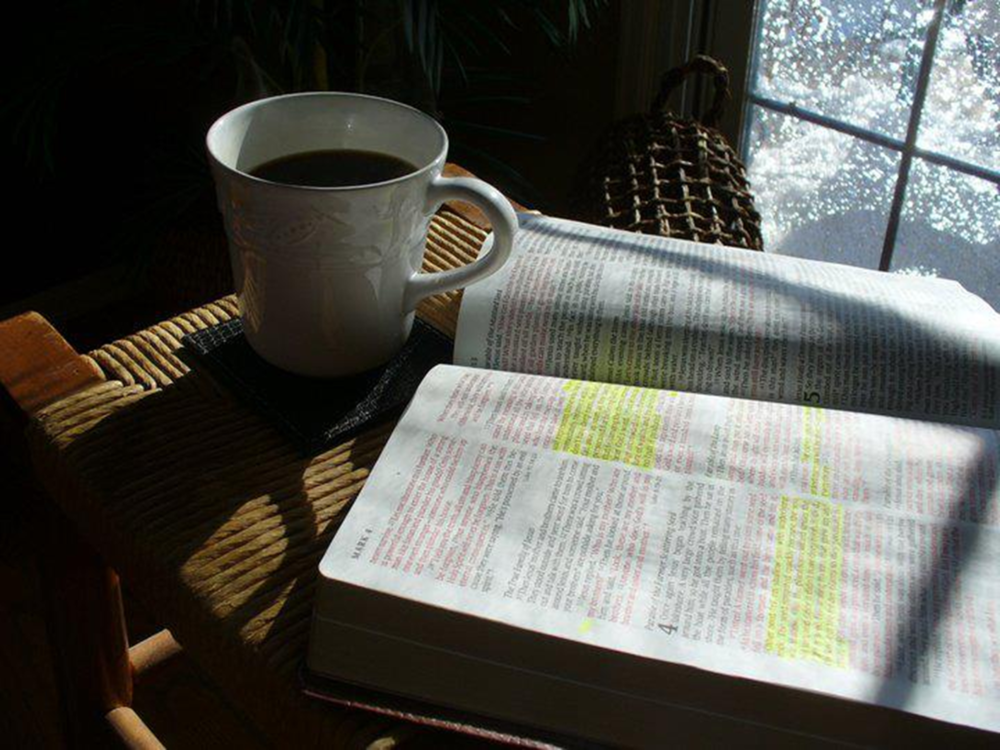
I pull out my purple colored pencil and underline the verse. It’s a command to obey. Put away and receive.

But I’m struck by the fact that I am exhorted to receive something which has already been implanted. To take hold of something that is, literally, inborn. And I wonder afresh at the divine dynamic associated with the Word of God.

When I believed, the law of God was put within me; it was written on my heart (Jer. 31:33). When, by faith, I was adopted as a child of God, the Spirit of God entered, and along with Him, access to the thoughts of God (1Cor. 2:11-12). Access to the mind of God enabled by the Spirit of God, and that, through the implanted word of God.

When we taste and see that the Lord is good (Ps. 34:8), it should create a hunger for more (Matt. 5:6). Having first sipped from the wells of living water, a thirst should emerge which drives us to want to drink deeply of the water Jesus said He would provide. Water that would forever quench whatever thirst we might know. Water which would overflow to the point that it would become within us “a spring of water welling up to eternal life” (Jn. 4:13-14). The implanting of the word seeding the divine dynamic of pursuing the word.

And it is this rooted word that is able to save our souls. Having already been saved by faith from the penalty of sin, we are continually being saved, by appropriating and obeying the implanted word, from the power of sin. We receive the implanted word and, through the indwelling Spirit’s active agency of renewing of our minds, it transforms our lives (Rom. 12:2).

As we determine, only through His divine enabling, to become “doers of the word, and not hearers only” (James 1:22), we increasingly become imitators of Christ, and not just knowledge bearers of God. Having been freely granted a holy standing before God through the finished work of the cross, we should increasingly see a holy reality emerging in the lives we live before God because of the inborn word of the gospel.

But James also points out that there are barriers to the implanted word flourishing. Sin and pride.

Thus, we must put away all that which would defile, and reject all the evil our world is trying to tell us is good. And, we must deal with the self thoughts that would deceive us into thinking that our ways are higher than His ways. To recognize and confess the arrogance within us that causes us to say, in effect, that while He may have gifted us with the implanted word, we’ll still have the last word. Instead, with meekness–with humility and a disposition of gentle deference–we are to receive it. To take hold of it. To submit to it. To do it.

Thank God for the implanted word.

Might its roots go ever deeper that its fruit might be increasingly sweeter.

Only by His grace. Always for His glory.

Posted in James | Tagged , , , , , | Leave a comment

Beyond the Sun

He had done life both ways–pursuing wisdom and going after folly. He was a thinker, knowing that life was meant to be lived and that there were different ways to live it. And he had the smarts to devise experiments that would maximize his experience. What’s more, he had the means to make the world his laboratory. And so, he said to himself, “Self, I will test you with pleasure; enjoy yourself” (Eccl. 2:1).

And enjoy himself he did. He laid hold of folly (2:3). He drank hard. He worked hard. He made whatever he wanted to make. Accumulated whatever he wanted to accumulate. Enjoyed whatever he wanted to enjoy.

Whatever his eyes desired, he gave them. Whatever his brain could think for his hands to do, he did it. And his heart found pleasure in all his toil (2:4-10).

Eventually, he sat back and considered all that his hands had done. Noodled on all that he had to show for the energy and expense he had put out. Evaluated which way was better–the way of wisdom or the way of folly–and concluded:

. . . that there is more gain in wisdom than in folly, as there is more gain in light than in darkness.

(Ecclesiastes 2:13 ESV)

Wisdom is better than folly. He knew that. But, in the end, he was frustrated.

Though he added a ton of experiential knowledge to his already vast knowledge reserves, though he had grown in wisdom through what he had been a first-hand witness to, though he knew wisdom was the better way than folly, when all was said and done . . . he was done!

Then I considered all that my hands had done and the toil I had expended in doing it, and behold, all was vanity and a striving after wind, and there was nothing to be gained under the sun . . . Then I said in my heart, “What happens to the fool will happen to me also. Why then have I been so very wise?” And I said in my heart that this also is vanity. For of the wise as of the fool there is no enduring remembrance, seeing that in the days to come all will have been long forgotten. How the wise dies just like the fool!

(Ecclesiastes 2:11, 15-16 ESV)

Under the sun. It’s the great equalizer.

Whether you go the way of wisdom or go the way of folly, if all there is is what’s under the sun, then there’s nothing to be gained. If life’s purpose is nothing more than to somehow get through life, then it really doesn’t matter how you go about it. If the wisest of the wise is eventually forgotten like the greatest of fools, then what’s it all for?

I’m reading Solomon’s thought processing and I realize afresh that if we are not living lives that are eternal, if we are not laying up treasures for a life beyond this life, if we are not anticipating that whatever happens and gets done during our earthbound years is just setting the stage for real life afterwards, then so what?!? What difference does it make if the entire game, set, and match are played and won, or lost, only under the sun?

Doesn’t matter what you do, how much you make, how many toys you acquire, or even how much you invest in, or give away to good causes, if it’s all contained to what’s under the sun, then it’s vanity, a striving after wind.

That’s why heavenly minded people can be of such earthly good, because they live life in the context of a future–a forever, glorious future. Knowing that what’s done today will have implications which last forever. Sure, some stuff will get burned up in the transition from this life to the next, but other stuff will come through the fire that tests our lives as “gold, sliver, precious stones” worthy of eternal reward (1Cor. 3:10-15). That’s why we choose wisdom.

Wisdom is better than folly.

Solomon verified that through his life experiments. But if life is only lived under the sun, then it doesn’t really matter. However, if life, true life, abundant life, extends beyond the sun, then the wisdom of God and the ways of God are not only better for this life, but for the life to come.

And the One who is Wisdom personified is worthy of our allegiance.

. . . but we preach Christ crucified, a stumbling block to Jews and folly to Gentiles, but to those who are called, both Jews and Greeks, Christ the power of God and the wisdom of God.

(1Corinthians 1:23-24 ESV)

. . . that their hearts may be encouraged, being knit together in love, to reach all the riches of full assurance of understanding and the knowledge of God’s mystery, which is Christ, in whom are hidden all the treasures of wisdom and knowledge.

(Colossians 2:2-3 ESV)

Wisdom is better, Christ is better. And life–our forever life–is better . . . when we live with our minds set beyond the sun.

That’s just smart thinking. Amen?

By His grace. For His glory.

Posted in Ecclesiastes | Tagged , , , , , | 1 Comment

Living Life on the Edge

They stood at the foot of the mount and they trembled. Though they were so close they could touch it, they didn’t dare. The blazing fire emanating from it, the darkness and gloom hovering over it, the tempest swirling about it–all indicating that, while this was holy ground, it was too holy for anything unholy to be near. And then there was the sound of the trumpet, the voice from on high, which made the hearers beg for no more messages to be spoken to them. With dread they understood why they had been told, “If even a beast touches the mountain, it shall be stoned” (Heb. 12:18-21).

And, this morning, the writer to the Hebrews reminds me that we too stand at the foot of a mountain. That we live life on the edge.

But you have come to Mount Zion and to the city of the living God, the heavenly Jerusalem, and to innumerable angels in festal gathering, and to the assembly of the firstborn who are enrolled in heaven, and to God, the judge of all, and to the spirits of the righteous made perfect . . .

(Hebrews 12:22-23 ESV)

If I let my mind just focus on things of this earth, right now I’m sitting at my desk with a book and a computer before me. But if I set my mind on things that are above (Col. 3:2), I am standing at the foot of a mountain. If I bring every thought into captivity, allowing the word of God to be illuminated by the Spirit of God on the things of God, I am on the outer perimeter of promised Mount Zion, the city of the living God. I am doing life on the edge.

Far from being repelled by the terror of getting too close to the holiest of holy places, I have been declared holy myself, and so, draw near with confidence. I don’t see darkness and dread awaiting those who would dare venture closer to the hill, but, instead, anticipate with longing that day when I am beckoned to ascend, knowing that what awaits are innumerable angels in festal gathering, and a grand reunion with those who are already enrolled in heaven–my spirit being welcomed to join the spirits of the righteous made perfect.

That’s the mountain that I stand at the edge of this morning. The holy hill I see today by faith as in a mirror dimly, but then face to face; the place I know of now only in part, but one day soon to be fully known, even as I will be fully known (1Cor. 13:12).

And I hangout at the border of such a majestic kingdom, with absolute certainty of my place in it, not because of who I am or because of what I’ve done. Not because of my own worthiness or righteousness. Not because I’ve negotiated some deal which guarantees my entrance. But I know I can come to Mount Zion because I have also come . . .

. . . to Jesus, the Mediator of a new covenant, and to the sprinkled blood that speaks a better word than the blood of Abel.

(Hebrews 12:24 ESV)

I can camp out at the border of heaven because of a Mediator better than Moses, a promise better than the Law, and a sacrifice better than any offered ever by any man.

I stand at the edge of eternity because I sit at the feet of Jesus. Unafraid of interacting with holy ground because I have been robed with His righteousness. Not driven away by fear, nor complacently content to remain at a distance, but wanting to get as close to heaven, while on earth, as is possible. To peer through whatever knot-hole in the fence I can find and behold whatever I can glimpse of the kingdom.

Because I have come to Jesus, I can live life on the edge–at the foot of Mount Zion, the city of the living God, the heavenly Jerusalem. I can live life on the edge of eternity.

Only because of God’s grace. Solely for God’s glory.

Therefore let us be grateful for receiving a kingdom that cannot be shaken, and thus let us offer to God acceptable worship, with reverence and awe.

(Hebrews 12:28 ESV)

Amen?

Posted in Hebrews | Tagged , , , , , | Leave a comment

The Creator of All Things

Came across a phrase this morning which jumped off the page. Not because I wasn’t familiar with it, but because I was. But what made it pop was that it showed up in the “wrong place.” Not just in a chapter I didn’t expect it to be found, but in a book where I never knew it existed. And not just in a different book of my bible, but in a whole different section of my bible–the Old Testament. What I had been very familiar with as a New Testament command showed up this morning as an Old Testament creation.

And so, it jumped off the page . . . and I sat back in my chair . . . and smiled to myself and said, “Self, He really is the Creator of all things.”

Through [Jesus] then let us continually offer up a sacrifice of praise to God, that is, the fruit of lips that acknowledge His name. (Hebrews 13:15 ESV)

“I have seen [the backslider’s] ways, but I will heal him; I will lead him and restore comfort to him and his mourners, creating the fruit of the lips. Peace, peace, to the far and to the near,” says the LORD, “and I will heal him.” (Isaiah 57:18-19 ESV)

The fruit of the lips. I’ve know about it for a long time from Hebrews. I discovered it afresh this morning in Isaiah.

For years I have been aware that our praise is viewed in heaven as a sacrifice. Available to every believer, it is to be offered continually before our God. Kind of like the incense always burning in the holy place (Ex. 30:1-8).

But the aha! for me this morning is that, while it might be mine to give, my offering of praise, like so many other things, is also a gift sourced by Another. That what is to be offered to God has, in fact, been created by God. He is the Creator of all things, even the fruit of the lips.

Any fruit I have to offer is only because the high and lifted up One, who inhabits eternity and dwells in the high and holy place, has, in His steadfast love and abounding grace, also determined to dwell with “him who is of a contrite and lowly spirit”–and does so in order to “revive the spirit of the lowly, and to revive the heart of the contrite” (Isa. 57:15).

Though He knows the tendencies of the backslider’s way (aka the guy sitting in this chair), He has also purposed not to contend forever, “nor will He always be angry” (57:16), but with compassion He will discipline them (Heb. 12:6-11) so that, with mercy, He can heal them, lead them, and restore them. And thus, creating the fruit of their lips.

His restoration is the source of our response. The salvation He has promised becomes the catalyst for our sacrifice of praise. His unfailing love and abiding grace are the seeds which bear the fruit of our lips.

He is the Creator of all things — even the fruit of our lips.

Of course, He is! I knew that. Oh, how thankful I am that I’ve been reminded of that.

To Him be all glory. For He is the Source, the only source, of such amazing grace.

Amen?

Posted in Isaiah | Tagged , | 2 Comments