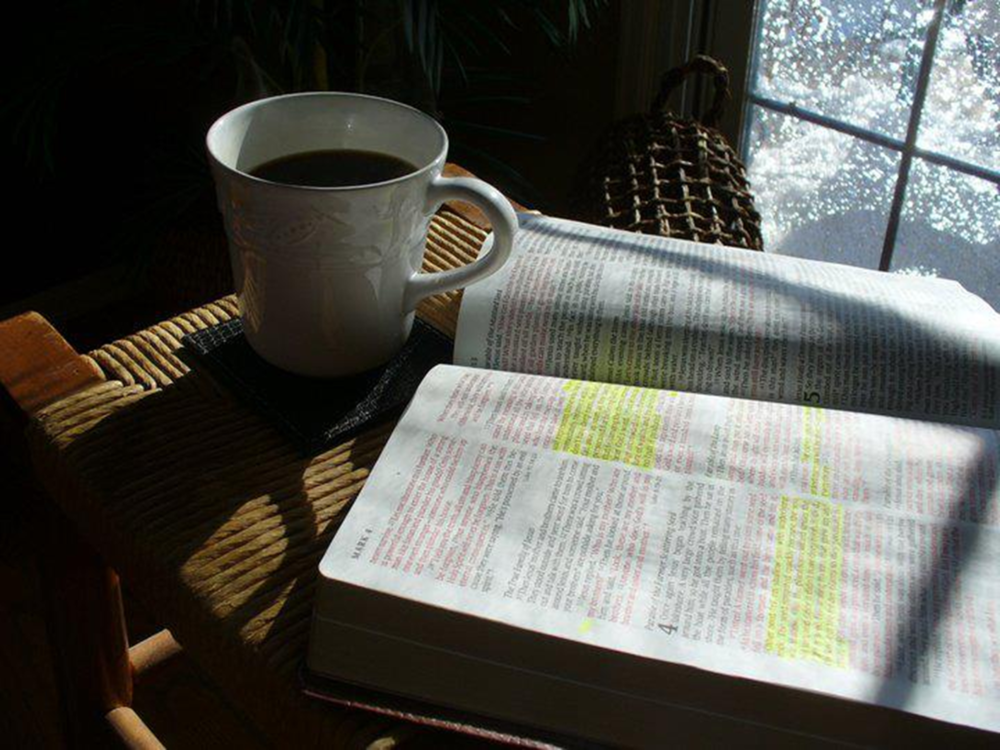
Sweet!

Really quick post this morning . . . gotta get on the road for a quick day-trip down to Oregon.

This morning, a Proverb grabs not just my attention by primes the pump for praise. And that, because I’m reminded of something that’s really, really sweet.

Oil and incense bring joy to the heart,
and the sweetness of a friend is better than self-counsel.

(Proverbs 27:9 CSB)

This is where I think the CSB maybe leaves things cloudier than it should. Almost all the other translations capture the thought better. Here’s three of them.

Oil and perfume make the heart glad, and the sweetness of a friend comes from his earnest counsel. (ESV)

Ointment and perfume delight the heart, And the sweetness of a man’s friend gives delight by hearty counsel. (NKJV)

The heartfelt counsel of a friend is as sweet as perfume and incense. (NLT)

Lots a people thinking they have a lotta “friends” these days — so they’re told by a number which appears on their social media feed. But we have so lost the definition of what it means to be a friend.

A friend, a sweet friend, is one who provides counsel, earnest counsel, hearty counsel, heartfelt counsel. They care enough to consult. The love enough to listen and then lay it out. They get you to the point where they’re willing to give it to you — even when it hurts. (And Proverbs covers that too, check out Proverbs 27:6.)

I have a few of those sweet friends. One I meet with weekly and have, for more weeks than not, for the past 15 or so years. Another, I connect with regularly, and a couple of others who I am able to see maybe twice a year — but every time we connect it is sweet ’cause they get in my business. And there are others who while not as close, still care enough to counsel and are willing to be iron to sharpen my iron (Prov. 27:17).

God designed us for friendship . . . real friendship . . . sweet friendship . . . hearty friendship . . . friendship that bears the sweet fruit of counsel. Oh, that I would be such a friend.

So thankful for my friends. So grateful to my God.

Sweet!

Thank you, Lord.

By You grace. For Your glory.

Posted in Proverbs | Tagged | 1 Comment

Perfected

Reminded this morning that while I may not be perfect (I new that well before this morning), I am perfected.

For by one offering He has perfected forever those who are sanctified.

(Hebrews 10:14 CSB)

The letter written to the Hebrews continues to remind me that Christ is better . . . like, so much better. Not only is He the better revelation of God; not only better than angels and better than Moses; not only a better high priest with a better priesthood operating on the basis of a better covenant; I read this morning that He is also a better sacrifice for sin.

Every priest stands day after day ministering and offering the same sacrifices time after time, which can never take away sins. But this Man, after offering one sacrifice for sins forever, sat down at the right hand of God.

(Hebrews 10:11-12 CSB)

One sacrifice for sins forever. One and done. Time for Jesus to sit down, the work is finished. And what was that one sacrifice?

We have been sanctified through the offering of the body of Jesus Christ once for all time.

(Hebrews 10:10 CSB)

The body of Jesus Christ. That’s the better sacrifice. By offering Himself as the payment for the debt of sin I could never pay, Jesus is the once for all time atonement for all my iniquity.

Not just a better offering, but the ONLY offering that could deal with my sin problem. And not just deal with it, but actually turn it completely around. Thus, He has perfected forever those who are sanctified. Like I said, I may not be perfect, but I am perfected.

A finished work (as in the cross) results in a finished product (as in a Christian). Complete. Not lacking nor wanting. Assured that I will be all that I was born again to be. Called by the Father. Redeemed by the Son. Guaranteed by the Spirit. So, let me say it again, this morning I am perfected.

But while I am yet to be perfected in my state — that will occur in a future time, perhaps soon and very soon — my friend William MacDonald reminds me that now I am perfected in my sanctification, my set apart, holy status before God.

They have been perfected in a twofold sense. First, they have a perfect standing before God; they stand before the Father in all the acceptability of His beloved Son. Second, they have a perfect conscience as far as the guilt and penalty of sin are concerned; they know that the price has been paid in full and that God will not demand payment a second time.

William MacDonals. Believers Bible Commentary

A better sacrifice, a better state. A better offering, a better outcome.

Redeemed, how I love to proclaim it!
Redeemed by the blood of the Lamb;
Redeemed through His infinite mercy,
His child, and forever, I am.
~ Fanny Crosby

Perfected. (Not perfect . . . yet).

By His grace. For His glory.

Posted in Hebrews | Tagged , , | Leave a comment

Count On It

Ben Franklin said that “in this world, nothing is certain except death and taxes.” Others have tried to add a third or fourth thing to the list, but the one thing we all know is undeniable is that death is certain. Since the creation of the world, but for a couple of notable exceptions, the mortality rate for those being born is essentially 100%. Gonna happen. It’s tragic and unexpected when it happens earlier than the “threescore years and ten; [or] if by reason of strength they be fourscore years” (Ps. 90:10 KJV) most are allotted. But to avoid that manner of loss is not to avoid the loss — death’s gonna do what death’s gonna do. Count on it.

But this morning, someone wiser than Ben (aka inspired by God) reminds me through the Scriptures that taxes aren’t death’s twin of certainty. It’s actually something far more glorious.

And just as it is appointed for people to die once ​— ​and after this, judgment ​— ​so also Christ, having been offered once to bear the sins of many, will appear a second time, not to bear sin, but to bring salvation to those who are waiting for Him.

(Hebrews 9:27-28 CSB)

Just as it is appointed for people to die . . . so also Christ will appear a second time. That’s what I’m chewing on this morning — the certainty of Jesus’ coming again.

Every funeral can be a reminder of the future. Every burial, a prompting to anticipate an already scheduled arrival. Every encounter with mortality an encouragement to look afresh to the eastern sky (Mt. 24:27). Death is certain? Yup. So is Jesus’ return.

Not wanting in any way to minimize or trivialize the sting of death. But because they’re linked together here, we shouldn’t minimize or trivialize the Lord’s second coming either.

Just as Jesus “has appeared . . . for the removal of sin by the sacrifice of Himself” (9:26), so too He “will appear . . . to bring salvation to those who are waiting for Him.” Count on it.

It’s not a matter of if He will come again, but of when. And if that when is before my 70 or 80 years here are done, will I be found among those who are waiting for Him?

The ESV translates it as eagerly waiting for Him, trying to capture that the original word isn’t just a passive waiting, like waiting for a bus to arrive as you read the paper, listen to a podcast, or do your favorite crossword puzzle. Rather the waiting in mind here is waiting with great care, attention, and effort. Far from idle waiting it is anticipatory, active waiting. Waiting which compels one to be occupied with waiting. Waiting that creates a desire to be prepared and ready for when the waiting is over. Because of death’s certainty, we estate plan. Shouldn’t we also “eternity plan” because of the equal certainty of Christ’s return? I’m thinkin’ . . .

Jesus is coming again. Count on it.

By God’s grace. For God’s glory.

Marvelous message we bring
Glorious carol we sing
Wonderful word of the King
Jesus is coming again

Standing before Him at last
Trial and trouble all past
Crowns at His feet we will cast
Jesus is coming again

Coming again coming again
Maybe morning maybe noon
Maybe evening and maybe soon
Coming again coming again
Oh what a wonderful day it will be
Jesus is coming again

~ John W. Peterson

Posted in Hebrews | Tagged , , , , | Leave a comment

It’s Still a Promise

I push back from my desk and realize afresh that this is why, by God’s grace, I purpose to read through the bible every year. It’s because I forget what I shouldn’t. Even well-known passages and verses can fade from memory due to time . . . or, perhaps, be displaced from memory because of the data begging to be processed through a given season.

I’m in a such a season. A season that in so many ways doesn’t make sense. One not foreseen nor anticipated. One with no guidebook containing the 7 easy steps to walking through it. A season where I recognized fairly early on that I would have to wait on the Lord in order to make sense of the past and to direct the future. A season that would require patience. And I don’t do patience well!

And yet, I have. By God’s grace, but not without ups and downs, I’m hanging in there. But more than hanging in there, I think I’ve been drawing nearer. And more than drawing nearer, I even think that perhaps I’m getting stronger. Hmm . . .

If I am surprised by that, I shouldn’t be. My reading this morning in Isaiah 40 reminded me why.

Do you not know? Have you not heard?
The LORD is the everlasting God, the Creator of the whole earth.
He never becomes faint or weary; there is no limit to His understanding.
He gives strength to the faint and strengthens the powerless.
Youths may become faint and weary, and young men stumble and fall,
but those who trust in the LORD will renew their strength;
they will soar on wings like eagles;
they will run and not become weary,
they will walk and not faint.

(Isaiah 40:28-31 CSB)

They who wait on the LORD (that’s how I learned it) will renew their strength. Now there’s a promise to claim. But the power in the promise doesn’t lie in my remembering to claim it.

The power of the promise lies in the fact that the God who is the everlasting God has ordained a connection between waiting and refueling — between trusting and surmounting.

The reality of the promise isn’t dependent on me remembering it’s a promise. It’s real because the God who never becomes faint or weary and has no limit to His understanding of how things work, is ready, willing, and able to give strength to the faint and strengthens the powerless.

Whether or not I consciously remembered that when I purposed to be patient isn’t the operative factor of whether or not the dynamic is engaged. Those who wait on the LORD — those who trust in the LORD — WILL renew their strength.

I pause as I read this verse and think back as to the start of this season and there wasn’t much soaring going on. The only running I might have considered was the temptation to just run away. The only walking anticipated was with my head bowed down. But sitting where I’m sitting this morning — and knowing the race is not yet fully run — the weariness has not won and this fellow, by God’s grace, has not fainted.

So, this morning I don’t claim the promise, I rejoice in it. Mine wasn’t to remember it, recite it, demand it, or to hold God to it in order to experience the truth of it. Mine was just to trust in the LORD — just to wait. And the fact that, almost a year later, I’m still trusting and still waiting — and sometimes even feeling like I might be soaring and not fainting — is not evidence of my endurance but is witness to God’s faithfulness. Not because of who I am, but because of what He’s done. Not because of what I’ve done, but because of who He is (thanx again Casting Crowns for that line).

Gonna keep doing what I can do, wait on the Lord. Gonna trust that God’s gonna do what God said He’d do, renew my strength. Because whether I remember it or not, it’s still a promise.

Through His overflowing grace. For His everlasting glory.

Posted in Isaiah | Tagged , , , , | 2 Comments

Peace and Quiet Confidence

A tucked away gem in Isaiah has me thinking this morning. It’s a verse out of context but it’s a truth for eternity. And, while I’ve yet to experience it to its undiluted fullness, I’ve tasted it enough of it so as to long to know it more and more.

The result of righteousness will be peace;
the effect of righteousness
will be quiet confidence forever.

(Isaiah 32:17 CSB)

Peace and quiet confidence. Who doesn’t want some of that? Well, it’s the result of righteousness, it’s the effect of righteousness. Righteousness brings with it peace and quiet confidence.

The prophet is talking of a day when “a king will reign righteously” (32:1) in Israel. A day when “the Spirit from on high is poured out on us” (32:15a). And in that day, the land which God had planted to be His vineyard — the one He had tended and caused to flourish, the one which rebelled and was then abandoned by God and became a wasteland (Isa. 5:1-7)– that land will again “become an orchard” (32:15b), or as the ESV puts it, it will again be “a fruitful field.” And on that day, “righteousness will dwell in the orchard” (32:16b).

And the result of righteousness? Its effect? Peace and quiet confidence.

For believers, today is that day even as we wait for that day to be fully known. Followers of Jesus are fruitful fields (Jn. 15:5). Thus, we are dwelling places for righteousness.

Not our own (though we would hope there would be more of our own righteousness apparent as the Spirit’s sanctifying work has its way with us). But the righteousness that dwells in these fruitful fields is the righteousness of Another. It is the righteousness of Christ — a righteousness imputed to, or credited to the account of, all who believe.

God made Jesus “to be sin who knew no sin, so that in Him we might become the righteousness of God” (2Cor. 5:21). If we are in Jesus, then we are righteous — “not having a righteousness of [our] own . . . but that which comes through faith in Christ, the righteousness from God that depends on faith” (Php. 3:9). Our trust in the finished work of the cross and in the power of an empty tomb places us “in Christ Jesus, who became to us wisdom from God, righteousness and sanctification and redemption” (1Cor. 1:30). Our faith in Jesus “is counted as righteousness” (Rom. 4:5).

And the result of righteousness — Jesus’ righteousness imputed to me? Well, at the end of the day (or at the beginning) even though I may find my own righteousness wanting . . .

The result of Jesus’ righteousness will be peace;
the effect of Jesus’ righteousness
will be quiet confidence forever.

Gonna take a few moments this morning just to chew on that. To believe that. To experientially know that. To rejoice in that. To praise God for that.

Only by His grace. Only for His glory.

Posted in Isaiah | Tagged , , , , | 1 Comment

Rahab Who Just Sits

When the going get’s tough, the tough are going to get going. True statement, I think. Perseverers are going to persevere. They’ll find a way. While they may not know exactly the path towards relief, they’re going to pick a path and figure it out as they go. The question becomes them, which path you gonna start down?

Reading in Isaiah this morning and this “woe” caught my eye.

Woe to the rebellious children!
This is the LORD’s declaration.
They carry out a plan, but not Mine;
they make an alliance,
but against My will,
piling sin on top of sin.
Without asking my advice
they set out to go down to Egypt
in order to seek shelter.

(Isaiah 30:1-2a CSB)

“So you wanna go back to Egypt?” is more than just a cute ’80’s song by Keith Green. It is too often the propensity of a people’s heart who are on pilgrimage to a promised land and, in the “in between space” from deliverance to final delight, find it hard at times. Like, really hard.

Egypt is commonly recognized as a type of the world. A picture of the system from which we were saved, and yet an alluring alternative when storms are encountered. She seems to provide the resources we think we need if we’re gonna make it. She makes promises we’d like to believe could come true. Offers ease when things just don’t seem easy. Again and again, the children of Israel, even after they left the wilderness and entered the promised land — like centuries after — found themselves looking to Egypt for relief when things got out of control. And the LORD declares, “Woe!” (And, I would think, “Whoa!”)

And not just because they picked what’s behind Door Number 2 when they should have picked what was behind Door Number 1. But because Egypt, while perhaps seeming to provide relief and reward for a season, just wasn’t gonna give God’s people what God’s people needed. Cue the prophet again . . .

Egypt’s help is completely worthless;
therefore, I call her:
Rahab Who Just Sits.

(Isaiah 30:7 CSB)

Rahab Who Just Sits. That’s what I’m chewing on this morning. Egypt, the world, is completely worthless, cause she’s a Rahab Who Just Sits.

First occurrence of Rahab in the bible is in Joshua 2:1 where the spies sent by Joshua to scout out the land before “Operation Occupy” come to the house of a prostitute whose name is Rahab. So, Egypt is likened to a harlot. The world is seen as a seductress. And this is what I also read this morning about a Rahab in Proverbs:

For a prostitute is a deep pit,
and a wayward woman is a narrow well;
indeed, she sets an ambush like a robber
and increases the number of unfaithful people.

(Proverbs 23:27-28 CSB)

So you wanna go go back to Egypt? It’s an ambush. It’s a trap. It’s the path of unfaithfulness.

Praise God that Jesus’ saves those from Egypt. The gospel is able to rescue even Rahabs through faith (check out Joshua 6 and Heb. 11:31 and James 2:25). And not just rescue, but redeem and re-life, so much so that a Rahab the prostitute can become Rahab the mother of Boaz, whose son was Obed, who fathered Jesse, who fathered David, who provided the lineage from which Messiah would come (Mt. 1:5). Rahab can be redeemed. But Rahab redeemed is no longer a Rahab of the world.

If we turn to Egypt, if when the going gets tough we’re tempted to find refuge in the world, then we’ve been deceived to think we’re gonna find something from a Rahab who has nothing of any eternal substance to give — she just sits. While she might look good, might boast of possessing the resources we think we need, she’s but an impotent lump. We need to beware of the temptation to make an alliance with Egypt, to turn to her for what only God can do — and delights to do — when we’re walking the wilderness.

Only by God’s grace. Only for God’s glory.

Posted in Isaiah | Tagged , | Leave a comment

A Holy, Holy, Holy Hope

Hebrews 6 sure knows how to take you on a bit of a roller-coaster ride. From the unsettling uncertainties of “falling away” (6:4-6) to the absolute assuredness of being “heirs of the promise” because of God’s “unchangeable purpose” (6:17). That’s our hope, says the writer to the Hebrews, a hope based on the promise given to all the faith-children of Abraham by an unchanging, unfailing God. Not only did God say it, He also swore an oath to it by Himself. So, if like Abraham we will wait patiently and confidently on the promise, we too will obtain the promise (6:13-15). That’s our hope. “Seize it,” says the writer (6:18b).

And when we do, the hope will have a stabilizing affect.

We have this hope as an anchor for the soul, firm and secure.

(Hebrews 6:19a CSB)

An anchor. That’s the metaphor we’re to apply to an eternal hope based on an eternal promise made by the eternal God. Hope is our mainstay. It’s our fastener, our footing, and unfailing hook to that which is yet to be. It’s our mooring in the mess. It’s our safeguard through the storm. It’s our hold when things seem to become too helter-skelter. And this anchor is firm and secure because of where it has been placed.

It enters the inner sanctuary behind the curtain.

(Hebrews 6:19b CSB)

Follow the lifeline of our hope, as you might a rainbow looking for a prize at the end of it, and, unlike a mythical pot of gold, you’ll find an actual anchor for the soul firmly entrenched in the inner sanctuary behind the curtain.

Our hope enters the Holy of Holies. Our confidence is not in some shifting sand, but firmly planted where the glory of God dwells. Our assurance is entrenched in the bedrock of His character. The anchor is grounded in the presence of God Himself. Our hope is found in the midst of the One who is high and lifted up and whose train fills the temple, the One before whom angels declare without ceasing, “Holy, Holy, Holy, is the Lord God Almighty” (Isa. 6:3, Rev. 4:8). Thus, couldn’t we say that ours is a holy, holy, holy hope? I’m thinkin’ . . .

Our anchor is firm and secure because of where it is found. But it is even more firm and secure because of who placed it there. And who’s that? You know the Sunday School answer . . . Jesus!

Jesus has entered there on our behalf as a forerunner, because He has become a high priest forever according to the order of Melchizedek.

(Hebrews 6:20 CSB)

A forerunner. Only time you’ll find this particular word in the original. A runner ahead. One who goes in advance to a place where there rest are to follow. That’s my Redeemer!

Entering the Holy of Holies by His own blood, the once-for-all and last-forever sacrifice for my sin. And having entered the inner sanctuary, He placed my hope there. Having entered behind the curtain He’s gone to prepare a place for us.Having entered and being seated where God is enthroned, He beckons us, “Come to Me. And I will give you rest.”

We have an anchor for the soul. A holy, holy, holy hope. Firm and secure because it’s has been grounded in the presence of a holy, holy, holy God. And that, by the Person, and through the finished work, of a holy, holy, holy Savior.

Oh, what grace! To God be the glory!

Posted in Hebrews | Tagged , | Leave a comment

Those Who Have Fallen Away

Okay, this is one of those thoughts that I’m going to begin but I suspect I don’t where it’ll land. May not even land this morning.

I’m hovering over this troublesome passage in Hebrews 6.

For it is impossible to renew to repentance those who were once enlightened, who tasted the heavenly gift, who shared in the Holy Spirit, who tasted God’s good word and the powers of the coming age, and who have fallen away. This is because, to their own harm, they are recrucifying the Son of God and holding him up to contempt. For the ground that drinks the rain that often falls on it and that produces vegetation useful to those for whom it is cultivated receives a blessing from God. But if it produces thorns and thistles, it is worthless and about to be cursed, and at the end will be burned.

(Hebrews 6:4-8 CSB)

You know this passage? The one that makes it sound like a believer can become an unbeliever. The one which, apart from the rest of Scriptures teaching on the eternal dynamics of being born again, might make you wonder if you can be “un-born again.” But I’m not chewing on it this morning because of that. For I’m confident that the bible teaches that those within whom God has begun the good work of salvation, God will complete the good work of salvation (Php. 1:6). That those whom the Son has come to give life, He has, in fact, given life and life to the full (Jn. 10:10). That those who have become children of God by faith through the Spirit will, each one, be those who mature as children of God by faith through the Spirit (Gal. 3:3). The fruit of God’s work in us being, at least in part, the fruit of faith and perseverance.

So, if I’m not chewing on it for that reason, then why? ‘Cause, as I read about those who have fallen away it sounds a lot like those who we seem to often refer to today as “deconstructing.”

They once seemed to walk according to light, had tasted something of grace, experienced in some manner the Spirit and received to some degree the Word. For a while, they even seemed to be living here and now in the reality of their hope in a there and then. But then, they fell away.

A few decades ago, the term used to describe such people was apostate. And we talked about the sin of apostasy. Now, we seem to talk about deconstructing. Hmm . . .

First, let me say that I think there’s a place for “deconstructing” if by that we mean taking things apart in order to put them back together, and if those things have to do with how we practice biblical, Christian faith and not biblical, Christian faith itself. Let’s examine our behaviors as the church and prune where pruning is needed — much to be repented of, I think. But when it comes down to our beliefs as the church: “What then? If some were unfaithful, will their unfaithfulness nullify God’s faithfulness? Absolutely not! Let God be true, even though everyone is a liar” (Romans 3:3-4a CSB).

So, I guess I’m just feeling cautious this morning that we’ve started a conversation using language other than biblical language. Is our talk about “deconstructing” really about “examining ourselves to see if we are in the faith” (2Cor. 13:15), or are we really talking about apostasy in light of the warning that before Christ returns “the falling way comes first” (2Th. 2:3 NKJV)? The ESV and NIV call it “the rebellion.” Peterson calls it for what the original word say it is “The Apostasy” (MSG).

We should be talking about “deconstructing.” But we should do so, I think, with biblical language. We should address it as the writer to the Hebrews addresses it, with the warning that if “if you hear His voice, do not harden your hearts.”

Watch out, brothers and sisters, so that there won’t be in any of you an evil, unbelieving heart that turns away from the living God. But encourage each other daily, while it is still called today, so that none of you is hardened by sin’s deception. For we have become participants in Christ if we hold firmly until the end the reality that we had at the start. As it is said:

Today, if you hear His voice,
do not harden your hearts as in the rebellion.

(Hebrews 3:12-15 CSB)

Participate in the deconstruction conversation? Yeah, I think we should. But “watch out” that being real about the church (Jesus’s bride, a work in progress, being prepared for glory) doesn’t lead to being hard-hearted about the faith. So let’s do so even as we “encourage each other daily.”

We don’t know a person’s heart, whether it’s apostate or not. But we can be on guard against the spirit of apostasy and contend for the faith in an age marked increasingly by rebellion.

Gonna stop here. Don’t know if I’ve made sense. More to chew on I think.

By His grace. For His glory.

Posted in Hebrews | Tagged , , | Leave a comment

Not a Condition, A Crime

This morning, one of those “encounters” with the CSB that I knew would happen when I started using the translation for my morning readings this year but didn’t know from where. Reading a familiar passage in Hebrews and then, BAM!, an unfamiliar nuance is highlighted. And I think it’s saying that an inability to understand Scripture is less about a condition and more about a crime.

The writer to the Hebrews has been writing about the superiority of Jesus for those who are questioning whether walking in the new way of Jesus is really worth all the difficulty they’ve encountered since choosing to no longer be in bondage to the old way of law and Jewish tradition. He’s making the case that it’s worth it because it’s better. And it’s better because Jesus is better. Better than the prophets. Better than the angels. Better even than Moses. And then he starts to breakdown how Jesus is better (like, way better) than the priesthood. And it’s as he gets ready to dive deep into Jesus’ superiority as a high priest that the writer pauses.

About this we have much to say, and it is hard to explain, since you have become dull of hearing.

(Hebrews 5:11 ESV)

That’s how I’ve always read that verse. But here’s how I read it this morning:

We have a great deal to say about this, and it is difficult to explain, since you have become too lazy to understand.

(Hebrews 5:11 CSB)

Hmm . . . dull of hearing vs. too lazy to understand. At first, they sound pretty different to me. But noodle on it a bit and it isn’t hard to see how similar the two phrases are. How does one become dull of hearing? They’ve become too lazy to understand.

While the writer to the Hebrews is getting into some meaty stuff, his concern about his readers’ understanding isn’t that the material will be too difficult to comprehend. It’s not that it’s too “academic.” Not that it’ll be a 301 class for 101 people. It’s that they were dull. And the reason they were dull is that they were lazy. And, while dull might be a state, lazy is a sin.

They had become dull of hearing, had become too lazy to understand. They didn’t start that way. When receiving the gospel it sounds like they were eating up the gospel. When the dots were first connected as to how Moses and the prophets pointed to Jesus, their hearts were alive to the truth. But then, they became — became dull because they had become lazy.

Don’t know why. Too hard to follow Jesus? Too tempting to follow the world? Too easy to follow the flesh?

Lot of reasons to not to read our bibles. But that we can’t understand our bibles, isn’t one of them. After all, along with the Holy Scriptures we’ve been promised the indwelling Holy Spirit to illuminate them and make them known. The Spirit of truth, who has been given to us forever and will remain in us (Jn. 14:16-17), is the Spirit of truth who ultimately reveals to us truth in the scriptures (Jn. 16:13-14). But that we have the Spirit doesn’t mean it isn’t going to require a little work on our part.

Ours is to not be lazy. Ours is to resist the propensity to be content with being dull. Ours is to read, to study, and to meditate. We are to be workers (that’s a “not lazy” word) “who don’t need to be ashamed, correctly teaching the word of truth” (2Tim. 2:15). And, while we may not all be called to teach a class, there is a divine expectation that, over time, we all “ought to be teachers” (Heb. 5:12). Only then will we become mature. Only then will we be able to digest “solid food.” Only then will we be able to “distinguish between good and evil.” (Heb. 5:13-14).

Let’s not settle for the condition of being dull of hearing. Rather, let’s respond to God’s kindness as He calls us to repent of the crime of being too lazy to understand.

Only by His grace. Always for His glory.

Posted in Hebrews | Tagged , , | Leave a comment

Saddle Up!

Apparently it’s a quote from a movie 20 years ago, but it’s a quote that comes to mind this morning as I hover some wise words of wisdom. While it’s important to put the emphaSIS on the right syllaBLE, when it comes to Proverbs 21:31, I’m not sure you really can put the wrong emPHAsis on the wrong sylLABle.

A horse is prepared for the day of battle,
but victory comes from the LORD.

(Proverbs 21:31 CSB)

Likely a familiar proverb for those familiar with the proverbs. Also likely that not too much noodling is required to get the point, i.e., when all is said and done, what God has said will be done. When the going gets tough, deliverance is ultimately dependent on the LORD’s purposes and not our preparation. The first part of the proverb sets up the main point of the proverb; victory comes from the LORD. That’s the right emphasis.

But what if we chew on the “wrong” emphasis for a bit. Isn’t it true that the horse should in fact be prepared for the day of battle (in those days at least)? If we’re being real about trials and temptations, isn’t it wise to also be ready for trials and temptations? I’m thinkin’ . . .

While we trust in the LORD and His power to save, we are not to test the LORD through our presumption (Mt. 4:6-7). While we look to the LORD alone for our rescue, I don’t think that it means when it comes to being ready to be rescued, we are to be reckless. If we’re gonna be serious about “fighting the good fight” (1Tim. 6:12), if we really want to be a “good soldier” (2Tim. 2:3-4), and if horses are the way the fight is fought, then I’m thinking horses need to be prepared.

WE PUT ON the whole armor of God so that WE CAN STAND against the schemes of the devil (Eph. 6:11). But who enables us to stand? Cue the Sunday School 101 answer: God, “the Lord is able to make him stand” (Rom. 14:4b). WE MAKE EVERY EFFORT to add to our faith so that we won’t become “ineffective or unfruitful in the knowledge of our Lord Jesus Christ” (2Pet. 1:5-8). But where does the fruit come from? Cue it again: Jesus. He’s the Vine, we’re the branches and only as we abide in Him do we “bear much fruit.” “For,” says Jesus, “Apart from Me you can do nothing” (Jn. 15:5).

Yes, the battle is the LORD’s, but that doesn’t mean we shouldn’t prepare the horse for the day of battle. In fact, doesn’t it kind of presuppose it?

While it’s not by might, nor by strength, but by My Spirit, says the LORD (Zec. 4:6), shouldn’t we be mindful of wanting to give the Spirit something to work with? I think about Jesus telling His disciples that on the day they stand before accusers and persecutors to give an account for their faith that they should not “be anxious about how you should defend yourself or what you should say, for the Holy Spirit will teach you in that very hour what you ought to say” (Lk. 12:11-12). But wasn’t Jesus also constantly pulling them aside to teach them and then exhorting them to have “ears to hear”? Yeah, He was. He was preparing them for the day of battle. And in that day, the Spirit would give them the words that were needed because they had taken in the word when it was available. The victory would come from the LORD, but the horse was still to be prepared for the day of battle.

Sure, the right emphaSIS here is that only the LORD wields the power for salvation. But’s it’s not a wrong emPHAsis to also recognize we need to be prepared to work out our salvation (Php. 2:12).

So, let’s saddle up!

By His grace. For His glory.

Posted in Uncategorized | Leave a comment