
Imago Dei

I’m no theologian, nor am I into Latin, but Imago Dei, “the image of God,” has been on my radar a lot over the past few months.

It started at an Apologetics Canada Conference a friend invited me to back in March and, not surprisingly, continued as I tied into the Apologetics Canada’s podcast. But it has also been popping up somewhat regularly and frequently in a number of things I have either read or listened to. All to say that I’ve been somewhat taken with the profound implications of Imago Dei, and what it means to be a human being created in the image of God (Gen. 1:26-27).

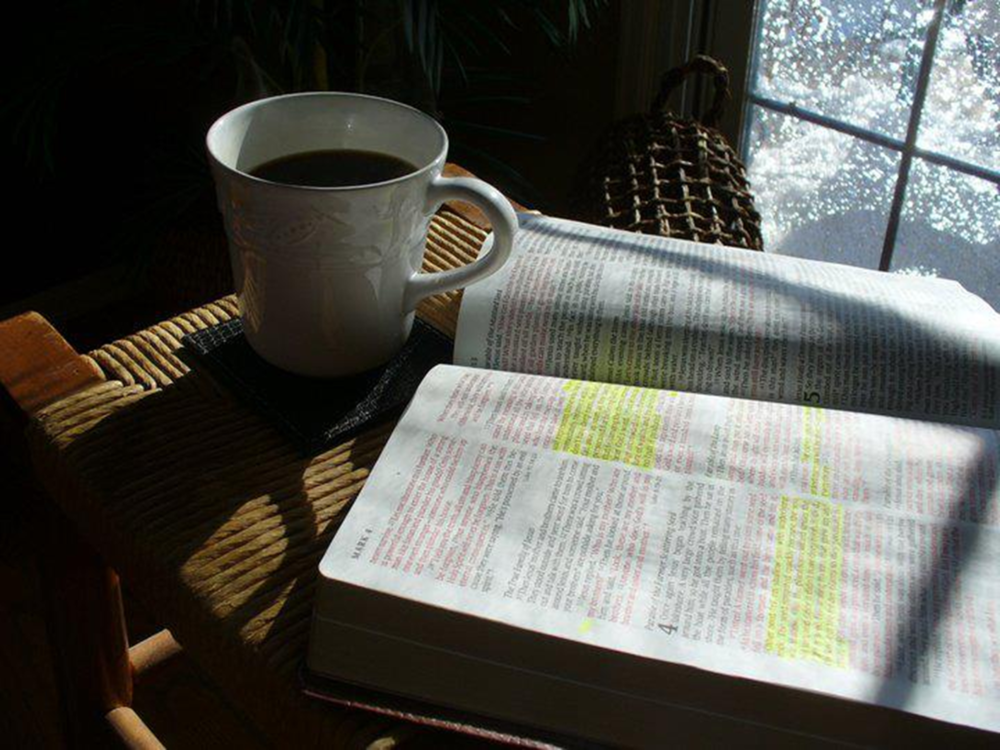
Maybe then, I shouldn’t be surprised that it surfaced again this morning as it jumped off the page during my reading in Ephesians.

. . . put on the new self, created after the likeness of God in true righteousness and holiness.

(Ephesians 4:24 ESV) 

Reminded this morning that, while all men and women have been created in the image of God and thus possess an intrinsic worth, only those born again have been re-created after the likeness of God and thus, with the potential to reflect Him in “true righteousness and holiness,” can also know an intimate walk. Or, as Peter puts it, be “partakers of the divine nature” (2Pet. 1:4).

And I’m a bit in awe at the reminder.

Created after the likeness of God in true righteousness and holiness.

Really? True righteousness? Actual holiness?

Yup! Imago Dei.

That’s who I am in Christ. That’s what I am because of “the grace of our Lord Jesus Christ, that though He was rich, yet for your sake He became poor, so that you by His poverty might become rich” (2Cor. 8:9). Rich in real righteousness. Abundantly resourced in true holiness. That’s me. That’s the likeness I bear, along with all who are children of God, saved by grace through faith, “and this is not your own doing; it is the gift of God, not a result of works, so that no one may boast” (Eph. 2:8-9).

No boasting. Just bearing. Bearing the image of God. Feebly at times. Faltering at times. Nevertheless, by His grace, an image bearer of God in true righteousness and holiness.

If this is true, and it is, then how could I not long to heed Paul’s plea to believers to “put on the new self?” To stop walking as the unsaved do, “in the futility of their minds . . . darkened in their understanding . . . alienated from the life of God . . . callous and given to sensuality?” (Eph. 4:17-19)

How could I not desire with great desire to “be renewed in the spirit” of my mind (4:23). To seek the kingdom. To feed on His word. To abide in the Vine. To walk in manner worthy of our calling.

We have the promise, that we are new creations in Christ and the old has passed away (2Cor. 5:17). We have the platform, the righteousness and holiness of our Savior credited to our account (2Cor. 5:21). And we have the power, for we’ve been created, and re-created, after the likeness of God.

Imago Dei.

By His grace. For His glory.
Posted in Ephesians | Tagged , , , , , | Leave a comment

Not Meant to Walk Alone

Chewing on the first part of Ephesians 4 this morning, verses 1 through 16. And what hits me is that what I have so often read as something directed toward me, is actually, I think, more directed toward we.

I therefore, a prisoner for the Lord, urge you to walk in a manner worthy of the calling to which you have been called . . .

(Ephesians 4:1 ESV)

My first inclination is to receive Paul’s exhortation in an individualistic manner. That I need to walk in a manner worthy of my calling. That it’s a call for me to walk as a trophy of grace, the workmanship of God, a pursuer of Christ. But what grabs me is that Paul doesn’t tell me what to do, but instead how to be. Doesn’t provide a list of actions, but a list of attitudes. Doesn’t tell me how to respond as a lone Christian, but how to relate to others as a member of the Body of Christ. Kind of a “two-by-four-over-the-back-of-the-head” reminder that I’m not meant to walk alone.

. . . walk in a manner worthy of the calling to which you have been called, with all humility and gentleness, with patience, bearing with one another in love, eager to maintain the unity of the Spirit in the bond of peace. There is one body and one Spirit . . .

(Ephesians 4:1b-4a ESV)

While we are called as individuals, we are not called to walk individually. The worthy manner of walking in Christ is realized as we walk together. In a sense, I don’t need humility, gentleness, or patience if I’m going it alone. Don’t need to esteem others better than myself if I’m not doing life with others. Patiently bearing with one another doesn’t come into play if I only think of the Christian walk revolving around this one, the guy in the chair.

Rather, the worthy walk is one that is done in the context of needing to be eager, or to strive, to maintain the unity created by the Spirit. Not really much of a striving if I only need to be unified with myself. But interweave a bunch of people into my world and let the effort begin. There is not just one, and that one me. But there is one body.

We’re not meant to walk alone.

Read on in this passage and it’s all about how we are to mature “to the measure of the stature of the fullness of Christ” (v.13). And we’re to do it together.

Though “each one” of us is given his own gift out of the grace-fueled generosity of Christ, the gifts are not meant to be used alone. Gifts are given to individuals “for building up the body of Christ” (v.12). The manner of walk that is a worthy manner is one that bears fruit through believers that grow up in their faith. And that only happens in the context of the whole body, “joined and held together by every joint with which it is equipped, when each part is working properly, makes the body grow so that it builds itself up in love” (v.16).

We’re not meant to walk alone. The “manner worthy” walk is the walk of a group of people. People who, apart from the gospel, might never naturally do life together. But people, who because of the gospel, have been called into community to walk together. And that, in a manner worthy of their calling.

The worthy walk is the corporate walk. Not that we don’t pursue, nurture, and abide in a “personal relationship” with Christ. But we do so in preparation to walk in partnered relationship with the Bride of Christ. Our brothers and sisters. Our family.

We’re meant to walk together.

By His grace. For His glory.

Posted in Ephesians | Tagged , , , | Leave a comment

Stride Freely Through Wide Open Spaces

Maybe it’s because I’m literally perched on the edge of the ocean. Maybe it’s because there’s something awe-invoking about broad and wide expanses. Or maybe it’s because I’m still savoring my previous reading and the thought of saints comprehending the incomprehensible “breadth and length and height and depth” of the love of Christ (Eph. 3:18-19). Or, maybe it’s the Spirit. But a verse I encountered in Psalm 119 has me thinking about the immense freedom which is mine in Christ. Freedom not to do as I please, but freedom, by His grace and power, to do what pleases the God who created this vast expanse of water in front of me. It’s the blessing of “a wide place.” Or, as Peterson coins it in the Message, the blessing to “stride freely through wide open spaces.”

As I’m meditating on Psalm 119:45, I go back in my journal to see what I might have written about it previously. Thoughts from 2013 capture much of what I’m chewing on this morning. Here they are . . .

Maybe they won’t out-and-out say it, but I sense that some within the church view obedience as the “price to pay” for salvation. That if you want to get to heaven you have to give up something on earth . . . that if you want to inherit eternal riches you need to take a pass on present rewards. And, to be sure, the Christian is called to “count the cost” (Luke 14:28) . . . to “enter by the narrow gate” (Matt. 7:13) . . . to not live for that which “moth and rust destroys” (Matt. 6:19). But something I read in Psalm 119 this morning reminded that these “restrictions” are in fact “redirections” toward true freedom . . . that instead of giving something up, we are, in fact, gaining life . . . abundant life . . . life to the full (John 10:10).

I will keep Your law continually,
   forever and ever,
and I shall walk in a wide place,
   for I have sought Your precepts.

(Psalm 119:44-45 ESV)

“I shall walk in a wide place” . . . that’s the phrase that caused me to pause and consider.

Other translations render “wide place” as “freedom” or “liberty.” The Young’s Literal Translation renders it a “broad place” . . . because, well, that’s literally what the Hebrew word means . . . large, broad, or wide.

So to observe His law continually . . . to inquire of His precepts diligently . . . is to walk in a wide place . . . to live in freedom. Far from being bound by God’s word, to desire to align ourselves to the revealed will of God is to be emancipated from the cruel taskmaster of the flesh . . . and to be redeemed from the oppressive ways of this world. Far from “paying a price” for salvation, obedience is the fruit of eyes that see, ears that hear, and hearts that have, by the grace of God through the gospel, been made alive to the things of heaven. The holy determination to walk in heaven’s way, by the power of God through the gospel, is to be “free indeed” (John 8:36).

Having been given the mind of Christ . . . having had His laws written on our hearts . . . having been given the Spirit of God to lead us . . . is then to freely tread on the wide open plains of God’s goodness . . . to know the unrestricted reality of His presence . . . to sow with great latitude, confident of the harvest of His blessing. It is the old man, who would try and convince us otherwise . . . the old nature who would entertain a voice sent to deceive us into thinking that freedom is found in subjecting ourselves to our own fleshly desires or to the “enlightened” thinking of this world.

“For freedom Christ has set us free,” Paul writes to the Galatians, “stand firm therefore, and do not submit again to a yoke of slavery” (Galatians 5:1)

It is by faith in the good news of the person of Christ . . . in the good news of the finished work of Christ on our behalf . . . that we were set free. By believing the word of grace and promise, we were rescued from the slave shop of sin. Why wouldn’t we also believe that same word . . . that same “power of God for salvation” . . . to be the way to true freedom . . . to be the context for living life in a wide place?

I find my delight in Your commandments,
   which I love.
I will lift up my hands toward Your commandments, which I love,
   and I will meditate on Your statutes.

(Psalm 119:47-48 ESV)

Wide open spaces. Who get’s to enjoy walking in such places? This guy!

By His grace. For His glory.

Posted in Psalms | Tagged , , , | Leave a comment

The Incliner of My Heart

If you know the story of King Solomon, there’s something foreboding as you read the 1Kings account of his early days of success on the throne. The throne promised to David. The throne reserved for the heirs of the man after God’s own heart. The throne forever available for those who, like their father David, would walk faithfully with God with all their heart. Solomon knew this well.

When David’s time to die drew near, he commanded Solomon his son, saying, “I am about to go the way of all the earth. Be strong, and show yourself a man, and keep the charge of the LORD your God, . . . that the LORD may establish His word that He spoke concerning me, saying, ‘If your sons pay close attention to their way, to walk before me in faithfulness with all their heart and with all their soul, you shall not lack a man on the throne of Israel.'”

(1Kings 2:1-4 ESV)

Wholeheartedness would be the X-factor. It was the identified secret sauce to spiritual success, longevity, and finishing the race. Solomon was taught it from the beginning. That’s why, if you know the story of Solomon, you dread coming to the part later in his story where it says, “When Solomon was old his wives turned away his heart after other gods, and his heart was not wholly true to the LORD his God” (1Ki. 11:4). Heavy sigh!

But, this morning, I’m reading in 1Kings 8 and Solomon’s dedication of the temple. The magnificent structure he had built. The place where the ark would settle. The place where the glory would reside. The place, Solomon prayed, where heaven’s portal would be open so that God might hear the prayers of His people. And as Solomon cries out to God for Him to hear from heaven, prophetically almost, he acknowledges the battle for the heart.

“The LORD our God be with us, as He was with our fathers. May He not leave us or forsake us, that He may incline our hearts to Him, to walk in all His ways and to keep His commandments, His statutes, and His rules, which He commanded our fathers.”

(1Kings 8:57-58 ESV)

Rather than resolve in his own strength to be wholehearted, Solomon knows the battle for the heart is only won when we ask God to incline the heart.

Put on my radar this morning in 1Kings 8. Reinforced by the Spirit when I moved on to my reading in Psalm 119.

Teach me, O LORD, the way of Your statutes;
   and I will keep it to the end.
Give me understanding, that I may keep Your law
   and observe it with my whole heart.
Lead me in the path of Your commandments,
   for I delight in it.
Incline my heart to Your testimonies,
   and not to selfish gain!

(Psalm 119:33-36 ESV)

Incline my heart. Stretch it out. Work it like dough that it might be malleable and receptive. Bend it as it needs to be bent. Turn it towards where it needs to be turned. Extend it. Influence it. Incline my heart, O LORD!

Solomon, whose heart would eventually be compromised as he played loose with the world’s pleasures, acknowledged the need for God’s gracious heart work. So does the psalmist as he asks the LORD to teach him, to give him understanding, to lead him in divine paths. Pleading, as did Solomon, that God would incline his heart.

I’m taken this morning with the absolute necessity for a whole heart toward God and yet the absolute dependency on God’s gracious provision to keep the heart whole.

And I’m thankful this morning that, in keeping His promise to never to leave us nor forsake us, God has given us the seal of that promise in the indwelling Holy Spirit (Col. 1:22). The resident Warrior ready to battle daily and engage the flesh (Gal. 5:16-17). The ever-present Power allowing us to partake in the divine nature (2Pet. 1:3-4). The always shining Beacon leading us through divine illumination into all truth (Jn. 16:13).

The One who, if I will ask Him and submit to Him, will be the Incliner of my heart.

Oh, praise God for His wondrous provision through His blessed Spirit.

Incline my heart, O LORD!

By Your grace. For Your glory.

Posted in 1Kings, Psalms | Tagged , , , | Leave a comment

A Divine Dynamic

Reminded this morning that it’s meant to be less of an activity and more of a dynamic. That the benefit is not just in what I do, but in what I long for God to do. That, in a very real sense, opening my Bible reaches it’s full potential when He’s the one opening it to me.

Open my eyes, that I may behold
   wondrous things out of Your law. . . .

Make me understand the way of Your precepts,
   and I will meditate on Your wondrous works. . . . 

I will run in the way of Your commandments
   when You enlarge my heart!

(Psalm 119:18, 27, 32 ESV)

For some, it might be viewed as a kind of lucky charm. Gotta’ start my day with the Word if I want my day to go well.

For others perhaps, it’s viewed as but a discipline. A good habit. Part of a daily spiritual exercise routine. Gut it out. No pain, no gain.

And for others still, maybe it’s seen more as a text book. There’s information in there I need to know. Good data in, good living out.

And maybe, if I’m honest with myself, in different seasons it’s been each of those for me.

But this morning, I’m a bit in awe as I chew afresh on the fact that every time I read my Bible it provides the opportunity for an out-of-this-world experience. A spiritual dynamic involving an intimate interaction with the One who longs to sanctify me in the truth, and His word is truth (Jn. 17:17).

And truly, I can only behold the wondrous things in God’s word, if God first, by His power and according to His purpose, opens my eyes and reveals wondrous things in it to me. Noodling on His amazing works only happens as He gives me insight into His unfathomable ways. And obedience? Only as He makes room in my heart can the seed of the Word go deep, find good soil, and bear the fruit of walking in His ways.

Every time I reading my Bible it has the potential to be a close encounter of the divine kind.  It’s a divine dynamic.

There is no more sure way to interact with the living God than to sit down with His living Word. Open the Book in front of me and the Spirit inside of me is ready to lead me into truth. Ask Him to open my eyes, clear my mind, and make ready my heart, and it’s an invitation He longs to hear and delights to respond to.

Word of God speak!

By Your grace. For Your glory!

Posted in Psalms | Tagged , , , | Leave a comment

God and Gibeon

If he had been in Major League Baseball, his .500 batting average would have been record setting and unprecedented. But stack him up against other followers of God and as a following God average, it kind of stinks.

That’s the thought that comes to mind as I read of Solomon’s start at being king. And maybe that’s why I’m chewing on the fact that God met with Solomon–and blessed Solomon big time–in Gibeon.

I start in on 1Kings 3 and I observe four things in the first four verses:

  1. Solomon made a marriage alliance with Pharaoh king of Egypt. A swing and a miss! What’s he doing marrying a foreign woman? Forbidden. Come out and be separate, says the Lord. Don’t mess with unequal yokes. Especially when it’s with the world from which you were delivered by God’s mighty hand.
  2. Solomon loved the Lord. Home run! That’s what we’re talking about. Love the Lord your God with all your heart, soul, and might. This is looking promising.
  3. Solomon walked in the statutes of David his father. Attaboy! Now we’re batting .666 (ok, so maybe that’s a bit foreboding in itself . . . whatever). David was man after God’s own heart and, if the son was going to be like his father, then things are looking favorable for Israel’s king.
  4. Only he sacrificed and made offerings at the high places. And the king went to Gibeon to sacrifice there. But the arks in Jerusalem! Sacrificing at high places was a pagan practice. Right action, wrong venue. Popup foul fly–easily caught for the out. Batting .500. Great, if he’s hitting balls with a stick. Perhaps not so great, at least to my judgmental way of thinking, for someone who “supposedly” loves the Lord.

Good thing I’m not the scorekeeper. Game would be over for Solomon. For so many others. For me!

But here’s what grabbed me this morning:

At Gibeon the LORD appeared to Solomon in a dream by night, and God said, “Ask what I shall give you.”

(1Kings 3:5 ESV)

God meets with Solomon at Gibeon . . . the “hill city” . . . the high place. Despite Solomon’s forbidden alliance with the world and his misdirected worship at Gibeon, God appears to Solomon and says, “Ask.  Seek Me.  I’m prepared to bless you.”

And it sets up one of the greatest passages in all of Scripture. Solomon, rather than asking for long life, instead of wanting riches and prosperity, above all the ease that would have been his if his enemies were removed, Solomon humbly asks for wisdom and discernment to lead God’s people well. And “it pleased the Lord” (3:10).

Batting 500 on my scorecard. But God is delighted in His servant.

Where I might have written off Solomon because of his poor entrance scores, God, in His abundant grace, meets with the would be king where he’s at. And I think it’s because Solomon truly loved the Lord.

While some of his actions might have been misdirected, his heart desired His God above all things. His longed to be faithful more than he wanted to be set up to be famous. He loved God. God loved Solomon. And, though somewhat out of context, “love covers a multitude of sins” (1Pet. 4:8).

And then I read this:

And Solomon awoke, and behold, it was a dream. Then he came to Jerusalem and stood before the ark of the covenant of the LORD, and offered up burnt offerings and peace offerings, and made a feast for all his servants.

(1Kings 3:15 ESV)

God met with Solomon in Gibeon, then Solomon went up to Jerusalem to worship. God blessed Solomon abundantly where he was at, then Solomon went to where he should have been.  Jerusalem wasn’t a requirement, it was a response.

How prone am I to think that I must do, and then God will bless. That if I walk in a manner worthy, only then will God accept my worship. Not saying that we shouldn’t seek to obey, just that I’m so glad God’s not keeping score the way I might before meeting me where I am.

After all, it’s not about keeping score, it’s about loving God.

Not about how well I perform, but that He so loved me that He sent His Son to redeem me, and His Spirit to seal me, and His Word to transform me by the renewing of my mind.

And in that, He will meet me even when I fall short. And in His kindness, lead me to repentance. And through the finished work of the cross, and by the shed blood of His Son, forgive my sin when I confess my sin–cleansing me from all unrighteousness.

Not because of who I am or how good my batting average is.

But because of His abundant grace. And always for His all-deserving glory.

Posted in 1Kings | Tagged , , , , | Leave a comment

Grace Through Wisdom and Insight

Maybe it’s just me, but most often don’t we tend to take credit for what we know? After all it’s our intelligence that makes sense of stuff, right? Our cognitive abilities that allow us to process data and come up with information. Isn’t it? Or is it?

Maybe it’s grace. Wonderful grace. Marvelous grace. Glorious grace. Super-abounding, abundant, lavished upon us grace.

Here’s what I’m chewing on this morning:

In Him we have redemption through His blood, the forgiveness of our trespasses, according to the riches of His grace, which He lavished upon us, in all wisdom and insight making known to us the mystery of His will, according to His purpose, which He set forth in Christ . . .

(Ephesians 1:7-9 ESV)

I’ve written of it before, reading these opening verses of Ephesians is like drinking from a fire hose. How could it be anything less when you’re trying to take in what it means to be blessed “with every spiritual blessing in heavenly places” (Eph. 1:3)?

But what strikes me this morning is the link between grace and wisdom and insight.

It’s “according to the riches” of God’s grace that we have redemption through the blood of Christ. Grace manifest in a King who came not to be served but to serve a rebellious kingdom even “giving His life as a ransom for many” (Mk. 10:45). Grace displayed by a Good Shepherd who would lay down His life for His sheep (Jn. 10:11). Grace conveyed through God’s own Son, “the radiance of the glory of God and the exact imprint of His nature, upholding the universe by the word of His power,” yet making purification for our sin by, Himself, bearing the wrath our sin deserved (Heb. 1:3).

But what good is grace manifested if it’s not recognized? What good is grace displayed if eyes are blind? What good is grace conveyed if heads and hearts are too thick and too hard to receive it? What good is it if no one is capable of picking up what’s being laid down?

And the thought that’s overwhelming me this morning is that, at least in part, the way God lavishes His grace upon us is by giving us the wisdom and insight to recognize His abundant grace.

And this is not your own doing; it is the gift of God.

(Ephesians 2:8b ESV)

I would never have come up with the ability to articulate the problem of sin if God hadn’t made it known. Never in my wildest dreams come up with a solution of a holy and righteous God dealing with that problem in the giving of Himself. Never imagined that the God of creation would go to such lengths because of His desire to be in fellowship with His creation. Never have conceived that, beyond being redeemed, He also has purposed to bless me with every spiritual blessing in heavenly places.

Who would have thought of such things? Not this guy.

And yet, I fear sometimes that this wisdom has become familiar, old-hat wisdom. That somehow, we fall into believing that this insight was something we were bright enough to grasp on our own and thus becomes a potential source of spiritual pride.

Instead, I’m reminded this morning that what I know, I know only by the determined counsel of God. That what I understand, I understand solely through the spiritual dynamic of illumination by the Spirit of God who patiently leads me into truth. That what I affirm, I affirm not because I figured it out, but because He has lavished the riches of His grace upon me with all wisdom and understanding.

How precious to me are Your thoughts, O God!
   How vast is the sum of them!
If I would count them,
they are more than the sand.   (Psalm 139:17-18a ESV)

Grace through wisdom and insight.

By the grace of God. For the glory of God.

Posted in Ephesians | Tagged , , , | Leave a comment

Walking with the Wind

If He’s more like a breath than a beacon, then how do we know when He’s been leading us? If, though we sense His presence, we don’t actually know where He comes from or where He goes to, then how can we know for sure it’s Him who’s been guiding us? If the Spirit of God operates like the wind (Jn. 3:8), then how do we walk in Him?

Some questions I’ve been chewing on as I read the latter portion of Galatians 5 this morning. It’s what I’m noodling on as Paul continues to exhort the Galatians to allow what began by the Spirit to be “perfected” by the Spirit (3:3).

“Walk by the Spirit,” Paul says (3:16). Be “led by the Spirit”–that’s what Paul wants for believers (3:18). What’s more, he writes,

If we live by the Spirit, let us also keep in step with the Spirit.

(Galatians 5:25 ESV)

Sounds like pretty concrete, objective exhortations to me.

But, when all is said and done, isn’t Paul asking us to keep in step with something, actually Someone, who the Bible describes as moving like the air (pneuma is the Greek word translated Spirit . . . as in pneumatic)–though it be divine air? So, how are we to know when we’re walking with the Wind?

For sure, we know that we have been sealed by the Spirit (Eph. 4:30). And we know that He has been given as a deposit of the presence of God guaranteeing what is yet to fully come (Eph. 1:14). That the Spirit actually lives in us (Rom. 8:9), and interacts with our own spirit through some active, mysterious dynamic (Rom. 8:16). We know too that He’s come as a Helper (Jn. 16:7), an Intercessor (Rom. 8:26-27), and as a Teacher who will lead us into all truth (Jn. 14:26, 16:13).

But walk by the Spirit? Be led by the Spirit? Keep in step with the Spirit? How do you know when that’s been happening?

At least part of the answer, it seems from my reading this morning, lies in the fruit of the Spirit.

Paul explains in Galatians 5:16-26 that a war rages within the Christian. A battle between the Spirit of God and the nature of our old man, the flesh. They have opposite desires, operate out of incompatible motives, and manifest themselves through very different types of behavior.

Now the works of the flesh are evident: sexual immorality, impurity, sensuality, idolatry, sorcery, enmity, strife, jealousy, fits of anger, rivalries, dissensions, divisions, envy, drunkenness, orgies, and things like these. . . . But the fruit of the Spirit is love, joy, peace, patience, kindness, goodness, faithfulness, gentleness, self-control . . .

(Galatians 5:19-21a, 22-23a ESV)

It seems to me that, while it might be hard to know for sure at any given moment if we are walking with the Wind, the evidence that we have been eventually becomes pretty apparent.

Governed by lust? Consumed with idolatry? Marked by strife, or jealousy, or rage, or rivalries and envy? Prone to drunkenness? Then it’s a pretty good indicator that I’m not walking with the Wind. Even if on the outside I’m pretty good at faking it, if, when I’m honest with what’s going on in my heart, I see these things on the inside, then I probably haven’t been keeping in step.

But, if instead there’s some evidence of a measure of increasing love, joy, and peace . . . if I’m surprised by patience, kindness, and goodness that really wasn’t all that me at one time . . . if I seem to be more and more marked by a desire for faithfulness, a demeanor of gentleness, an ability to exercise some self-control . . . then maybe, just maybe, it’s an indicator that I’ve been walking with the Wind.

Nothing to boast of in the fruit. I can plant the seed with holy desire, water it with the Holy Word, but ultimately it’s God, through His Spirit, who gives the increase.

So, while not a cause for boasting, the fruit of the Spirit is cause for rejoicing because it indicates that I have been walking with the Spirit, been led by the Spirit, and, to some degree, keeping in the step with the Spirit.

I’m thinking it’s one of the ways we know we’ve been walking with the Wind . . .

And that, by His grace. And that, for His glory.

Posted in Galatians | Tagged , , , , | Leave a comment

The Table Is Enough

He could have wanted more. He could have had more. But for Mephibosheth, the table was enough.

He was the son of Jonathan, the grandson of King Saul. If not for the determined counsel of God, the throne would have been his one day. But it was not God’s will. And the line of the throne was transferred to David after Saul’s rebellion and disobedience to God.

It wasn’t even God’s will that Mephibosheth should be able bodied. When he was five years old, just after his grandfather and his father had been slain in battle, his nurse fled with him in case someone determined to entirely eradicate all competition for the throne. So she took him up, “and as she fled in her haste, he fell and became lame” — as in “crippled in both feet” lame (2Sam. 4:4, 9:13).

But King David had shown him kindness for Jonathan’s sake (2Sam. 9:1).

Beyond allowing him to live, and thus potentially compete for the throne, David also allowed him to keep the land which was his inheritance. But, what was over the top, is that the king invited this guy who was lame in both feet, who couldn’t do anything but crawl to get himself anywhere, to reside in the palace and to dine each night at the table. The table which covered his immobilizing defects. The table, the place he would partake of a feast fit for a king in the presence of the king.

But when David had to flee because of Absalom’s coup, Mephibosheth could have seen an opportunity to have more. Perhaps the dysfunction in the line of David might provide an opening for the line of Saul to be re-established. That’s what Mephibosheth’s traitor servant, Ziba, told David when David asked why the young man was not fleeing with him. And so David, gave the inheritance to Ziba.

But, for Mephibosheth, the table was enough.

Reading this morning that from the day David fled Absalom until he safely returned, Mephibosheth “had neither taken care of his feet nor trimmed his beard nor washed his clothes” (2Sam. 19:24). He had known the abundant grace of the king’s table, he wouldn’t attempt to usurp the king’s throne. And so he mourned and fasted as the king was absent from his rightful place as sovereign.

Then, upon David’s return, and with the treachery of Ziba exposed, David, in a rash attempt of justice, decided that Mephibosheth and Ziba should split the inheritance and “divide the land.” To which Mephibosheth replied, “Oh, let him take it all, since my lord the king has come safely home” (2Sam. 19:29-30).

He could have had more–at least half the land. But the table was enough.

How come?

For all my fathers house were but men doomed to death before my lord the king, but you set your servant among those who eat at your table. What further right have I, then, to cry to the king?”

(2Samuel 19:28 ESV)

Doomed to die.

For the wages of sin is death. (Romans 6:23a ESV)

Lame in both feet, unable to do anything to earn or merit the king’s favor.

For while we were still weak, at the right time Christ died for the ungodly. (Romans 5:6 ESV)

Of a competing line of leaders, the natural enemy of the king.

. . . while we were enemies we were reconciled to God by the death of his Son . . . (Romans 5:10a ESV)

But, all praise be to God, he had a place at the table!

And as Jesus reclined at table in the house, behold, many tax collectors and sinners came and were reclining with Jesus . . . (Matthew 9:10 ESV)

The table is enough.

Nothing more we could want. Nothing more we could have.

Because of the King’s abundant grace. All for the King’s everlasting glory.

Amen?

Posted in 2Samuel | Tagged , , | 1 Comment

The Possibility and The Power

It really is an incredible aspiration. One of those goals that’s so out there, you wonder if Paul was serious about thinking anyone could attain it. But if Paul wasn’t serious, then he’s being somewhat melodramatic with the Galatians. A little over the top with his “tummy ache” analogy if he believes, deep down, that what he’s hoping for is really a long shot.

But what if Paul’s “drama” is founded? What if the heavy affliction he said he felt he actually felt. What’s more, what if it was justified because the outcome he longed for in their lives was achievable? Then it should cause me to pause. To be in awe of the possibility. And, what’s more, to be in fresh wonder at the power.

It is always good to be made much of for a good purpose, and not only when I am present with you, my little children, for whom I am again in the anguish of childbirth until Christ is formed in you! I wish I could be present with you now and change my tone, for I am perplexed about you.

(Galatians 4:18-20 ESV)

Paul likened it to labor pains. The anguish of childbirth. I’ve been present for five of those. Glad I was the coach and doing the empathizing and not the carrier and the one doing the delivering. The pain of childbirth is an excruciating pain. And that’s how Paul describes the inner agony he had for his children in the faith. And how come? Because he wanted to see Christ formed in them.

Chew on that. Christ formed in them.

The Son of God’s life visible in their life. Jesus the Messiah mirrored in men and women. His mind, His heart, His passion, His priorities–all fully developed in those He redeemed. That’s what Paul sought for those He had led to faith in Christ. And not as some pie-in-the-sky-in-the-sweet-by-and-by-but-probably-won’t-ever-happen outcome. No, Paul’s birthing symptoms were real because he knew that the possibility of Christ formed in you was real.

And we know that for those who love God all things work together for good, for those who are called according to His purpose. For those whom He foreknew He also predestined to be conformed to the image of His Son, in order that He might be the firstborn among many brothers.

(Romans 8:28-29 ESV)

The Galatians were called according to God’s purpose. And that purpose entailed the possibility of being conformed to the image of His Son. No wonder Paul was sick to his stomach at the thought they were being derailed from God’s grand possibility.

But here’s the other thing that hits me as I noodle on this. Paul wasn’t telling them to do more in order to achieve their potential. Rather, it was to believe again in the power of the gospel.

What had begun by faith, would be completed through faith. They had received the Spirit because they believed the gospel, and Christ would be formed in them as they continued to believe the gospel.

That’s why Paul was so bent out of shape at those who corrupted the gospel with the law. Who, in anyway, even insinuated that what had begun as a work of God could somehow be completed as a work of man.

The power of the gospel is a salvation for everyone who believes. A salvation from sin past, to a glory future, with a metamorphosis toward Christ-likeness in the present. A gospel which promises the righteousness of His Son, available to everyone who believes. A righteousness that is “from faith for faith, as it is written, ‘The righteous shall live by faith'” (Rom. 1:16-17).

The gospel that justifies is the gospel that sanctifies. The power that declares us righteous in Him, is the power which makes us righteous through Him.

Christ increasingly formed in us is the possibility. The gospel of Christ is the power for us.

A possibility because of grace. A power to make known His glory.

Posted in Galatians | Tagged , , , | Leave a comment