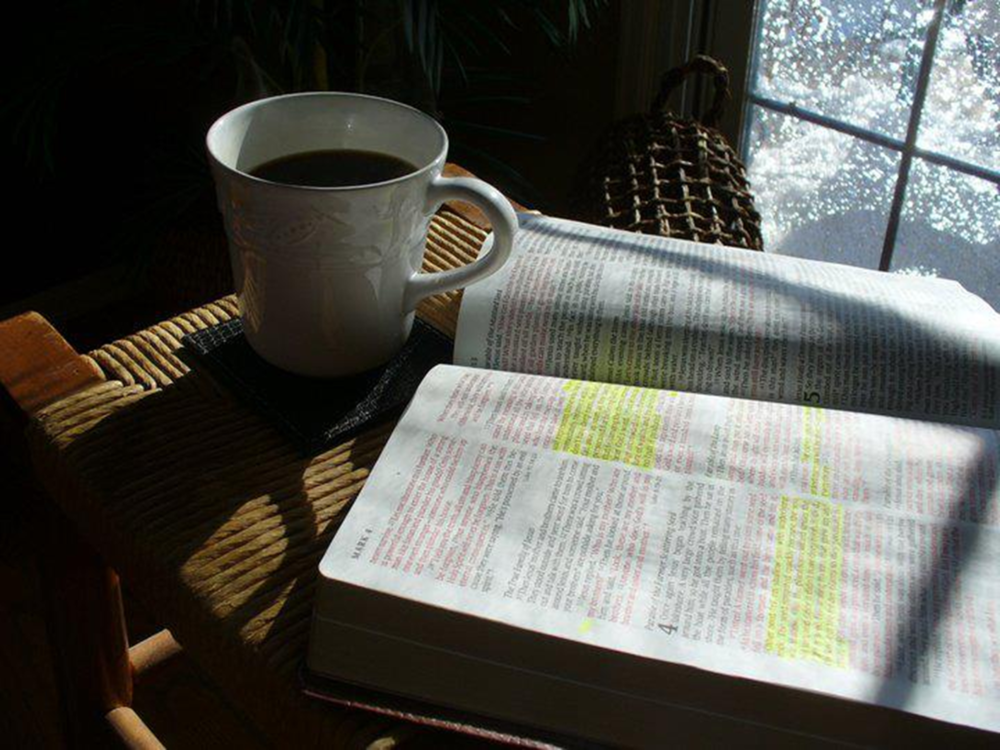
Bless

As part of a class we teach at our church, we say that, among other things, a church member is one who aspires to be a “unifying member.” Someone who understands that we are to be “eager”, or “make every effort”, to “maintain the unity of the Spirit in the bond of peace” (Eph. 4:3). As part of this discussion we talk about what unity is not. It’s not uniformity, everybody looking, thinking, acting the same. It’s not about artificiality, a culture of pretending that we’re something we’re not in order to portray a reality that doesn’t really exist. Nor is it about superficiality, relating to each other at such a surface level that we avoid the undercurrents that invariably exist when people seek to do life together.

Instead it’s about different people with a like mind who have been brought together with a common gospel experience; real people figuring out how to live out a real faith in real relationship with one another; and those adopted as children of God committing themselves to do family life together. How wonderful, how beautiful, when brothers and sisters live together in unity (Ps. 133:1).

But how do you do that? Practically what does it look like? As I hover over a couple of verses in 1Peter this morning, there’s seem to be here at least one very practical thing we can do. It seems that such unity is more than just how we relate to one another, but also how we respond to one another.

Finally, all of you, have unity of mind, sympathy, brotherly love, a tender heart, and a humble mind. Do not repay evil for evil or reviling for reviling, but on the contrary, bless, for to this you were called, that you may obtain a blessing.

(1Peter 3:8-9 ESV)

As the culture became increasingly hostile around the Christians Peter was writing to, it was sure to test the metal of their new nature in Christ. External pressure has a way of exposing internal frailty. And so, Peter addressed the need for servants to serve well their masters, for wives to gently contend for their unbelieving husbands, and for husbands to lean in to honoring their wives. And then he concludes by addressing “all of you.”

First he talks about how they should relate to one another. Acknowledging their common calling and commission. Suffering alongside those who suffered. Loving each other as one would their own brother or sister. Having compassion for one another, soft towards their struggles, empathetic as to their circumstance. And with a humility that showed itself in kindness to others, esteeming others better than themselves.

But when the inevitable happens in a family, when there’s a blow up, when there’s misunderstanding, when the tongue gets ahead of the brain and things are said that probably shouldn’t have been, it’s how we respond that practically works to maintain the unity.

We are not to retaliate. No sharp-tongued sarcasm (MSG). No tit-for-tat.

On the contrary, Peter writes, bless.

That’s the right action that springs from the right attitude. The right response from right relating. Bless.

“Fine speaking” . . . that’s the literal meaning. It’s the word to eulogize.

Despite whatever dust up has occurred, speak well of and invoke God’s favor for. The incident processed through the context of the relationship results in an unexpected response.

Even though we feel slighted or demeaned, because we are likeminded, because we seek to suffer alongside of, because we see each other as blood-bought kin, because we’re tender hearted toward each other with the compassion of Christ, because we’re willing to take the lower place, we respond with blessing.

If I’m relating right to my brother, I’m more likely to be responding right to my brother. And that, only possible through Christ who dwells in me by His Spirit.

Bless.

By His grace. For the His glory.

Posted in 1Peter | Tagged , , , | Leave a comment

Flawless

As I’m hovering over my reading in Song of Solomon this morning, I realize I’ve kind of come full-circle.

As a newer believer, I didn’t know what to make of the Song. Seemed kind of out of place. If the Scriptures were the word of God, this just didn’t seem to fit. If the Bible was for religious instruction, the Song seemed out of place. So I read it allegorically. Conceding that it must be full of types and pictures way beyond my immature believing mind to comprehend. I was more concerned with just getting through it, then thinking I could really understand it.

And then, at some point, probably after some exposure to the basics of hermeneutics (principles and rules for how to interpret the Bible), when I read the Song I would read it literally. The words making more sense, the concepts becoming more relatable, the storyline emerging more clearly. But honestly, still not quite getting why it had been preserved as Holy Writ.

And now, while I probably still read it literally, I think about it more allegorically. While the love story it portrays is beautiful, the love story it foreshadows is awe-invoking.

Behold, you are beautiful, my love, behold, you are beautiful! . . . .You are altogether beautiful, my love; there is no flaw in you. Come with me from Lebanon, my bride . . .

(Song of Solomon 4:1, 7-8a ESV)

Love is blind. That’s the only conclusion you come to if you read this literally. I get that a guy’s gonna look at his girl and think, “You’re beautiful.” She’s not gonna be his girl very long if he doesn’t. And it makes sense that, if he plans on marrying her, he tells her that she’s beautiful . . . repeatedly . . . over and over again. I even get him becoming all gushy at times and blurting out, as he spins on his heals, “Your altogether beautiful!” That everything about her, everything, is pleasant to behold. Love is to be expressed and confessed. It’s what you’d expect a lover to do.

But, to say “there is no flaw in you?” Really? Flawless?

No blemish? No spot? Not even a minor defect? Even though the sweet lady of this love story had been forced by her brothers to work in their vineyards in the hot sun such that she had become very “dark, because the sun has looked upon me” (1:5-6)? You don’t spend time working a vineyard, working among the vines in the blazing sun, and not develop a few scratches, one or two sun spots, or a bit of cut up and wrinkled up skin. Only way you read this literally, and buy the “no flaw” part, is to conclude love is blind.

But what if you chew on this allegorically? What if it’s a picture of another bridegroom-to-be and him fawning over his betrothed? Well then, the mind goes into a cross- referencing mode . . .

. . . Christ loved the church and gave Himself up for her, that He might sanctify her, having cleansed her by the washing of water with the word, so that He might present the church to Himself in splendor, without spot or wrinkle or any such thing, that she might be holy and without blemish. 

(Ephesians 5:26b-27  ESV)

Without spot. No sign of a wrinkle or any such thing. Not even a blemish. Flawless. That’s the bride the Christ beholds as He whispers, “Behold, you are beautiful, My love, behold, you are beautiful! You are altogether beautiful, My love!”

Paul tells us to try and grasp the breadth and length and height and depth of the love of Christ–to seek to know that which “surpasses knowledge” (Eph. 3:18-19). And I’m thinking that, this morning, the Song is a catalyst for doing that.

Before Christ, the Bridegroom, His betrothed, the church, is flawless. Not because love is blind, but because He sees this work in progress as the work completed when she is presented before Him. A work not dependent on our best intentions and self-cleansing efforts, but a work He has begun and has promised He will complete (Php. 1:6).

A work founded on the cross, where He paid the price for our redemption and shed His blood for our cleansing. The work begun when, through His sovereign determination, He graced us with ears to hear, eyes to see, and a new heart to receive. The work sustained through the sealing of the Holy Spirit, who leads us into truth, and patiently forms within us the very nature of the Son of God. The results of the work guaranteed through that sealing, assured that one day the Bridegroom will present His Bride to Himself. And that, flawless!

O’ the love of God. How can it not take our breath away? How does it not humble and yet invigorate at the same time? How does it not prime the pump of awe, wonder, praise, and worship?

Flawless. Really? Yeah, really!

Because of grace. For His glory!

Posted in Song of Solomon | Tagged , , | Leave a comment

Like Living Stones

To say the believers of the dispersion were misunderstood is an understatement. Increasingly, they were being persecuted for that which they didn’t do under the guise that they believed something which they didn’t believe. They were becoming a convenient scapegoat for Nero and there would be no public outcry on their behalf as many who looked upon them didn’t like what they were seeing in themselves. Can’t help but think there’s some connection to us pilgrims today.

We live in a culture where we’re increasingly misunderstood. Our conviction misrepresented as intolerance. Our love for the lost cast as hatred for the least. Our willingness to diagnose the disease in order to point people to the cure seen as a desire to demean others and leave them with guilt and shame. Our light shunned by the darkness, our salt increasingly leaving a bad taste in the world’s mouth.

And it can have a way of wearing you down. Eventually everyone gets tired of swimming upstream. Even the most determined might wonder, at times, if it’s worth it all. But I’m reminded this morning that it’s not really about how much we, as believers, are liked. But who we, as believers, are like.

As you come to Him, a living stone rejected by men but in the sight of God chosen and precious, you yourselves like living stones are being built up as a spiritual house, to be a holy priesthood, to offer spiritual sacrifices acceptable to God through Jesus Christ. For it stands in Scripture: “Behold, I am laying in Zion a stone, a cornerstone chosen and precious, and whoever believes in Him will not be put to shame.”

(1Peter 2:4-6 ESV)

We are like living stones. Cast in the image of the Living Stone, the One disapproved of men, but with God choice, precious.

The chosen and precious Cornerstone upon which we as living stones are being built up as a spiritual dwelling place. The great High Priest of a better covenant fashioning us into His holy priesthood, honored, through no merit of our own, to boldly approach the throne of God with spiritual sacrifices. Sacrifices acceptable to God, though unappreciated by men, as they are offered through Jesus Christ.

And though the media might mischaracterize us, though our culture might misunderstand us, because we are like the Living Stone, the One chosen and precious in God’s sight, we who believe in Him and have been made like Him, as living stones, will not be put to shame.

Whatever dishonor we experience in this life will give way to honor in the next. Any disgrace we suffer now due to the propaganda of the father of lies, will be replaced in that future day when, because of His grace and enabling, we hear “Well done” from the Father of Lights. Any embarrassment we experience now because of false accusations soon to be displaced with an eternal glory as we are presented the victor’s crown.

. . . in all these things we are more than conquerors through Him who loved us.    (Romans 8:37 ESV)

We are like living stones. Knit together to be the place of His dwelling now through the Holy Spirit (Eph. 2:21-22). Called together to bear the privilege of proclaiming “the excellencies of Him who called you out of darkness into His marvelous light” (1Pet. 2:9). Possessing together the promise that we too, like the Living Stone, are deemed by our God to be chosen and precious, and will one day hear, “Enter into the joy of Your Master.”

Like living stones . . . being conformed to the image of the Living Stone.

By His grace. For His glory.

Posted in 1Peter | Tagged , , , | Leave a comment

What’s the Deal with Egypt?

Reading again in Jeremiah this morning, and I don’t get it. What it is about Egypt that made the people turn their backs on God, again! What was it about the world they had been delivered from that drew them, over and over, to return, thinking that somehow there they would find what they needed. What was it about Egypt’s siren’s call that drowned out the voice of God? What was it about it’s wisdom that made the people think they should trust in themselves with all their heart and lean not on God’s understanding? I don’t get it. What’s the deal with Egypt?

Then all the commanders of the forces, and Johanan the son of Kareah and Jezaniah the son of Hoshaiah, and all the people from the least to the greatest, came near and said to Jeremiah the prophet, “Let our plea for mercy come before you, and pray to the LORD your God for us, for all this remnant–because we are left with but a few, as your eyes see us–that the LORD your God may show us the way we should go, and the thing that we should do. . . . May the LORD be a true and faithful witness against us if we do not act according to all the word with which the LORD your God sends you to us. Whether it is good or bad, we will obey the voice of the LORD our God to whom we are sending you, that it may be well with us when we obey the voice of the LORD our God.”

(Jeremiah 42:1-3 ESV)

To say that Judah had been destabilized after the Babylonian razing of Jerusalem, would be an understatement. The king had been captured, Jerusalem had fallen, Babylon’s appointed governor for the region had been assassinated by the Ammonites, and though the Ammonites had been run off, those who returned to Judah were feeling pretty insecure and vulnerable.

It was a good time to turn to God. And they did. But it was a bad time not to listen.

Whatever God says, they told Jeremiah, that we will do. Whether we think its good or bad, we will obey the voice of God. Just reveal to us the mind of God. So they asked, so Jeremiah did.

And after 10 ten days of seeking God in prayer, Jeremiah comes back and says, “Stay here. Stay in Judah. Don’t fear the king of Babylon for I will be with you in this land I promised you. Don’t go to Egypt. Don’t think you’ll find there the stability you long for. Don’t for a second think it will provide you safety or long life. In fact, if you go back, you’ll die there.”

And their response?

When Jeremiah finished speaking to all the people all these words of the LORD their God, with which the LORD their God had sent him to them, Azariah the son of Hoshaiah and Johanan the son of Kareah and all the insolent men said to Jeremiah, “You are telling a lie. The LORD our God did not send you to say, ‘Do not go to Egypt to live there,'”. . . And they came into the land of Egypt, for they did not obey the voice of the LORD.

(Jeremiah 43:1-2, 7 ESV)

What?!?!?!? You gotta be kidding me! Pray, Jeremiah, they said. Give us the word of God, they said. We’ll obey no matter what, they said. But stay here? . . . No way! . . . We’re going to Egypt, they said.

What’s the deal with Egypt?

What is it about the world that, even when presented with the word of God, it draws us to itself for protection? That, whatever we think it promises, those promises override the promises of God? That, whatever we think it provides, it seems more sure than the provision of God? That, whatever ease and pleasure we think might be found there, it desensitizes us to the pleasures and joy we know abiding in His presence?

Oh, that they would have sought God’s word, heard God’s word, and heeded God’s word. Then would they have known the protection of God’s word.

There’s a warning there. There’s a lesson there.

Not that I might sit in judgment, but that I might be instructed. Aware of Egypt’s allure. Recognizing the lingering, deceiving nature of the old man that looks longingly towards the world from which I’ve been delivered and thinking it will somehow be easier if I go back. Warned of making decisions according to my will which effectively declare God’s word to be a liar.

Get behind me, Egypt!

I am bound for the promised land. And to that journey, by the Spirit’s enabling, I will remain true. Knowing my God is with me. By faith, confident that He will lead me, He will protect me, and He will bring me safely home.

By His grace. For His glory.

Posted in Jeremiah | Tagged , , , , | Leave a comment

The Foretaste of Grace

It was going to get worse before it got better. And for many, there was the very real possibility they wouldn’t live through the worse and never see it get better . . . at least not on earth. That’s why Peter wrote his first letter.

They were already the “exiles of the Dispersion” (1:1), because of their faith. Now Peter was preparing them to be those who would be the “endurers” through the persecution, for their faith. So, in order to encourage the brothers and sisters to keep on keepin’ on; to try and prevent a bad taste from forming in their mouths concerning their decision to follow Christ; Peter encourages them to live in light of the foretaste of grace.

Therefore, preparing your minds for action, and being sober-minded, set your hope fully on the grace that will be brought to you at the revelation of Jesus Christ.

(1Peter 1:13 ESV)

“The grace that will be brought to you at the revelation of Jesus Christ.” That was to be their focus. That was what they were to lock and load on. The grace that’s coming.

They had already experienced amazing grace. Sins forgiven. Debt paid. Righteousness credited to their account. Hearts of stone replaced with hearts of flesh. Once far from God, now able to draw near. Once strangers concerning the promises, now adopted as children and made joint heirs with God’s own Son. Wretches, they once were lost but now were found. All because of amazing grace.

What’s more, they had started to experience and understand something of abiding grace. Becoming more and more used to what a “personal relationship” with the Creator and Sustainer of the universe looked like. More aware of being transformed and conformed into the image of Christ. More aware of the Spirit’s leading. More attuned to picking up on the whisper of His still, small voice. More accustomed to recognizing His active agency in their lives. Increasingly able, by His power, to follow as He led. More and more familiar with what it looked like to rest in Christ through abiding grace.

And, they had known what it was to receive sustaining grace. To recognize their weakness as the perfect platform to encounter His power. To accept those “thorns in the flesh” which the Lord determined not to remove, so that they might know what it was to walk not by their might, nor by their power, but by God’s Spirit. They were learning what it was to boast not in themselves, but only in His sustaining grace.

But as great as amazing grace was . . . as intimate as abiding grace was becoming . . . as real as sustaining grace had become for each trial and testing . . . it was all just a foretaste of “the grace that will brought to you at the revelation of Jesus Christ.”

My reading this morning reminding me that, as much grace as we have known, experienced, and come to appreciate, it is but a sampling of the grace to come. It’s just the appetizer.

There awaits an inheritance, “imperishable, undefiled, and unfading, kept in heaven for you” (1:4)–the treasures of His grace. A place He is preparing where “death shall be no more, neither shall there be mourning nor crying nor pain anymore” (Rev. 21:4)–the final deliverance of His grace. But more than all that, a time and place where we will, up close and more personal than can be imagined, behold the glory of God and the face of the Lamb–the fullness of His grace.

Our enemy would want to take our struggles and use them to put a bitter taste in our mouths, causing us to murmur and wonder if it’s worth it all as we sojourn sometimes through very dry lands. But our Savior would have us live in light of the foretaste we have received. The grace experienced but a “teaser” of the grace that will be brought at the revelation of Jesus Christ.

Even so, come Lord Jesus.

Until then, we’ll keep on keepin’ on . . .

With the foretaste of His grace. For the sake of His glory.

Amen?

Posted in 1Peter | Tagged , , , , | Leave a comment

The Back, The Face, and The Heart

The more I read the prophets, the more I’m intrigued by the prophets. The more I think I understand what’s going on, the more I think I know of God. And the more I consider the dynamic of Israel’s judgment and promised restoration, the more I see the gospel. And the more I’m stirred with awe and wonder; praise and worship.

Case in point, Jeremiah’s prophetic word to Israel and Judah and the relationship between the back, the face, and the heart.

This city has aroused my anger and wrath, from the day it was built to this day, so that I will remove it from my sight because of all the evil of the children of Israel and the children of Judah that they did to provoke me to anger–their kings and their officials, their priests and their prophets, the men of Judah and the inhabitants of Jerusalem. They have turned to me their back and not their face. And though I have taught them persistently, they have not listened to receive instruction.

(Jeremiah 32:31-33 ESV)

God’s wrath was but the result. The evil of the children of Israel was the problem. But the root cause for it all had to do with the back and the face.

Though God had called them; though He had owned them as His own special people; though He had blessed them and brought them into the land promised; though He patiently waited on their whining, endured their rebellion, and begged them to return to Him; yet, they gave Him their back and not their face.

They turned away. They refused to look, as it were, into God’s face. They put their fingers in their ears, refusing to hear God’s voice through the prophets. They tightly shut their eyes unwilling to look into His word. Blindfolded themselves even as they hypocritically brought sacrifices to the altar. They broke all the mirrors not wanting to see themselves as they really were. With arms crossed, they spun on their heels and gave God their back. Oh, how He longed for their face.

How God desired that they would gaze into the fullness of all which the sacrifices wanted to speak of–that a holy God had made provision to live in the midst of an unholy people. How He wanted them to hear the word, that in obedience there would be blessing, that in faithfulness there would be fullness. How He desired that they would see themselves not just as they really were, but as all that God wanted them to be, a bride adorned, and adored, by a loving suitor. Instead, though He longed for their face to be turned toward heaven, they instead gave Him their back and focused their attention and desires on the things of the world.

So how would He get their face and not their back? How would He turn them around? Jeremiah reminds me this morning that the pivot point between the back and the face is the heart.

I will give them one heart and one way, that they may fear Me forever, for their own good and the good of their children after them. I will make with them an everlasting covenant, that I will not turn away from doing good to them. And I will put the fear of Me in their hearts, that they may not turn from Me. I will rejoice in doing them good, and I will plant them in this land in faithfulness, with all my heart and all my soul.

(Jeremiah 32:39-41 ESV)

God, for His names sake, would capture their face through their heart. He would turn them toward Himself by infusing within them the knowledge of Himself. In order to turn their backs and receive their face God would invade their hearts.

He would give them a new heart, a heart that would respond with appropriate awe, reverence, and holy fear to the revelation of the God who sits enthroned over the universe yet seeks to interact with those He created to inhabit the earth. They would know Him, they would fear Him, and they would give Him, willingly and longingly, their face and not their back.

Isn’t that the work of the gospel? Old, idolatrous, selfish hearts made new; wired to thirst and hunger for the things of eternity and the God of heaven? The inner man regenerated so that we long to look into the word of God, and want to hear the voice of God, that we might feebly strive to walk in the ways of God. Intensely looking, though dimly as in a mirror, into what is revealed about us so that we, by faith, might prevail upon Him to continue to transform us.

Having been beckoned to come freely and enter into the holy of holies, we reverently approach, knowing that His unapproachable light will expose the darkness still hanging on through the old nature. And seeing our stain as we abide with our God, face to face, we repent, confess, and know that, through the blood of Jesus and the finished work of the cross, He is ready, willing, and justly able to forgive us our sin and cleanse us from all unrighteousness.

Our faces set toward Him because we believe, that through the power of the Spirit, He desires with great desire to continue to make ready for His Son a bride “without spot or wrinkle or any such thing, that she might be holy and without blemish.”

It’s the heart work that compels us to give Him our face and not our back.

A work solely because of His grace. A work eternally for His glory.

Posted in Jeremiah | Tagged , , , | Leave a comment

Seeker Friendly

I guess I don’t normally think of God as a seeker. Maybe that’s because I think of seekers as needing something and I don’t think of God as in need of anything. But while God has no need of anything, there are some things He desires. This morning I read of something the Father seeks. Of something that He’s actively pursuing–something, in a sense, He craves. Something, go figure, that I can provide.

“But the hour is coming, and is now here, when the true worshipers will worship the Father in spirit and truth, for the Father is seeking such people to worship Him.”   ~ Jesus

(John 4:23 ESV)

God is a seeker. And He seeks true worshipers to worship Him.

The woman tried to debate the Lord Jesus on the form of worship (John 4:19)– was it after the way of the Samaritans on Mt. Gerizim or more along the way of the Jews at Jerusalem. But Jesus didn’t engage in that conversation. He was more interested in the function of worship. The “where” and “what” of worship were secondary to the “how” and “heart” of worship. True worship, said Jesus, was worship offered in spirit and truth.

Authentic worship isn’t tied to the externals of rite and ceremony, but is sourced in the authenticity and sincerity of the inner man. Real worship is less about going through the motions than it is about something moving in and through us. Offerings sourced in the heart and then finding expression as the “sacrifice of praise to God, that is, the fruit of lips that acknowledge His name” (Heb. 13:15). True worship is worship in spirit.

True worship is also worship founded on truth, Jesus said. Not in shadows or types, which is what Jerusalem worship offered, but in the substance which those shadows and types pointed to. Yes, it is to be worship based upon sacrifice, but not the shed blood of lambs or goats. Instead, it’s to be adoration in response to the shed blood of the Lamb of God, come to take away the sin of the world.

What’s more, worship in truth is not worship offered from afar, carried by another into some cordoned off holy place. Rather, the worship God desires is to be personally, and transparently, brought before the throne of a thrice holy God by those declared to be believer priests, having been cleansed of their sin and robed in righteousness, through the power of the gospel. Able to bring their own offerings, as it were, into the very holy of holies, through the One who is the Way, the Truth, and the Life (John 14:6). Worship in truth is direct access worship.

People who worship in spirit. People who worship in truth. The Father seeks such people, true worshipers, to worship Him.

And so, in a sense, God is a seeker. And I ask myself, does God find in me what He’s looking for?

Am I Seeker friendly?

Oh, that my offerings would be sincere. That they would be sourced in thoughtful consideration of the One  I desire to worship. That they would be heartfelt. Brought with fervor before the One who is worthy of mindful and intentional sacrifices of praise. That I would resist slipping into an autopilot slumber with my thanksgiving. But that, instead, my worship would be the fruit of fully-engaged adoration–an expression of loving Him with all my heart, all my soul, and all my mind.

That my offerings would be grounded in His word and His ways, enabled and powered by His Spirt. That I would resist the temptation to improvise and bring before the altar that which seems right to me. Rather, that my worship would be a response to the grace and truth found in the Savior. That the cross would ever be my “permission” to boldly approach the God who lives in unapproachable light.

Seeker friendly. That’s what I want to be.

By His grace. For His glory.

Posted in John | Tagged , , , , , | 1 Comment

Wearied As He Was

Talk about your encounter of the divine kind. One on one with God incarnate. Learning about living water. Being offered springs that well up to eternal life. Finding out, up close and personal, what it’s like to encounter omniscience. Discovering there’s no changing the conversation, yet being so intrigued you’re not sure you want to. Realizing there’s no place to hide, but somehow sensing that, with this Man, it was still safe to be fully known. Wanting to talk about Messiah in theory and then being told that the One you’re debating theology with is Him. Mind-blowing! That’s what Jesus’ encounter with the Samaritan women is, it’s mind-blowing!

But my “wow factor” this morning came not from the wondrous way Jesus made Himself known to this woman, but the why of their encounter in the first place. Jesus was weary.

He left Judea and departed again for Galilee. And He had to pass through Samaria. So He came to a town of Samaria called Sychar, near the field that Jacob had given to his son Joseph. Jacobs well was there; so Jesus, wearied as He was from His journey, was sitting beside the well. It was about the sixth hour. There came a woman of Samaria to draw water. . .

(John 4:3-7 ESV)

Jesus, wearied as He was from His journey, sat by the well. Chew on that for bit.

He who was in the beginning with God, being God, was weary. He who is the Creator, having made all things, was tired. The One who is the radiance of God’s glory, the exact imprint of His nature, able to uphold the universe by the power of His word, was exhausted–having run out of gas. The eternal Intercessor who stands at the right hand of God, had to sit down by a well. Fatigued, He just wanted a bit of water for Himself.

What was it for Jesus, the Son of God, to take on flesh? To be born in the likeness of men? To let go of His “God form” and be found in human form? To divest Himself of His glory and humble Himself? To be wearied as He was?

I get the concept of Immanuel, God with us. But I don’t know that I can fully appreciate what it was for God to become man in order that man might be reconciled with God.

It was necessary so that He might taste death for all of Adam’s race who owe a debt they cannot pay. Necessary that the Righteous give His life in exchange for the unrighteous. But beyond that, flesh was more than just a form that Jesus needed to take on in order to achieve a goal. With it came all the feelings and experiences that go with being a mere mortal. Wearied as He was, He sat down and asked for a glass of water.

Therefore He had to be made like His brothers in every respect, so that He might become a merciful and faithful high priest in the service of God, . . . For we do not have a High Priest who is unable to sympathize with our weaknesses, . . .

(Hebrews 2:17a, 4:15a ESV)

Wearied as He was, He thirsted. And He would shed tears at a friend’s death. And He would know physical pain. And He would be subject to shame. And He would experience the reality of being forsaken. And He would be humbled to the point of death, even death on a cross. It’s all a reminder of what the Son of God entered into that He might make known God’s love for us.

O what a Savior!

And because He faithfully endured, wearied as He was, we can too. Our thirst satisfied by His living water. Our weakness empowered by His indwelling Spirit. Our weariness revived by His forever promises.

Wearied as He was, He loved us.

Wearied as we might be, we love Him.

By His grace. For His glory.

Posted in John, Uncategorized | Tagged , , | Leave a comment

The Right Umbrella (a re-run)

I’m up in B.C. for a couple of days. Getting in my grandkids fix and enjoying an early Thanksgiving, Canadian style (you know, eating beaver and such).

Morning devo time is kind of limited but as I read this morning I was reminded that our lives are but a mist. In a way, didn’t need the word to remind me of that–there’s a lot in my reality which testifies to it every day. But our “mist” only exists because we have a Maker. And not some distant cosmic force, but a self-revealing caring Father. Intimately aware of the fleeting nature of our lives, yet providing a freedom which allows us to make choices about how it’s lived. And thus we would do well to heed James exhortation to make a few small words a big part of our vocabulary. Here are some thoughts on those four simple words from a few years ago.

———————————

It’s a good reminder. Every time I come across it when reading James, it causes me to pause and reflect, and remember, and relive the truth that we “do not know what tomorrow will bring.” And so, says James, it’s so important to put our plans under the right umbrella.

Come now, you who say, “Today or tomorrow we will go into such and such a town and spend a year there and trade and make a profit”—yet you do not know what tomorrow will bring. What is your life? For you are a mist that appears for a little time and then vanishes. Instead you ought to say, “If the Lord wills, we will live and do this or that.”

(James 4:13-15 ESV)

The problem isn’t that we have plans . . . it’s that we lose perspective. We set our course but forget that God establishes our steps (Prov. 16:9). And so we’re surprised when things don’t turn out as we thought they would . . . or they take a turn we never anticipated . . . or we find ourselves out-of-balance because “our will be done” has become our de facto operating mode.

But if we were to heed . . . rather, if I were to heed James’ exhortation more consistently, how much would that help in putting the right things in their right place?

If all my plans . . . all my ambitions . . . all my desires were under the umbrella of “If the Lord wills” . . . how much freedom and balance would that create?

First, I’m recognizing that, when all is said and done, it’s all about the Lord’s will. It’s about His plans . . . His purposes . . . what He seeks to accomplish . . . all about His glory. My plans are placed within the context of all that I know He has purposed. I don’t want anything on my “to do” list that isn’t on His. I don’t want any of my priorities to trump that which He has already let me know are on His “top ten.” And then, when my plans play out . . . because it was in His will . . . He gets all the glory and praise.

Second, my life is lived under the reality of the great “if.” I don’t know what tomorrow will bring, or even if there will be a tomorrow. I am but a mist that appears for a little time. Thus, I am to hold things loosely. And I’m to live, by His grace, in such a way that at the end of the day, if there be no tomorrow, there is a contentment and a confidence (not an arrogance) that I have done today under the umbrella of His will.

Four simple words that I would do well to add to the end of more of my sentences. Four single-syllable words that place my life on earth within the grander scheme of His work in heaven.

“If the Lord wills.” That’s the right umbrella.

Living under His grace . . . living for His glory.

———————————

Now, time for grandkids and beaver . . . if the Lord wills.

Posted in James | Tagged , | Leave a comment

Wisdom Without Works

I wonder if, in our modern culture, our default isn’t to gauge the measure of wisdom a person has by what they know. That we want to hear what someone has to say in order to discern how wise they are. That classic picture (I’m probably dating myself . . . again!) of climbing a mountain in order to hear from the guru who has figured out the secret to life, comes to mind. His understanding of life, we think, apparent by the utterance from his lips. But James portrays a different measure of wisdom. One that is based not on what is heard, but on what is seen. Not on what someone says they know, but on how that knowledge manifests itself in how they live.

Who is wise and understanding among you? By his good conduct let him show his works in the meekness of wisdom.

(James 3:13 ESV)

Just like faith, wisdom without works is dead. When what is known about God isn’t seen in how we live for God, then it’s useless knowledge. When the fruit of the Spirit is but something we memorize and not something we manifest, it’s just dead data. So James says, in effect, show me your wisdom by telling me what you know, and I’ll tell you what I know by showing you how I live.

Your life is marked by “bitter jealousy” and “selfish ambition”? Then don’t’ tell anybody you know something about the truth of life (3:14). That’s the evidence of worldly wisdom, of horizontal understanding, of earthly ignorance. And it can only bear the fruit of confusion and disorder. It is ultimately the genesis of “every vile practice” (3:16). Sound as wise as you want, but if you live for yourself above others, then it’s not the stuff of the celestial, its the way of the terrestrial. Not wisdom from above, it’s fake wisdom from below.

But the wisdom from above is first pure, then peaceable, gentle, open to reason, full of mercy and good fruits, impartial and sincere. And a harvest of righteousness is sown in peace by those who make peace.

(James 3:17-18 ESV)

No mention there of the platitudes one might give assent to. Not about the creed they can recite, or the confession of faith they claim to espouse. But true wisdom from heaven is demonstrated by how we really walk on earth.

Marked by purity, seasoned by the sacred. Jazzed by that which brings peace and not division, being motivated to heal rather than hurt, valuing reconciliation over recognition.

Mild in temperament, though strong in conviction. Ready to yield and open to reason, in order to gain common understanding.

Overflowing with mercy and kindness. Welcoming others as Christ has welcomed us (Rom. 15:7). Serving others as Christ has served us (Mark 10:45).

Sincere. Without duplicity or hypocrisy. Not playing favorites, but straight up with all people.

Those who live in such a way speak volumes, without uttering a word, by how they interact with others. Other-worldly in their behavior, it reveals something of their beliefs. Marching to the beat of a heavenly drum, they show by how they live, the truths they know.

And in their wake, they leave a harvest of righteousness sown in peace.

That’s wisdom. That’s the art of skillful living. Seen in our actions, not just heard in our words.

Made possible by God’s grace. To be pursued ardently for God’s glory.

Posted in James | Tagged , | 1 Comment