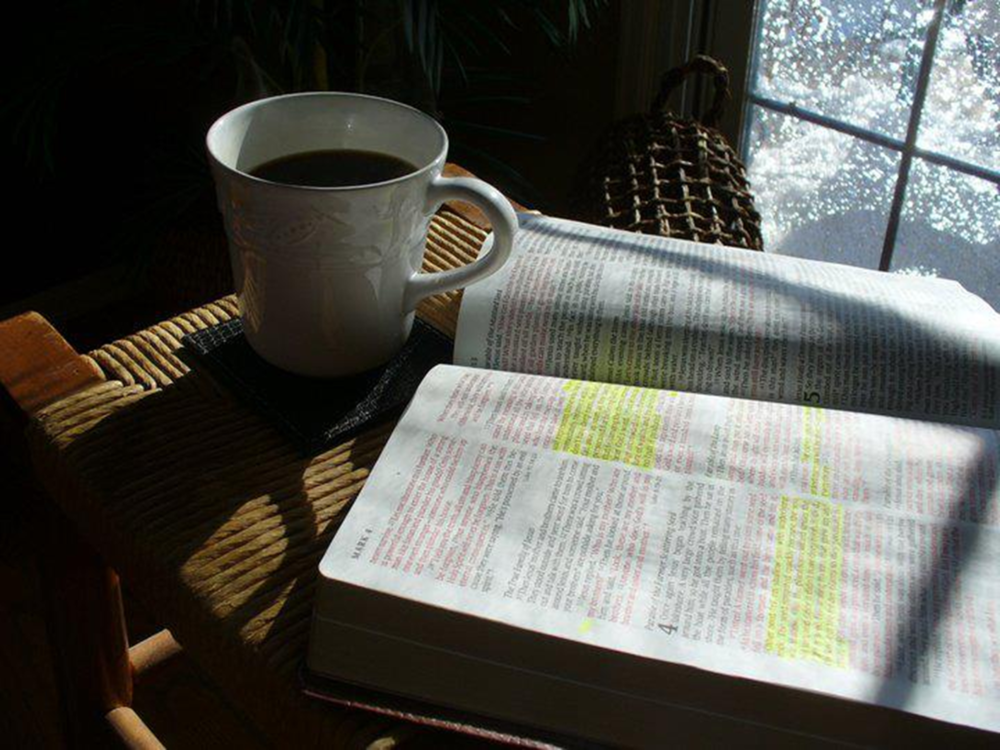
Angel Face

I’ll take well known people in the book of Acts for 500, Alex?

This man is the most renown of the seven chosen to address
the problem which arose with the Hellenist widows.
Who is Stephen?
Correct.

Luke describes this man as being “full of the Spirit and of wisdom”,
“a man full of faith”, and a man “full of grace and power.”
Who is Stephen, again?
Yessir.

This guy is called “angel face”.
Huh?

This morning I’m hovering over the last verse of Acts 6.

Acts 6, the chapter that lets us know that even among the born again there can be blow ups. The chapter that hints at the principle that church leaders are meant to serve by leading and that others are called by the church to lead by serving. The chapter that tells us that the character qualities for those who “serve tables” are somewhat alike to those who are to devote themselves “to prayer and to the ministry of the word.” The chapter that introduces us to Stephen. The chapter that introduces us to “angel face.”

After faithfully teaming with the other six to resolve the issue of discrimination in the widow’s dining hall, the Lord leads Stephen to go solo “doing great wonders and signs among the people” as he testifies of the risen Christ. And it draws the attention of opponents who are so bent out of shape they conspire to falsely accuse him of grievous misconduct and bring him before “the council.” And what does this tribunal see when this man full of the Spirit, and of wisdom, and of grace is brought before them? You guessed it. They see angel face.

And gazing at him, all who sat in the council saw that his face was like the face of an angel.

(Acts 6:15 ESV)

What a curious thing for Luke to include in his account. And yet, “all Scripture is breathed out by God” (2Tim. 3:16) and what Luke wrote he wrote as he was “carried along by the Holy Spirit” (2Peter 1:21). So, that Stephen’s face was like the face of an angel must be important. How come?

There was something in Stephen’s countenance, as he stood before those who would accuse him and those who would judge him, that was noticeable. I don’t know that Stephen’s face literally shone as did Moses’ face (Ex. 34:29), though given how the Spirit was manifesting His power through Stephen, it might be considered an encounter of the divine kind similar to Moses’ one-on-one with God on Mt. Sinai. Hang out in the presence of holiness and glory and, it seems, some of it may just rub off on you . . . literally.

But if it wasn’t a visible aura, I wonder if what they saw in angel face was an intangible assurance. A coolness, a calmness, a composure. The same thing seen a few chapters back when the Jewish leaders in Jerusalem “saw the boldness of Peter and John” and “recognized that they had been with Jesus” (Acts 4:13). Something about engaging with the Trinity — Father, Son, and Holy Spirit — that etches itself not necessarily upon one’s countenance but through one’s confidence.

However it was exactly perceived, there seems to be something about rubbing shoulders with majesty that can mark a man. Something about encountering God’s glory that can be detected through an unseen glow in a woman. Something about abiding in the holiness of God that gives off the air of . . . well, of an angel . . . a messenger who dwells in the presence of God and is ready to do the bidding of God.

Hmm . . . something to chew on, I think.

More evidence of God’s grace. More reason to give God glory.

Posted in Acts | Tagged , | 1 Comment

To Know Him Is To Trust Him

It’s a song of thanksgiving and praise. A lyric of gladness and exultation. Not because the songwriter had not known oppression or times of trouble, but because he had. Not because he had not been needy, but because he had not been forgotten. Not because he had no enemies, but because they had been turned back. And what particularly stands out this morning in this ninth psalm is that to know Him is to trust Him.

And those who know Your name put their trust in You,
      for You, O LORD, have not forsaken those who seek You.

(Psalm 9:10 ESV)

Among the things I’m on the lookout for when I’m reading are truths about the people of God. Ways to describe them. Characteristics that mark them. Ideals that should define them. So, this morning I highlight the reminder that God’s people are those who know His name and who seek Him. Know not just in a theoretical sense but know by experience. Seek not just casually, but with care. Knowing Him beyond the documented data about Him. Instead, knowing Him because of repeated deliverance through Him. Seeking Him beyond inquisitive curiosity. But seeking Him in order to engage with Him. The people of God know their God. The people of God seek their God.

Thus, what do the people of God do? They put their trust in their God.

When, not if, enemies arise (v.3); when, not if, oppression and times of trouble are experienced (v.9); when, not if, we are needy and have run out of our own resources (v.19); then those who know God trust God. While tempted to fear, they actually become bold. While their world is shaken, yet they have an abiding sense of security. While they may feel the crush of waves of adversity, still there is a calm of an abiding confidence. To know Him is to trust Him.

And as I chew on it and reflect a bit, isn’t it true that to trust Him is to know Him?

I’m thinkin . . .

Having sought God through our storms, we’ve known Him as a faithful, reliable stronghold (v.9). Having committed to him our conflicts, He has maintained our cause (v.4). Having cried out to Him in our affliction, He has, again and again, born witness that we are not forgotten (v.12).

Yeah, to know Him is to trust Him. And to trust Him is to grow in depths of knowing Him. And so, we give thanks to Him.

I will give thanks to the LORD with my whole heart;
      I will recount all of Your wonderful deeds.
I will be glad and exult in You;
         I will sing praise to Your name, O Most High.

(Psalm 9:1-2 ESV)

I will recount all of Your wonderful deeds . . .

For us who know Him, for us who seek Him, for us who trust Him, we give thanks and praise for His wonderful works of deliverance. Both for deliverance on the grandest of scales, as in the deliverance from the bondage of slavery to sin and death, but also for deliverance on the most personal of levels, as in the respite known in trials, the rescue known in ill-treatment, and the renewal known in seasons of sorrow.

All because of grace. Only for His glory.

Amen?

Posted in Psalms | Tagged , , , , , | 1 Comment

Another Question

If anyone fits the term, “Innocent Bystander”, I’m thinking it’s Hagar. Not saying she was innocent as in “no sin, no wrong”, but that she was caught up in a story that really was almost entirely written by others.

Given by her mistress to her master in order to birth a child they would claim as their own? Not her choice. Rejected by the mistress after giving birth to that child? Not what she had signed up for. Sent away with her son after her mistress gives birth to her own son? Nope, not something she had a lot of control over.

Sometimes, the hands we’re dealt in life we’ve dealt ourselves. Other times, it’s just the cards we end up with due to things out of our control. I think that’s the kind of hand Hagar’s holding in Genesis 21. An innocent (though not innocent) bystander, I think.

And as I read about Hagar & Son this morning, it’s another one of those questions asked by God that strikes me. You know, questions like, “Where are you?” (Gen. 3:9). Or, “Why are you angry?” (Gen. 4:6). Or, “Where have you come from and where are you going?” (Gen. 16:8). This morning, after Hagar and her son are kicked out of the house by Abraham and Sarah with but a little water and a little bread, it’s another of God’s probes that has me pondering. And that, because I hear the question asked of me.

When the water in the skin was gone, [Hagar] put the child under one of the bushes. Then she went and sat down opposite him a good way off, about the distance of a bowshot, for she said, “Let me not look on the death of the child.” And as she sat opposite him, she lifted up her voice and wept. And God heard the voice of the boy, and the angel of God called to Hagar from heaven and said to her, “What troubles you, Hagar? Fear not, for God has heard the voice of the boy where he is.”

(Genesis 21:15-17 ESV)

What troubles you?

Fear not . . .

. . . God has heard.

That’s what I’m noodling on this morning.

Whether because we’re an innocent bystander or because it’s been self-inflicted, all of us have some “less than ideal” reality we are dealing with. So, queries the Spirit, “What troubles you?” What ails you? What’s the matter? What’s wrong that you feel should be right?

Who’s asking? God’s asking.

Asking not because He doesn’t know. But asking the question because He wants us to know that He knows. Wants us to remember that He’s present and engaged. Wants us to believe He cares. So that, remembering that God has heard, we might take courage and fear not.

That’s it. That’s what I’m chewing on. Another question asked by a great and gracious God.

What troubles you? Fear not. God has heard.

By His grace. For His glory.

Posted in Genesis | Tagged , , , | Leave a comment

And God Remembered Jesus

The cities are smoldering because of their great sin. And I’m hovering over a verse that prompts me to reflect on a great Savior.

Back story . . . the Lord appears again to Abraham in Genesis 18 and gives him and Sarah their “one year warning” that a baby’s on the way. Get the nursery ready! Then, in sort of a side bar conversation (a side bar with significant consequence), the Lord informs Abraham that there’s trouble (great understatement) brewing in Sodom and Gomorrah and because “their sin is very grave” He is about to bring judgment on those places (Gen. 18:16-21).

Oh yeah, one more thing to note. Abraham’s nephew, Lot, lives in Sodom.

So, the Lord dispatches two angels to evaluate and confirm the veracity of the great “outcry against Sodom and Gomorrah.” Meanwhile, Abraham, still in the Lord’s presence, made a bold move and he “drew near”. Bolder yet, he spoke to the Lord.

“Will You indeed sweep away the righteous with the wicked? Suppose there are fifty righteous within the city. Will You then sweep away the place and not spare it for the fifty righteous who are in it? Far be it from You to do such a thing, to put the righteous to death with the wicked, so that the righteous fare as the wicked! Far be that from You! Shall not the Judge of all the earth do what is just?”

(Genesis 18:23-25 ESV)

And God listens to Abraham’s intercession and promises to “spare the whole place” for the sake of fifty righteous, should they be found. As He does so again when Abraham intercedes if there’s but forty-five righteous, or forty, or thirty, or twenty, and yes, even if there’s just ten (Gen. 18:26-33).

But there isn’t ten. And so Sodom and Gomorrah are toast — literally! Yet, Lot and his daughters are spared. And it’s the “why” of that “what” that I’m chewing on this morning.

So it was that, when God destroyed the cities of the valley, God remembered Abraham and sent Lot out of the midst of the overthrow when He overthrew the cities in which Lot had lived.

(Genesis 19:29 ESV)

God remembered Abraham. Thus, God saved Lot out of the midst.

For the sake of another, God saved a sinner. Because of the intercession of another, God showed unmerited favor to one who had settled for a world of wickedness. Because God remembered Abraham, God rescued and redeemed Lot.

Hmm . . . sound familiar? Does to me.

Jesus is the greater Abraham. And I was the lost Lot who had settled for a world destined for fire (2Peter 3:7).

But, because a ransom was paid at a place called Golgotha, and because a righteousness was imputed through a Son’s holy nature, and because an Intercessor interceded on my behalf “to the point of death, even death on a cross” (Php. 2:8), I too, like Lot, “found favor” as God showed me “great kindness in saving my life” (Gen. 19:19). For, like Abraham, even when on the cross, Jesus drew near to the Father and cried out for those destined to be caught up in destruction.

“Father, forgive them, for they know not what they do.”

(Luke 23:34 ESV)

And God remembered Jesus. Thus, God saved Pete. Praise God!

Moreover, praise God that it’s not a one-and-done thing. My Savior continues to intercede so that those rescued from judgment might be saved “to the uttermost” (Heb. 7:25). For, if we confess our sins, His blood remains sufficient to “cleanse us from all unrighteousness” (1Jn. 1:9). And, if we walk by the Spirit and sow to the Spirit, we will “from the Spirit reap eternal life” (Gal. 5:16, 6:8).

Hallelujah, what a Savior!

By His grace. For His glory.

Posted in Genesis | Tagged , , , | Leave a comment

Oh! It’s a Fourfold Promise

Seeing the date on the calendar, it seems kind of late into the new year to be making my first entry. But last week, all the family gathered together in Bend, Oregon. And, with pickleball one day, and sledding the next day, and the high desert museum on another day, and eight grandchildren around every day, it was a little challenging to get some “me time.” So, it feels good to be back home and settling back into routine.

This morning, it’s an “aha” concerning the Abrahamic Covenant that’s evoked some wonder and worship. That the promise made to Abraham wasn’t just threefold, but actually fourfold.

“Land, seed, and blessing.” That’s how I learned to remember the covenant made with Abraham. In Genesis 12:2-3, God tells Abraham to go to a land where He will make him into a great nation (seed) through which he would be a blessing to “all the families of the earth.” And God’s promise is repeated to Abraham a few times over the course of his life as he and his wife, Sarah, await the birth of a son from which a great nation would rise. It’s one of those repetitions this morning that I’m struck by. For in it, I’m reminded that beyond land, seed, and blessing, there’s a fourth element of the promise which surpasses the others.

“I will make you exceedingly fruitful, and I will make you into nations, and kings shall come from you. And I will establish My covenant between Me and you and your offspring after you throughout their generations for an everlasting covenant, to be God to you and to your offspring after you. And I will give to you and to your offspring after you the land of your sojournings, all the land of Canaan, for an everlasting possession, and I will be their God.”

(Genesis 17:6-8 ESV)

I will be their God . . . That’s what struck me this morning. That’s what I’m chewing on. That God promised Abraham not only to give him land, innumerable progeny, and to be the conduit for blessing the whole world for all time (and beyond time), but that God also covenanted with Abraham and his offspring to give them Himself. I will be their God . . .

Chew on that for a bit . . .

How easy is it for us — for me — to take that for granted? To skim over what’s always been on my radar since coming to faith nearly five decades ago. But isn’t the greatest aspect of the gift of salvation God Himself? Isn’t that the essence of salvation itself?

“And this is eternal life, that they know You the only true God, and Jesus Christ whom You have sent.”

(John 17:3 ESV)

For God to promise to be our God is to give us eternal life. To bring us into an on-going, personal relationship with Himself through His word — the spoken, written, and incarnate Word — defines what it means to “have life and have it abundantly” (Jn. 10:10). To adopt us as sons and daughters through our union with His Son, sealed by His Spirit, so that we might have the privilege and joy of addressing the eternal, incomprehensible, Almighty God, as “our Father” is what it means to be redeemed. Because, for those who believe, He promised, “I will be their God.” Okay, noodle on that and tell me the awe-o-meter isn’t spiking!

The one and only and always God is my God. How pretentious it might sound. But also how precious, because it’s true. My God not because of who I am or what I’ve done, but my God only because of who He is and what He has done. Sending His Son to atone for my sin on a cross that I might enter into the promise made to Abraham so long ago. The promise of land, seed, blessing, and Himself! A fourfold promise.

And I will be their God . . .

Only by His grace. Only for His glory.

Hallelujah, what a Savior!

Amen?

Posted in Genesis | Tagged , | 2 Comments

Walking with God

I’m pretty sure it’s a first — the first time I’ve colored this phrase with this color.

Continuing to read in Genesis and working my way through Adam’s descendants (okay, honestly, I’m skimming my way through the genealogy). And I pull out my yellow-colored pencil anticipating the highlighting of Enoch, because I know his genealogical entry will be a little different than the others — close, but not quite fitting the pattern.

When Enoch had lived 65 years, he fathered Methuselah. Enoch walked with God after he fathered Methuselah 300 years and had other sons and daughters. Thus all the days of Enoch were 365 years. Enoch walked with God, and he was not, for God took him.

(Genesis 5:21-24 ESV)

It’s that last sentence, verse 24, that I have for years highlighted in yellow. Yellow’s not attached to any particular theme or topic, it’s just to highlight something worthy of highlighting. And, a guy who “was not, for God took him” seems worthy of noting. For some reason, Enoch did not see death. For some reason, he breaks the pattern. While it is written of the men before him in his family tree, “he died,” of Enoch it’s recorded, “God took him.” For some reason.

But this morning, more color is added to this verse (literally) because the reason hits me afresh. Maybe because the reason is repeated. Enoch walked with God.

Enoch stands out not just because of how he didn’t die, but more importantly because of how he lived. Literally, he walked habitually with God. He walked near to God. He knew relationship with God thus, he walked together with God.

But chew on that a bit. What does “walking with God” even mean?

Cue the Spirit to connect the dots. To remind me that He has not left me to come up with an answer on my own. Cue the Spirit to invite me to visit Hebrews’ Hall of Faith.

By faith Enoch was taken up so that he should not see death, and he was not found, because God had taken him. Now before he was taken he was commended as having pleased God.

(Hebrews 11:5 ESV)

By faith Enoch was taken up . . .

BY FAITH . . . that’s what he walked with God means. By faith, that’s what brings one near to God. By faith, that’s the basis for relationship with God. By faith, that’s the essence of being together with God. By faith, that is what ultimately reverses the death trend. By faith, that’s the reason God took him.

By faith. And so, I pull out my light green colored pencil and twice shade Enoch walked with God. Like I said, pretty sure it’s a first.

And just in case I might be overly in awe of something based on just one verse, I immediately get a second verse. I get to repeat that shading again in the next chapter, the next time we read of someone who “walked with God.” It’s in Genesis 6 where I read that Noah too “walked with God” (Gen. 6:9). You know, Noah, the one who “found favor in the eyes of the Lord” (6:8) when the “wickedness of man was great in the earth” (6:5). You know, Noah, the one God had told, “You are righteous before me in this generation” (Gen. 7:1). Righteous as in perfect? Nope. Keep reading through the Hall of Faith and you’ll find Noah was “an heir of the righteousness that comes by faith” (Heb. 11:7) — a righteousness imputed when one walks with God.

How’s that for a 2025 resolution? To know more deeply what it means to walk with God? To increasingly draw nearer, being together with God? To rest more assuredly in faith alone as to my righteousness before God? To live more expectantly that, because I believe, I too will one day be taken by God.

Only by His grace. Only for His glory.

Posted in Genesis | Tagged , | Leave a comment

Grace Questioning

Continuing in the early chapters of Genesis this morning, and I’m drawn to three questions. And as I chew on them, I’m inclined to thinking of them as questions of grace.

And [Adam and Eve] heard the sound of the LORD God walking in the garden in the cool of the day, and the man and his wife hid themselves from the presence of the LORD God among the trees of the garden. But the LORD God called to the man and said to him, “Where are you?

(Genesis 3:8-9 ESV)

In the course of time Cain brought to the LORD an offering of the fruit of the ground, and Abel also brought of the firstborn of his flock and of their fat portions. And the LORD had regard for Abel and his offering, but for Cain and his offering He had no regard. So Cain was very angry, and his face fell. The LORD said to Cain, “Why are you angry, and why has your face fallen?

(Genesis 4:3-6 ESV)

Cain spoke to Abel his brother. And when they were in the field, Cain rose up against his brother Abel and killed him. Then the LORD said to Cain, “Where is Abel your brother?” He said, “I do not know; am I my brother’s keeper?” And the LORD said, “What have you done?

(Genesis 4:8-10a ESV)

Where are you? Why has your face fallen? What have you done?

Adam and Eve have blown it big time. Eating of the fruit they were commanded not to. Trying to cover their nakedness. Thinking they can hide from God.

Their eldest, Cain, takes it to a next level. While they despise the word of God, he shows disregard for the worship of God. While they try and hide from God’s presence in self incrimination, he brazenly sulks before God in self justification. And then, he takes the life of his brother in senseless, misguided retaliation.

And it seems to me that if, at this point, God had decided to call it quits with the whole creation experiment, who could blame Him? It’s simply was not going very well. Four people into multiplying and subduing the earth and one is dead and the other three are dead in their sin. Heavy sigh. Let’s try something else.

But God . . . who is “merciful and gracious, slow to anger, and abounding in steadfast love and faithfulness” (Ex. 34:6), rather than abandoning the sinner, pursues the sinner. And He does so with some piercing questions. Questions demanding answers. Questions requiring honesty and transparency. Rather than forsake the fallen, He engages them with grace questioning.

He who knows all things and is everywhere asks the foolish couple, “Where are you?” I know you are wearing fig leaves and trying to hide from Me, but you need to realize it. You need to confess that your way to gaining wisdom has led you only to fleeing from the source of wisdom. Be candid, be real, admit it. Where are you?

“Why has your face fallen?” Why, when in the presence of the Creator of the world, are you so moody and mad at the world. Why, do you think, when worshiping God in a manner which seems right in your own eyes, you are so bent out of shape? Why, when your brother is rightly commended and you are lovingly corrected, are you pouting? Know your heart. Admit it’s not where it should be.

“What have you done?” Be honest and confess your sin. Stop trying to defend your actions. Instead, in contrition, repent of what you’ve done. Only when you are open about your sin can I forgive your sin (1John 1:9).

Cover up . . . it’s in our DNA. Clam up . . . it’s what our pride would have us do to protect our sense of self-worth. Come up . . . with excuses like “I’m not my brother’s keeper” (Gen. 4:9) . . . anything that lessens our sense of responsibility for our transgression. Left to ourselves, we will try and fool ourselves. But God loves us too much to let us do that. And so, He will enter into some grace questioning. Where are you? Why are you so disquieted? What have you done?

Only when, with humility and transparency, we answer the questions God asks by His Spirit, will we know the restoration and reconciliation God has provided by His Son.

Questioned by God’s grace. Questioned for God’s glory.

Makes sense?

Posted in Genesis | Tagged , , | 1 Comment

My Beginnings, My Future

Not waiting for the new year to crack open my new bible to begin again a new year of readings directed by my reading plan. And so, I start this morning in Genesis 1, (a very good place to start). And while it is the story of my beginnings, what I’m chewing on this morning is how it maps out also my future.

Then God said, “Let Us make man in Our image, after Our likeness. And let them have dominion over the fish of the sea and over the birds of the heavens and over the livestock and over all the earth and over every creeping thing that creeps on the earth.”

So God created man in His own image,
in the image of God He created him;
male and female He created them.

. . . And the LORD God planted a garden in Eden, in the east, and there He put the man whom He had formed. And out of the ground the LORD God made to spring up every tree that is pleasant to the sight and good for food. The tree of life was in the midst of the garden, and the tree of the knowledge of good and evil. A river flowed out of Eden to water the garden.

(Genesis 1:26-27, 2:8-10b ESV)

Made in the image of God, after His likeness. Responsible for all God’s creation on earth, stewarding it faithfully and fruitfully. In the midst of a garden planted by God. A garden with a tree of life and a river flowing out of it. That’s what men and women were made for.

Oh, but hasn’t something gone wrong? God’s image within men and women so marred by sin and rebellion that often it’s unrecognizable. A garden so overgrown by weeds and thickets that its presence is, for the most part, undetectable. The tree of life hidden. The river of life seemingly run dry.

And yet, what once was will be again. I know that ’cause I just finished reading the end of the book earlier this week. An end where “the dwelling place of God is with man” (Rev. 21:3). When they again, without distortion, bear within and blaze forth the image of their holy God. Again stewards, this time of a new creation. A creation embodied within a heavenly city. A new Eden, again with a tree in its midst and a river flowing forth — “the river of the water of life, bright as crystal, flowing from the throne of God and of the Lamb through the middle of the street of the city; also, on either side of the river, the tree of life with its twelve kinds of fruit, yielding its fruit each month” (Rev. 22:1).

Eden restored. Image bearers redeemed, reconciled, regenerated, and again perfectly reflecting God’s image.

As I read again about beginnings this morning, I’m reminded again about the ending and that I’m on a pilgrimage towards fully realizing it.

A journey begun by seeing with faith’s eye another tree. A tree, as it were, not of life, but of death. A tree of sacrifice some two-thousand years ago. The cross of Calvary where the Lamb of God’s blood was poured out so sin and death’s bondage would be broken, and men and women might know anew the freedom to become what they were always meant to be, image bearers.

Through the power of that tree, blood-bought children of God set again on a path and process of being conformed to the likeness of God (Rom. 8:29). The agency of such transformation sourced in a river springing forth from within their souls, its source the Spirit of God infused within them (Jn. 7:38-39). On their way again to inhabiting again a garden, a place where God is in their midst and “they will see His face . . . and night will be no more . . . for the Lord God will be their light, and they will reign forever and ever” (Rev. 22:4-5).

As I read again about how it all started, I’m reminded again of how it will all turn out. As I read about where I’ve been, I’m reminded of where I’m going. As I read once more about my beginnings, I catch once more a picture of my future.

Buckle up. The journey continues . . .

By His grace. For His glory.

Posted in Genesis | Tagged , | Leave a comment

Looking Over His Shoulder

I finish up Job 42 and I’m left to noodle on the last verse. Is God still talking about Leviathan, or has He switched things up and is revealing something about Himself? The answer? I think it’s, “Yes.”

Over these final chapters in Job, when God has taken center stage in the debate between Job & Co., God has presented to Job a primer on creation so that Job might gain insight as to his own arrogance towards the Creator.

“Will you even put Me in the wrong?
Will you condemn Me that you may be in the right?
Have you an arm like God,
and can you thunder with a voice like His?”

(Job 40:8-9 ESV)

And in illustrating “an arm like God” God talks about the biggest and most fearsome of His creation, Behemoth (40:15-24) and Leviathan (41:1-34). And if what distinguishes Behemoth is that he is big, what sets apart Leviathan is that he is bad — not bad as in evil, but bad as in you don’t want to mess with this dude! And God’s point to Job, it seems, is that if Job has no hope of taking on God’s creation, Leviathan, then what makes him think he can challenge Leviathan’s creator? For, “whatever is under the whole heaven is Mine” (Job 40:10-11).

And then, God’s “drop the mic” moment as He concludes His Leviathan lecture . . .

On earth there is not his like,
a creature without fear.
He sees everything that is high;
he is king over all the sons of pride.”

(Job 41:33-34 ESV)

On earth there is not his like . . . he sees everything . . . he is king over all . . .

That’s what I’m hovering over this morning. Who is God talking about here? Leviathan? Himself as Leviathan’s creator? Like I said before, “Yes!”

For what can be known about God is plain to them, because God has shown it to them. For His invisible attributes, namely, His eternal power and divine nature, have been clearly perceived, ever since the creation of the world, in the things that have been made.

(Romans 1:19-20 ESV)

Job, says the LORD God Almighty, look over Leviathan’s shoulder and his untamable power and presence, and behold His Creator. Leviathan’s creator, Job, He’s the One you want an audience with, the One you want to go toe-to-toe with. He’s the One you are calling out, demanding your day in court. Give your head a shake, brother! For on earth there is not His like . . . He sees everything . . . He is king over all!

But as I chew on it, I realize that, for a brief span of history, there was once on earth “His like” — the man Christ Jesus.

. . . who, though He was in the form of God, did not count equality with God a thing to be grasped, but emptied Himself, by taking the form of a servant, being born in the likeness of men. And being found in human form, He humbled himself by becoming obedient to the point of death, even death on a cross.

(Philippians 2:6-8 ESV)

In times past, God spoke to Job through the bone-shaking, fear-invoking reality of Leviathan — a creature unlike anything on earth — in order to illustrate God’s own one-of-a-kind, other worldly power and presence and rule. “But in these last days He has spoken to us by His Son” (Heb. 1:2). Immanuel, God with us. Far from the frightening figure of a great water beast, God instead reveals Himself to us very much like the people of earth — “Veiled in flesh, the Godhead see; Hail, the incarnate deity.”

Though still the One who sees everything, though never not the King of kings and the Lord of lords, Jesus enters our world looking very much like our world, sharing in our “flesh and blood”, being made “like His brothers in every respect” (Heb. 2:14-17). God making Himself known — the Father sending the Son conceived by the Spirit.

On earth there is not His like . . . but for a while there was. Oh, let’s celebrate that wondrous time.

And as we celebrate, may we see more than just the babe in the manger, but instead would we look over His shoulder and behold our God — the One who on earth is not His like, the One who sees everything, the One who is King over all.

O come, let us adore Him!

By His grace. For His glory.

Posted in Job | Tagged , , | Leave a comment

The Faultfinder (2016 Remix)

It’s a line that I don’t ever want to look back over my shoulder and see that I’ve crossed. The “fault” line. The line of finding fault with my God and Father. The line of reproving the One who is Righteousness. “Faultfinder” . . . This morning, that’s the word that caused me to be still and know afresh that He is God.

Then I went back through my journal and found the post that follows from Christmas 2016, the last Christmas with Sue. Two months after this post she would be home with the Lord.

Those days at the lodge were marked by everything you hope having all the family together would bring — a lot of fun and joy. And yet, it was also marked by Sue’s compromised condition. So, as I read the following post again, I think of how it was being used of the Lord to prepare me, readying me to find my Father only faithful when it might have been easy to find fault. Instilling a spirit of confidence in my God’s goodness that would combat any temptation to harbor a spirit of contention questioning God’s fairness.

Here are those thoughts from 8 years ago. In some ways it seems like yesterday . . .


Spent the last couple of days driving down to California to do Christmas with the family at the Scott River Lodge, the retreat center managed by my son-in-law and daughter. Although the lodge is more than big enough to accommodate all of us, communal living does have a way of disrupting routine. So, while I’ll continue to work my way through the last few entries in my reading plan, finding computer time to put down some thoughts could be kind of challenging. Likely to be hit and miss.

But this morning, for right now, I’m alone and chewing on something I read in Job.

I can’t imagine the fear factor experienced by Job when God decides to answer him “out of the whirlwind” (38:1, 40:6). Whatever storm Job may have thought he had been enduring through his suffering, it paled when compared to the tempest experienced when the Almighty Creator determines to enter the debate. For most of this book Job’s comforters have been answering Job’s complaint and Job has, in turn, been answering back at their answers. Now it is the Almighty’s turn to answer. And when He speaks it’s like being in the middle of a hurricane.

But, though the sensory overload due to God’s manifested presence must have driven Job to his knees, I think hearing God’s accusation against him is what really humbled and mortified this man of whom God Himself had said “Have you considered my servant Job, that there is none like him on the earth, a blameless and upright man, who fears God and turns away from evil?” (1:8, 2:3).

And the LORD said to Job:

“Shall a faultfinder contend with the Almighty?
He who argues with God, let him answer it.” . . .

Then the LORD answered Job out of the whirlwind and said:

“Dress for action like a man;
I will question you, and you make it known to Me.
Will you even put Me in the wrong?
Will you condemn Me that you may be in the right?

(Job 40:1-2, 6-8 ESV)

I think Job was shocked when He heard God summarize his arguments. While Job had certainly been defending his own record against his accusers (ahem, I mean “comforters”), I don’t think this man, who feared God and sought to bless the name of the LORD in all circumstance (1:21), ever intended to find fault with God. Or, to assert that God could be wrong. Or, to seek to put God down that Job might lift himself up.

And so, I’m thinking, how does a godly man like Job end up getting on the wrong side of his God? Short answer: he allows his world to revolve around himself rather than around his God.

He becomes so consumed with his own story that he forgets it’s but a subplot in a much greater narrative. He starts to believe that the ways he has planned, and the goals he has set, must somehow dictate the steps God should ordain for him. He develops a self-centered arrogance which, at least implicitly, asserts that his sense of right and wrong should define God’s sense of justice and purpose.

I don’t think Job consciously determined to find fault with his faultless God. I don’t think he said to himself, “Self, God must be in the wrong if I am to be in the right. Jehovah needs to be corrected so that I can be justified.” Rather, as Job allowed himself and the woe of his situation to increase, his view of God was forced to decrease. As Job’s circumstance became the paramount circumstance, God needed to find an orbit around Job’s planet. And before he knew it, Job the God-fearer had become Job the God-faultfinder.

O’ that I might learn a lesson from this man of God. Might I never cease to be always humbled before an all-knowing, all-powerful God.

By His grace, might I always see my circumstance in the greater context of His sovereignty. Trusting in His promised presence. Resting in His steadfast love. Quick always to say, “Nevertheless, not my will, but Yours be done.”

So that, above all things, He might always be given glory.

Posted in Job | Tagged , , | Leave a comment