
Two Prophetic Words

Two prophetic words rattling around in my head this morning. The first the dying words of a patriarch, the second the desperate words of a king. The first enveloped with an anticipation of glory, the second enduring the agony of humiliation. The first talking of One who would reign forever. The second? Same thing.

Cue Jacob . . .

“Judah, your brothers shall praise you . . . Judah is a lion’s cub; from the prey, my son, you have gone up. He stooped down; he crouched as a lion and as a lioness; who dares rouse him? The scepter shall not depart from Judah, nor the ruler’s staff from between His feet, until tribute comes to Him; and to Him shall be the obedience of the peoples.

(Genesis 49:8a, 9-10 ESV)

Jacob blessing his son, the Spirit of God looking beyond his son. Jacob given the vision of a kingdom to come, a forever rule yet to be, a sovereign, one day, for all the peoples. The Spirit foretelling of Messiah, a descendent of Judah, coming as King over all.

Then, cue David . . .

But I am a worm and not a man, scorned by mankind and despised by the people. All who see Me mock Me; they make mouths at Me; they wag their heads; “He trusts in the LORD; let Him deliver Him; let Him rescue Him, for He delights in Him!”

(Psalm 22:6-8 ESV)

Some situation prompting David to express such extreme feelings of degradation. And this too, but a portal used by the same Spirit of God to foretell the sufferings of a son of David. And what is mind boggling is that, in both prophetic utterances, the Spirit is looking to the same Person. Jesus the Christ.

Who could have conceived such a path for One who would forever hold the scepter over the kingdom of God? Who would have required a cross before the crown? Who would have determined that the inaugural path for a coming King would find its way, first, by becoming a suffering Servant?

Cue Sunday School answer 101 . . . God!

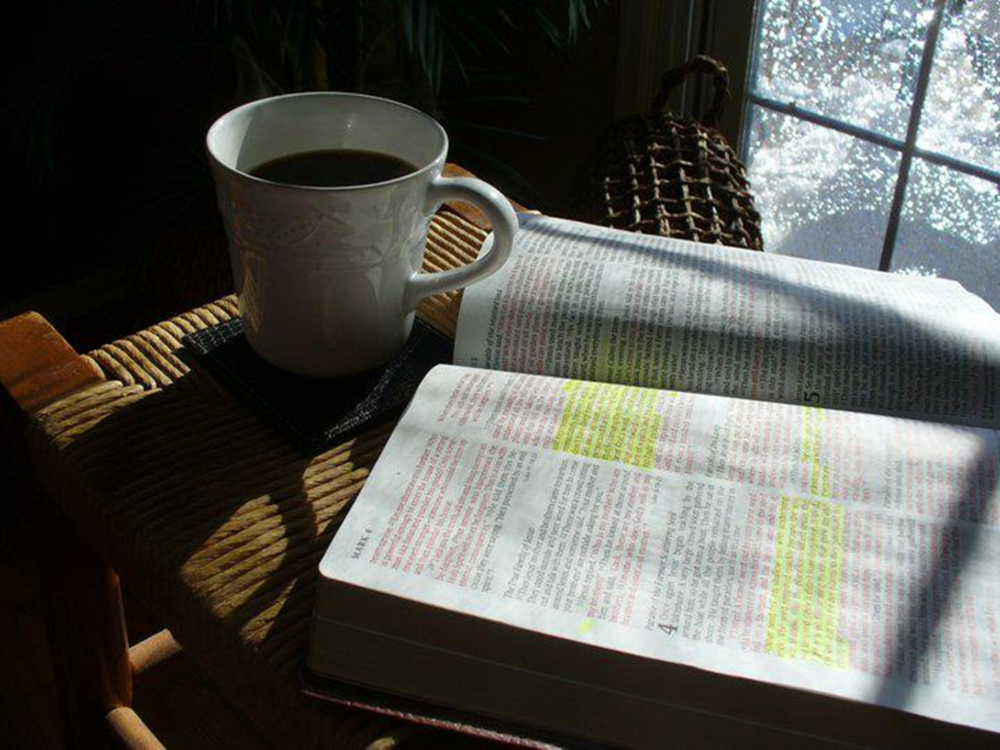
Hovering in awe afresh this morning as I consider these two prophetic words. Wonder, the only appropriate way to describe it. Worship, the only appropriate response in light of it.

And then, another prophetic word comes to mind, bringing these other two together.

Cue John . . .

And one of the elders said to me, “Weep no more; behold, the Lion of the tribe of Judah, the Root of David, has conquered, so that He can open the scroll and its seven seals.” And between the throne and the four living creatures and among the elders I saw a Lamb standing, as though it had been slain, with seven horns and with seven eyes, which are the seven spirits of God sent out into all the earth.

(Revelation 5:5-6 ESV)

The Lion of the tribe of Judah. The Root of David. The Lamb of God.

O’ what a Savior! O’ what a Sovereign!

From Him we’ve known such abundant grace. To Him only must be everlasting glory!

Amen?
Posted in Genesis, Psalms | Tagged , , , , , , , , | 2 Comments

Illumination not Confirmation

It’s not what he taught that choked them, but all who had listened. The synagogue leaders didn’t object to Paul’s teaching after that first Sabbath when he proclaimed Jesus as the Savior promised through the line of David. They didn’t get their shorts in a knot when Paul said their brothers in Jerusalem had condemned Messiah to death “because they did not recognize Him nor understand the utterances of the prophets.” They didn’t even scoff when, on that first Sabbath, Paul testified to the resurrection of Jesus from the dead as the defining sign proving He was the Son of God. But when, on the next Sabbath, crowds of people gathered again to hear Paul’s good news, then their blood started to boil.

The next Sabbath almost the whole city gathered to hear the word of the Lord. But when the Jews saw the crowds, they were filled with jealousy and began to contradict what was spoken by Paul, reviling him.

(Acts 13:44-45 ESV)

A week earlier they had welcomed the visiting Paul & Co. into their gathering and onto their pulpit, “Brothers, if you have any word of encouragement for the people, say it.” (13:15). And did they ever!

Ask me about great sermons in Acts and Peter at Pentecost (Acts 2) comes to mind immediately. Think a bit more, and I’d come up with Paul on Mars Hill (Acts 17). But Paul at Pisidia in Acts 13? Honestly, not top of mind. But should be.

Paul’s word of encouragement for “you who fear God” (13:16b) is a masterful summary of Israel’s redemptive story. A chosen nation. Flourishing under the hand of God while oppressed under the hand of Egypt. Delivered from bondage, cared for in the wilderness, given a land as their inheritance. Ruled by judges, then by kings, but in need of a Savior. A Savior promised from the line of David. Jesus.

Paul preaches the word and the word points to Jesus. And the people listened. They got a taste of the good news and they wanted more. The people “begged that these things might be told them the next Sabbath” (13:42). And that’s when it started to come apart. When the Jewish leaders saw the crowds gathering to Paul and his message on that next Sabbath, they were filled with jealousy and began to oppose them.

They didn’t object to Paul’s truth but to Paul’s popularity. They didn’t refute what he said because it was misaligned with Scripture, but because it threatened their power and authority. It wasn’t Paul’s error that compelled them to thrust aside the gospel and judge themselves unworthy of eternal life (13:46), but their own envy. It wasn’t Paul’s facts but their filter. Not his beliefs but their bias. Not the seed he sowed but the soil they presented.

As I hover over this dynamic of minds made up so as to protect their own cozy worlds, far from judging these religious leaders, I sense one of those “beware” sort of things. “Therefore let anyone who thinks that he stands take heed lest he fall” (1Cor. 10:12).

How I need to beware of filtering Scripture through self and not fully submitting self to Scripture. Aware that the flesh has a way of corrupting truth to suit it’s own desires. How I need to determine, as much as lies within me, to open my Bible each morning with an open heart. How I need to desire the Spirit’s illumination and not settle for my own confirmation.

By His grace. For His glory.

Posted in Acts | Tagged , , , | Leave a comment

Standing Firm in Simple Truth

Hovering over the familiar this morning. Chewing on stuff that’s been chewed on before. Sometimes you just need to pause and reaffirm that which has been reaffirmed again and again.

Some trust in chariots and some in horses, but we trust in the name of the LORD our God.

(Psalm 20:7 ESV)

Lot going on in this song. A day of trouble (v.1), a calling out in prayer (v.9). A plea for God to send help (v.2), to remember faithfulness (v.3), to respond to the desires of a needy heart (v.4). An anticipation of raising up the victor’s banner and shouting for joy over the LORD’s salvation (v.5). All sourced in an unfailing confidence in the Person of God and the Promises of God.

Now I know that the LORD saves His anointed; He will answer Him from His holy heaven with the saving might of His right hand. Some trust in chariots and some in horses, but we trust in the name of the LORD our God.

(Psalm 20:6-7 ESV)

I read “chariots and horses” and it triggers images from the news this past week of a fortified Washington D.C. Armored vehicles our chariots and horses, the National Guard our hope and strength for avoiding scenes like those of two weeks ago. And honestly, it strikes me as so simplistic, so cliché at times, to believe that trusting in the name of the LORD our God is ultimately what will cause us to “rise and stand upright” (v.8).

I’m tempted to think that, somehow, it must have been “simpler” in ancient times. But I guess that’s at the heart of any “day of trouble.” That somehow, the current “day of trouble” is the most troubling yet. That somehow trusting in the name of the LORD there and then was easier than it is here and now. That the bottom line of faith may need some supplementing in the complicated, nuanced, post-modern, post-truth, techno-media driven 21st century.

Or, maybe not.

As I’m chewing on simply trusting in the name of the LORD our God, a song comes to mind. Written almost 50 years ago, it too reminds me of a simpler age. Simple music, simple lyrics, evoking a nostalgic remembrance of the “good old days” when a phone was actually just a phone. Pulled up a 1983 performance of the song — talk about a blast from the past. Jesus is the answer for the world today . . . Above Him there’s no other, Jesus is the way . . . (you can pull it up here).

Jesus is the answer. Sounds trite to some. The more cynical might say, “Yeah? What’s the question?” But I’m reminded this morning, “Doesn’t matter.”

He is the answer. The redeeming work of the cross is what’s needed. The reconciling work of Lamb of God given as the once for all peace offering, removing the enmity of sin between man and God, is the only way to peace between men. The regenerating work of being born again is the only thing to restore a recognition of transcendent, absolute moral truth. Thinking that it doesn’t matter how complex the question is, the answer, simple or not, is still, “Jesus!”

Deploy your chariots. Take prudent measures with your horses. Engage in the public square. Be “prepared to make a defense to anyone who asks you for a reason for the hope that is in you” (1Pet. 3:15). But at the end of the day (and at the beginning), call out in simple prayer about complex matters.

Standing firm in the hope of this simple truth — our trust is in the name of the LORD our God.

In need of His grace. In anticipation of His glory.

Posted in Psalms | Tagged , , , | Leave a comment

Omni-Condescendence

In Psalm 18 David has a song to sing! Words penned “on the day when the LORD delivered him from the hand of all his enemies, and from the hand of Saul” (Ps. 18 Intro). It’s a victory song. An I-was-down-but-now-have-won song. And David has no doubt as to the Source of his triumph. That’s why he begins his song with,

I love you, O LORD, my strength. (Psalm 18:1 ESV)

Though things looked bad, though the cords of death encompassed him, in his distress David cried to God for help. And from His holy temple God heard his voice. And God took up David’s cause.

The LORD bowed the heavens and came down. He rode on a cherub and came swiftly to David’s aid. The heavens thundered as the Most High uttered His voice. Departing His temple, the God of heaven planted His feet next to David’s on terra firma so that, by Him, David could run against a troop. By Him David could leap over a wall. By the God who equipped Him, his feet were like the feet of a deer, able to stand securely on the heights. The God of heaven drew alongside this shepherd boy of the field, and trained his hands for war and provided him the shield of His salvation.

It really is quite a stirring tale. I can only imagine the music suitable for such lyrics (Something along the Hallelujah Chorus from Handel’s Messiah anyone?) Could the crescendo of the song be found in the following verses?

The LORD lives, and blessed be my rock, and exalted be the God of my salvation — the God who gave me vengeance and subdued peoples under me, who delivered me from my enemies; yes, You exalted me above those who rose against me; You rescued me from the man of violence.

For this I will praise You, O LORD, among the nations, and sing to Your name.

(Psalm 18:46-49 ESV)

And as I hover over the psalm the greatness of God is evident. His Omniscience. His Omnipresence. His Omnipotence. And, one other attribute I didn’t expect — one that I’m pretty sure isn’t even a word — His Omni-condescendence.

You have given me the shield of Your salvation, and Your right hand supported me, and Your gentleness made me great.

(Psalm 18:35 ESV)

And Your gentleness made me great. Wasn’t expecting that.

Literally, the original word means “humility” or “meekness.” Thus, the idea of God lowering Himself, or condescending to come alongside David. And I guess that’s what happens whenever the God of majestic glory and power determines to aid men and women made of dust (Gen. 2:7), those who are as frail as the grass of the field (Isa. 40:6-8) — He does so in gentleness.

He humbles Himself in a sense. Binding His great strength in meekness. Every time the Creator allies Himself with His creation He lowers Himself in order to be their strength, their rock, their fortress, and deliverer. Thus, in addition to all the other “omni” attributes of God, couldn’t we say He’s also Omni-condescendent? I’m thinkin’ . . .

He’s gotta be! This is how Spurgeon puts it:

It is God’s making himself little which is the cause of our being made great. We are so little that if God should manifest his greatness without condescension, we should be trampled under his feet; but God, who must stoop to view the skies and bow to see what angels do, looks to the lowly and contrite, and makes them great. — (The Treasury of David, Spurgeon)

God humbling Himself in order to deliver His people and make them great. Hmmm . . . has a familiar ring to it, doesn’t it (Php. 2:5-8). Requires Omni-condescendence I think.

An attribute of His amazing grace. An attribute for His everlasting glory.

Posted in Psalms | Tagged , , , , | Leave a comment

Joseph and His Terrible, Horrible, No Good, Very Bad Days

It’s easy, especially when it comes to well known stories we’ve heard since Sunday School, to read them again with the end in mind. To skim over details until we get to “the lesson.” To rush through the “back story” in anticipation of the “main event.” Thinking this might be true when we encounter Joseph’s story for the umpteenth time. But what if we tried to read it again as if for the first time?

As I pause this morning at the end of Genesis 40, it occurs to me that, while God’s been with Joseph, and though I know how things eventually turn out — what others meant for evil God uses for good (Gen. 50:20) — at this point in the story things haven’t been going all that well for Joseph. While we are often quick to pull out the flannel graph to recount the story of Joseph and the Coat of Many Colors, or the story of Joseph the Ruler in Egypt, I don’t know that very often we’ve seen the felt put on the board to convey the tale of Joseph and His Terrible, Horrible, No Good, Very Bad Days. (Thanx Judith Voist for almost 50 years of “Alexander”, one the best kids books ever).

Think about it, one day Joseph gets up and is told by his dad to go see how his brothers are doing tending the flocks. And this guy in his late teens, favored by his father though despised by his older brothers, heads out thinking that’s what the day(s) hold for him. (Cue the theme from Gilligan’s Island). And what begins as a “three hour tour” turns into a shipwreck.

Threatened with murder. Stripped of his daddy’s coat. Thrown in a pit. Sold as slave. Taken to Egypt. Bought as a housekeeper.

Even when things take a turn for the better and he’s promoted to house manager, he then gets hit on by the boss’s wife and, though he refuses her, still gets thrown in jail. Sure, he’s promoted again, this time to top of the food chain as the jail keeper, but he’s still incarcerated. And when his hopes are raised after connecting with some influencers in Pharaoh’s house who say they’ll plead his case, they get out of jail and forget about him for the next two years.

So stop there and noodle on that. How’s it going for Joseph? Tell me that, despite some encouraging bright spots along the way, this hasn’t been some terrible, horrible, no good, very bad days. Tell me Joseph wasn’t confused by the why of it all. Tell me he wasn’t overwhelmed with weariness at times.

So why is Moses (the author of Genesis) spending so much time detailing the events of this favored son of the patriarch, Jacob, to a people who have been delivered from bondage but have a ways to go before seeing the promised land? I think it’s so they might remember in the midst of their inevitable terrible, horrible, no good, very bad days, that God would be with them, just as He was with Joseph.

But the LORD was with Joseph and showed him steadfast love . . .

(Genesis 39:21a ESV)

That’s the echo which reverberates through Genesis 39. The Spirit moving Moses to remind a sojourning people that just as “the LORD was with Joseph”, so He would be with them. That’s the take away for these favored people of God when they encounter their terrible, horrible, no good, very bad days — and they’d have a few. It’s the take away for me as a favored son of the Father — by grace alone — when my “days” don’t go as I would like. The take away for the people of God as we try and make sense of unanticipated, unwanted, less than stellar circumstances.

“Be strong and courageous. Do not fear or be in dread of them, for it is the LORD your God who goes with you. He will not leave you or forsake you.”

(Deuteronomy 31:6 ESV)

Looking forward to the “happy ending” of Genesis 50. But right now, I’m encouraged by the “terrible days” of Genesis 39 and 40.

. . . the LORD was with him . . .

By God’s grace. For God’s glory.

Posted in Genesis | Tagged , , , , , , | Leave a comment

Of Purpose and Prospect

The context of David’s prayer in Psalm 17 is a plea for deliverance from his enemies. What I’m chewing on this morning, though, is the contrast between their over-arching purpose in life and the psalmist’s over-riding prospect.

Arise, O LORD! Confront him, subdue him! Deliver my soul from the wicked by Your sword, from men by Your hand, O LORD, from men of the world whose portion is in this life. You fill their womb with treasure; they are satisfied with children, and they leave their abundance to their infants.

As for me, I shall behold Your face in righteousness; when I awake, I shall be satisfied with Your likeness.

(Psalm 17:13-15 ESV)

Men of the world whose portion is in this life. Men who look to this world for their reward (NLT). Flat-earth people who can’t think beyond today (MSG).

David says it’s what drove those who closed “their hearts to pity” and compelled their mouths to “speak arrogantly” (v.10). It’s what sourced “the ways of the violent” (v.4b), fueling within them the spirit of “a lion eager to tear”, priming the instinct of “a young lion lurking in ambush” (v.12). And for what purpose? To get their portion in this life. To get what they can while they can.

Whether treasure seeking, pleasure seeking, or attention seeking, when the heart is convinced that this life is its one shot to get what it deserves, then beware the behaviors potentially spawned from such a view of life’s purpose.

But when life is lived with the prospect of beholding the face of God in righteousness, when the day is begun waking with the expectation of being fully satisfied by experiencing His presence, then life’s purpose is not tied to this world but a world yet to come. The prize that compels us to run well the race before us today shifts — less about something actualized in this life, all about something anticipated in life after this life.

If our treasures are being stored up in heaven, then our hearts will be set on heavenly things (Matt. 6:21). If our greatest joy is the prospect of beholding the face of God, then our pleasures will be realized through that which nurtures the righteousness God has credited to our accounts by faith (Matt. 5:6, Rom. 14:17). If we expect that our sufficiency will only be found in the One who created us in His likeness (Gen 1:26), then to bear His likeness (Rom. 8:29), even as we anticipate a day when we will be face to face with His likeness (1Cor. 13:12), will satisfy every longing and need.

Thinking this morning that our purpose is tied to our prospect. That because one day we will awake to behold His face, that this morning we can awake to be satisfied with His likeness.

By His grace. For His glory.

Posted in Psalms | Tagged , , , , | 1 Comment

My Right Hand, His Right Hand

We know it’s a Messianic psalm, a song about the Christ. Though words were put to music by David at a certain time for a specific reason, God breathed out the lyrics, conceived before the foundation of the earth, through the moving of the Spirit so that He might point to the Son. The psalmist becoming a prophet.

We know it because Peter says so when he quotes from the song in Acts 2 (Acts 2:25-31). So, to read Psalm 16 as the words of Jesus is appropriate. And a blessing. The mind of Christ in the words of this ancient song.

But it’s not just a song for the blessed Son of God, it is a song also sung by the perfect Son of Man, thus, by extension, for all the sons, and daughters, of men who would seek to follow in His footsteps. Messiah’s experience a model for those who would aspire to His example of how to walk on earth while a citizen of heaven. And what captures my thoughts this morning is the “right hand.”

I have set the LORD always before me; because He is at my right hand, I shall not be shaken. . . .

You make known to me the path of life; in Your presence there is fullness of joy; at Your right hand are pleasures forevermore.

(Psalm 16:8, 11 ESV)

My take away? Doing life here is only possible now as He is at my right hand. Entering into fullness of life there will be my reality then because I will be at His right hand.

I’m pretty familiar with the concept of His right hand. It is the place of glory, honor and power. The place where the Lord Jesus, even now, is seated (Heb. 1:3, 10:12, 12:2). Seated at “the right hand of the throne of the Majesty in the heavens” (Heb. 8:1) until that time when God makes all His enemies His footstool (Heb. 1:13). And from this morning’s reading, His right hand is also the destination for the path of life the Father has made known to me. The way of the cross that leads into His very presence. The road of redemption bringing me one day before His throne. At His right hand, the place where I will experience pleasures forevermore.

But dare I think that now He would condescend to be at my right hand? Not that it’s a place of honor and glory — far from it. But that my right hand is a place of need and dependence. A place requiring the enabling power and steadfast strength of Another. Just as the Son experienced when He faced the cross, calling upon the Father to be His refuge (Ps. 16:1). Just as the Christ, knowing that God held His lot (Ps. 16:5b), sought counsel from above and submitted to heavenly instruction (Ps. 16:7). Knowing the hostility of earth, even Jesus set Himself before the LORD of heaven. Thus, unshakeable. Confident His God would not leave Him or forsake Him. And that, because “He is at my right hand.” Yeah, I dare to think.

As I head out today I set the LORD before me. Confident He is at my right hand, strong in the power of His might. Not because of who I am, but because of who He is.

But one day, I will be at His right hand. In that place where there is fullness of joy and pleasures forevermore. Not because of what I’ve done, but because of what He’s promised to do.

All by His grace. Only for His glory.

Posted in Psalms | Tagged , , , , , , | 1 Comment

In the Tent

Sometimes I have to smile at Peterson’s casual, conversational, colloquial way of translating the Scriptures. If, as some of the introductions to The Message Bible state, his purpose was to “engage and intrigue us right where we are”, for me it delivers. Case in point? The opening question of Psalm 15.

God, who gets invited to dinner at Your place?

(Psalm 15:1a MSG)

While I was arrested by the more literal translation of the song as I read in my ESV, comparing it to Peterson’s paraphrase only deepens the sense of wonder and awe.

O LORD, who shall sojourn in Your tent?

(Psalm 15:1a ESV)

Who gets to sojourn in the tent? Who gets to “turn aside from the road for lodging and hospitality” and find a place in the Holy Place? Who gets to walk past the altar of sacrifice, wash their hands in the laver of cleansing, and enter the place where the light always shines and the bread is always on the table? Who gets to approach the altar of incense as it shadows the place where the glory of God dwells, above the mercy seat, beneath the wings of the cherubim (Heb. 9:1-5)? What’s more, who would even dare to think that they might enter the Most Holy Place and actually abide in the presence of Holy, Holy, Holy God Himself? Who?

That such a place exists isn’t the jaw-dropper. For those who believe in a holy God, such a holy place just makes sense. But that one might sojourn there? That it is available for abiding? That invitations have been sent out and the way prepared for the creation to come and fellowship around the table with the Creator? How amazing is that? Pretty amazing!

As I read on in David’s psalm and process the qualifications for “who”, they aren’t all that surprising. Who gets to dine with Deity? Who finds a seat at the table with the Sovereign? Who can live in the midst of unapproachable Light? Short answer: the righteous.

Pragmatically, David describes them this way: They walk blamelessly and speak truth from the heart. They don’t slander others, or wrong their neighbor, or turn on their friends. They can’t stand the sight of evil, and honor those who fear the LORD. They’ll “keep their word even when it costs” (MSG). When they loan someone money, they don’t expect any interest payment in return. And, they’d never even consider taking a bribe to stand against the innocent. (Ps. 15:2-5)

But, while righteous works will accompany righteous people, the gospel reminds us our righteousness comes not from good works but by faith for good works. That’s the power of the gospel — our faith!

For I am not ashamed of the gospel, for it is the power of God for salvation to everyone who believes, to the Jew first and also to the Greek. For in it the righteousness of God is revealed from faith for faith, as it is written, “The righteous shall live by faith.”

(Romans 1:16-17 ESV)

Righteousness credited to our account because we believe “in Him who raised from the dead Jesus our Lord, who was delivered up for our trespasses and raised for our justification” (Rom. 4:24-25).

So, the righteous have a place in the tent. The faithful are invited to feast at His table. Those who are wholly His, through trusting in the finished work of the cross, can turn aside from the wearying road and find rest in the Holy Place.

O LORD, who shall sojourn in Your tent?

God, who gets invited to dinner at Your place?

Hmmm . . . I like chewing on good questions. Reminds me of a great God. Renews wonder. Evokes worship.

A place at the table, by God’s grace. Sojourning in the tent, for God’s glory.

Posted in Psalms | Tagged , , , | Leave a comment

I See You

Hovering over the opening section of Matthew 6 this morning. A warning about doing the right stuff for the wrong reasons “as the hypocrites do” — a warning about “practicing your righteousness before other people in order to be seen by them” (Matt. 6:1).

The hypocrites Jesus is talking about are those “in the synagogues” (6:2) who make a big deal of their acts of charity. The Pharisees who intentionally showcase their giving to the needy, their dedication to prayer, and their self-imposed hardship through fasting. They do these things, Jesus says, to be seen by others (6:5), their motive being the praise of others (6:2). And that, says Jesus, will be their reward — the accolades of men. So what?, He implies, when there is a greater, more lasting, eternally significant reward — to be seen by “the Father who sees in secret” and to receive His reward.

And your Father who sees in secret will reward you.

(Matthew 6:4b, 6b, 18b ESV)

If the sins of the Pharisees are an “either/or” proposition, then perhaps it’s easy to distance ourselves from people like them. If we’re not doing what they did for the reasons they did it, then we must be okay. But what if it’s less about an “either/or” and it’s more like a continuum? That while our heart may not be exactly like their heart, our actions can still reflect a heart that needs to be checked.

Honestly, who doesn’t want to be seen by someone? Who doesn’t want someone to know they’ve done good? Not that they desire a stage, not that they seek the applause of a crowd, they’re not looking for a following — they just want someone to notice. They want someone who’s connected closely enough, and deeply enough, that even the things that are “done in secret” can be shared. They just want to know they’re seen.

Most, I’d venture to say, either know, or have known, that kind of relationship. Familiar with the dynamics of a close enough relationship where there’s someone who sees them. A marriage relationship, a family relationship, a close friend relationship, or even an accountability relationship — an intimate relationship where you are known and where you are seen.

But what if that relationship doesn’t exist? What if it’s not what it once was? What if the only one who sees is, in fact, “your Father who sees in secret?” Would it be enough to satisfy that longing to be seen, that desire to be known? If not, though not like the Pharisee who is driven to be seen by adoring crowds, in a sense aren’t we also in danger of doing our good works to be seen by others, even if that other is only one other, a very close other?

Hmmm . . . maybe this opening section of Matthew 6 is more targeted to me than I’d like to think.

To be satisfied in secret. To give to the needy without the left hand knowing what the right is doing. To pray in my closet with no one else the wiser. To fast without ever mentioning it. Knowing and believing that I’m still seen. That Someone still knows.

As if to punctuate these thoughts stimulated by Matthew 6, I then encountered the following in my reading in the Psalms:

The LORD looks down from heaven on the children of man, to see if there are any who understand, who seek after God.

(Psalm 14:2 ESV)

Oh, that the Father’s knowledge of who we are and what we do would be enough. That we really would be satisfied by an Audience of One.

Not that we shouldn’t have someone “on the inside” who celebrates our triumphs, rebukes our wrongdoings, and encourages us to keep on keepin’ on. After all, the Creator who created man put this “warning label” on the package, “It is not good that man should be alone” (Gen. 2:18).

But, should we find ourselves in an “it is not good” circumstance and we are alone, knowing that the Father sees will be sufficient. Knowing that Jesus is present will satisfy. Abiding through His Spirit, will be enough. Mindful that our recognition rewards are coming from the Father who sees in secret. Able to hear that still small voice whispering in our ear, “I see you.”

By His grace. For His glory.

Posted in Matthew | Tagged , , , | Leave a comment

The Fear

Brings to mind my Sesame Street days. Well, not my Sesame Street days — I kind of predate Bert and Ernie as my TV teachers of the ABC’s, my era was more Miss Margaret and Romper Room. But my kids spent some time being tutored by the Muppets and thus, by extension, me too. One of my favorite teaching techniques? “One of these things is not like the other.” That’s what I encountered this morning as I continued reading in Genesis.

“If the God of my father, the God of Abraham and the Fear of Isaac, had not been on my side, surely now you would have sent me away empty-handed. God saw my affliction and the labor of my hands and rebuked you last night.” ~ Jacob to Laban

(Genesis 31:42 ESV)

Then Laban said to Jacob . . . “The God of Abraham and the God of Nahor, the God of their father, judge between us.” So Jacob swore by the Fear of his father Isaac, and Jacob offered a sacrifice in the hill country and called his kinsmen to eat bread. They ate bread and spent the night in the hill country.

(Genesis 31:51a, 53-54 ESV)

In each of those passages one of these things is not like the other. Did you see it?

Jacob says that the God of his father, the God of Abraham, is the Fear of Isaac. When Laban uses the “God of” language in making his pact with his nephew, then again the Holy Spirit moves Moses to record that Jacob enters into the agreement “by the Fear of his father Isaac.” The God of . . . The God of . . . The Fear of. One of these things is not like the other. How come?

Let’s be honest, when did “The Fear” last make your top 10 list of the names of God? How often do we call Him “my Fear”? When’s the last time we encouraged someone by reminding them that our God is Jehovah-Jireh (The LORD my Provider), Jehovah-Nissi (The LORD my Banner), Jehovah-Tsidkenu (The LORD my Righteousness), and Jehovah-Pachad (God my Fear)? Like never!

So how come? How come the God-breathed, Holy Spirit directed writings of Moses twice refer to Jacob’s God as the Fear of Isaac?

I don’t know. But I am chewing on an explanation from one of my online commentaries.

“He calls him not Isaac’s God, but his fear, because Isaac was yet alive, and in the state of probation, and served God with fear and trembling . . . The Jews observe, that God is not called the God of any particular person, as of Abraham, Isaac, and Jacob, till after their death.” — Matthew Poole’s Commentary

Hmmm. “The God of” is for recounting the faith of the dead. “The Fear of” is for the living.

It’s designation a reminder that He is awesome God and we are not. That while He loves us with a steadfast love He is still the LORD of hosts and that to behold even the garment of His majesty is to instinctively go facedown with trembling. That though He is the God of abundant grace, He is still the Great God who will judge and will one day hold all people to account — unbelievers for every word they’ve spoken (Matt. 12:36-37) and according to all they have done (Rev. 20:12), believers for how they have built on the foundation of the forgiveness they’ve received for those words and deeds through the finished work of the cross (1Cor. 3:11-15). While God the Son calls us friends (Jn. 15:15), and brothers and sisters (Heb. 2:11), He is still God to be feared (Ps. 34:9).

If the ancient Jews, as Poole maintains, viewed that God is to be our Fear while we are alive, would it be too much for us to believe that to really live, to live life to the full, only happens when we live in the fear of the Lord? That we are doing life to the max when we walk in a productive sense of dread, never taking His awesome nature for granted? That we are in right relationship when He is not just our pal, or our genie in a bottle, but the glorious God of heaven and earth? When He’s the Fear of Betty Believer, the Fear of Sam the Saint,? When He’s the Fear of the guy in this chair?

I’m thinkin’ . . .

The fear of God — it too is a gift of grace. The fear of God — how it can prime the pump for living for His glory.

Amen?

Posted in Genesis | Tagged , , , | 2 Comments