
Commended Through Their Faith

They were people of promise. A promise that they would be an innumerable people, that they would possess a land flowing with milk and honey, and that they would know, and make known to all nations, blessings unimaginable (Gen. 12:1-3). But when all was said and done, generations upon generations of those who had received the promise never really realized the promise. At best, some experienced but a foretaste, others had eyes to dimly see but a foreshadow.

Sure, a few experienced “victory” and a sense of advancement toward the promise. But for many, they were tortured for the promise, “suffered mocking and flogging, and even chains and imprisonment.” Other were stoned, sawn in two, and killed with the sword for pursuing the promise. And for those not released by death, “they went about in skins of sheep and goats, destitute, afflicted, mistreated . . . wandering about in deserts and mountains, and in dens and caves of the earth” — all for the promise. And the testimony of the One who’s testimony is the only testimony that counts at the end of the day, was that these people of the promise were people “of whom the world was not worthy” (Heb. 11:32-38).

Makes the current conditions and hardships of what this person of promise is enduring today pale in comparison. And yet, this is the time and place and circumstance that this person of promise has been given by God to pursue the promise. And so, just like the “great cloud of witnesses” (Heb. 12:3) which have gone before, this person of promise longs to also be commended through their faith.

And all these, though commended through their faith, did not receive what was promised, since God had provided something better for us, that apart from us they should not be made perfect.

(Hebrews 11:39-40 ESV)

Their testimony wasn’t founded on having lived a “victorious life,” but on being faithful even to death. Their approval lay not in the amount of material goods left at their departure because of their hard work, but in the treasure which they had laid up in heaven through their obedience. Their eternal reputation not based on their temporal relevance, but on their steadfast submission. Not a success by the world’s standard, but also not worthy of the world in the Creator’s estimation.

They walked by faith, not by sight (2Cor. 5:7). And for that, they were commended through their faith.

That’s all I can aspire to, to walk this day by faith — in these circumstances, with limited understanding, apart from tomorrow’s certainty. Standing firm on His promises, holding fast by His power. With the desire that on that day I too will be commended through faith.

By His grace. For His glory.
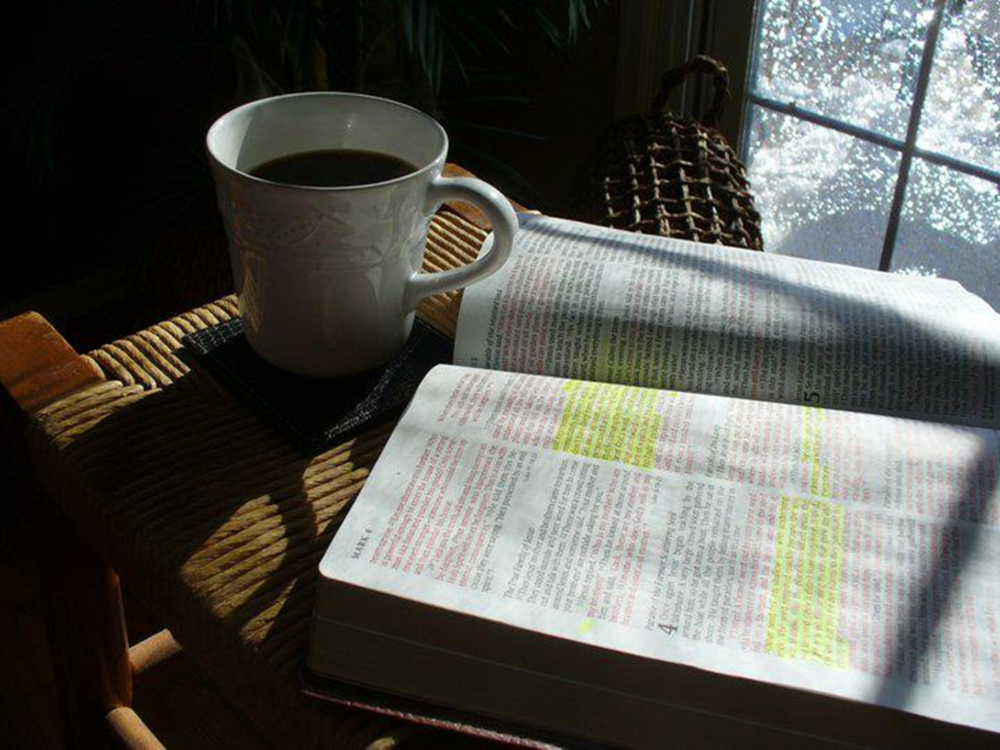
Posted in Hebrews | Tagged , , , , , , , | Leave a comment

Promise and Desire

I won’t get to the part about escaping lions, and fires, and swords until tomorrow, Lord willing. Won’t chew on what motivates someone to be willing to accept torture rather than release, or be willing to endure mocking, flogging, chains, and imprisonment rather than renounce. But I know it’s coming. And it makes the first sixteen verses of Hebrews 11 all the more sweet and sobering.

Now faith is the assurance of things hoped for, the conviction of things not seen.

(Hebrews 11:1 ESV)

or, as I memorized it way back when,

Now faith is the substance of things hoped for, the evidence of things not seen.

(Hebrews 11:1 NKJV)

Yes and amen!

Was “set up” for chewing on faith this morning in my Isaiah reading:

Let him who walks in darkness and has no light trust in the name of the LORD and rely on His God.

(Isaiah 50:10b ESV)

We sing (or used to at least) “Trust and Obey.” But who doesn’t know times when we could use a song written by someone to remind us to “Trust and Rely.”

Trust and rely
When there’s no other why
You will stand fast in Jesus
Just trust and rely

And as I hover over the first part of Hebrews 11, amidst all the observations that can be gleaned about faith, a couple stand out. Faith is tied to promise. Faith evokes desire.

By faith Sarah herself received power to conceive, even when she was past the age, since she considered Him faithful who had promised. Therefore from one man, and him as good as dead, were born descendants as many as the stars of heaven and as many as the innumerable grains of sand by the seashore. These all died in faith, not having received the things promised, but having seen them and greeted them from afar, and having acknowledged that they were strangers and exiles on the earth. For people who speak thus make it clear that they are seeking a homeland. If they had been thinking of that land from which they had gone out, they would have had opportunity to return. But as it is, they desire a better country, that is, a heavenly one.

(Hebrews 11:11-16a ESV)

Sarah gave birth to a child but never really saw the promise of land, seed, and blessing fulfilled. But she believed they’d come because she considered Him faithful who had promised. Faith is the substance of things hoped for because it is faith in promises given by a faithful Promiser.

And when we focus on the Promiser, our faith takes on a certainty. It is assured. Not just some I-wish-I-may-I-wish-I-might kind of fairy faith, but a rock-solid, both feet firmly planted, kind of faith. Not because of how much faith we can muster (some times it’s just a mustard seed), but because He is faithful.

And promise-based faith, which brings assurance, is power-giving faith which evokes desire. Though we experience but small, intermittent tastes of what’s in store, we greet the full-meal deal from afar. Reminded that this world is not our home, we seek the homeland we were created, and re-created for. As we gain clarity on the substance, or lack thereof, of this country, we desire a better country. Faith evokes desire.

Trials below set our hearts on things above. Testing here and now give us a hunger and thirst for there and then.

So, we believe. Assured of things hoped for. Spirit affirmed evidence, building an enduring conviction, resulting in an insatiable desire for a better land yet to be seen.

Love this chapter! What an oasis.

Because of grace. For His glory.

Posted in Hebrews | Tagged , , , , , , | Leave a comment

We Have Therefore Let Us

Who hasn’t heard people talking about “the last days” over these last months. Folks wondering if the craziness that’s been 2020 is actually the beginning of the birth pains (or even the full on labor) that will deliver the return of Christ. But as I reflect on some who think these may truly be the last days of the last days, I see a disconnect. That, while the signs of the time have led to much speculation on their part, for many it really hasn’t resulted in a renewed desire for congregation on their part. And, as I chew on a golden passage in Hebrews, I’m thinking it should.

If, in fact, we are witnessing the playing out of prophecy, it’s not intended to paralyze. While we might shelter in place for safety, we’re not to withdraw and retreat. In fact, if masking up keeps us in the game, then we should be willing to become all things to all people. What’s more, if we can meet — and we know it’s not safe for everyone to meet — we should meet. And all the more as you see the Day drawing near.

Therefore, brothers [and sisters], since we have confidence to enter the holy places by the blood of Jesus, by the new and living way that He opened for us through the curtain, that is, through His flesh, and since we have a Great Priest over the house of God, let us draw near with a true heart in full assurance of faith, with our hearts sprinkled clean from an evil conscience and our bodies washed with pure water. Let us hold fast the confession of our hope without wavering, for He who promised is faithful. And let us consider how to stir up one another to love and good works, not neglecting to meet together, as is the habit of some, but encouraging one another, and all the more as you see the Day drawing near.

(Hebrews 10:19-25 ESV)

We have, therefore, let us. That’s what I’m noodling on this morning.

We have confidence. Not in ourselves, but in who we are by the blood of Jesus. People who have residence in the holy of holies. Proximity to, and a relationship with a holy, holy, holy God who is wholly over all things. We have a new and a living way to walk in. A way architected and mapped out through the curtain. Confident in who our God is. Steadfast in who we are in His beloved Son.

And we are not alone within the veil. We have a High Priest. The Son of God, our Savior. The Shepherd of the sheep. The Head of the body. The Lover of His bride. The Ruler of His house.

So, because we have such confidence and such an Advocate, let us . . .

Let us draw near. Let us hold fast. Let us consider how we might spur on our brothers and sisters in Christ. And all the more as we see the Day drawing near.

Have said it here before, right behavior comes from right belief. We discern the signs of the time not to save ourselves, that’s been covered. No, we discern the times in order to be reminded that we never know how much time there is, and so, we make the most of time. Fighting off paralyzing fear as we know afresh who we are in Christ and know again who He is — our ever-present, ever-interceding, High Priest.

And having done that, we draw near, we hold fast, and we encourage one another.

What that looks like in individual situations is, of course, dependent on individual situations. But at least one thing it should not look like is neglecting to meet together. We really do need one another. It seems to me that, whether we assemble physically as a larger congregation or as a smaller group, or gather technologically via video conferencing of even frequent phone calls, this should be a time when the need for one another is heightened and not ignored. And the onus is ours not others. The command isn’t “let them”, but “let us.”

Even if these aren’t the actual last days of the last days, we still should recognize that the Day is drawing near. So, let us!

Because we have by His grace, let us for His glory.

Posted in Hebrews | Tagged , , , , , , | Leave a comment

That People May Know

A friend of mine captured it well in one of his social media posts: “When I was hoping to get a break from the COVID/politics news cycle, I wasn’t asking for the whole state to be set on fire.” It’s been a crazy 24+ hours. Haven’t been affected directly by the fires in the area, but many in our congregation have had to evacuate. Honestly, feels like a bit of piling on. A once in thirty year wind toppling a power pole that sparks a fire during record-high temps and record-low humidity during a time of an unprecedented pandemic and unimaginable civil unrest. Come on!

Maybe that’s why the following text “popped” this morning:

“I am the LORD, and there is no other, besides Me there is no God; I equip you, though you do not know Me, that people may know, from the rising of the sun and from the west, that there is none besides Me; I am the LORD, and there is no other. I form light and create darkness, I make well-being and create calamity, I am the LORD, who does all these things.”

(Isaiah 45:5-7 ESV)

The “you” in this passage is Cyrus, king of Persia (45:1). God’s prophet identifying the pagan king as the one God would raise up, and stir up (Ezra 1:1), to end the exile and return a remnant to the land to rebuild the temple and Jerusalem.

The “I” of the passage? The LORD. The God besides whom there is no God. The One like no other. The One who equips even those who don’t know Him to accomplish His will. The One who is the Author of light and darkness. The One who makes well-being and creates calamity.

Calamity. If ever there was a single word to capture this season, calamity could be that word. And ultimately were does calamity come from? From the Creator of all things, even the Creator of calamity.

And for what purpose?

. . . that people may know, from the rising of the sun and from the west, that there is none besides Me; I am the LORD, and there is no other.

The LORD, the Creator of all things, wants people, all people, to know Him. So, ask the question again, “And for what purpose?”

“And this is eternal life, that they know You the only true God, and Jesus Christ whom You have sent.”

(John 17:3 ESV)

Lot to pray about right now. A fire still out of control. People displaced from their homes. Firefighters on the front-lines, many without any real break for almost 48 hours. But would I pray too that through this calamity, people might know there is a God? A God like no other? A God who creates even calamity and seasons of darkness that He might draw them to the Light and point them to the way of eternal well-being? I’m thinkin’ . . .

. . . that people may know, there is none besides You . . .

By Your grace. For people’s good. For Your glory.

Posted in Isaiah | Tagged , , , , | Leave a comment

Without an Ounce of Exaggeration

Funny how on Labor Day most of us welcome the opportunity to cease from labor. Been hovering over Hebrews 9 this morning . . . thought I’d take a “less-labor” approach to sharing something to chew on. Re-posting some thoughts from 2008 . . .

I was recently proof-reading a cover letter for a job application. In it, the writer contended that, among their many qualifications, they also possessed “limitless energy.” While I appreciated that they were truly as enthusiastic a person as I’d ever known, I did provide the feedback that they might want to steer away from such words as “limitless.” No one, I pointed out, has limitless energy. There are just some words that are “so big” you need to be careful how you use them . . . what might be intended as a descriptive attribute to be appreciated, can quickly become an exaggeration which is ignored or dismissed. I came across another word like that this morning in my reading in Hebrews . . . in fact I encountered it three times . . . and the wonder of it all is that the word is used without an ounce of exaggeration.

“But Christ came as High Priest of the good things to come, . . . Not with the blood of goats and calves, but with His own blood He entered the Most Holy Place once for all, having obtained eternal redemption. For if the blood of bulls and goats and the ashes of a heifer, sprinkling the unclean, sanctifies for the purifying of the flesh, how much more shall the blood of Christ, who through the eternal Spirit offered Himself without spot to God, cleanse your conscience from dead works to serve the living God? And for this reason He is the Mediator of the new covenant, by means of death, for the redemption of the transgressions under the first covenant, that those who are called may receive the promise of the eternal inheritance.”

(Hebrews 9:11-15 NKJV)

Eternal redemption . . . eternal Spirit . . . eternal inheritance. Oh, to pause for a moment and consider the implications of these three realities in my life . . .

Ok . . . so first of all, try wrapping your head around “eternal.” Not the easiest thing for mortal man to grasp . . . from the time we are born, we begin to die . . . we don’t encounter a whole lot that’s eternal on this earth. But “eternal” is what we’re dealing with here . . . perpetuity of time . . . that which always has been and always will be . . . never to cease . . . everlasting . . . forever . . . without beginning and end. It’s trying to fathom the unfathomable . . . to understand the incomprehensible . . . to know the unknowable. But, it is ours to possess . . . ours to pursue the appreciation of . . . ours to live in the reality of . . . that which is eternal.

And it’s about eternal redemption. The price paid . . . our sin atoned for . . . our souls purchased from the marketplace of sin . . . once for all . . . and forever. It’s not a redemption that might fail at some point . . . not a price that might be determined to not be quite sufficient for “that sin.” It is a ransom paid that redeems for eternity . . . that has secured the possession for the Purchaser such that nothing can separate us from the love of God. I can’t fully grasp it . . . but I sure do like thinking on it. It’s beyond my full comprehension, but I understand enough to rest in my long term future . . . and rejoice in God’s amazing grace shown to me.

It’s also about the eternal Spirit. The Third Person of the Godhead . . . the One who is fully God and who is the active agent in God’s dealings with men. It was through the eternal Spirit that Christ offered Himself without spot to God . . . the Spirit being active and present on the cross. That same Spirit was in the beginning when God created all things. And, that same Spirit indwells me even now . . . at this very moment. He sealed me at salvation as a guarantee of eternal things to come. He now indwells me such that His eternal power might work its work of sanctification, conforming me to the image of Christ. And one day, He will deliver me into the very presence of the Father and the Son! What a thought . . . what a reality . . . the eternal Spirit of God inhabits me.

And finally, there is soon coming a day when I will receive the promise of the eternal inheritance. What will that be like? To be surrounded by the incorruptible and the imperishable and the unfading . . . to dwell in eternity itself . . . before the eternal God. And to think, it is my inheritance . . . as a joint heir with Christ, the eternal King of kings and Lord of lords. The things we think are long lasting on this earth don’t even compare to what awaits those purchased with eternal redemption, those possessed by the eternal Spirit.

Father, thank You for that which is without end . . . for that which is mine . . . my redemption . . . Your Spirit . . . my inheritance. Help me to live in light of their eternal reality . . . to respond in praise and worship . . . to react with a desire to faithfully follow You . . . that I might bring You limitless glory . . . without an ounce of exaggeration . . . amen.

Posted in Hebrews | Tagged , , | Leave a comment

A Word Fitly Spoken

I get that it just might be confirmation bias, interpreting what I’m reading this morning in support of something I’ve been sensing for awhile. But if that “sensing” has been of the Spirit, then I shouldn’t be surprised if He confirms it from the word of truth.

One of the things I think this season has brought clarity to is the need for engaged, meaningful, civil discourse. The ability and willingness to express ideas, and to listen to ideas, respectfully in the public square. Whether that “public square” is the kitchen table, the church foyer, or yes, even a social media platform. I think for too long we’ve been too happy to avoid hard topics and keep our relationships an inch deep and a mile wide. But with everything else this season has brought, it has brought to the surface the reality that many sincere people sincerely see things different on many different life-on-life topics. So, if we’re gonna get along, and grow together, I’m thinking we need to be able to figure out how to have conversations. And that such conversations will be, in the long run, beneficial.

That’s my bias. Here’s the confirmation.

A word fitly spoken is like apples of gold in a setting of silver. Like a gold ring or an ornament of gold is a wise reprover to a listening ear. Like the cold of snow in the time of harvest is a faithful messenger to those who send him; he refreshes the soul of his masters.

(Proverbs 25:11-13 ESV)

Beautiful. Valuable. Refreshing. That, says Solomon, is what a word fitly spoken, a wise reprover, and a faithful messenger are like.

A word fitly spoken. A timely word. A word for the current circumstance. A word addressing the present condition. A seasonal word. A spoken word. It can adorn a conversation with the beauty of apples of gold in a setting of silver. But having such a word, it seems to me, requires some work in advance. The need to listen long enough to truly know the workings of the circumstance we’re addressing. The need to seek to understand the language being used, what the words mean, so as to avoid thinking we’re discussing the same thing though we’ve attached different nuances to the words we’re speaking. The need to be careful with our words. The need to not viscerally react when others use words that trigger something within us. A word fitly spoken, that’s what I long to speak.

And beautiful words are not just words of agreement. In fact, they can come from the mouth of a wise reprover. Oh, how we tend to shy away from reproof, rebuke, and reprimand — likely because we have encountered it in harsh and destructive ways. But in the hands, or mouth, of the wise, of those trained in skillfully leveraging the word of God and with Spirit-led insight into the ways of man, a well-spoken, gently delivered word of correction is of great value — like gold. And, when a discussion is marked not just by moving lips but also by listening ears, just see what profit can come of it.

And the motive isn’t to win an argument or to become further entrenched in one’s position. But to be a faithful messenger. To be an envoy of reliable, verifiable truth. Our conversations needing to be grounded in a sincere understanding of the principles and precepts at play in Scripture. Fitly spoken words and wise reproofs not based solely on our own understanding, but drawn from our understanding of what God has revealed in His word. Matters of life below addressed in the context of things above. A biblical worldview, as it’s referred to, addressing the world we view. Not that this will result in agreement, necessarily. But when two faithful messengers engage with one another with words fitly spoken desiring to be a wise reprover — for one another’s good and God’s glory — it has the potential to be a beautiful, valuable, and refreshing conversation.

That’s what I’m thinking. That’s what I’m picking up from what Solomon is laying down. Might be just confirming my own bias. But it might also be the way of those called to be ambassadors of the kingdom.

Only by His grace. Always for His glory.

Posted in Proverbs | Tagged , , , , | 1 Comment

To Have and To Hold

Had dinner with a friend at a restaurant last night — a small, family-business sort of restaurant. Asked our waitress, “So, how are you doing?” She knew what I was asking, how’s the pandemic affected business? Though I only saw her eyes, you could read the rest of her facial expression. With heaviness, she said it has been tough. Whereas once they had a number of staff working, now it was just her serving customers and the owner in the kitchen. “This has been life-changing,” she said. I can imagine the multiple ways it’s been life-changing — most of those ways characterized by some form of loss.

Reminded this morning that the recipients of the letter to the Hebrews had also suffered loss. Having believed Jesus to be the Messiah, and having chosen to walk in the Way, they were forced to leave behind certain things. Things like gathering with their old community in the synagogue. No longer participating in the rites, rituals, and practices of the temple. Removed from the covering of the ministry of the Levitical priesthood. Expelled from the fellowship of those who refused Christ to remain in the way of Moses. The loss of family, friends, and familiarity.

And sometimes, when there’s loss, we’re prone to lose site of what remains. The focus on what was but is no longer blocking out what is. And that’s why Hebrews was written.

Now the point in what we are saying is this: we have such a High Priest, one who is seated at the right hand of the throne of the Majesty in heaven, a Minister in the holy places, in the true tent that the Lord set up, not man.

(Hebrews 8:1-2 ESV)

There it is! That’s the thesis of the letter. Everything up to this point has set it up. Everything following expands on this High Priest and the implications of believing in Him and living for Him.

A ton of heavy theological lifting here. A High Priest unlike the priests they had known. Eternal not temporal. Serving in the heavenly tabernacle set up by God not an earthly one constructed by men. And then, how that plays into things concerning a better covenant, a better promise, a better Holy Place, a better sacrifice, and thus, a better redemption. Put on your thinking cap!

But this morning, it’s not the theological which grabs me, it is the intensely practical. And that, captured in two words: “We have.”

. . . we have such a High Priest

To be sure, these Hebrew believers had forfeited much in order to follow Christ. But this letter was written so that they might know that what they now possessed was better. Infinitely, and eternally better. They had given up but copies and shadows of heavenly things (8:5), and now held the heavenly thing itself. “We have such a High Priest,” the writer writes, “We have Jesus!”

We possess. We own. We have. We hold. Despite whatever loss we have experienced during these past 6 months, or over these past 6 years, we have Jesus. We hold fast to the Son of God. The Savior of our souls. The High Priest seated even now at the right hand of the throne in Majesty, ministering on our behalf in heavenly, holy places.

To be sure, we grieve the loss. No escaping that we endure the difficulty. Not surprising that we wonder about when, of even if, things might again be “normal.” But let it not distract us from what we have. We have Jesus.

Blessed assurance, Jesus is mine
O what a foretaste of glory divine!

Jesus. To have and to hold.

And all His grace. All for His glory.

Posted in Hebrews | Tagged , , | Leave a comment

The Stability of Your Times

Hovering over three verses from my reading in Isaiah this morning.

“Behold, a king will reign in righteousness, . . . He will fill Zion with justice and righteousness, and He will be the stability of your times, abundance of salvation, wisdom, and knowledge; the fear of the LORD is Zion’s treasure. . . . Your eyes will behold the King in His beauty . . . ”

(Isaiah 32:1a, Isaiah 33:5b-6, Isaiah 33:17a ESV)

Think about it, that last promise is huge — Your eyes will behold the King in His beauty.

Isaiah is writing during the decline of the Jewish monarchy. The throne will be destroyed when judgment comes upon Judah and Jerusalem, and a rebellious, adulterous people are sent into captivity for a 70 year timeout. And when they return, no king. So, when Isaiah speaks of beholding the King you know he’s prophesying of a future time.

Jesus is that king. A glimpse of Jerusalem’s “beholding” seen as He entered the city a week before He was nailed to a cross.

The next day the large crowd that had come to the feast heard that Jesus was coming to Jerusalem. So they took branches of palm trees and went out to meet Him, crying out, “Hosanna! Blessed is He who comes in the name of the Lord, even the King of Israel!”

(John 12:12-13 ESV)

They wanted to believe He was the one the prophet pointed to. But they knew that they weren’t really beholding Him “in His beauty.” After all, He was riding on a feeble, young donkey, not a battle-ready steed. They didn’t get the prophet’s other prediction concerning the promised Messiah, that during this visit to the city He would have “no form or majesty that we should look at Him, and no beauty that we should desire Him” (Isa. 53:2).

So we know the promise of beholding the King in His beauty is yet to be fulfilled. Even so, Lord Jesus, come!

And yet, while we wait for the King, we know the King has come. While we anticipate a day when He will reign on earth in righteousness, even now, in the kingdom He is building in the hearts of His people, He reigns in righteousness. Though a day is coming when He will fill this world with justice, abundance of salvation, and wisdom and knowledge, in this time of the kingdom’s “already but not yet” existence, we have a divinely implanted sense of these things, and a supernatural foretaste of what the abundance of salvation looks like.

And this is true, too, when it comes to the promise that the King will be the stability of your times.

There is coming a day when Jesus will calm the chaos. When He will shush the storm. When He will order order. When He will stand and bring stability. How we long for that day.

But even now, I’m reminded, He is the stability of our times.

Of these tumultuous times. Of these sometimes seemingly out of control times. Of these post-Christian, post-modern, post-truth, post-whatever times. Of these pandemic times. Of these protesting times. Of these extreme partisan times. Pick a way of describing the times, and still know that Jesus, the King, is the stability of these “already but not yet” times.

On Christ the solid rock I stand
All other ground is sinking sand!

He will be the stability of your times. Yes, He will. Yes, He is.

Hallejuah, what a Savior!

By His grace. For His glory.

Posted in Isaiah | Tagged , , , , , , | Leave a comment

Blessed Are Those Who Wait For Him

It’s a word written to an ancient people. But it’s an ancient word preserved for this present people. And, this morning, I’m thinking it’s worth chewing on.

Therefore the LORD waits to be gracious to you, and therefore He exalts Himself to show mercy to you. For the LORD is a God of justice; blessed are all those who wait for Him.

(Isaiah 30:18 ESV)

One verse, four applications of colored pencil. Underline in dark blue what I observe about God: He waits to be gracious to His people; He rises up to show mercy; He is a God of justice. Shade with brown what I notice about grace: grace has a season, a time when God determines is the right time (in this case coming after a time of weeping, see 30:19). Use the orange colored pencil to highlight a promise seen, a promise that those who wait on God will be blessed by God. Finally, shade with lime green what’s observed about faith: faith is marked by waiting on Him who waits to be gracious.

Hmmm . . . lot to chew on there.

Circumstances of the people who this was written to very different than the situations of those it has been preserved for. But, it seems to me, that within it there is a transcendent principle at play for the people of God. In due time, in His time, blessing will be known by those who know the person of their God, and believe in the promises of their God. Who know His nature. Who trust in his word.

My God waits to be gracious. Far from sitting back on His throne in heaven, with His arms crossed, His lips pursed, and His head shaking back and forth with divine disapproval, my God actually leans over heaven’s balcony waiting to be gracious. Longing to show unmerited favor. And in the fullness of time, far from being a passive player in earth’s history, He rises up to show mercy, as demonstrated when He sent forth His Son to redeem and adopt those unworthy in themselves of redemption and adoption (Gal. 4:4-5). And that’s just but an opening of the floodgates of divine mercy and abounding grace. Do I believe it? Really believe it?

My God is a God of justice. Wrongs will be made right. Scales will be balanced. Payment for what is owed will be required. The wages of sin will be tendered. God has shown that He cares about justice. Even entering our world to bring about what is just, starting with the cross (Rom. 3:23-26). Thus, divine forbearance is appropriate as He waits patiently for sinners to find their way to the cross where Jesus became the once forever atoning sacrifice for sin and transgression. But a day is coming when that which has not been covered by the blood will brought to light, an accounting required, justice prevailing. Do I believe that? Really believe that?

If I believe these things to be true about my God then, by His enabling, I can wait for Him. I can endure the weeping that lasts for night, confident that joy will come in the morning (Ps. 30:5). I can patiently wait out the season of sorrow, knowing that one day He really will provide “a crown of beauty instead of ashes, the oil of gladness instead of mourning, and a garment of praise instead of a spirit of despair” (Isa. 61:3). By faith I can wait.

And blessed are those who wait for Him.

Blessed this day. Even as we wait and experience His abiding presence in our loneliness and His sustaining power in our weakness. Blessed in that day. When the LORD who waits to be gracious reveals the full extent of His grace. When the LORD who rises up to show mercy, makes Himself known to all the earth. Those who wait, and persevere by faith, are blessed. In this day and in the day to come.

I can rest in knowing who My God is. I can trust in knowing what my God has promised.

By His grace. For His glory.

Posted in Isaiah | Tagged , , , , , | Leave a comment

An Anchor Behind the Curtain

We have an anchor of the soul. That’s what’s resonating this morning as I read the last half of Hebrews 6. And who doesn’t need an anchor these days? Something that is sure? Something which can hold fast? But what grabs me this morning is less about what the nature of our anchor is and more about where our anchor is planted. We have an anchor behind the curtain.

So when God desired to show more convincingly to the heirs of the promise the unchangeable character of His purpose, He guaranteed it with an oath, so that by two unchangeable things, in which it is impossible for God to lie, we who have fled for refuge might have strong encouragement to hold fast to the hope set before us. We have this as a sure and steadfast anchor of the soul, a hope that enters into the inner place behind the curtain, where Jesus has gone as a forerunner on our behalf, having become a High Priest forever after the order of Melchizedek.

(Hebrews 6:17-20 ESV)

These ancient Hebrews weren’t dealing with pandemics, protests, and politics, but whatever it was that was creating the pressure cooker they were living in, for some it was causing them to waver in their faith. To question “the ask” of God’s call on their lives. To second guess whether following Christ was really going to be worth it all. To forsake the assembling of themselves together. To consider going back to an easier way, a way more in line with the world they used to know.

So the message to the Hebrews was, “Keep on keepin’ on!” Because Christ is better (Heb. 1:4, 2:17-18, 3:3). Because the promises are better (Heb. 7:22, 8:6). Because, when all will be said and done, the way of faith is better (Heb. 11:6). Therefore, the race to be run, though it requires great endurance, is also better (Heb. 12:1-3). And this results in a hope which is better. A hope set before us. A hope we have as a sure and steadfast anchor of the soul.

But lest we think it is our ability to hope which provides our steadfast security, the Spirit emphasizes that the strength of the anchor lies not in us but in where the anchor is planted — the inner place behind the curtain.

No matter how heavy an anchor is, if it doesn’t become firmly planted in the ocean bed, if it doesn’t catch onto something immovable, it can hang off the boat all day long but will provide little stability in the storm. Yes, our hope is an anchor for the soul, but only because it is tethered steadfastly behind the curtain.

Behind the curtain, where the glory dwells and God is present. Behind the curtain, where our great High Priest, having made a once for all atonement, ever lives to make perpetual intercession. That’s where the anchor of our soul is fastened. Not in our ability to muster up enough hope, but in the presence, in the power, and in the promises of the One who has given us such a sure hope.

The substance of our hope is faith (Heb. 11:1 NKJV). And we all know how our faith can waver at times. Therefore our hope can waver. Our anchor, at times, less characterized by weighty iron and more like flimsy aluminum. But, praise God, it is less about the weight of our hope and all about the ground into which our hope is anchored. Holy ground. Solid ground. Ground which is behind the curtain.

Thank God we have an anchor for the soul. An anchor formed by things better than this world could ever offer. An anchor securely attached to ground more holy than we could ever imagine. A steadfast anchor of the soul. An anchor behind the curtain.

By His grace. For His glory.

Posted in Hebrews | Tagged , , , | Leave a comment