
Bad Weather Worship

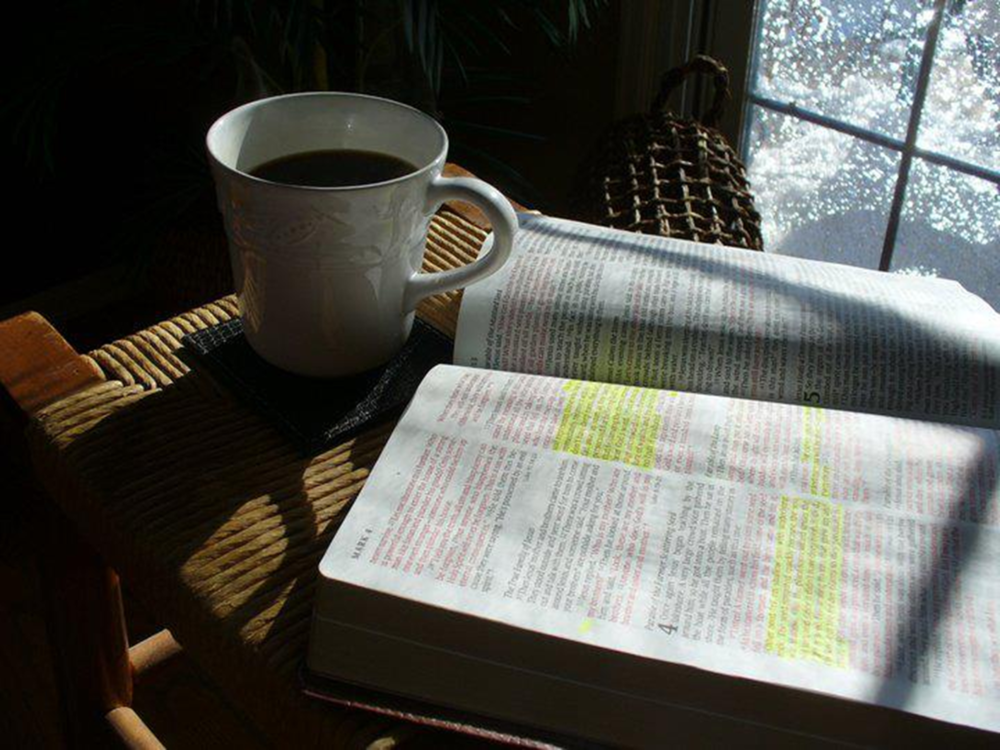
A thunderstorm . . . that was the trigger. Foul weather, the inspiration for the song. Whereas in Psalm 8 it’s the moon and the stars which provoke awe-filled wonder . . . and in Psalm 19 it’s the sun acting as the catalyst for declaring the glory of God, this morning, it’s a loud tempest that evokes praise in Psalm 29. So I’m noodling this morning on bad weather worship.

Unlike David, how infrequently I connect the every day happenings of the creation with the Creator. Day after day the winds blow and the rain falls and I just brood about being wet. The rivers rise and I worry. The power of the sun is blocked by a massive enveloping cover and I’m thinking about the need for vitamin D supplements.

But what if the endless rain were to bring to remembrance the abundant out-pouring of His grace? A downpour experienced daily, but unable to fully comprehend it’s source. No apparent end to its supply. Filling streams and rivers and seas to overflowing. So much so that it causes us to respond, as another songwriter has written, “If grace is an ocean we’re all sinking.”

Or what if the winds were a reminder of how the Spirit of God works? With unseen, yet blatantly obvious power. Blowing where it wishes. And, though we hear its sound, we don’t know where it comes from or where it goes to (Jn. 3:8). Except to know that the Spirit brings dead people to life. That He enables deaf people to have ears to hear. That He intercedes when dumb people can’t find the words to say. That He is a deposit for redeemed people guaranteeing what is to come. A mighty, rushing wind come from heaven, apportioning divine enabling as He purposes (1Cor. 12:11).

And what if the cloud cover–that day after day after day of cloud cover–what if it were less a source of lament and more a reminder of the Father’s enveloping presence? Instead of seeing the grey skies as something to roar against, I rejoiced afresh in the refuge that is mine in the shadow of His wings. Reminded that, just like the seemingly endless cloud cover, “You have been my help, and in the shadow of Your wings I will sing for joy” (Ps. 63:7). That the skies can be more than a constant grey to be endured, but could be creation’s cue to again sing with the psalmist of God’s faithfulness: “How precious is Your steadfast love, O God! The children of mankind take refuge in the shadow of Your wings” (Ps. 36:7).

Yeah, to be more like David. Where, in Psalm 29, the thunderstorm isn’t just the thunderstorm, but it’s the voice of God. The voice over the waters. Breaking cedars. Flashing forth flames of fire. Shaking the wilderness. Causing animals to go into labor.

Where every day (literally “every day!”) common atmospheric conditions reveal a God who is anything but common. Declaring, if we’ll but take notice, that Jehovah is “full of majesty.” And reminding us that “in His temple all cry, ‘Glory!'”

I encounter bad weather and often wring my hands. David encountered bad weather and worshiped.

Ascribe to the LORD, O heavenly beings,
   ascribe to the LORD glory and strength.
Ascribe to the LORD the glory due His name;
   worship the LORD in the splendor of holiness. . . .
The LORD sits enthroned over the flood;
   the LORD sits enthroned as king forever.

(Psalm 29:1-2, 10 ESV)

Oh to be more like David. To know more of bad weather worship.

By God’s grace. For God’s glory.
Posted in Psalms | Tagged , , | 1 Comment

A Strong Hand

They were to remember the day. They were to commemorate it with a special feast. They were to pass its memory on from generation to generation, handing it down as a perpetual sign on their hand and memorial between their eyes. They were to consecrate the firstborn of every man and every creature in light of the day, so that when their children asked why, they would have reason to tell again the story. The story of their deliverance. The story of their redemption. The story of a strong hand.

Then Moses said to the people, “Remember this day in which you came out from Egypt, out of the house of slavery, for by a strong hand the LORD brought you out from this place.”

(Exodus 13:3 ESV)

They had been led out of bondage. Not only having walked out as free men and women, but with the plunder of Egypt. They were more than conquerors. And that not of themselves, it was the gift of God who had determined to break their chains. And that, by a strong hand.

Four times in Exodus 13, Moses is led by the Spirit of God to emphasize that God’s deliverance was by “a strong hand.” That when they remembered the story, when they told the story, when they offered up their firstfruits to commemorate the story, the story was not to forget a critical detail. That their actions of memorial were to recall not just that they were brought out of slavery, not just that it was God who had delivered them, but that it was by His strong hand that they walked out of bondage.

It was God who personally opposed Pharaoh’s tyranny. God who actively intervened to show Himself mighty so that His people might go free and His glory might be known. God who powerfully brought Pharaoh and his domain into submission while protecting the children He came to rescue.

When they remembered their exodus, they were to remember a strong hand.

And I’m chewing on this as I get ready to remember.

Our fellowship’s practice is to remember the means of our deliverance on the first Sunday of the month. We’ll take some time to consider afresh the act by which our bonds were broken and our freedom secured. To quiet ourselves before some simple feasting elements designed to direct our thoughts again to the day when the cell doors of our Egypt were burst forth. Death conquered. Sin’s power crushed. Riches, which we didn’t deserve and could never have earned, freely given as our inheritance. Assured that we too would eventually be brought into a land flowing with milk and honey. And this too, by a strong hand.

And you, who were dead in your trespasses and the uncircumcision of your flesh, God made alive together with Him, having forgiven us all our trespasses, by canceling the record of debt that stood against us with its legal demands. This He set aside, nailing it to the cross. He disarmed the rulers and authorities and put them to open shame, by triumphing over them in Him.

(Colossians 2:13-15 ESV)

God’s power displayed on the cross. His dominance over our enemies forever settled by an empty tomb. The work finished. The promise secured. Our hope eternal. Because of a strong hand–the strong hand of our Mighty Redeemer.

Remember, you were brought out by a strong hand.

Because of His grace. Forever for His glory.

Posted in Exodus | Tagged , , , , | Leave a comment

“One Thing” People

Mary was one. While there was a ton of stuff to do to get things ready for hosting Jesus & Company at her and her sister’s place, she sat at the Savior’s feet. Martha was anxious and troubled about many things, but Mary new that only one thing was necessary (Luke 10:41-42). And so she neglected what was good for what was better. She was a “one thing” person.

So was the man born blind in John 9. Those around him were distracted debating if he really was the same guy as the guy born blind, or if, in fact, he really was ever blind at all. Others, who conceded that fact, wanted an explanation of how he was made to see, an explanation that didn’t involve Jesus. And so, they pressed him to give glory to God and come up with some other hypothesis of what had happened. But he couldn’t be swayed from what he knew to be true, “Whether he is a sinner I do not know. One thing I do know, that though I was blind, now I see.” The blind man who could see was also a “one thing” person.

And what about Paul? Sure he had met the risen Christ on the road to Damascus–that encounter of the divine kind redirecting his life 180 degrees. And yeah, he had been told that he would have to suffer much for Christ. But, at some point, you wouldn’t blame him if he thought that he’d suffered enough and might have been tempted to reprogram his internal GPS from Rocky Road towards Easy Street. But he didn’t. Instead he never wavered from fighting the good fight and running the race, never thinking he had fought enough or run enough to win, never giving in to the temptation to tap out. How come? Let Paul speak for himself: “But one thing I do: forgetting what lies behind and straining forward to what lies ahead, I press on toward the goal for the prize of the upward call of God in Christ Jesus” (Php. 3:13b – 14). Another “one thing” person.

And it was David who got me thinking about “one thing” people this morning.

One thing have I asked of the LORD, that will I seek after: that I may dwell in the house of the LORD all the days of my life, to gaze upon the beauty of the LORD and to inquire in His temple.

(Psalm 27:4 ESV)

If I’m recalling things correctly, it seems to me that rarely, if ever, did David deal with his enemies from inside Jerusalem. Whether it was Saul or Absalom or others who stood opposed to him, their opposition invariably resulted in his expatriation. Whether it was fleeing in a field, or hiding in a cave, or fighting on a battlefield, some of David’s darkest and most desperate trials were encountered away from the holy hill. And even when evildoers assailed him and his adversaries and foes would have his flesh as food, when armies encamped about him and war arose against him, there was always one thing he asked of the Lord, one think he would seek after, to get back to the house.

Not his house where his family dwelt. Nor back to the courts of power. Not even back to his esteemed position, his material wealth, and the life of ease. But David’s heart, even in the midst of great trial and oppression, was set on seeking the house of the LORD.

The presence of God being the only place he wanted to dwell. To gaze upon the beauty of holiness the only thing he wanted to see. To have restored divine communion and to inquire in His temple, the only thing he wanted again to experience.

There’s something about “one thing” people. Something inspirational. Something motivational. But I’m also reminded that it’s not because of who they are, but because they reflect something of the One they seek.

Consequently, when Christ came into the world, He said, “Sacrifices and offerings You have not desired, but a body have You prepared for Me; in burnt offerings and sin offerings You have taken no pleasure. Then I said, ‘Behold, I have come to do Your will, O God . . .'”

(Hebrews 10:5-7a ESV)

Jesus too was a “one thing” person. Come to do the will of the Father. To give His life as a ransom for many. To redeem for Himself a people. To re-image them in His own likeness. To reserve for them a place in glory. That that they too might be “one thing” people.

By His grace. For His glory.

Hallelujah! What a Savior!

Posted in Psalms | Tagged , , , | Leave a comment

Gen S

I’m a baby boomer. That’s how my generation is referred to by those who talk of the characteristics of people born during certain time periods. And that’s all I had to do to be a baby boomer . . . be born. I cannot not be a baby boomer. I might wanna be more cool and wear a Gen X t-shirt or a Gen Y baseball cap. Or try to be more hip and wear kneeless, tight jeans and think I can roll with the Millennials. But that’s not how it works. I’m part of the generation (and there were a lot of us, hence the “boom”) that was born post-World War II, between 1946 and 1964. So, I’m a baby boomer. Done deal.

And as I’m hovering over Psalm 24 this morning, I’m chewing on another demographic that I’m part of. And, in a similar way, part of the group through nothing I did or could have done. Though it isn’t a generation of people I was born into, it is an ageless, eternal cohort of men and women I was born again into. A generation that I sometimes think of as Gen S.

Who shall ascend the hill of the LORD? And who shall stand in His holy place? He who has clean hands and a pure heart, who does not lift up his soul to what is false and does not swear deceitfully. He will receive blessing from the LORD and righteousness from the God of his salvation. Such is the generation of those who seek Him, who seek the face of the God of Jacob.   Selah

(Psalm 24:3-6 ESV)

My “people” are those who can ascend the hill of the LORD. Those allowed access to His holy place. Those invited within the veil to behold His glory.

And we have received blessing.  In fact, we’ve been blessed with every spiritual blessing in the heavenlies (Eph. 1:3). What’s more, we have been deemed righteous–a righteousness God has credited to our account apart from works (Rom. 4:6). Thus, identified as the those who seek Him and His face, we might think of ourselves as Generation Seeker. That’s us, Gen S’ers.

And such privileged access before the LORD of all the earth “and the fullness thereof” (24:1), such abundant blessing from the Giver of every good gift, is due solely to the fact that we have been counted among those who have clean hands and a pure heart. And this not of ourselves, it too is the gift of God (Eph. 2:8).

Clean hands not because of our goodness and perfection, but hands washed clean by Another. A pure heart not of our own making, for naturally mine was a heart of stone enveloped by sin. Instead, a pure heart because it’s a new heart.  We’ve been given a new spirit. And these, by the God or our salvation.

Such is the generation of those who seek Him.

We didn’t behave our way into this generation. We were born again into it. Because of the Father’s Sovereign determination. Through the Son’s sacrificial death. By the Spirit’s soul-regenerating dynamic.

Though once lost, we were found. Though once blind, now we see. Though once in bondage to sin, living in freedom. Though once wandering aimlessly, now seeking the face of God.

We’re part of Gen S. Not because of what we’ve done, but because of who He is. Members of that generation that seeks Him. Not because of who we are, but because of what He has done.

Seekers by grace alone. For the glory of God alone.

Posted in Psalms | Tagged , , , , | Leave a comment

The Turning

The word is used only once in the New Testament. And this morning it jumped off the page as I read it in Acts. A term I recall hearing more frequently 30 or 40 years ago, when I was a newer believer. Don’t really know when it faded from use, but I think it has. I’m guessing the word wouldn’t land on the modern ear very well. I’m thinking that whatever defines “politically correct” would filter out this way of talking about those who have been saved by faith alone in Christ alone. But it is a biblical term. And an accurate term. And maybe, if we used it more, a helpful term in reminding ourselves of who we are and, perhaps, how we should continue to be.

In Acts 15 those who wanted to attach circumcision to faith as the way of salvation are confronted by Paul and Barnabas. After “no small dissension and debate with them,” Paul and Barnabas decide to go meet with the apostles and elders in Jerusalem to settle the matter. And the Holy Spirit moves Luke, the author of Acts, to write this:

So, being sent on their way by the church, they passed through both Phoenicia and Samaria, describing in detail the conversion of the Gentiles, and brought great joy to all the brothers.

(Acts 15:3 ESV)

Did you see it? Know what word I’m talking about? If not have a look again before reading on.

As Paul and Barnabas traveled to Jerusalem, as they were hosted by churches and groups of believers along the way, they described in detail the conversion of the Gentiles.

Conversion. When’s the last time you heard someone refer to becoming a Christian like that? We’ve believed. We’ve come to Christ. We’ve accepted Jesus. We’ve been born again (but even that’s less popular today). But we were converted? Not used that much I’m thinking.

Or, we’ll call ourselves a believer, a follower, or a disciple. But when’s the last time I said I was a convert?

Not to make a big deal out of something that isn’t. But as I chew on the conversion of the Gentiles I can’t help but think it’s an important way of describing ourselves that shouldn’t be dropped from the multi-faceted portrayal of what it means to be in Christ.

While the word “conversion” is only used once, its root is far more common and used far more frequently. It’s the verb to turn. As in, to turn to God. That’s what salvation is, it’s the turning.

And you read of the turning, again and again in the book of Acts. Peter calling upon his fellow Jews to “repent therefore, and turn again, that your sins may be blotted out” (Acts 3:19). In Lydda, when the people heard the gospel preached and saw a paralyzed man healed, “they turned to the Lord” (Acts 9:35). In Lystra, where Paul and Barnabas were mistaken for gods to be worshiped because of the miracles that accompanied their message, Paul declares, “Men, why are you doing these things? We also are men, of like nature with you, and we bring you good news, that you should turn from these vain things to a living God, who made the heaven and the earth and the sea and all that is in them” (Acts 14:15).

Isn’t that at the heart of our salvation? Having once pursued the vain things of this world, we’ve done an about face and now seek first the kingdom of a living God? We’ve experienced a conversion. We’ve known the turning.

But perhaps, because we’ve lost the language, we’ve forgotten that we are called to be people who are to walk in a direction 180 degrees to the world which woos us to be more and more conformed to it. Called to be people who pivot on our heels, by the power of the Spirit in us, when the flesh lures us to follow its sensual leading. Called to be a people who give our back to the tempter and the accuser when he says, “Why even keep trying? Follow me.”

By God’s saving grace, because of the finished work of the cross, by the power of Christ’s resurrected life, through faith we are a people of conversion. People who have known the turning.

May we continue in the turning. Walking in a manner worthy of our calling (Eph. 4:1). Returning when needed, confessing our sin, knowing that He is faithful and just to forgive us our sins and cleanse us from all unrighteousness (1John 1:9). That we might be a source of great joy to heavenly realms as they recount too the conversion of the Gentiles.

Because of grace. For His glory.

Posted in Acts | Tagged , , | Leave a comment

They Went Back

They caught up with Paul at Lystra. They were able to do there what they had wanted to do when he was at Iconium. At Lystra they had Paul stoned.

The unbelieving Jews and Gentiles from Iconium incited those in Lystra who, it seems, were offended by Paul’s refusal to be worshiped as a god. Ironic that those who were ready to offer sacrifices to Paul now wanted to offer Paul as a sacrifice. Even though they had witnessed Paul’s healing of a man crippled from birth, they were now determined to put him to death. And so, persuaded by those from Iconium who were opposed to the gospel, they were convinced to pick up rocks against the gospel preacher. To silence the voice of the one who proclaimed the good news of the living God who had made way for men entrapped in vain worship to know true worship.

And when they were done stoning Paul, they “dragged him out of the city, supposing he was dead” (Acts. 14:19).

But when the disciples from Lystra–those who were but baby believers, having just received the good news preached by Paul–when those disciples gathered around Paul’s bleeding body, “he rose up.” It’s possible that his recovery was natural, that he was only “mostly dead.” But you get the sense that these brand new Christians were privy, up close and personal, to the power of God as Paul was miraculously raised up, recovering to such an extent that he was able to leave the next day to go preach in Derbe.

While you couldn’t say that disaster had been avoided, certainly it had been mitigated. And, if I’m Paul, I’m pretty much done with Lystra.

But I’m not Paul. And they went back.

When they had preached the gospel to that city and had made many disciples, they returned to Lystra and to Iconium and to Antioch, strengthening the souls of the disciples, encouraging them to continue in the faith, and saying that through many tribulations we must enter the kingdom of God. And when they had appointed elders for them in every church, with prayer and fasting they committed them to the Lord in whom they had believed.

(Acts 14:21-23 ESV)

After Paul & Co. had preached the gospel in Derbe, they went back to Lystra. Yeah, the same Lystra where Paul had almost been assassinated. What’s more, they went back to Iconium and Antioch, the cities from which the hit had been put out on Paul in the first place. It’s like Shadrach, Meshach, and Abednego walking back into the fiery furnace, though unlike them, Paul had been burned pretty bad in Lystra. It’s like Daniel traipsing back into the lion’s den, though, unlike Daniel, Paul had been mauled, chewed up, and spit out for dead. So why go back?

To strengthen the souls of the disciples. To encourage them in the faith. To make the connection between tribulation and entering the kingdom of God. To appoint shepherds to watch over the flock.

Paul’s calling wasn’t simply to save souls, it was to ground them in the new life they possessed in Christ. Not just to make disciples, but to draw alongside and call them to perseverance for the faith. To teach them that following Jesus was worth whatever opposition they might face. It was so important to Paul to return and encourage these babes in Christ, that he would risk being stoned again. So paramount that they know the fullness of life in Christ, that he would give up his own.

They went back to Lystra so that the Lystran Christians wouldn’t go back into the world.

So how important was it for Paul to see believers mature? How critical did he view the need for encouraging brothers and sisters in Christ to keep on keepin’ on? I’m thinking pretty. Pretty important . . . pretty critical.

Jesus loved the church and gave Himself up for her (Eph. 5:25). Paul loved the church and was willing to do the same. And I can’t help but thinking, we should love her too.

By His grace. For His glory.

Posted in Acts | Tagged , , , | Leave a comment

All The Way My Savior Leads Me

It’s the words of an old man whose time on earth is almost done that captures my thoughts this morning. A man who’s been through a lot and has a story or two he could tell.

Stories from his youth, some of which he probably didn’t like to talk a lot about. Like how we extorted his brother’s birthright and then scammed his father in order to steal his brother’s blessing. Of how he had to flee his home because of his brother’s murderous wrath and ended up slaving away for twenty years under a taskmaster of an uncle. An uncle who obviously came from the same gene pool as his sly maneuvers resulted in the man ending up with two wives, Rachel and her sister Leah, instead of just the one he loved, Rachel. And then, what tales could be told of the “season” of child wars when sister jealousy and rivalry ended up with the man fathering children not only with his two wives but also with their maidservants, as well. Quiver full, sure. But probably not how he envisioned things turning out the night he thought he was going on his honeymoon with his beloved.

Then there was the sojourning and the things legends are made of. Like the night he packed up his wives, kids, and livestock and “quietly left,” unilaterally terminating his employment with his uncle only to be pursued, caught, and accused of being a thief. Or of the experience of returning home and reconciling with his brother. Or the sad and sordid account of his daughter’s rape and his sons violent revenge. Not to mention the heartbreaking saga of a favored son and a favored son’s disappearance.

And the stories could go on. Stories of visions and ladders ascending into heaven. Of wrestling with God and prevailing, sporting throughout his life the limp to prove it. Of how famine in the land gave way to finding a lost son and feasting in Egypt.

Yup, a lot of water under the bridge. Some of it somewhat pristine, but too much of it way too polluted.

Yet, with eyes dim, and illness overtaking him, when it comes time to speak last words and extend finally blessings, he would talk of . . .

“. . . the God who has been my shepherd all my life long to this day . . .”

(Genesis 48:15b ESV)

And those words penetrate deep as I hover over them and chew on them. Because, like Jacob, and like the many who can bear similar witness, I too can pause and reflect on the God who has been my shepherd. The One who has graciously led me beside still waters to places of green pasture. The One who has faithfully followed, never leaving me nor forsaking me, when I’ve wandered into fields I had no place being, only to rescue me and return me to the fold. The One who has revealed His glory when I’ve been on the mountain, and provided water from the Rock when I’ve thirsted in the desert. The One who continues to provide strength for today and hope for tomorrow.

And an old hymn comes to mind that I haven’t thought of for years and years. And I read and re-read it. I listen to a couple of different artists and groups sing it. And I bless the God of Jacob, and His Son, the Good Shepherd of His sheep. For, as the songwriter has penned, “All the way my Savior leads me!”

All the way my Savior leads me
What have I to ask beside
Can I doubt His tender mercy
Who through life has been my Guide
Heav’nly peace divinest comfort
Here by faith in Him to dwell
For I know whate’er befall me
Jesus doeth all things well
For I know whate’er befall me
Jesus doeth all things well

All the way my Savior leads me
Cheers each winding path I tread
Gives me grace for ev’ry trial
Feeds me with the living bread
Though my weary steps may falter
And my soul athirst may be
Gushing from the Rock before me
Lo a spring of joy I see
Gushing from the Rock before me
Lo a spring of joy I see

All the way my Savior leads me
O the fullness of His love
Perfect rest to me is promised
In my Father’s house above
When my spirit clothed immortal
Wings its flight to realms of day
This my song through endless ages
Jesus led me all the way
This my song through endless ages
Jesus led me all the way

— Fanny Jane Crosby | Robert Lowry

And I praise the God who has been my shepherd all my life long to this day . . .

For His grace . . . for His glory.

Posted in Genesis | Tagged , , , | Leave a comment

Prayer Founded on Promise

Who writes a song for themselves? Apparently David does. A song by a king for the king. Spurgeon calls it “a National Anthem, fitted to be sung at the outbreak of war, when the monarch was girding on his sword for the fight.”

It’s a song that cries out repeatedly for God to respond to prayer. Asking the Almighty to answer in the day of trouble (v.1); to grant to the king his heart’s desire and to accomplish all his plans (v.4); and, to fulfill all his petitions that the people might shout for joy over his salvation, raising up banners of victory (v.5).

O LORD, save the king! May he answer us when we call.

(Psalm 20:9 ESV)

But the singers’ plea is not founded in their merit, or that of their nation, or even that of their king. But it is prayer founded on promise.

Now I know that the LORD rescues His anointed king. He will answer Him from His holy heaven and rescue Him by His great power.

(Psalm 20:6 ESV)

David was the Lord’s anointed. The kid called to be king. A shepherd of sheep raised up to lead God’s people. The youngest and “least of these” exulted by the hand of God to occupy the throne. The king who had been promised that an heir would forever sit on the throne. Thus, despite the various “days of trouble” that might arise, regardless of how desperate the trial might seem, knowing that what God starts, God finishes, there was a confidence that God would answer from His holy heaven and rescue by His great power.

And then, what I imagine would be the chorus of the song if it were being written for the modern ear. The refrain that I would come back to, again and again, to punctuate the verses:

Some trust in chariots and some in horses, but we trust in the name of the LORD our God.

(Psalm 20:7 ESV)

Others might rely on their strength and their preparation when entering the fray, but in the day of battle our confidence is in the name of the LORD our God. Our ability to stand is through the power of the Name above all names. Our strength to fight the good fight only because of the presence of the King of kings.

And so, we trust. Not in ourselves but in our God. Not because we are fearless, but because He is faithful. Not that we are able, but that His is able. Not that we deserve such favor, but because He has determined to show such favor.

And so, we rest . . . even in the day of trouble . . . even as we cry out. For ours is prayer founded on promise.

Because of God’s abundant grace. All for God’s enduring glory.

Posted in Psalms | Tagged , , , , , | 1 Comment

Treasure in My Sack

The brothers thought they had been brought to the house for a reckoning. Fear struck at the anticipation of standing before the most powerful man in Egypt. The man who had thought they were spies. The man who had kept one of them from returning home after their last food-finding trip to Egypt. The man who had sold them what they needed to survive, but also the man who had been short-changed because the money for the food had never been paid, it was still in their wallets.

So on their return trip to Egypt, the sons of Jacob arrived with a bit of trepidation. They had brought the youngest brother, Benjamin, though against their father’s desires–but that was the ransom required for Simeon’s release. They had brought double the money needed for the food needed this time hoping to square up for what they had already received. And, for good measure, they brought a present for the governor of Egypt, the best of their own labors–“choice fruits . . . a little balm and a little honey, gum, myrrh, pistachio nuts, and almonds.”

They came ready to settle up. Ready to buy themselves out of trouble. Yet, when they were called to the house, they weren’t sure it would be enough. And so, “the men were afraid” (Gen. 43:18).

Thus, when they entered the house they fell before the ruler’s feet. And, before he could say a word, they pleaded their case and offered their monies. But then they heard words they could never have anticipated . . .

“Peace to you, do not be afraid. Your God and the God of your father has put treasure in your sacks for you. I received your money.”

(Genesis 43:23 ESV)

Rather than receive the punishment they feared, they instead were given a peace they never expected. And this, because God had put treasure in their sacks.

Whatever debt they thought they owed had already been paid. Whatever treasure they thought they must offer had already been tendered. Whatever effort they thought they had to put forth, hoping for some goodwill in return, had already been worked by another.

Their effort to fill their sacks was uncalled for because God had already paid the price. Their money wasn’t needed because of mercy. Their gifts not required because of grace.

Though they entered the house fearful of standing before a throne of judgment, they instead were invited to dine at the ruler’s table in peace. Their justified shaking giving way to unanticipated shalom. And all this, because payment had already been made in full–God having put the treasure in their sacks.

Yesterday I figured out I’m not Joseph in this story. But I have been in the place where I could be one of his brothers. My past sin found out. My heart condemning me for wrongs I know I’ve committed. Fearful too at the thought of eventually standing before the Ruler. Acutely aware that whatever I think I have to offer as payment won’t be enough. But then bowing before the Sovereign who has need of nothing with my pitiful offering for reconciliation, only to hear, “Peace to you, do not be afraid.”

Peace, because payment has already been received. Paid in full by the determined will of the Father. Paid in full at Calvary. Paid in full as the Son of God took upon Himself the wages for my sin, death, on a Roman cross. Paid in full through the power of His resurrected life. Paid in full as His perfect righteousness was credited to my account–the treasure of His finished work put in my sack.

There is therefore now no condemnation
for those who are in Christ Jesus.  
(Romans 8:1 ESV)

Peace to you . . .

By His grace. For His glory.

Posted in Genesis | Tagged , , , , | Leave a comment

Fruitful In The Land Of My Affliction

Not gonna lie (not that I would) . . . but more often than not, I wanna be Joseph. I get to the part of the story in Genesis about Jacob’s favorite son, and I wanna see myself in him. Apple of a heavenly Father’s eye. Unjust hardship encountered, yet faithfulness never failing. God’s hand of favor ever present so that, even what others meant for evil God worked for good. I wanna be Joseph. I want his life to have been recorded so that I might be encouraged in my life.

So that’s why this morning, as my reading plan continues in Genesis, my first inclination was to claim as my own the promise of being “fruitful in the land of my affliction.”

Before the year of famine came, two sons were born to Joseph. Asenath, the daughter of Potiphera priest of On, bore them to him. Joseph called the name of the firstborn Manasseh. “For,” he said, “God has made me forget all my hardship and all my father’s house.” The name of the second he called Ephraim, “For God has made me fruitful in the land of my affliction.

(Genesis 41:50-51 ESV)

Yup! I read that and my first thought to myself was, “Self, that’s what’ll happen . . . patiently wait for it. One day you’re going to forget about all your hardship when God makes you fruitful in the land of your affliction.” Great promise to believe. A principle worthy of adding to my things-to-help-me-keep-on-keepin’-on file.

But as I chew on it, I start thinking or, perhaps, the Spirit starts whispering, “What if Joseph really isn’t about you, Pete? What if he’s really a foreshadow of Someone else?”

Yet it was the will of the LORD to crush Him; He has put Him to grief; when His soul makes an offering for sin, He shall see His offspring; He shall prolong His days; the will of the LORD shall prosper in His hand. Out of the anguish of His soul He shall see and be satisfied; by His knowledge shall the Righteous One, My Servant, make many to be accounted righteous, and He shall bear their iniquities. Therefore I will divide Him a portion with the many, and He shall divide the spoil with the strong, because He poured out His soul to death and was numbered with the transgressors; yet He bore the sin of many, and makes intercession for the transgressors.

(Isaiah 53:10-12 ESV)

What if Joseph is really about the one Jehovah refers to as “My Servant?” What if He’s the one who one day would forget all His hardship in the land of His affliction? Forget about coming to His own and His own receiving Him not (John 1:11). No longer recalling being crushed and put to grief as He was made an offering for the sins of others. Putting behind Himself the anguish of soul as His soul was poured out to death for the iniquities of many. What if Joseph’s trials are really meant to foreshadow the Servant’s suffering?

Then the promise of being made fruitful in the land of affliction would be the Servant’s to claim. Enduring the shame for the joy set before Him, He would know that, even in His rejection, He was giving birth to many. That Jehovah would prosper His hand, and out of His suffering He would be satisfied with the harvest that would come. That a day would come when He would be “rewarded extravagantly” and given the “highest honors” (MSG) as He was declared to be Ruler of All. And that His reward would be the myriads of souls rescued from death and brought into His family because of His faithfulness to the Father.

What if Joseph isn’t intended as a mirror to be a reflection of me, but a signpost intended to point me to Jesus?

If that’s the case, then I’m reminded that God has made Him fruitful in the land of His affliction.

But then, maybe it is kind of about me . . . ’cause I’m some of that fruit!

By His grace. For His glory.

Hallelujah, what a Savior!

Posted in Genesis | Tagged , , | Leave a comment