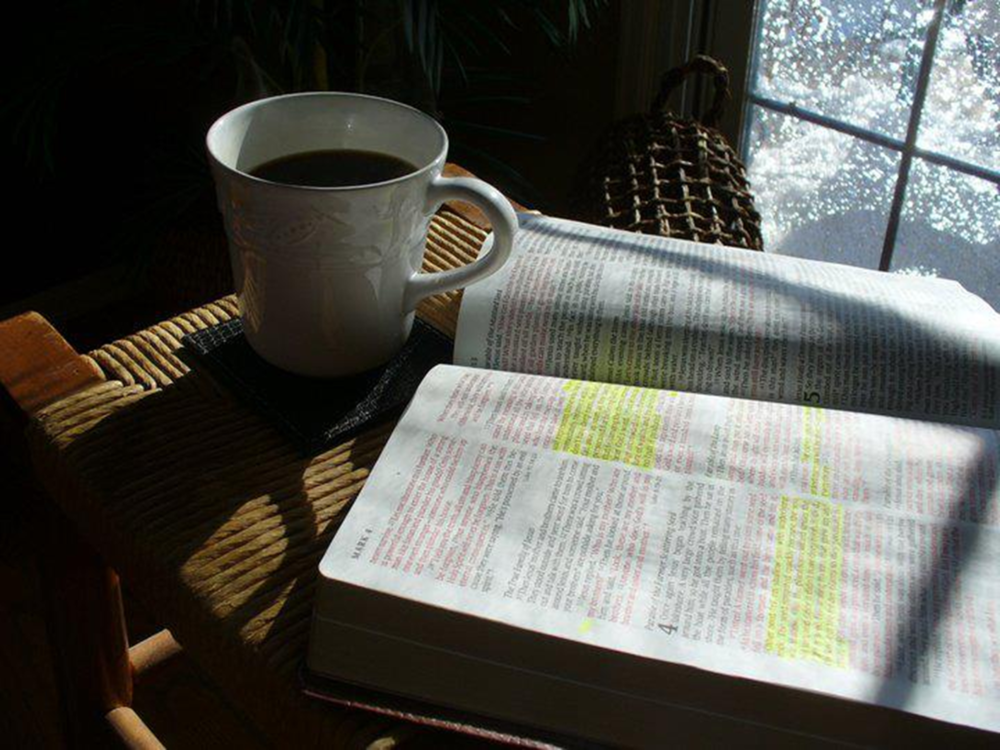
I Will Hear From Heaven

Maybe I shouldn’t be surprised that it occurs seven times. Not that I’m big into biblical numerology, but it just seems right that, if seven is the number of perfection and completion in the Scriptures, then one of the most amazing dynamics ordained by God and graced to man should be covenanted between Solomon and God with a seven-fold repetition.

Every time I approach 2Chronicles 6 and 7 there is a sense of stepping on holy ground. The temple Solomon built for God is complete. The promise God made to David concerning the place of His dwelling is fulfilled. All that’s left is for God to take up residence within this earthly dwelling. “But,” asks Solomon, “will God indeed dwell with men on earth?” (6:18). Solomon, in awe, wonders at how a house he has built can house a God who cannot be contained by “heaven and the highest heaven.”

As Solomon beholds the structure he has made for God’s presence, he knows that the glory which will reside in that house will be but a small representation of the glory which overflows the throne of God’s heavenly dwelling place. And so, on his knees before the altar, with hands stretched out toward the skies, Solomon petitions God six times, “Hear from heaven.” And God responds, a seventh time . . . the time of perfection . . . the time of completion, “I will hear from heaven!”

Solomon, knowing God is holy and that man is not, repeatedly paints scenarios of failure due to sin. From sin as an individual to sin as a nation. From sin among those of Israel to the sin of the foreigner. From sin which results in God’s favor withheld concerning the rains for their crops, to sin which demands God’s judgment poured out as they are taken captive by their enemies and exiled to a distant land. And in each of the six scenarios presented, Solomon asks that when God’s people come to their senses, and turn to heaven and cry out for mercy, then God, says Solomon, hear from heaven.

And upon the completion of Solomon’s petition, the glory of God fills the temple, and the grace of God responds through the ages . . .

. . . if My people who are called by My name humble themselves, and pray and seek My face and turn from their wicked ways, then I will hear from heaven and will forgive their sin and heal their land.    (2Chronicles 7:14 ESV)

That God is able to hear from heaven, while mind-stretching in and of itself, is not the jaw-dropping thing for me this morning. But that God WOULD hear from heaven is what fills me with a fresh sense of amazement. And that God COULD, justly and in perfect holiness, forgive sin . . . and forgive sin . . . and again forgive sin, is what evokes a meditation of wonder and worship.

For under-girding this promise . . . at the foundation of this assurance . . . is the good news that Christ Jesus came into the world to save sinners (1Tim. 1:15). That the blood of Jesus, God’s son, cleanses us from all sin (1John 1:7). That because of the blood, we have confidence to enter the holy places (Heb. 10:19), even when we have transgressed, and call out to our God, “Hear from heaven” — not just six times, but as many times as our failure requires it. And when we do, knowing that because of who Christ is and because of what He has accomplished through the cross, we will hear that seventh, perfect and complete response, “I will hear from heaven.”

Oh what mercy! Oh what grace! Oh what a Savior!

To Him be all glory . . . amen?

Posted in 2Chronicles | Tagged | Leave a comment

I Live When You Stand

I think Paul would have failed in some of the schools of modern thought as to how to find and maintain happiness. He would have flunked the class that taught that we can’t be dependent upon anyone else for our own joy and fulfillment. He would have messed up on the essay question which probed at the connection between our well-being and the well-being of others. He would have failed on “Setting Boundaries 101” and crashed and burned in the class on “Keeping Your Emotional Distance in Order to Protect Your Emotional Well-Being.” For Paul, it seems, much of what made life worth the living was tied to the life that others were living.

For now we live, if you are standing fast in the Lord.   (1Thessalonians 3:8 ESV)

If there is any of Paul’s letters where knowing the context makes such a difference in understanding the letter, it’s Paul’s letter to the believers at Thessalonica. The first part of Acts 17 indicates that Paul was afforded three to four weeks to preach the gospel to those in Thessalonica. He was there long enough to have three Sabbath days speaking in the local synagogue reasoning with the Jews “from the Scriptures, explaining and proving that it was necessary for the Christ to suffer and to rise from the dead, and saying, ‘This Jesus, whom I proclaim to you, is the Christ'” (Acts 17:2-3). And while some of them believed, so did “a great many of the devout Greeks and not a few of the leading women” (17:4). But, incited by the Jews who would not receive the good news, Paul & Co. were run out of town.

Church planted in 3+ weeks. Great! New believers left on their own with but a crash course on the things of the gospel and implications concerning the kingdom. Not so great. Holy Spirit present among the believers? Absolutely. Mature believers in place to “make disciples” and teach them? Not so much.

And so Paul sends a follow up team back to Thessalonica to see how these newborn believers and their newborn church are doing. This first letter then to the Thessalonians, in addition to providing exhortation to these believers to keep on keepin’ on, also provides some pretty interesting insight as to the heart of the apostle as he waited to hear of the health of the church. And within that letter, Paul declares, I live when you stand.

While there is “joy before the angels of God over one sinner who repents” (Luke 15:10), Paul was jazzed when that repentant sinner proved to be a firm believer. More than just being jazzed, it would seem Paul’s vitality was dependent upon knowing that those whom he had seen respond to the gospel were then living out the gospel.

Taking Paul at face value . . . assuming he’s not being overly dramatic . . . Paul indicates that his life’s energy was intricately tied to these believer’s life walk. To know that they were standing fast in the Lord . . . that they were persevering in the faith . . . that they were persisting in the freedom that was theirs in Christ . . . that they were pursuing the kingdom of God . . . was, for Paul, to live. Because they were walking the talk, Paul’s spirit was revived . . . his cup overflowing . . . his joy complete.

Seems like kind of a risky anchor to tether your boat to . . . someone else’s walk with the Lord. But such, it seems, is the heart of the shepherd. Such is the risk one takes who cares not only for the souls of men, but for the glory of God. Such is the roller-coaster ride one gets on when he cares not only for “decisions made” but for disciples grown.

Might God increase those within the body of Christ who care, as Paul did, for the spiritual health of others. That more of us within the church would be dropouts of the world’s school of wisdom which says, “You happiness should be dependent upon you and you alone.” That more of us would be like Paul and know a measure of life’s vitality tied to the spiritual well-being of our brothers and sisters in Christ. That more of us would say with the beloved apostle, I live when you stand.

All because of grace . . . all for God’s glory.

Posted in 1Thessalonians | Tagged | Leave a comment

A Resting Place

Sometimes you just need a resting place. Someplace where the footing is sure and the ground stops shaking. Not necessarily a physical place, but a place of promise . . . a place of assurance . . . a place where, because it is true, everything else can put in context. David knew what it was to experience trial and turmoil. From enemies outside of his house, to enemies within, David had his fair share of trouble . . . his fair share of being on the ropes . . . his fair share of not knowing when, or how, things that were upside down were going to once again be right-side up. But something I read this morning in a song he wrote reminds me that he had a resting place . . . the same resting place I have in Christ.

For though the LORD is high, He regards the lowly, but the haughty He knows from afar. Though I walk in the midst of trouble, You preserve my life; You stretch out Your hand against the wrath of my enemies, and Your right hand delivers me. The LORD will fulfill His purpose for me; Your steadfast love, O LORD, endures forever. Do not forsake the work of Your hands.   (Psalm 138:6-8 ESV)

Don’t know exactly the trouble David was walking in the midst of . . . not sure which of his enemies was unleashing their wrath upon him . . . but in the midst of it, David pens a song of thanksgiving and praise. David bows down before God’s holy temple and gives thanks for His steadfast love and faithfulness . . . he praises the name which God has exalted above all names. Essentially he puts his earthly circumstance within a heavenly context.

David sings of that day when “all the kings of the earth shall give you thanks, O LORD . . . and they shall sing of the ways of the LORD” (138:5). Though he is in a battle right now, David doesn’t lose sight of a future time . . . he looks forward to the day of ultimate triumph. And so, he puts his here-and-now reality within a there-and-then mindset.

And at the heart of it all, because God is who God is, and because God will do what God says he will do, David finds a stability and surety as he touches base again on his resting place . . . “the LORD will fulfill His purpose for me.” And, with feet firmly planted on such solid ground — the promises and purposes of God, David prays according to what he knows to be God’s will concerning that promise, “Do not forsake the work of Your hands.”

I relate. Beyond specific individual trials, the prevailing winds are blowing increasingly against God’s people. Rejection of truth, and opposition to those who say there is a truth, is on the rise. God’s people, generally, are in the midst of trouble. But we know this, the LORD will fulfill His purpose for us . . . and He will not forsake the work of His hands.

For we are His workmanship, created in Christ Jesus for good works, which God prepared beforehand, that we should walk in them. (Ephesians 2:10 ESV)

And I am sure of this, that He who began a good work in you will bring it to completion at the day of Jesus Christ. (Philippians 1:6 ESV)

Sometimes we just need to be reminded of that resting place . . . and then go there. He WILL fulfill His purpose for me.

Not many of us are Davids and are called to what he was called to. But we are all God’s workmanship . . . and we were all created for good works that He has prepared for us to do. And the work of His hands which He has begun in us He has promised to bring to completion.

That’s a resting place . . . that’s solid ground . . . that’s unshakeable footing.

His steadfast love endures forever . . . His Word endures forever . . . His promises endure forever.

All because of grace. All for His glory.

Posted in Uncategorized | Leave a comment

A Source of Rejoicing

In a couple of hours Sue and I head out for a week long couples retreat. Don’t know how consistent I will be able to be with posting this week . . . I’ll try . . . but we’ll see.

This morning, I remember a story a friend once told me of how, when he was a young boy, his mom responded to his complaint about having to go to church. “I’m just doing it out of habit,” he protested to his mom. “Well,” she replied, “at least you’ll be developing a good habit.” I think it’s true of many of us. That at one time we went to gather with God’s people because we knew we should. To not forsake the assembling of ourselves together was commanded in the Word (Heb. 10:24-25), and so we knew we had to. But equally true for many of us, eventually we found ourselves looking forward to Sunday mornings not because we HAD TO go to meeting, but because we GOT TO. As we realized more and more the privilege it was ours to be with God’s people, the anticipation of weekly gathering became just that, an anticipation . . . no longer just an obligation.

As I’m wrapping up 1Chronicles this morning, that same dynamic comes to mind. That point when our tithing is no longer just an act of obedience, but becomes a source of rejoicing.

Then the people rejoiced because they had given willingly, for with a whole heart they had offered freely to the LORD. David the king also rejoiced greatly. (1Chronicles 29:9 ESV)

David’s making final preparation for the building of the temple. Part of that involves installing Solomon as king. And part of that involves gathering materials for the treasury which will be used for the building and financing of the temple. The spoils of war have gone into the treasury. Much of David’s personal wealth has gone into the treasury. And then, David appeals to the people to give to the treasury, “Who then will offer willingly, consecrating himself today to the LORD?” (29:5)

Note David’s perspective. To give of one’s material wealth willingly was an act of consecrating oneself freely. Not just an obligation, but an indication. And when they indicated their love for the LORD through the giving of their treasures, it was a source of rejoicing.

I’ve always thought that the Sunday morning offering should be integrated closely with Sunday morning worship. The sacrifice of our lips, our praise, should be fueled when we’ve had opportunity to offer the sacrifice of our wallets. The people rejoiced as they pondered with David . . .

But who am I, and what is my people, that we should be able thus to offer willingly? For all things come from You, and of Your own have we given You . . . O LORD our God, all this abundance that we have provided for building You a house for Your holy name comes from Your hand and is all Your own.”   (1Chronicles 29:14, 16).

The very act of giving was a powerful reminder that anything they had to give had all come from God’s gracious hand. That any abundance that was theirs from which to give a portion to the LORD, was but a stewardship entrusted to them by a freely giving God. Far from being an obligation, it was a privilege to participate in the work of the LORD. And so their monetary offering was a source of rejoicing.

O’ that we might be people who give willingly. Who, with a whole heart, offer freely. And in the act of giving, find a source of rejoicing . . . and worship exceedingly.

Another indication of God’s abundant grace . . . another opportunity to live for God’s glory.

Posted in 1Chronicles | Tagged | Leave a comment

Time Gods

It’s a pretty good word picture when you pause to reflect on it. Even more, it’s a pretty formative piece of information if it’s true. And, as I think about it, there seems to be a clear choice to make. Decide whether you will trust in the gods of your own making, and thus become like them or, trust in the God who made you, and become like Him.

The idols of the nations are silver and gold, the work of human hands. They have mouths, but do not speak; they have eyes, but do not see; they have ears, but do not hear, nor is there any breath in their mouths. Those who make them become like them, so do all who trust in them!   (Psalm 135:15-18 ESV)

Psalm 135 is a call to God’s people to praise the LORD. A song written encouraging others to sing. To sing for the LORD is good . . . to sing for the LORD is great . . . to sing for the LORD is above all gods . . . to sing because the LORD is sovereign . . . to sing because the LORD saves . . . to sing because His name endures forever.

And dropped in the middle of this call to worship, is a warning. It’s stupid (forgive me girls for using the “s” word) to give the energies owed to God to things fashioned by our own hands.

They might be made of precious metals. They might exhibit the finest craftsmanship. They might reflect their maker with mouths and eyes and ears carved out with the finest detail. But, at the end of the day, these idols, these gods, are inanimate. Not able to speak . . . not able to see . . . not able to hear. Lifeless. Offering nothing beyond their inert existence. And, so goes the song, “Those who make them become like them, so do all who trust in them!” Those who worship such gods eventually lose their senses . . . their lives become just as lifeless as that which they worship.

Not many in my circles who are silver and gold idol makers . . . don’t know anyone who’s a silver and gold idol worshiper. But I am thinking that the precious material with which we craft our idols is our time. Show me where someone puts in their time and I’ll show you what they are trusting in . . . what they are looking to for self-realization and self-satisfaction. And so often, that which they have created with the material of their time, the “time gods” they’ve made, eventually take over and consumes all their time . . . becoming their highest goal . . . becoming what defines them as people. Those who make “time gods” and trust in “time gods” become like their “time gods.” And, at the end of the day, these “time gods” are just as lifeless and just as inert as silver and gold gods. What’s more, these “time gods” eventually displace the time deserving of the God who made time. The God who gives to each man and woman limited time ends up not getting their time.

So we can trust in the gods of our own making — whether they are made with silver, gold, or our time — and eventually become as lifeless as they are, or, we can trust in the God who made us . . . and sent His Son to redeem us . . . and has given His Spirit to transform us . . . and become like Him who desires to impart His divine nature to us. And in doing that, far from some inert, lifeless existence, we can know life and life to the full. These other idols fashioned by our own hands, those other “time gods,” are thieves come to steal, kill, and destroy. But Jesus came so that we might have life and “have it abundantly” (John 10:10).

God give us wisdom to quit making and worshiping “time gods” . . . and, instead, to desiring, above all else, to make the time to worship the true God.

By His grace . . . for His glory.

Posted in Psalms | Tagged , | Leave a comment

Owning It

It kind of comes out of nowhere. You’re reading along in 1Chronicles and David’s riding the wave. Military victory after military victory are recorded from chapters 18 through chapters 20. The chronicler recording twice in chapter 18, “And the LORD gave victory to David wherever he went.” No stopping him. On a roll. And then things come to a screeching halt in chapter 21 . . . “Then Satan stood against Israel and incited David to number Israel” (21:1). And David crashes and burns.

Now numbering Israel, in and of itself, wasn’t wrong if done for the right purpose. In Exodus the LORD tells Moses to take a census and, as part of being counted, each person “shall give a ransom for his life to the LORD when you number them, that there be no plague among them when you number them” (Exodus 30:12). The numbering was for the purpose of collecting an offering for atonement which would be used in the service of the tabernacle. Count the people, collect the offering, service the tabernacle, no plague.

David’s census, however, was for a different purpose. Seems that this king who was dominating the battle field . . . this king who was crushing it . . . that this king just wanted to know how big a number he could boast concerning his military might. David wanted to know just how great David was. He wanted the numbers off the top of his head so he could drop them whenever his ego wanted some feeding. Satan, the adversary, incited David the king to count the people with one of the oldest tricks in the book, pride.

And God calls the man after His own heart (1Sam. 13:14) on it, and strikes Israel according to the word of Moses. You counted . . . no collection . . . therefore consequences.

And here’s what strikes me this morning . . . David owns it.

But God was displeased with this thing, and He struck Israel. And David said to God, “I have sinned greatly in that I have done this thing. But now, please take away the iniquity of your servant, for I have acted very foolishly.”    (1Chronicles 21:7-8 ESV)

We parade pride. David confessed it as sin. We want to rewrite the rules as seems best to us. David said that by ignoring God’s law and taking matters into his own hands he had acted foolishly. We rejoice in our iniquity, David cries out to the God of redemption, “Take it away!”

And, though consequences were suffered . . . though David’s army was depleted by 70,000 men because of his arrogance (21:14) . . . through it all David casts himself upon God’s mercy. He builds an altar . . . offers sacrifices for atonement . . . calls upon the LORD . . . and LORD answers him. Relationship restored . . . all because David owned it.

And David said to God, “Was it not I who gave command to number the people? It is I who have sinned and done great evil. But these sheep, what have they done? Please let your hand, O LORD my God, be against me and against my fathers house. But do not let the plague be on your people.”    (1Chronicles 21:17 ESV)

And I’m reminded that to refuse to own our sin is to hamstring salvation. That, if there is no “bad news” concerning our transgression, there is no basis for the “good news” of His forgiveness. If there is no guilt for having raised ourselves up to be our own gods, then there is no need for grace to address the price to be paid for our iniquity. If there is no basis for a case against us, then there is no benefit from the cross suffered for us.

We need to own it. I need to own it.

If we say we have no sin, we deceive ourselves, and the truth is not in us. If we confess our sins, He is faithful and just to forgive us our sins and to cleanse us from all unrighteousness. If we say we have not sinned, we make Him a liar, and His word is not in us.   (1John 1:8-10 ESV)

Owning my sin . . . confessing my sin . . . knowing my sin will be forgiven by a faithful God because of the once for all sacrifice of His beloved Son.

Owning it. Even that is by God’s grace . . . and for God’s glory.

Posted in 1Chronicles | Tagged , , | Leave a comment

Who Am I?

So different . . . and yet so much the same. In time we are separated by three millennia. In terms of relative rank he was a king of a great nation, I was once the boss of a pretty great group of people. In terms of accomplishments, he conquered the world and boasts a resume still spoken of, while I have pretty much just tried to live a peaceful and quiet life. So different, King David and I. And yet, so much the same. Whoever we are . . . whatever we’ve done . . . all that we have been blessed with . . . it all beckons but one question, “Who am I?”

Then King David went in and sat before the LORD and said, Who am I, O LORD God, and what is my house, that You have brought me thus far?     (1Chronciles 17:16 ESV)

David has just been informed by God, through Nathan the prophet, that God has determined to “build a house” for David. Though it was David’s desire to “upgrade” the dwelling place of God’s glory from a tent to a magnificent house of cedar and gold, the Sovereign of Israel delays any temple building program and promises, instead, that He is undertaking a kingdom building program.

The LORD of hosts reminds David that He had chosen David to be promoted from the pasture, from following the sheep, to be prince of God’s people Israel. Reminds David that He has been with him throughout his rise to power. And then informs him, “You ain’t seen nothing yet!” God’s plan was to make David’s name great . . . to make David’s throne great . . . to establish his kingdom forever. Partially fulfilled in David’s son, Solomon. Yet to be fully realized at the return of David’s greater son, Jesus the Messiah (17:7-14).

And as David processes the prophet’s words, he enters the tent . . . squats before the curtain shielding the holy of holies . . . quiets himself before the LORD of heaven and earth . . . and, I imagine, whispers, “Who am I . . . What is my house? . . . That You have done so much and still promise so much?”

And as I eavesdrop on David’s sacred moments of reflection, though we are so different, I can’t help but think we are so much the same.

The Spirit reminding me that I too have been chosen . . . not to be the king of a mighty nation, but to be the adopted son of a mighty God. Not promoted from a pasture of sheep, but raised up from the mire and pit of sin. Not given a throne on earth, but seated together with Christ in heavenly places. God having been faithful since I first heard Him calling my name . . . promising that the work He has begun in me He will complete (Php. 1:6) . . . testifying by His Spirit with my spirit, “And you ain’t seen nothing yet!” God’s plan is yet to be fully realized. There is yet a new name to be received . . . a glorious throne to worship before . . . a wondrous kingdom to receive, no longer by faith, but by sight.

And so, I too sit before God. Not outside the curtain, but having entered the holy of holies through my prayer closet by the blood of the Lamb. Being still . . . knowing He is God . . . and whispering, just like David did, “Who am I . . . what is my family . . . that you have done so much for us?” That you would send Your Son to die for our sin? That you would, in Your persevering grace, woo us to Yourself through Your Spirit . . . and continue to lovingly call us back when we stumble and lose our way? That You would not only redeem us and rescue us from the judgment we deserve, but that You would also clothe us with the righteousness of Your Son and promise us a portion in His eternal inheritance? Who am I?

All because of Your grace. All for Your glory.

Posted in 2Chronicles | Tagged | Leave a comment

The Splendor of Holiness

I’ve referred to it as “the hidden psalm” in the past. There’s a few of these songs tucked within the pages of Scripture outside of the Bible’s main hymnal, the Psalter. But this one, I think, always surprises me the most when I come upon it. Maybe because it’s almost like God has not only hidden it within 1Chronicles, but, in a sense, made it so “difficult” to get to. In order to get here, you’ve had to work your way through pages and pages of names — to be honest, pretty dry reading and not for the faint of heart. Next to Leviticus, I wouldn’t be surprised if the first chapters of 1Chronicles might be the next most common place for people to bail out on their “Through the Bible in a Year” reading plan. But working your way through the dense brush of the early chapters of Chronicles is worth it if only to come across this treasure.

The song David gave the singers to sing appears to be a remix. You read this hidden psalm and much of it sounds familiar. It’s a composite of other songs you’ll encounter in Psalms. And the one line in this song which ignites my soul is a line I’ve encountered twice already this year as I’ve been reading through the psalms. First, back in February when Psalm 29 was on my reading plan. Then, in late April or early May when I read Psalm 96. And now, for the third time this year, the Spirit says . . .

Ascribe to the LORD the glory due His name;
bring an offering and come before Him!
Worship the LORD in the splendor of holiness.
(1Chronicles 16:29 ESV)

Worship the LORD in the splendor of holiness! Is there a command to obey more glorious? Is there an occupation of the soul more wondrous? Worship the LORD . . . and do so in the splendor . . . the beauty . . . the adorning glory . . . of holiness.

In this divinely ordained activity both parties — He who is to be worshiped and the one who is to do the worshiping — are “dressed up with some place to go.”

The object of our worship, Jehovah, the Existing One, is to be approached in the splendor of His holiness. Our God is Holy, Holy, Holy. He defines the term. Set apart alone in His glory, He so defines what it is to be sacred that to come into His presence is to instinctively fall on one’s face. He lives in unapproachable light and yet the songwriter calls to the people, “come before Him!” — the splendor of His holiness also encompassing the manner in which He has torn the curtain of the holy of holies from top to bottom in order that all who believe might enter before Him and before His throne of grace.

And that brings us to us . . . the worshipers of the Object of our worship. We come in the splendor of our holiness. Not that which is of our own making, but that of Another which, at great cost to Him, has been given to us freely. We have been set apart and declared holy. Having been consecrated according to the will of God the Father, with the blood shed for our sin by God the Son, through the life-giving, holiness-imparting active agency of God the Spirit, we seek to obey David’s command to “ascribe to the LORD the glory due His name” adorned in our own beautiful holiness . . . in the splendor of that which has been given us by grace, through faith.

The splendor of holiness. What privilege it is to be invited to come before our Holy, Holy, Holy God as His holy people that we might bring an offering of praise?  Praise birthed in the hearts of redeemed souls and well-pleasing to the ears of Him who has bought us for Himself. It is great privilege indeed!

Worship the LORD in the splendor of holiness . . . His and ours.

All because of amazing grace . . . all to the glory of an awesome God!

Posted in 1Chronicles | Tagged | Leave a comment

Just Like Jesus

A thought out of Colossians has my mind spinning this Monday morning. If I’m reading it right, it’s a truth I’ve never really thought about a lot. A reality that I’d probably do well to have more at the forefront of my thinking rather than mired in some deep recess of mind. The thought being that I’m just like Jesus.

Ok . . . so not in every way . . . but He’s working on that. The Word says that God has predestined me “to be conformed to the image of His Son” (Rom. 8:29). To forming me, and all that’s within me, into the very nature of Jesus — second Person of the Trinity . . . come to earth, fully man and fully God. That’s the work of sanctification begun by faith, continuing by faith, and to be fully realized one day, by faith. A work not of my own doing . . . though requiring my cooperation . . . but of the Spirit’s doing. The same Spirit which raised Jesus in resurrected life . . . the same Spirit which gave me new life by His power, through regeneration. So, while I’m not there yet, there is one way in which I am exactly like Jesus was when He was on earth. My glory is hidden.

If then you have been raised with Christ, seek the things that are above, where Christ is, seated at the right hand of God. Set your minds on things that are above, not on things that are on earth. For you have died, and your life is hidden with Christ in God. When Christ who is your life appears, then you also will appear with Him in glory.   (Colossians 3:1-4 ESV)

When Christ came to earth He emptied Himself of His heavenly glory (Php. 2:6-7). In order to become the atoning sacrifice for all sin, as well as a faithful High Priest for all mankind, Jesus needed to be like His creation in all ways . . . fully associating with them as “brothers” (Heb. 2:17) . . . thus “taking the form of a servant, being born in the likeness of men” (Php. 2:7). While Jesus walked this earth His glory was hidden. His true nature was concealed . . . it escaped notice . . . in many ways He blended into the fabric of human existence. Me too. In that way, I’m just like Jesus.

Not that I divested myself of glory when I was born. In fact, when I was born, I was anything but glorious. Like David, and every other man, woman, and child every born, “I was brought forth in iniquity, and in sin did my mother conceive me” (Ps. 51:5). But something happened . . . in my case, at the age of 19 . . . when the glory came down . . . literally. God in His grace revealed my need to me . . . and in His grace showed my His provision for that need . . .and in His grace gave me the gift to believe and to receive that provision. And at that moment when I first believed . . . BAM!!!! . . . the glory came down.

Forgiven of my sin through the finished work of Christ on the cross. Credited with a righteousness not my own, because of Jesus’ perfect and transferable life. And given a glory that will be revealed on that day when Christ, who is my life, will appear.

Paul says that this body of my mine which was sown perishable will be raised one day imperishable. Though it is bound today by weakness, one day it will rise in power. This natural body is destined to give way to a spiritual body. What was sown in dishonor, and is now being transformed into conformation with the likeness of Christ, will one day be “raised in glory” (1Cor. 15:42-44).

But our citizenship is in heaven, and from it we await a Savior, the Lord Jesus Christ, who will transform our lowly body to be like His glorious body, by the power that enables Him even to subject all things to Himself.
(Philippians 3:20-21 ESV)

Like treasure hidden in a field (Matt. 13:44), though not seen beyond heaven today, we are of great worth in His sight — God having paid the price of His blessed Son in order to purchase us. And one day that which is now a “hidden treasure,” hidden in Christ, will be excavated and elevated and put on display for eternity as trophies of His grace. The glory is hidden . . . just like Jesus. But the glory will be revealed . . . just like Jesus.

If then you have been raised with Christ . . . and we have, Praise God! . . . then seek the things that are above, dear saint. Set your minds on where your citizenship truly resides. And wait for the glory to be revealed . . . His and yours. We WILL appear with Him in glory . . . and we WILL BE glorious! Just like Jesus. Count on it.

Because of His abounding grace . . . and for His eternal glory . . . amen.

Posted in Colossians, Philippians | Tagged , | Leave a comment

Filled with His Fullness

We had a guest speaker last Sunday. Some might classify him a bit “old school.” He was led of the Lord to exhort the saints as to their walk based on the different “walks” in Ephesians. Practical, nuts and bolts “do this” type of message. A friend, who struggled a bit with the nature of the message, afterward said to me, “Rather than tell them what to do, why didn’t he tell them who they are in Christ?” Fair enough. I think the “practical” needs to be in the context of the “positional.” That exhortations “to do” need to be in the context of a response as to what’s already been done. That what we should be needs to be enveloped within who we already are.

For in Him the whole fullness of deity dwells bodily, and you have been filled in Him, who is the head of all rule and authority.    (Colossians 2:9-10 ESV) 

Glorious truth concerning Christ. In Him the full nature and essence of deity dwells bodily. He is the embodiment of the Godhead. Hebrews says, “He is the radiance of the glory of God and the exact imprint of His nature.” Think God . . . think Jesus. Think Jesus . . . think God, fully God.

Noodle on that for even a moment and the awe-o-meter goes off the scale as you consider Jesus. Jesus the babe in the manger . . . Jesus the man who had no place to lay His head . . . Jesus the teacher who most rejected . . . Jesus the master who patiently poured Himself into a rag-tag bunch of followers . . . Jesus the object of disdain and ridicule by the religious elite . . . Jesus the blood-sweating prayer at Gethsemane . . . Jesus the mocked, beaten, and crucified . . . Jesus the buried . . . Jesus the once-for-all atoning sacrifice for my sin . . . Jesus in whom the whole fullness of deity dwells bodily. Facedown time!

Now throw in the extension . . . “and you have been filled in Him.”

He is filled with fullness of deity and we have been filled in Him! What do you do with that?

First, meditate on it. In Him, and through His blessed Spirit in me, I have been immersed within the divine. Complete in Christ . . . that’s who I am. Counted righteous as He is righteous. Declared holy as He is holy. Given authority, as His is all authority. And keep on adding to the list. What is Christ and we are not filled with that fullness?

Second, worship because of it. As we consider our place in Him, offer up the sacrifice of praise, the fruit of our lips, to Him. Just as Christ came to glorify God, so those filled with the fullness of God should rush to declare God’s glory and proclaim His wonderful ways and works. 

And then, as our brother sought to remind us this past Sunday, we should walk as those completely complete in Christ . . . as those filled with His fullness. Not in our own power, but in the power of the risen Christ who lives within us and so desires to live through us. Walking in a manner worthy as His sanctifying work in our lives increases our desire that our practice would come more and more in line with our position — all by the grace of God and through the power of His indwelling Spirit. Not that we become more godly, but that we reflect more the godliness that we have been filled with. Not that we manufacture our own godliness but that we exercise the godliness imputed to us through the finished work of Christ.

Filled in Him who is the fullness of deity. Not because of who we are or what we’ve done but in spite of who we are and what we’ve done. All because of who He is . . . all because of what He’s done.

And you, who were dead in your trespasses and the uncircumcision of your flesh, God made alive together with Him, having forgiven us all our trespasses, by canceling the record of debt that stood against us with its legal demands. This He set aside, nailing it to the cross.    (Colossians 2:13-14 ESV)

Filled with His fullness. To Him be all glory and praise forevermore. Amen.

Posted in Colossians | Tagged | Leave a comment