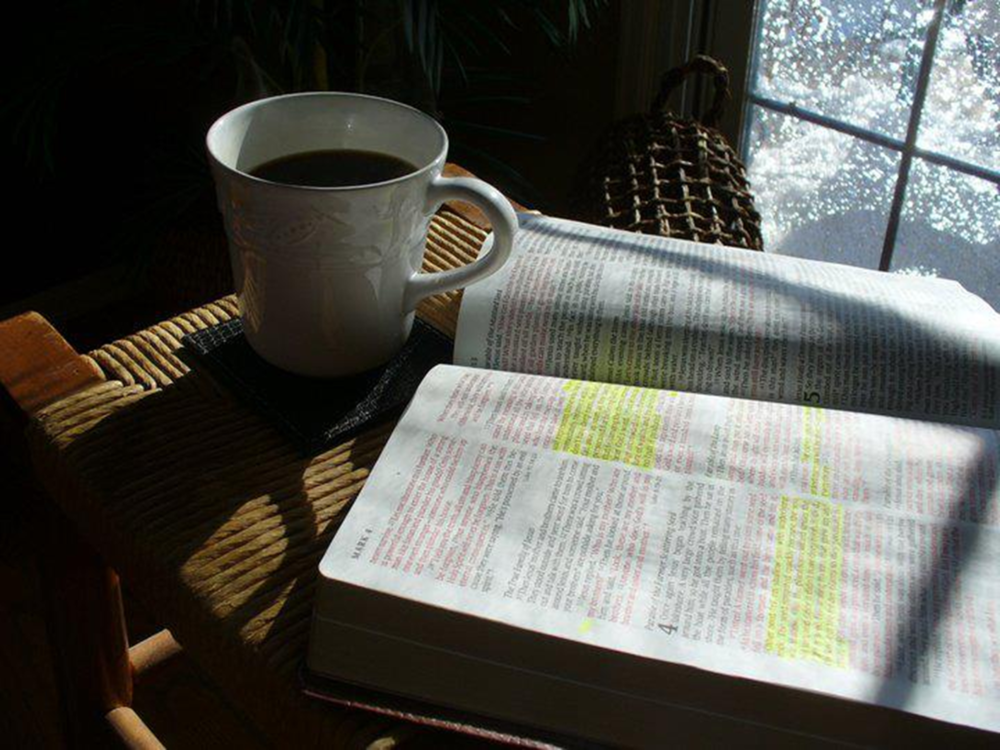
This Life

The church was on a roll! The gospel was being preached, and the gospel was being practiced. Those who believed were of “one heart and soul,” demonstrated as everyone of them held loose to their material possessions and were readily redistributing it as others had need (Acts 4:32). The apostles in their midst declaring this radical fellowship to be an expression of the radical redemption found in Christ–signs and wonder regularly accompanying their message as a witness to its veracity. As a result, those who were yet to believe were drawn to this authentic and dynamic community and its message–“and more than ever believers were added to the Lord, multitudes of both men and women” (5:12-14).

So probably not surprising that with great momentum there arose great opposition. The high priest and his party of Sadducees (sad-you-see because they didn’t believe in the resurrection) flexing some self-serving muscle as they put in prison those who were proclaiming the gospel.

And what’s grabbed me this morning is something said to these messengers while they were being sprung from their cell. Words spoken, actually two of the words spoken, during a prison-break of the divine kind. This morning, I’m chewing on the many facets of “this Life.”

But during the night an angel of the Lord opened the prison doors and brought them out, and said, “Go and stand in the temple and speak to the people all the words of this Life.”

(Acts 5:19-20 ESV)

This Life. That’s how they were to talk about Christianity. That’s how they were to present the gospel. Not as some form of religion. Not as some competing philosophy. Not as one of many faith-based worldviews. But as a way of life.

Life sourced in the resurrection of Jesus from the dead. Life conquering sin and death–the victory’s foundation, Another’s righteousness and immortality. New life in Christ, old things having passed away. Eternal life, but life everlasting which we begin to experience now. Life to the full, the abundant life. Life founded on the word. Life energized by the Spirit. That’s this Life.

Not just a bunch of words, but a Way. Beyond the promises, a Practice. More than doctrine, lived out as a Demonstration.

Speak to the people, the angel said, tell them of this Life.

If my faith doesn’t impact my walk have I really come to know this Life? If the gospel is just some “good news” to be shared but isn’t really a GPS to be followed, then is it only “good” as insurance for the future with little impact on the here-and-now? Is the “power of God for salvation” only powerful for the salvation to come with little ability to impact the salvation we are currently trying to work out? Is the righteous of God by faith simply something we’ve put on to allow us into heaven’s gate someday with little practical benefit for walking out our door everyday?

Tell them about this Life, the angel said to the apostles. Show them this Life by  experiencing this Life, the Spirit whispers through His word.

And this is the testimony, that God gave us eternal life, and this life is in His Son.

(1John 5:11 ESV)

This Life by His grace. This Life for His glory.

Posted in Acts | Tagged , , , , | Leave a comment

The Abundance

Good thing I got a head start on my reading plan last week, ’cause I didn’t necessarily anticipate not getting into routine until the end of the first week of 2018. But a quick trip to the homeland consumed with kids and grandkids has a way of doing that to you. Great way to start the New Year . . . but glad to be back “in the saddle” this morning.

Hovering over Psalm 5 this morning . . . and chewing on what seems to me to be a definition of grace from the songwriter’s prayer.

But I, through the abundance of Your steadfast love, will enter Your house.   I will bow down toward Your holy temple in the fear of You.

(Psalm 5:7 ESV)

How’s that for a definition of grace: the abundance of God’s steadfast love. The King James translates it “the multitude of Thy mercy.” The NIV’s similar, “Your great mercy.” And the NASB, “Your abundant lovingkindness.” Translate the noun how you will, but the adjective has the same idea, it was out of the overflow of God’s love, mercy, and kindness, that David could enter His house.

That David could even draw near God’s holy temple was because of the abundance. That he knew God well enough to bow in reverent awe, due also to the abundance.

David would confidently cry out in petition in the morning; believe that the Almighty would give ear to his groanings; be confident that God would respond to his voice; all because of the abundance. Because of God’s grace.

And if proximity and petition is evidence of the abundance, how much more presence?

Through the blood of Jesus we draw not just near the place where the glory dwells, but we confidently enter into the holy of holies. The finished work of Christ sufficient to rend the curtain from top to bottom. The once for all sacrifice of Christ able to cleanse completely, taking garments stained with sin and making them as white as snow. The perfection of Christ credited to the account of all who own Him as Savior and Lord, so that we enter clothed in His righteousness–holy, even as He is holy. That’s the abundance of God’s steadfast love. That’s grace.

If David was picking up on the abundance, how much more should I? If God’s unmerited favor for the king of Israel moved him from meditation to exultation, if it took his morning prayer and turned it into meaningful praise, if it converted his reflection into rest, then how can it not do the same for those who have known, to a whole next level, “the grace of our Lord Jesus Christ, that though He was rich, yet for your sake He became poor, so that you by His poverty might become rich” (2Cor. 8:9)?

Rich.  That’s us as believers. Those who know the abundance. Participants in God’s overflowing favor. Blessed with every spiritual blessing in heavenly places, the riches of His grace lavished upon us (Eph. 1:3, 7-8).

All according to the abundance of His steadfast love.

All because of grace.

All for His glory.

Posted in Psalms | Tagged , , , , | 1 Comment

The Lifter of My Head

What’s the relationship between sorrow and sagging? When was our countenance wired to fall as a response to becoming aware of our failure? Why, when we’re despondent, does the chin droop? How come the neck naturally bends forward when bad things happen? Where’s the connection between a heavy heart and the need to stare at our feet? Don’t know. You’d almost think there’s a physiological cause-and-effect between feeling down and the ability to hold your head up.

But what I do know, what I was reminded of this morning as I read the third Psalm, is who can lift the head.

But You, O LORD, are a shield about me,
. . . my glory, and the lifter of my head.
I cried aloud to the LORD,
. . . and He answered me from His holy hill. Selah

(Psalm 3:3-4 ESV)

Jehovah, the Existing One, is the One we can know as The Lifter of My Head.

David was on the run from his son, Absalom. Apart from fearing for his life, there was enough shame and blame to deal with as he thought of what he could have done, and should have done, to have avoided this mess. He could draw a pretty straight line between the current dysfunction in his home and his failure to deal with past sin in his home (2Sam. 13-15). And He didn’t have to think too long and hard before reminding himself that his failure to act was tied to his failure to have led by example. Bathsheba an ever present reminder of his own moral shortcoming and compromise (2Sam. 11-12). Uriah’s grave always whispering, “Who are you to insist your kids take the high road?”

So now, as he flees from Absalom his son, as his enemies rise against him, as the doubts surface questioning if God is still for him, David cries out to the LORD. With intense stress and struggle causing his chin to attach itself firmly to his chest, David calls out to The Lifter of My Head.

And his head is lifted.

He’s reminded that his failure has been dealt with by God’s gracious provision. That God does not deal with us according to our sins, but according to His steadfast love toward those who fear Him. That “as far as the east is from the west so far does He remove our transgressions from us” (Ps. 103:10-12).

He recalls that his future had been determined by God’s unfailing promise. That he had been promised a throne. That God had said He would establish his kingdom and that He would make his house forever sure (2Sam. 7:16). And that the promise was not founded on who David was, but on what God had determined to do (2Sam. 7:18). It’s prevailing power independent of what David did and assured because of who God is.

He regains his equilibrium as he knows again the strengthening of the inner man through God’s ever abiding presence. That the LORD is a shield about him–an ever present help in time of need. That salvation belongs to the LORD–salvation in the past, salvation for the future, and salvation sufficient to deal with the circumstance of the present.

And the shoulders pull back. The neck straightens up. The chin comes off the chest. And his eyes look heavenward as The Lifter of My Head lifts his head.

“Written for our instruction, that through endurance and through the encouragement of the Scriptures we might have hope” (Rom. 15:4).

Such is the abundant and abiding grace of the One we can call The Lifter of My Head.

And with faces He as turned heavenward, we’ll give Him all the glory.

Amen?

Posted in Psalms | Tagged , , , , | 1 Comment

What God Has Actually Said

Brilliant, really. How does a beast of the field take on the God of heaven? How does a serpent go head to head with the Sovereign? Sow some confusion, mix in a bit of doubt, and let the sensual nature of the flesh take it from there.

Hovering over the first few verses of Genesis 3 this morning. Noodling on what went wrong. How that which was created so “very good” went south so very fast.

While I marvel afresh at God’s grace at still entering the garden even after Adam and Eve’s rebellion; while I wonder at the Omniscient’s pursuit of those who tried to hide from His presence as He calls out to them, “Where are you?”; while I fall deeper in love with the God who, rather than laugh in derision at their pathetic attempt at masking their sin and their nakedness with fig leaves and loin clothes, makes the call to shed blood that He might make for them an acceptable covering; I also take heed. Noting how important it is to know what God has actually said.

Now the serpent was more crafty than any other beast of the field that the LORD God had made. He said to the woman, “Did God actually say, ‘You shall not eat of any tree in the garden’?”

(Genesis 3:1 ESV)

That’s how it started. With a question? A question that sounded sincere enough, but twisted just enough, to sow confusion in Eve’s mind. A question that appealed to human reasoning but was meant to challenge God’s right to rule. God had NOT said they weren’t to eat of “any tree” in the garden. In fact He had said they could “surely eat of every tree of the garden” . . . just not the tree of the knowledge of good and evil, “for in the day that you eat of it you shall surely die” (2:16).

So that’s kind of confusing–eat of every tree, but not really every tree? Which did God really mean?

And once this image-bearer of God was destabilized by confusion as to the word of God, then it was much easier to cause her to doubt the way of God. “You will not surely die,” hisses the deceiver, “I’ll tell you what God really meant . . . ” And from there it’s all downhill.

Eve leans to her own understanding as informed by the enemy. She allows her eyes to usurp her ears, desiring what looked good for food more than heeding what God had said would be good for them. She gives into a desire to be wise like God rather than be led by a holy determination to be true to God.

So she eats. Then he eats. And then their eyes were really opened, “and they knew they were naked.”

And it all began with, “Did God actually say?” Makes me think it’s might be kinda’ important to know what God has actually said.

If Eve had taken her confusion to her next encounter of the divine kind in the “cool of the day”, if she had submitted her doubt to God’s direction, then perhaps she wouldn’t have been left in the tenuous situation of acting based on what she perceived as “a delight to the eyes” and what she thought should be “desired to make one wise.”

So, can we really know what God has actually said? I’m thinkin’ . . .

It’s why I feel such a need to open the Book more days in the week than not. Why I cling to the promise that the Author of Scripture is also my abiding and accessible Teacher, the Spirit of God indwelling me. Why I trust that the Spirit’s active agency of illumination is, in fact, active when I read my bible. Why I believe that I can have the mind of Christ, knowing what God has actually said, as I’m conformed increasingly into His likeness through the transformation that comes by the renewing of the mind through the reading of His Word.

If I can know what God has actually said . . . and I’m thinking I can . . . then it just seems it might save me some bad decision making down the road.

Only by His grace. Always for His glory.

Posted in Genesis | Tagged , , , , , | Leave a comment

Next Time

Started in on my reading plan for 2018–always like to be a few days ahead . . . creates a bit of buffer and reduces the risk of getting behind.

Feels good to crack open a new Bible, ready myself with my colored pencils, and anticipate the blessing God promises those who delight in His word (Ps. 1:1-2). That blessing being less about what I receive and more about Who I experience.

Every year I become more and more convinced that there is no more sure way to have an encounter of the divine kind than to open the Book. Not only is it God-breathed and God-revealing, but it is also God-engaging as the Holy Spirit’s active agency is present as He guides me into truth (Jn. 16:13). As I read, I realize increasingly that it’s not my cognitive processes that bring the Scriptures to life, but God Himself who brings them to light through the supernatural dynamic of illumination by His Spirit who lives in me.

And this morning, I’m thinking about Jesus’ second coming . . . and the fact that the next time won’t be like the first time.

And when [Jesus] had said these things, as they were looking on, He was lifted up, and a cloud took Him out of their sight. And while they were gazing into heaven as He went, behold, two men stood by them in white robes, and said, “Men of Galilee, why do you stand looking into heaven? This Jesus, who was taken up from you into heaven, will come in the same way as you saw Him go into heaven.”

(Acts 1:9-11 ESV)

Hopefully the afterglow of Christmas has not yet dissipated. The wonder of Immanuel, God With Us, is still with us. All the cool gifts we’ve given and received haven’t overshadowed the greatest Gift. The main thing still being the main thing.

And we still marvel at His lowly birth. Divesting Himself of heavenly glory, cloaking His Almighty power in flesh, humbling Himself to being born of woman, Jesus came quietly into the world to save people from their sins. Relatively little fanfare. Most not knowing anything of what happened that night.

But it’s not gonna be like that the next time.

Next time, He comes in the clouds. There’ll be no confusion as to where He’s from–no debates about Bethlehem, Nazareth, or Egypt. Just as heaven received Him, so heaven will reveal Him.

Next time, He comes with great fanfare–with the voice of an archangel, and with the sound of the trumpet of God. And the dead in Christ will rise first, followed by those still living who have patiently and faithfully waited for the blessed hope and His glorious appearing (1Thess. 4:16-17, Tit. 2:12-13).

And next time He comes, it won’t be just a few around a manger who ponder the arrival of such a meek and lowly Savior. Instead, when He comes again, every eye will see Him (Rev. 1:7) and He will be robed in power and majesty (Mt. 24:30). The One born king of the Jews the first time, will be recognized as the King of Heaven next time.

Just as we savor the awe of His birth, we should taste the anticipation of the promise of His coming.

Next time, the Son of Mary will come in power as the Son of Man. And we shall behold Him! Amen?

By His grace. For His glory.

Posted in Acts | Tagged , , | 1 Comment

Nothing But Temple

Coming to the end of my reading plan for 2017. Minor prophets with major messages. A God who breaks the sound barrier in order to further refine a man who has already been heaven’s boast as one of the elite of earth–a servant of God like no other, “a blameless and upright man, who fears God and turns away from evil” (Job 1:8). And an encounter of the divine kind on a beach where, after breakfast together, the Great Shepherd commissions a flaky fisherman to feed His sheep.

And then there’s the revelation of a new heaven, and a new earth, and a new city. And what captures me this morning isn’t so much what’s there but what’s not there.

I hover over the promise that tears will be wiped away and death shall be no more. That mourning is done with, pain is a experience of the past, and crying is one of the “former things” that have passed away (Rev. 21:4).

But what’s really got me noodlin’ this morning is the declaration of no temple.

And I saw no temple in the city, for its temple is the Lord God the Almighty and the Lamb. And the city has no need of sun or moon to shine on it, for the glory of God gives it light, and its lamp is the Lamb.

(Revelation 21:22-23 ESV)

No temple. No structure built expressly for worship. No particular place to gather and offer the sacrifice of praise and the fruit of our lips. No one house where the glory would fall and the cloud would descend. No temple. Because it’s nothing but temple.

Where on earth He dwelt among His people, in the new economy His people dwell in His midst. The glory no longer needing to come down, but the glory every present because we have been taken up. Living in a city that has no need for sun or moon. Where it’s always day with an ever present light and an always shining lamp. The glory that once resided behind a curtain in the holy holies . . . the glory what once occupied a temple of living stones built into a spiritual house inhabited by the Spirit of glory . . . that glory now the very light of our existence.

We’ll be ever encountering glory. Not in a temple, though. ‘Cause in that day it will be nothing but temple.

It’s the stuff of eager expectation. It’s the imagery that says it’s gonna be worth it all. It’s the hope of glory. Ever present, always shining, all consuming glory.

Nothing but temple.

Soon to be ours because of grace. Soon to be ours for His everlasting glory.

Amen?

Posted in Revelation | Tagged , , , | 1 Comment

Hand On Mouth

Sticks and stones may break my bones . . . but when the Almighty’s name-calling, it’s gotta hurt! Not that God harmfully throws down insults from heaven, but the One who searches the soul and spirits of men will reveal the thoughts and intents of the heart (Heb. 4:12). Not that it should condemn, but that it would be a catalyst for repentance. So, when Job hears God call Him out, there’s only thing to do . . . hand on mouth.

And the LORD said to Job: “Shall a faultfinder contend with the Almighty? He who argues with God, let him answer it.” Then Job answered the LORD and said: “Behold, I am of small account; what shall I answer You? I lay my hand on my mouth. I have spoken once, and I will not answer; twice, but I will proceed no further.”

(Job 40:1-5 ESV)

God has been schooling Job on the inner-workings of creation. Using the brush of what can be seen and known by men, He has been painting a picture of power and purpose that transcends the world of gravitational pull. And He pauses to allow Job a chance to chime in.

Job’s been wanting a one-on-One, and now’s his chance to point out a thing or two to the Almighty. But in turning the floor over to Job, God calls him out, “Speak up, faultfinder.”

Faultfinder. Ouch! Seems harsh. What’s stated explicitly in the ESV is hinted at in the NIV and NKVJ: “Shall the one who contends with the Almighty correct Him?” But I guess if you’re ready to correct the Almighty, it’s because you’ve weighed God in the balances and found Him wanting. You’ve found fault. You’re a faultfinder.

There’s a line, it seems. A line between honestly asking questions and arrogantly demanding an audience. Between humbling confessing confusion and insolently calling out the Creator. Job crossed that line. And God loved Him too much to let him stay there. “What do you want to discuss now, faultfinder?”

And Job’s response is the right response. His answer the only answer. “I lay my hand over my mouth.”

No argument. Just awe. Nothing to counter. Just contrition. No rebuttal. Only repentance.

The words have died up. The lesson has been learned. God is God, and nothing less. Man is man, and nothing more.

Sometimes the right response is no response at all. There’s a point where God speaks and ours is simply to listen and acknowledge truth. To confess He is right, and we have been in the wrong.

Not that He might prove Himself just before us–God has nothing to prove to anyone–but that we might be restored.

Humble yourselves before the Lord,
and He will exalt you.   (James 4:10 ESV)

Hand on mouth. Sometimes, when you don’t what to do, it’s the right thing to do. When there’s nothing left to say, it’s best to say nothing.

Be still, and know that I am God.   (Psalm 46:10 ESV)

It’s his kindness that leads us to repentance (Rom. 2:4).

Such is grace. To Him be all the glory.

Posted in Job | Tagged , , | 1 Comment

The Spirit Who Remains in Our Midst

It’s not a hard ask if the answers are good. Digging deep works fine if you’re pretty sure you’re gonna uncover gold. But going introspective can be risky if you’re not sure you’re gonna like what you find. Or, worse yet, you’re not sure God’s gonna like what you find. So there’s a sense of foreboding as I chew on Haggai’s repeated command this morning.

Now, therefore, thus says the LORD of hosts: Consider your ways. You have sown much, and harvested little. You eat, but you never have enough; you drink, but you never have your fill. You clothe yourselves, but no one is warm. And he who earns wages does so to put them into a bag with holes. Thus says the LORD of hosts: Consider your ways. Go up to the hills and bring wood and build the house, that I may take pleasure in it and that I may be glorified, says the LORD.

(Haggai 1:5-8 ESV)

The work on rebuilding the temple had stalled. Their focus had shifted. The going had gotten tough and they had got going–each to building their own homes and tending to their own affairs. Their priority had shifted from God’s glory to their own good. The labors were spent on that which provided very little return while the house of the Lord remained in ruins. So five times in Haggai’s short letter he exhorts the people to consider.

Consider. Take a breath and look around. Give careful thought to your ways (NIV). Look at what’s happening (NLT). Take a good hard look (MSG). Set your heart to know your heart.

Hard ask if you’re not sure what to do with the awareness. Or, worse yet, if you know what to do with it but you’re not sure you can.

Wasn’t really sure I wanted to hover over this too long. No doubt it’s a command to obey . . . .but maybe tomorrow.

And then this jumped off the page:

Yet now be strong, O Zerubbabel, declares the LORD. Be strong, O Joshua, son of Jehozadak, the high priest. Be strong, all you people of the land, declares the LORD. Work, for I am with you, declares the LORD of hosts, according to the covenant that I made with you when you came out of Egypt. My Spirit remains in your midst. Fear not.

(Haggai 2:4-5 ESV)

Consider your ways and then be strong. Consider your ways and then work it out. Consider your ways and fear not. For I am with you according to promise, says the Lord. My Spirit stands fast in your midst. He will not cease to hold His ground among you.

That’s how we take the risk of going internal. That’s how we deal with whatever we find when we dig deep. Believing the promise. Trusting in His presence.

Whatever we find is no surprise to the Father. What needs to be done about it has already been accomplished by the Son. And the path forward is empowered by the Spirit who remains in our midst.

The gospel is the power of God for salvation. Salvation past, when our former transgressions were forgiven through the finished work of the cross, and salvation present, as we are increasingly freed from the power of sin through the abiding Spirit within us and the unchanging promise that the work He has begun in us He will finish in us (Php. 1:6).

And the gospel is the power because “in it the righteousness of God is revealed from faith for faith, as it is written, ‘The righteous shall live by faith'” (Rom. 1:17). The righteousness of God imputed by faith. The righteousness of God imparted by faith. Having been declared righteous in Him, He has determined that we should made righteous through Him. Conformed to the image of Christ by the indwelling Spirit of Christ.

Not that it’s a straight line. Way too many detours and distractions along the way. But along the way He continues to call us to take the risk of considering our ways so that He might continue to remind us of the truth of His promise, and to show us the reality of His presence, as He redeems and redirects our ways.

Be strong. Work, for I am with you. My Spirit remains in your midst. Fear not.

The exhortation of grace. That He alone might receive the glory.

Posted in Haggai | Tagged , , , , | 1 Comment

Out of the Storm

It had worked! Kinda’. Job had wanted a one-on-one with God, and He got it. But it wasn’t quite what he had in mind.

Heaven rolled back its curtain. The courtroom door was opened and Job’s case was on the docket. But instead of God taking the stand and responding to Job’s line of questioning, Job was the witness and God the cross-examiner.

“Who is this that darkens counsel by words without knowledge? Dress for action like a man; I will question you, and you make it known to Me.”

(Job 38:2-3 ESV)

And so begins “the conversation.” But it wouldn’t be about suffering as Job had demanded. Instead, it would focus on Sovereignty. The “why” would not be addressed, rather the “Who” would be revealed in all His majestic glory and power. And God graciously, though sternly and powerfully, transforms Job through the renewing of his mind. A right understanding of who the Creator and Sustainer is would go a long way towards Job ability to deal with all that the Creator and Sustainer had permitted.

But here’s what struck me as I began reading of Job’s encounter of the divine kind: Job met God out of the storm.

Then the LORD answered Job out of the whirlwind and said . . .

(Job 38:1 ESV)

Jehovah revealed Himself through the tempest. Amidst the hurricane the human heard the voice of God.

To be sure this refers to the physical manifestation of what happens when God breaks the sound barrier. When God descended to speak with Moses on Sinai, His visit was accompanied with “thunders and lightnings and a thick cloud on the mountain” so that the people who were gathered at the foot of the mountain “trembled” (Ex. 19:16).

But as I read this I couldn’t help but think it was true figuratively as well. That God also spoke to Job out of the raging commotion of Job’s circumstance.

What Job had lost was incalculable. What he was suffering through was unimaginable. The debate with his comforters, extremely unhelpful. And not knowing why, almost unbearable. But God reveals Himself out of that storm.

At just the right time, when the wisdom of Job and his friends had run their course and been found wanting, God shows up. Not to answer any questions. Not to provide any easy solutions. But just to show up. To reveal Himself. To put earth’s circumstance in the context of heaven’s reality. And so, out of the storm of suffering, God graciously makes Himself known. Amidst all the questions, He shows Himself to be the answer.

Criticism of His ways evaporates as, once more, He patiently reveals Himself in the wonder of creation. Declarations of “unfair” fall silent through reminders that He is faithful and true. The darkness of the apparent vanity of that which is under the sun flees, as He again sheds the light of hope of an “inheritance that is imperishable, undefiled, and unfading, kept in heaven for you” (1Peter 1:4).

The sorrows of the temporal giving way to reminders of the eternal. The weakness of the flesh a platform to reveal the all-sufficient power of the Spirit.

And in this, out of the storm, God speaks. And in this, despite the storm, the inner man is restored and renewed.

And it testifies, again, to God’s grace. And it declares, forever, God’s glory.

Posted in Job | Tagged , , , | Leave a comment

Stand Still

Some thoughts from 2010 that I’m needing and heeding this morning . . .
————————————————————————-

There’s something about reading Job that, for me at least, sets a me bit back on my heals. Not so much chapters 1 and 2 in which God speaks with Satan . . . nor in chapters 38 through 42, where God speaks with Job . . . but in that middle part, chapters 3 through 37, where Job and his “friends” have their conversation about the ways of God.

What keeps me a bit off balance is the fact that while I’m reading the Word of God concerning a discussion about God not everything written is true of God. While these men know a lot of facts about God, sometimes their understanding concerning the mind of God is lacking . . . and sometimes their application misses the mark . . . and sometimes their seeming arrogance gets in the way. So I find myself, as I read, always on edge a bit as I read these statements concerning God and seek to discern (with the help of my Teacher) that which is true of Him and that which is misunderstood by these men. This morning though, I found some pretty solid ground offered up by Job’s buddy, Elihu . . . “Stand still!”

“Listen to this, O Job; Stand still and consider the wondrous works of God”

(Job 37:14 NKJV)

Now those are words to take to the bank! When working through the “Why?” or the “How come?” of a tough situation . . . when the stress is piling up and the release valve seems stuck . . . when the going gets tough . . . or it’s just tough to get going . . . then maybe it’s wise to just stand still and consider.

Stop moving . . . cease the churn . . . take a breather . . . and behold the evidence and wonder of God in our midst. Take a peek at creation for the first time all over again. Marvel at the intricacies of how your body is put together. Determine for a few minutes to reflect on where you’ve been and where, but by the grace of God, you might have ended up. Recall the joy of your salvation . . . reflect on the certainty of your hope.

“Be still,” says the Lord through the psalmist, “and know that I am God. I will be exalted in all the earth. I am with you . . . and I will be your refuge” (Ps. 46:10-11).

Sometimes we just need to cease and desist . . . stop the bus . . . put ‘er in park . . . and think . . . and ponder . . . and turn to our favorite passages in the Bible . . . dust off those promises that we’ve claimed and clung to for years. Sometimes we need to shut down the noise and seek to hear the still small voice of the Spirit inside us revealing the wondrous works of God in and around us.

This morning I also read the book of Habakkuk. Talk about some churn! The prophet is so bent out of shape over the persistent rebellion and sin of Israel, that He asks God, “How long are you going to put up with this, O Lord?” And the Lord responds, “Hold on to your hat (or yarmulke), Hab. I’m going to deal with the situation . . . I’m sending in the Chaldeans to judge my people.” And that doesn’t help Habakkuk much, “Them, Lord?!? You’re going to use them? They’re worse than us!” But then, check this out, Habakkuk must have read Job . . .

I will stand watch and set myself on a rampart, and watch to see what He will say to me . . .

(Habakkuk 2:1 NKJV)

That’s it! At some point the striving ceases . . . the questions have been asked . . . and it’s time to stand still . . . to listen . . . to consider . . . to know that He is God.

And, I’m thinking, what better time of year to walk the talk . . . or not walk the talk, as the case may be. When all around us the birth of Christ is evident . . . what an opportunity to be still and think Immanuel (Matt. 1:23) . . . God with us . . . amazing. To pause and reflect that unto us a Savior is born (Luke 2:11) . . . to take a few quiet moments and behold the Lamb of God (John 1:29) . . . to hear His voice again call all those who labor and are heavy laden to come to Him (Matt. 11:28) . . . to stand still and know that our salvation is nearer than when we first believed (Rom. 13:11) . . . to quietly gaze heavenward and know that our redemption draws near (Luke 21:28).

Stand still and consider the wondrous works of God . . . now that’s truth! O Come Let Us Adore Him . . . amen?

Posted in Habakkuk, Job | Tagged | 2 Comments