
Heart Matters

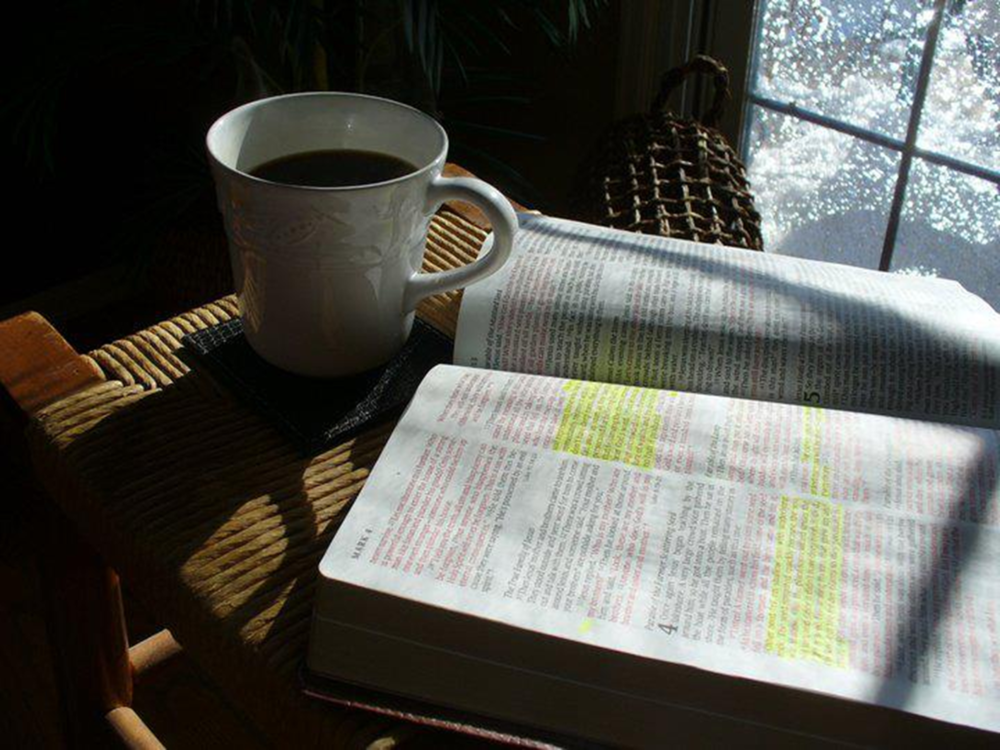
I’m up in B.C. for a few days this week helping my daughter and family move. And I’m reminded again that, when it comes to my morning quiet time, I find it really difficult when I’m out of my environment and out of my routine. Still able to get to “the table” but feeling almost too distracted to really chew on a lot. So, a quick thought this morning. Isaiah and Solomon teaming up to remind me how much the heart matters.

And the Lord said: “Because this people draw near with their mouth and honor me with their lips, while their hearts are far from me, and their fear of me is a commandment taught by men

(Isaiah 29:13 ESV)

My son, give me your heart, and let your eyes observe my ways.

(Proverbs 23:26)

Two bottom line statements, it seems. First, when all was said and done with Judah, the problem ultimately lie with the condition of their heart–it was far from God. They were talking the right talk, even going through the right motions, but it counted for nothing because their hearts were distant. They had demoted God on their priority list. They were content with doing enough to get by, but effectively had put the Creator and His Kingdom on the shelf–the dusty, unattended shelf.

And with their hearts removed, the door was open for a slippery slope, the likes of which they could never have imagined. But, once the Light is turned off, it shouldn’t be surprising if what’s left is great darkness and, what’s more, blindness to being in great darkness. Once the eyes are fixed on the things of earth, the things of heaven grow strangely dim.

And I’m guessing that’s why Solomon’s plea to his son is so simple, why it’s so foundational. Give me your heart, let your eyes delight in my ways, and I can rest knowing wisdom will have its way.

In Proverbs, asking for the heart is set against the allure of the prostitute. Her way is a “deep pit.” Her motive is that of the robber who steals and the traitor who betrays. As the old southern gospel song says, she will take you farther than you wanna go . . . and she’ll cost you far more than you wanna pay. So, pleads the Father, “Give me your heart!”

And it’s not just the temptation of the painted-up lady–regardless of whether she’s calling toward lurid sin or acceptable pleasures–that competes for the heart’s affection. It’s the cares of the world that vie for its attention. It’s the storms of life which seek to blow the heart off course. Many are the calls for our heart.

Instead, how I need to hear His call, “Give me your heart. That’s all I ask!”

Maybe not so easy to do, but isn’t it really that simple? When all is said and done, isn’t it a matter of the heart? And that’s why the heart matters?

I’m thinkin’ . . .

If then you have been raised with Christ, seek the things that are above, where Christ is, seated at the right hand of God. Set your minds on things that are above, not on things that are on earth.

(Colossians 3:1-2 ESV)

Provision has been made for the setting of our hearts on things above. The price paid to purchase our hearts for His own. The promise given to stir our hearts with the things of another land. The power infused to continually renew our hearts as we continue on pilgrimage.

Ours then, by the grace of God, is to give Him our heart. And then His delight, for the glory of God, will be to direct it.

‘Cause the heart matters.

Amen?
Posted in Isaiah, Proverbs | Tagged , , , | Leave a comment

Lean on Me

Usually, I sleep pretty well . . . until I don’t. No problem knocking out. Don’t think I toss and turn a lot. But way too often, if I need to get up in the middle of the night, before I can fall back to sleep my mind starts racing. It kicks into high gear as it starts processing cares, concerns, and to dos. People, projects, problems–they’ll often flood my head. And then my heart starts to churn. Anxiety sets in. And inside I feel like a clothes washer during the spin cycle. So, I’ll pray. And maybe try some fall-back-to-sleep exercises. But often the “spin cycle” going on inside of me won’t slow down, and so I’ll just get up and read and try and calm myself that way. But this morning, I was reminded of another source of calm. The LORD saying to me, in effect, “Lean on Me.”

You keep him in perfect peace
   whose mind is stayed on You, because he trusts in You.
Trust in the LORD forever,
for the LORD GOD is an everlasting rock.

(Isaiah 26:3-4 ESV)

Perfect peace. Literally, peace peace, shalom shalom. That’s really what I need on those sleepless nights. The tranquility Paul talks about which passes all understanding (Php. 4:6-7). And such shalom shalom comes from a mind that is stayed on the LORD GOD, the everlasting rock.

Poked at that word, stayed. Not really about establishing a fixed focus, but more about leaning on a firm foundation.

The mind that is stayed on Jehovah is the one that rests upon His power, His provision, and His promises. It’s supported by trusting in the One who is forever faithful. It leans against the immovable wall of an unchanging God who is committed to finishing the work He has begun (Php. 1:6).

Perhaps part of my problem in not being able to quiet my mind and calm my heart as I pray in the middle of the night is that I’m overly focused on the petitions that need to be made and less on the Person to whom they are being addressed. My brain processing all that needs to be dealt with, rather than my heart resting in the One who is familiar with all my circumstance, . . . and all that needs to be done, . . . and all that needs to be prayed for. Consumed with what’s on my plate and not really aware of His presence through the One sent to draw alongside as my Helper. And the Spirit says, “Lean on Me.”

Maybe that’s why getting up to do my devotions when I can’t sleep is so helpful in eventually returning to rest. Because, in reading His word, and believing what it says, I find anew the support that is found in Him. What I read might not address what I’m fretting about, but it does remind me of who I abide in . . . and abide with. The one who says, “Come to Me, all who labor and are heavy laden, and I will give you rest” (Matt. 11:28). “Lean on Me,” Jesus whispers.

And it’s not just about getting sleep at night, but also finding strength for the day. The mind leaning on the Father, resting in the Son, and supported by the Spirit, is the mind that knows shalom shalom because it trusts in the LORD in all things.

Trust in the LORD with all your heart,
  and do not lean on your own understanding.
In all your ways acknowledge Him,
  and He will make straight your paths.

(Proverbs 3:5-6 ESV)

Lean on Me.

I need to hear that. I need to do that.

By His grace. For His glory.

Posted in Isaiah | Tagged , , , , | 1 Comment

Appointed

Hovering over Hebrews 5 this morning. And a fresh sense of awe and wonder rolls over me as I realize how little I’m able to really grasp of the mysterious nature and workings of a Triune God. Not just how God is one and yet presents Himself as three, but how all three are equally God and yet willingly submit to functioning within an hierarchy. That God submits to God doesn’t really compute. Hence, cue the awe and wonder.

For every high priest chosen from among men is appointed to act on behalf of men in relation to God, to offer gifts and sacrifices for sins. . . . And no one takes this honor for himself, but only when called by God, just as Aaron was. So also Christ did not exalt Himself to be made a high priest, but was appointed by Him who said to Him, “You are My Son, today I have begotten You.”

(Hebrews 5:1, 4-5 ESV)

In the beginning was the Word. He was with God, what’s more, He was God. And the Word became flesh, God taking on human form in the person of Jesus the Christ. Revealed as the Son, though still the radiance of God’s glory and bearing the exact imprint of God’s nature. The fullness of God encapsulated within the body of a man.

And through the Word all things were made, nothing having been brought into existence apart from Him. He created the world. And in Him all things hold together.  Even while walking this earth for 33 years He “moonlighted”, upholding the universe by His power. (John 1:1-14, Heb. 1:2-3, Col. 1:15-17)

And maybe I can kind of get that this Second Person of the Trinity is one of a tri-part, equally-divine Being if I camp on the fact that He is Eternal and He is Creator and He is Sustainer. But then consider that He is appointed? That He is assigned duties? That He operates under the direction of another? That He submits Himself to Another’s will? Well, that’s a little more than this puny brain can really process.

But I read this morning that the Son was appointed by the Father as a high priest.

Though, if anyone would be justified in exalting themselves to the highest religious role in heaven and earth it should be the Creator and Sustainer of heaven and earth, Christ did not take upon Himself the glory of becoming a high priest (NIV). Instead, He was appointed. God the Father determining the assignment for God the Son. Saying to Him, You are my Son and You will be a priest forever.

And maybe I can somehow reconcile “equally God” with “being appointed” if it’s to a highly exalted role such as eternal High Priest of the universe. But then I get thinking about the other appointments the Son has received by the will of the Father.

Appointed as Shepherd. Receiving those the Father has given Him, ensuring that they are never again lost. Not quite High Priest, but still an appointment of leadership and authority.

But also appointed to be a Servant. Come to earth not to be served but to serve–that’s a little harder to fully understand. The King of Kings the Servant of All? Nice poetic ring, perhaps, but really? How does that work?

And what’s more, He came to serve AND to give His life as a ransom for those He created. God, fully God, was also appointed to be a Sacrifice. “Behold the Lamb of God,” John would proclaim, “who takes away the sin of the world.” What?!?!

That God, or any member of God’s triune being, should take orders from any other is hard enough to grasp. Maybe made a bit easier if He’s submitting to being exalted as High Priest. Perhaps palatable as gentle Shepherd. But lowly Servant? Once-for-all Sacrifice? Unfathomable, really. Just awe and wonder.

And don’t even get me going on how He is perfected as He learned obedience through suffering (Heb. 5:8-9). He’s God! All-knowing God. What’s to learn? He is holy, holy, holy. What’s to perfect?

Appointed.

“For I have come down from heaven, not to do My own will but the will of Him who sent Me.”     ~ Jesus

(John 6:38 ESV)

For God so loved the world.

Awe and wonder.

What amazing grace. To Him be eternal glory.

Amen?

Posted in Hebrews | Tagged , , , | Leave a comment

Receive Mercy, Find Grace

I frequent it on a regular basis. Yet, for the last several years, there’s also been an annual trek to this place.

Six years ago events transpired in August that were life changing, and, five-and-a-half years later, would be life ending. Since 2011, August has been a significant month during this part of the journey. Not just because of the things that have happened in August, but also as a result of where my annual Bible reading plan has brought me back to, again and again.

Since then we have a great High Priest who has passed through the heavens, Jesus, the Son of God, let us hold fast our confession. For we do not have a High Priest who is unable to sympathize with our weaknesses, but One who in every respect has been tempted as we are, yet without sin. Let us then with confidence draw near to the throne of grace, that we may receive mercy and find grace to help in time of need.

(Hebrews 4:14-16 ESV)

The throne of grace. My reading plan takes me there around this time every year.

It’s the place where our great High Priest resides. The One who is able to sympathize with our struggles and weakness, ready to intercede on our behalf. And where we receive mercy but find grace.

In a sense, to receive mercy before the throne is the expected part. Not the taken-for-granted part, but it’s what we know we’ll obtain because of the substitutionary, atoning sacrifice of Christ. We receive mercy–not getting what we rightly deserve it–because He stood in our place, taking upon Himself what He did not deserve. As we enter the throne room, confessing again our sin and selfishness, we know His word is true, and that He is faithful and just. Thus, we are confident that He will forgive our sins through the blood of Christ, ready to cleanse us again from all our unrighteousness. That’s mercy. We owe a debt, He has written it off because it was paid in full 2,000 years ago on a Roman cross.

So we receive mercy. We lay hold of it. We gladly take it as our own and know afresh the rest that is ours because of the work He has finished.

But while we receive mercy, we find grace.

Because grace is getting what we don’t deserve, in a sense, it’s unpredictable. While mercy deals primarily with our transgression, the application of grace is multi-faceted, and its abundance is beyond measure.

It is the basis for our justification. Being more than forgiven, by grace we have been gifted with the righteousness of Christ.  Declared holy as we are covered in His holiness.

And it’s through God’s overflowing grace that He determines to adopt fallen image-bearers as sons and daughters. To have only been spared the just punishment our sin demands would be cause for eternal thanksgiving, but to be adopted as His children? To be made part of His forever family?  To be considered joint heirs with Christ?  What kind of unmerited favor is that?

What’s more, we find this grace is sufficient for the day, for the enduring of trials and for dealing with “thorns in the flesh.” His power manifest through our weakness. His presence experienced when we think we’re on our own. His provision available in our time of need.

We don’t know exactly what we’ll find when we enter His throne room. We can’t predict in what manner His grace will be manifest–it could be in the calming of the storm, or the endurance to sojourn through it as it rages. But what we can know is that we will find grace to help in time of need.

Let us then with confidence draw near to the throne of grace . . .

To Him be all praise and glory.

Amen?

Posted in Hebrews | Tagged , , | Leave a comment

The Weighed Down Heart

Hung out with friends from out of town yesterday. They arrived on Sunday afternoon and we did a lot of our visiting in the way that we know how to do it best–over food. Yesterday morning we went out for breakfast to a local eatery known for it’s big meals . . . and I mean BIG! And after breakfast, even though it was the start of the day, I could feel my body slipping into a food coma. You know, that feeling of drowsiness and lethargy that comes from packing away a little too much omelet and few too many hash browns.

Had a flashback to that post-breakfast haze as I read this morning.

“. . . watch yourselves lest your hearts be weighed down with dissipation and drunkenness and cares of this life, and that day come upon you suddenly like a trap. . . . But stay awake at all times, praying that you may have strength to escape all these things that are going to take place, and to stand before the Son of Man.”    ~ Jesus

(Luke 21:34, 36 ESV)

The specific context of Jesus’ warning to His disciples was the destruction of Jerusalem–something that, for us, happened long ago. The greater context was the second coming of Christ, the imminent return of the Son of Man–something which could happen any time in the future. But the application, I’m thinking, is for the present. Beware the weighed down heart.

Just as the center of our physical beings, the heart within our chest, has its limits and can only bear so much before it is damaged or shuts down, so too the center and seat of our spiritual lives, our souls, have only so much capacity. It can only take in so much before, just as I experienced yesterday morning after breakfast, it becomes overcharged and lethargic.

Whether it’s with too much food and drinking, dissipation and drunkenness, or too much anxiety concerning the affairs of this life, the effect is that the heart becomes weighed down. Whether it’s overly indulging in the pleasures of the table or being overly preoccupied with things of this world, if we are not careful our souls will become stuffed to the full with spiritual sugars and carbs which eventually causes the “crash,” resulting in souls that just want to snooze.

But, says the Lord, “Stay awake at all times.” Follower of Christ, keep your head in the game.

Whether it was preparing for the unimaginable when Rome would raze the holy city, or getting ready for increasingly difficult times in advance of the Lord’s return, we need to be awake . . . running the race . . . stewarding the talents he’s told us to work with until He returns and asks for an accounting . . . standing fast against the darkness, as ambassadors we proclaim the kingdom of life . . . fighting the good fight . . . with great desire wanting to hear Him say, when we bow before His Bema Seat, “Well done, good and faithful servant.”

We need to beware the food coma of the soul. That way of living which leaves little reserves to walk in a manner worthy of our calling. That way of prioritizing which ends up sending “seek first the kingdom of God” to the bottom of the list. That way of indulging, or worrying, that says, “Soul, time to take a nap.”

How we need to “eat clean” and beware of weighing down our hearts with life’s excesses–whether that’s feasting or fretting. How we need to drink deep of the Son’s living water and sup continually on the Father’s living Word, while we pursue the things of heaven by the power of the Spirit’s ever-present enabling.

Then, will we stay awake. Ready for today’s trial. Prepared for tomorrow’s uncertainty. In anticipation of His soon return.

By His grace. For His glory.

Posted in Luke | Tagged , , , , | Leave a comment

Much Closer Attention

When you see a “therefore” in Scripture it’s good to pause to take note of what the therefore is there for. Such practical counsel on reading the Bible was put on my radar years and years ago, and continues to serve me well.

The writer to Hebrews has just completed his argument that Christ is so much better than the angels because He is the Son of God. But before moving on to his next argument as to Jesus’ superiority, he pauses with a therefore. So I ask myself, “Self, what’s it there for?”

Therefore we must pay much closer attention to what we have heard, lest we drift away from it.

(Hebrews 2:1 ESV)

It’s a warning about drifting away from the gospel. It’s a caution about allowing the old, old story to occupy less and less of our attention. It’s an admonition against allowing ourselves to glide by that which has become familiar to the point where it ends up becoming ineffectual.

The gospel is the power of God for salvation (Rom. 1:16). For everyone who believes and for every facet of our salvation. The power for our justification, having saved us from the penalty of sin for the transgressions we have committed. The power for our glorification, delivering us, one day, from the presence of sin when we are taken home to heaven. And the power of God for our sanctification, freeing us from the power of sin  while we sojourn this earth as ambassadors for Christ though we’re still at war with the old nature.

And if the gospel is the power of God for our sanctification, then we must be on guard against the tendency to drift from it. Instead, rather than moving on from the gospel, we must pay much closer attention to what we know to be true.

We need to “give more earnest heed” (NKJV) to the Person of Christ or we’re in danger of living in mindless religion rather than in the dynamic of on-going transformation. We need to lean in and plumb the depths of what it means that in these last days God has spoken to us by His Son, the radiance of His glory and the exact imprint of His nature (Heb. 1:2-3a). We need to constantly be turning our minds to plumb the depths of who Christ is.

What’s more, beyond the fascination and pursuit of understanding His person, we need to become addicted with seeking to grasp the fullness of the nature and implications of His work on the cross. All that it means when we read “He made purification for sins” (Heb. 1:3b). What was it for the heir of all things and the Creator of the world to take upon Himself flesh and humble Himself unto death, even death on a cross? How do we ever really wrap our minds around that? Don’t stop trying, says the writer to the Hebrews. In fact, he says, pay much closer attention.

When the old, old story becomes old, then we lose awe. And, as pointed out in a book I’m reading about awe by Paul Tripp, we were wired for, and are motivated by, awe. And when we lose our awe of God and His gospel, we’ll replace it with awe of something else which then will shape and direct our lives. That’s the drift!

When the gospel is only seen as for our salvation past, but not our salvation present–our sanctification–then we run the danger of trying to complete in the flesh that which was begun by the Spirit. We’ll tend to rely more on our power to behave properly, than to ask the Spirit’s help in believing more deeply. But the power of the gospel is that “in it the righteousness of God is revealed from faith for faith, as it is written, ‘The righteous shall live by faith'” (Rom. 1:17).

When we allow what we have heard to slip away, then the catalyst for response dims. While we may go through the motions, the fire in our belly to live for the One who died for us flickers and fades because we’ve stopped providing it with fuel.

Much closer attention. More than before. Now, more than ever. That’s what we need to bring when it comes to the Person and Work of the Savior.

That we might constantly be in awe of grace. That we might always be motivated to live for His glory.

Posted in Hebrews | Tagged , , , , | Leave a comment

A Seated Savior

“Don’t make me get up!”

Kind of remember hearing that once or twice (ok, . . . maybe more often than that) when I was a kid. It was a warning. Often the last warning. If my dad had to get up, I wasn’t going to like what was coming down. If he stood, it wasn’t going to be good.

As I continue reading in Isaiah this morning, Judah had already gone beyond that point of no return.

The LORD has taken His place to contend;
He stands to judge peoples.    (Isaiah 3:13 ESV)

Jehovah, the Existing One, was taking His place in the courtroom of divine justice. His pleas and provision for reconciliation having been rejected, He makes His case for chastening discipline. He presents the facts of the indictment. He lays out the details of His complaint. Arrogance. Decadence. Injustice. Rebellion. So He stands to judge the people.

“Don’t make me get up!”

And just as there was a day when Judah’s persistent refusal required God’s righteous determination, there will be a day when the Lord will stand in judgment over all who have refused Him.

But not today!

Long ago, at many times and in many ways, God spoke to our fathers by the prophets, but in these last days He has spoken to us by His Son, whom He appointed the heir of all things, through whom also He created the world. He is the radiance of the glory of God and the exact imprint of His nature, and He upholds the universe by the word of His power. After making purification for sins, He sat down at the right hand of the Majesty on high . . .

And to which of the angels has [God] ever said, “Sit at My right hand until I make Your enemies a footstool for Your feet”?

(Hebrews 1:1-3, 13 ESV)

Today, the Heir of all things is seated. Today, the eternal Creator waits–sat down at the right hand of the Majesty on high.

Seated because the work is finished. The provision for purification for sins secured through the cross. Made available to all who, by faith, will receive it.

Seated at the Father’s right hand because our God is patient, “not wishing that any should perish, but that all should reach repentance” (2Pet. 3:9).

To be sure, there will be a day when the Lord will stand to judge the peoples. But, for now, He is sitting.

Sitting, but not inactive. His Spirit at work in the world. Convicting men and women of sin. Wooing lost souls to an eternal home. Giving supernatural sight to the spiritually blind. Rebirthing creatures of darkness into children of light. Taking those made in the image of God and forming within them the image of Christ.

Oh, the glorious work of a seated Savior!

. . . let the wicked forsake his way, and the unrighteous man his thoughts; let him return to the LORD, that He may have compassion on him, and to our God, for He will abundantly pardon.

(Isaiah 55:7 ESV)

Though one day He will stand as the righteous Judge, not today!

Let us seek the Savior while He is seated.

By faith alone through grace alone. For His glory alone.

Posted in Hebrews, Isaiah | Tagged , , , , | Leave a comment

Iniquity and Solemn Assembly

Maybe it jumps off the page because you’re not expecting for God to say in the Bible, “I can’t do something.” The tendency, rightly so I think, is to equate all-powerful God with can-do-anything God. To interpret “with God all things are possible” (Mt. 19:26) as meaning nothing is impossible. So that’s perhaps why, as I started in on Isaiah this morning, I’m left to chew on what it means when God says, “I can’t bear it any longer.” To think on the implications of iniquity and solemn assembly.

Bring no more vain offerings; incense is an abomination to Me. New moon and Sabbath and the calling of convocations–I cannot endure iniquity and solemn assembly.

(Isaiah 1:13 ESV)

The Spirit wastes no time as He moves Isaiah to speak the word of the LORD and get to the heart of the matter. Fake religion. That was the problem.

Lots of sacrifice going down. Not much obedience. The blood flowed according to the Law. But rebellion was rampant as everyone did what was right in their own eyes. They kept the feasts. But had little, if any, regard for faithfulness. They regularly met for solemn assembly. But they refused to turn from their sordid iniquity. And God says, “I cannot endure it.”

I am unable to deal it. I can’t overcome it. I have no power to prevail.

The provision of atoning sacrifice had been made as a means for a holy God to dwell in the midst of an unholy people. Remission of sin was made possible through the shedding of blood. Process was provided so that hearts might draw near. But when that which is intended to reconcile and restore is trampled on and set under foot, what’s left? When that which is meant to provide a covering for sin is despised and not put on, what covers the rejection of the covering?

One day a week they met for their “sacred meeting” (NKJV). But the other six days they lived for themselves. On that one day they spoke the name of the God Most High, but during the rest of the week they sought the idols of the nations around them. As Isaiah would prophecy later, “this people draw near with their mouth and honor Me with their lips, while their hearts are far from Me” (Isa. 29:13).

So, because of how they lived, and what they served during the week, when they came together on the weekend, God considered their offerings vain, and their incense an abomination. For God cannot endure iniquity and solemn assembly.

Thus, God would take action against the nation in order to turn their hearts again toward Him, that they would then know and embrace the provision made for them.

And maybe it’s too simple or too small an application, but I can’t help but think that the degree to which our gatherings are pleasing in His sight on Sunday is impacted by our heart’s desire to honor Him on Monday. That we are just as prone to enter into solemn assembly, though our lives are marked by willing iniquity. That, even as we gather to glory in the gospel, we can rob it of its power when we live carelessly and worship mindlessly. The blood which cleanses from all sin having no cleansing effect because we don’t think to apply the blood as we confess our love of the world and it’s ways, even as we go through the motions of offering our tithes.

With God nothing is impossible. But somethings, evidently, can only be endured for so long. Such is the contradictory coupling of iniquity and solemn assembly.

Father, guard our hearts. That, when we gather, we draw near not only with lips of praise but souls of consecration. That, rather than mechanically going through process and procedure, we wholeheartedly enter into Your great promises and provision. That, rather than go through the motions, we come together to lift up Your Name.  And this, through the power of the gospel.

By Your grace. For Your glory.

Posted in Isaiah | Tagged , , , | Leave a comment

The Power of Grace

Wrapping up the book of Esther this morning. And so much to chew on. Beyond the mystery of a story in which God is so at work, yet never mentioned, there are so many different aspects of the story to ponder. Is Mordecai a picture of Christ? If so, in what ways? How about Esther? A picture of the church, the bride of Christ? Or, of Christ Himself, as an agent of mediating salvation? Or both? What of this story should be considered normative? And the list can go on.

But the aroma which lingers as I meditate on the story this morning is that of unmerited favor and the power of grace.

In my ESV I noted the use of the words grace or favor nine times. Grace used once, favor eight times. The Hebrew word cheded used twice and chen used six times. Twice, the favor Esther was shown was more akin to “kindness.” But the rest of the time she was “well-favored” and shown grace.

When she was made ready for her meeting with the king, Esther was marked as someone who “obtained favor in the sight of all who saw her” (2:15). Though a nobody from nowhere with nothing but a natural beauty, she was marked early on as a target for unmerited favor.

And then, after she had spent her designated time with the king, Esther “obtained grace and favor in his sight” (2:17). Chen and cheded. Unearned acceptance in addition to unexpected kindness.

Later, it would be the king’s favor she had to rely upon when she approached him unannounced (5:2). The grace of his golden scepter extended to her as she stood at the doorway provided the access she needed to mediate on behalf of her people. And it was on the basis of unmerited favor that Esther appealed to the king to bring Haman to a banquet she desired to host for them (5:8). They were both very busy and much-in-demand men, she would not presume on their presence. That she should warrant any of their time would solely result from the king’s gracious desire to spend time with her.

Finally, on the basis of unmerited favor, Esther pleaded for her life, and the life of her people, before the king (7:3, 8:5). Not that she had earned any right to be spared. But, as a recipient of grace, she accepted that place of unmerited favor and interceded on behalf of herself and others.

While Esther is a story of the power of the unseen hand of God, it is also a record of the power of grace. Of what a person can do when enveloped in unmerited favor. And in that, isn’t it also then a picture of the power that is the child of God’s as a trophy of His grace?

Our confidence not lying in our lineage. Our strength not found in what we bring to the table. Our access granted not because of our worth or works but solely by the King’s desire to have us boldly approach His throne?

And when the king saw Queen Esther standing in the court, she won favor in his sight, and he held out to Esther the golden scepter that was in his hand. Then Esther approached and touched the tip of the scepter.

(Esther 5:2 ESV)

That’s the power of grace, to approach. To draw near. With confidence, not in ourselves but in His love, and petition. With surety, not because of what we have done but because of what Christ has accomplished, and pray. Without fear of man, proclaiming and praising our King, not because of who we are but standing only on the foundation of who He is.

A great story. A lot to chew on.

Encouraged this morning by the power of grace. To God be the glory.

Posted in Esther | Tagged , , , | Leave a comment

Grace Training

Been away for the past few days with some of my girls. Hard to get to my computer, but have been enjoying working my way through Titus.

And, if I’m picking up what Paul has been laying down for Titus, then grace and good works go hand in hand. To be a fan of one, should lead to the embrace of the other. To revel in God’s unmerited favor is to respond in accord to God’s unambiguous commands.

Might seem a bit counter-intuitive. We tend to think of grace being the antithesis of works. That abiding in grace is ceasing from all effort. And while it’s true that no amount of good works are going to earn acceptance with God, it’s equally true than when we get grace, grace is going to compel us towards good works. Paul calls it grace training.

For the grace of God has appeared, bringing salvation for all people, training us to renounce ungodliness and worldly passions, and to live self-controlled, upright, and godly lives in the present age . . .

(Titus 2:11-12 ESV)

While grace is the means to salvation, it is also our mentor towards godly living. While we enter the holy of holies on the merit of Christ’s finished work alone, when we enter the world we do so renouncing ungodliness and worldly passions. While we look for a place and time yet to come, we live in accord with its principles and tenets even now. And it’s grace that teaches us how.

Paul talks about the manifestation of grace later in his letter to Titus. Grace arrived on the scene when the Savior appeared. It saved us not because of our righteous deeds and merit, but according to its own righteous way and mercy. It saved us “by the washing of regeneration and the renewal of the Holy Spirit” not by the weighing of our works and the rewarding of our best effort. Rather, being justified solely by grace through Christ our Savior, we became “heirs according to the hope of eternal life” (3:4-7).

And then Paul pens this great implication to such great truth:

The saying is trustworthy, and I want you to insist on these things, so that those who have believed in God may be careful to devote themselves to good works. These things are excellent and profitable for people.

(Titus 3:8 ESV)

Insist on grace alone, says Paul, and those who believe it will be motivated towards good works, as well. Grace teaches us to live godly lives. It trains us to seek after righteousness.

Good works, then, come as a response. If He died for us, how can we not want to live for Him.

Godliness, then, emerges as a reflection. Having rescued us from the bondage of sin, He now delights to reshape up is in the very image of His Son. The more we become like Jesus, by grace, the more we we will act like Jesus, known for our good works.

To live in grace and do nothing for God is to not really get grace at all. For the grace that has appeared, is grace that teaches us to pursue godly living in anticipation of the glory soon to be revealed.

Grace training. Every child of God has been enrolled in it.

God’s glory. The reason we should all desire to be good students of it.

Posted in Titus | Tagged , , , , | Leave a comment