
Justice and Equity to All

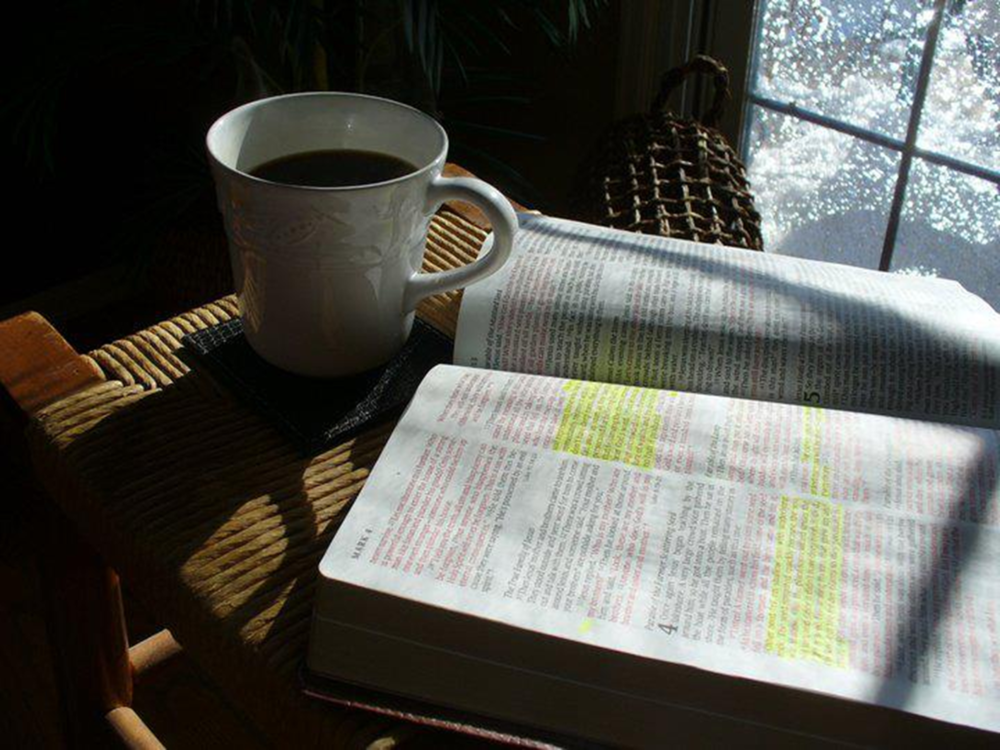
I know that often, when it comes to Bible reading, our filters factor in to what catches our attention. Whether it’s what’s going on in our lives as individuals, or in our gospel community as a church body, or in our community at large and the current events reported in the news cycles, what’s front and center in our minds when we’re not reading the Bible, can be a pretty powerful funnel through which the living and active word is received when we are reading our Bibles.

But that’s not to say that what hits our radar isn’t still of the Spirit. To be sure, we need to be aware of personal bias, but not to the exclusion of any consideration that the events around us can make ready “good soil” for what God wants to sow within us.

So, that’s why I’m thinking a somewhat obscure verse in 1Chronicles pops off the page this morning. Because of the events of the past several weeks around me AND, because I trust the Spirit of God is continuing His lifelong work of sanctification in me. Thus, this morning I’m chewing on justice and equity to all.

So David reigned over all Israel, and he administered justice and equity to all his people.

(1Chronicles 18:14 ESV)

David was a man after God’s own heart (Acts 13:22). Not a perfect man, yet a persistent pursuer of God. Not all his actions were upright, but his fear of God was unwavering. Throughout his life, not a faultless man, nevertheless a repentant man (Ps. 51) and a forgiven man (Ps. 103:1-5, 11-12). So, I’m thinking, when David was at the top of his game, he was a model for what a man of God, and a leader under God, should look like. And when David reigned at the top of his game, he administered justice and equity to all his people.

Lot of talk about justice and equity these days. For me and many in my circles, at least, talk that seems to have found “ears to hear.” To be honest, in the past I would have paid little attention and waited for things to settle down and wanted things just to move on. But this time it’s different. And I’ve found myself wrestling with the relationship between the gospel and justice and equity to all. Not sure I have answers, but convinced it’s a question worth noodling on.

So this morning what hits me is, if David was a man after God’s own heart, and if, when David was at the top of his game and God was actively present in the affairs of his kingdom, he administered justice and equity to all, then, shouldn’t justice and equity be the model for kingdoms of earth influenced by the kingdom of heaven? I’m thinkin . . .

While in my past I have had opportunity to share the gospel in minimum security prisons, and to serve meals along with a message in downtown missions, if I’m honest with myself, I think I’ve had a position, if not explicitly at least implicitly, that “the gospel” and “social justice” are somehow on opposite ends of a continuum. But recently I’ve been increasingly challenged to think about the relationship between the gospel and justice and equity to all.

To be sure, this is a decaying and dark world. It needs the good news of the gospel. But beyond the message, how is the good news manifest by those who are to be salt and light to this decaying and dark world? How are glimpses of the “Thy kingdom come” to be reflected through the ambassadors of that kingdom who are here now?

Our God is a just God. Our God is a God of equity and impartiality. What’s more, all people bear the Imago Dei, as all people are created in the image of God. So, as ambassadors of the good news which rescues from sin and restores the Imago Dei, what part does being advocates of justice and equity to all come into play?

Honestly again, don’t have many answers. But becoming more and more convinced these are some of the right questions to be working through.

Convinced because of encounters of the divine kind, like this morning’s, where an obscure verse in 1Chronicles pops off the page. Aware there might be some bias because the topic is front and center these days, but also sensing it’s because of the resident Teacher within me who is ever present, and ever active in the work of transformation through the renewing of the mind.

This too, evidence of the grace of God. This too, only for the glory of God.
Posted in 1Chronicles | Tagged , , , , , | Leave a comment

Walk in That

Don’t know that I have a lot to say this morning. Don’t know that I should if I’m meditating on the quieted soul. After all, the songwriter’s picture of a weaned child isn’t that of a wailing child. A baby at rest in their mother’s arms isn’t a baby up in arms. A calm soul is a quiet soul.

Not because everything around is calm and quiet. And not because we’re not to thoughtfully engage in such things as pandemics, politics, and problems that have long haunted the land. But because, as the songwriter reminds me, we are not to walk in them.

O LORD, my heart is not lifted up; my eyes are not raised too high; I do not occupy myself with things too great and too marvelous for me.
But I have calmed and quieted my soul, like a weaned child with its mother; like a weaned child is my soul within me.
O Israel, hope in the LORD from this time forth and forevermore.

(Psalm 131:1-3 ESV)

Occupy. That’s the word I wonder about this morning. I do not occupy myself with things too great for me.

Not sure how I feel about other translations. CSB and NASB say “I do not get involved with.” NIV and NKJV, “I do not concern myself with.” Peterson cuts to the chase, “I haven’t meddled where I have no business” (MSG). But literally it reads “Nor have I walked in great things” (YLT).

I don’t think the songwriter is advocating an “ignorance is bliss” approach to the big things of life. But that we don’t live our lives consumed by things which are simply beyond us.

Maybe the clue is in the opening words of the song, a lifted up heart and eyes that are raised up. That, while ignorance is not the way, neither is arrogance. While being uninformed is not what’s advocated here, neither is a know-it-all attitude. That for the big issues of life — like suffering, like injustice, like what it means for the kingdom to come — at the end of the day, we don’t walk in them with arrogance that agitates. With pride that ultimately is unproductive. But we know rest amidst the troublesome, too big things of life because we know where, ultimately, our help comes from.

At some point, probably sooner than later, we need to calm ourselves, rest in the Father’s arms, and hope in the LORD.

And how’s that possible? Psalm 130 gives a clue.

O Israel, hope in the LORD! For with the LORD there is steadfast love, and with Him is plentiful redemption.

(Psalm 130:7 ESV)

Steadfast love. Plentiful redemption. The character of God. The promise of God.

Isn’t that what I need to occupy myself with? Aren’t those the truths I need to walk in? I’m thinkin . . .

Isn’t that the context that corrals the anxiety fueled by unanswerable questions? The bearings that point us in the right direction when we feel things are out of control. The greater truths which allow us to be thoughtful but not obsessed? The remembrance that compels us to humble ourselves even as we exalt our God? I’m thinkin’ that too . . .

Okay, so maybe I have more to say than I first thought. But now it’s time to calm the soul. To quiet the spirit. To hope in the Lord from this time forth and forevermore. And to walk in that.

By His grace. For His glory.

Posted in Psalms | Tagged , , , , , | Leave a comment

Not the Opposite

Jesus and His disciples sailed to the country of the Gerasenes, which, writes Luke, “is opposite Galilee” (Luke 8:26). The region of the Gerasenes was “over against” the land of Galilee. And as I hover over this passage in Luke I’m thinking about how it’s “other sided-ness” was more than just a physical characteristic.

The man who met Jesus was opposite as well. The man was naked and lived among the dead (8:27), but Jesus was clothed in power (Lk. 3:22, Lk. 24:49) and was the Author of Life (Acts 3:15). He recognized Jesus as the one and only Son of the Most High (8:28), but Jesus called him out as the many, who went by the name Legion and possessed the man, demons deserving of the abyss below (8:30-31). Legion had little regard for life, whether human or otherwise (8:32), but Jesus came to seek and save the lost (Lk. 19:10).

But perhaps the most stark contrast is how, after being delivered by Jesus, the man stood, or rather sat, opposite to the others of the Gerasenes.

Then people went out to see what had happened, and they came to Jesus and found the man from whom the demons had gone, sitting at the feet of Jesus, clothed and in his right mind, and they were afraid. And those who had seen it told them how the demon-possessed man had been healed. Then all the people of the surrounding country of the Gerasenes asked Him to depart from them, for they were seized with great fear. So He got into the boat and returned.

(Luke 8:35-37 ESV)

The man formally known as Legion, sat at the feet of Jesus. The man who once lived in lifeless darkness, now was drawn to the light as he tasted of life to the full. He who once was naked and wretched, was now clothed with a robe of righteousness. He who had been an unwilling slave to the underworld, was now a willing servant in the kingdom of heaven.

He was clothed. He was in his right mind. And so, he sat at the feet of Jesus. Opposite to those who were once his countrymen.

His countrymen stood at a distance. For they were out of their minds, seized with great fear. Whether because they didn’t know how to process the miracle of a possessed man healed, or because they were all too capable of adding up the impact to their economy if more of their livelihood were to be driven to destruction in the lake (8:32-33), we don’t know. But they were not in a right mind and so, they wanted Jesus to leave.

The country of the Gerasenes was opposite Galilee. So, while the many of the Gerasenes would send away the Son of God, the one who had been delivered by the Man of Galilee would sit at His feet. While those living for swine would seek distance from the Savior, the one delivered from darkness “begged that he might be with Him” (8:38).

He has delivered us from the domain of darkness and transferred us to the kingdom of His beloved Son, in whom we have redemption, the forgiveness of sins.

(Colossians 1:13-14 ESV)

O’ to be clothed, in our right minds, and at the feet of Jesus . . . and not the opposite.

What redemption! What reconciliation! Hallelujah, what a Savior!

Trophies of God’s grace. Only for God’s glory.

Posted in Luke | Tagged , , , | Leave a comment

Seeing How We Hear

As I hover over this six word command to obey, it impresses me as being a pretty weighty charge by Jesus to His disciples. Foundational for their growth as followers of Christ. Insightful as to a spiritual dynamic that dictates there’s no such thing as “good enough” in the kingdom. And it all comes down to seeing how we hear.

Take care then how you hear, for to the one who has, more will be given, and from the one who has not, even what he thinks that he has will be taken away.” ~ Jesus

(Luke 8:18 ESV)

Jesus is “proclaiming and bringing the good news of the kingdom of God” (Lk. 8:1). And when the crowd about him peaks, He tells them a parable (Lk. 8:4-8). A story about a sower, some seed, and four different outcomes. He concludes the story with, “He who has ears to hear, let him hear.”

He then let’s His disciples in on the meaning of the mysterious tale (Lk. 8:9-15). How come? Because, Jesus says, “To you it has been given to know the secrets of the kingdom of God.”

The seed is the presented word of God. It is the served up secrets of the kingdom.

And, the four scenarios presented are hearing scenarios. In the first, the word is heard, but because it falls on hardened ground, it’s easily removed. Or, the seed is heard, but because it falls on shallow ground and has no root, in times of testing it falls away. Or, perhaps most tragic, the seed is heard, takes root, but bears no fruit because it is “choked out by the cares and riches and pleasures of life.” Finally, in the best case scenario, the seed finds good soil in “those who, hearing the word, hold it fast in an honest and good heart, and bear fruit with patience.”

Same seed. Very different outcomes. Take care then how you hear.

Literally, “see how you hear.” Look at how you listen. Discern how you’re detecting. Pay attention to how you prepare, participate, and process. ‘Cause it’s a big deal! The secrets of the kingdom are at stake! The fruit of the kingdom is dependent upon it. He who has ears to hear, let him hear!

And, as I noodle on it, here’s what really gets me. It’s not like you can opt to stop hearing at some point because you feel like you’ve borne enough fruit. Not like you can say I’ve heard enough, I’ve grown enough, I’ll just settle for where I am at.

“. . . for to the one who has, more will be given, and from the one who has not, even what he thinks that he has will be taken away.”

If good soil is allowed to become untilled hard ground; if good soil is allowed to erode and becomes shallow; if good soil isn’t tended and the weeds of the world are allowed to grow unchecked, then it’s not as if what was already harvested from what was once good soil will just stay in the barn. The deposits don’t just sit and gain interest. No, says Jesus, instead what he thinks he has will be taken away. To no longer have ears to hear is to atrophy. To not see how you hear is to risk going blind.

To us who are disciples of Christ, provision has been made to know the secrets of the kingdom. And those secrets come in the form of seed, the word of God. And ours is to listen — carefully, committedly, constantly.

Seeing how we hear. That we might bear fruit with patience.

By His grace. For His glory.

Posted in Luke | Tagged , , , , | Leave a comment

She Loved Much

She was a woman of repute. Of ill repute. A woman “of the city” and evidently a woman known (in the biblical sense) by many in the city. That she crashed the dinner party at the Pharisee’s house was shocking. But that she had the means to purchase an alabaster flask of ointment wasn’t all that surprising. For they all knew that she had loved much.

She perhaps had originally purchased the jar of perfume as a carpenter might purchase a hammer or a saw. As a tool of the trade. An investment in her business. But she had purchased the mixture of aromatic spices with the wages of sin. For she had loved much.

So when she started to approach the banquet table there may have been a bit of a gasp in the room. As she seemed to move towards the Teacher in particular, it might have peaked some curiosity. How would an encounter between a holy Man of God and a sinner of the city play out?

She approached the Teacher as He reclined at the table. But then stopped at His feet. And what she did next, no one really expected. For she loved much.

. . . and standing behind Him at His feet, weeping, she began to wet His feet with her tears and wiped them with the hair of her head and kissed His feet and anointed them with the ointment.

(Luke 7:38 ESV)

And the Pharisee thought to himself, Scandalous! How inappropriate!

Not that a brazen sinner would approach the One who had claimed to be the Son of Man, for she had approached many men in her time. Not that she would waste such extravagant perfume, for she was likely regarded more for her beauty than her brain. But the Pharisee was incredulous because, he reasoned, “If this Man were a prophet, He would have known who and what sort of woman this is who is touching Him, for she is a sinner.” He was blind to the woman. Unable to see that she was loving much. Unable to fathom why.

And while the room fills with the aroma of perfume, as the woman continues to minister at His feet, Jesus addresses the Pharisee with a short parable. The story of two debtors who owed money to a moneylender. One owed 50 days wages. The other needing to turn over his daily pay for the next 17 months in order to settle accounts. But both were forgiven, in full, their debt by their creditor. “Now which of them,” asked Jesus, “will love him more?”

The Pharisee reclined with Jesus in order to test Jesus. The woman wept at His feet, and washed them with costly perfume, because Jesus had tested her. By His grace, through His Spirit, He had shown her her sin. Had revealed to her her need. Had shown an unconditional, redeeming love to her in a way that no one had ever before. For He was ready to love her unto death, “even death on a cross” (Php. 2:8). Forgiving her sins. Cleansing her soul. Raising her in newness of life. Loving her much.

And in return, she loved much.

Therefore I tell you, her sins, which are many, are forgiven —  for she loved much.

(Luke 7:47 ESV)

The woman of the city was not forgiven because she loved much, but that she loved much was the result of her forgiveness. Her humiliation at His feet, and the extravagance of her offering, wasn’t what purchased her redemption, for only the shed blood of the Savior could do that. But her tears, her humble act of foot washing, the extravagance with which she poured out her perfume, were a response of unbridled worship and thanksgiving. Having been forgiven much, she loved much.

Knowing the debt I have been forgiven, might I ever love much, as well.

Because of God’s grace. Only for God’s glory.

Posted in Luke | Tagged , , , , , , | Leave a comment

Still the Coming One

Going to re-run some thoughts from this day’s readings 10 years ago. 10 years ago. A different lifetime ago. Corporate job. Couple of girls still at home. Coming home daily to a loving wife. No brain cancer even on the radar.

Back then my translation of choice was the New King James version. Back then Jesus was “the Coming One.” 10 years later . . . so much has changed. But what hasn’t changed is that He is still the Coming One.


Ok . . . so here’s a question that transcends time. A question that carries just as much punch today as it did 2,000 years ago. A question, the answer to which, has as broad a range of implications today as it did when John the Baptist asked it. A question which, depending on the answer, has a way of forming how you desire and determine to order your life. Here’s the question . . .

“And John, calling two of his disciples to him [in prison], sent them to Jesus, saying, ‘Are You the Coming One, or do we look for another?'”

(Luke 7:19 NKJV)

So, in a nutshell, here’s John’s situation. Since birth he’s been filled with the Holy Spirit, knowing he had been set apart “to make ready a people prepared for the Lord” (Luke 1:15-17). He was so “set apart”, in fact, that he grew up in the desert (1:80) . . . not easy “formative years.” He had witnessed the evidence of Jesus being the Son of God when he baptized Jesus in the Jordan . . . the Holy Spirit descending on Him . . . the Father audibly declaring His love for His Son (Luke 3:21-22). He recognized Jesus as the “Lamb of God come to take away the sin of the world” (John 1:29). John, however, ends up in prison as He “crosses a line” with Herod in condemning Herod’s adulterous sin with his brother’s wife. And while in prison, perhaps sensing he’d never get out alive, continuing to hear of the miraculous signs and wonders being done by Jesus, John has a question, “Are You the Coming One?”

I don’t know what John expected from life . . . I don’t think this desert-dweller ever thought about “freedom 55” or living on “Easy Street.” But, as one dedicated to preparing the way for God’s anointed . . . given that his life’s work had been about making ready a way for Messiah . . . I guess you can’t blame him . . . as he sits in prison . . . for asking himself, “Is Jesus the One we were waiting for?” Expectations concerning Messiah and the reality he was now living were, perhaps, a bit at odds for him. So he asks, “Are You the Coming One?”

Good question then. Still a good question now. The prophets spoke of a Coming One. They looked for Him in John’s day . . . and He came. We look for Him today . . . and He’s coming . . . count on it!

What wasn’t clear from the prophets was that He would come twice. First, as a humble servant in the likeness of man . . . God in flesh . . . on a rescue mission . . . come, not to be served, but to serve others and give His live as a ransom for many (Mark 10:45). Come to testify of the kingdom . . . and to die in order to open the gates to “whosoever will”. Conquering not the Roman oppression . . . eliminating not the religious hypocrisy . . . but instead conquering sin and death . . . and removing the wall of separation between God and man. Yes John, He was the One to come . . .

And, He is still the One to come . . .

“And if I go and prepare a place for you, I will come again and receive you to Myself; that where I am, there you may be also.” ~ Jesus

(John 14:3 NKJV)

As believers, we don’t all find ourselves in situations like John’s (though many do), but we can find ourselves, from time to time, in a place that doesn’t line up for us with the “abundant life” we’ve imagined we should have as believers . . . a place where thoughts of, “Is it really real?” find a way to the surface . . . circumstances where we ask, “Are You the Coming One?” And the answer is still, “Yes!” The promise is still true. The reality will one day be experienced. So, by faith, we order our lives in light of that day . . . by faith, we look up, for our redemption draws near . . . by faith, we keep on keeping on . . . knowing, through the inner testimony of the abiding Holy Spirit, that He is the Coming One . . . by faith, knowing that, one day, faith will give way to sight.

” ‘Behold, I am coming quickly, and My reward is with Me . . . ‘ He who testifies to these things says, ‘Surely I am coming quickly.’ Amen. Even so, come Lord Jesus!”

(Rev. 22:12a, 20 NKJV)


And so, we wait by grace. And so, we serve for His glory.

Posted in Luke | Tagged , , , | Leave a comment

A Threefold Cord

That they are linked together in Scripture seems clear to me. An inseparable trio. Comprising a threefold cord which is not quickly broken. To have one should be to have the other two. I encountered these three amigos this morning in the opening verses of Colossians.

Paul was the consummate “follow up” guy. He didn’t plant a church without keeping tabs on that church. Didn’t birth disciples of Christ without asking, from time to time, if they were growing in Christ. While knowing that it was Christ who would build His church, part of Paul’s call was to check in on how the building was going. And what Paul heard about the church at Colossae primed the pump of thanksgiving. Whatever else was going on in Colossae, whatever doctrinal issues needed to be addressed, he gave God thanks because the threefold cord was in place. The three amigos were alive and well.

We always thank God, the Father of our Lord Jesus Christ, when we pray for you, since we heard of your faith in Christ Jesus and of the love that you have for all the saints, because of the hope laid up for you in heaven.

(Colossians 1:3-5a ESV)

When instructing the Corinthians on what it meant to be the church (1Cor. 12-14), at the center of it all, Paul said, were faith, hope, and love. And that seems to have been true of the church at Colossae.

Faith in Christ begets hope in heaven and is manifest by love for the saints. To have trusted in the finished work of the cross once past, is to have a confident expectation concerning a glorious future yet to come, which is made evident by an authentic affection for those of likemind in the present.

“By this all people will know that you are My disciples, if you have love for one another.” ~ Jesus

(John 13:35 ESV)

How important is gospel community to the overall mission? I’m thinking, pretty important.

Faith in Christ, and hope in heaven, without love for the saints is a weakened cord. Two-thirds of a full-meal deal. Conveying only a partial message. Resulting in a less than abundant “abundant life” which Jesus came to give (Jn. 10:10).

I sometimes fear that the cultural values which seem to emphasize the individual over the collective, and the personal over the corporate, water down the church’s effectiveness. That while we might declare to a lost world that we are Christians by faith alone in Christ alone, and that our hope for a better world is not in this world, we may be less aware of the need to show a lost world that we are Christians by our love for one another.

So now faith, hope, and love abide, these three; but the greatest of these is love.

(1Corinthians 13:13 ESV)

Oh, that the church’s threefold cord would be entact and enduring.

Lord, fuel our faith, affirm our hope, ignite our affection.

By Your grace. For Your glory.

Posted in Colossians | Tagged , , , , | Leave a comment

Our Investment Portfolios

I have often been intrigued by the idea of laying up “treasures in heaven.” Of being mindful that there is stuff we do in the here and now that results in the accumulation and deposit of valuable collectibles in the there and then. Investments made on earth that impact the dividends realized in heaven.

Jesus told each of His disciples to invest their own HRA (Heaven-bound Retirement Account). For not only would it pay off in the future through the realization of a spiritual treasury “where neither moth nor rust destroys and where thieves do not break in and steal”, but it would also pay benefits in the present, having the very practical effect of keeping their hearts aligned towards their true home, heaven, the place where this eternal repository is being established (Matt. 6:19-21).

Paul picks up on the theme in one of his letters, as well. He tells Timothy to “charge” those “rich in this present age” not to set their hopes on “the uncertainty of riches.” Instead, Timothy was to encourage these well-off saints to be “rich in good works, to be generous and ready to share.” And for the same reasons. That they would store up “treasure for themselves as a good foundation for the future” and, in so doing, “take hold of that which is truly life” (1Tim. 6:17-19 ESV).

So I can’t help but think that future returns are to be a motivating factor in present investments — of our treasures, our talents, and our time. As such, we need to be mindful of our investment portfolios.

And I’m thinking it’s this filter, activated by my resident Illuminator, that serves up the following verse to chew on this morning.

Not that I seek the gift, but I seek the fruit that increases to your credit.

(Philippians 4:17 ESV)

As Paul wraps up his letter to the church in Philippi, he acknowledges their faithful, financial partnering from the “beginning” when he shared the gospel with them and then “left Macedonia” to share it with others. No other church had “entered into partnership” with him. But they were giving Paul their money, and Paul was receiving it in order to preach the gospel (Php. 4:14-16).

But while Paul appreciated the funds, he didn’t “seek the gift.” Instead he intensely desired that it was being credited to their account. His immediate financial benefit was their future spiritual blessing. His need being met today was their heavenly storehouses being filled with”fruit that increases to your credit” for tomorrow.

And while most Christians I know are “invested” in foreign missions and missionaries to a greater or lesser extent, the thought occurs to me of how much we may limit our “portfolio” of heavenly investments as we’ve adopted a more individualized view of our faith. As we focus on our “personal relationship” with God, do we sometimes lose sight that the relationship with a heavenly Father comes in the context of having been adopted into an earthly family? That as we’ve followed the lead of our culture, which sees church as a “service” to consume on a Sunday morning (if we choose), we’re missing opportunities by forgetting it is also “the household of faith” (Gal. 6:10) in which we are abe to invest in 24/7. And those investments, I’m thinking, also bear fruit that increases to our credit.

I’m not just talking tithing on Sunday mornings. But I’m also talking investing in people throughout the week. Generous with brothers and sisters in Christ. Generous, not just with our treasure and talents, but with our time as well. Seeing these valuable resources invested in others as truly part of storing up treasure in heaven for ourselves.

Maybe it’s worth reviewing my heavenly portfolio, making sure it’s balanced and that I’m maximizing my investments.

Because of His grace. Ultimately for His glory.

Posted in Philippians | Tagged , , , | Leave a comment

A Kept Man

For those of us who have viewed these past 3 months through the eyeglasses of “this is much to do about nothing”, emerging from “shelter in place” probably comes with very little anxiety. About time, they might say. But for those of us who land on the side of the continuum more towards “these have been extreme, but prudent pre-cautions”, I’m guessing that expanding our bubbles can come with a certain amount of angst. To leave our homes is to venture into the world of unseen droplets. To have people in our homes is to want to know that they’ve come to us directly from 14 days of self-quarantine. More than angst, it’s enough to make one paranoid which, as a friend pointed out to me years ago, is just smart thinking when everything’s against you.

But this morning I’m reminded by the songwriter that I am a kept man.

I lift up my eyes to the hills. From where does my help come?
My help comes from the LORD, who made heaven and earth.
He will not let your foot be moved; He who keeps you will not slumber.
Behold, He who keeps Israel will neither slumber nor sleep.
The LORD is your keeper; the LORD is your shade on your right hand.
The sun shall not strike you by day, nor the moon by night.
The LORD will keep you from all evil; He will keep your life.
The LORD will keep your going out and your coming in from this time forth and forevermore.

(Psalm 121:1-8 ESV)

Jehovah is a keeper of life. What’s more, says the psalmist, He is your keeper.

The Maker of heaven and earth is ultimately where our help comes from. He is our greatest safety protocol.

For He is a protector. One who will not let even our foot be moved apart from His sovereign purposes. He is our shade, not allowing sunbeam, nor moonbeam to touch the surface of our skin apart from first being given His permission. Our Father keeps watch over His children.

And He does so 24/7. In season and out of season. In times of peace and times of pandemic. He who keeps you will not slumber.

And whether we are going out, or allowing others to come in, the songwriter sings that we can rest in the promise that He keeps watch over both. Aware of all movements, determining the paths of mundane, daily life even as He observes the paths of marauding, infectious droplets.

Not that we should be reckless and test the Lord our God with thoughtless, post-quarantine behaviors, but we should be confident that outside our homes He is still our keeper. That ultimately all the safety measures and precautions in the world cannot substitute for the One who has said He will keep your life.

And so we venture out. We expand our bubbles. We release a level of self-preservation because of the fresh remembrance of divine promise. No guarantees that we won’t contract something, but every confidence that, even then, He is still the keeper of our lives.

Heading out into the world again today. Careful, but not fearful. Thoughtful, but not paranoid. Confident, but not in my own power to protect.

Heading out today because my God is a faithful and able Keeper. And I am a kept man.

By His grace. For His glory.

Posted in Psalms | Tagged , , , | Leave a comment

Holding On While Pressing On

The apostle Paul thought it was the grown up way to think. To count all things loss for the sake of Christ. And not just reckon them as lost, but to actually lose all things in order to “gain Christ” (Php. 3:8). To be driven by a desire to know the reality of the power of Christ’s resurrection, even if it meant sharing in His sufferings and becoming like Him in His death (Php. 3:10). Paul believed it was the adult way of internalizing core Christian motivation. So it compelled him to keep on pressing on. To strain forward with eyes fixed on the prize. To relentlessly pursue “the upward call of God in Christ Jesus” (Php. 3:14).

Such a view is what drove Paul to have what I referred to yesterday as a divine discontentment. And, it would seem, Paul believed that to have such a view was to have the right view.

But what grabs me this morning as I continue in Philippians is what God says through the driven apostle about those who don’t yet see it the same way.

Let those of us who are mature think this way, and if in anything you think otherwise, God will reveal that also to you. Only let us hold true to what we have attained.

(Philippians 3:15-16 ESV)

What hits me first is that while we can teach truth, and though we are told to encourage, exhort, and even rebuke one another in truth, when all is said and done, it is God who reveals truth.

That’s one of the dynamics of the active agency of the Spirit within us, to lead believers into truth (Jn. 16:13). But more than just a theological statement to assert concerning the Third Person of the Trinity, it must be a way of the kingdom I actually believe. It’s a faith statement. To believe, really believe, that it is only God who can, and will, reveal truth to His children. I can be a spokesman. I can advertise truth. I can lead a horse to water, as it were. But it is God the Spirit who will sanctify the hearer by leading them to drink deep. To buy in. To make advertised truth their own.

I can exhort strongly. I can seek to teach persistently. I can even argue my Biblical case passionately. But, to quote a wise songwriter, “unless the LORD builds the house, those who build it labor in vain” (Ps. 127:1). Said another way, I can teach, others can affirm, but when all is said and done, it is God, through His Spirit, who gives the increase (1Cor. 3:6) — who causes believers to grow up and mature in the faith.

But what I’m hovering over this morning is that, in contrast to his exhortation to press on, Paul also exhorts his readers to hold on.

Only let us hold true to what we have attained.

While Paul is pressing his children in the faith to take two steps forward, he is also careful to exhort them not to take one step back. That while there was more light to be seen, they should live according to the light they had already received. That though the implications of the cross were yet to be fully realized, they should obey whatever degree of truth they had already attained.

Kind of the “faithful with little, faithful with much” principle at play (Mt. 25:21). I can’t walk, neither can I expect others to walk, in the light of what I haven’t yet seen. But the light I have received — what I do know to be true of the way of the cross, and the way of the kingdom, and the calling of my King — is the light I’m to hold true to and walk in.

I am to hold on even as I press on. Walking in the light I have while pursuing the light I still need to receive.

Confident God will reveal that to me also.

By His grace. For His glory.

Posted in Philippians | Tagged , , , , , | 1 Comment