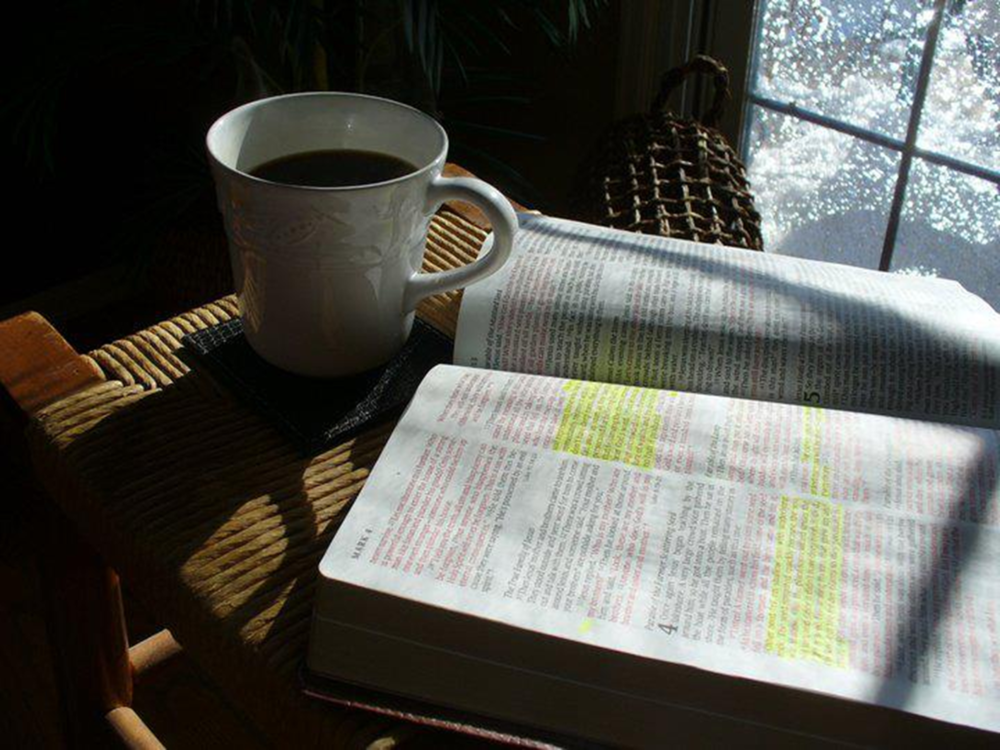
He Shall Bear

The phrase is repeated four times in Exodus 28. Said it before, said it again, repetition is God’s way of saying, “Listen up!” Also discovered that the phrase is used nowhere else other than in this chapter . . . this portion of Scripture detailing the LORD’s instruction to Moses about the garments of the high priest. And as I hovered over these verses I felt compelled to highlight them with one of my colored pencils. But which one? I don’t have a color for high priest . . . or do I? And so I highlighted these four occurrences of the phrase with the same highlighting I use for Jesus, the Christ. For He shall bear . . .

And you shall set the two stones on the shoulder pieces of the ephod, as stones of remembrance for the sons of Israel. And Aaron shall bear their names before the LORD on his two shoulders for remembrance. (Exodus 28:12 ESV)

So Aaron shall bear the names of the sons of Israel in the breastpiece of judgment on his heart, when he goes into the Holy Place, to bring them to regular remembrance before the LORD. And in the breastpiece of judgment you shall put the Urim and the Thummim, and they shall be on Aarons heart, when he goes in before the LORD. Thus Aaron shall bear the judgment of the people of Israel on his heart before the LORD regularly. (Exodus 28:29-30 ESV)

You shall make a plate of pure gold and engrave on it, like the engraving of a signet, ‘Holy to the LORD.’ And you shall fasten it on the turban by a cord of blue. It shall be on the front of the turban. It shall be on Aarons forehead, and Aaron shall bear any guilt from the holy things that the people of Israel consecrate as their holy gifts. It shall regularly be on his forehead, that they may be accepted before the LORD. (Exodus 28:38 ESV)

The LORD is giving Moses instruction for the building of the tabernacle. The tent of meeting where, above the mercy seat, God would meet with Moses and speak with him. The place that would be sanctified by God’s glory and where, in condescending grace, He would determine to meet with the people of Israel. He would dwell among His people and His people would know He is the LORD their God, their Deliverer who brought them out of Egypt that “I might dwell among them. I am the LORD their God (Ex. 29:42-46).

And integral to the operational dynamic of the tabernacle would be Aaron the high priest. While Moses would be permitted direct access, the people’s access would be through Aaron. He would be their conduit. He would be their advocate. He would be their intercessor. And the LORD declares, four times, “Aaron shall bear . . . “

He would bear their names on His shoulders. He would bear God’s judgment and God’s will for them over his heart. And he would bear their guilt upon his head. All that the people might be “accepted before the LORD.”

And while I know that there are depths to be plumbed here, even just dipping my toe into the water’s edge of this shadow of our great High Priest stirs the heart with awe and adoration.

We have such a high priest. One who bears our name before the throne of God in heaven. On His shoulders, the great Shepherd carries those He has called by Name, and who, by grace through regeneration, know His Name. On His heart, He brings His people to remembrance, interceding for them. The great Shepherd leading them in the ways and will of the Father. Leading them beside still waters and to green pastures.

And on His head, the Great Shepherd having humbled Himself to become the Lamb of God, has borne our guilt once for all. The sacrifice of atonement having been offered on Calvary’s cross . . . the blood able to cleanse us from all sin. And through, and in Him, we too are permitted access into the holy of holies.

That the LORD God might be our God . . . and we, His people . . . He shall bear.

To Him be all glory.


Posted in Exodus | Tagged | Leave a comment

The Treasure of the Kingdom

Thinking about treasure this morning. Not just about acquiring it, but also what we’re to do with it. But the treasure I’m considering this morning is not gold or silver, but something far more valuable and longer lasting. And far from keeping it locked up and hidden away, it’s to be opened and accessed . . . and by implication, shared with others. That’s what we’re to do with the treasure of the kingdom.

Wrapping up my reading in Matthew 13 this morning. Jesus has been revealing truths and dynamics concerning the kingdom of heaven through parables. “Mystery stories.” Not as in “whodunnit?” But as in “whogetsit?” Simple stories grounded in relatable experience that carry a meaning and insight concerning a dimension only accessible by faith. Insights beyond the reach of those with hard hearts of unbelief, but illumination concerning a kingdom which, though sourced in heaven, operates within the hearts of men and women who believe. As such, revealing spiritual reality to those with “ears to hear.”

And Jesus disciples had such ears. “Blessed are your eyes, for they see, and your ears, for they hear,” said Jesus to His own, “For truly, I say to you, many prophets and righteous people longed to see what you see, and did not see it, and to hear what you hear, and did not hear it” (Matt. 13:16-17). And so, Jesus peppers them with parables. Telling them multiple stories, all beginning with the phrase, “the kingdom of heaven is like.”

And as Jesus concludes His Matthew 13 round of “story telling,” He asks His disciples a simple question and then gives them a profound lesson in stewardship. He tells them what they are to do with the treasure of the kingdom.

“Have you understood all these things?” They said to Him, “Yes.” And He said to them, “Therefore every scribe who has been trained for the kingdom of heaven is like a master of a house, who brings out of his treasure what is new and what is old.” (Matthew 13:51-52 ESV)

They were getting it. It would be awhile before they fully understood the depths of it, but they were getting it. And Jesus said that every truth their “ears to hear” received, every dynamic they “eyes to see” saw, every byte of data concerning the kingdom their hearts were able to store, that it was all to be regarded as gold, silver, and precious stones. That, like the scribes who had carefully handled the ancient Scriptures — particularly those like Ezra who had “set his heart to study the Law of the LORD, and to do it and to teach His statutes and rules in Israel” (Ezra 7:10) — they were to regard their degree of understanding as a solemn and privileged stewardship.

They were to regard themselves as heads of households accessing their treasure, both the old and the new, so that the household needs would be met . . . and that the members of the house might be fed . . . and that the family might be nurtured to maturity and productivity . . . and that those outside the family might be reached with the good news of the kingdom.

So too, for those who, by God’s grace, have ears to hear, we are, in a sense, like a “scribe who has been trained for the kingdom of heaven.” Said by Jesus TO His disciples . . . preserved by the Holy Spirit FOR us. And, as such, we are to be ready to access our treasures of knowledge, insight, and Holy Spirit revealed understanding. Treasure not to be regarded as something of our own intelligence or diligence, but gems freely given by the Spirit of illumination and revelation. Gems, both old and new, to be shared. We, as grace trained scribes, and grace compelled stewards, ready to share the gospel with all who have ears to hear.

That’s what we’re to do with the treasure of the kingdom.

For His glory . . .


Posted in Matthew | Tagged , | Leave a comment

Blessed Eyes and Blessed Ears

Many are the benefits of God’s grace. If God extended nothing but mercy for our sin, forgiving our sins on the merit of the once for all paid sacrifice of His Son that would be more than enough to thank Him for throughout eternity. But God, in His great love, has determined to extend more than mercy.

Mercy but primes the pump of abundant, over-flowing grace. Forgiven, yes! But then clothed with the righteousness of another? Sealed with the Third Person of the Godhead? The curtain removed so that we might access the holy of holies? Invited to not only worship in His presence but to abide with Him in intimate communion? Yes! Yes! Yes! And Yes! And more! Many are the benefits of God’s grace.

And this morning I was reminded of another of those benefits as I read in Matthew 13.

Then the disciples came and said to Him, “Why do you speak to them in parables?” And He answered them, “To you it has been given to know the secrets of the kingdom of heaven, but to them it has not been given. For to the one who has, more will be given, and he will have an abundance . . . blessed are your eyes, for they see, and your ears, for they hear. Truly, I say to you, many prophets and righteous people longed to see what you see, and did not see it, and to hear what you hear, and did not hear it.”   (Matthew 13:10-12a, 16-17 ESV)

Said TO Jesus’ disciples. Recorded FOR all those who would become disciples through faith in the gospel. And so, this morning, I’m feeling like a man of blessed eyes and blessed ears.

Add it to the list of the benefits of grace. Eyes, once blind to the things of God, that now perceive the glory of God all about — in both creation, and in situation. Ears once stone-deaf to the sounds of life beyond this earth, now attuned to the rhythm of heaven as it calls us to consider things above even while we deal with things below. Once registering a zero KQ, Kingdom Quotient, now given to know the secrets of the kingdom of heaven . . . and that, in abundance!

Blessed eyes . . . blessed ears.

But, as it is written, “What no eye has seen, nor ear heard, nor the heart of man imagined, what God has prepared for those who love him” — these things God has revealed to us through the Spirit. For the Spirit searches everything, even the depths of God. For who knows a persons thoughts except the spirit of that person, which is in him? So also no one comprehends the thoughts of God except the Spirit of God. Now we have received not the spirit of the world, but the Spirit who is from God, that we might understand the things freely given us by God. (1Corinthians 2:9-12 ESV)

We have been given eyes and ears to understand the things freely given us by God. And the more we take in . . . the more we receive and believe . . . the more which will be given. And, says the Lord, we will have “an abundance.” Not because of who we are . . . but because of who He is. Not because of what we can do . . . but because of all He has done. All as a result of over-flowing grace.

Many are the benefits of God’s grace. Eyes that see and ears that hear being among them. Amen?

To God be the glory!


Posted in 1Corinthians, Matthew | Tagged , , | Leave a comment

Praising Him in the Storm

I pulled this one out of the archives. After reading Psalm 29 this morning, I sat back and hovered over the command, “Worship the LORD in the splendor of holiness.” And, as I’m noodling on it, I thought I must have written some thoughts down concerning this magnificent psalm sometime in the past. Yup, I did. Back in 2010. I’ve pulled it out . . . brushed it off . . . and touched it up. Five years later, I’m again intrigued by the thought of praising Him in the storm . . .

It’s been a while since I’ve enjoyed a good thunderstorm . . . a while since I took advantage of a wall-rattling storm to just sit and listen and watch. There is something about sitting there anticipating the next peal of thunder as it rolls in and then explodes overhead . . . about watching the sky, waiting for the next time it lights up . . . about witnessing a bolt of lightning connect the heavens to the earth. Have you ever seen the lighting and then started to count as you waited for the thunder . . . only to not even get to “two” before your house is hammered with what seems like a sonic boom? It’s kind of scary! . . . and kind of exhilarating! . . . all at the same time. But you know, for all those times I took to “enjoy” a good thunderstorm, I never once wrote a song of praise because of it. David didn’t waste the opportunity.

I’m reading Psalm 29 this morning. Seven times in these 11 verses David describes “the voice of the Lord.”

“The voice of the LORD is over the waters; the God of glory thunders . . . the voice of the LORD is powerful . . . the voice of the LORD is full of majesty . . . The voice of the LORD breaks the cedars . . . The voice of the LORD flashes forth flames of fire . . . The voice of the LORD shakes the wilderness . . . The voice of the LORD makes the deer give birth, and strips the forests bare . . . ”    (Psalm 29:3-9 ESV)

Awesome! It makes me think of some of those hot summer night thunder and lightning storms we experienced when we lived in the interior of B.C.. You knew you were witnessing raw power unleashed from the sky. Oh, had I only had my head more in the game, such storms would have also been opportunities to recognize something of the power of God. Then I too, just as David did, could have praised Him in the storm.

David’s response to bone rattling-thunder and eye-blinding lightning was to call all of heaven to a worship meeting.

Ascribe to the LORD, O heavenly beings, ascribe to the LORD glory and strength. Ascribe to the LORD the glory due His name; worship the LORD in the splendor of holiness. . . . and in His temple all cry, “Glory!”   (Psalm 29:1-2,9b ESV)

Talk about creating your perfect environment for a worship concert. The all natural light show . . . the special effects . . . the hammering, low frequency bass sounds emanating from a cloud constructed sub-woofer. All creating the perfect venue as the participants look toward the heavens and to the Author of the “production” and declare, “It’s time to give Him glory!” David saw in the storm the power of God . . . the majesty of God . . . and rather than analyze the physical phenomenon in terms of barometric pressures and such, he instead responded with worship.

Worship the Lord in the splendor of holiness.

Oh, how I love that thought! There’s the idea of the holy beauty of the dwelling place of God . . . that inner sanctuary . . . that place “behind the curtain.” That place where no defiled thing is permitted . . . or could even exist. The glory of God so present that it ushers out anything contrary to His holy, holy, holy nature.

But there’s also a thought here of the worshiper, himself, being adorned in the splendor of holy garments. I can respond to David’s call this morning and worship in the splendor of holiness because of the garments I’ve been given in Christ. My sin atoned for . . . the stain of rebellion washed away by the blood of the Lamb . . . the rags of sin exchanged for a robe of righteousness. In Him, I reside in the splendor of holiness . . . in Him, I reflect the splendor of holiness . . . in Him, I have unrestricted access into the splendor of holiness, the holy of holies, that I might give unto the Lord the glory due His name. I’m all dressed up and have a place to go! I too, can praise Him in the storm.

Can’t wait for the next big thunder and lightning storm. May it be a call to worship.

Because of grace . . . for His glory.


Posted in Psalms | Tagged , | Leave a comment

A Homing Instinct

Paul stands in the midst of the Areopagus and addresses the philosophers and “religious” men of Athens (Acts 17:16-34). His eye had taken in the objects of their worship . . . and his spirit was exasperated at the folly of such “smart guys” thinking that “the divine being is like gold or silver or stone, an image formed by the art and imagination of man.” What foolishness! But one thing these idols did indicate, is that these men had a homing instinct.

Paul, in his dissertation as to the identity of “the unknown god,” provides a masterful summary of the dynamics put in play by “the God who made the world and everything in it.” He explains that this God is the Lord of heaven and earth and, as such, doesn’t live in temples made by man. Nor is He dependent on human hands to meet His needs and satisfies His appetites. In fact, this God is supreme . . . He the genesis of everything else. He is the One who, in Himself, gives life and sustaining breath to all mankind. This is not some puny fake god that is put on a shelf or encased in a shrine. But Paul’s God, as declared by the prophet Isaiah, is a God whose throne is heaven, and the earth is His footstool (Isa. 66:1). And as such, He has put within the heart of men a homing instinct.

And He made from one man every nation of mankind to live on all the face of the earth, having determined allotted periods and the boundaries of their dwelling place, that they should seek God, in the hope that they might feel their way toward Him and find Him. Yet He is actually not far from each one of us . . .   (Acts 17:26-27 ESV)

That they should seek God. That they should pursue their homing instinct.

Creation bearing testimony to all men that something greater than themselves exists. The heavens stirring the souls of all people to have an innate sense of a dynamic that exists beyond just their five senses. Though creation testifies of a Creator, and though they seek God, and though He is “actually not far from each one of us,” they are blindfolded by sin. Like children playing pin the tail on the donkey, they wander towards something in hope of hitting the mark and securing some sort of benefit, but don’t know exactly where it is or what the prize could be.

Enter “the Man.”

The times of ignorance God overlooked, but now He commands all people everywhere to repent, because He has fixed a day on which He will judge the world in righteousness by a Man whom He has appointed; and of this He has given assurance to all by raising Him from the dead.   (Acts 17:30-31 ESV)

Turn your eyes away from your idols and altars and look to the Man, to the One who has conquered death. Take off the blindfold and gaze intently on Him who, through the validation of resurrection, can be believed when He says, “I am the way, the truth, and the life” (John 14:6). Stop groping aimlessly, arrogantly relying on your own ingenuity and intuition, and confess that you are blinded by sin and in need of a Savior who can give sight to the blind. Humble yourselves before the God of heaven and believe that the One He has sent to “judge the world in righteousness” has also paid the price for the world’s unrighteousness. And that, for all who believe, there is no condemnation because they are in Christ Jesus the Righteous One (Rom. 8:1).

O’, how hard men and women have worked at suppressing their homing instinct. Many not seeking any god, but instead setting themselves up as their own idols. Others refusing to acknowledge in their head what they sense to be true in their hearts.

But for those who, by God’s grace, have heard the call to come home, and have responded by faith, to them belongs the prize . . . life to the full. Knowing abiding communion with the Creator, because of the finished work of the cross through His Son. Fully assured of eternity in His presence . . . confident they’re going home.

By His grace . . . for His glory.


Posted in Acts | Tagged | Leave a comment

So They Did

Working my way through Exodus. Reading of the escalating signs performed by the LORD through Moses to try and convince a hard-hearted Pharaoh to let His people go. And, as perhaps expected, my focus has been on Moses and Pharaoh . . . and, to be honest, probably more on Pharaoh. He’s in a game of chicken that he can’t win. He has set his “car” on a collision course with the God of the universe and refuses to take his foot off the gas. Don’t know exactly what he’s thinking, but despite the indisputable signs and wonders performed in the land, Pharaoh’s determined not to swerve. And I know that God has hardened his heart . . . and that he has hardened his heart . . . but it’s just jaw-dropping to read of his arrogance and stubbornness even as Egypt is literally torn down around him.

But this morning, a sentence jumped off the page that reminded me that, beyond Moses and the collective obstinacy of the Egyptians, there’s a third group of people who are part of this drama playing out, the people of Israel.

Remember them? Having grown into a great multitude they had been forced into hard labor by the Egyptians as a preventive measure against any inclination toward insurrection. It was with their elders that Moses met with and told of the LORD’s plan to deliver them. And they liked what they heard, “and the people believed” (Ex. 4:31). But that belief was short-lived when, after Moses’ first meeting with Egypt’s king, Pharaoh turns up the heat on his Israelite workforce requiring them to hit their production numbers amidst impossible demands. Then, these once believing elders track down Moses and curse him, “The LORD look on you and judge, because you have made us stink in the sight of Pharaoh and his servants, and have put a sword in their hand to kill us” (Ex. 5:21)

So that’s Moses’ starting point . . . angry, hard-hearted Pharaoh . . . angry, disheartened people. Great! The LORD has everybody exactly where He wants them.

Fast forward a few plagues and Moses is telling these same people about God’s Passover plan. Quite an incredible story of God’s plan to send an angel of death to strike the firstborn of all Egypt. And that, to avoid the disaster, they were to take a lamb, . . . a lamb without blemish, and kill it. They were then to apply its blood to the door frames of their houses so that, when the LORD passed through to strike the Egyptians, He would see the the blood on house and would pass over that door, not allowing the destroyer to strike that house. That was the plan. That’s it. Angel of death coming . . . kill a lamb and put some blood on the doorframe . . . all will be well. So, how do the Israelites respond?

And the people bowed their heads and worshiped. Then the people of Israel went and did so; as the LORD had commanded Moses and Aaron, so they did.
(Exodus 12:27b-28 ESV)

So they did. With heads bowed in awe . . . and hearts lifted in worship . . . the people heard the plan, believed the plan, and so they did the plan. And while I know this motley group would not be the most consistent testimony of faith, for right now, they believed and so they did.

So, while the drama of the plagues was primarily a showdown between a stubborn king and a sent deliverer, it also played out in the hearts of a desperate people to produce, quite literally, a saving faith. They believed God was able to do what He said He would do that night, and so they obeyed. They believed that if God said to apply the blood then all they needed to do was to apply the blood. While there had been much collateral damage in Egypt throughout the showdown, there had also been a lot of collateral faith building throughout God’s people.

That’s how our God works. And that’s why His people respond the way they do.

Because of His grace . . . and for His glory.


Posted in Exodus | Tagged , | Leave a comment

Evidence of Friendship

We got a bit relationally messed up when we moved down to the States 11+ years ago. We had been warned by an expert in U.S./Canadian cultural differences that we might encounter it.

In general, she said, Americans were more open about the stuff they’d talk about to acquaintances than were Canadians. To share such “stuff’ in Canada was a pretty good indicator that you were “going deep” with someone and were developing a real friendship. Not so much, down here. Here, we were told, you could be thinking you were becoming “best buds” because of what you and someone else were sharing, only to find that the next day they had forgotten your name. (Not a good / bad or right /wrong thing . . . just a cultural difference thing). Thus, on more than one occasion, the girls, or even Sue and I, would think we were connecting with someone only to find out, we weren’t. Ouch! Took awhile to get used to that.

But the fact of the matter is, depending on the culture, what we share with someone else, and what they share with us, is a pretty good indicator of the depth of friendship that is being developed. Reminded of that this morning as I read the Twenty-Fifth Psalm.

The friendship of the LORD is for those who fear Him, and He makes known to them His covenant.   (Psalm 25:14 ESV)

And check it out in the NASB, or NKJV . . .

The secret of the LORD is with those who fear Him, And He will show them His covenant.   (Psalm 25:14 NKJV)

And here’s the verse in the NIV . . .

The LORD confides in those who fear Him; He makes His covenant known to them.   (Psalm 25:14 NIV)

The word at the center of the difference in translations literally refers to “a session.” The idea is that of a company of people in close deliberation. It implies intimacy, consultation, a sharing of secret things. Not a word, I’m guessing, that is used to describe casual acquaintances. But one that refers to those who have gone beneath the surface in revealing themselves. So, you can kind of see why some translations emphasize the sharing of a secret, while the ESV emphasizes the implication, that this is something done among friends. That the sharing of secret things is evidence of friendship.

Ok . . . so after reconciling the translation difference, time to pause . . . and noodle on it . . . and then sit back in fresh awe and wonder.

That the LORD . . . that Jehovah . . . that “the existing One” . . . would enter into intimate, secret-sharing, covenant revealing relationship with anyone speaks of the depths of the love of God and of the unbelievable privilege extended to man. That He would, as it were, extend such friendship to those once in rebellion, to those who really have nothing to bring to the relationship, testifies anew to the abundant grace that flows from Heaven’s Throne.

Think about it. Everything we know about God . . . whatever understanding we have as to His ways . . . to whatever degree we have believed and appropriated His promises . . . it all testifies to the intimate nature of the relationship the Father desires with us. These things are not known because of how bright we are . . . or how well we were raised . . . or even how much we’ve studied the Scriptures. But these things are, ultimately, known by us because of the friendship of the LORD. Because He has chosen to “confide” in us. Because He has determined to share the secrets of the things of the kingdom with us.

We know God to the degree we know God, because He has revealed Himself to us. Because He, through the finished work of His Son on the cross, and by the active agency of His Spirit on the earth, extends to us His friendship.

Can anyone say, “Unbelievable!” How about, “Thank You, LORD!”

That is the “culture” of the kingdom. For those who humble themselves in reverent awe before Him, He draws them into “conversation,” revealing Himself and His friendship to us. And guess what? He doesn’t forget our name the next day!

Let us praise His name forever!

By His grace . . . for His glory.


Posted in Psalms | Tagged | Leave a comment

And He Knew . . .

They had hit the wall. The oppression had become too much. The Egyptian taskmasters had become ruthless and their demands were beyond any manner of reason. Their burden had become too great. Life for the Israelites in Egypt had become overwhelmingly “bitter with hard service, in mortar and brick, and in all kinds of work in the field” (Exodus 1:14). And so, “the people of Israel groaned because of their slavery and cried out for help” (Exodus 2:23).

Never been there . . . but can relate. I can’t relate to the hard labor . . . nor to the loss of freedom . . . nor to the despair of forced submission to a ruthless taskmaster. But I can relate to being in a life state that is so hard, that all that’s left is groaning and crying out for help. I can relate to hitting the wall . . . of trying to do my best . . . with all my might and strength . . . and still coming up short . . . way short . . . as in, helpless-to-help-myself-or-anybody-else short. And it’s at that point, and during those sorts of tough times, that there is comfort and hope in something I read this morning. And He knew . . .

And God heard their groaning, and God remembered His covenant with Abraham, with Isaac, and with Jacob. God saw the people of Israel–and God knew.
(Exodus 2:24-25 ESV)

Noodle on that. God heard . . . God remembered . . . God saw . . . and God knew.

He heard their cries. The Majesty enthroned in heaven has ears to the ground for His people on earth. He is not a God who can’t hear our whispers amidst frailty and failures. Not deaf to those times when we just simply run out of gas. Doesn’t ignore “911 prayer.” Hasn’t tuned out the long, pleading petition. He is a God who hears.

What’s more, hearing their cry, He looks upon His people. He sees their situation. Knowing their frame, He is moved with compassion as He takes in their struggle.

And He remembers. He remembers His promise. He knows the call He has put on their lives when He claimed them for His own and drew them to Himself.

So, in hearing, and seeing, and remembering, He knows. He acknowledges their situation. He takes notice of their plight. He recognizes when it is time to act.

And because He hears, and sees, and remembers, and knows, I can trust . . . I can rest . . . I can wait until He brings His deliverance.

He has rescued me from the bondage of sin and death. He has allowed me exodus through the blood of Jesus applied to “my house.” He has set before me a promised land. He has purposed to conform me to the image of His Son. And He has promised to finish the work which He has begun (Php. 1:6). And so, when, not if but when, I hit the wall, I can cry out with confidence. Confidence that He hears, He sees, He remembers, and He knows.

And confident that His grace will be sufficient.

Amen?


Posted in Exodus | Tagged | Leave a comment

Jesus Knows the Name

Don’t really know why . . . or where I’m going with this thought . . . but, for some reason, this morning I find myself hovering over the names of Jesus’ twelve disciples as recorded in Matthew 10. And I’m asking myself the question, “Self, what’s in a name?”

And He called to Him His twelve disciples and gave them authority over unclean spirits, to cast them out, and to heal every disease and every affliction. The names of the twelve apostles are these: first, Simon, who is called Peter, and Andrew his brother; James the son of Zebedee, and John his brother; Philip and Bartholomew; Thomas and Matthew the tax collector; James the son of Alphaeus, and Thaddaeus; Simon the Cananaean, and Judas Iscariot, who betrayed Him. (Matthew 10:1-4 ESV)

It was Thaddaeus who initially caught my eye. Thaddaeus? Who’s he? While I may not know a lot about all the apostles, at least I thought I’d recognize their names when I come across them. But Thaddaeus. Not much “brand recognition” there. If I were to be asked the question, “True or False, Thaddaeus was one of Jesus’ twelve disciples?” . . . I’d have a 50/50 chance of getting it right. And it just hit me, Thaddaeus . . . why don’t I recognize that name at all?

A little bit of digging and I come to find that, in Luke’s gospel and his Book of Acts, this disciple is referred to as “Judas the son of James.” And in John’s gospel, after Judas the betrayer leaves the upper room where Jesus and the twelve have gathered for Passover, Jesus is asked a question by one of the disciples referred to as “Judas not Isacriot)” (John 14:22). Okay . . . so Thaddaeus is Jude. The same Jude who wrote the one-page letter in my Bible. Mystery solved. Lesser known character identified. All is good.

But so what, if I didn’t know him when I read his name? So what, if Thaddaeus isn’t the household (as in “house of faith” – hold) name that Peter or James or John is? So what if, comparatively, in terms of sheer words within the Book, he’s more of a “bit player?” The fact that I had trouble with his name and that, in some ways, he’s kind of hidden in the tapestry of the New Testament story, really doesn’t matter. The realization I’m coming to as I noodle on Thaddaeus, is that Jesus knows the name.

Jesus called the name to Himself. Jesus determined to bring the name into His inner circle. Jesus sent the name out, along with the others, and gave him authority over unclean spirits, disease and every affliction, and asked him to proclaim the good news that “the kingdom of heaven is at hand” (Matt. 10:7). And Jesus has given the name a new name “that no one knows except the one who receives it” (Rev. 2:17).

Jesus knows the name. The name doesn’t need to be worried about making his name known . . . doesn’t need to be concerned with notoriety . . . or with his own “brand recognition.” In fact, the name prefers to be invisible that he might reflect only THE NAME — The Name that is above every name. The Name by which all, who believe, are delivered from sin and death.

And there is salvation in no one else, for there is no other name under heaven given among men by which we must be saved. (Acts 4:12 ESV)

Jesus knows Thaddaeus’ name. And He knows mine. And that’s enough . . . that’s more than enough!

To Him be all glory . . .


Posted in Matthew | Tagged | Leave a comment

Kingship Belongs to the LORD

O’ the wonder of the Twenty-Second Psalm. That it is Jesus’ song is evident from the very first line, “My God, my God, why have You forsaken Me?” The opening lyric of the song is that “sung” by the Lamb of God upon the cross (Matt. 27:46). As such, you can’t help but walk through Psalm 22 as though treading on holy ground as you are invited to experience, up close and personal, the suffering of the Messiah.

But though there is a dark cloud over much of the psalm, just as darkness hung over the cross that day, at its foundation is a message of deliverance, hope, and victory.

The afflicted shall eat and be satisfied; those who seek Him shall praise the LORD! May your hearts live forever!   (Psalm 22:26 ESV)

Where does that come from? Amidst the mocking and scorn . . . amidst ravenous attacks of the surrounding bulls of Bashan . . . amidst being poured out like water, heart becoming like wax, strength dried up like a fragile earthen vessel . . . amidst the pierced hands and feet . . . how can there be a hope of feasting and eating until the soul is filled? What, in the midst of this, could possibly lead to such joyful praise?

Short answer: kingship. Royal power. The right to have dominion. That the kingdom belongs to the One who suffered.

All the ends of the earth shall remember and turn to the LORD, and all the families of the nations shall worship before You. For kingship belongs to the LORD, and He rules over the nations.   (Psalm 22:27-28 ESV)

Add that to your list of universal, eternal, and eventually to be recognized by everyone, truths. Kingship belongs to the LORD.

He rules over the nations. Always has, always will.

The amazing thing though, is the lengths to which the King would go to secure for Himself loyal subjects. That He would humble Himself, divesting Himself of His royal garments, for a time, that He might come among us as one of us. That He would humble Himself and take upon Himself the fullness of our experience . . . yet without sin. That He would humble Himself to the point of death, even death on a cross. And that He would do this to tear down the barrier preventing entrance into His presence, the debt owed because of our sin and transgression. In His own body, He bore the penalty for our disobedience. In His flesh, abused at the hands of His creation, He was forsaken of the Father, that He might pay the wages of our sin, satisfying the just demands of a holy God.

Nevertheless, all the while, kingship belongs to the LORD.

He ruled then, even in His humility. He rules now in the hearts of men and women who are willingly submitted to His authority by faith. And, one day, He will rule such that all the ends of the earth shall know Him . . . and turn to Him . . . and worship before Him.

O’ what a King! O’ what a Savior! To Him be all glory . . .


Posted in Psalms | Tagged | Leave a comment