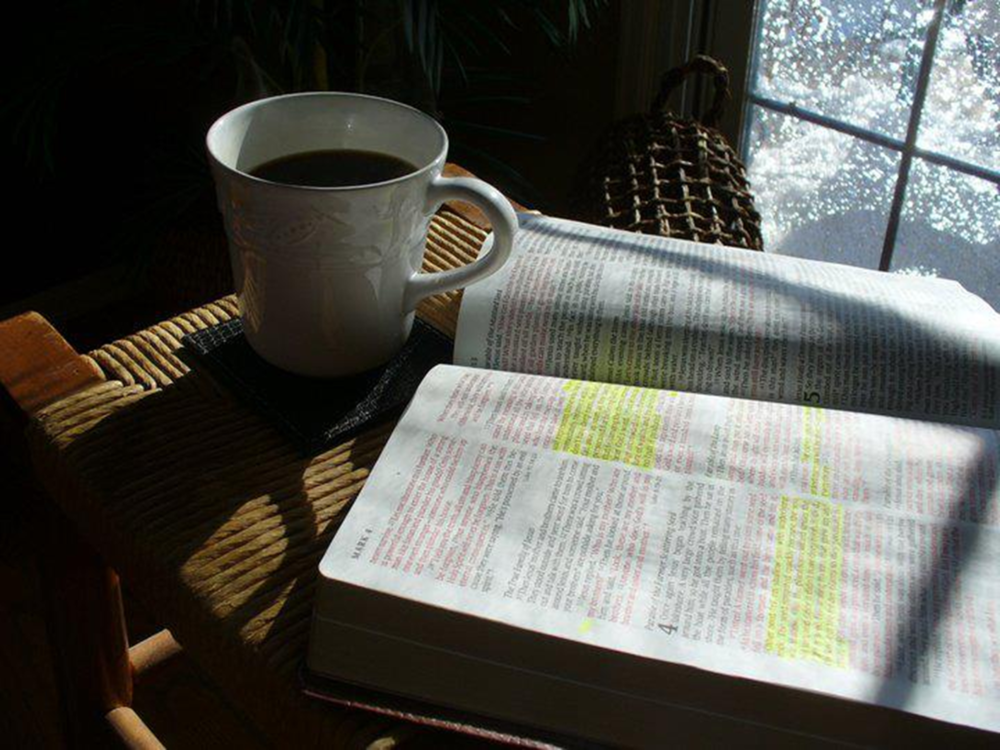
Nature or Nurture? . . . Or Something Else?

Continuing this morning to work my way through Solomon’s Twitter feed . . . aka Proverbs. And Wisdom continues to speak, providing insight concerning the dynamics of human nature, instruction as to skillful living, and indications of how to recognize wisdom when you see it. And it’s one of those indications that has me noodling a bit this morning.

Whoever restrains his words has knowledge,
   and he who has a cool spirit is a man of understanding.

(Proverbs 17:27 ESV)

Okay, gonna be honest . . . it’s the phrase “cool spirit” that caught my eye–who doesn’t wasn’t to be cool? (Or, maybe it’s the Holy Spirit directing my attention here . . . seems verbosity verses have been jumping off the page a lot this time through Proverbs).

Anyway, I check out “cool spirit” and see that the ESV has gone with the most literal of translations. Apparently it comes from a root word that means “to chill.” And it has the idea in this context of being calm or self-possessed. Literally “cool of spirit.” That’s why the NKJV translates it “calm spirit”, why the NIV renders it “even-tempered.”

So here you have an indication of where wisdom is taking hold in a person. They will hold back on what they’re thinking. They’re chill and even-keel in their reactions.

As someone who naturally has a tendency to speak first and think later, this is a bit alarming. Too many memories of being anything but cool. Instances that flash to mind of wave-tossed reactions rather than calm seas of reflection. But, though I’m not there yet, I do think I’m more even-keeled, a little more restrained, a little more cool than I once was. So what’s the deal?

If my self-assessment has any merit, then I’m not simply defined by my nature. Naturally, I probably fall more on the “hot head” side of the continuum. So is it just nurture that’s tempered my temper? Simply trying hard enough, and practicing often enough, that has resulted in some measure of keeping it chill when everything in me would just as soon react? Don’t think so. I think it’s something else. Someone else. Wisdom is having her way.

It’s not that I need to behave in a certain way in order to be wise, but that because I am growing in knowledge and understanding, it manifests itself in being more cool — even when I’m anything but cool naturally.

It’s as I get to know how this world is wired and Who wired it . . . as I understand why I’m here, why my nature is flawed, and how God intervened to renew it . . . as I continue to grasp that the source of true righteousness is not in who I am, nor in how well I can perform, but in believing what God has done . . .

As all this takes–and that only by the illumination of God’s Holy Spirit–then nature bows to a new nature. Nurture is less a means and more of an outcome. Such that restrained words and a cool spirit reflect something else at work deep within the heart of a person. And like I said, that something else is Someone else . . . Wisdom.

He is the source of your life in Christ Jesus, whom God made our wisdom and our righteousness and sanctification and redemption.

(1Corinthians 1:30 ESV)

It is no longer I who live, but Christ who lives in me. And the life I now live in the flesh I live by faith in the Son of God, who loved me and gave Himself for me.

(Galatians 2:20 ESV)

As we grow in the grace and knowledge of our Lord and Savior Jesus Christ, He increasingly manifests Himself in and through us. That’s called sanctification. That’s called transformation through the renewal of our minds (Rom. 12:2). And that’s cool.

By His grace. For His glory.

Posted in Proverbs | Tagged , , | Leave a comment

Rebuke is Just Fuel for the Fire

It’s a reminder of the role heat can play in promoting purity. Leave precious metals at room temperature and they can look pretty precious. But apply the right amount of heat and the dross becomes evident. A scum forms on the surface of the molten metal. The dregs once hidden now rise to the surface. The impurities once concealed become evident. At that point, you either deal with the revealed uncleanness by removing it, or you let it settle back in to continue to defile, mar, and impede the potential of these metals created for unique purposes.

This morning, Wisdom says that God will turn up the heat on our hearts in order deal with impurities there as well.

The crucible is for silver, and the furnace is for gold,
   and the LORD tests hearts.

(Proverbs 17:3 ESV)

While the end product is worth it, the process isn’t much fun . . . not for the silver, not for the gold, not for our hearts. Uncomfortable at the very least, but as the temperature increases, perhaps approaching unbearable. Much easier to try and remove yourself from the fire than allow it to do it’s refining work of driving hidden junk to the surface.

And while we can meditate on the number of ways God might “turn up the heat” on our hearts in order to bring stuff that needs to be dealt with into the open, this morning it’s another verse in Proverbs 17 that has me thinking about one particular type of fuel for the fire. Rebuke.

A rebuke goes deeper into a man of understanding
   than a hundred blows into a fool.

(Proverbs 17:10 ESV)

The NIV says that rebuke “impresses a man of discernment more.” The NKJV, that it “is more effective.” But the more literal translation of the ESV explains why. Because it “goes deeper.”

A person of understanding, a person who has invited Wisdom in, and in whom Wisdom is active, while having no more natural affection for correction than anyone else, will be “pressed down” by reproof. It will penetrate deeper. It will cut further. It will hurt more. Why? Because Wisdom is doing her work as the Spirit of God takes the rebuke and fuels the fire revealing more of the impurities.

To be honest. I don’t much care for being rebuked. I know it’s “good for me”, but I don’t like it. I’ve learned to invite “feedback” and know that it’s “a gift,” but most often I’m not crazy about receiving the gift.

How come? If it’s beneficial why am I not more excited by it? Because I don’t like the heat being turned up. As the correction descends, the process that reveals the heart gets increasingly uncomfortable. My initial reaction, my fleshly reaction, is to ignore it, or dismiss it, or rationalize it away. Because rebuke fuels the fire of God’s revealing work.

And beyond the hot-seat dynamic of correction, I’m not much of a fan of seeing what surfaces when the Tester of Hearts actually tests my heart. When He brings to the surface things I’d just as soon leave buried. When He assays what I would naturally choose to ignore.

But a man who welcomes understanding, a woman who embraces wisdom, people who have been given the mind of Christ, will submit to the testing of their hearts. They will deal with the penetrating discomfort of rebuke as it fuels the purifying fire of the Spirit and reveals stuff that needs to be dealt with if they are to be increasingly conformed to the image of Christ.

Not much fun. But part of sanctification’s process. And continuing evidence of God’s love for His children.

“For the Lord disciplines the one He loves, and chastises every son whom He receives.” . . . He disciplines us for our good, that we may share His holiness. For the moment all discipline seems painful rather than pleasant, but later it yields the peaceful fruit of righteousness to those who have been trained by it.

(Hebrews 12:6, 10b-11 ESV)

Rebuke is just fuel for the fire.

And this too, by His grace and for His glory.

Posted in Proverbs | Tagged , , , | Leave a comment

There Is A Refuge

We sang about heaven yesterday morning. One of the songs, probably not the most theological in nature, was a real toe tapper. In what is normally a non-clapping church, some were even moved to assume the “clappetory” position and make a joyful noise to the Lord with their hands as well was with their voice. One senior saint couldn’t keep herself from dancing before the Lord — well, maybe dancing is overstating it a bit, but the joy of the Lord was enough to set her feet moving and her body swaying. Did I mention we were singing about heaven?

I have often thought, and sometimes remarked to the congregation, what an unbeliever might think to be in our midst and watch a group of people standing and singing together at 8:30 a.m. on a Sunday morning.  Much less singing with smiles on their faces and joy in their heart as they declare,

“When I die, hallelujah by and by! I’ll fly away!” 

Written by Albert E. Brumley. Lyrics © Albert E. Brumley & Sons

Weird.

Or not . . .

The wicked is overthrown through his evildoing,
   but the righteous finds refuge in his death.

(Proverbs 14:32 ESV)

At first read, it might sound like the righteous finds refuge in the wicked’s death. But that doesn’t make sense. But for some, neither does it make sense that someone might find refuge in their own death. “When I die, hallelujah by and by! I’ll fly away!”

But that’s the way of Wisdom. “Even in death the righteous have a refuge” (NIV). They are “trustful” in death (YLT). They have hope (AV).

Why? Because the Source of their righteousness conquered death. The One who bore the wrath for their sin on the cross, so that He could justly credit His holiness to their account, rose from the dead on the third day.

Where O’ death is your victory? No where!

What’s more the One who defeated death made a promise to those who are declared righteous by faith.

“Let not your hearts be troubled. Believe in God; believe also in Me. In My Father’s house are many rooms. If it were not so, would I have told you that I go to prepare a place for you? And if I go and prepare a place for you, I will come again and will take you to Myself, that where I am you may be also.” ~ Jesus

(John 14:2b-3 ESV)

Let not your hearts be troubled. The righteous finds refuge in his death. Knowing that where Jesus is, they will be also. “When I die, hallelujah by and by! I’ll fly away!”

There is a refuge for the people of God. Such that, though we mourn through the ugliness of death, though we figure out how to work through the sorrow of separation, though we endure the lasting effects of loneliness when someone has gone, we do not grieve as those who have no hope (1Thess. 4:13). But as those who are sure of refuge.

We sang about heaven yesterday morning. And we shifted from top tapping to hand raising.

When I stand before Your throne
Dressed in glory not my own
What a joy I’ll sing of on that day
No more tears or broken dreams
Forgotten is the minor key
Everything as it was meant to be

And we will worship, worship
Forever in Your presence we will sing
We will worship, worship You
An endless hallelujah to the King

Songwriters: Chris Tomlin / Jonas Myrin /
Matthew James Redman / Timothy John Wanstall

Endless Hallelujah lyrics © Capitol Christian Music Group,
BMG Rights Management

“When I die, hallelujah by and by! I’ll fly away!”

Weird. Wonderfully, marvelously weird!

By His grace. For His glory.

Posted in Proverbs | Tagged , , , , | 2 Comments

A Curse-based Oath vs. Grace-based Determination

You gotta hand it to Nehemiah & Co. They did it!

Despite unrelenting opposition they rebuilt the walls. But perhaps more impressive, after decades of exile in a foreign land they rediscovered the Word. The Law read resulted in hearts stirred. And the more they studied the Book the more determined they were to obey the Book.

But as I get to chapter ten, and knowing how it plays out in chapter thirteen, I cringe a bit as the people led by Nehemiah seek to enter into obedience through a curse-based oath rather than through grace-based determination.

. . . all who have separated themselves from the peoples of the lands to the Law of God, their wives, their sons, their daughters, all who have knowledge and understanding, join with their brothers, their nobles, and enter into a curse and an oath to walk in God’s Law that was given by Moses the servant of God, and to observe and do all the commandments of the LORD our Lord and His rules and his statutes.

(Nehemiah 10:28b-29 ESV)

They knew where they had come from (Neh. 9). It was clear to them why the city had been razed 70 years earlier and why they had been subjected to an extended stay-cation in the land of their enemies. They had rebelled. They had acted presumptuously in the land gifted them. They had embraced the world around them and acted wickedly. They had cast the law behind their backs and killed the prophets. Been there, they thought, don’t wanna go back.

But their God was a God “ready to forgive, gracious and merciful, slow to anger and abounding in steadfast love” — a God who would not forsake His people (9:17). And so, they had a new lease on life in the land of promise. And they weren’t gonna let it go. And so they did all they could see as humanly possible and entered into a “firm covenant in writing” (9:38) with the God of heaven. A curse-based oath.

They accepted the challenge of Moses. Obey and be blessed. Disobey and be cursed. They would perform and be rewarded. And if they didn’t, they would be punished.

Heavy sigh!!! What a burden.

Not that desiring to be obedient was bad. But that thinking obedience was achievable through human effort if only placed under the sword of grave enough consequence. Centuries later Peter would declare such thinking to be a no-win situation. That it would be but a yoke on their neck “that neither our fathers nor we have been able to bear” (Acts 15:10). Curse-based oaths were never intended to be burdens that could be carried to righteousness.

For by works of the law no human being will be justified in His sight, since through the law comes knowledge of sin.

(Romans 3:20 ESV)

Like Nehemiah & Co., the desire of God’s people should be faithful obedience. But ours is not a desire fueled by an oath taken under threat of punishment, instead it is a longing of the heart in response to the finished work of the cross. Not in a strong-willed belief in our ability to obey, but in a soul-submitted humility acknowledging our dependence on the power that raised Christ from the dead. Not in order to win blessing, but because we have already been blessed with every spiritual blessing in heavenly places.

Our hope of obeying lying not in a curse-based oath but in grace-based determination.

Believing we are new creations in Christ. That we are indwelt by the Spirit, are being conformed to His image, and are able to do His will.

Knowing that when we fail and/or tripped up, as will happen as long as the flesh continues to rebel against the law, that His blood shed on the cross is sufficient to cleanse us from all unrighteousness and that His grace is sufficient to restore us and set us again on the path of obedience.

Praise God for setting within us a grace-based holy determination so that, like Nehemiah & Co. desired, we might “do all the commandments of the LORD our Lord.”

By His grace. For His glory.

Posted in Nehemiah | Tagged , , , | Leave a comment

Reveal or Conceal?

Not everything you know, does everybody else need to know as well. That’s the word for me this morning from Proverbs.

A prudent man conceals knowledge,
   but the heart of fools proclaims folly.

(Proverbs 12:23 ESV)

Probably two ways to understand what the teacher is teaching here. The MSG and NLT tip their hands clearly as to how they see the meaning. Prudent people don’t “flaunt their knowledge” (MSG); wise people “don’t make a show” of it (NLT). We’ve all seen them, the know-it-alls who want you to know that they know it all. Solomon says, “You don’t want to be that guy!”

But there’s another way to pick up what’s being laid down here. There’s just stuff we know, things we are aware of, that others don’t necessarily need to know. And we need to know when that stuff is better kept to ourselves.

Personally, I tend to value transparency. Over the years I’ve intentionally tried to practice openness, and that, as a two-way street. I’ve tried to be quick to ask for feedback (and really want it). And, I’ve probably tended to be equally quick to provide it. But this morning, as I chew on the word and reflect on the past, I’m wondering if sometimes I’ve been too quick to share my knowledge. That perhaps, in some circumstances, it might have been better concealed.

And that’s the deal . . . only in some circumstances might it have been better to keep things to myself, not in all circumstances. Or, as the great poet Kenny Rogers put it, “You’ve got to know when to hold ’em, know when to fold ’em.” And that complicates things.

It’s a lot easier, it seems to me, if you choose to do life in a black and white mode. If things are either on or off, then it greatly simplifies the decision making. If I’ve chosen to operate either in a share knowledge mode or a conceal knowledge mode, it keeps things pretty simple–not a whole lot of thinking, or praying, required. But, as I’m reminded this morning, to be mindlessly in the share knowledge mode, is to risk having the heart of a fool. Settling for keeping things simple by being in one mode or the other is the way of the simpleton.

Instead, a prudent person knows when to speak knowledge and when to conceal it.

Prudence. Not a word we use a lot today. Shrewd. Using good judgment. Wise. Not words we see practiced a lot today. Everybody’s got an opinion it seems and with today’s social media platforms, seems few are holding back what they think they know.

But, this morning’s word isn’t about everybody, is about this body in this chair.

I need to know when to speak and when to hold back. When to share, and when not to share. When it’s prudent to reveal, and prudent to conceal.

It’s not an either/or, on or off, thing. It’s about discernment and wisdom. And truth is, I need a mind more attuned than mine is naturally, to navigate such waters. A mind that is more supernatural.

Now we have received not the spirit of the world, but the Spirit who is from God, that we might understand the things freely given us by God. And we impart this in words not taught by human wisdom but taught by the Spirit, interpreting spiritual truths to those who are spiritual. . . . we have the mind of Christ.

(1Corinthians 2:12-13, 16b ESV)

Perhaps I’m quoting these verse a bit out of context, but I think the principle applies. Some things need to be spiritually discerned. Not with the spirit of the world, but through the Spirit who lives in us. Not with reliance on our own human wisdom, but seeking the prudence that comes from above.

And what we need, He has provided. For we have the mind of Christ. We have Wisdom.

That I might seek Wisdom above valuing transparency. Wait for Wisdom to lead before opening my mouth because I think it’s a good idea.

Knowing when to reveal, and when it’s prudent to conceal.

By His grace. For His glory.

Posted in Proverbs | Tagged , | Comments Off on Reveal or Conceal?

The Word Had Its Way

Though rebuilt it was still a shadow of the glory it had been in the day. Sure the walls were in place, the gates re-hung, the temple again marked by the ascending smoke of offerings to the Lord, but it wasn’t the Jerusalem of David’s day, not the temple as Solomon had constructed it.

But really, for hundreds of years before Jerusalem had been razed by the Babylonians, though the physical city stood, inwardly the decay of spiritual infidelity had taken it’s toll. The more the world had crept in, the more the glory had been driven out.

But that was then. This was now. The people were back. The walls stood. The temple billowed smoke. And something occurred in a manner that the people of God hadn’t known for a thousand years. And that, because the Word had its way.

And all the assembly of those who had returned from the captivity made booths and lived in the booths, for from the days of Jeshua the son of Nun to that day the people of Israel had not done so. And there was very great rejoicing.

(Nehemiah 8:17 ESV)

It’s not that the Feast of Booths hadn’t been celebrated since Joshua (1Ki 8:2,65 2Ch 7:9, Ezra 3:4), but not since Joshua had the Israelites celebrated it “like this” (NIV, NLT). Less of religious compulsion, instead of willing response. And what was the catalyst for such a glorious and joyful response? The Word had it’s way.

God had set their hearts to seek Him afresh through His word. They gathered together with unity of purpose and asked Ezra to bring the Book and read the Word (8:1). And the people were all ears and attentively listened as the Law was read (8:3). As the Book was opened, the people stood (8:5)–the Holy Word received with holy reverence. And they worshiped, hands up and face down, at the anticipation of hearing afresh from the God of their restoration (8:6). And they were taught. Learned men taking the Word that was read, and making clear it’s meaning, “so that the people understood the reading” (8:8).

And the Word had its way. They were transformed by the renewal of their mind, discerning the good and perfect and acceptable will of God (Rom. 12:2).

First, they wept tears of contrition as they realized afresh the depths of their past rebellion and the reasons for their exile. But then they were encouraged as they were reminded that they were no longer standing in Babylon, but were now in Jerusalem. And while the city might have been a shadow of a former day, the hearts of the people was set towards heaven in a way they hadn’t been in a millennia, not since the days of Joshua.

And it’s got me thinking this morning about the power of God’s inspired Word. That it truly is “living and active, sharper than any two-edged sword, piercing to the division of soul and of spirit, of joints and of marrow, and discerning the thoughts and intentions of the heart” (Heb. 4:12). That it really is “profitable for teaching, for reproof, for correction, and for training in righteousness” so that the people of God might be equipped for every good work (2Tim. 3:16-17). Such as the good work of obediently celebrating the faithfulness and provision of God.

How often do we think we need to supplement the Word in order “get results”? How often do we look to something else as the means for heart-level change? How often are we tempted to think we’ve outgrown the pat answers of the Bible and are ready for something more “sophisticated”?

I chew on Nehemiah 8 and what I see is the Word having it’s way. A hunger and thirst for righteousness created because they had tasted and seen that the Lord was good. A desire for obedience, not in order to earn favor, but as a response to the abundant favor already showered upon them.

The city around them may have been a shadow of its former glory, but the shadow of God’s glory enveloped them that day as it hadn’t for years. And that, because the Word had it’s way.

By His grace. For His glory.

Posted in Nehemiah | Tagged , , , | Leave a comment

What More Could You Want?

In the day, you normally wouldn’t have seen them hanging out together, for Jews had no dealings with Samaritans (Jn. 4:9b). Samaritans were viewed as an impure and unclean people. But hey, when you’re unclean yourself, guess it doesn’t much matter.

And so the nine Jewish lepers, and their co-sufferer, the Samaritan, had become a bit of a brotherhood. They lived between Samaria and Galillee and at a distance from everyone else (Lk. 17:11-13). And when opportunity came knocking, they went after it as a cohort together.

“Jesus, Master, have mercy on us.”  (Luke 17:13b ESV)

The Healer had come to town. His reputation preceding Him. The crowds, no doubt, following Him. And these ten, with whatever feeble faith they had, together, as Jew and Samaritan, put off their separated anonymity, and with voices lifted up cast the spotlight on themselves as they pleaded for Messiah’s mercy.

When He saw them He said to them, “Go and show yourselves to the priests.” (Luke 17:14a ESV)

That was it. No big production. No “abracadabra!” Just go and let the priests declare you clean. And they went. All of them–including the Samaritan who wasn’t sure if a good Jewish priest would even receive him.

But they had all believed enough to go to Jesus. And they would all believe enough to obey Jesus. And so they went, all of them, though nothing had yet changed. And, records the Scriptures, “As they went they were cleansed” (14b).

They believed. They obeyed. They were healed. What more could you want?

Evidently, their gratitude.

Then one of them, when he saw that he was healed, turned back, praising God with a loud voice; and he fell on his face at Jesus’ feet, giving Him thanks. Now he was a Samaritan. Then Jesus answered, “Were not ten cleansed? Where are the nine? Was no one found to return and give praise to God except this foreigner?” (Luke 17:15-18 ESV)

Don’t know what the nine were thinking. At best, they were so caught up with their new, unblemished skin that they couldn’t wait to be certified clean by the priests and get on with life and so, simply forgot to say, “Thank You!” At worst, they were patting themselves on their own backs for their boldness in taking advantage of the Healer’s presence and stepping forward in faith and could only think to themselves, “We did it!!!” They were on their way to being certified clean, now they’d take it from here. Having left the Healer’s presence, Jesus was outta sight, outta mind.

But one, the Samaritan, returned to worship. He assumed the posture of worship–facedown. He found the place of worship–the feet of Jesus. And he offered the product of worship–praise to God.

Just as he had lifted his voice with his cohort pleading for mercy, now alone with a loud voice he proclaimed the glory of God. And to him Jesus said,

“Rise and go your way; your faith has made you well.” (Luke 15:19 ESV)

Faith and obedience resulting in worship was the indicator that not only had his body been healed, but that his soul had been delivered. That not only was he no longer physically leprous, but he was also no longer spiritually blind. That not only had his skin been restored, but his heart renewed.

Worship, it seems to me, is the fruit of salvation. Giving God glory is the supernatural outcome of having been touched by God’s grace. True healing manifests in heartfelt praise.

Oh, that I might ever stand with the Samaritan. Finding myself frequently at the feet of Jesus giving Him thanks. Might I be kept from a heart that receives the miracle of being made whole without the irrepressible desire to return often to praise the miracle Giver.

Because of His grace. Only for His glory.

Posted in Luke | Tagged , , , , , | 1 Comment

The Righteous

Stick with something long enough, even an annual reading plan, and patterns will start to form, things will become familiar, and lessons learned will repeat. One such lesson, it occurs to me, comes into play when you hit Proverbs 10 and shift into Solomon’s “one-liners.” You gotta know this guy would have been a “tweeter” if tweeting was a thing back then. But I digress . . .

Anyway, seems to me, there’s a bit of a decision that has to be made when you hit chapter 10. While I know that what Solomon writes is for me, is this wisdom about me? Specifically all the stuff about “the righteous.”

Thirteen of the thirty-two verses in this chapter deal with “the righteous” . . fourteen if you include the one concerning “the blameless.”

And for the past several years, when I’ve got to this point in Proverbs, I’ve found myself having a conversation with myself that goes something like this, “Self, these verses are about you. I know you know how unrighteous you are deep down. But these verses are about you and for you because, in Christ, you are the righteous.” And having been reminded of that, I start marking these verses with the color I use for the people of God.

In the thirteen verses about the righteous found in this chapter (fourteen if you include the blameless), there are realities to rejoice in . . .

Blessings are on the head of the righteous . . . The memory of the righteous is a blessing . . . the righteous is established forever . . . the hope of the righteous brings joy . . .

(Proverbs 10:6a, 7a, 25b, 28a ESV)

And there are character qualities to aspire to . . .

The mouth of the righteous is a fountain of life (11a) . . . The tongue of the righteous is choice silver . . . The lips of the righteous feed many . . . The mouth of the righteous brings forth wisdom . . .

(Proverbs 10:11a, 20a, 21a, 31a ESV)

What’s more, there are promises to claim . . .

The Lord does not let the righteous go hungry . . . The wage of the righteous leads to life . . . the desire of the righteous will be granted . . . The righteous will never be removed . . .

(Proverbs 10:3a, 16a, 24b, 30a ESV)

But all this falls by the wayside if you look yourself in the mirror and say, “That’s not me. I know me. I’m far from righteous.”

Instead, I need to let the Spirit remind me, “Yeah, that is you!”

For our sake He made Him to be sin who knew no sin, so that in Him we might become the righteousness of God.  

(2Corinthians 5:21 ESV)

For as by the one man’s disobedience the many were made sinners, so by the one Man’s obedience the many will be made righteous.  

(Romans 5:19 ESV)

For in [the gospel] the righteousness of God is revealed from faith for faith, as it is written, “The righteous shall live by faith.”  

(Romans 1:17 ESV)

Through faith in the Son of God and His finished work on the cross, I am the righteous (the blameless if I include the fourteenth verse). Positionally I have been justified. Practically I am being sanctified.

A good reminder at this point in Proverbs because there’s over forty more truths to come about the righteous. A good reminder, in general, because it’s who I am in Christ.

A good reminder as it brings to mind again His abounding grace.

A good reminder as it evokes a desire to declare is unmatchable glory.

Amen?

Posted in Proverbs | Tagged , , | 1 Comment

Chez Wisdom

Been mostly offline this week as I’ve been on almost full-time grandpa duty. Doesn’t seem possible that one little toddler can consume so much of a grown man’s energy . . . but that’s why I guess, generally speaking, parenting is a young person’s sport. Anyway, while I’ve managed to get in time for reading these past few days, time for putting a few thoughts through a keyboard has been hard to find.

But I’m home this morning. Back in routine. And chewing on some good stuff as I wrap up the first section of Proverbs. And my awe influx for the day? The reminder of having a seat at the table at Chez Wisdom.

Yesterday I read Wisdom’s impressive, awe-invoking bio (Prov.8:22-36). Around since the beginning, Wisdom was there when God created all things. When the Creator made firm the skies, when He established the heavens, when He set limit to the sea, Wisdom was beside Him, “like a master workman.” What’s more, just as God was pleased with what He had created, Wisdom was also “rejoicing in His inhabited world and delighting in the children of man.” Together, the Creator and the Workman “saw everything that He had made, and behold, it was very good” (Gen. 1:31).

And though what started so good went so bad, though rebellion was born when man started to heed other voices, Wisdom never stopped calling out:

“To you, O men, I call, and My cry is to the children of man. O simple ones, learn prudence; O fools, learn sense. Hear, for I will speak noble things, and from My lips will come what is right, for My mouth will utter truth . . .”

(Proverbs 8:4-7a ESV)

Wisdom has always offered truth, something “better than jewels” (8:11). For those who take Wisdom up on the invitation, they find fruit “better than gold, even fine gold, and a yield than choice silver.” To those who love Wisdom, they are granted an unimaginable inheritance, their eternal storehouse filled with treasures (8:19-21).

But Wisdom calls out not as some impersonal drill sergeant barking out orders to be obeyed before some platoon of no-name cadets. Nor is Wisdom postured as but a lecturer at the front of a classroom filling the board with useful instruction. Not some form of distance ed., not just some accessible online content. No, what grabs me this morning is that Wisdom is a hospitable host. One who prepares a great house, sets a fine table, and invites those who have lacked sense and been trapped by simple ways to come and eat.

Wisdom has built her house; she has hewn her seven pillars. She has slaughtered her beasts; she has mixed her wine; she has also set her table. She has sent out her young women to call from the highest places in the town, “Whoever is simple, let him turn in here!” To him who lacks sense she says, “Come, eat of my bread and drink of the wine I have mixed. Leave your simple ways, and live, and walk in the way of insight.”

(Proverbs 9:1-6 ESV)

Wisdom has built a house–Chez wisdom.

And has prepared a feast and set a table. And, far from passively waiting for those to find the place, the invitation is sent out from the highest places, “Come!” And far from instructing from a distance, Wisdom is at the table.

The offer is for more than instruction, it is for insight. The venue not some classroom, or inanimate church building. But a table, a table in a house Wisdom has built. A table in a house Wisdom has built which offers food for life through communing with the Author of Life.

And I can’t help but think, who am I to have a seat at the table? Who am I to have been given ears to hear the invitation? A man once happy to ignorantly walk in his simpleton ways. A man who once lacked sense or understanding. Now a man at the table. Dining at the house of the seven pillars. A reserved seat at Chez Wisdom.

Because of grace. For His glory.

Posted in Proverbs | Tagged , , , | 1 Comment

God’s Good Hand

I’m not sure who said it, but as I hover over Ezra’s continuing story, I’m reminded of someone saying, “We’re all worship hogs!” But Ezra wasn’t.

Though, within the heart of man, there might be the natural desire to want to receive the credit–especially when credit is due–Ezra seems to be somewhat counter-natural. When we might be prone to see how some accomplishment might build our resume, Ezra seems to have marched to the beat of different drummer. And I’m thinking the beat Ezra marched to was the word of God.

Blessed be the LORD, the God of our fathers, who put such a thing as this into the heart of the king, to beautify the house of the LORD that is in Jerusalem, and who extended to me His steadfast love before the king and his counselors, and before all the king’s mighty officers. I took courage, for the hand of the LORD my God was on me, and I gathered leading men from Israel to go up with me.

(Ezra 7:27-28 ESV)

It was Ezra who had rubbed shoulders with the highest political powers over Babylon. He who had requested another commissioning permitting exiles with a heart for home to return to Jerusalem and rebuild. It was Ezra the scribe who made the ask, and to whom “the king granted him all that he asked” (7:6). What a guy! What a negotiator! Not only does he secure the permission for the trip, but the funding for it as well. What’s more, he’s ready to return to Jerusalem with financing in place to help in the rebuilding of the temple and of Jerusalem.

But rather than take credit, Ezra took courage. Rather than boast in what he had done, his confidence was bolstered in what God was doing. For in it all, rather than tell about his hard work, he testified of God’s good hand.

Since Ezra comes on the scene in chapter 7 in the book bearing his name, God’s good hand clangs, again and again, like a bell tolling in the background. While a lot is said and done by Ezra the man, there is a repeated acknowledgement that what is being accomplished is by God’s good hand.

. . . the king granted him all that he asked, for the hand of the LORD his God was on him . . . he came to Jerusalem, for the good hand of his God was on him (7:9) . . . I took courage, for the hand of the LORD my God was on me . . . And by the good hand of our God on us, they brought us a man of discretion . . . The hand of our God was on us, and he delivered us from the hand of the enemy and from ambushes by the way.

(Ezra 7:6, 9, 28; 8:18, 31)

By anyone’s account in any age, this Ezra the scribe was a rock star. What he accomplished was nothing less than amazing. And yet when it comes to getting the glory, he takes a pass, pointing out repeatedly that it was only by “the good hand of our God on us.”

So what makes this guy a glory giver rather than a worship hog. I want to suggest that, at least in part . . . and I’m thinking a very, very, big part . . . it was because, not only was the hand of God on Him, but the word of God was in him.

. . . for the good hand of his God was on him. For Ezra had set his heart to study the Law of the LORD, and to do it and to teach His statutes and rules in Israel.

(Ezra 79b-10 ESV)

I’m thinkin’ there’s a connection between Ezra’s heart being set on God’s word and Ezra’s head recognizing God’s hand.  A tie between his desire to study, to do, to teach, and to give God glory.

He knew that his favor before the king wasn’t just because of his charismatic or persuasive nature, it was because of a divine dynamic. It wasn’t just his convincing arguments that influenced the king’s decision, it was the Spirit’s working that directed the king’s heart. God had set things in motion as He had promised decades before by the prophets. And Ezra just got to be a bit player in the greater story God was directing.

And Ezra inspires me to see the worship hog in me be put down as the word of God in me lifts Christ up. That the “me monster’ would decrease, and that He who is Master would increase.

The good hand of God on me, by His grace. The goodness of God always declared, for His glory.

Posted in Ezra | Tagged , , , | 1 Comment