Under the Influence

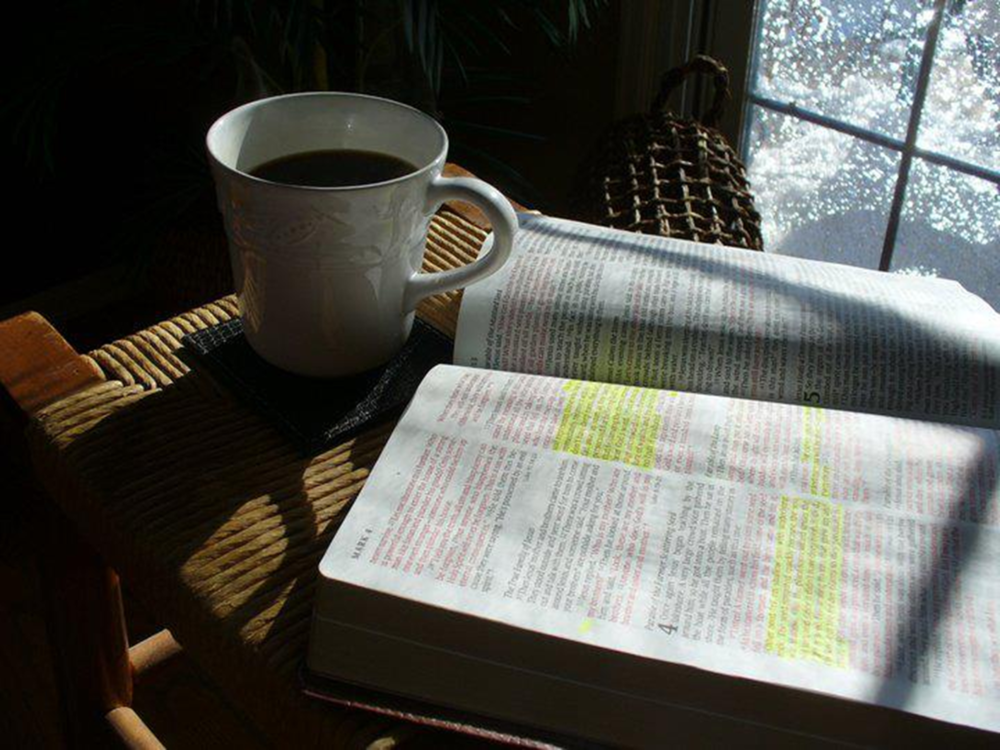
A bit overwhelmed this morning. Awestruck, as a truth I’ve known for most of my Christian life hits home with a renewed clarity. I am under the influence.

Paul’s pretty clear in my Romans 8 reading this morning: if I belong to Jesus then the Spirit of God dwells in me.

You, however, are not in the flesh but in the Spirit, if in fact the Spirit of God dwells in you. Anyone who does not have the Spirit of Christ does not belong to Him. . . . If the Spirit of Him who raised Jesus from the dead dwells in you, He who raised Christ Jesus from the dead will also give life to your mortal bodies through His Spirit who dwells in you.

(Romans 8:9, 11 ESV)

Reading that one word three times in those two verses was like hearing a great tower bell clang resoundingly over and over and over. The Spirit of God dwells in you. The Spirit who raised Jesus from the dead dwells in you. “Yes,” a still small voice says, “in case you didn’t hear it the first two times, I dwell in you.”

So guess what? I’m under the influence. Literally!!!!

I’m sitting here and chewing on the idea of God dwelling in me. That by His Spirit, the Spirit of Christ, He has taken up residence. He has moved in. And more than being that unbreakable seal guaranteeing my future inheritance (Eph. 1:13-14), more than being the One who will give life to this mortal body after mortality has passed, He is the One who, right now, is ready, willing, and able to lead me (8:14) . . . and that, from within.

No cloud of smoke hovering over me by day.  No pillar of fire going before me at night.  Rather, the 24/7 presence of God within me, . . . by His Spirit. Can anyone say, “Unreal!!!”

I did a bit of Greek lexicon work and notice that it’s not exactly the same original word used for each of the “dwells.” The first two “dwells” are the same word and are pretty straight forward. They carry the idea of occupying a house, or residing in a residence. The implication being that my spirit cohabits this body with the Creator of this body through His Spirit. That’s pretty amazing!

But then the third use of the word looks like a Greek compound word. Beyond just having moved in, it carries the idea of cohabiting with the intent to direct . . . or influence. And that’s even more amazing!

Not only is He the Regenerator, the One who gives new life, but He is also the Illuminator, the One who brings new light. Not only is He the Attester, Himself bearing witness with our spirit that we are children of God (Rom. 8:16), but He is also desires to be the Influencer through the dynamics of His active agency as Helper, Intercessor, and Sanctifier. Ultimately, He wants to be the Transformer, conforming me more and more into the likeness of the Son.

Noodle on it for a bit. Look in the mirror and say to yourself, “I’m looking in the face of someone within whom the Spirit of God dwells!” How awesome is that!?!

He is ever present, mine is to never forget it.

He is longing to lead, mine is to seek to follow.

He is ready to influence, mine is to long to be under the influence.

By His grace. For His glory.

Posted in Romans | Tagged , , , | 1 Comment

The Need for Deliverance

I have used the analogy repeatedly throughout the years — worse than being in a minefield, is not knowing you’re in a minefield. At least if you know it, you can do whatever you can to try and step carefully . . . and lightly . . . to find your way out of it. But not knowing, and you’re oblivious to the danger and have little regard for where, or how, you walk.

And, there’s something, in my mind, even worse than not knowing. It’s being told you are in a minefield and not believing it. Being warned of the danger and disregarding it or, worse yet, seeking to disprove the warning by carelessly making light of it. The tendency then is to recklessly stomp around just to prove others wrong. Can anyone say, “KABOOM?”

I’m reading in Romans 7 this morning and being reminded of a minefield.

So I find it to be a law that when I want to do right, evil lies close at hand. For I delight in the law of God, in my inner being, but I see in my members another law waging war against the law of my mind and making me captive to the law of sin that dwells in my members.

(Romans 7:21-23 ESV)

There is a battle going on. A battle between the redeemed inner being which delights in the law of God and the flesh, the old man lingering on in our natural bodies, still susceptible to the temptations of sin. While the things of God might permeate the mind which, through regeneration, has been made alive to what is spiritual, sin still dwells in my members, that which is prone to the sensual. While I long to be under the influence of what is holy, there is something working in opposition which seeks to make me captive again to sin.

For the desires of the flesh are against the Spirit, and the desires of the Spirit are against the flesh, for these are opposed to each other, to keep you from doing the things you want to do.

(Galatians 5:17 ESV)

As my daughter would say, “It’s a thing.” It’s real. Better believe it or we risk carelessly stomping around in a minefield.

And avoiding the danger isn’t found in what I can do but in what Christ has done.

Paul talks about how ineffective Vitamin “I” (a term coined by William MacDonald) is in dealing with sin.

I do not understand my own actions. For I do not do what I want, but I do the very thing I hate. . . . For I have the desire to do what is right, but not the ability to carry it out. . . . For I do not do the good I want, but the evil I do not want is what I keep on doing. . . .

(Romans 7:15, 18b-19 ESV)

To think I can win the battle is to be stomping around in the minefield. To rely on my effort, to count on my discipline, to gut it out with my resources is only to eventually hear “KABOOM!”

Paul knew it. He knew the frustration of the spirit being willing but the flesh being weak. Of wanting to walk in a manner worthy but repeatedly finding himself heading down the wrong path. “Wretched man that I am!” he cries out. And then he asks,

Who will deliver me from this body of death?

(Romans 7:24b)

Paul recognized his need for deliverance. An on-going deliverance. An ever present, help me to remain faithful, rescue. The power to put down the flesh. Strength outside himself to say no to the old man.

Where is that daily rescue found? Where is the power produced? Where is the strength sourced?

Thanks be to God through Jesus Christ our Lord!

(Romans 7:25a ESV)

God has effected the deliverance for which Vitamin “I” will never be enough. There is a way of rescue, and that not of ourselves, but through Jesus and the finished work of the cross. What my best efforts can never do, the gospel has accomplished.

Mine is to believe it. Mine is to bow to it. Mine is to recognize the battle and arm myself with it.

There is a need for on-going deliverance. And we can be more than conquerors through Him who loved us.

By His grace. For His glory.

Posted in Romans | Tagged , , , , | 1 Comment

Spirit Songs

Let Psalm 57 stand on its own, and it’s an amazing song. Put it in its context, and it is almost unbelievable.

Praise songs most often stem from prosperous times. God’s goodness most often the theme of a song when things are good. But not this song. It’s singing amidst the storm. A song lifted up when the soul was bowed down. A chorus from the cave.

And while I know that it was inspired by the Spirit of God, this morning what hits me is the manner in which the song reveals the Spirit’s active agency with an individual without even a mention of Him.

It’s a song of David “when he fled from Saul, in the cave.” David is cornered in a cave because the king is out to get him. What’s more, he’s holed up in a tunnel though God’s promised him a throne.

As he sits hiding in the dark he assesses the situation. He is in “storms of darkness.” He is “in the midst of lions” and “lying down amid fiery beasts” whose “teeth are spears and arrows, whose tongues are sharp swords.” Situation desperate.

But while in that desperate situation he breaks forth with a surprising song.

My heart is steadfast, O God,
   my heart is steadfast!
I will sing and make melody!
Awake, my glory!
Awake, O harp and lyre!
I will awake the dawn!
I will give thanks to You, O Lord, among the peoples;
   I will sing praises to You among the nations.
For Your steadfast love is great to the heavens,
   Your faithfulness to the clouds.
Be exalted, O God, above the heavens!
   Let Your glory be over all the earth!

(Psalm 57:7-11 ESV)

How does someone in such a situation come up with such a song if not by the Spirit of God?

Naturally, how would someone forced to hide in a hole sing of steadfast love that is greater than the heavens? How does someone, fleeing for their life, declare faithfulness that reaches to the clouds, if not as a result of a direct encounter of the divine kind?

Read the psalm and it’s evidence of how a gracious God can answer a desperate prayer without the circumstances changing one iota. He ministers to the bowed down soul with His own presence as made known by His Holy Spirit. He gives strength for the day through the One Jesus calls “the Helper” (Jn. 16:7). He brings to remembrance the assurance of promise and infuses hope through Him sent to lead God’s people into all truth (Jn. 14:26). And He supplants the lament of uncertainty with a song of praise penned by the blessed member of the Trinity tasked with making known the Savior (Jn. 15:26).

It’s nothing less than the Spirit of God bearing witness with our spirit which enables us to offer sacrifices of praise from the depths of the cave. Nothing less than a visitation of heaven when we sing amidst our sorrow . . . when we awake the dawn with thanksgiving though the storm continues to rage around us.

Praise God for Spirit songs. Melodies and lyrics which transcend situations because they are composed by God Himself. Symphonies of worship conducted by the Spirit Himself who “helps us in our weakness” (Rom. 8:26).

Be exalted, O God, above the heavens!
   Let Your glory be over all the earth!

By His grace. For His glory.

Posted in Psalms | Tagged , , , | Leave a comment

Dead to Sin and Alive to God

Chewing on Romans 6 this morning.

In the last couple of chapters Paul’s been explaining how Christ’s death for us has made possible a righteousness received by faith. That by believing that Christ died for our sin on the cross, we can be justified before a holy God. That, in His death, He has paid sin’s penalty, and through His risen life He imputes, or credits to our account, His righteousness. Thus, we have been saved through Christ’s substitutionary death.

But beyond the idea of this substitution, Paul also explains the implications of our identification. That while Christ died for us and for our sin, we also have died with Him and unto sin. That not only was He crucified for us to pay the penalty of sin, but, by believing, we too have been put to death with Him thus breaking the power of sin.

And so, Paul says, I need to connect the dots and consider myself dead to sin and alive to God.

We were buried therefore with Him by baptism into death, in order that, just as Christ was raised from dead by the glory of the Father, we too might walk in newness of life. . . Now if we have died with Christ, we believe that we will also live with Him. We know that Christ being raised from the dead will never die again; death no longer has dominion over Him. For the death He died He died to sin, once for all, but the life He lives He lives to God. So you also must consider yourselves dead to sin and alive to God in Christ Jesus.

(Romans 6:4, 8-11 ESV)

“Consider yourselves” is the ESV translation of the Greek word logizomai. Don’t need to be a Greek scholar to see that’s where we get our word for logic. It means to think, to compute, to calculate, to reckon, to connect the dots. If this . . . then that.

The word deals with reality. Of taking inventory and then drawing reasonable conclusions.

And so, if I have been crucified with Christ and now “live by faith in the Son of God, who loved me and gave Himself for me” (Gal. 2:20), then I need to count myself a dead man to sin and, by His enabling, live as He lived–for the Father’s will (Jn. 4:34, 6:38).

The logical conclusion of Him dying for us, is that we would count ourselves dead in Him. Dead to the old man. Dead to the old ways. Dead to the old desires. The power of the Spirit working in us, through regenerated spiritual DNA to, in reality, break sin and death’s dominion over us.

And then, to recognize that the reasonable implications of Christ being raised in newness of life is that, in Him, we too should know new life. That life, and life abundantly (Jn 10:10), begins now. Not necessarily the easy life, or the prosperous life, or life apart from suffering and trial, but life lived in Christ to God. The consecrated life, doing all we do for His glory (1Cor. 10:31). The abiding life, doing all we do by His power at work in us (Jn. 15:5). Eternal life, knowing that, even now, we can store up treasure in heaven (Mt. 6:20, 1Tim. 6:18).

Dead to sin . . . praise God!

Alive to God . . . may we know the reality of that by the power of God.

Because of grace. For His glory.

Posted in Romans | Tagged , , , , , | 1 Comment

If the LORD Delights in Us . . .

They were done! They had hit the wall! They were ready to tap out!

“Enough,” they said. “Let us choose a leader and go back to Egypt,” they said.

After forty days spying out the promised land the majority had voted: “Uh, uh! No way! No go!”

Sure, it really was a land full of bounty, but it was also a land full of bullies. Really, really big bullies–so big that the spies “seemed to ourselves like grasshopper.” (Num. 13:33). And they knew bullies liked to crush grasshoppers under their feet. So, they said, let’s go home.

They had a fear problem. They had a “let’s be realistic” problem. They had a “who are we compared to them” problem. But something Joshua and Caleb, the minority opinion, said in rebuttal reminds me that, ultimately, what they had was a faith problem.

And Joshua the son of Nun and Caleb the son of Jephunneh, who were among those who had spied out the land, tore their clothes and said to all the congregation of the people of Israel, “The land, which we passed through to spy it out, is an exceedingly good land. If the LORD delights in us, He will bring us into this land and give it to us, a land that flows with milk and honey.”

(Numbers 14:6-8 ESV)

I think they were all in agreement as to the facts. Fact: the land was exceedingly good. No disputing it flowed with milk and honey. If this was where they were to hang their hats, then the journey was worth it all.

Fact: God, by the very nature that He is God, was able to give them the land. An omnipotent God is no match for an oversized bully. A God who delivers from Egypt can deposit in Canaan. A God who parts the sea can tame the land.

So what was the problem? It was a faith problem. A “do I believe what I really say I believe” problem. It was an “if” problem . . . “If God delights in us.”

If He really takes pleasure in us . . . if He truly longs to incline Himself toward us . . . if He, for sure, desires us . . . then no problem that an all-powerful God can fulfill His covenental promise.

What they had was a faith problem. They didn’t, at a heart of heart level, believe that the Almighty God of creation delighted in them.

And I’m thinking that maybe that’s why we sometimes tap out because of fear. Or lose the drive to pursue the promise. Or head back to Egypt because it’s not working for us on the pilgrim way. We don’t really think that God delights in us. Sure, we’ll quote John 3:16 and how God so love the world, but we’re not really sure He so loved us . . . that He so loves us.

Maybe it’s because the accuser continually seeks to remind us of our failures and minimizes His forgiveness–that the blood of Christ really does “cleanse us from all unrighteousness” (1Jn. 1:9).  Maybe it’s because we feel like we’ve been wandering in the wilderness so long that any anticipation of a promised land seems like pie-in-the-sky. Maybe it’s just because we’re weary, and weary people often don’t feel like people that someone else, much less the God of creation, is all that crazy about.

So maybe, just maybe, we need a renewed sense that God really does delight in His people.  And know again, by faith, that we are His people.

The LORD your God is in your midst,
   a mighty One who will save;
He will rejoice over you with gladness;
   He will quiet you by His love;
He will exult over you with loud singing.   (Zephaniah 3:17 ESV)

What then shall we say to these things? If God is for us, who can be against us?   (Romans 8:31 ESV)

Because of grace. For His glory.


Posted in Numbers | Tagged , , , , | 1 Comment

Complaining in the Cloud

It must have been quite some sight to see the 600,000 plus men, along with their wives and children, break camp and set out from Sinai (Num.10). To see the horde of the redeemed marching away from the world of bondage to the land of promise. And in their midst, right smack dab in the middle of the twelve tribes, the ark of the covenant and the mercy seat–God in their midst. But more impressive than seeing the parade on the ground would have been to see what hovered overhead.

And the cloud of the LORD was over them by day, whenever they set out from the camp.

(Numbers 10:34 ESV)

So energizing was that initial departure from Sinai that Moses sought to convince his father-in-law to go with them, “We are setting out for the place of which the LORD said, ‘I will give it to you.’ Come with us, and we will do good to you, for the LORD has promised good to Israel” (10:29).

That’s why they set out–because God had said He had a land for them. That’s why the heightened anticipation–because God had promised good to them. That’s what the cloud before them by day, and the fire around them by night, should have reminded them of, that they were a people of promise.

It is all the more amazing then, that there was complaining in the cloud.

Don’t really know the timing, but in terms of how it reads in my Bible, it’s not long after they leave Sinai that they want to go back to Egypt. Not long after tasting and seeing the Lord is good, that they complain they have no meat. That bread from heaven is no longer good enough. And so, with the cloud above them, and the promise before them, “the people complained in the hearing of the LORD about their misfortunes” (11:1).

And I sit in silence and contemplate such folly. Not because I can’t understand how a child delivered of God, under the cloud of the presence of God, possessing the promise of God, would complain against God. But because I can. Forgive me, Lord.

The LORD had promised them good, all they could focus on was the food. The cloud was before them, but their “strong craving” (11:4) is ultimately what led them.

To be sure, perhaps I over-romanticize the thought of a swarm of nomads as they create their own cloud, a dust cloud. And I probably need to beware of seeing through rose-color glasses what was a massively hard journey. Nevertheless, the LORD had promised good to them and the LORD was in their midst.

So what allowed their cravings to overshadow His cloud?

I think there’s a clue in my Romans reading this morning–they weren’t fully convinced that God was able.

In hope [Abraham] believed against hope, that he should become the father of many nations, as he had been told, “So shall your offspring be.” He did not weaken in faith when he considered his own body, which was as good as dead (since he was about a hundred years old), or when he considered the barrenness of Sarah’s womb. No distrust made him waver concerning the promise of God, but he grew strong in his faith as he gave glory to God, fully convinced that God was able to do what He had promised.

(Romans 4:18-21 ESV)

Abraham too had been promised good. He too had been called to leave a land. He too had to endure an uncertain journey with no apparent fulfillment of the promise in sight. He too knew what it was to wonder at how it was all going to come together. He too knew the despair of “strong cravings” of longing for an easier way. But the divine testimony is that Abraham “believed against hope.” That he “did not weaken in faith.” That he didn’t waver through distrust concerning the promise, but, instead, grew strong in his faith. All because he was fully convinced that God was able to do what God had promised He would do.

Complaining in the cloud dissipates as we determine with holy resolve to believe the word of the Promise-Giver. The temptation to submit to the “cravings” to murmur is put down as we “trust in the Lord with all our heart and lean not to our own understanding” (Prov. 3:5-5).

O, that we would be fully convinced that God is able. Confident that the cloud of His presence will lead us to the good He has promised.

By His grace. For His glory.

Posted in Numbers | Tagged , , , , , , , | Leave a comment

A Privilege or a Pain?

Ask me to think about moving the ark of the covenant and I immediately think about the poor guy who instinctively put out his hand and grabbed the ark to keep it from falling when the oxen pulling the cart it was on stumbled. He touches the ark and the Lord’s anger is kindled. The ark remains upright on the cart, but the guy ends up struck down beside it (2Sam. 6:6-7). Such are the occupational hazards of encountering the holy. Right motive, perhaps. Wrong method.

But what I’m reminded of this morning as I read in Numbers is that the ark shouldn’t have even been on the cart. That’s not how it was intended to be transported.

. . . the chiefs of Israel . . . brought their offerings before the LORD, six wagons and twelve oxen . . . Then the LORD said to Moses, “Accept these from them, that they may be used in the service of the tent of meeting, and give them to the Levites, to each man according to his service.” So Moses took the wagons and the oxen and gave them to the Levites. Two wagons and four oxen he gave to the sons of Gershon, according to their service. And four wagons and eight oxen he gave to the sons of Merari, according to their service, under the direction of Ithamar the son of Aaron the priest. But to the sons of Kohath he gave none, because they were charged with the service of the holy things that had to be carried on the shoulder.

(Numbers 7:2-9 ESV)

Think about it. The Levites have all this stuff to transport as they travel to the Promised Land. Every time they set out, they’re charged with packing up the tabernacle and taking it with them. They are the ones making sure the place where God has said He would dwell among them would actually be among them. What a relief then, when they see the gift of six wagons and twelve healthy beasts of burdens to pull those wagons.

Do the math. Three divisions of men in charge of moving the tabernacle–that’s a wagon and pair of oxen each. “Good deal!” they’re thinking. “Load ’em up!” they’re thinking.

But not so fast. The sons of Kohath didn’t need no cart. Two strong oxen were of no benefit for them. For they were in charge of transporting “the holy things.” And the holy things were to be carried on their shoulders.  They were to be the cart.  They were the “beasts of burden.”

Think about it, again. Everything inside the tent–the lampstand, the table for bread, the altar for incense, and the ark in the holy of holies, cherubim and all–all of it either made of gold or plated with gold, was to be transported on the backs of men. I’m guessing that’s a lot of weight and they have a long way to go (and they don’t even know about doing laps in the desert for 40 years yet). So, was it a privilege or a pain?

What was it to get up everyday and know that at some point you’d be taking your turn under one of the sets of poles? And, after the debacle at Kadesh-Barnea, when, for forty years they wandered in the wilderness, what was it like for their kids to grow up knowing that they too, one day, would take their place bearing the weight of the holy things? Pain or privilege?

And as I chew on it, I wonder if sometimes we might view our association with the holy as more of a pain than a privilege. That we might see following Christ more in terms of what we have to do than what we get to do. That we view the Christian walk more as bearing the weight of a bunch of rules and expectations rather than carrying a weight of glory. That sometimes, we just might think the load would be lighter if weren’t having to do service for “the holy things.”

And I chew on it more, I think of Jesus and the weight He bore in order to transport the holy. The One who, for the joy set before Him, endured the cross. The pain paling in comparison to the privilege of bringing many sons and daughters into glory.

I’m no son of Kohath. And I’m not asked to carry anything on my shoulders that He isn’t prepared to carry it alongside with me. But I have been redeemed to interact with the holy, and that is a privilege. A privilege of grace–not because it’s deserved or earned, but because He has called me to sojourn with Him in the midst.

“Take My yoke upon you, and learn from Me, for I am gentle and lowly in heart, and you will find rest for your souls. For My yoke is easy, and My burden is light.”   ~ Jesus

(Matthew 11:29-30 ESV)

By His grace. For His glory.

Posted in Numbers | Tagged , , , , | Leave a comment

The Folly of Presuming

I know the media crafts headlines to capture our interest and seduce our attention. I know there’s always a story behind the story that tends to get buried if it detracts from a sensational one-liner. But, not gonna lie, I had to smile when I saw this headline a few days ago: “Russian Olympian Who Wore ‘I Don’t Do Doping’ Sweatshirt Fails Doping Test.” Beyond knowing that she was filmed wearing the sweatshirt and that she did, in fact, fail a drug test, I don’t know if she knowingly took something to help her performance or not. But the headline presents, at the least, an interesting irony.

You can wear the shirt, but you can’t hide behind the shirt. You can implicitly judge others by declaring yourself innocent, but things have a way of coming to light. There’s no hiding behind the shirt. Knowing something is not the same as doing something . . . or as the case might be, not the same as NOT doing something. If this disgraced Olympian consciously presumed upon the publicity of a well-timed placement of a logo, then she was foolishly mistaken. Such is the folly of presuming.

Do you suppose, O man–you who judge those who do such things and yet do them yourself–that you will escape the judgment of God? Or do you presume on the riches of His kindness and forbearance and patience, not knowing that Gods kindness is meant to lead you to repentance?

(Romans 2:3-4 ESV)

Paul continues to make His case for the power of God for salvation, the gospel. And the wonder of a righteousness revealed which is apart from works–a righteousness from “faith for faith” (1:17)–is truly good news when the bad news is fully understood. The bad news that by the works of law, whether the Mosaic law or the law of moral consciousness, “no human being will be justified in God’s sight, since through the law comes knowledge of sin” (3:20). And as part of laying out the bad news, he takes on those who would pass judgment on others as a way of deflecting attention from their own disguised depravity. Those who, like our Olympian friend, had their own shirt declaring, “I Don’t!” . . . though, in reality, they did.

And though they knew better, they continued to present the facade of their own goodness. No divine doping test had busted them. No scandal had broken. What was done in secret was contained in secret. And because there had been no judgment, they fooled themselves into thinking they had escaped judgment. But in reality, they were presuming on “the riches of God’s kindness, forbearance, and patience.” They were slighting God’s “slow to anger” mercy. Failing to recognize that His kindness was meant to lead them to repentance.

Though they thought they were getting away with something as they pointed their fingers at others, all the while God was contending for their hearts. Though they boasted of great knowledge and an inner track on holiness, God waited as He sought to show them how dumb it was to trust in their own righteousness.

God’s patience was part of His pursuit. But they presumed. They thought light of it. In effect, they mocked and despised God’s kindness as they paraded around in their “I Don’t” tee’s and believed the lie of the logo on their chest instead of recognizing God’s forbearance as a call to repentance.

Oh, praise God for the riches of His kindness and forbearance and patience. Exalt the King who is longsuffering with His servants. Worship the Judge who desires that all men and women be justified, not by their own works and righteousness, but through the finished work of Christ on the cross and the perfect righteousness of Christ credited to their account.

And ours is to shred the sweatshirt. To quit kidding ourselves as to our own goodness. To quit fooling ourselves that because everything is going well we must be doing well. Instead ours should be the psalmist’s plea: “Search me, O God, and know my heart! Try me and know my thoughts! And see if there be any grievous way in me . . . ” (Ps. 139:23-24).

And having been searched, then take advantage of the riches of God’s patience and kindness to repent. To submit to a change of mind as prompted by the Spirit who convicts of sin. To change our course through the enabling of the Spirit who lives in us, leading us, and conforming us, more and more, into the likeness of the Master.

If we confess our sins, He is faithful and just to forgive us our sins and to cleanse us from all unrighteousness. If we say we have not sinned, we make Him a liar, and His word is not in us.

(1John 1:9-10 ESV)

Father, keep us from the folly of presuming on the riches of Your kindness . . . but lead us to repentance.

By Your grace. For Your glory.


Posted in Romans | Tagged , , | Leave a comment

A Righteousness Revealed

Reading in Romans this morning and thinking about power. Not just any power, but the power of God. In particular, I’m chewing on the power of God for salvation.

Own it or not, we’re all in need of salvation. Whether it’s being saved from the penalty of our transgressions against a holy God, or being saved from the power that sin continues to have over us because of the weakness of our flesh, or being saved from the perishability of sin, death, we all need to be saved. We all need the price to be paid, the victory to be known, and eternity to be secured.

And, if we’re honest, in and of ourselves we are powerless. Powerless to atone for our rebellion against a holy God. Powerless to gut it out and live lives worthy of a holy God who longs to dwell among a people called to be His own. Powerless to clothe ourselves in garments fit for eternity in the place where a holy God is enthroned.

Powerless–that’s us.

But omnipotent–that’s our God.

And the power of God for salvation is the gospel. The good news that Jesus, God incarnate, paid the price for our sin on a Roman cross some 2,000 years ago. The good news that on the third day He rose from the grave, thus able to live in us through His Holy Spirit, providing the power to battle the flesh and it’s propensity toward sin. The good news that, even now, the risen Christ is preparing a place for us in His Father’s house.

And at the heart of that power is a righteousness–a righteousness revealed.

For I am not ashamed of the gospel, for it is the power of God for salvation to everyone who believes, to the Jew first and also to the Greek. For in it the righteousness of God is revealed from faith for faith, as it is written, “The righteous shall live by faith.”

(Romans 1:16-17 ESV)

The righteousness of God revealed from faith for faith. That’s why the gospel is the demonstration of an omnipotent God’s ability to rescue, redeem, and renew.

A righteousness apart from our own. Independent of anything we might try to feebly, and invariably fail, at mustering up. The righteousness of Another, the pure and perfect Son of God.

A righteousness apart from any merit. Unable to be purchased. Incapable of being earned. Neither great treasure nor a good life enough to be deserve such righteousness. Instead, the righteousness of God is revealed “from faith for faith.” Believed on in order to be received. Believed on in order to be released.

That’s the power, a righteousness revealed which is true righteousness. A holiness which is God’s holiness.

That’s the power, a righteousness received by faith alone in Christ alone.

And my failures pale in light of such power. My burdens become lighter in the context of such provision. My weariness gives way to renewal because of such belief.

Belief in the gospel. Belief in the power of God. Belief in the righteousness of Another which can be credited to my account.  Appropriated by faith for faith.  Faith that the price has been paid, the victory will be provided, and eternity with Him is promised.

Oh blessed salvation! Oh glorious righteousness revealed!

Because of God’s grace. Only for God’s glory.

Posted in Romans | Tagged , , , , | Leave a comment

Behold and Be Still

There is a direct correlation between who God is and how His people are to respond. What we know and believe about our King should make a difference in how we respond to our circumstance.

I’m chewing on Psalm 46 this morning. The song’s theme isn’t hard to identify, it’s the line repeated twice.

The LORD of hosts is with us;
   the God of Jacob is our fortress.    Selah

(Psalm 47:7, 11 ESV)

God is our fortress. Though the earth gives way and mountains start tumbling into the sea, God is our fortress. Though the nations rage and the enemies of God rise with bow, spear, and chariot, God is our fortress. And if it is true that God is our fortress, our refuge, our strength and “a very present help in trouble” (v.1), then declares the psalmist . . .

. . . we will not fear . . . (Psalm 47:2a ESV)

Then how come we so often find ourselves fearful? Why can the grip of anxiety become so tight we find it hard to breath? Why does what we know to be true about our God seem to fade in the background as we’re consumed by what we don’t know about the future?

No simple answers. But maybe a couple of clues in this song. Clues found in taking note of the two commands directed to God’s people in a song which is otherwise all about our God.

Come, behold the works of the LORD . . .

“Be still, and know that I am God.”

(Psalm 46:8a, 10a ESV)

Behold and be still. See and let it sink in. Perceive and ponder. Look and listen. Reflect on the works of God and then rest in the presence of God.

I wonder if how busy and distracted we can become isn’t at the heart of how disquieted we often feel. And, while I’m not suggesting there’s a formula for eliminating the fear factor, I’m thinking there are at least a couple of solid principles here.

Behold the works of the LORD. No need to run through a long list of works, just bow before the cross, His greatest finished work. Consider the work that surpasses all other works. Greater than creation is the making of a new creation. More astounding than deliverance from the bondage of Egypt, is the deliverance from the bondage of sin. More amazing than seeing the Red Sea parted, is knowing the veil torn asunder, from top to bottom, allowing free access into the holy of holies because we’ve been robed in Christ’s righteousness.

Behold the work of the cross. Consider afresh His atoning sacrifice. Marvel anew at Calvary’s declaration as to the degree to which God so loved the world.

And then, be still. Having recalled the cross, now reflect on the cross. Knowing it again, noodle on it awhile. Sit beneath its shadow. Gaze upon its glory.

That’s what our devotional times are for. Not just to check a box, work through a reading plan, or maintain a routine. But to behold and be still.

That’s what communion is for. Not simply a sacred ordinance. Far more than a monthly end of service add-on. But a new opportunity to behold and to be still.

And then, when we do, I’m thinking we may just find the song’s lyrics on our lips, “Therefore we will not fear.”

Behold and be still . . . and then God our fortress will be known.

Because of His abiding grace. For His all-deserving glory.

Amen?

Posted in Psalms | Tagged , , , , | 2 Comments