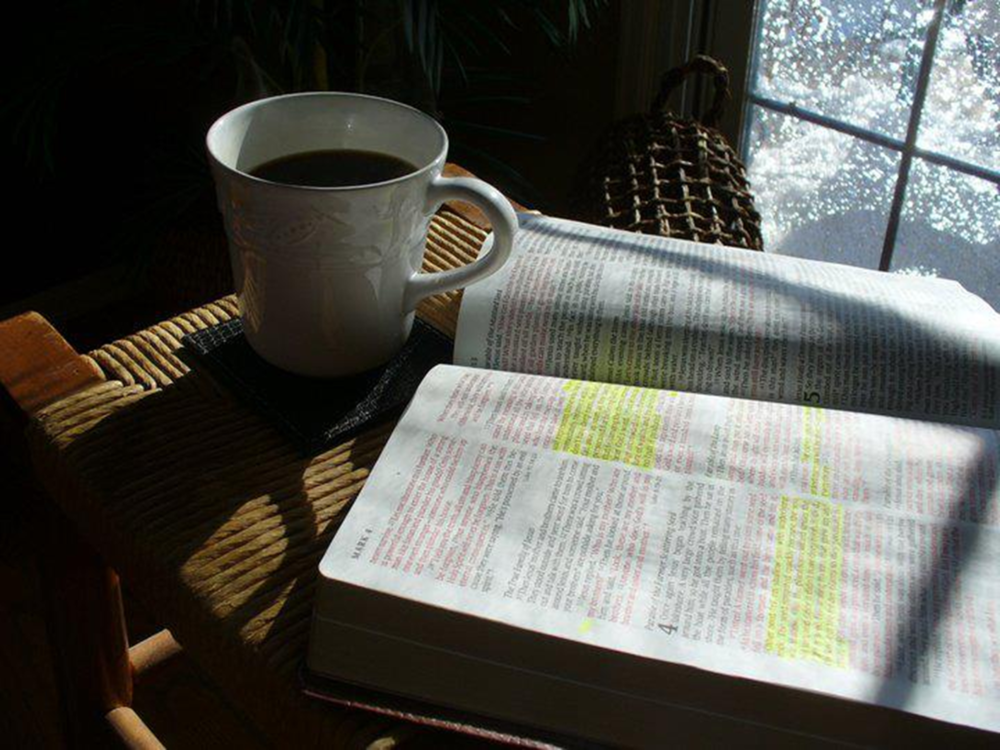
They March to the Beat of a Different Drummer

Reading in Esther this morning. Typically, while enjoying the story and marveling afresh at God’s “behind the scenes” presence, I’m not marking the pages very much. Not much on my list of “watch for’s” showing up on the pages of this story about secular Jews in a secular land with a big secular problem solved by a heavenly Father.

But something caught my attention this morning. Something I shaded in red, my color for “The Church/The People of God”. And it’s got me thinking that if anything marks the child of God it’s that they march to the beat of a different drummer.

Then Haman said to King Ahasuerus, “There is a certain people scattered abroad and dispersed among the peoples in all the provinces of your kingdom. Their laws are different from those of every other people, and they do not keep the kings laws, so that it is not to the kings profit to tolerate them.”

(Esther 3:8 ESV)

Ahasuerus has a new bride (2:1-4). Esther has a new home (2:17). Haman has a new job (3:1). And Mordecai has a big problem. He won’t bow down to Haman and Haman won’t stand for it.

The reason Mordecai gives for his refusal to bow the knee to this Agagite? “He told them that he was a Jew” (3:4). Haman’s solution to such insubordination? Get rid of the Jews.

And so Haman goes to the king with a plan to remove a people who have, in the past, proven themselves to be trouble-makers. To eradicate the descendants of Abraham who have demonstrated beforehand a difficulty with bowing to other gods. And his charge against them? “Their laws are different from those of every other people.” They march to the beat of a different drummer.

Peterson’s Message may take a bit of liberty with the original wording when he translates it, “Their customs and ways are different from those of everybody else”, but I think he’s capturing the essence of the indisputable claim Haman is making. These people are different. They are driven by a different internal compass. They are motivated by a different set of unseen objectives. They are living now in light of a different set of promises. They are different from every other people.

Amen!

That’s how the people of God should be known–as different! And not different just for different’s sake. Not different as in quirky. But the people of God should be known for being different because they follow the ways of God to advance the kingdom of God for the glory of God. And if someone has a problem with that–even if they complain to the king–so be it!

A different people than every other people. True then of God’s chosen nation. True today of those called to be “a chosen race, a royal priesthood, a holy nation, a people for His own possession, that you may proclaim the excellencies of Him who called you out of darkness into His marvelous light” (1Pet. 2:9).

We march to the beat of a different drummer.

Because of grace. For His glory!

Posted in Esther | Tagged , , | Leave a comment

We’re All Pudding

The proof is in the pudding . . . and child of God, we’re all pudding! This morning, that’s what I’m picking up from what Paul is laying down.

Reading in Titus 2 this morning. While Paul has been the church planter throughout Crete, he leaves Titus to be the church establisher. Titus was to appoint men of the highest character, calling, and capability to be elders who would shepherd these new found flocks (1:5-8). Among their other responsibilities, they were to “hold firm to the trustworthy word taught” so that they could “give instruction in sound doctrine” (1:9). Instruction not so much on what to know, but on how to live. Less about systematic theology and more about authentic “walk-ology.” And this because there were already those in their midst who professed to know God but denied Him by their works (1:16).

The truth of the word is testified to by the reality of the walk. The validity of the way of God is established by those who follow the way. In essence, the proof is in the pudding. And so, Paul charges his young co-worker to charge God’s people to be that pudding.

But as for you, teach what accords with sound doctrine. . . . that the word of God may not be reviled. . . . Show yourself in all respects to be a model of good works, and in your teaching show integrity, dignity, and sound speech that cannot be condemned . . . so that in everything they may adorn the doctrine of God our Savior.

(Titus 2:1, 5b, 7-8a, 10,b ESV)

Though we are saved by faith and not by good works, nevertheless, we are saved by faith for good works (Eph. 2:8-10). A real salvation will make a real difference. If the word of God is really the way of God, then those who say they’ve believe that word should walk in a manner consistent with that word. For what’s at stake is the reputation of the word.

Paul exhorts Titus to instruct the older men on how older men in Christ should conduct themselves. Likewise, he says, there is a behavior fitting for older women. Younger women also were to be taught, and that on how to do family life.  And younger men aren’t left out either as they are exhorted to be marked by self-control. Everyone has a “to do” list. How come? Because Paul didn’t want anyone looking down on God’s word because of the behavior of God’s people. In fact, the lives of the family of God are to enhance or “add luster” (MSG) to the truth of God.

Paul’s longing for the people of God was that in everything they would “adorn the doctrine of God our Savior.” That they would be the garnish, the trim, the embellishing reality testifying to the power of the gospel as salvation for all you believe. That, in how they conduct themselves, they would be “the bling” that draws the eyes of those in darkness to know that “if anyone is in Christ, he is a new creation. The old has passed away; behold, the new has come” (2Cor. 5:17). That, by their lives, they would so “decorate” the truth of God’s saving grace that others would know saving grace.

A real salvation is only real if it is real. The proof is in the pudding. And we’re all pudding!

Might God’s set-apart people testify to the reality of God’s life-giving word as they, by God’s powerful Spirit, seek to live lives consistent with sound doctrine.

By His grace. For His glory.

Posted in Titus | Tagged , , | Leave a comment

Just Like David Did

Wasn’t planning on “re-cycling” this morning. But as I went back over my posts on today’s readings from past years some thoughts from August 11, 2011 stirred me. Thought I’d re-work them a bit and share them again. My own little “throw back Thursday” if you like.

—————————————————-

I didn’t expect him to be there. Kind of surprised me that his name showed up–not just once, but four times. It’s been 600 years since he was physically on the scene. But when it’s time to rejoice, when it’s time to praise, when it’s time to worship, when it’s time to offer the sacrifice of thanksgiving, then it’s time to do it just like David did.

I’m reading in Nehemiah 12 this morning. The walls of Jerusalem have been rebuilt. The opposition has been withstood and the scoffers silenced. What’s more, the people of God have experienced a degree of revival as the word of God has been rediscovered. Ezra the scribe has taught it and, to a certain degree, the people have caught it. The walls of God’s dwelling place stand firm. The word of God’s kingdom has been preached faithfully. And the ways of God’s people have been impacted forever.

And now it’s time to celebrate. Not in recognition of their own abilities and accomplishments, but in the goodness, grace, and great power of the God they serve. The temple is back in business and the walls of Jerusalem protect once again–all because God brought His people back. Back to the land and back to Himself. Time to rejoice and give thanks. And time to do it just like David did.

Nehemiah 12 isn’t about David, but his name shows up four times, twice as “David the man of God.” And what impresses me is the legacy left through this man of whom God says, “I have found in David the son of Jesse a man after My heart” (Acts 13:22).

David was integral in establishing the music and the song that covered the temple activity. So, when it’s time to dedicate the wall, Nehemiah gathers all the Levite musicians and singers to Jerusalem and tells them to “go for it!” Sing just as David commanded, he says (Neh. 12:24, 45). Play with gusto the musical instruments “David the man of God” used (12:36). When it was time to celebrate the goodness of God they were to sing the songs, play the music, and give thanks just like David did.

And it reminds me that our modern worship isn’t something new, it’s just the latest form of something ancient. Something God has ordained throughout the millennia to be part of what His people do when they get together. It is the natural response of the people of God to the wonder-inducing works of God. Though the slicing and dicing of animals ended at the cross, this form of sacrifice continues today.

Through Him then let us continually offer up a sacrifice of praise to God, that is, the fruit of lips that acknowledge His name.

(Hebrews 13:15 ESV)

. . . be filled with the Spirit, addressing one another in psalms and hymns and spiritual songs, singing and making melody to the Lord with all your heart, giving thanks always and for everything to God the Father in the name of our Lord Jesus Christ.

(Ephesians 5:18b-20 ESV)

And it is an offering that will continue throughout eternity.

Then I looked, and I heard around the throne and the living creatures and the elders the voice of many angels, numbering myriads of myriads and thousands of thousands, saying with a loud voice, “Worthy is the Lamb who was slain, to receive power and wealth and wisdom and might and honor and glory and blessing!” And I heard every creature in heaven and on earth and under the earth and in the sea, and all that is in them, saying, “To Him who sits on the throne and to the Lamb be blessing and honor and glory and might forever and ever!” And the four living creatures said, “Amen!” and the elders fell down and worshiped.

(Revelation 5:11-14 ESV)

And so, when Nehemiah sensed it was time to thank God for the work He had enabled them to complete, they celebrated “with gladness, with thanksgivings and with singing, with cymbals, harps, and lyres” (Neh. 12:25).

Today the instruments are a bit different. The cymbals are accompanied by some “skins” and have become a drum kit. The harps are now the strings of a piano (or the digitized equivalent). The lyres have given way to guitars. But what should not have changed is the gladness, the thanksgiving, and the singing.

And unlike the worship service in Nehemiah 12, our choir doesn’t gather on a wall around a temple, but our choir IS THE TEMPLE, “a holy temple in the Lord . . . a dwelling place for God by the Spirit” (Eph. 2:21-22). The glory of God dwelling where the people of God are worshiping.

“And the singers sang . . . And they offered great sacrifices that day and rejoiced, for God had made them rejoice with great joy; the women and children also rejoiced. And the joy of Jerusalem was heard far away.”

(Nehemiah 12:42b-43 ESV)

Gladness . . . thanksgiving . . . singing . . . just like David did.

May the joy of the people of God be heard far away . . . today, as it was that day.

All because of His abundant grace. All for His eternal glory!


Posted in Nehemiah | Tagged , , , , | 1 Comment

Rubbing Shoulders with Wisdom

They’re not rocket science, but they can be life changing. So many of them are just common sense but, for those who are mindful of them, their impact is anything but run-of-the-mill. I’m talking about Solomon’s proverbs. His quick snappers giving instruction for skillful living. His pithy maxims which, if heeded, have a lifelong effect.

The Hebrew root for the word “proverb” apparently has the idea of ruling, reigning, or having dominion. Proverbs then are words fit for directing our lives. Exhortations which are valuable for influencing our walk and our talk. Counsel worth submitting to.

And this morning I’m chewing on one of Solomon’s simple, yet far-reaching sayings. And I’m realizing how important it is to rub shoulders with Wisdom.

Whoever walks with the wise becomes wise, but the companion of fools will suffer harm.

(Proverbs 13:20 ESV)

Walk with the wise and become wise. Associate with wisdom and you’ll pickup up wisdom. Hang out with people who know a thing or two about a life well lived and don’t be surprised when you start picking up what they are laying down. Rub shoulders with those who fear the LORD and watch what rubs off on you.

That’s why “doing coffee” is such an important part of my routine (and the routines of many I call friends). Finding a place to talk about life . . . the life here and now and the one to come . . . the life full of trials and hardships and the abundant life. To engage in spiritual discussion. To share what we’ve been seeing in the Word. To talk of matters too lofty for our full comprehension. To encourage one another to keep on keepin’ on. Hanging out with godly people has a way of their godliness rubbing off on me.

Not rocket science . . . but potentially life changing. Common sense? Yup. But integral to shaping a supernatural reality.

But here’s what I’ve really been chewing on this morning . . .

Especially in the early chapters of Proverbs, I see so often wisdom as a type of Christ. I hear Jesus crying aloud in the streets and raising His voice in the market. The Son of God saying, “Blessed is the one who finds Me.” The Christ claiming that to have Him is better than silver and of far more profit than gold. The Lord of creation who beckons people to Himself as “a tree of life for those who lay hold of her.”

And so, if Christ is Wisdom, then whoever walks with the Wise becomes wise. Whoever hangs with Jesus eventually becomes like Jesus. Whoever engages the living Christ, through His revealed Word and through Spirit-mediated prayer, will have the mind of Christ. To have Christ rub off on me, I must rub shoulders with Christ.

That’s what Paul labored for concerning his children in the faith, that Christ would be formed in them (Gal. 4:19). That’s why he would say, “Be imitators of me, as I am of Christ” (1Cor. 11:1). In essence he too is saying, Rub shoulders with Wisdom so that Wisdom might rub off on you.

Child of God, He who foreknew you also predestined you to “be conformed to the image of His Son” (Rom. 8:29). “He decided from the outset to shape the lives of those who love Him along the same lines as the life of His Son” (MSG). From the beginning God determined to form His Son in you as you, by His grace and power, determined to walk with His Son. So, it’s kind of important that we engage with the risen Christ on a daily basis. It needs to be a priority to walk with Him if we want to be like Him.

Not rocket science, but life changing!

O that Wisdom might rub off on us as we rub shoulders with Wisdom.

By His grace. For His glory.

Posted in Proverbs | Tagged , , | Leave a comment

Ready to Forgive

Back online . . . and hopefully, for awhile at least, back in routine.

I’ve enjoyed the break. Enjoyed spending focused time with the family of God. Enjoyed a quick road trip south to central Oregon to connect with my daughter and husband. But, not gonna lie to ya’, I’ve missed my morning routine. Something about being still and knowing that He is God each morning. Something about opening His word and asking Him to “open my eyes, that I may behold wondrous things out of Your law” (Ps. 119:18). Something about a secret place where God can search me and know me. Something about a secret place where I can again hear His still small voice through His living and active Word. Something about then taking a few minutes, noodling on His revelation and chewing on His word, and then putting a few thoughts into the computer. Ah, blessed routine!

And this morning it is a phrase in a verse in Nehemiah that I think God has highlighted for me to savor.

“But they and our fathers acted presumptuously and stiffened their neck and did not obey Your commandments. They refused to obey and were not mindful of the wonders that You performed among them, but they stiffened their neck and appointed a leader to return to their slavery in Egypt. But You are a God ready to forgive, gracious and merciful, slow to anger and abounding in steadfast love, and did not forsake them.”

(Nehemiah 9:16-17 ESV)

Nehemiah 8 and 9 have got to be some of the most stirring chapters in all of Scripture. After great opposition and many different attempts at derailing the work, Nehemiah and his crew of former exiles have finished rebuilding the wall around Jerusalem. And to celebrate they gather in the security of their rebuilt city to lay again the foundation of God’s word. A platform is built, the people gather, Ezra takes the stage, everyone stands, and the word of God is read . . . and read . . . and read some more. And the people listen, and the Levites explain the meaning of what is read, and hearts are moved, and the things of God are again pursued.

Three weeks later they gather again. For three hours they stand again to hear the Book of the Law read. And then for three hours they confess their sin and worship their God. And in the midst of such confession and worship they recount God’s dealing with them as a nation.

“You are the LORD, You alone,” they acknowledge afresh (9:5). The Maker of heaven and earth, the God who chose Abram, the God who entered into covenant. The God of their deliverance from Egypt, the Provider of bread from heaven, the One who lead them by day and night, by pillar of cloud and pillar of fire, to the land promised them.

But, they confess, “our fathers acted presumptuously and stiffened their neck and did not obey your commandments.” Though they were set up for success, their faithlessness led to failure. Though God was on their side, they chose instead to give Him their backs. But where man’s sin does abound, the grace of God does more abound.

But You are a God ready to forgive, gracious and merciful, slow to anger and abounding in steadfast love . . .

Familiar ring to the verse but with a twist. It is the goodness of God proclaimed to Moses as he stood by the LORD on the rock. The glory of God revealed to Moses as he was sheltered in the cleft of the rock (Ex. 33:17-34:8). And while the glory revealed to Moses is repeated throughout the Old Testament, only here is found the added attribute, “ready to forgive.”

Not only able to forgive, having become, through the finished work of the cross, the “just and the justifier of the one who has faith in Jesus” (Rom 3:23-26). Not just willing to forgive, extending patience and longsuffering toward all, “not willing that any should perish but that all should come to repentance” (2Pet. 3:9). But ready to forgive. Allowing circumstance here on earth that directs eyes toward heaven. Calling the sinner to Himself. Waiting for faith to ascend that He might forgive.

True for the sinner, true for the saint.

If we say we have no sin, we deceive ourselves, and the truth is not in us. If we confess our sins, He is faithful and just to forgive us our sins and to cleanse us from all unrighteousness.

(1John 1:8-9 ESV)

Ready to forgive. The sacrifice of Christ sufficient to pay the price for all our sin–past, present, and future. The blood of Christ able to cleanse away the stain of all our transgressions–not only the stain of the distant past, but also the stain of the not so distant past.

You are the LORD, God alone. And You are ready to forgive. Thank you, Father.

For Your grace . . . for Your glory.

Posted in Nehemiah | Tagged , , | Leave a comment

The Ponderer

It’s truth given as a warning, but being received this morning as a comfort. It is a reminder of the nature of the God of heaven which has profound implications for life on earth. That God possesses a divine knowledge. That all the ways of men and women are known. That He is the Ponderer!

For a man’s ways are before the eyes of the LORD,
   and He ponders all his paths.

(Proverbs 5:21 ESV)

The Context (5:1,7): The teacher continues to exhort his son to be attentive, to incline his ear, to listen and not depart from the words of his mouth.

The Subject (5:3, 22): The forbidden woman. The seductress. Temptation which entices with lips dripping with honey and speech smoother than oil. Iniquity which ensnares. Sin that binds with cords.

The Solution (5:15, 18-19): Drink water from your own cistern. Be filled with the abundance offered from your own well. Desire nothing but your first love. Be intoxicated with that which is pure.

The Stimulus: The Ponderer. That there is One intimately familiar with every path taken. Not only passively familiar, but actively engaged. Laying out the ways of our heavenly homeland though not eliminating the voice of the alluring foreigner. Allowing us to choose, but also weighing our decisions.

And so, in context, the way of wisdom says flee from the hidden ways of sin because, in fact, they are not hidden at all. A man’s ways, a woman’s ways, are before the eyes of the LORD. And He who sees all will judge all.

Warning noted afresh. But beyond the warning, this morning as I chew on this great truth there is also a warming.

He ponders all my paths. Not just those that offend Him, but those also that seek Him. Far from some morbid picture of a God who only takes an interest in our failures as we succumb to heeding to the siren’s voice and following the allure of the world, with greater desire He is a God who longs to draw near to those who faithfully, though not perfectly, stumble along the roadway as sojourners on their way home. All the ways of the child of God are before His eyes. For He is the Ponderer.

Not some distant observer, but actively making level our paths and enabling us to walk in a manner worthy of our calling (Eph 4:1). Not unfamiliar with our trials but actively engaged in supplying mercy and grace to help in time of need (Heb. 4:16). Drawing alongside to help bear the burden, as He knows from first hand experience the weight that is sometimes ours as we seek to keep on keepin’ on.

For surely it is not angels that He helps, but He helps the offspring of Abraham. Therefore He had to be made like His brothers in every respect, so that He might become a merciful and faithful high priest in the service of God, to make propitiation for the sins of the people. For because He himself has suffered when tempted, He is able to help those who are being tempted.

(Hebrews 2:16-18 ESV)

He knows our struggles. He is familiar with our worries for the day. For our ways are before the eyes of our God. And He ponders all our paths.

And His grace is sufficient.

And His glory will be known.

For He is the Ponderer.

—————————————
Note: Sue and I will be gone next week hanging out with our church family at our annual camping retreat. Will be offline. Lord willing, will be sharing my morning musings again on the 8th.


Posted in Proverbs | Tagged , , , | Leave a comment

Get It!

Urgency. If there’s one word that captures the tone of these opening chapters of Proverbs it’s urgency. Nothing optional in Solomon’s exhortation. Nothing secondary in it’s nature. To heed Solomon’s repetitious pleading, if you were developing your life’s “to do” list, would be to place “get wisdom” at the top.

Get wisdom; get insight; do not forget, and do not turn away from the words of my mouth. Do not forsake her, and she will keep you; love her, and she will guard you. The beginning of wisdom is this: Get wisdom, and whatever you get, get insight.

(Proverbs 4:6-7 ESV)

Get it. That’s an imperative. A command, not a suggestion. Get it. Acquire it, obtain it, buy it, possess it. As I’ve noted before action required!

And “it” is wisdom, and her companion is insight. If wisdom is skill for living, then insight is discernment for living.

Wisdom is the “what.” It is the instruction that when obeyed provides protection against danger and brings honor among men. It is what leads to straight paths and avoids the injuries of destructive snares. It is founded in the fear of the LORD and it is appropriated through the word of God. Get wisdom.

But too, “whatever you get, get insight.” The acquisition of wisdom results in the protective filter of insight. For all those situations, and for all those decisions, that are not covered specifically by a command or an exhortation, insight kicks in to discern whether a course of action is profitable or not. Understanding helps us deal with the grey areas. Beyond simply following wisdom’s specific rules, insight allows us to apply wisdom’s intent so that we are not left to our own devices to avoid paths of evil. As, in obedience, we exercise the ways of wisdom, we develop the insight to discern good from evil (Heb. 5:14).

So get wisdom. And get insight. Don’t leave home without them! The beginning of wisdom is knowing how desperately you need wisdom. The beginning of acquiring skill for living is recognizing that living requires skill.

Wisdom and insight are game changers. They impact life in a profound way. They are the difference between being protected and being exposed. They are the difference between paths of righteousness and ways of evil. The difference between being able to run freely and stumbling constantly. The pivot point between building upon the foundation of the gospel with the stuff that lasts, gold, silver and precious stones, or the stuff that burns, wood, hay, and straw (1Cor.3:12-15).

Wisdom, get it! Insight, get it too!

They are the dynamic duo of skillful living. If wisdom could be considered as a personification of Christ, the Word made flesh, then perhaps insight could be identified as the Spirit, the mind of Christ in us. If you have the One, you have the Other. If you seek heaven’s Wisdom manifest before men, then you’ll also be permeated by heaven’s power to internalize Wisdom given to dwell inside men.

And when, by His grace, we get wisdom, and she provides for us insight, then God gets the glory.

Posted in Proverbs | Tagged , , , , | Leave a comment

What We Do With Wisdom Matters

The cause-and-effect promises of Proverbs continues in my reading in chapter three this morning. Just as in yesterday’s consideration, Solomon again encourages his son, “Receive this and you can expect that.” And at the center of “this” is wisdom. According to God’s word, there is a correlation between responding to divine wisdom and being rewarded with a blessed life.

My son, do not forget my teaching, but let your heart keep my commandments, for length of days and years of life and peace they will add to you. Let not steadfast love and faithfulness forsake you; bind them around your neck; write them on the tablet of your heart. So you will find favor and good success in the sight of God and man.

(Proverbs 3:1-4 ESV)

What we do with wisdom matters. It impacts length of days, years of life, and peace within. It turns the face of God towards us in grace and favor. It even influences how others will perceive and receive us as we simply do life. The Author of Life is the Giver of Wisdom (Prov.2:6), knowing that the quality of one is directly dependent on the appropriation of the other.

And so, ours is to learn the lessons and not forget the teaching.

And it’s not just some holy “to do” list we are to memorize. It’s not about mindlessly going through the motions of righteousness. Instead, the depths from which we respond matters. It’s our hearts which are to keep the commandments, the essence of who we are that seeks to respond in willful submission to His ways. Far from simply making a checklist for today’s random acts of godliness, we are exhorted to tie them around our necks and etch them into our souls. The obedience that makes a difference is inside-out obedience. Principle based more than performance based. Less about what to do and more about who to do it for. Not concerned with “just enough” but compelled to be all in. Such is the way of receiving wisdom and responding with wisdom.

To receive wisdom is to receive God Himself. To respond to wisdom is to respond to God Himself.

Verse three says that I am not to allow “steadfast love and faithfulness” to forsake me. These same terms are used when God reveals His glory to Moses.

The LORD passed before him and proclaimed, “The LORD, the LORD, a God merciful and gracious, slow to anger, and abounding in steadfast love and faithfulness, keeping steadfast love for thousands, forgiving iniquity and transgression and sin, but who will by no means clear the guilty, visiting the iniquity of the fathers on the children and the children’s children, to the third and the fourth generation.” 

(Exodus 34:6-7 ESV)

To put on wisdom is to put on the nature of God. To respond to wisdom’s call is to respond to the Voice from heaven itself. To fear the LORD, to desire the knowledge of the divine, to seek the understanding that is from above, is to clothe ourselves with the glorious nature of our holy God.

And that’s what happens when we “put on Christ.” He is Wisdom. He is the glory of God that we can bind around our necks and carve into our hearts. He is the fulfillment of the law, so that desiring above all to follow Him is to walk in the law without being worried about the letter of the law. He is our length of days, our years of life, and our peace that passes understanding. To know His favor is enough. And His success, true success, is found in seeking His kingdom.

What we do with Wisdom matters.

O that He would permeate our lives and lead us in the way everlasting.

Because of grace. For His glory.

Posted in Proverbs | Tagged , , , | Leave a comment

Action Required

It’s a lie. It’s made to sound like reasonable thinking, but it isn’t. Some people just don’t learn by reading, they say. Some people just aren’t academics, they say. Getting into the Bible just isn’t everybody’s thing–and that’s ok, they say. Na-uh! Nope. Ain’t true. Not ok!

I feel a bit of a rant coming on as I’m reading the opening chapters of Proverbs this morning. If wisdom cries aloud in the street (1:20), then she is wired to a megaphone in the church. But there too are the simple ones who love being simple (1:22). Those who hear the call every Sunday from the pulpit but refuse to listen. Those who have the Word handed to them on a platter on the Lord’s Day but can’t be bothered to reach out and grab some food any other day. The Book sits closed day after day. Though wisdom calls out, people refuse to listen. Though she stretches out her hand, so many say, “Pass,” to the invitation (1:24). But the stakes are too high to be ignored.

Proverbs 2 seems to me to be one great conditional promise. Wisdom says, you do this and I’ll do that. Here’s the “if” part . . .

My son, if you receive my words and treasure up my commandments with you, making your ear attentive to wisdom and inclining your heart to understanding; yes, if you call out for insight and raise your voice for understanding, if you seek it like silver and search for it as for hidden treasures, . . .

(Proverbs 2:1-4 ESV)

Action required. You need to sow before you reap.

Not only action, but desire. When we look at our Bibles we should see a hidden treasure map. If we believe it’s the inspired word of God then we should seek it as one seeks precious metals. The Book isn’t about one’s inclination toward reading. It’s not dependent upon one’s cognitive or academic capabilities. I know people who couldn’t graduate from high school but who wouldn’t go a day with consuming Holy Writ. Not because it’s easy for them, but because they believe it’s so valuable to them.

And they’re right! As I read through Proverbs 2, the payback is huge!

. . . then you will understand the fear of the LORD and find the knowledge of God. . . . Then you will understand righteousness and justice and equity, every good path . . . discretion will watch over you, understanding will guard you, delivering you from the way of evil . . . So you will be delivered from the forbidden woman, from the adulteress with her smooth words . . . So you will walk in the way of the good and keep to the paths of the righteous.

(Proverbs 2:5, 9, 11-12a, 16, 20 ESV)

Tell me there isn’t a direct correlation between godliness and God’s word. Receive His words, understand the fear of the LORD, and then you’ll know God. Make your ear attentive, incline your heart, and then you’ll understand righteousness and recognize every good path. Call out for insight, raise your voice for understanding, and then your inner warning systems will be so attuned that you will stay away from the downward path of sin and keep to the paths of righteousness.

It’s an if / then promise. Effort needed in order to realize the benefit.

So then convince me that to not gut it out and discipline ourselves to know God and His ways and His thoughts as revealed in His word is to not set ourselves up for defeat in laying hold of the abundant life graced to us. Make the argument that reading and studying God’s word is somehow optional and depends on our natural inclinations and abilities. Nonsense! (Did I mention I felt a rant coming on?)

God’s word is not just some book. It is supernatural revelation. And we have not been left to our own academic propensities or cognitive capabilities as the determining factor as to whether or not it will impact our lives. Rather we have been given the Spirit of God who illuminates the Word of God to reveal the mind of God and transform the child of God by the power of God.

Wisdom cries aloud . . . may God’s people hear her voice. She offers, through the Word, a living and active dynamic that renews the mind, transforms the life, and conforms the student, more and more, into the likeness of the Teacher.

Oh that the church would hunger after the Word of God. Revive us again!

By God’s grace. For our benefit. And for God’s glory.

Amen?

(Rant complete.)

Posted in Proverbs | Tagged , , | 1 Comment

Divine Forbearance

According to 2Kings, his reign was pretty much the straw that broke the camel’s back. Sure, there would be one more government mandated revival in Judah after him, but Manasseh’s determination to do “evil in the sight of the LORD, according to the abominations of the nations whom the LORD drove out before the people of Israel” (2Chron 33:2), kind of put it over the top. Judah’s days of freedom were numbered.

His father’s 30 year reign had cleansed the temple, restored temple worship, and revitalized Jerusalem as the epicenter of God’s glory. But Manasseh undid it all–and with a vengeance. He rebuilt the high places. He erected altars to pagan gods. And he worshiped the creation above the Creator. He pursued the occult. He sacrificed his sons. And he desecrated the most holy place by moving in carved images displacing the LORD God. Thus, “Manasseh led Judah and the inhabitants of Jerusalem astray, to do more evil than the nations whom the LORD destroyed before the people of Israel” (2Chron. 33:9).

But God in His infinite patience wasn’t done pursuing the wayward king and His off-the-rails people. First, He sent prophets, but they paid no attention. So he sent an army to defeat them and carry them off in chains. And that got the king’s attention.

Therefore the LORD brought upon them the commanders of the army of the king of Assyria, who captured Manasseh with hooks and bound him with chains of bronze and brought him to Babylon. And when he was in distress, he entreated the favor of the LORD his God and humbled himself greatly before the God of his fathers. He prayed to him, and God was moved by his entreaty and heard his plea and brought him again to Jerusalem into his kingdom. Then Manasseh knew that the LORD was God.

(2Chronicles 33:11-12 ESV)

Unbelievable! If anybody deserved what he got, it was this schmuck king. Instead, when he prayed and humbled himself before the LORD (and this wasn’t some self-imposed “humble yourself in the sight of the Lord” humility–this was a you-are-backed-into-a-corner-and-have-only-one-thing-left-to-do humility), “God was moved by his entreaty.”

And I am moved this morning as I chew on God being moved. I marvel again at grace. I wonder at heaven’s response to repentance. I’m in awe as I consider this reminder that no matter how far one strays there is always a way back.

And on what basis is God able to forgive such over the top transgression? How can a just God justly deal with the great debt owed by one who has purposed through his life to snub God and pursue the ways of the nations around him? How can a holy God cleanse the defilement dumped at His feet?

God could forgive because a mediator would come who would plead for sinners, “Father, forgive them for know not what they do?” A just God could show mercy because He already ordained a time when the price would be paid in full. A holy God could deal with the junk because He had already purposed to provide a heaven made covering of righteousness for all who would honestly humble themselves in contrition and confession.

. . . for all have sinned and fall short of the glory of God, and are justified by His grace as a gift, through the redemption that is in Christ Jesus, whom God put forward as a propitiation by His blood, to be received by faith. This was to show Gods righteousness, because in his divine forbearance he had passed over former sins.

(Romans 3:23-25 ESV)

God was moved by Manasseh’s entreaty because of divine forbearance.

Despite a lifetime of rebellion, God still listened for the cry of a humbled heart because He had made perfect provision for a perfect redemption since the foundation of the world.

O what a Savior!

O what amazing grace!

To Him be glory now and forevermore!

Amen?

Posted in 2Chronicles | Tagged , , , | Leave a comment