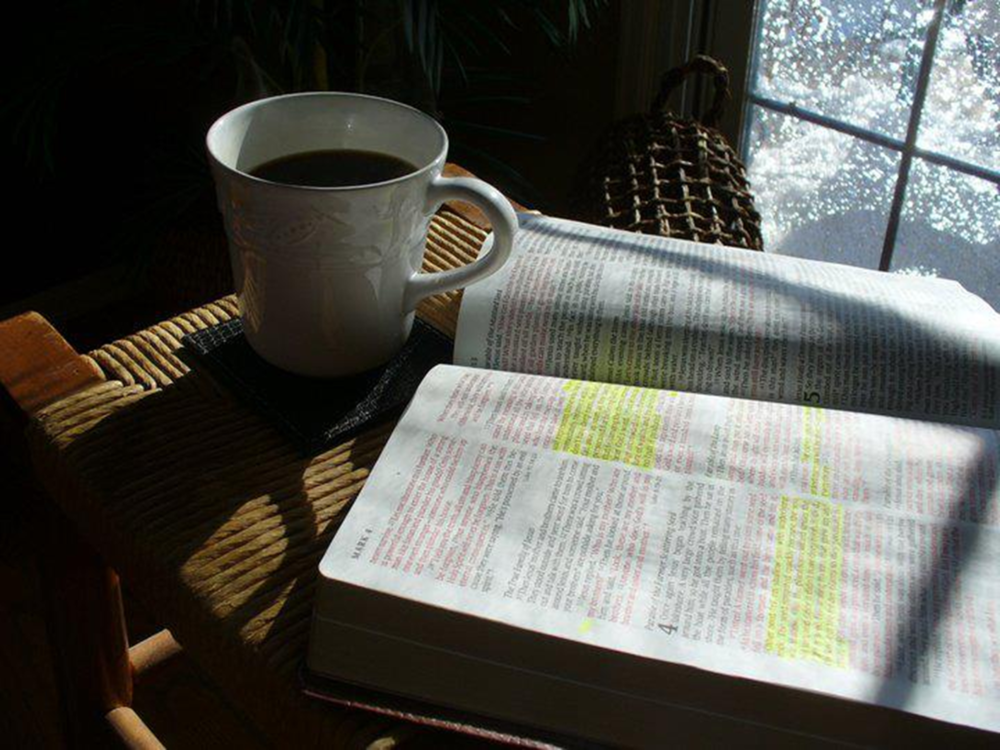
In His Confidence (2020 Rerun)

Not gonna lie, I’ve always liked being on the inside. Jazzed by being around the table. Not necessarily having to be the one who makes things happen, content if that’s left to others, but also not wanting to be that guy who all of a sudden looks up one day, gives his head a shake, and dumbfoundedly asks, “Uh, what just happened?”

I don’t think it’s a power thing. It’s an engagement thing. I don’t think it’s FOMO, fear of missing out, but more like FOMOO, a fear of mindlessly opting out.

If someone’s gonna let me into their inner circle, I’m in. If someone’s willing to take me into their confidence, I’m good for the taking. Especially if that Someone is the God of creation!

Do not envy a man of violence and do not choose any of his ways, for the devious person is an abomination to the LORD, but the upright are in His confidence.

(Proverbs 3:31-32 ESV)

The upright are in His confidence. Chew on that for a bit. Let that sink in. Talk about being on the inside!

In His confidence. Literally, invited into secret counsel. Part of the family conversation. Received as an intimate friend. Talk about your seat at the table!

The psalmist says we should bless the LORD and forget not all His benefits (Ps. 103:1-2). Being in His confidence is one of those benefits. Let’s not forget it. Bless the LORD, O my soul!

Think about all the stuff we know which we would have never known apart from being in His confidence. Stuff about creation and how it reveals the Creator. Insider knowledge as to the real reason all people matter, because they are image bearers of God. A practical understanding of where things went south and a confident answer, along with a working knowledge, for how things can be restored.

Not only do we have a handle on the macro picture of history, we’re also prophets able to talk confidently about the future. Optimists, even in depressing and cynical times, because we know who wins. Having been brought into the secret council of heavenly happenings, we’ve got the tools to go out and be of maximum earthly good.

And that, because we are the upright. Not in ourselves, but in His Son. Not because of our best efforts, but through His finished work on the cross. Not because we deserve it, but because — and this we know via insider knowledge — He desired it!

No need to look around and wonder what’s happening. Instead, we look up and confidently declare, “I know the One who’s making it happen!”

For who among them has stood in the council of the LORD
to see and to hear His word,
or who has paid attention to His word and listened?

(Jeremiah 23:18 ESV)

The friendship of the LORD is for those who fear Him,
and He makes known to them His covenant.

(Psalm 25:14 ESV)

Again, not gonna lie, I like being on the inside. I love having a seat at the table. Blessed by being in His confidence. How about you?

Only because of His grace.

Might it always be for His glory.

Posted in Proverbs | Tagged | Leave a comment

Super!

My 4-year-old grandson recently discovered the word “super.” As in, “That’s super, super, super, super, super, super, super big.” Or, “Isn’t that super, super, super, super, super, super, super cool?” Sometimes it can be super, super, super, super, super, super, super annoying. But this morning, I hear my grandson in the words of Paul.

I thank Him who has given me strength, Christ Jesus our Lord, because He judged me faithful, appointing me to His service, though formerly I was a blasphemer, persecutor, and insolent opponent. But I received mercy because I had acted ignorantly in unbelief, and the grace of our Lord overflowed for me with the faith and love that are in Christ Jesus.

(1Timothy 1:12-14 ESV)

The grace of our Lord overflowed for me . . . That’s what I’m chewing on this morning . . .

Overflowing grace. That paints an image. Grace that can’t be contained. Grace bigger than anything that might try to constrain it. It’s a good image.

But poke at the original word a bit, and I think there’s a better mind-picture to noodle on. A super, super, super, super, super, super, super picture.

The original word for overflowed is huperpleonazo. Start to anglicize the word and it’s hyper-pleonazo. And pleonazo? Well, apparently it means to superabound. So, says Paul, the grace of Jesus hyper-superabounded for him. I like how the King James renders it; the grace of our Lord was exceedingly abundant. Sounds a little redundant, doesn’t it? But also sounds pretty wonderful — yes? And, I imagine that if my grandson were to create his own translation, he might enthusiastically declare that the grace of Jesus super, super, super, super, super, super, super abounds. And he’d be right (but maybe a few “supers” short).

The grace of our Lord . . . It’s quantity unquantifiable. It’s availability unrestrainable.

Where sin abounds, grace does more abound (Rom. 5:20 KJV). Where weakness is overwhelming, grace is overflowing sufficiently (2Cor. 12:9). When we’re drowning in guilt and shame, the super, super, super, super, super, super, super-abounding grace of Jesus defends against the guilt and displaces the shame with the super, super, super, super, super, super, super righteousness of a super, super, super, super, super, super, super Savior (Rom. 5:18-19, 7:22-8:1).

How thankful am I this morning? You guessed it . . . super, super, super, super, super, super, super thankful.

Because of overflowing grace. For His all-deserving glory.

Wonderful grace of Jesus,
greater than all my sin;
how shall my tongue describe it,
where shall its praise begin?
Taking away my burden,
setting my spirit free,
for the wonderful grace of Jesus reaches me.

Wonderful grace of Jesus,
reaching to all the lost,
by it I have been pardoned,
saved to the uttermost.
Chains have been torn asunder,
giving me liberty,
for the wonderful grace of Jesus reaches me.

Wonderful grace of Jesus,
reaching the most reviled,
by its transforming power
making me God’s dear child,
purchasing peace and heaven
for all eternity,
for the wonderful grace of Jesus reaches me.

Wonderful the matchless grace of Jesus,
deeper than the mighty rolling sea,
higher than the mountain, sparkling like a fountain,
all sufficient grace for even me;
broader than the scope of my transgressions, sing it!
greater far than all my sin and shame.
O magnify the precious name of Jesus, praise His name!

~ Haldor Lillenas (1918)

Posted in 1Timothy | Tagged , , , | Leave a comment

Stirring It Up

So much separated them, and yet one thing connected them.

He was a pagan, they were the people of God. He was a king, they were the conquered. He was a sovereign, they were survivors. He had all the earthly power, they possessed but a heavenly promise. Yet, despite all that distinguished them from each other, what they shared was stirring. Literally. Stirring is what they shared.

In the first year of Cyrus king of Persia, that the word of the LORD by the mouth of Jeremiah might be fulfilled, the LORD stirred up the spirit of Cyrus king of Persia, so that he made a proclamation throughout all his kingdom and also put it in writing: “Thus says Cyrus king of Persia: The LORD, the God of heaven, has given me all the kingdoms of the earth, and He has charged me to build him a house at Jerusalem, which is in Judah. Whoever is among you of all his people, may his God be with him, and let him go up to Jerusalem, which is in Judah, and rebuild the house of the LORD, the God of Israel— he is the God who is in Jerusalem. . . .

Then rose up the heads of the fathers’ houses of Judah and Benjamin, and the priests and the Levites, everyone whose spirit God had stirred to go up to rebuild the house of the LORD that is in Jerusalem.

(Ezra 1:1-3, 5 ESV)

Seventy years are done. The sin-polluted, promised land has “enjoyed its Sabbaths” (2Chron. 36:20-21). It’s ready to receive again the people of promise after their seven-decade “timeout.” But not only is the exile done, so are the kings of Israel. The monarchy era — the “let us have a king like the nations around us” experiment (1Sam. 8:5, 19-20) — has been tried and found wanting and there’s no one to lead the parade. Timeout’s done, but who’s gonna tell the people it’s time to go home?

Timeout’s done, but it’s been 70 years of seeking and praying for the welfare of the city to which God sent them (Jer. 29:7), 70 years of getting comfortable in a foreign land so that it’s starting to feel like home, so who’s gonna want to go home?

How’s it all gonna happen? Stir it up!

That’s what God does. He stirred up the spirit of Cyrus king of Persia to commission the return. And He stirred up the spirit of everyone who was ready to return. Chew on that.

Stirring it up. Literally, rousing and awakening. That’s what God does best. His Spirit kindling a flame in the spirits of both kings and captives. His Spirit making alive those who once were dead. His Spirit overcoming the inertia of stagnant religion with the invigoration of gospel revival. Apart from God stirring it up, how prone we are to maintaining the status quo, of coasting in comfort and just staying where we’ve always been doing things just the way we’ve always done them? Pretty prone, I think. But God stirs it up.

Stirring it up. For His purposes and in His timing. Faithful to His promise, faithful to His people. More than able to move “with power through His Spirit in our inner being” (Eph. 3:16).

Even so, stir it up, Lord!

By Your grace. For Your glory.

Posted in Ezra | Tagged , , , | Leave a comment

When All Is Said and Done . . .

Seven months. Seven months and about 180 readings. Seven months, 180-ish readings, and a lot of poetry. And how does it wrap up? Praise the LORD!

For half-a-year, it’s been an emotion-filled journey. Capturing the ups and downs of life; “the best of times and the worst of times”; the highs and lows of walking with God in the midst. Encompassing deep questions and high and lofty answers. Lament and elation. Doubt and certainty. And it concludes with a declaration, an invocation, the God-breathed consummation to “Praise the LORD!”

It closes with a command to obey.

Praise the LORD!
Praise God in His sanctuary;
praise Him in His mighty heavens!
Praise Him for His mighty deeds;
praise Him according to His excellent greatness!
Praise Him with trumpet sound;
praise Him with lute and harp!
Praise Him with tambourine and dance;
praise Him with strings and pipe!
Praise Him with sounding cymbals;
praise Him with loud clashing cymbals!
Let everything that has breath praise the LORD!

Praise the LORD!

(Psalm 150 ESV)

Are you picking up the repetition there? Sensing that there’s “an ask” happening in this last song of the Psalter? Am I wrong in thinking this is a command to obey?

Where are you gonna praise the LORD? In His sanctuary . . . in His might heavens. Sounds like everywhere. No place an unfit place to declare the glories of God.

What are you gonna praise the LORD for? His mighty deeds . . . His excellent greatness. What He has done and who He is. The Scriptures record His great works, the heavens declare His glory. His fingerprints are all over history, His hand has been all over our lives already this week. Not His “so-so” deeds but His acts of power, strength, force, valor, and victory. Not His “meh” greatness, but His multi-faceted magnificence, His abundant preeminence.

How are you gonna praise the LORD? With everything you got! Loud trumpets, soft harps. Woodwinds and strings. Cymbals and even louder cymbals. Oh, and did you catch the “with dance” part. Talk about stepping outside your comfort zone!

And who is commanded to praise the LORD! Everybody! Everything that has breath . . .

Hmm . . . now ain’t that something to chew on? Brings to mind this favorite, golden-oldie Gaither moment . . . Singing with the Saints . . . shouldn’t we be practicing now what we’re gonna be doing then? I’m thinkin’ . . .

Finished the psalms this morning. When all is said and done, Praise the LORD!

Amen?

By His grace. For His glory.

Posted in Psalms | Tagged , , , , | Leave a comment

Humble Myself. Really?

In case I missed it when I was reading in 2 Chronicles this morning, my reading in Psalm 149 punctuated it. This morning’s word to chew on: “humble.”

I read about three kings of Judah; Hezekiah, his son, Manasseh, and Manasseh’s son, Amon. Hezekiah started well but then got tripped up by his own pride. Manasseh’s reign, on the other hand, was marked from the get-go by doing what was evil and faithless until the LORD brought him to his senses and graciously allowed him to finished well. And Amon? Well, let’s just say he was a chip off the old block when it came to ruling like dad and failed to learn anything from grandpa’s or dad’s story.

And what’s the common thing highlighted about all three of these guys? Did I mention this morning’s word to chew on?

But Hezekiah humbled himself for the pride of his heart, both he and the inhabitants of Jerusalem, so that the wrath of the LORD did not come upon them in the days of Hezekiah.

(2Chronicles 32:26 ESV)

And when [Manasseh] was in distress, he entreated the favor of the LORD his God and humbled himself greatly before the God of his fathers. . . . And his prayer, and how God was moved by his entreaty, and all his sin and his faithlessness, and the sites on which he built high places and set up the Asherim and the images, before he humbled himself, behold, they are written in the Chronicles of the Seers.

(2Chronicles 33:12, 19 ESV)

And [Amon] did not humble himself before the LORD, as Manasseh his father had humbled himself, but this Amon incurred guilt more and more.

(2Chronicles 33:23 ESV)

Humbled himself . . . It peals, again and again, like an echoing tower bell, as I read through these chapters. A long, loud, repeating foreshadowing for what I then read in Psalms.

For the LORD takes pleasure in His people;
He adorns the humble with salvation.

(Psalm 149:4 ESV)

It’s a parallel thought. Who does God take pleasure in? Who does he adorn with salvation? His people . . . the humble.

Wanna describe the people of God? You should be able to use the word humble. Those who are brought down. Brought under. In subjection. Subdued, meek, lowly.

To who? The Lord? For sure (Ja. 4:10).

Is that it? Nope.

Then who else? To other people — a LOT of other people (Eph. 5:21, Php. 2:3-4).

Isn’t that kind of hard? Yup. But it starts with the heart. Do you want to be humble? Are you willing to humble yourself? Do you believe the meek are blessed, because it’s they who will inherit the earth (Mt. 5:5)? Do you believe that what the prophet says is true is, in fact, really true?

For thus says the One who is high and lifted up, who inhabits eternity, whose name is Holy: “I dwell in the high and holy place, and also with him who is of a contrite and lowly spirit . . .

(Isaiah 57:15a ESV)

Okay, but you know I’m gonna fail at times . . . like maybe a lot. Yeah, that’s how it works while we’re being transformed by the renewing of our minds and being conformed (Rom. 12:2a) to the likeness of Christ (Rom. 8:29).

Humble myself. Really? Can I really do that? Not on your own. But the question really should be can WE do that? You’re not doing this alone for it’s no longer you who live, but Christ who lives in you (Gal. 2:20). And His Spirit-infused grace is sufficient for your flesh-bound weakness (2Cor. 12:9). So, ask yourself, “Can WE do it?” You bet, for we can do all things through the Christ who gives us strength (Php. 4:13).

The LORD takes pleasure in His people;
He adorns the humble with salvation.

Take pleasure, my King. Adorn away, my God.

By Your grace. For Your glory.

Posted in 2Chronicles | Tagged , | Leave a comment

Our Eyes Are On You

“Don’t freak out!” I don’t know that it’s still one of their go-to mantras, but I remember one of my favorite missionary couples relating how “don’t freak out” was often what they would tell each other when things weren’t coming together (or were falling apart) as they had hoped. It came to mind this morning as I continued to read of Jehoshaphat, king of Judah, in 2Chronicles 20.

Context? A bunch of “Ites”, as in Moabites, Ammonites, and Meunites, form a military alliance to attack Judah. Their combined army is described once as “a great multitude’ (20:2), and three times referred to — by Jehoshaphat and by God — as “a great horde” (20:12, 15, 24). Jehoshaphat wasn’t overreacting as he took stock of the enemy approaching his kingdom.

Jehoshaphat calls together the people to pray. And it’s something in that prayer which causes me to pause and to ponder.

O our God, will You not execute judgment on them? For we are powerless against this great horde that is coming against us. We do not know what to do, but our eyes are on You.”

(2Chronicles 20:12 ESV)

We are powerless . . . we don’t know what to do . . . but our eyes are on You! Hmm . . .

A lot of talk in our current cultural moment about who has “the power.” Jehoshaphat had none. A lot of outlets feeding us the info they think we need so that we can always know how to think and what to do. Jehoshaphat was clueless on next steps. A lot of expectations set that we need to be our “authentic selves” and make sure we’re seen and heard. Jehoshaphat removed the focus from himself and cast his eyes on Him who is invisible. Like I said, Hmm . . .

Don’t know what your “horde” is. But it seems to me that, more and more, we’ve all got “stuff” — if not multiple “stuff” that seems allied against us — which tends, at times, to overwhelm. Big stuff. Complex stuff. Stronger than us stuff. Stuff that reminds us we are powerless. And, when it comes down to it, often stuff against which we don’t know what to do.

Jehoshaphat reminds me this morning, that when that kind of stuff is encroaching, I should look up. Like, look WAY up. I should bow my head, close my eyes, and whisper to Him who hears in secret (Mt. 6:6), “My eyes are on You.”

Our eyes are on You . . . I shaded that with my light green pencil, my color for faith. Isn’t that what’s left when nothing’s left? Believing. Isn’t that what you gotta do when you don’t know what to do? I’m thinkin’ . . .

Easier said than done, perhaps. But when we are powerless, when we’re at a loss for what levers we have to pull, turning our eyes on Jesus seems like a pretty good next step.

Now faith is the assurance of things hoped for, the conviction of things not seen. For by it the people of old received their commendation.

(Hebrews 11:1-2 ESV)

Lord, our eyes are on You.

By Your grace. For Your glory.

Posted in 2Chronicles | Tagged , , | 1 Comment

Bugged & Blessed

It bugs me. Why? Because I know it reflects me.

Reading this morning in 2Chronicles about King Jehoshaphat of Judah — by all accounts, one of the “good kings.” He walked in the ways of David, seeking God and ordering his life according to the LORD’s commandments (2Chron. 17:3-4). He was bold in the ways of the LORD, even taking on the “high places” of false worship by taking them down (17:6). Not only did he seek to pursue and live by the word of God, he was active in helping his subjects to know it and live by it too (17:7-9). By God’s own assessment, he had set his heart to seek God (19:3). Thus, “the LORD established the kingdom in his hand” (17:5).

On the “faith scale” of zero-to-hero, Jehoshaphat trended pretty heavily on the “hero” side. So, it bugs me to read this:

Now Jehoshaphat had great riches and honor, and he made a marriage alliance with Ahab.

(2Chronicles 18:1 ESV)

He made a marriage alliance with Ahab . . .

What was he thinking?!? I don’t know for sure. But it has me thinking.

Jehoshaphat, good king, partners with Ahab, really, really, really bad king. God seeker couples himself with Baal worshiper. Someone with a passion for God pairs with someone whose life has been dedicated to the pursuit of idols. Talk about your unequal yoking; talk about righteousness partnering with lawlessness; talk about light fellowshiping with darkness (2Cor. 6:14). Then your talking about Jehoshaphat’s alliance with Ahab. So what’s up with that?

I don’t know. A strategic alliance for military purposes? Perhaps. A sentimental alliance with the wayward northern tribes of Jacob because of their shared gene pool? Could be. A short-sighted, astronomically miscalculated, bonehead move? Certainly (continue to read on in the chapter and see how Ahab plays Jehoshaphat like a fish). Nope, don’t know what Jehoshaphat was thinking.

But what I do know is that it bugs me. That I am bugged by the incongruity of Jehoshaphat’s heart and some of his actions. That I am bothered by the dissonance created because of his faithfulness and yet his foolishness. That I’m bewildered by what I think should be a mutual exclusivity between loving God and aligning oneself with God-haters (2Chron. 19:2b). Bugged because I know the dichotomy is real. And I know it because it’s real in me.

On the “follow scale” of “cast Him behind my back” (1Kings 14:9) vs. “love Him with all my heart, soul, mind, and strength” (Mk. 12:3), I need to admit I’m a solid “some” — some of my heart, soul, mind, and strength. Or, as Paul puts it, “I decide to do good, but I don t really do it; I decide not to do bad, but then I do it anyway” (Rom. 7:17 MSG). Just like Jehoshaphat. Ugh!

This morning, Jehoshaphat’s a mirror reminding me that “the desires of the flesh are against the Spirit, and the desires of the Spirit are against the flesh, for these are opposed to each other, to keep you from doing the things you want to do” (Gal. 5:17). That’s the reality. That’s how Jehoshaphat could set his his heart to seek God and still tether himself to Ahab. While pursuing the things of the Spirit, he was still battling the ways and the wisdom of the flesh. And that’s my reality. While being a new creation in Christ, I am still tripped up by the old man and his sinful nature. As the hymn writer so piercingly puts it, “Prone to wander, Lord, I feel it. Prone to leave the One I love.” Prone to do what is incompatible and unbecoming for a follower of Christ.

Thank God, for abiding, abundant, all-sufficient, amazing grace! Thank God, that on the cross all my sins — past, present, and future — were atoned for. Thank God, that while I may suffer the consequence of my sin, He will use even those consequences to train me so that I might increasingly “share His holiness” and know more and more “the peaceful fruit of righteousness” (Heb. 12:10-11).

Mine is to confess, His is to forgive (1John 1:9). Mine is to repent, His is to wipe away my sin (Acts 3:19). Mine is to be humbled, His is to lift up (James 4:10).

And know what? When I think it about that way, I’m a lot less bugged and a lot more blessed.

Blessed because of His unfailing, unlimited grace.

Blessed only for His all-deserving, everlasting glory.

Posted in 2Chronicles | Tagged , , , , | 1 Comment

Things To Do Today (2010 Rerun)

This morning I’m hovering over Rehoboam’s story as recorded in 2Chronicles. What catches my attention in particular is the statement that “when the rule of Rehoboam was established and he was strong, he abandoned the law of the LORD” (2Chron. 12:1). When the going got good, he stopped going to God. Hmm . . . Sometimes the best way to be reminded of what to do is an example of what not to do.

Went back into the archives and found this from 14 years ago . . .


I’ve said it before, I like “bottom-line” statements. Oh, I know there’s a danger, perhaps, in trying to over-simplify life . . . a risk of being accused of using “pat answers.” But I also think that some things really aren’t too complicated . . . that, when you boil them down, it really does end up at some foundational, easy to understand principle or “law” of life . . . some “bottom-line” view of how to “walk the talk” that, if heeded, can serve you pretty well. This morning, the three chapters I read in 2Chronicles did just that . . . they came down to one verse . . . one simple lesson . . . a refresher lesson that I’d do well to cling to.

And [King Rehoboam] did evil, for he did not set his heart to seek the LORD.

(2Chronicles 12:14 ESV)

There it is . . . you want the essence of Rehoboam’s failing in life boiled down to 10 words? . . . there it is . . . he did not set his heart to seek the LORD.

Yeah, I know that there was a lot going on behind the scenes . . . that, behind the scenes, God was fulfilling His own sovereign purposes. I get that the sudden crumbling of the nation of Israel with its division into a 10-tribe northern kingdom and the 2-tribe smaller southern kingdom was all part of God’s plan and required some sort of event to start the wheels in motion . . . that “the turn of events was from God, that the LORD might fulfill His word” (2Chron. 10:15). But at the same time, it came down to the actions of a man . . . a man who should have known better . . . who could have listened better to wise counsel . . . who could have decided better to serve his people. And he was a man who thought “might was right” . . . who, when he “was established and he was strong, he abandoned the law of the LORD” (2Chron. 12:2). He strengthened himself and, in that self-sufficiency, he saw no need to seek the Lord. And the bottom line is . . . you do evil when you don’t prepare your heart to seek the Lord. Simple? Yes. True? I’m thinkin’ so . . .

You know, we could approach avoiding doing evil things by starting a long list. At the top of the list is the heading “Things Not To Do Today.” And under that heading start writing down all the “bad things” we shouldn’t do. It could be quite a long list . . . we’d agree on a lot of them . . . we’d disagree on some of them . . . and, in our own strength and our own self-sufficiency, we’d do a miserable job of trying to accomplish this “Not To Do” list. Or we could take a relatively small piece of paper and head it up with “Things To Do Today” and then write down just one thing, “Set my heart on seeking the God of my salvation.”

Now, it would take us awhile to check off that “to do” . . . like a lifetime . . . but, as long as we were working on it, I’m thinking the “Not To Do List” would kind of look after itself. I live in the light, and it dispels the darkness . . . I fill my life with the pursuit of the kingdom and the ways of the world have little to feed on . . . I continually renew my allegiance to Jesus alone as King and other masters find it hard to get a foothold.

You know I’m not talking about never failing . . . it’s not about never working off the wrong list . . . but, bottom line, Rehoboam did evil because he did not prepare his heart to seek God and so, the converse reality is that when one does set their heart on seeking the Lord, then evil has little room to work. And where it finds some room, grace abounds. When sin trips us up, we run to the foot of the cross knowing that “if we confess our sins, He is faithful and just to forgive us our sins and to cleanse us from all unrighteousness” (1Jn. 1:9).

Mine is to, by His grace and through the power of His Son living in me, set my heart each day to seek Him . . . to know Him through His word . . . to hear Him through His indwelling Spirit . . . to heed and obey Him when He directs. I’m not saying it’s necessarily easy . . . but I am thinking it’s amazingly simple.

Time to pull out my “Things To Do Today” list and get going on it . . . by His grace . . . for His glory . . .

Posted in 2Chronicles | Tagged , , | 1 Comment

As Those Who Have Hope

Hovering over a well known passage this morning, quite often a common “funeral” passage. But as I noodle on 1Thessalonians 4:13-18, I realize it’s really a “for everything” passage.

One of the things that first hits me is that Paul wants his readers to know that what he’s saying is not just speculation but is, in fact, revelation.

For this we declare to you by a word from the Lord . . .

(1Thessalonians 4:15a ESV)

Not just Paul’s informed opinion, but the Lord’s inspired declaration. Not just wishful thinking, but a word from the Word. So what’s the word?

For the Lord Himself will descend from heaven with a cry of command, with the voice of an archangel, and with the sound of the trumpet of God. And the dead in Christ will rise first. Then we who are alive, who are left, will be caught up together with them in the clouds to meet the Lord in the air, and so we will always be with the Lord.

(1Thessalonians 4:16-17 ESV)

Chew on the “He” and “we” of it . . .

He’s coming, thus we’ll be going. He’s gonna return, and we’re gonna rise. He will Himself descend from heaven, so we will always be with the Lord. (Did I mention that this isn’t just informed opinion or wishful thinking?)

There it is! Wanna know the future? We will always be with the Lord! That’s it! That’s the bottom line! No fortune teller needed. No crystal ball crystal clear enough. This is a word from the Lord. The risen Lord. The coming again Lord.

But it’s the “so what” of this passage, the conclusion often cited when we gather to mourn the loss of a beloved one who has gone before, that primes the pump for this morning’s meditation.

We do not want you to be uninformed, brothers (and sisters), . . . that you may not grieve as others do who have no hope.

(1Thessalonians 4:13 ESV)

The Lord’s coming. We’re going. So, says Paul, don’t grieve as others do who have no hope. Don’t mourn like those who don’t know Jesus. Sure, lament at the separation currently experienced, but don’t lament as those who have never experienced the new birth and have never been reconciled to God and adopted as His child, through faith in the finished work of the cross where Jesus’ death fully paid the debt owed for their sin. No, says Paul, in light of Jesus’ resurrection, His ascension, and His soon coming again; in light of us living in the reality that one day soon we will always be with the Lord, grieve, mourn, and lament in a different way — as those who have hope.

And as I chew on this I get to thinking that I can insert any verb within Paul’s encouragement and it makes just as much sense, it’s just as worthy a word of exhortation. Try it . . .

Don’t work as those who have no hope. Don’t party as those who have no hope. Don’t parent as those who have no hope. Don’t invest as those who have no hope. Don’t argue as those who have no hope. Don’t vote as those who have no hope. Don’t prioritize as those who have no hope. Don’t live as those who have no hope.

Get the idea? Go ahead, try it for yourself. Grab a common verb or two, think of an experience or activity, any experience or activity, and insert it: Don’t _____________ as others do who have no hope.

Whatever we do, all that we do, shouldn’t we do it as those who have hope? As those who will be going on that day when He is coming? I’m thinkin . . .

Set your minds on things that are above, not on things that are on earth. For you have died, and your life is hidden with Christ in God. When Christ who is your life appears, then you also will appear with Him in glory.

(Colossians 3:2-4 ESV)

As those who have hope. Not just a grieving mindset, a “for everything” mindset.

Amen?

By His grace. For His glory.

Posted in 1Thessalonians | Tagged , , , , , , | 1 Comment

Live Quietly

When we think of what “being sanctified” looks like, this might not be the first thing that comes to mind. If we tried to describe “holiness”, this might not make the top of our holiness “to do” list.

Abstain from sexual immorality (1Thess. 4:3-4)? Check, that makes sense. Love one another (1Thess. 4:9)? Yup, I can see how that makes the list. But “live quietly”? Hmm . . .

. . . aspire to live quietly, and to mind your own affairs, and to work with your hands, as we instructed you, so that you may walk properly before outsiders and be dependent on no one.

(1Thessalonians 4:11-12 ESV)

Live quietly . . . mind your own affairs . . . work with your hands . . . How’s that for a concise shortlist of commands to obey so that we would walk properly before outsiders?

I’m guessing that it was the culture around them and the habits some of them had picked up from that culture which prompted Paul to pen these commands. I might infer that stirring things up in the public square was a thing — and viewed as a normal thing — for many in Thessalonica. So was sticking one’s nose in the affairs of other. As was idleness, to the point of depending on others for what they should have provided for themselves. While the world around them — the world they had been redeemed from — might value these things, for those who were called to walk in a new way, such things were unbecoming those called to holiness.

Instead, in order to walk properly before outsiders, they were to buck cultural norms and instead live quietly. To “make it their ambition to have, in a sense, no ambition” (Philips). To hold one’s peace. To not meddle. To not be busybodies. Rather, their focus was to be on their own stuff, tending to their own affairs. Working with their own hands to meet their own needs.

Sounds pretty ordinary, huh? Kind of mundane? Not the stuff that you’d necessarily immediately connect to being an ambassador of a kingdom not of this world? Yeah, maybe . . . if that’s all that they were doing.

But we know that wasn’t the case. This band of believers had “turned from idols to serve the living and true God” (1Thess. 1:9) and were stirring up the world around them as word of their faith in God had “gone forth everywhere” (1Thess. 1:8). They had “received the word of God” and were living like it really was “the word of God, which is at work in you believers” (2:13).

They were making waves; they were disturbing the status quo. And part of how they were doing that was by not diluting their message with noise about things that didn’t matter in light of eternity. By not meddling in affairs which, at the end of the day, weren’t worth meddling in. Instead, Paul encouraged them, as he encouraged others in other places, to “lead a peaceful and quiet life, godly and dignified in every way” (1Tim. 2:2), to “if possible, so far as it depends on you, live peaceably with all” (Rom. 12:18).

Living quietly. Minding my own business. Keeping busy with what God has called me to keep busy with. Mindful to avoid creating barriers to the gospel, barriers erected by running with the crowd’s craziness and going with the culture’s flow. That’s walking properly. That’s holiness (at least in part). That’s sanctification.

Live quietly.

By His grace. For His glory.

Posted in 1Thessalonians | Tagged , , | Leave a comment