
From Blues to Bounty

The psalm is only six short verses in length. But the distance the song travels, from the first line to the last, is huge.

How long, O LORD? Will You forget me forever? . . . I will sing to the LORD, because He has dealt bountifully with me.

(Psalm 13:1a, 6 ESV)

How long? How long? How long? And for a fourth time, heavy sigh, how long? That’s how the song starts. Seems like a song fit for a pandemic.

A lament. A question repeated again and again. Lyrics sung in a minor key. Feelings of despair put to parchment amidst an unchanging forecast — rain yesterday, rain today, and, for the foreseeable future, more rain.

And yet by the time the songwriter pens these 109 words, scribes these mere 436 characters, he’s singing not the blues but of God’s bounty. What starts as “rue another day” ends with “my heart shall rejoice” (13:5b).

So, what’s happened? What’s changed? What did God do so that how long, O LORD becomes how great is our God?

Well, nothing in one sense. Yet, everything in another.

But I have trusted in Your steadfast love; my heart shall rejoice in Your salvation. I will sing to the LORD, because He has dealt bountifully with me.

(Psalm 13:5-6 ESV)

But I have trusted in Your steadfast love. That’s what I’m chewing on this morning.

The how longs of the season have not changed, but the how high of the Savior has come again to remembrance. The enemy persists, but the Deliverer is preeminent. The sorrow is still experienced, but God’s steadfast love is greater than the sorrow. The helplessness of what is yet to pass not worth comparing to the hope of what is yet to come (Rom. 8:18). All because of God’s steadfast love.

Steadfast love. Unfailing love (NIV). Faithful love (CSB). God’s unlimited, unchanging, unbounded love never ceasing (Lam. 3:22). And in that love, asserts the songwriter amidst his how longs, he will trust.

Songs of rejoicing come not always because of an immediate change of circumstance, but sometimes simply through a declared confidence in the person and purposes of the Creator and the assurance of eventual rescue. Lament gives way, if only temporarily, when the LORD’s steadfast love is remembered and rested upon. Bringing a confidence that though weeping may last for the night, joy’s gonna come in the morning (Ps. 30:5).

I have trusted in Your steadfast love . . .

That’s what can transport us from singing the blues to singing songs of His bounty.

Only by His grace. Only for His glory.
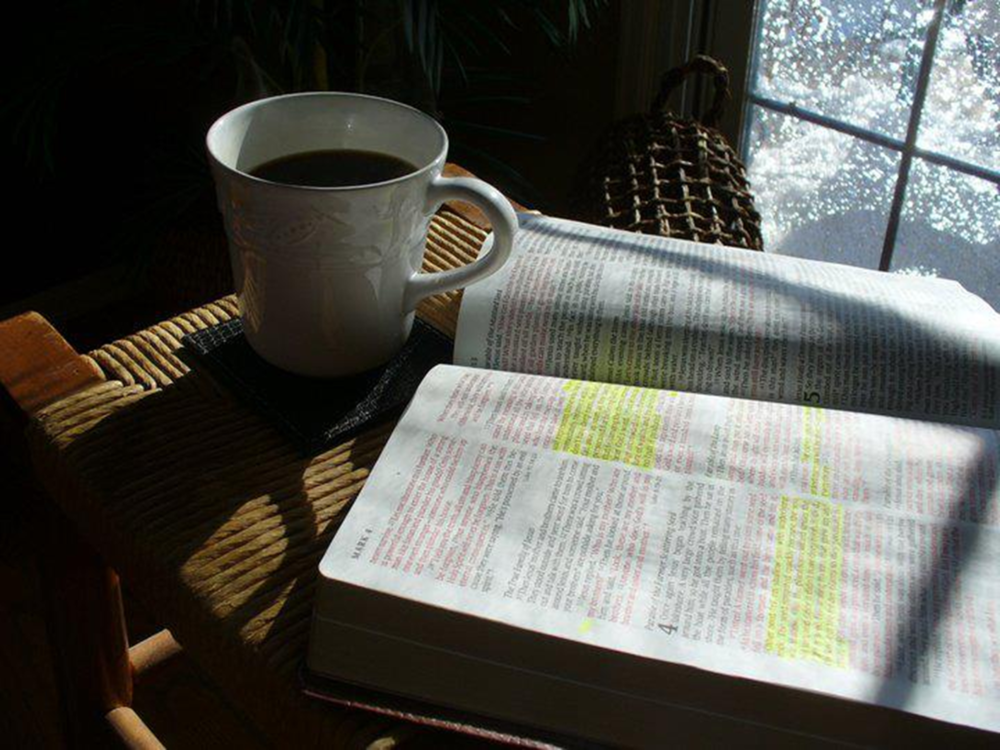
Posted in Psalms | Tagged , , | Leave a comment

God Determines the Destiny

It was Ralph Waldo Emerson who, with pen wrote:

“Sow a thought and you reap an action; sow an act and you reap a habit; sow a habit and you reap a character; sow a character and you reap a destiny.”

This morning it seems Isaac, from the flesh, pens a different legacy:

“Sow disobedience and you reap mistrust. Mistrust will lead to deception, and deception to anger. Anger sown reaps hatred, and hatred murder.”

Hovering over Genesis 27 this morning. Trying to make sense of the dynamics of this seemingly hyper-dysfunctional family.

Not bright enough to dogmatically assert cause and effect here, but it seems it all starts with Isaac, an old blind man, driven by his appetite, deciding to do one thing when God had clearly told him through his wife to do another. He’s hungry, he’s weary and anticipates the day of his death, and so he strikes a deal with Esau, the older son, to bless him in exchange for a favorite meal. Problem is God had revealed to Rebekah, before their twin boys were born, that “the older shall serve the younger” (Gen. 25:23). But you know there’s trouble coming as, in Genesis 25:28, the Holy Spirit, with a certain foreboding, makes sure we know that “Isaac loved Esau because he ate of his game, but Rebekah loved Jacob” (because he was the child of promise).

Fast forward to the twilight years and Isaac decides to bless Esau as the one to be served (Gen. 27:29). Disobedience. And it’s a train-wreck from there on.

Rebekah’s eavesdropping and plotting. Jacob’s scheming and deceiving. Esau’s choked and murderous. Just one big happy family.

And while there’s a lesson here about sin taking you farther than you want to go, a warning to heed about how sowing thoughts out-of-sync with God will reap actions, habits, and character out-of-sync with God, ultimately God determines the destiny.

Then Isaac called Jacob and blessed him . . . “God Almighty bless you and make you fruitful and multiply you, that you may become a company of peoples. May He give the blessing of Abraham to you and to your offspring with you, that you may take possession of the land of your sojournings that God gave to Abraham!”

(Genesis 28:1a, 3-4 ESV)

God’s purposes prevail. His promises are fulfilled. His grace always greater than all our sin.

God does some of His best work through dysfunctional families.

Not because of who we are, but because of what He’s done. Not because of what we’ve done, but because of who He is. (Thank you, again, Casting Crowns).

By His grace. For His glory.

Posted in Genesis | Tagged , , , , | Leave a comment

Full

Acts 6 this morning. And I’ve got Stephen on the mind. What grabs me is that he was full.

“Therefore, brothers, pick out from among you seven men of good repute, full of the Spirit and of wisdom, whom we will appoint to this duty. But we will devote ourselves to prayer and to the ministry of the word.” And what they said pleased the whole gathering, and they chose Stephen, a man full of faith and of the Holy Spirit, and Philip, and Prochorus, and Nicanor, and Timon, and Parmenas, and Nicolaus, a proselyte of Antioch. . . . And Stephen, full of grace and power, was doing great wonders and signs among the people.

(Acts 6:3-5, 8 ESV)

Full of the Spirit. Full of wisdom. Full of faith. Full of grace. Full of power. Stephen was full. As I chew on that, I find myself aspiring to be full too.

But is that something I can will? Something that I can work? Something that’s in my power and control to do? Can I make myself full?

I’m indwelt by the Holy Spirit. Sealed by the Spirit. Able to be led by the Spirit. But can I really say I’m thoroughly permeated by the Spirit?

I think I have some wisdom, some faith, and know what it’s like walk to be grace dependent, but I get the sense here that Stephen was intrinsically wired for wisdom, overflowing in faith, and saturated by grace. This guy comes across as a granite pillar of faith, and the more I noodle on this the more I feel like I’m but a mud-made jar of clay.

So, what’s the secret sauce to being full?

First, I don’t think I can make myself full. Doesn’t the word itself speak of something that was once empty (or at least less than full) being supplied with something outside itself? I am not the source of wisdom, faith, grace, or power. Certainly not in command of the Spirit. I can’t fill myself. Yet, I think I have a part. While I might not be able to make myself full, I’m thinking that I can open the lid for Jesus to fill this hollow vessel, to flood this jar of clay.

As I mediated further on Stephen, my eye fell on tomorrow’s reading in Acts. If there’s anything we’ll discover about Stephen from Acts 7, it’s that he knew the word. Stephen was also full of the Scriptures. Connection there? Some divine cause and effect? I’m thinkin’.

. . . be transformed by the renewal of your mind . . . (Romans 12:2b ESV)

I can’t do the filling, but I can furnish the Giver of “every good gift and every perfect gift from above” (Ja. 1:17) with something to work with. I can take in what’s been graciously provided for me to take in and trust Him that He will use it to make me, if not full like Stephen, at least fuller than I am. And that, “according to the measure of faith that God has assigned” (Rom. 12:3).

I can cooperate with God’s predestined purpose to conform me “to the image of His Son” (Rom. 8:29) by regularly, intentionally putting myself under His living and active word (Heb. 4:12). The word that gives wisdom, fuels faith, and purges the dross to maximize the power. The word that, when I open it, invites the Holy Spirit to engage in some divine one-on-One time.

I want to be full. Don’t think I can do that on my own. But I can be faithful. I can be purposeful. And I can be trustful, that the work He has begun in me, He will bring to fullness (Php. 1:6).

By His grace. For His glory.

Posted in Acts | Tagged , , , , | Leave a comment

This Life

Chewing on something this morning that I know I’ve read many times before but somehow feel like I’m only noticing for the first time.

When Jesus came, according to Mark, He came preaching “the gospel of God” (Mk. 1:14). Matthew says that He proclaimed “the gospel of the kingdom” (Mt. 4:23). Which is it? Is it the gospel of God or the gospel of the kingdom? Yes. It’s both. That the gospel is multifaceted good news is evident.

It is the gospel of Christ who has come, as well as the gospel of the Christ who will come again in glory. It is the gospel of peace, the gospel of our salvation, and, as such, good news of great joy. Yup, all that is pretty familiar.

But this morning I’m chewing on the reminder that it is also the gospel of this Life.

But the high priest rose up, and all who were with him (that is, the party of the Sadducees), and filled with jealousy they arrested the apostles and put them in the public prison. But during the night an angel of the Lord opened the prison doors and brought them out, and said, “Go and stand in the temple and speak to the people all the words of this Life.” And when they heard this, they entered the temple at daybreak and began to teach.

(Acts 5:17-21a ESV)

The apostles are on a tear. Preaching up a storm, doing signs and wonders at will, so that even if their shadow fell on the sick, they were all healed (Acts 5:12-16). The result? “More than ever believers were added to the Lord, multitudes of both men and women” (5:14). And it choked the ruling religious party. So, they threw them in jail.

But, as Paul would declare at the end of his ministry, “the word of God is not bound” (2Tim. 2:9). An angel conducts a jailbreak and tells the boys to get back out there and keep sharing the good news. But notice how the Holy Spirit records that injunction. Here, while we understand the apostles are to continue preaching the gospel, it’s identified as all the words of this Life.

So, what life is this Life we’re talking about? The life of Jesus? New life in Christ? Everlasting life? Yup, that’s what I’m thinking.

Jesus is the Author of Life (Acts 3:15). He came to seek and save the lost so that they might “have life and have it abundantly” (Jn. 10:10). Those who believe and obey have been buried with Him in baptism so that they “too might walk in newness of life” (Rom. 6:4). What’s more, He has given us freely His Spirit so that “the one who sows to the Spirit will from the Spirit reap eternal life” (Gal. 6:8). And so, we’re exhorted to “fight the good fight of faith” and take hold of “that which is truly life” (1Tim. 6:12, 19).

How much does the good news of this Life emphasize that the gospel isn’t just a “Get Out of Hell Free” card we get to stuff in our back pockets and then present at the pearly gates? How much does it remind us that we’re not talking a dictated religion for Sunday but a divinely oriented and empowered regime for everyday of the week? This Life should be the life we live as believers.

The gospel, among so many other things, is the good news of this Life. Isn’t it? I’m thinkin’ . . .

This Life of God’s giving. This Life so worth living.

By His grace. For His glory.

Posted in Acts | Tagged , , , , , | Leave a comment

Faith and Fear

Struck by a verse in Genesis 22 this morning.

Genesis 22 is a pretty well-known story. God tests Abraham asking him to offer his son, Isaac, as a burnt offering. A story foreshadowing a greater redemptive story of a Heavenly Father who was willing to offer up His one and only Son as a sacrifice for others. Nevertheless, a story which records the actions of an earthly father, a flesh and blood child, and, if you pause to think about it, an obedience that transcends natural understanding. A story which, while being prophetic, I think is also meant to be instructive.

So, what’s the lesson to be learned? That’s what I’m chewing on this morning.

Then Abraham reached out his hand and took the knife to slaughter his son. But the angel of the LORD called to him from heaven and said, “Abraham, Abraham!” And he said, “Here I am.” He said, “Do not lay your hand on the boy or do anything to him, for now I know that you fear God, seeing you have not withheld your son, your only son, from Me.”

(Genesis 22:10-12 ESV)

For now I know that you fear God. That’s the phrase I’m noodling on.

Gonna be honest, I am far more comfortable with thinking of “fearing God” as reverent fear or awe-induced trembling than I am with “to fear God is to be willing to sacrifice even your own child.” More okay with thinking that the fear of God is evidenced by bowing before an altar facedown than putting wood on an altar for a fire on which my son will be burned up. Yet, says God, I know that you fear God because you’ve withheld nothing from me, not even the miracle boy born when you 100 years old and your wife was 90 — the son I promised.

So, is that the measure? Is that the bar we need to jump in order to demonstrate we really fear God. Is that the lesson to be learned? That I need to step up my “fear factor”? Thinking not. Seems to me the fear factor comes with a faith factor.

By faith Abraham, when he was tested, offered up Isaac, and he who had received the promises was in the act of offering up his only son, of whom it was said, “Through Isaac shall your offspring be named.” He considered that God was able even to raise him from the dead, from which, figuratively speaking, he did receive him back.

(Hebrews 11:17-19 ESV)

There’s a relationship, it seems to me, between our faith and our fear. Said it before, what we believe is going to impact how we behave. Though he couldn’t humanly reconcile sacrificing his son on the altar today with handing over to his son the deed to the family promises tomorrow, yet Abraham believed God was able to make it happen.

Then Abraham said to his young men, “Stay here with the donkey; I and the boy will go over there and worship and come again to you.”

(Genesis 22:5 ESV)

The boy and I are going to worship over there (code for I’ll do the burnt offering, he’ll be the burnt offering), says Abraham to his servants, and then we’ll come again to you. Both of us. Me and the boy. We’ll return. Don’t know how. But I do know Who. God has promised. God is faithful. God is able.

Thinking the lesson here this morning is less about stepping up my fear factor and resting more in the faith factor. That while without faith it’s impossible to please God (Heb. 11:6), I’m thinking that without faith it’s pretty hard, really, to fear God. Just as we were saved through faith, “and this is not your own doing; it is the gift of God” (Eph. 2:8), we sacrifice through faith, “and this is not your own doing; it is the gift of God.” Just as we walk by faith (2Cor. 5:7), we worship by faith — even when, by the mercies of God, that worship involves presenting our bodies as living sacrifices by faith (Rom. 12:1).

Believe, by the grace of God, and behavior, by the power of God, will follow. My faith factor will fuel my fear factor.

True? Something to chew on.

By His grace. For His glory.

Posted in Genesis | Tagged , , , | 3 Comments

A Big Deal

Started up in my 2022 reading plan last week, but today we return to routine. And this morning I’m hovering over Matthew’s account of the temptation of Jesus in the wilderness.

Then Jesus was led up by the Spirit into the wilderness to be tempted by the devil. And after fasting forty days and forty nights, He was hungry. And the tempter came and said to Him, “If you are the Son of God, command these stones to become loaves of bread.” But He answered, “It is written, ‘Man shall not live by bread alone, but by every word that comes from the mouth of God.'”

(Matthew 4:1-4 ESV)

Wear my “Jesus is God” hat, and the temptation of Jesus can seem . . . well, less tempting. No big deal. We’ll just play this out so people know who’s God and who’s not and move on. Diablos, the accuser, does his thing and tries to mess with God. And God, manifest in flesh, does His thing and says, “No way!” Easy. Next.

But chew on the reality that Jesus was a man, fully man, flesh and blood man, and His temptation takes on a different flavor — a flavor of wonder . . . then awe . . . and appreciation . . . and adoration. ‘Cause it was a big deal.

Wonder, first of all, as to why the One who created all things would subject Himself to such an experience. It’s one thing to divest yourself of all your heavenly glory to take on flesh, it’s another thing — especially when you are the Creator and Provider of all things — to starve that flesh.

Forty days and forty nights, that’s how long Jesus fasted. And Matthew writes only that “He was hungry.” Ya’ think? How hungry we talking here? Pretty hungry. Literally “suffering want” hungry. Jesus was “needy” hungry. He needed food. Badly.

So, just how tempting was the tempter when he said, “Hey, why don’t you do a God-thing — if you are God — and turn a few of these stones into bread?” Come on, don’t you think Jesus was legitimately tempted to bite at the suggestion? (Pun intended). If He was fully man starving who possessed fully God power, I’m guessing He was fully tempted — just as we would be.

And isn’t that the point? The Creator entered into His creation in order to fully experience what He required of those He had created.

“Man shall not live by bread alone, but by every word that comes from the mouth of God.”

Trust God for every need, His word can be your sustaining portion. Don’t put God to the test (Mt. 4:7). Worship God alone (Mt. 4:10). The ABC’s of flesh walking by faith. And Jesus subjected Himself fully to the spiritual dynamics the Father had ordained for all His children. And did so under the most extreme of conditions. His temptation by the Enemy was the real thing to the nth degree.

So how come?

For because He Himself has suffered when tempted, He is able to help those who are being tempted.

(Hebrews 2:18 ESV)

For we do not have a High Priest who is unable to sympathize with our weaknesses, but One who in every respect has been tempted as we are, yet without sin. Let us then with confidence draw near to the throne of grace, that we may receive mercy and find grace to help in time of need.

(Hebrews 4:15-16 ESV)

Tempted as we are, yet without sin. Suffered as we do, yet faithful to God’s word. Led by the Spirit, as we can be each day, drawing on divine power to subject the cravings of the flesh to the will of the Father.

Able to help those tempted. Able to sympathize with those who are weak. Able to provide mercy and grace to help in time of need. For He is the Source of mercy and grace, and He knows intrinsically what it takes for us to stand fast in time of need.

Yeah, thinking this morning that the temptation of Jesus was a big deal.

Hallelujah! What a Savior!

O’ what a grace. To Him be all the glory.

Posted in Matthew | Tagged , , , | Leave a comment

Come and Come

Reading plan done for 2021. So thankful for another year where, by God’s grace, I’ve been able to know God’s presence as I’ve chewed on God’s word.

Thinking that I will likely begin my reading plan again sometime next week. But for now, no plans other than to take a bit of a break from routine.

This morning, I’m hovering over Revelation 22. In particular, verse 17. Feeling like I get the “come” and “come” of what John was told to write.

The Spirit and the Bride say, “Come.” And let the one who hears say, “Come.”

(Revelation 22:17a ESV)

A year ago I couldn’t imagine 2021 “topping” 2020 as a “bottom of the barrel” year. How many times did we think we were turning a corner only to find there was another detour in the road? More deaths in the U.S. from COVID in 2021 than 2020 and, for most in my circle, what had been a mostly distant disease in 2020 has hit far closer to home in 2021 — sometimes repeatedly, a few times lethally. Another tough year. Another really tough year.

So, I’m all in with the Spirit and the Bride when they say, “Come!” I’m one who hears. Add my voice, “Come, Lord Jesus!”

Feeling kinda’ done. This world is feeling as broken as it’s ever felt, I’m ready for a new world. As out of control as it’s ever seemed, ready for some stability. As disquieted as I ever recall, ready for some peace on earth. The pressures of a pandemic along with the collateral impact of a pandemic are, at the least, wearisome. Add in the other “standard sufferings” of a broken world and, at times, it’s overwhelming. Ready for some respite. So, come!

But even as I whisper that, I hear a “still small voice” beckon to me in the cave (1Kings 19:12 NKJV).

And let the one who is thirsty come; let the one who desires take the water of life without price.

(Revelation 22:17b ESV)

Parched. That’s a good word. Dried up. Thirsty. A longing for something this world cannot provide. A thirst it’s incapable of satisfying. “Come,” whispers the Savior, “take the water of life without price.”

Water that will satisfy the thirst. Water freely given which primes an inner spiritual pump becoming “a spring of water welling up to eternal life” (Jn. 4:14). Water which satiates the parched soul so that, not only does it survive, but it even flourishes and bears fruit. Living water. Holy Spirit water.

On the last day of the feast, the great day, Jesus stood up and cried out, “If anyone thirsts, let him come to Me and drink. Whoever believes in Me, as the Scripture has said, ‘Out of his heart will flow rivers of living water.'” Now this He said about the Spirit, whom those who believed in Him were to receive, . . .

(John 7:37-39a ESV)

Lamb of God, I come. Spirit of God, spring up, O well!

Come and come. As I wait for the King to come and reign in His perfect timing, I will, by the Spirit’s enabling and through the Spirit’s provision, continue to accept the Shepherd’s invitation to come and drink of the water of life.

By His grace. For His glory.

Merry Christmas!

Posted in Revelation | Tagged , , , , | Leave a comment

Words Matter

Wrapping up my reading plan for 2021. Hovering over something in Job 42 this morning. Something that’s been familiar in my other Old Testament readings recently, but that struck me as somewhat out of place here in Job.

That God can be provoked to anger is clear in the prophets. That Israel’s persistent rebellion would eventually test the limits of a God who is merciful, gracious and slow to anger and evoke His righteous wrath is what you’d expect from such sin before a holy, holy, holy God. But for some reason I wasn’t expecting a similar divine reaction in the conclusion of Job’s story.

After the LORD had spoken these words to Job, the LORD said to Eliphaz the Temanite: “My anger burns against you and against your two friends, for you have not spoken of Me what is right, as My servant Job has.”

(Job 42:7 ESV)

My anger burns. Those are the words that caught my attention and surprised me a bit.

Like I said, I’ve been coming across those kind of words for weeks and weeks now as I’ve been reading through the prophets. And I get God’s anger being provoked by fake worship, false worship, and spiritual infidelity. I know enough about God to expect that out and out disobedience to His word in the form of idolatry, injustice, and sexual immorality will eventually result in His holy, perfect wrath. But words? Just words? God’s anger will also burn against words?

Haven’t I just read through what’s just been a theological debate around the “why” of suffering? A back and forth of differing opinions? Eliphaz & Co. asserting that suffering is “the wicked man’s portion from God” (Job 20:29) and Job saying, in effect, “Nope. Can’t be. Because I’m not a wicked man.” Friends fractured over varying views of how life’s playing out at the moment, that’s all this is. Isn’t it? Apparently not.

God’s anger is provoked by Eliphaz & Friend’s words to Job. His wrath is stirred up by their misinformed assertion concerning His character and conduct. While sticks and stones won’t break God’s bones, there’s a limit to the degree He will allow words to misrepresent Him.

“My anger burns against you . . . for you have not spoken of Me what is right . . .”

As an ambassador for the kingdom, those words arrest me this morning. As a representative of the revealed will of God those words are a caution — get the story right!

As a bearer of good news, make sure the news you’re bearing is the good news. As a spokesmen, in a sense, for God, tread careful that you’re speaking the right stuff in the right way applied to the right situation at the right time.

Do words matter? I’m thinkin’ . . .

Maybe it goes without saying, but it seems to me that speaking for God needs to start with knowing God and knowing His word. While we might get away with adlibbing before others who don’t know better, no “careless word” escapes the scrutiny of the One who will judge every word (Mt. 12:36). I also think speaking for God demands humility even as, with conviction, we are to boldly declare the ways of a God whose ways are higher than our ways.

Slow to speak seems prudent. Careful to make sure we’ve done our homework when it comes to representing the Creator seems wise. Humble in heart, soft in tone, treading lightly on holy ground even as we stand firm on holy ground representing a holy God seems appropriate. Thankful, that the blood of Christ is sufficient for all our sins, even sins of not having spoken of God what is right, also seems like it’s part of the package.

Oh, how I need to speak of Him accurately and humbly. ‘Cause words matter.

By His grace. For His glory.

Posted in Job | Tagged , , , | 2 Comments

The Lamb’s Book of Life

Chewing on Revelation 21 this morning and the first thought that strikes me is, “This is Eden regained.”

And I heard a loud voice from the throne saying, “Behold, the dwelling place of God is with man. He will dwell with them, and they will be His people, and God Himself will be with them as their God. He will wipe away every tear from their eyes, and death shall be no more, neither shall there be mourning, nor crying, nor pain anymore, for the former things have passed away.”

(Revelation 21:3-4 ESV)

The former things have passed away . . . and the first things have been restored. God dwelling with man. God Himself with them and they with God.

But the garden is no longer a garden. Eden has been upgraded to a city. A huge city. A holy city. A city “coming down out of heaven from God.” A city “having the glory of God” (21:11) which, as I was reminded in yesterday’s sermon, is God Himself.

A city whose atmosphere is God Himself. A city without a temple, as He will be in their midst in all places at all times — His glory enveloping the city. A city without need of a sun or moon as its forever source of light will be the ever-present glory of God (21:22-23).

And the essence of the city will be manifest as a result of those who inhabit the city — this city is “the Bride, the wife of the Lamb” (21:9).

The Bride of the Lamb. That’s the other thing that captures my attention this morning. I am always in awe at the reminder that Jesus is the Lamb forever.

That in the eternal state we will know Him as the Son of God and the Son of Man makes sense. That we would behold Him in all His majestic power as the King of kings and Lord of Lords is expected. But that we will also forever recognize Jesus as the Lamb, the One slain on Calvary’s cross? My first reaction is that it seems somehow out of place in a celestial city where tears, death, mourning, crying, and pain have passed away. Evidently the memory of such things, at least when it comes to the Lamb, will endure forever.

I’m struck also of the other reminder in that city that will forever mark the Second Person of the Trinity as the Lamb who shed His blood and gave His life. That reminder? Well, it’s us.

They will bring into [the city] the glory and the honor of the nations. But nothing unclean will ever enter it, nor anyone who does what is detestable or false, but only those who are written in the Lamb’s book of life.

(Revelation 21:26-27 ESV)

The fact that we are there will forever remind us that the Son of God, came to earth as Jesus, the promised Christ, in order to be the Lamb of God to take away the sins of men. For everyone in that forever place will be there not because of who they were on earth or on the merit of what they had done. But solely because their names are found in a long list of those redeemed through Christ’s once for all atoning sacrifice.

Because the promised Servant suffered in their stead, they are citizens of the new city. Because the Son paid the price for their sin, they have been forever adopted and owned as God’s children. Their names written in a book. Written, as one song writer has penned, in red.

Written in a book of life. Written in the Lamb’s book of life.

Written by grace alone. Written for His glory alone.

Hallelujah! What a Savior.

Posted in Revelation | Tagged , , , | 1 Comment

A Faultfinder? Nope!

Most often when a Scripture “speaks to me”, if it’s not of God’s greatness or goodness, it’s a word to me of caution or correction. But this morning, as I continue to hover over God’s One-on-one with Job, I’m encouraged. Seems to me that, though there has been much to question, lament, and perhaps even complain about over these past couple of years, for me (and for those in my circle) there hasn’t been evidence of finding fault with the Divine. To God be the glory!

And the LORD said to Job: “Shall a faultfinder contend with the Almighty? He who argues with God, let him answer it.”

(Job 40:1-2 ESV)

Whoever came up with “sticks and stones may break my bones, but names will never hurt me” never had the God of creation call Him a “faultfinder.” Ouch!

Job’s been diatribing (not really a verb) before the Almighty for 30+ chapters, refusing to stand down until he gets an audience with the Creator so the Creator can explain Himself and let Job in on what’s goin’ on. Though Job began his “season” of suffering well — blessing the LORD who gives and takes away (1:21), and ready to receive evil from God as well as good (2:10) — as time goes on, as the suffering continues, as the why’s of the situation don’t become any clearer, Job crosses a line. So much so that God adds “faultfinder” to the list of attributes He ascribes to Job:

“Have you considered My servant Job, that there is none like him on the earth, a blameless and upright man, who fears God and turns away from evil . . . but has also become a faultfinder contending with the Almighty?”

Like I said, Ouch!

Not judging Job. No way. I get it. There but for the grace of God go I.

But also not judging me. Through this extended season of pandemic+ (pandemic plus all the hard stuff that doing life can bring), though at times I may have been overwhelmed by circumstances, whined about “why me?” (repent), and have too often been short with others (repent), I honestly don’t think I’ve been tempted to find fault with God. Neither have the folks who are near to me. If anything, we’ve leaned into His “ways above our ways”, and “His thoughts above our thoughts” more than ever before (Isa. 55:8-9).

Never have we forgotten that God is sovereign. Never have we doubted that God is good. Never have we not believed (though not sure how) that God determines / permits all things, even the pandemic+ things, for our good and His glory. By God’s grace, while there have been many things to repent of during this season, faultfinding isn’t one of them. Thank you, Lord.

Lessons learned from reading in Job in the past seem to have born some fruit in the present. Availing ourselves, when times are good, of what God has revealed of Himself, not only promotes right belief but prepares for right behavior.

It’ll never be said of this guy that he is blameless and upright (except in Christ), or that he always feared God as he should and never was tripped up with evil. But a faultfinder? Nope!

Only by God’s grace. Only for God’s glory.

Posted in Job | Tagged , , | Leave a comment